








Introduction
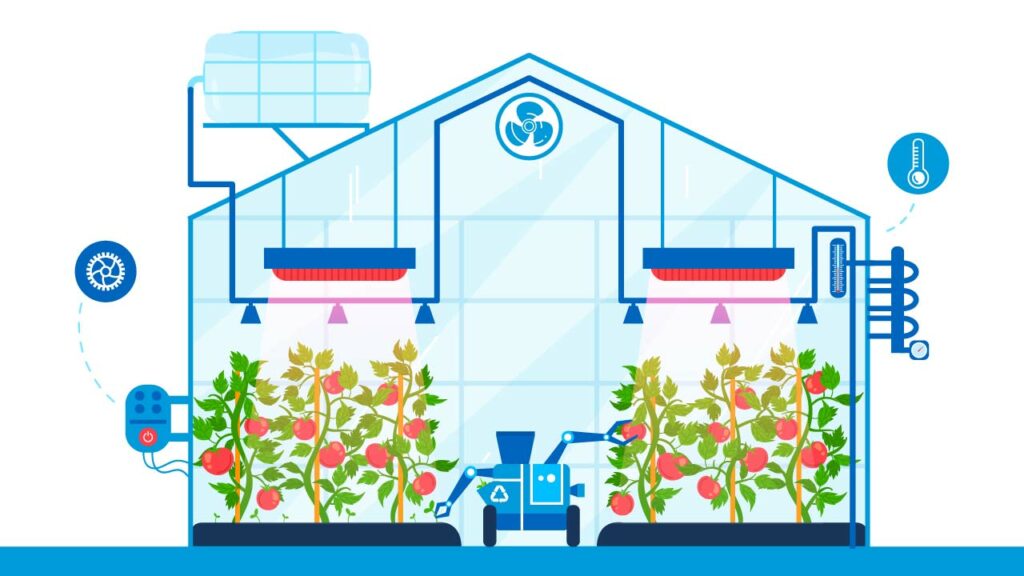
Controlled Environment Agriculture Statistics: The (CEA) is a farming method where crops are grown indoors or in structures like greenhouses, using technology to precisely manage light, temperature, water, nutrients, and CO2 for optimal, year-round production, regardless of outside conditions, enabling higher yields, reduced pesticide use, and consistent quality. It ranges from low-tech hoop houses to high-tech vertical farms and plant factories, often using soilless systems like hydroponics or geoponics.
Controlled Environment Agriculture (CEA) uses technology (like hydroponics, vertical farms, greenhouses) to control light, temp, nutrients for year-round, high-yield crops (lettuce, tomatoes, herbs), offering water/land efficiency, reduced pesticides, and local food, with significant global market growth driven by food security needs, though high initial costs and more socio-economic research are needed.
Key stats show rapid operation growth (e.g., US 100%+ from 2009-2019) and booming market value (projected to hit hundreds of billions), but research often overlooks social impacts and diverse crops beyond leafy greens.
Editor’s Choice
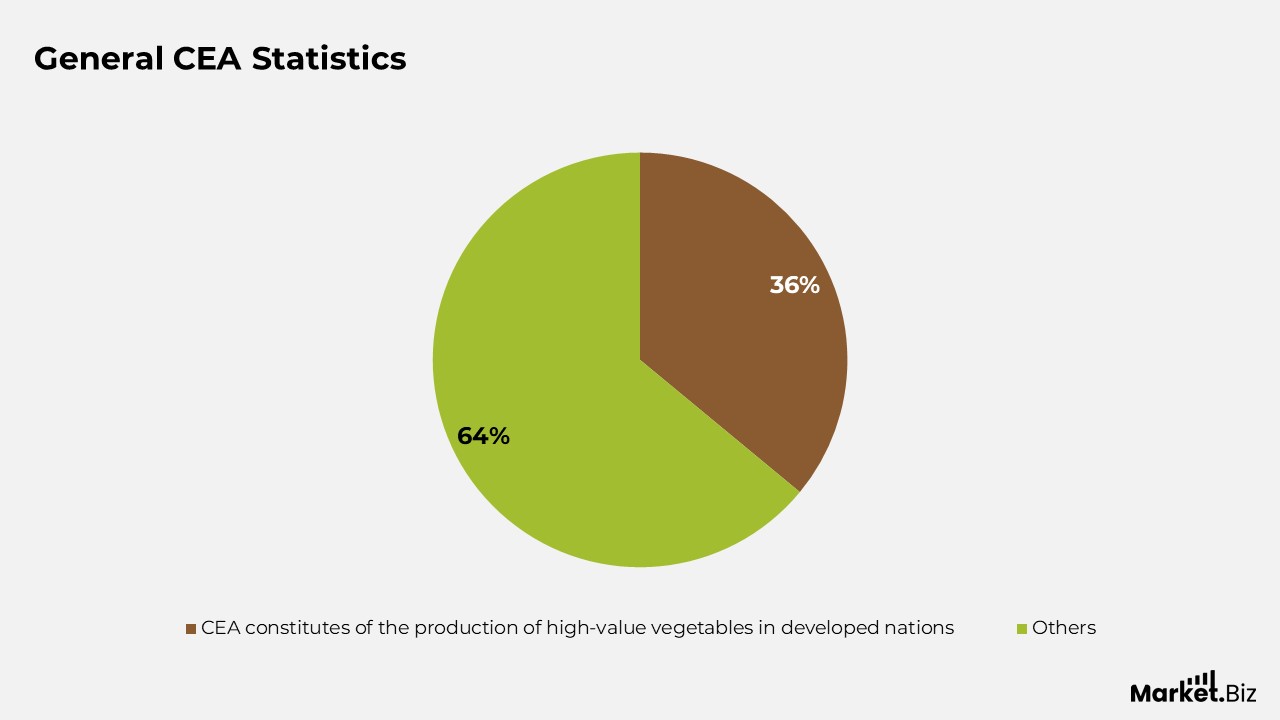
- Controlled Environment Agriculture (CEA) constitutes approximately 36% of the production of high-value vegetables in developed nations.
- Hydroponics has maintained a leading market position, securing over 46.10% of the market share.
- Greenhouses account for 72% of the total production area.
- The Asia-Pacific region accounts for 46% of the global greenhouse gas emissions.
- CEA products are priced 17% higher.
General Controlled Environment Agriculture Statistics
- Controlled Environment Agriculture (CEA) constitutes approximately 36% of the production of high-value vegetables in developed nations.
- More than 75% of CEA operations utilise greenhouses.
- The total area of global protected cultivation surpasses 10 million hectares.
- Yields achieved are between 300% and 1,000% greater than those from traditional open-field farming.
- The annual crop failure rates are maintained at below 5%.
- The number of annual crop cycles has increased from 1–2 to between 6 and 15 cycles.
- 60% of CEA farms are located within 100 kilometres of urban areas.
- 70% of these farms concentrate on the production of food crops.
- Produce is delivered to markets 38% more quickly.
- Labour productivity is 2 to 4 times higher.
- More than 50% of new projects incorporate automation.
- Weather-related volatility has been reduced by 80%.
CEA Market Size
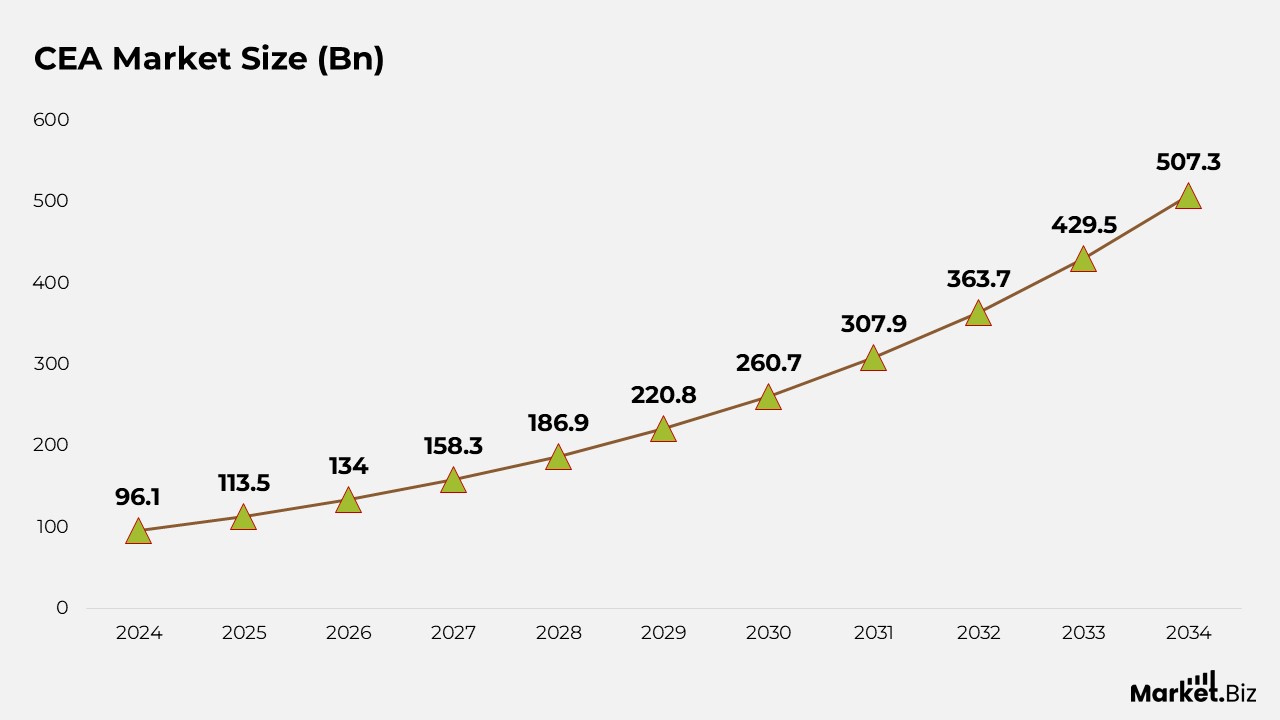
- The Controlled Environment Agriculture Market is projected to reach approximately USD 507.3 billion by 2034, up from USD 96.1 billion in 2024, reflecting a compound annual growth rate (CAGR) of 18.1%.
- Hydroponics has maintained a leading market position, securing over 46.10% of the market share.
- Lighting Systems has also established a significant market presence, accounting for more than 37.10% of the controlled environment agriculture market.
- Greenhouses have captured a substantial market share, exceeding 38.10%.
- Vegetables have dominated the market, holding more than 41.20% of the controlled environment agriculture sector.
- Commercial Growers have a commanding market position, with over 53.10% of the share.
- Europe is anticipated to contribute around 34.20%, which is approximately USD 32.8 billion.
Controlled Environment Agriculture Type Statistics
- Greenhouses account for 72% of the total production area.
- Vertical farms, while occupying less than 5% of the area, represent 21% of the investment value.
- Hydroponics is utilised in 54% of the facilities.
- Aeroponics constitutes 8% of the installations.
- Aquaponics makes up 4% of the operations.
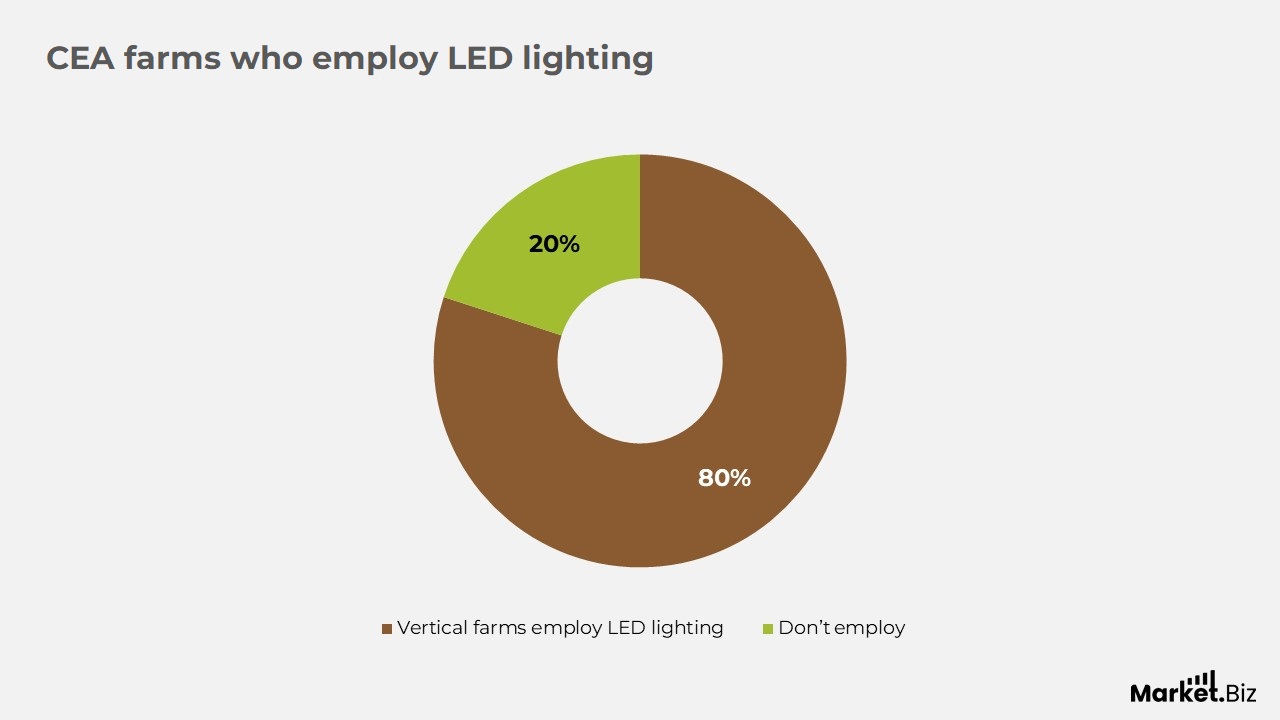
- 80% of vertical farms employ LED lighting.
- Hybrid lighting systems are implemented in 47% of greenhouses.
- 65% of newly established facilities utilise closed-loop nutrients.
- Temperature is maintained within ±1–2°C.
- CO enrichment is applied in over 50% of greenhouses.
- LED efficiency has improved by 65% since 2015.
- Automation reduces labour requirements by 46%.
Regional CEA Statistics
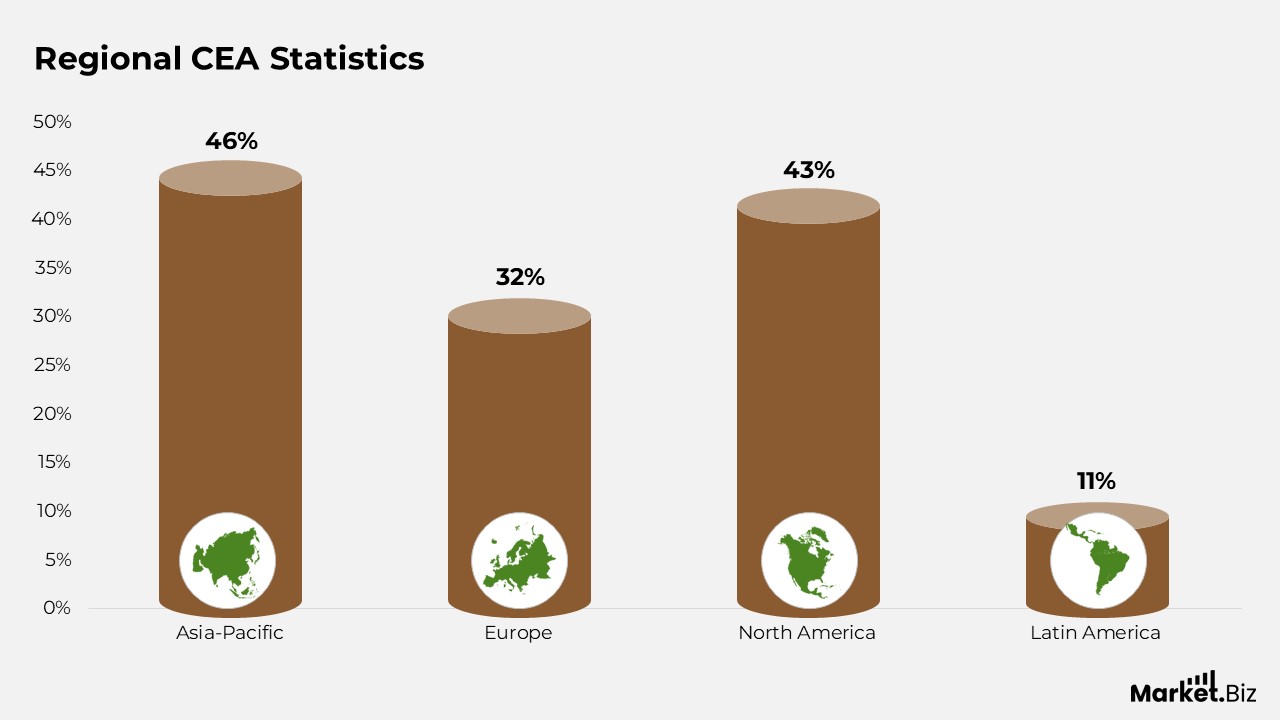
- The Asia-Pacific region accounts for 46% of the global greenhouse gas.
- China constitutes more than 50% of the world’s protected cultivation.
- Europe contributes between 32% to the value of Controlled Environment Agriculture (CEA).
- The Netherlands produces over 60% of its vegetables in greenhouses.
- North America is home to 43% of vertical farm startups.
- Urban facilities represent 66% of the latest installations.
- Japan operates more than 200 vertical farms.
- The Middle East depends on CEA for 49% of its vegetable supply.
- Latin America encompasses 11% of the global greenhouse area.
- Europe exports more than 50% of CEA output in certain countries.
- Over 30 countries offer subsidies for CEA.
- Adoption in cold climates has increased by 40% since 2018.
CEA Crop Distribution Statistics
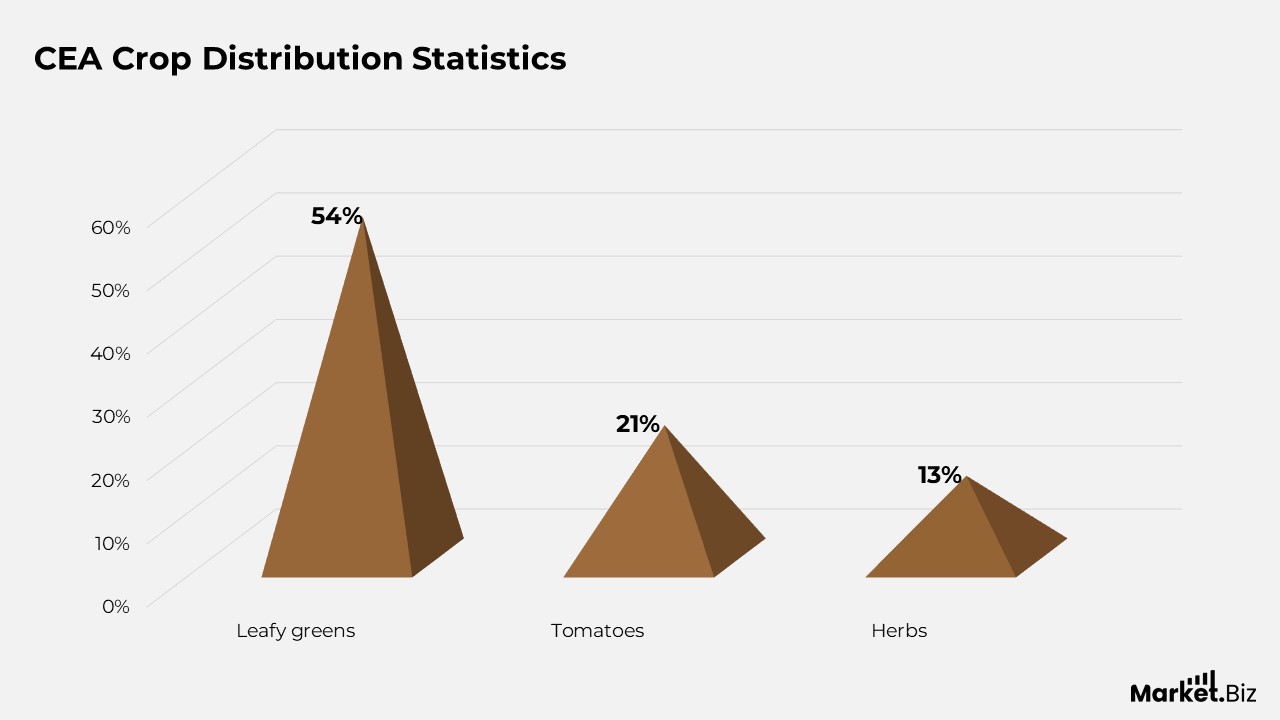
- Leafy greens constitute 54% of the total output.
- Tomatoes account for 21% of greenhouse yields.
- Herbs represent 13% of the output from indoor farms.
- Strawberries and peppers yield a greater share of revenue.
- Over 90% of vertical farms exclusively cultivate leafy greens.
- Crops reach maturity 39% more quickly.
- Leafy greens can be harvested up to 14 times a year.
- Crop uniformity is greater than 95%.
- Pest-related losses are maintained below 2–3%.
- Plant density is 3–5 times greater.
- Nutrient absorption rates exceed 90%.
- 65% of the produce is sold fresh.
CEA Consumer Demand Statistics
- CEA products are priced 17% higher.
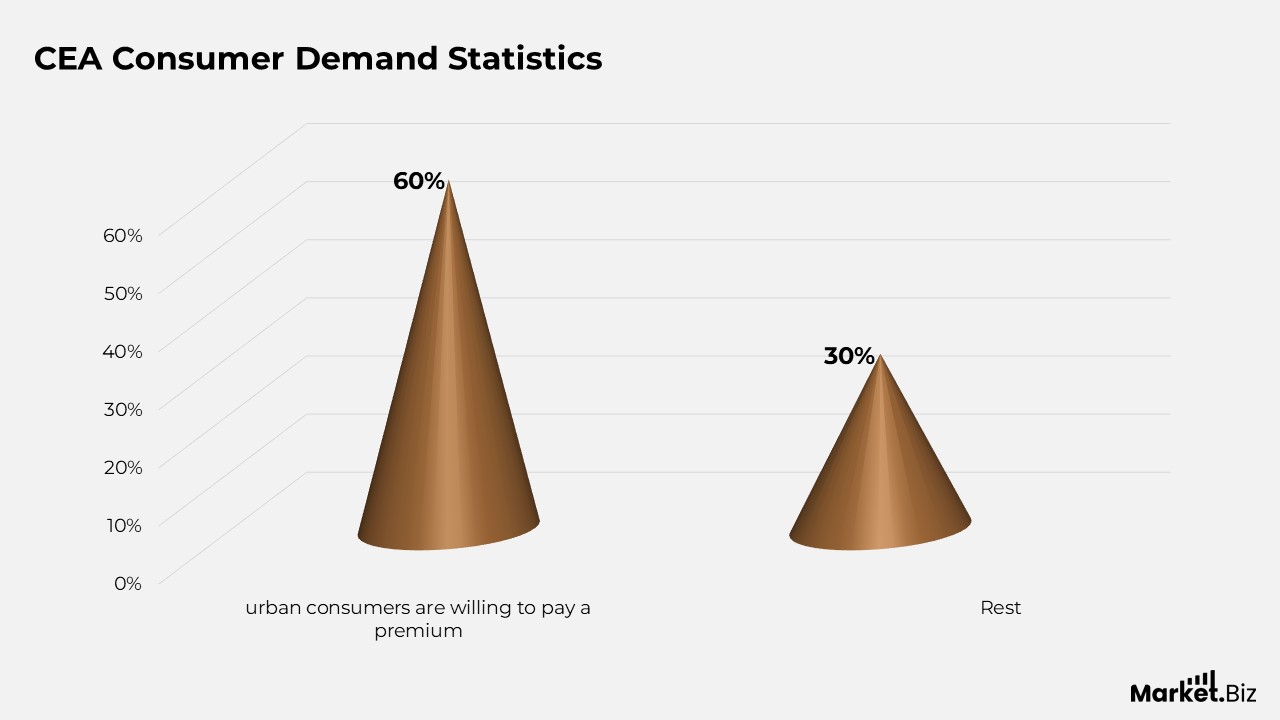
- 60% of urban consumers are willing to pay a premium.
- The shelf life of these products is up to twice as long in retail settings.
- Seasonal price fluctuations have been reduced by 31%.
- More than 30 governments are in favour of adopting CEA.
- CEA is regarded as essential for ensuring food security.
Recent Developments
- In December 2023, Plenty Unlimited Inc. inaugurated its new agricultural facility in Compton, California, referred to as “Plenty Compton Farm,” which aims to provide fresh produce to more than 430 Walmart locations across California.
- In May 2024, Saffron Tech launched a state-of-the-art facility that incorporates Controlled Environment Agriculture techniques and an autonomous cultivation system designed for effective saffron farming.
CEA Future Prediction
- By the year 2026, Controlled Environment Agriculture (CEA) is expected to experience significant market expansion, propelled by the integration of technology such as artificial intelligence and robotics, a growing demand for locally sourced food, and sustainability objectives, with the industry size anticipated to exceed $134 billion.
- By 2027, it is forecasted that Controlled Environment Agriculture (CEA) will evolve into a thriving multi-billion dollar sector, fueled by technologies like AI and the Internet of Things for automation, a heightened demand for local and pesticide-free food, and solutions to land and climate challenges.
- Substantial growth is anticipated, with projections indicating that the global market could reach $260.7 billion by 2030, or even $520 billion by 2035, driven by increasing food demand and diminishing arable land.
Conclusion
Controlled Environment Agriculture Statistics: (CEA) is an emerging, technology-oriented industry that aims to improve food security by providing increased yields, reduced water and pesticide consumption, and the availability of local produce throughout the year.
This is despite the significant initial investment required and a primary focus on leafy greens. Current statistics indicate robust market expansion, with a compound annual growth rate (CAGR) of approximately 19%.
This growth is fueled by the rising demand for fresh food, advancements in technology such as LEDs and automation, and concerns regarding food security. North America is currently at the forefront of this sector, while the Asia-Pacific region is experiencing the fastest growth. However, achieving profitability in comparison to traditional farming practices continues to pose a significant challenge.
FAQ’s
TCEA empowers growers to manage their production effectively, irrespective of seasonal changes or external weather conditions. This capability is increasingly vital in light of the rising occurrence of severe weather phenomena, including heatwaves and flash floods.
Controlled Environment Agriculture enables the cultivation of crops throughout the entire year, with the potential for enhanced yields by modifying the levels of carbon and nutrients provided to the plants.
CEA systems provide producers with the ability to regulate various factors such as temperature, wind, lighting, and precipitation. These systems contribute to heightened production while mitigating elements that could hinder growth, including unfavourable weather and prevalent pests.