








Introduction
Automatic Emergency Braking Statistics: (AEB) is a vehicle safety system that utilizes sensors, such as radar and cameras, to identify potential collisions with vehicles, pedestrians, or objects.
It automatically engages the brakes if the driver fails to respond, with the goal of preventing or mitigating the severity of crashes. Automatic Emergency Braking (AEB) represents a vital safety technology that significantly reduces the occurrence of rear-end collisions, often by 25-50% or more.
This system employs sensors to detect obstacles and applies the brakes autonomously, thereby preventing or diminishing the impact. Recent data indicate a marked improvement in effectiveness over time, particularly concerning pedestrian safety, although its performance can be influenced by various conditions, including speed and lighting.
Statistics reveal substantial decreases in front-to-rear collisions, exceeding 50%, as well as reductions in injury-related crashes. Notably, there are specific declines in backing crashes, which have dropped by 78%, and pedestrian incidents, which have decreased by 9-27%, underscoring its significance as a major enhancement in vehicle safety.
Editor’s Choice
- The Global Automatic Emergency Braking (AEB) Market is anticipated to grow from USD 57.1 billion in 2023 to around USD 160.7 billion by 2033.
- The Asia-Pacific region constitutes approximately 42% of the worldwide adoption of AEB.
- Vehicles equipped with AEB demonstrate a reduction of 49–52% in rear-end collisions.
- Manufacturers aimed for a 95% installation rate of AEB by the end of 2023.
- The Asia-Pacific region constitutes approximately 42% of the worldwide adoption of AEB.
- Rear-end collisions decreased by approximately 49–52% in real-world research.
General AEB Statistics
- Vehicles equipped with AEB demonstrate a reduction of 49–52% in rear-end collisions.
- Police-reported incidents of front-to-rear collisions have decreased by approximately 50%.
- AEB systems that detect pedestrians are associated with a 9% reduction in pedestrian-related accidents.
- The effectiveness of AEB has increased from around 46% (2015–2017) to approximately 52% (2021–2023).
- In low-speed tests (≤35 mph), crash avoidance can reach up to 100%.
- AEB systems engage at speeds ranging from 5 km/h to 60 km/h, depending on their configuration.
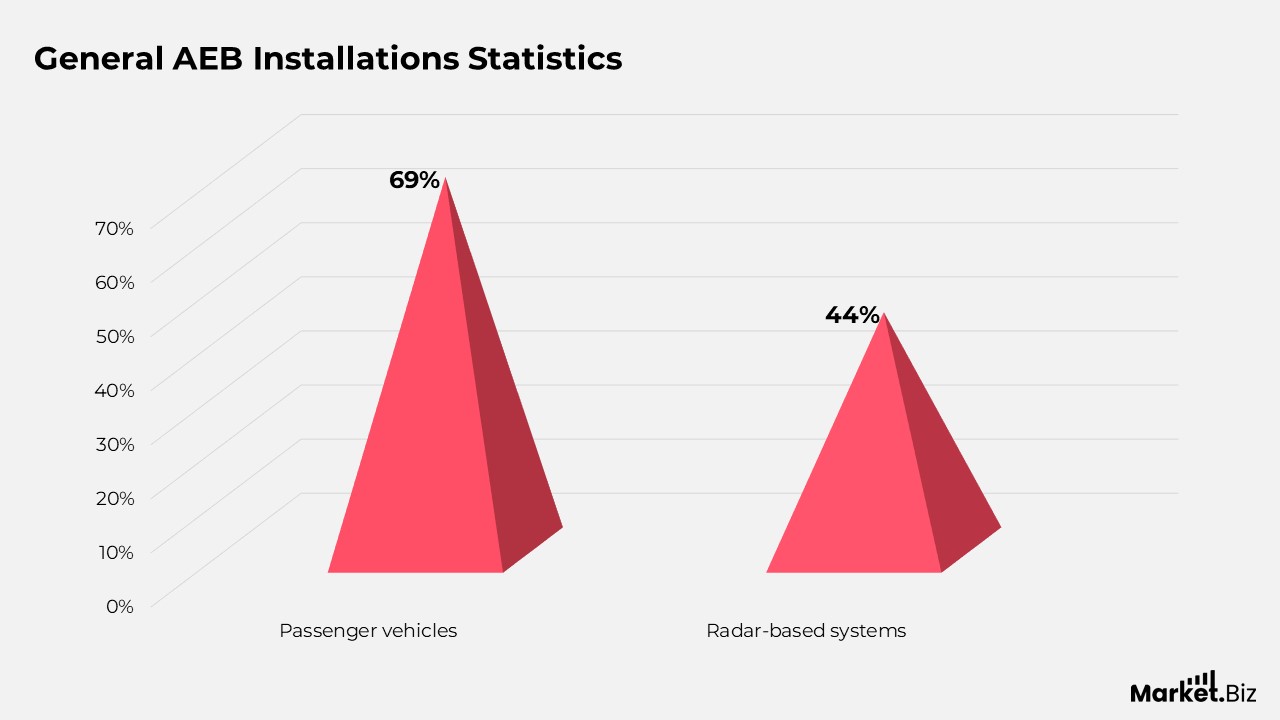
- Passenger vehicles account for about 69% of global AEB installations.
- Radar-based systems make up roughly 44% of AEB sensor technology.
Automatic Emergency Braking Market Size Statistics
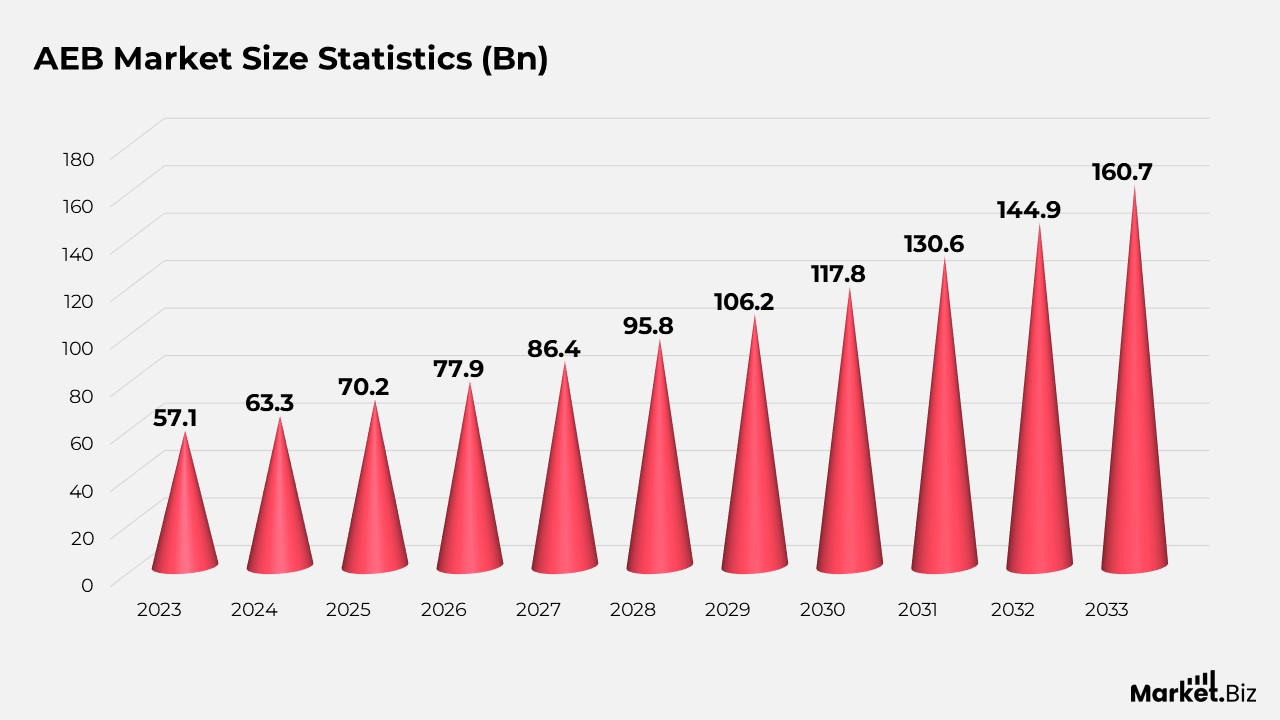
- The Global Automatic Emergency Braking (AEB) Market is anticipated to grow from USD 57.1 billion in 2023 to around USD 160.7 billion by 2033, reflecting a compound annual growth rate (CAGR) of 10.9%.
- Low-speed AEBS commands the largest market share within the product category at 53.1%, attributed to its efficiency in urban driving scenarios and its popularity among automotive manufacturers.
- Dynamic Brake Support leads the technology segment with a 49% share, owing to its ability to improve braking efficiency during emergencies.
- Passenger Vehicles dominate the market in terms of vehicle type, representing 71.1% of the market share, fueled by a strong consumer demand for safety features in new automobiles.
- Disc brakes are the leading choice in the brake segment, holding a 79.3% share, favored for their excellent braking performance and heat dissipation properties.
- The Asia-Pacific region is at the forefront of the AEB market with a 42.27% share, driven by the growing adoption of Advanced Driver Assistance Systems (ADAS), vehicle manufacturing, and supportive regulations in countries such as China, Japan, and South Korea.
- Technological innovations in radar, lidar, and AI-driven systems offer substantial opportunities, facilitating enhanced accuracy in AEB systems and broadening their implementation in both new and retrofitted vehicles.
Automatic Emergency Braking by Regional Statistics
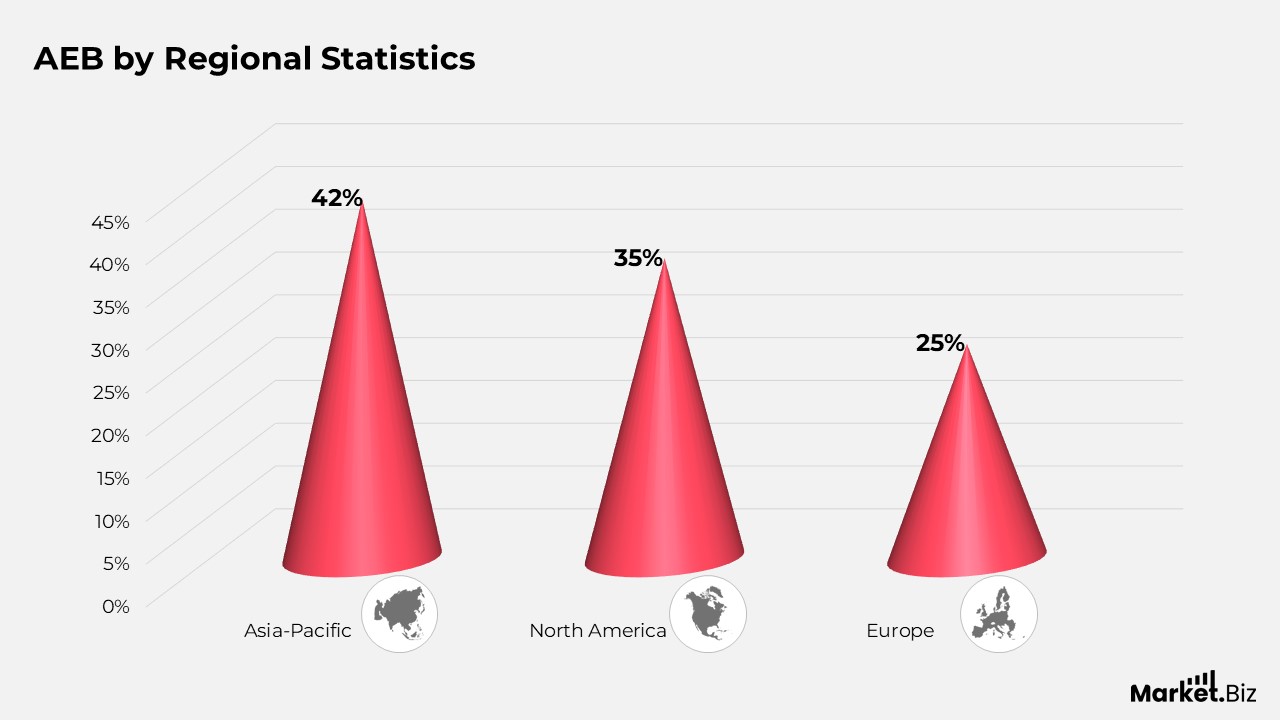
- The Asia-Pacific region constitutes approximately 42% of the worldwide adoption of AEB.
- North America accounts for around 35% of vehicles equipped with AEB.
- Europe contributes roughly 25% to the global penetration of AEB.
- The penetration of AEB in China increased from 0% in 2015 to about 10% in 2020.
- It is projected that China will achieve approximately 34% penetration by 2025.
- Demand in India has risen to between 15% and 20% where AEB is available.
- Together, Latin America and the Middle East & Africa represent about 10% adoption.
- Japan and South Korea have surpassed 80% availability of AEB in new vehicles.
Consumer Adoption Statistics
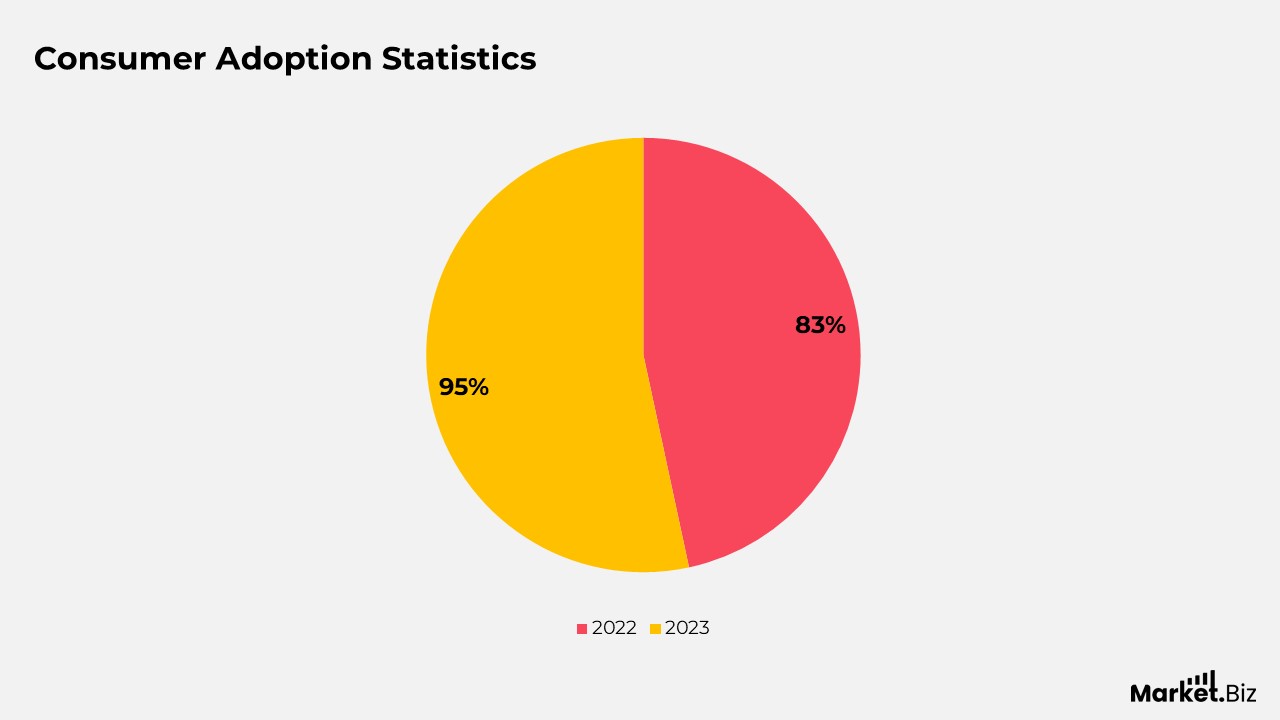
- By 2022, 83% of newly manufactured vehicles in the United States were equipped with standard Automatic Emergency Braking (AEB).
- Manufacturers aimed for a 95% installation rate of AEB by the end of 2023.
- The United States has mandated that all new vehicles must include AEB by 2029.
- Collision avoidance technology contributes to approximately 25% of Euro NCAP ratings.
- More than 70% of consumers consider active safety features to be a priority.
- Vehicles equipped with AEB experience a reduction in insurance claims by 10–15%.
- Fleet operators have reported an approximate 20% decrease in accident-related downtime.
- From 2018 to 2024, consumer confidence in AEB has increased by around 30%.
Crash Reduction & Safety Benefits
- Rear-end collisions decreased by approximately 49–52% in real-world research.
- Recent AEB-equipped vehicles successfully prevented all low-speed accidents during evaluations.
- Pedestrian AEB technology has led to a reduction of about 9% in non-motorist incidents.
- By the year 2030, China has the potential to prevent between 2,309 and 3,789 fatalities annually.
- The anticipated decrease in injuries is estimated to be between 5,055 and 7,835 by 2030.
- Even conservative projections indicate a reduction of 900 to 1,480 deaths.
- Under conservative estimates, the reduction in injuries is projected to be between 2,500 and 3,900 cases.
Automatic Emergency Braking Consumer Preferences Statistics
- The interest in safety technology significantly impacts decisions regarding car purchases.
- The adoption of Automatic Emergency Braking (AEB) is primarily motivated by families and consumers who prioritize safety.
- Regulations in the United States mandate collision avoidance systems to function at speeds of up to 62 mph.
- Pedestrian detection systems are required to operate at speeds of up to 45 mph, both during the day and at night.
- By the end of 2023, voluntary adoption of these technologies has reached approximately 95%.
- Advocates for safety are in favor of implementing mandatory performance standards.
- Ratings from the Insurance Institute for Highway Safety (IIHS) and Euro NCAP serve as incentives for the adoption of AEB systems.
AEB Recent Development
- On April 29, 2024, the NHTSA announced that nearly all new passenger vehicles and trucks sold in the United States will be required to be equipped with automatic emergency braking (AEB) systems by September 2029.
- The agency emphasised that this requirement could potentially save at least 360 lives each year and avert around 24,000 injuries annually.
- On May 9, 2024, the NHTSA issued a final rule mandating the installation of automatic emergency braking systems in U.S. light vehicles and trucks by September 2029, as part of a new Federal Motor Vehicle Safety Standard (FMVSS).
- On June 24, 2024, a coalition of prominent automakers, including General Motors, Toyota Motor, and Volkswagen, called on the NHTSA to reconsider the new regulation from April that mandates all new cars and trucks to be equipped with advanced AEB systems by 2029.
AEB Future Prediction
- Governments are advocating for the implementation of mandatory Automatic Emergency Braking (AEB) systems in all new vehicles (for instance, the United States by 2029 and India for commercial vehicles by 2026), which is propelling widespread adoption and market expansion.
- The worldwide AEB market is anticipated to exceed $100 billion by the year 2030.
Conclusion
Automatic Emergency Braking Statistics: (AEB) plays a crucial role in decreasing the number of accidents, particularly rear-end collisions (by 25-50%) and incidents involving pedestrians and cyclists (20-30%).
It has demonstrated remarkable effectiveness during daylight and at reduced speeds, although its performance may decline in low-light conditions or at high velocities. The growing implementation of AEB contributes to improved road safety, reducing hazards even when used in conjunction with other safety initiatives such as red-light cameras.
FAQ’s
Numerous studies conducted to date indicate that automatic emergency braking (AEB) can decrease the incidence of rear-end collisions by 25% to 50%.
Approximately 90% of the new vehicles currently available for purchase are equipped with some variant of automatic emergency braking. On Monday, regulators noted that automotive manufacturers had raised concerns regarding the potential loss of “driver authority” at elevated speeds.
The Tesla Model 3 is recognised as the safest vehicle available today, achieving an outstanding rating for its advanced assistance technology. The AEB system in the Model 3 has received particular commendation, performing exceptionally well across all tested scenarios.
Both the CBS and ABS braking systems enhance safety, yet they are designed for different riding conditions. ABS is more effective at high speeds and on difficult road surfaces, whereas CBS provides balanced braking at lower speeds, making it a suitable option for everyday commuting.

