








Introduction
Generative AI Statistics: In recent years, generative AI has quickly become a game-changer across multiple industries, powered by advancements in machine learning and neural networks. These innovations have greatly improved the efficiency and flexibility of AI systems, enabling them to produce high-quality results.
The growing availability of extensive datasets, along with enhanced computing capabilities, has further accelerated the progress of generative AI, fostering more precise and innovative applications. This shift is particularly evident in sectors such as healthcare, automotive, finance, and entertainment, where AI-driven solutions are revolutionizing business operations and enhancing customer experiences. As digital transformation continues, the demand for generative AI is set to skyrocket, fundamentally altering how businesses function and engage with their audiences.
Editor’s Choice
- 49% of U.S. adults use AI for information searches, while 44% utilize it to acquire new knowledge.
- Approximately 25% of respondents reported using AI-powered online search engines to explore new technology.
- Despite ongoing economic challenges, 63% of company decision-makers plan to either increase or maintain their AI spending.
- 52% of U.S. respondents and 63% of UK respondents expressed discomfort with news primarily produced by AI.
- In the first two months of 2023, Darktrace security researchers observed a 135% surge in social engineering attack emails.
- Eighty-two per cent of global employees are concerned that hackers could use generative AI to create scam emails that are indistinguishable from legitimate communications.
- Americans aware of AI-generated news articles, such as those from ChatGPT, had varied views, with some seeing it as a significant advance, others as a moderate advance, and some seeing no advance at all.
- Over the past three years, generative AI technology has attracted significant venture capital funding, totalling $1.7 billion across 255 deals.
(Source: Market.us)
Future Growth of Generative AI
- By 2025, AI is projected to account for 30% of outbound marketing messages for large companies, up from less than 2% in 2022.
- A major blockbuster film scheduled for release in 2030 is projected to have 90% of its content created by AI, up from 0% in 2022.
- In the U.S., AI is projected to replace 7% of jobs, enhance 63% of roles, and leave 30% unaffected.
- From 2018 to 2022, the most frequently utilized categories in Generative AI were natural language interfaces and 2D media production, accounting for 29.3% and 18.8% of VC-backed deals, respectively, as well as 23.6% and 11.4% of total invested dollars.
- 35% of marketers cite ‘risk’ and ‘governance’ concerns as significant challenges when using AI-generated content.
- 43% of U.S. adult workers believe that AI-generated written content can be just as high-quality as that created by humans.
(Source: Gartner, Capterra)
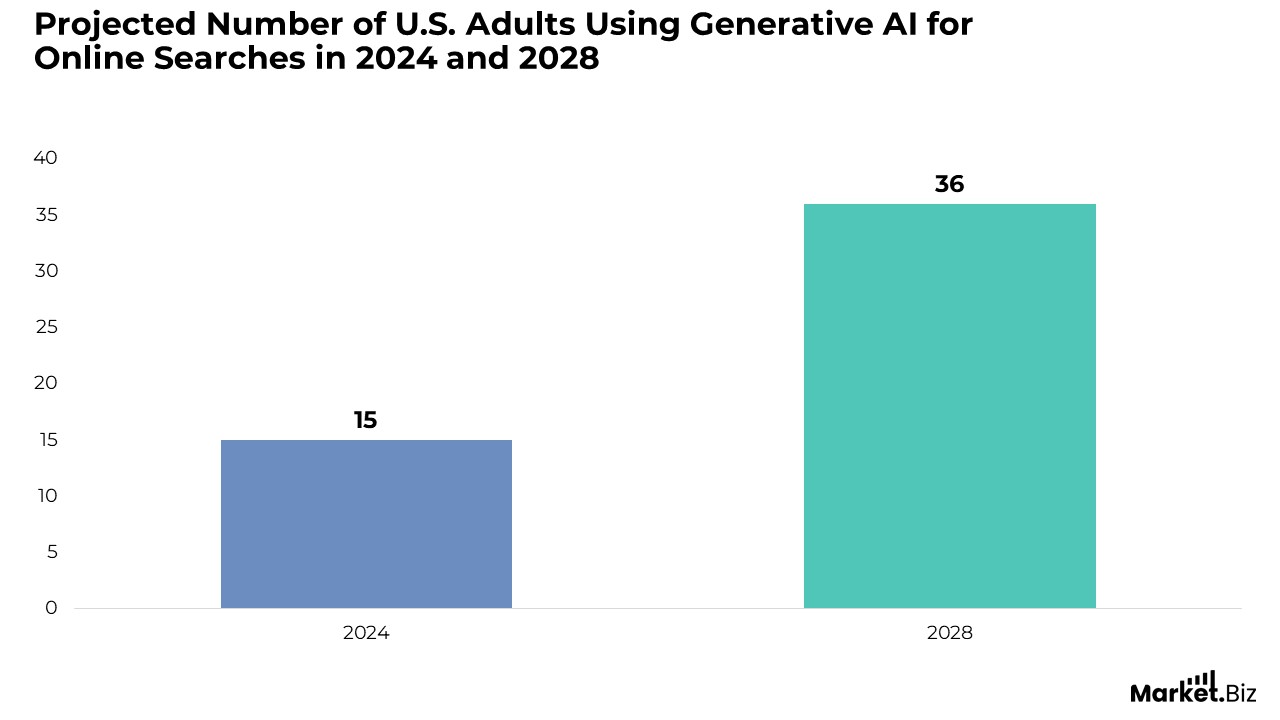
U.S. Adults Using Generative AI for Search
- In 2024, approximately 15 million adults in the U.S. are expected to use generative AI as their primary tool for online searches.
- By 2028, this number is expected to exceed 36 million users.
(Source: Statista)
Generative AI Usage Statistics
- AI is becoming increasingly integrated into the workplace, with 75% of knowledge workers expected to use AI by 2024, up from 46% just six months earlier.
- By 2025, it is anticipated that 30% of outbound marketing messages from large companies will be generated by artificial intelligence (AI).
- Fraud detection, risk management, and cybersecurity are identified as the top three benefits of AI, according to survey respondents.
- 37% of marketing and advertising professionals have incorporated generative AI into their work.
- Nearly 50% of the most common use cases for generative AI are focused on troubleshooting, technical support, professional and personal assistance, and educational purposes.
- As of early 2025, the global daily active user base for generative AI technology ranges from 115M to 180M users.
- Approximately 40% of U.S. adults aged 18–64 have engaged with generative AI, with about one-third using it daily or weekly, primarily for work-related tasks.
- 27% of Americans report using generative AI “almost constantly” or several times daily.
- Global usage varies significantly by country, with India leading at 73%, followed by the U.S. (45%), Australia (49%), and the U.K. (29%).
Moreover
- Millennials and Gen Z represent 65% of all generative AI users, with 70% of Gen Z using the technology, compared to 68% of Gen X or Boomers who don’t.
- Among Gen Z professionals, 80% use generative AI for more than half of their work tasks, and 40% use it weekly. In contrast, 50% of Boomers do not engage with the technology at all.
- According to Adobe, 53% of Americans have used generative AI models, with 30% for work, 81% utilizing them for personal tasks, and 17% for school-related purposes.
- 41% of regular generative AI users engage with it daily.
- Consumers believe generative AI can enhance their experience by delivering faster customer service (65%), personalizing interactions (48%), reducing product/service costs (44%), and offering more exciting experiences (36%).
- The Washington Post highlights that the top uses of chatbots like ChatGPT include creative writing and role-play (21%), image generation (6%), search inquiries (17%), homework assistance (18%), coding (7%), business tasks (15%), health advice (5%), and ‘jailbreaks’ (4%).
- Over 40% of surveyed people want generative AI to be incorporated into their communications with companies, particularly for automating support, search, and content creation in text, video, images, and audio.
- 70% of consumers now prefer tools like ChatGPT for service or product recommendations, replacing traditional search methods.
(Source: Microsoft, Gartner, MIT Technology, Harvard Business Review, ServiceNow)
Most Popular Types of Generative AI
| Type of AI Tool | Percentage of People Using Type of Tool |
|---|---|
| Cloud-Based Services | 69% |
| Local Or Offline Solutions | 13% |
| Cloud-Based Solutions Managed By User Or Organization | 10% |
| Other | 3% |
(Source: AIPRM)
Generative AI Market Size
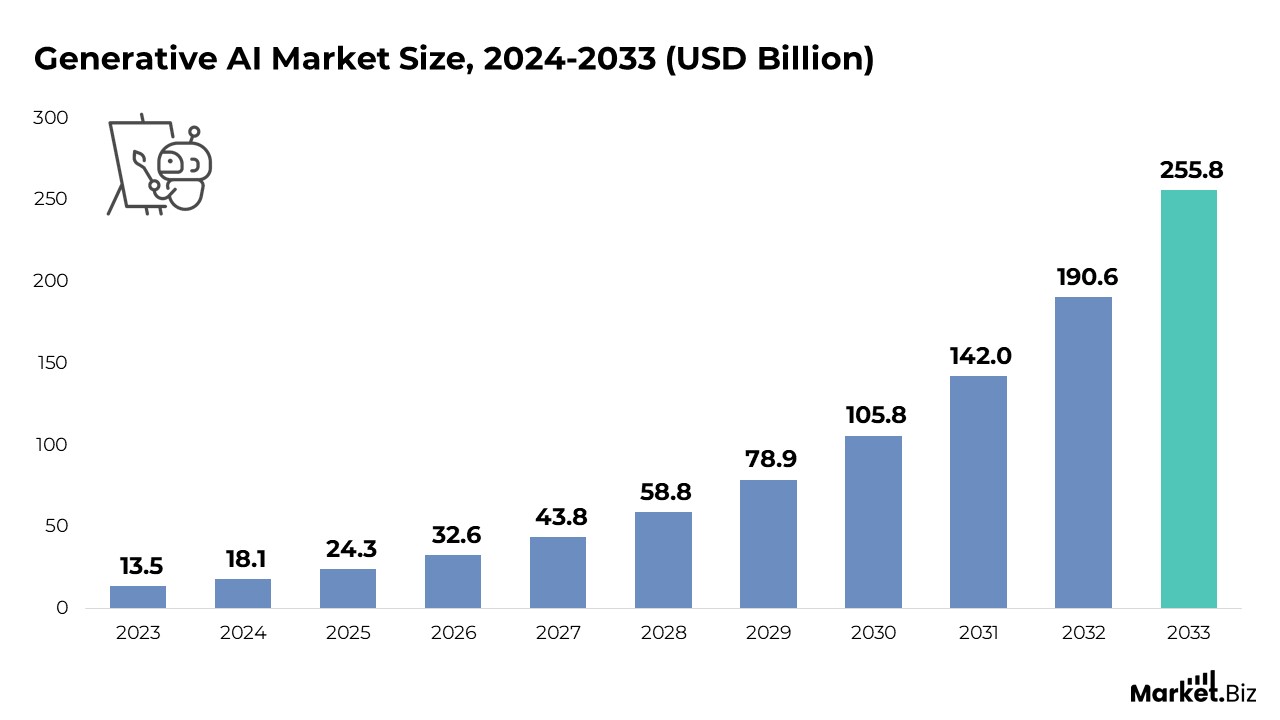
- According to Market.us, the global generative AI market is projected to grow from $24.3 billion in 2025 to $190.6 billion by 2032, representing a compound annual growth rate (CAGR) of 34.2% from 2025 to 2032.
- Advances in machine learning and neural networks have significantly enhanced generative AI capabilities, making it more efficient and versatile.
- Increased data availability and enhanced computing power contribute to better learning and output generation in generative AI systems.
- The ongoing digital transformation across sectors is driving the integration of generative AI.
- The Software segment dominated the generative AI market in 2023, accounting for over 66.7% of the market, driven by rising demand for AI-driven applications.
- The Large Language Models segment held a dominant position in 2023, capturing over 41.3% of the market due to widespread adoption across various sectors.
- Transformer technology emerged as a leading force in the generative AI market in 2023, with a market share of more than 45.1%, driven by its natural language processing (NLP) capabilities.
- The Media & Entertainment sector emerged as the leader in generative AI in 2023, holding a market share of over 24.3% with a strong compound annual growth rate (CAGR) of 36.4%.
- The NLP segment led the generative AI market in 2023 due to its widespread adoption in numerous applications.
- North America dominated the global generative AI market in 2023, capturing 42.1% of revenue and is expected to maintain a 33% CAGR over the forecast period.
(Source: Market.us)
Artificial Intelligence Market Size
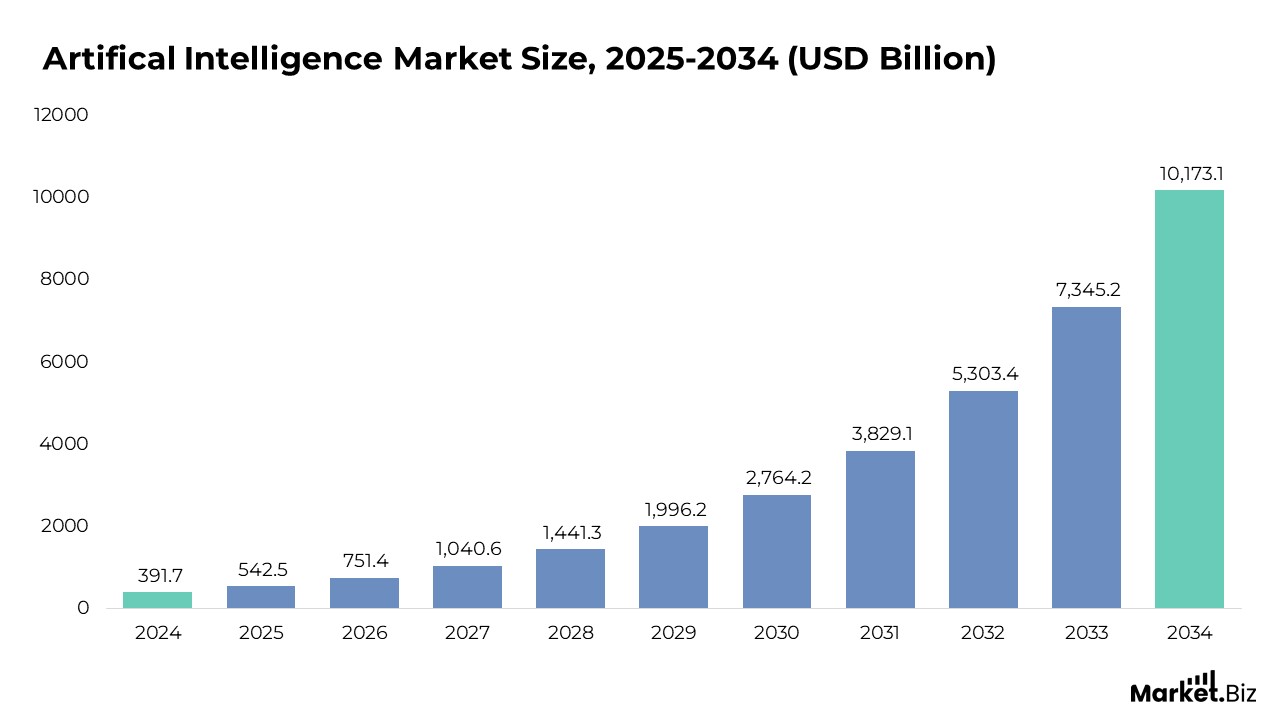
- According to Market.us, the global artificial intelligence market is projected to grow from $542.5 billion in 2025 to $ 10,173.1 billion by 2034, representing a compound annual growth rate (CAGR) of 38.5% from 2025 to 2034.
- The increasing availability of large datasets, advances in computing power, and rising demand for automation across industries are driving growth in the AI market.
- In 2023, the Software segment led the AI market, holding a 43.7% market share due to its fundamental role in enabling AI capabilities across various industries.
- The Cloud-based segment dominated the AI market in 2023, capturing 64.6% of the market share, driven by the flexibility, scalability, and cost efficiency of cloud solutions.
- In 2023, the Machine Learning segment accounted for 41.1% of the AI market share, primarily due to its pivotal role in powering AI applications across various industries.
- The Healthcare segment captured 15.9% of the AI market in 2023, driven by AI’s transformative role in patient diagnostics, management, and treatment.
- North America led the global AI market in 2023, with a 38.9% market share, translating to approximately USD 97.25 billion in revenue, driven by strong innovation in the region.
Generative AI adoption statistics
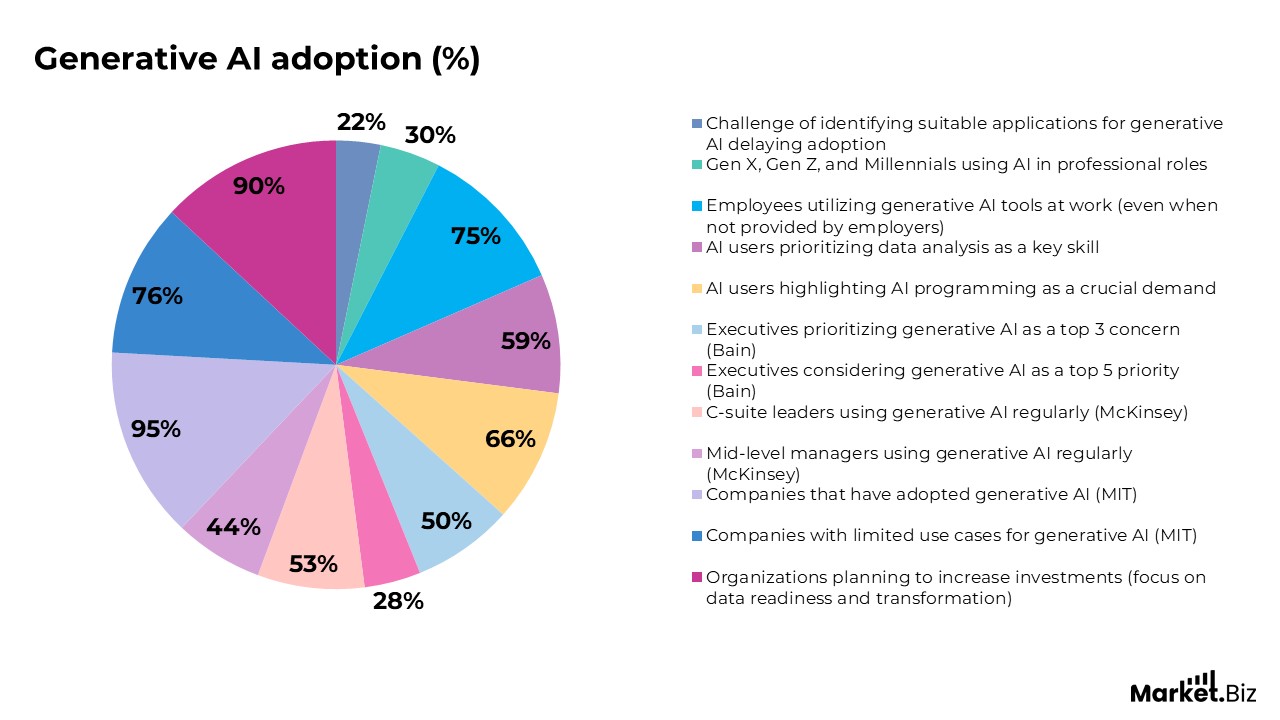
- 22% of AI users report that the challenge of identifying suitable applications for generative AI is delaying its adoption.
- A 2023 study found that consumers tend to lose trust in brands when they share personal information with artificial intelligence (AI).
- Nearly 30% of Gen X, Gen Z, and millennials use AI in their professional roles.
- Approximately 75% of employees across all age groups are utilizing generative AI tools at work, even when these tools are not provided by their employers.
- Over a third of businesses cite concerns over accountability and ethics as factors slowing down the adoption of generative AI.
- 59% of AI users prioritize data analysis as a key skill, while 66% highlight AI programming as a crucial demand.
- The marketing, technology, and consulting sectors exhibit the highest rates of AI adoption.
- According to Bain, 50% of executives prioritize generative AI (GAI) as a top 3 concern, with 28% considering it a top 5 priority due to its potential to disrupt industries.
- Key areas of impact for GAI include:
- Core product differentiation (56%)
- New customer engagement approaches (52%)
- New business models (48%)
- Changes in cost structures (43%)
- McKinsey reports that 53% of C-suite leaders use generative AI regularly at work, compared to 44% of mid-level managers.
- Among organizations using this technology, 63% focus on generating text, 35% on creating images, and 25% on generating code.
- Adoption of multimodal generative AI is particularly strong in the technology, automotive, and aerospace industries.
- MIT found that 95% of companies have adopted generative AI, though 76% are still limited to 1–3 use cases.
- 90% of organizations plan to increase investments, with a focus on data readiness and organizational transformation.
(Source: Fishbowl, O’Reilly, International Journal of Research in Marketing, Microsoft, EY, ServiceNow)
Generative AI’s Impact on the Labour Force
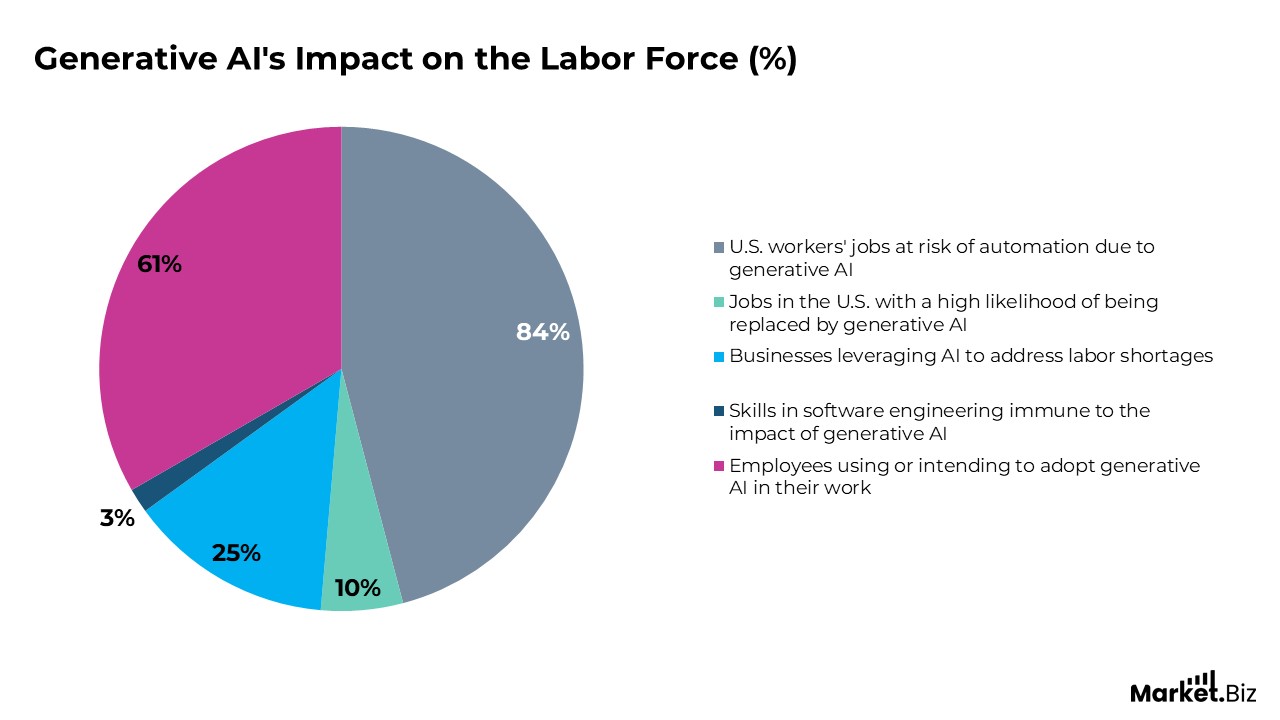
- Approximately 84% of U.S. workers hold jobs at risk of automation due to the emergence of generative AI.
- Approximately 10% of jobs in the U.S. are at high risk of being replaced by generative AI.
- 25% of businesses are leveraging AI to address labor shortages.
- Only 3% of the skills required in software engineering are unaffected by generative AI.
- By 2025, AI could create up to 97 million new jobs.
- AI and machine learning roles are expected to grow the fastest over the next four years, while positions such as bank tellers and clerks are expected to decline.
- 61% of employees either use or intend to adopt generative AI in their work.
Application of Generative AI in Various Industries
Healthcare
The healthcare industry is often perceived as difficult to reform due to its complexity; however, generative AI is poised to simplify data management, expedite patient record searches, streamline billing processes, and support doctors and researchers in discovering new medications and enhancing diagnostic accuracy.
- A study found that generative AI successfully diagnosed challenging medical cases correctly nearly 40% of the time.
- By 2025, generative AI is expected to contribute to the discovery of up to 30% of new pharmaceutical drugs.
- 53% of hospitals and healthcare systems are already integrating generative AI into some of their operations.
(Source: ServiceNow, Deloitte, Gartner, Jama Network )
Software development
- Software developers who utilize generative AI tools have seen a 25% to 30% improvement in their efficiency when completing complex coding tasks under tight deadlines.
- 95% of developers involved in coding are using generative AI tools.
- A GitHub study found that developers using a specific generative AI tool completed tasks 55% faster than those who did not use it.
- According to one report, software developers can reduce the time required to write new code by up to 50% with generative AI tools.
(Source: McKinsey, Sourcegraph, GitHub)
Finance
- An analysis revealed that generative AI could automate up to 40% of tasks in sectors such as banking, software, and insurance.
- A study found that 34% of financial institutions are running pilot projects with generative AI to enhance fraud detection.
- Major financial organizations are leveraging generative AI to understand internal and legal regulations, ensuring compliance and automating compliance audits.
(Source: McKinsey, Capgemini Research Institute, Accenture)
ChatGPT Statistics
- 49% of companies are currently using ChatGPT, with 93% of existing users planning to increase its usage. Within 9 months of its release, more than 80% of Fortune 500 companies have integrated ChatGPT into their workflows.
- Sixty-four per cent of journalists, sixty-three per cent of software developers, and sixty-five per cent of marketing professionals actively use ChatGPT.
- Tools like ChatGPT could enhance customer service productivity by 30-45%.
- ChatGPT may increase marketing output by 5-15% of total marketing spend.
- Firms investing in AI have seen revenue growth ranging from 3% to 15%.
- A quarter of U.S. companies have saved between $50,000 and $70,000 using GPTs, with 11% saving over $100,000.
- The model is available in 161 countries, boasting 100 million active users and handling an estimated 10 million queries daily.
- 64% of customers are open to purchasing products recommended by ChatGPT.
- 63% of ChatGPT users believe AI advancements will improve the workplace.
- ChatGPT.com receives about 5.2 billion visits each month, with 601.5 million unique visitors.
- The site has a bounce rate of 38.70%.
- Visitors average 2.77 page views per session.
- Each user spends an average of 8 minutes and 13 seconds on ChatGPT.com.
- The platform has 10 million paying subscribers (including Plus, Team, and Pro plans) and an additional 1 million users on commercial plans.
- ChatGPT generates $2.7 billion annually from paid subscriptions, with projections to reach $4 billion by the end of 2025.
(Source: GWI, Maste of Code, Semrush)
Future Growth Areas for Generative AI
Generative AI in Fashion
- The Global Generative AI in Fashion Market is projected to grow considerably, increasing from USD 96.5 million in 2023 to USD 2,230.4 million by 2032, with a remarkable CAGR of 36.9% between 2024 and 2033.
- The Solutions segment is the dominant player, holding over 71% of the market share in 2023, indicating the industry’s preference for comprehensive AI solutions across both creative and operational functions in fashion.
- The Cloud-Based segment accounted for more than 80% of the market share in 2023, underscoring the sector’s growing reliance on scalable, cost-effective, and collaborative cloud technologies.
- The Creative Designing & Trend Forecasting segment captured more than 25% of the market share, reflecting the critical role of AI in fashion innovation and trend prediction.
- North America led the regional market, commanding over 34% of the total market share in 2023, with revenue reaching approximately USD 32.81 million.
Animation By Generative AI
- The Generative AI in Animation market is projected to grow at a 35.7% Compound Annual Growth Rate (CAGR) and is expected to reach USD 17.7 billion by 2032, up from USD 1.2 billion in 2023.
- Demand for animators skilled in Generative AI is projected to increase by over 25% in 2024, driven by the technology’s growing adoption across the industry. This highlights the increasing importance of Generative AI in enhancing animation capabilities and the need for professionals proficient in this field.
- Integrating Generative AI into animation workflows is expected to boost creative productivity by 20%, streamlining processes and enabling more efficient creation and development of animated content.
- Over 75% of animation professionals believe that Generative AI will significantly impact the industry within the next five years, with many studios already implementing the technology, indicating its widespread acceptance and future integration.
- Demand for cloud-based Generative AI services in animation is projected to grow 35% in 2023, driven by the need for scalable, collaborative workflows, underscoring the industry’s shift toward more flexible, efficient production methods.
- The use of Generative AI in animation has reduced training data requirements by 20%, leading to cost savings and accelerating the development of innovative, creative solutions in animation production.
Generative AI in Music
- The Generative AI in Music Market, valued at USD 294 million in 2023, is projected to reach USD 3,637.1 million by 2033, growing at a CAGR of 28.6%.
- In 2023, solutions took the lead in the component segment, capturing 65% of the market, driven by increasing demand for AI-powered music creation tools. Cloud-based deployment dominates the market at 74%, offering scalability and enabling remote collaboration across the music industry.
- In the application segment, composition and music generation account for 28% of the market, as AI continues to redefine creative workflows.
- North America holds the largest regional share at 38%, benefitting from its established technology sector and innovative music production landscape. The region also shows growing interest in AI-driven platforms and plugins, with 28.6% of music producers recognizing AI tools for mastering and mixing as highly valuable, according to Bedroom Producers Blog.
- AI is also enhancing listener experiences, with new services like Spotify’s AI Playlist feature, set to launch in 2024, which customizes playlists based on user preferences.
- The market’s growth is further propelled by increasing investments in AI from both public and private sectors. In 2022, the U.S. government allocated $1.7 billion to AI research, a 13% increase from the previous year. Similarly, AI funds in the UK and EU totalled €9 billion in 2023, underscoring global commitment to AI innovation across multiple sectors, including music.
Generative AI in Healthcare
- In 2022, the Generative AI in Healthcare Market was estimated at USD 0.8 billion and is expected to reach USD 17.2 billion by 2032, growing at a CAGR of 37% from 2023 to 2032.
- Generative AI’s virtual nursing assistants are expected to deliver USD 20 billion in annual savings for the healthcare industry.
- In 2022, clinical applications accounted for 65% of market revenue, spanning multiple medical specialities, including cardiovascular care, dermatology, infectious diseases, and oncology.
- Clinical judgment and diagnosis accounted for the largest share, contributing 32% of market revenue in 2022. The AI-assisted robotic surgery segment is the fastest-growing area in the market.
- Diagnostic centers were the leading end-users, capturing 35% of market revenue in 2022, while hospitals and clinics are expected to experience the highest growth rate in the coming years.
- North America accounted for 36% of revenue in 2022, driven by the high prevalence of chronic diseases and the rapid adoption of generative AI in healthcare.
- The Asia-Pacific region is expected to grow at the fastest pace, driven by technological advancements and the expansion of healthcare technologies in emerging economies.
Fintech By Generative AI
- The Global Generative AI in Fintech Market is anticipated to grow significantly, reaching approximately USD 16.4 billion by 2032, up from USD 1.1 billion in 2023, representing a strong CAGR of 31% from 2024 to 2033.
- In 2023, the Software segment was the dominant force in the market, accounting for over 61% of the Generative AI in Fintech market share.
- The Cloud segment also maintained a strong presence in 2023, capturing more than 72% of the market.
- The Fraud Detection segment emerged as a key application within the Generative AI in Fintech market, holding a market share exceeding 25% in 2023.
- North America led the market in 2023, accounting for more than 36.5% of the market, with revenue reaching approximately USD 0.4 billion.
- 82% of financial institutions are actively exploring or implementing Generative AI solutions to enhance their operations and services.
- Banks and financial institutions that leverage Generative AI for customer service and personalization are expected to see a 20% boost in customer satisfaction by 2024.
Moreover
- The incorporation of Generative AI into anti-money laundering and scam detection processes could reduce false positives by 50% by 2024.
- Generative AI is projected to improve credit risk assessment accuracy by 25%, leading to better-informed lending decisions.
- The demand for Generative AI solutions for regulatory and reporting is expected to increase by 40% in 2023.
- The usage of Generative AI in financial trading and portfolio management could improve investment returns by 10% by 2024.
- The adoption of Generative AI in fintech is expected to generate approximately 1 million new jobs globally by 2025, particularly in AI development, data analysis, and financial advisory services.
- Integrating Generative AI with cybersecurity solutions could reduce data breaches and cyberattacks in the financial industry by 30% by 2024.
- The adoption of Generative AI in insurance funding and claims processing could reduce operational costs by 25% by 2024.
Generative AI in Marketing
- The Generative AI in Marketing market is expected to grow substantially, with value projected to rise from USD 2.6 billion in 2023 to USD 41.1 billion by 2033, reflecting a 31.8% Compound Annual Growth Rate (CAGR) over the forecast period from 2024 to 2033.
- In 2023, the Solutions segment emerged as the dominant force in the market, capturing over 61% of the total market share, underscoring the widespread demand for comprehensive, ready-to-deploy generative AI solutions for marketing.
- The Text Models segment also held a significant share, representing more than 55% of the market in 2023, emphasizing the importance of text-based generative AI in the creation and optimization of marketing content.
- The Content Creation category stood out as a leading application area, accounting for over 33% of the market share in 2023, reflecting the growing reliance on AI-driven tools for producing engaging and innovative content across various marketing platforms.
- The Media & Entertainment sector proved highly active, securing more than 26% of the market share, showcasing the transformative influence of generative AI in generating dynamic and personalized entertainment content.
- North America maintained its dominant position in the Generative AI in Marketing market, with a 40% market share and generating revenues of approximately USD 16.4 billion in 2023. This is attributed to the region’s advanced technological infrastructure and rapid adoption of innovative AI solutions across industries.
Generative AI in Gaming
- The Global Generative AI in Gaming Market is anticipated to grow significantly, reaching USD 11,106.6 million by 2033, up from USD 1,136.8 million in 2023, representing a solid compound annual growth rate (CAGR) of 25.6% from 2024 to 2033.
- In 2023, the cloud-based segment captured a substantial portion of the market, accounting for over 65% of the total market share.
- The nondeterministic segment also led the market in 2023, holding more than 61% of the market share, indicating its importance in gaming applications.
- The Procedural Content Generation segment continued to perform strongly in 2023, locking more than 30% of the market share, emphasizing its role in creating dynamic game environments.
- North America was the leading region in 2023, accounting for over 38% of the market share, with revenues reaching approximately USD 431.9 million.
(Source: Market.us)
Return on Investment of Generative AI
- Current Generative AI use cases deliver a 26-34% return on investment (ROI) across customer service, productivity, sales and marketing, digital commerce, back-office processes, and manufacturing.
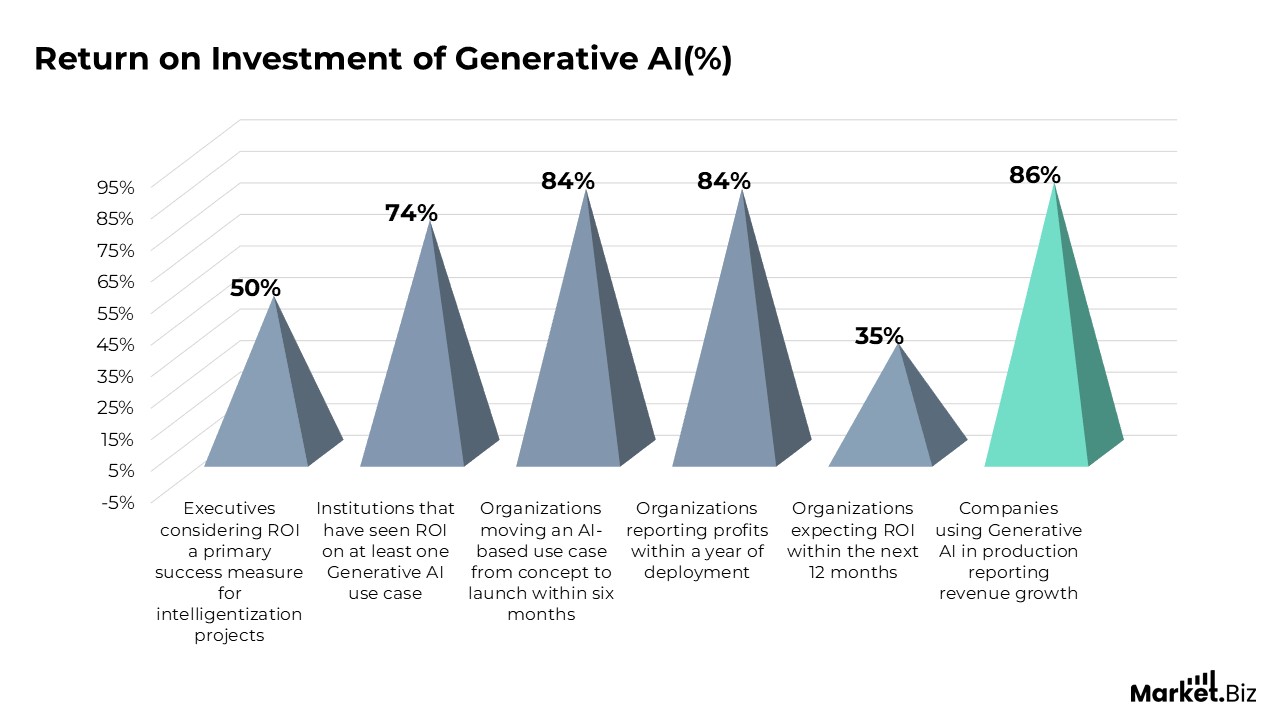
- 50% of executives consider achieving ROI a primary success measure for intelligentization projects.
- 74% of institutions have already seen ROI on at least one Generative AI use case.
- 84% of organizations move an AI-based use case from concept to launch within six months, with profits reported within a year of deployment.
- Approximately 30-35% of organisations expect to achieve a return on investment (ROI) within the next 12 months.
- 86% of companies using Generative AI in production report revenue growth, with annual revenue increases of 6% or more.
Challenges to Generative AI Adoption
- Difficulty in assessing and proving the value of generative AI
- Shortage of skilled talent to develop, manage, and maintain AI technologies
- Widespread technical challenges within organizations when implementing generative AI
- Inadequate data infrastructure and poor data management practices
- Misalignment between business goals and AI strategies
- Lack of trust in the reliability and effectiveness of AI systems
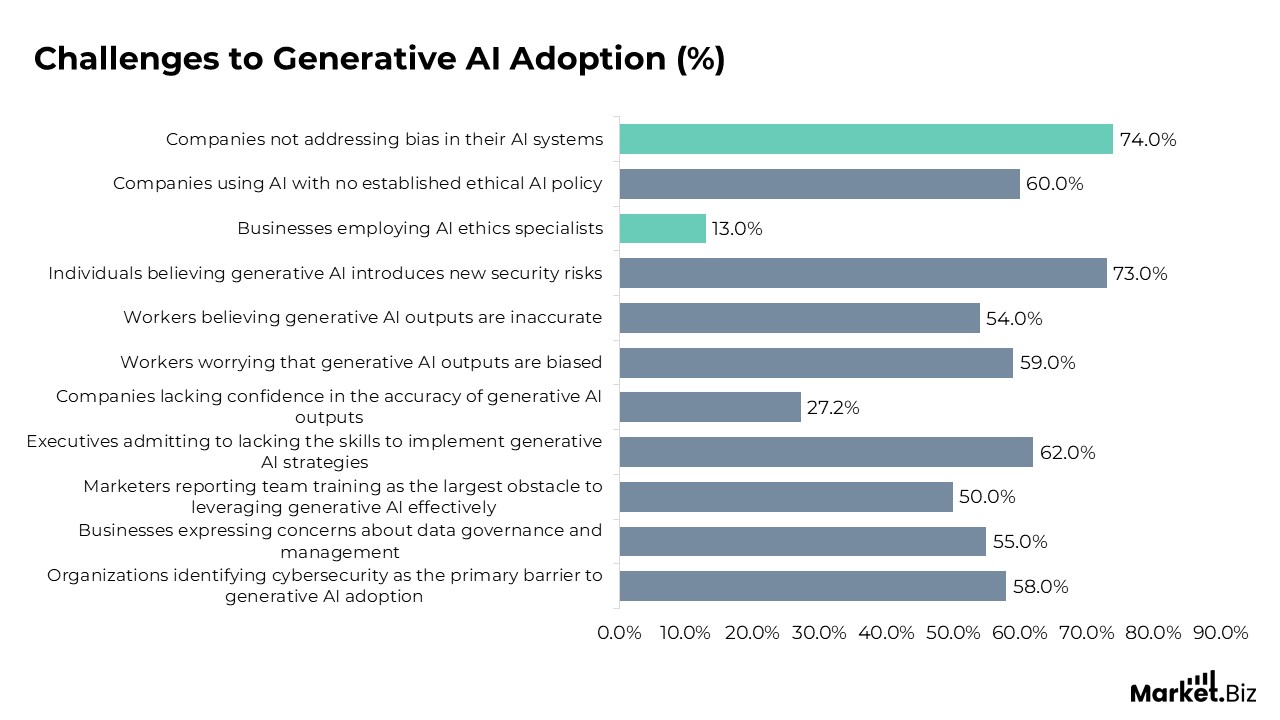
- 58% of organizations identify cybersecurity as the primary barrier to generative AI adoption.
- 55% of businesses express concerns about data governance and management.
- 50% of marketers report that team training is the biggest obstacle to effective use of generative AI.
- 62% of executives admit to lacking the skills needed to implement generative AI strategies.
- Deepfake-related fraud has increased by 1,200% in the U.S. and 4,500% in Canada from 2022 to 2023.
- 27.2% of companies lack confidence in the accuracy of generative AI outputs.
- 59% of workers worry that generative AI outputs are biased, while 54% believe they are inaccurate.
- 73% of individuals believe generative AI introduces new security risks.
- Only 13% of businesses have employed AI ethics specialists.
- 60% of companies using AI have no established ethical AI policy, and 74% do not address bias in their AI systems.
(Source: Insight Global Inc., Evergreen)
Recent Developments
Technological Benchmarks:
- In 2024, significant benchmarking was conducted to evaluate leading AI models, including Google’s Gemini Ultra and OpenAI’s GPT-4.
- These evaluations assess capabilities such as reasoning, mathematics, and coding, providing insights into the advances and effectiveness of generative AI technologies.
Adoption and Integration
- The adoption of generative AI in both consumer and professional platforms has gained momentum.
- Tools like ChatGPT have experienced rapid growth, particularly for enhancing productivity in fields such as software development and customer service. For instance, ChatGPT reached 100 million monthly active users within two months of launch, demonstrating rapid adoption and widespread use.
Conclusion
Generative AI is rapidly transforming a wide range of industries, enhancing productivity, precision, and efficiency in fields such as healthcare, finance, software development, and retail.
Its growing adoption is driving notable advancements in areas such as complex coding, fraud detection, personalized customer service, and drug discovery. By automating tasks, generating valuable insights, and facilitating informed decision-making, generative AI is transforming business operations and driving innovation beyond previous limits.
As its capabilities continue to expand, generative AI holds immense potential to reshape industries and drive economic growth, offering a bright future for both businesses and consumers.
FAQ’s
Artificial Intelligence (AI) refers to the creation of computer systems or machines that can perform tasks typically requiring human intelligence, such as speech recognition, problem-solving, learning, and decision-making.
AI is primarily classified into two categories: Narrow AI (also known as Weak AI) and General AI (also referred to as Strong AI). Narrow AI is designed to perform specific tasks and is limited to those functions. At the same time, General AI possesses human-like cognitive abilities, enabling it to learn, understand, and perform any intellectual task that a human can do.
AI has a wide range of applications across various industries, including healthcare, Finance, Transportation, Customer Support, and Manufacturing.
AI learns through a process called machine learning, where models are trained on large datasets. This enables AI systems to recognize patterns, make predictions, and perform tasks autonomously without requiring explicit instructions for each situation.
The most in-demand skills for AI professionals are data analysis and AI programming, with 59% seeking expertise in data analysis and 66% focused on AI programming.
Generative AI tools can help developers cut down the time spent writing new code by up to 50%.