









Introduction
Audiobooks Statistics: Audiobooks have evolved from a specialized format into a widely adopted digital content medium, supported by shifts in how people consume media and advancements in mobile and audio technologies. Widespread use of smartphones, wireless headphones, and in-car entertainment systems has made listening convenient during commutes, workouts, and everyday multitasking.
Audiobook statistics show a clear preference for audio over print among time-constrained consumers, especially younger audiences and professionals. The expansion of subscription platforms, broader publisher participation, and rising investments from content creators continue to strengthen market penetration. At the same time, higher production quality, celebrity narrators, and AI-enabled narration are improving scalability and accessibility.
Audiobooks statistics offer a structured, data-focused perspective on market size, listener behavior, genre demand, platform trends, and regional adoption, underscoring the growing role of audio content in the global publishing and digital entertainment ecosystem.
Editor’s Choice
- 67% of audiobook users report that listening enables them to consume more books compared to traditional reading.
- Narration quality plays a decisive role, with nearly 60% of listeners abandoning an audiobook due to dissatisfaction with the narrator’s voice or delivery.
- Despite strong awareness, audiobooks account for only 11.3% of the overall US publishing market, even though 45% of American adults have tried the format.
- In 2021, audiobook adoption reached approximately 116.25 million adults in the US, 24.77 million adults in England, and nearly 466 million listeners in China.
- The average listener spends about 41 minutes per day on audiobooks, allowing them to complete at least 2 full titles per month, based on typical book lengths.
- Science fiction emerged as the top-selling audiobook genre in 2021, with 73% of listeners engaging with these titles primarily during commuting hours.
- Young adults aged 18 to 29 make up the largest listening group, accounting for about 30% of the total audiobook audience.
- Platform concentration remains high, with 49% of audiobook listeners accessing content through Audible.
Key Audiobook Publishing and Listener Trends
- Publisher revenues reached USD 1.6 billion in 2021, up 25% from 2020.
- Around 45% of consumers aged 18 and above report having listened to an audiobook at least once.
- Audiobook production continued to expand, with nearly 74,000 new titles released in 2021, a 6% year-over-year increase.
- Younger audiences remain highly engaged, as 54% of frequent listeners are under 45 years of age, up from 52% in 2019.
- Listener preferences strongly favor professionally narrated audiobooks over titles read by authors themselves.
- Subscription adoption strengthened in 2021, with 41% of listeners reporting subscribing to at least one audiobook service.
- Audiobooks are widely viewed as a leisure format, with 70% of consumers agreeing they are well-suited for relaxation.
- Children’s audiobook use increased sharply, with 61% of parents reporting that their children listen to audiobooks, up from 35% in 2020, largely due to pandemic-related education changes.
- In terms of sales share, Science Fiction and Fantasy slightly surpassed Mysteries, Thrillers, and Suspense in 2021, while Romance and General Fiction followed closely.
- The Romance category recorded the fastest growth, posting a 75% revenue increase, followed by Self Help at 34% and Science Fiction at 32%.
- Overall listening engagement continues to rise, with the share of time spent on audiobooks increasing by 106% since 2017.
(Source: Audio Publishers Association)
Evolving Audiobook Consumption and Listening Behavior Trends
- Audiobooks continue to gain mainstream acceptance, with 38% of American adults listening to at least one audiobook in the past year, rising from 35% in 2023, indicating broader market penetration.
- Engagement levels are also increasing, as frequent listeners consumed an average of 6.8 audiobooks annually, up from 6.3 titles recorded in 2023.
- Among all individuals who have ever listened to audiobooks, average annual consumption reached 4.8 titles, up from 4.0 the previous year, reflecting deeper usage among casual listeners.
- Children’s participation remains significant, with 53% of audiobook listeners with children reporting that their kids also listen to audiobooks.
- Screen fatigue reduction is a major driver, as 77% of parents identify audiobooks as an effective way to give children time away from digital screens.
- Subscription-based access continues to expand, with 63% of listeners in the past year subscribing to at least one audiobook service, slightly higher than 62% in 2023.
- Digital libraries play an important role, as 46% of current audiobook consumers borrowed at least one digital audiobook from a library within the last year.
- Unauthorised access remains a challenge, with 47% of recent listeners reporting they obtained audiobooks for free through platforms such as YouTube or file-sharing sites.
- Fiction dominates audiobook revenues for the third consecutive year, accounting for 64% of total sales, led by General Fiction (21%), Science Fiction and Fantasy (14%), and Romance (11%).
- Growth momentum is strongest in nonfiction and lifestyle categories, with History, Biography, and Memoir growing by 22%, Health and Fitness by 20%, Religious and Faith-based titles by 17%, and Romance by 14%.
(Source: Audio Publishers Association, Edison Research)
Audiobook Listening Habits and Content Preferences
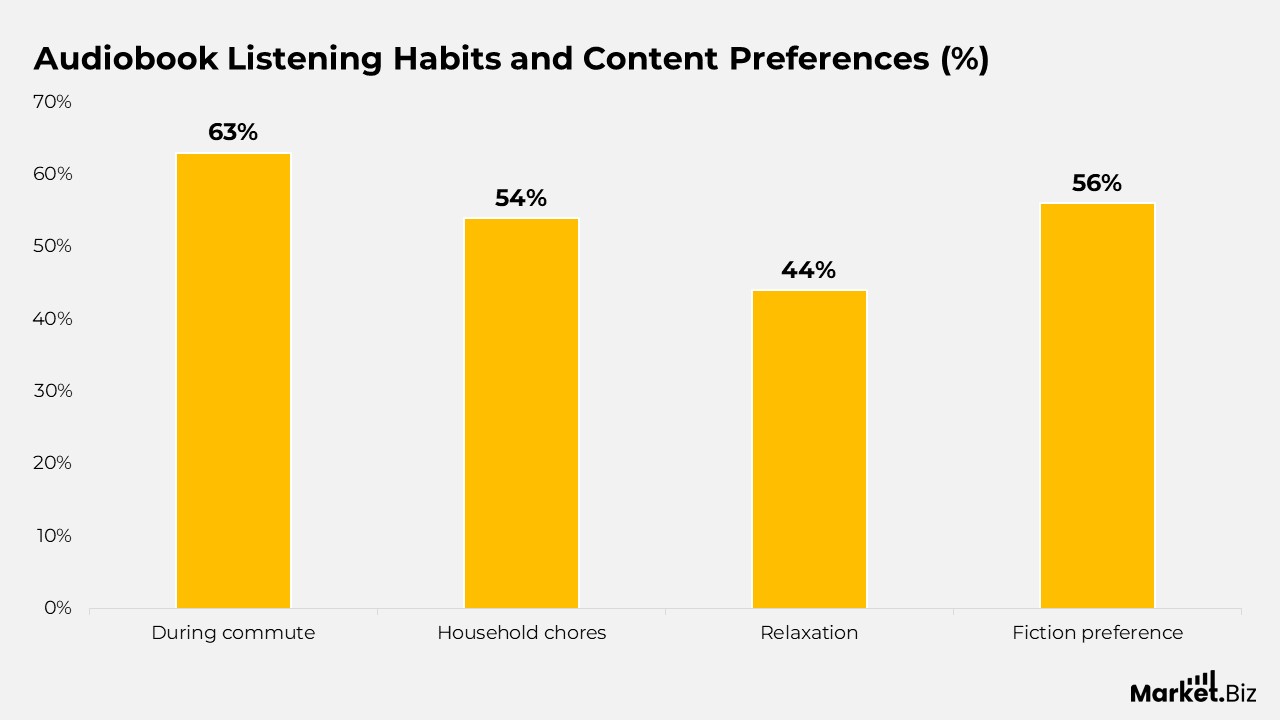
- Audiobook listening most commonly occurs during daily travel, with 63% of users engaging with audiobooks while commuting.
- Routine household activities are another major listening window, as 54% of listeners listen to audiobooks while doing chores.
- Relaxation-driven listening is also prominent, with 44% of users choosing audiobooks during leisure or downtime.
- Content preferences lean toward storytelling formats, with 56% of audiobook listeners favouring fiction titles over nonfiction.
(Source: Voices)
Audiobook Genre Preferences Among Listeners
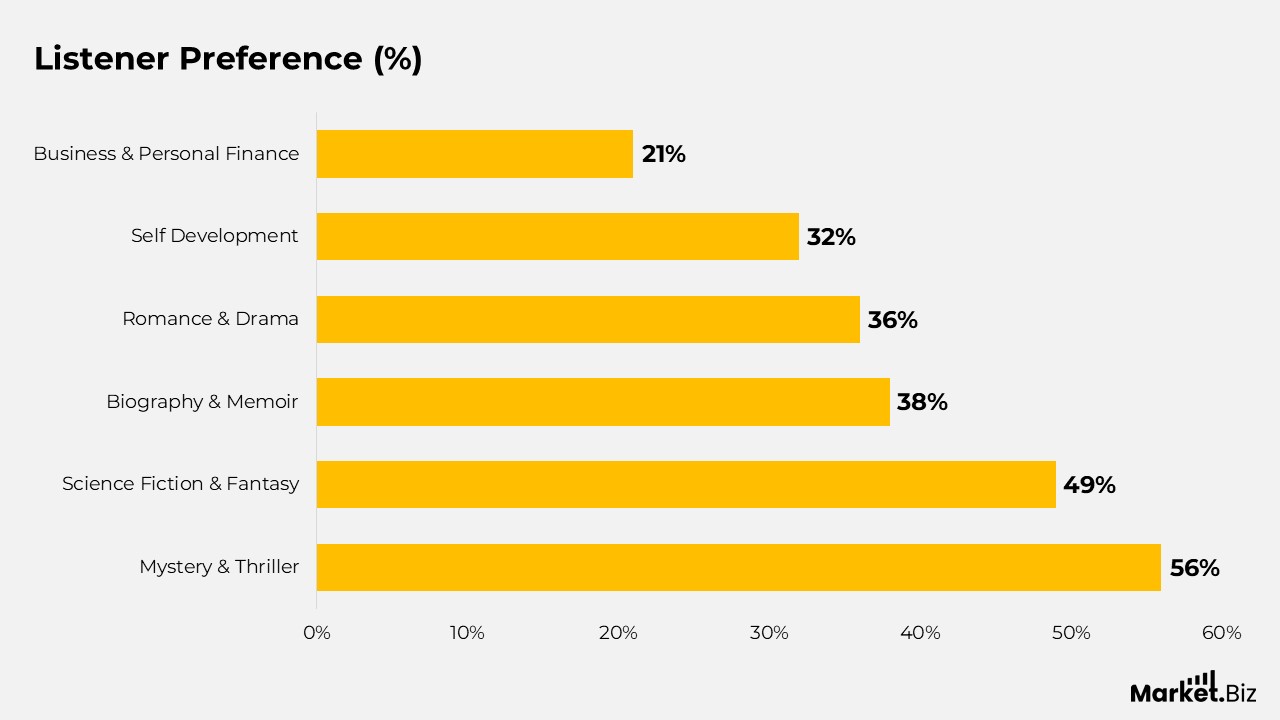
- Mystery and thriller titles lead listener preferences, with 56% of audiobook users favouring suspense-driven narratives.
- Science fiction and fantasy remain highly popular, attracting 49% of listeners due to their immersive and imaginative storytelling formats.
- Biography and memoir audiobooks appeal to 38% of listeners, reflecting a strong interest in real-life stories and personal experiences.
- Romance and drama genres account for 36% of listeners’ preferences, supported by emotionally engaging, character-focused content.
- Self-development audiobooks are chosen by 32% of users, highlighting demand for personal growth, motivation, and skill-building content.
- Business and personal finance titles have a more targeted audience, with 21% of listeners engaging with professional and money-management-focused audiobooks.
(Source: Voices)
Weekly Audiobook Listening Patterns
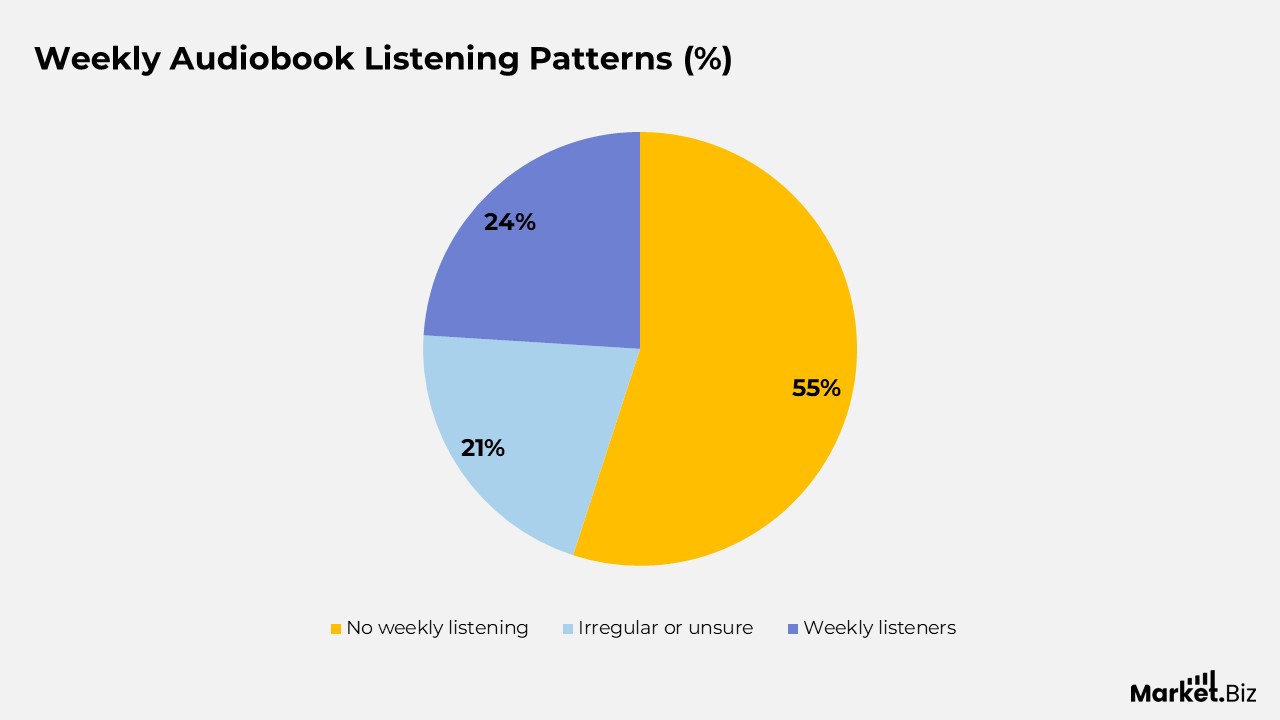
- A majority of individuals do not listen to audiobooks weekly, with 55% reporting no regular weekly listening habit.
- Uncertainty remains among 21% of respondents, suggesting inconsistent or irregular audiobook engagement during a typical week.
- Regular weekly audiobook listening is reported by 24% of users, highlighting a smaller but established group of habitual listeners.
(Source: Voices)
Listener Attitudes Toward AI-Narrated Audiobooks
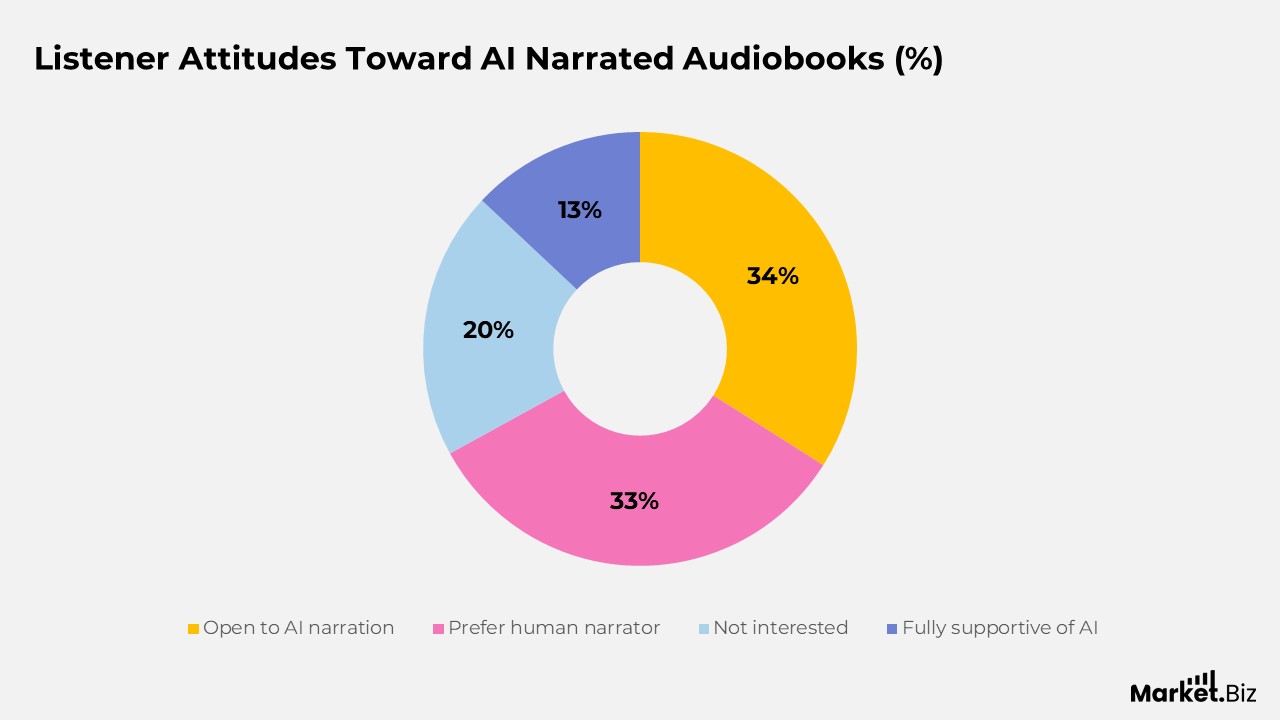
- A significant portion of audiobook users are open to AI narration: 34% are willing to listen to audiobooks narrated by artificial intelligence.
- Preference for traditional narration remains strong, with 33% of listeners favouring human-narrated audiobooks over AI-generated voices.
- Resistance to AI narration persists among 20% of respondents, indicating clear disinterest in automated voice formats.
- Full acceptance of AI-narrated audiobooks is currently limited, with only 13% of listeners expressing a definite interest in this narration approach.
(Source: Voices)
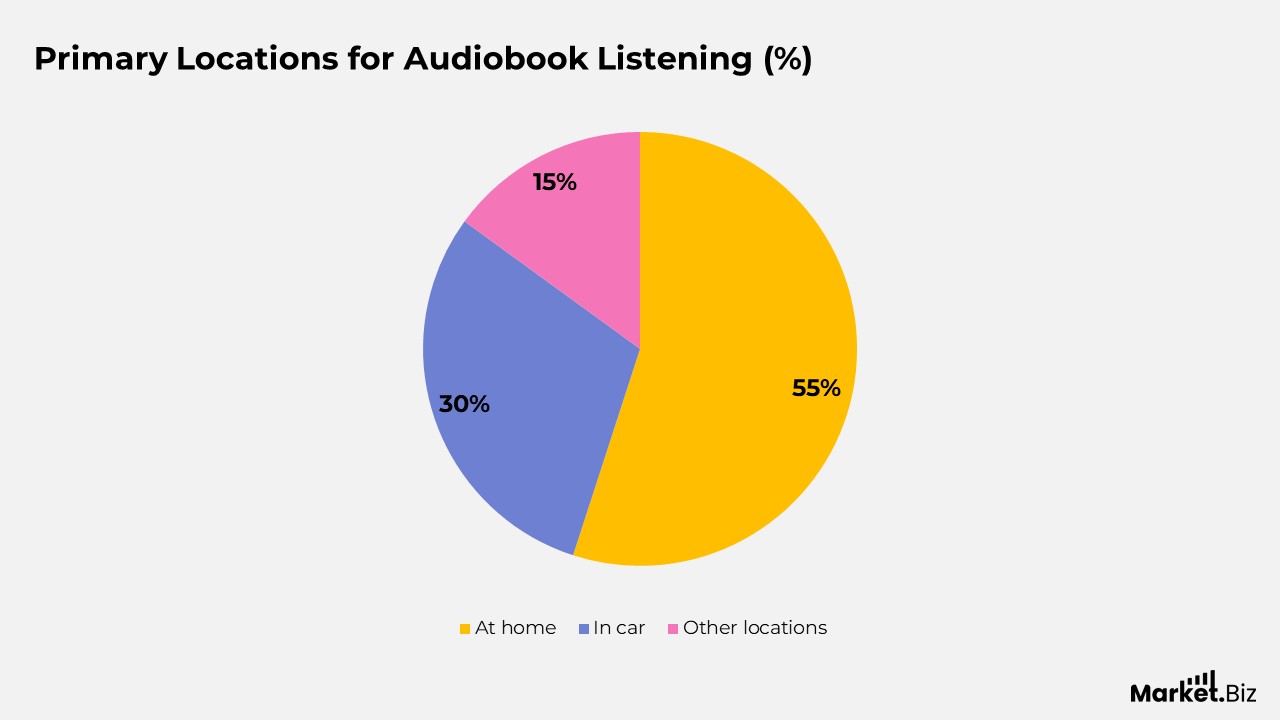
Primary Locations for Audiobook Listening
- Home remains the dominant listening environment, with 55% of audiobook users consuming content there.
- In-car listening accounts for 30% of audiobook usage, underscoring the role of audiobooks in commuting and travel routines.
- Other locations, including public spaces and workplaces, represent 15% of audiobook listening activity.
(Source: Bookliner, Statista)
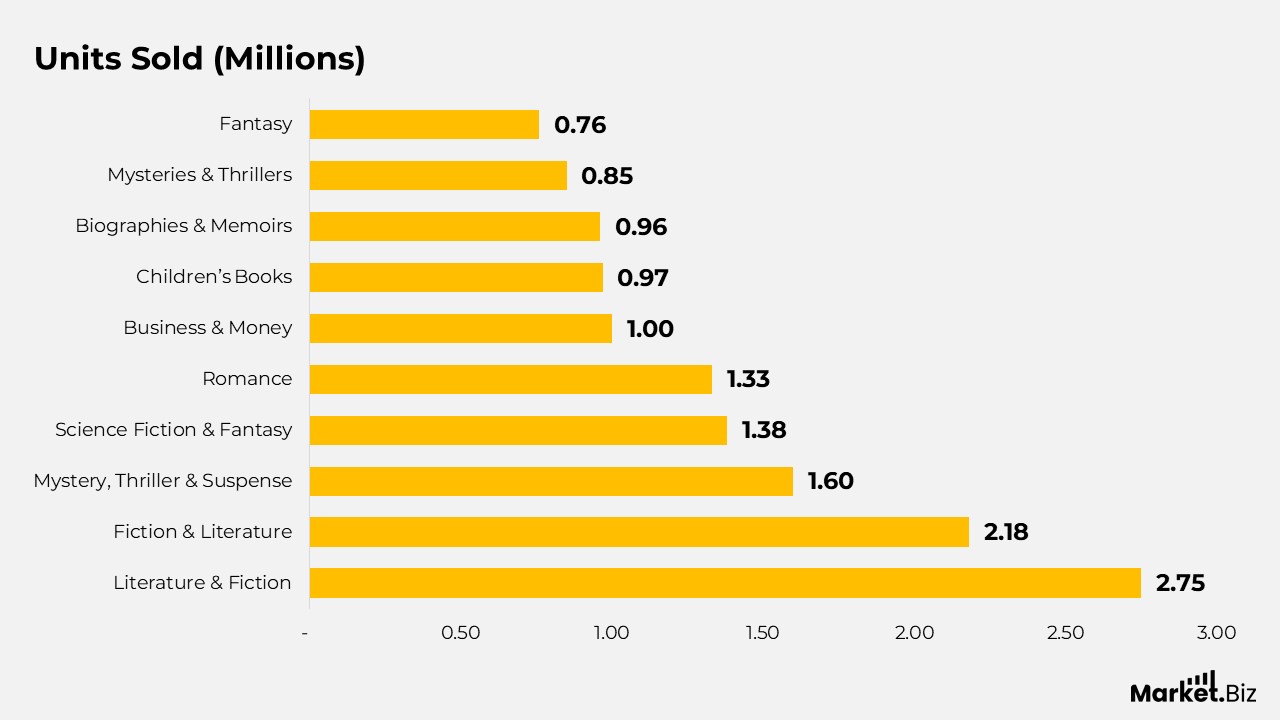
Top Selling Audiobook Genres in the United States by Volume
- Literature and fiction emerged as the highest-selling audiobook category, recording 2.75 million units sold in the US market.
- Fiction and literature titles followed closely, with total sales reaching 2.18 million audiobook units.
- Mystery, thriller, and suspense audiobooks generated solid demand, accounting for 1.6 million units sold.
- Science fiction and fantasy maintained strong audience interest, with sales totaling 1.38 million units.
- Romance audiobooks recorded 1.33 million units sold, reflecting consistent popularity among narrative-driven genres.
- Business- and money-focused audiobooks reached 1.0 million units, highlighting demand for professional and financial knowledge in audio form.
- Children’s audiobooks accounted for 0.97 million units sold, indicating steady adoption among younger listeners and families.
- Biographies and memoirs generated 0.96 million audiobook sales, driven by interest in real-life stories and personal journeys.
- Mysteries and thrillers sold approximately 0.85 million units, reinforcing their niche but loyal listener base.
- Fantasy-specific titles rounded out the list with 0.76 million units sold, underscoring continued interest in immersive storytelling formats.
(Source: Bookliner, Statista)
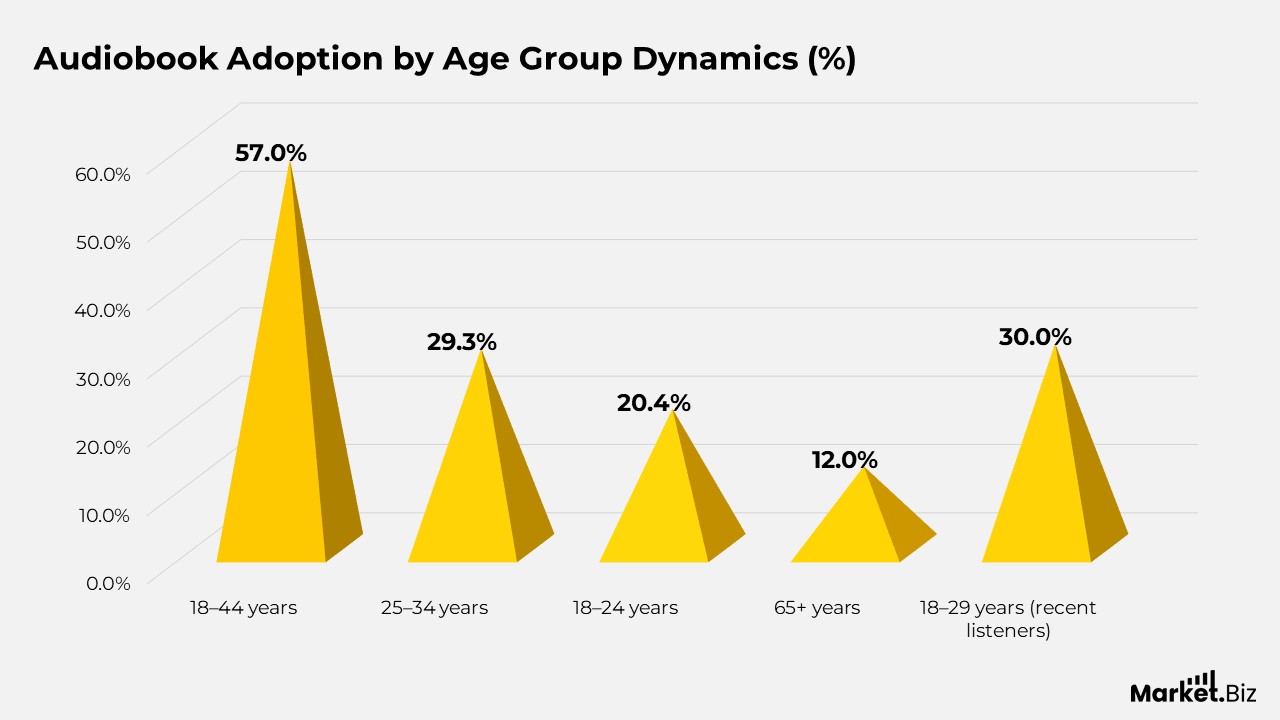
Audiobook Adoption by Age Group Dynamics
- Adults aged 18 to 44 account for 57% of total audiobook listeners, highlighting strong engagement among younger and mid-age demographics.
- The most active listener cohort falls within the 25 to 34 age range, representing 29.28% of the total audience.
- Listeners aged 18 to 24 are the next-largest segment, accounting for 20.41% of overall audiobook consumption.
- Adoption levels decline with age, as only 12% of adults aged 65 and above reported listening to an audiobook in the past year.
- In contrast, audiobook usage is significantly higher among younger adults, with 30% of individuals aged 18 to 29 engaging with the format.
(Source: PublishDrive, Statista)
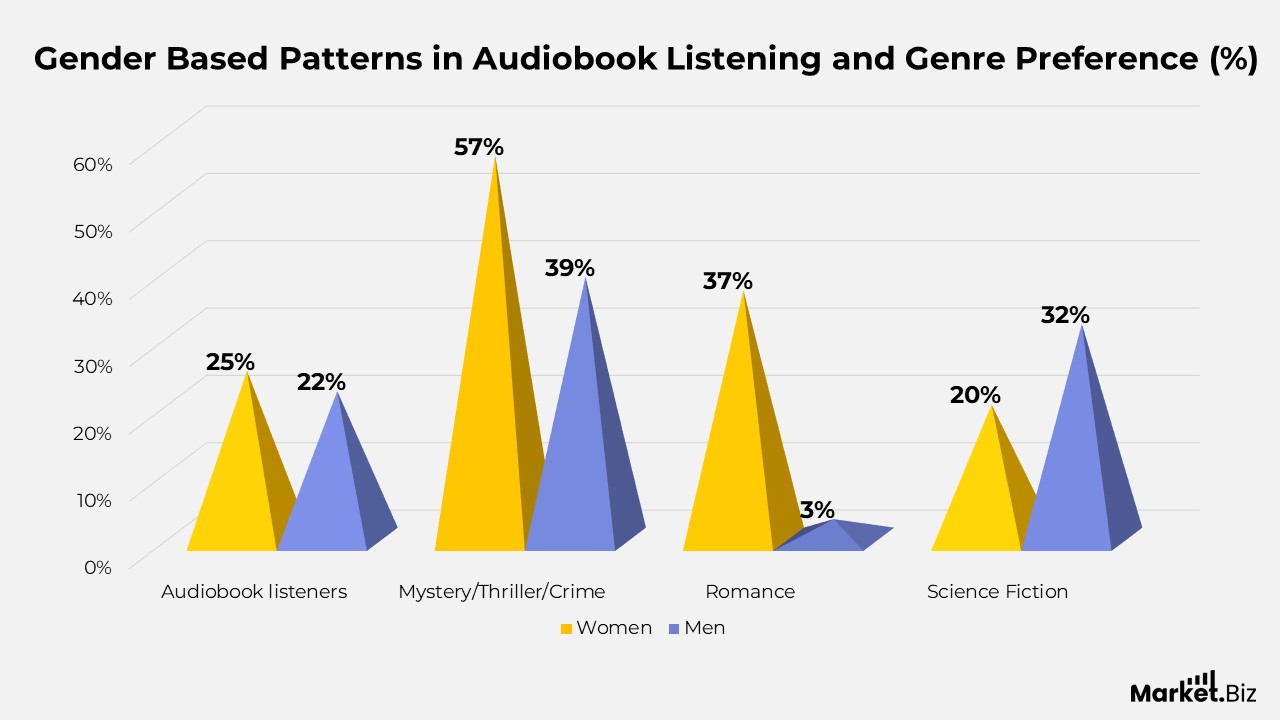
Gender Based Patterns in Audiobook Listening and Genre Preference
- Audiobook listening shows a slight gender difference: 25% of women reported using audiobooks in the past year, compared with 22% of men.
- Mystery, thriller, and crime audiobooks are significantly more popular among women, with 57% of female listeners engaging with these genres, compared with 39% of men.
- Romance exhibits the widest gender gap, as 37% of women listen to romance audiobooks compared to just 3% of men.
- Science fiction attracts a larger male audience, appealing to 32% of men compared with 20% of women.
(Source: PublishDrive, Statista)
Audiobook Consumption Intensity and Listening Velocity
- Audiobook listeners consumed an average of 6.8 titles in 2024, up from 6.3 in 2023, reflecting rising engagement.
- Highly active readers consume significantly more content overall, averaging 11 to 12 books per month, or roughly 132 to 144 books annually, with audiobooks accounting for a meaningful share of this volume.
- On a broader scale, listeners complete around 8.1 audiobooks per year on average, while heavy users far exceed that level.
- Daily listening time averages 41 minutes, indicating that audiobooks are integrated into routine activities rather than reserved for dedicated reading sessions.
- Given an average audiobook length of 10 hours, listeners can finish at least 2 full audiobooks per month, reinforcing the high velocity and scalability of audio-based reading.
(Source: PublishDrive, Statista)
Academic Publishing Revenue Performance
- Total academic publishing revenue reached £3.5 billion, a marginal 1% decline from the previous year.
- Revenue from academic books stood at £1.0 billion, a notable 8% year-over-year decrease.
- Academic journals showed positive momentum, with revenues of £2.5 billion, up 3% year on year.
- The UK academic publishing market generated £852 million in revenue, down by 9%, indicating domestic market pressure.
- Export-driven revenues remained resilient, totalling £2.7 billion and rising 2%.
- Print-based academic publishing continued to contract, with revenues of £836 million, down 13%.
- Digital academic publishing strengthened its position, generating £2.7 billion in revenue and achieving a 4% year-over-year increase.
(Source: PublishDrive, Statista)
Conclusion
Audiobook statistics show that the format has firmly established itself as a core part of modern digital media consumption. Expanding listener reach, increasing titles consumed per year, and higher subscription adoption signal deepening engagement rather than short-term experimentation. Strong uptake among young adults and families, along with growing use of audiobooks for relaxation and screen-free learning, continues to strengthen demand.
At the same time, shifting genre dynamics and accelerating growth across both fiction and nonfiction categories reflect changing consumer interests. Although issues such as piracy and reliance on major platforms persist, the steady rise in revenues, listening time, and global audiences highlights the market’s durability.
Overall, audiobook statistics suggest a scalable, resilient publishing segment supported by convenience, accessibility, and evolving reading behaviours.
FAQ’s
In theoretical terms, audiobook statistics refer to measurable data points used to study listening behaviour, patterns of media adoption, levels of content engagement, and long-term structural changes within the publishing and media landscape.
Audiobooks statistics are used to interpret how new media formats spread over time, illustrating the shift of audiobooks from niche accessibility solutions to widely accepted formats through technological progress, lifestyle alignment, and evolving time allocation.
Frequency-based metrics help assess the intensity of user engagement, the development of listening habits, and the degree to which audiobooks supplement or substitute traditional reading practices.
Demographic indicators enable analysts to examine age-related preferences, digital familiarity, and life-stage effects, offering explanations for stronger adoption among younger and economically active population groups.
Genre-related statistics provide insight into audience demand and format suitability, showing how story-driven and immersive categories tend to perform differently from informational or reference-based content in audio form.