









Introduction
Smart City Statistics: A smart city refers to an urban environment that leverages data, technology, and innovative approaches. This initiative aims to enhance the quality of life for its inhabitants, streamline resource management, and improve the overall functioning of urban operations. The idea of a smart city centres on the integration of diverse digital technologies and data-driven strategies. This integration aims to tackle urban challenges and foster more sustainable, efficient, and livable spaces.
In essence, a smart city seeks to elevate the overall quality of life for its residents by delivering efficient services. This includes efforts to reduce pollution, improve public spaces, and encourage social inclusion. Smart cities utilise data and technology (IoT, AI) to enhance urban efficiency, sustainability, and quality of life, propelled by swift urbanisation (over 54% of the global population living in urban areas, projected to reach approximately 70% by 2050).
Key statistics indicate substantial market growth (anticipated to exceed $135 billion by 2026) and notable project completion rates, such as India’s initiative approaching 94% project completion (more than 7,500 projects). These efforts optimise resource management (traffic, waste, energy) and elevate public services, although cybersecurity continues to be a vital concern.
Editor’s Choice
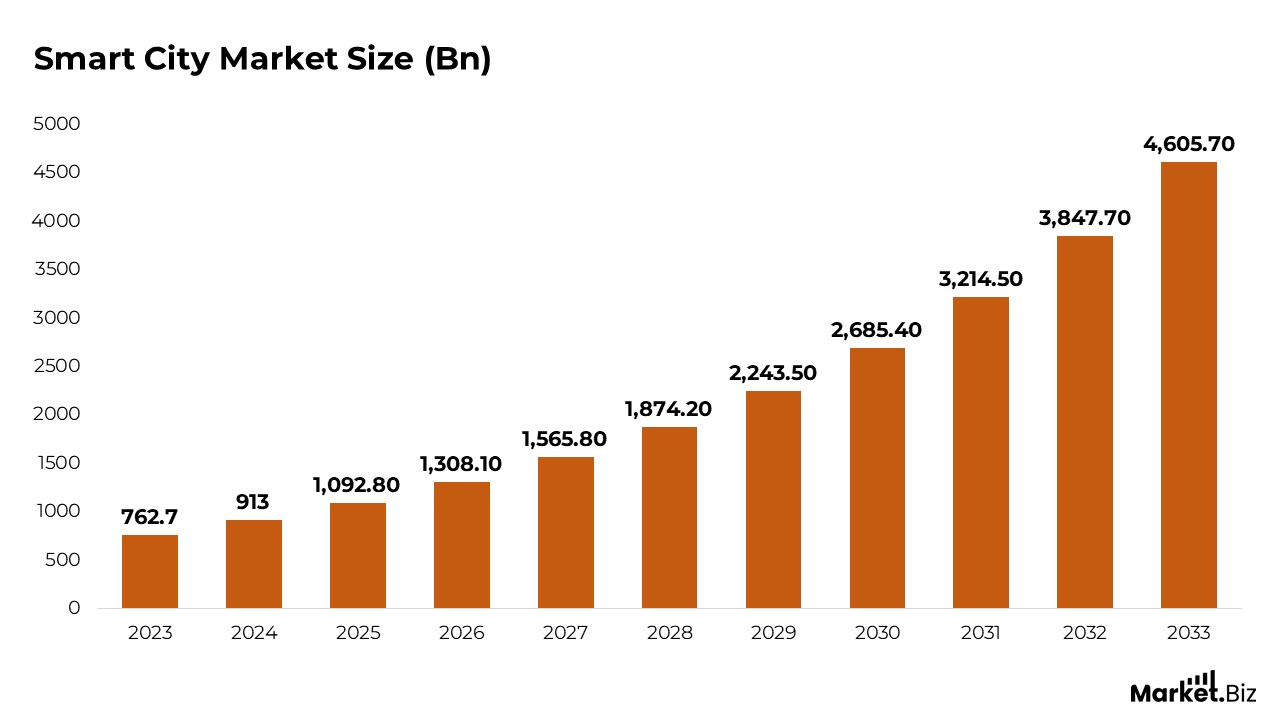
- The Global Smart City Market is projected to reach approximately USD 4,605.7 billion by the year 2033, up from USD 762.7 billion in 2023.
- Smart cities are expected to yield significant economic advantages, estimated at around $20 trillion by 2026.
- In 2026, Smart City revenue is projected to attain an impressive $135.3 billion.
- At present, 55% of the world’s population lives in urban areas, a figure projected to increase to 68% by the year 2050.
- Currently, the region with the highest level of urbanisation is North America, where 82% of the population was urban in 2018.
- In 2022, around 66% of the global population had internet access.
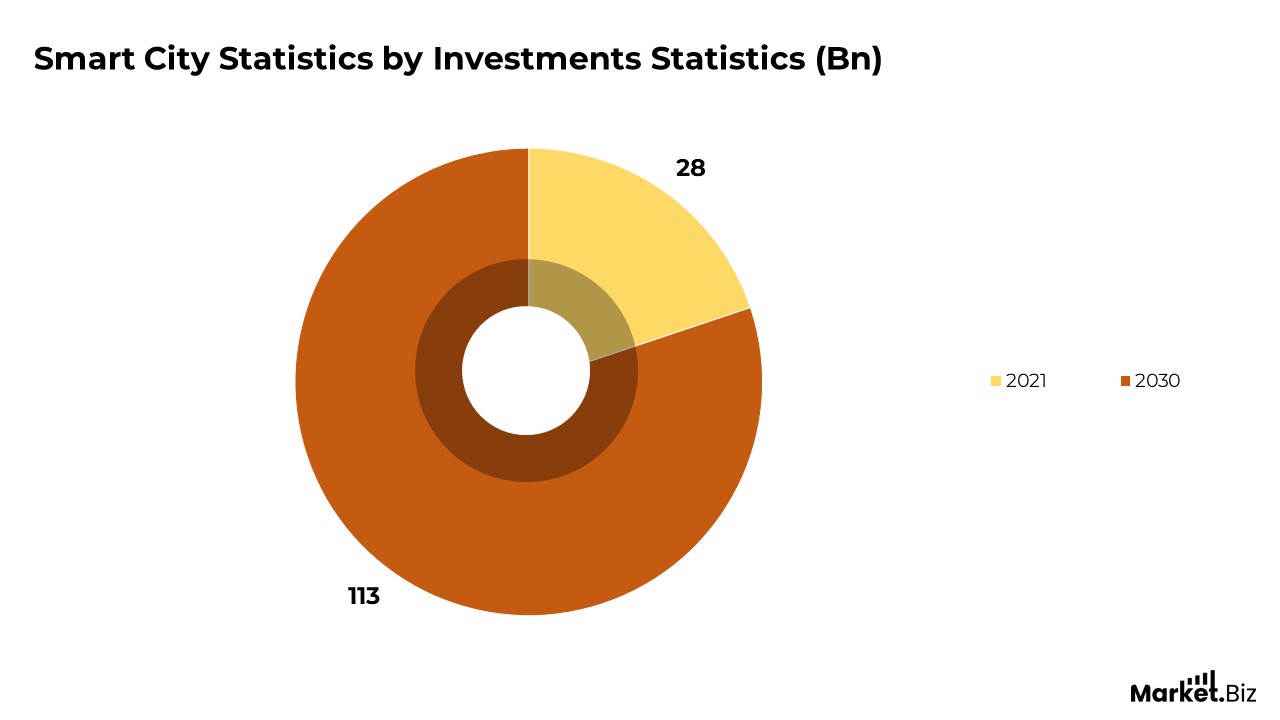
- In 2021, the total investments in nature-based solutions were merely 28 billion U.S. dollars, yet there is a possibility for this amount to rise to 113 billion U.S. dollars by 2030.
General Smart City Statistics
- The Global Smart City Market is projected to reach approximately USD 4,605.7 billion by the year 2033, up from USD 762.7 billion in 2023.
- This market is expected to grow at a compound annual growth rate (CAGR) of 19.7% during the forecast period spanning from 2022 to 2032.
- Smart cities are expected to yield significant economic advantages, estimated at around $20 trillion by 2026.
- Cities that adopt Smart City solutions may improve their energy efficiency by 30% over a period of two decades.
- In OECD countries, the uptake of digital government services saw a threefold increase from 2006 to 2016, with 36% of citizens opting for online submissions in 2016.
- In the European Union, the integration of digital services has resulted in an 85% decrease in municipal operating costs.
- As per Yonsei University’s Smart City Development Index, approximately one-third of cities offer Smart City services via applications or websites for transportation.
- Additionally, 23% of these services pertain to culture and tourism, while 8% are related to city administration.
- According to IMD’s Smart City Index, the leading Smart Cities are Singapore, Helsinki, and Zurich.
- Prominent Smart City administrations worldwide include Singapore, Seoul, London, Barcelona, and Helsinki.
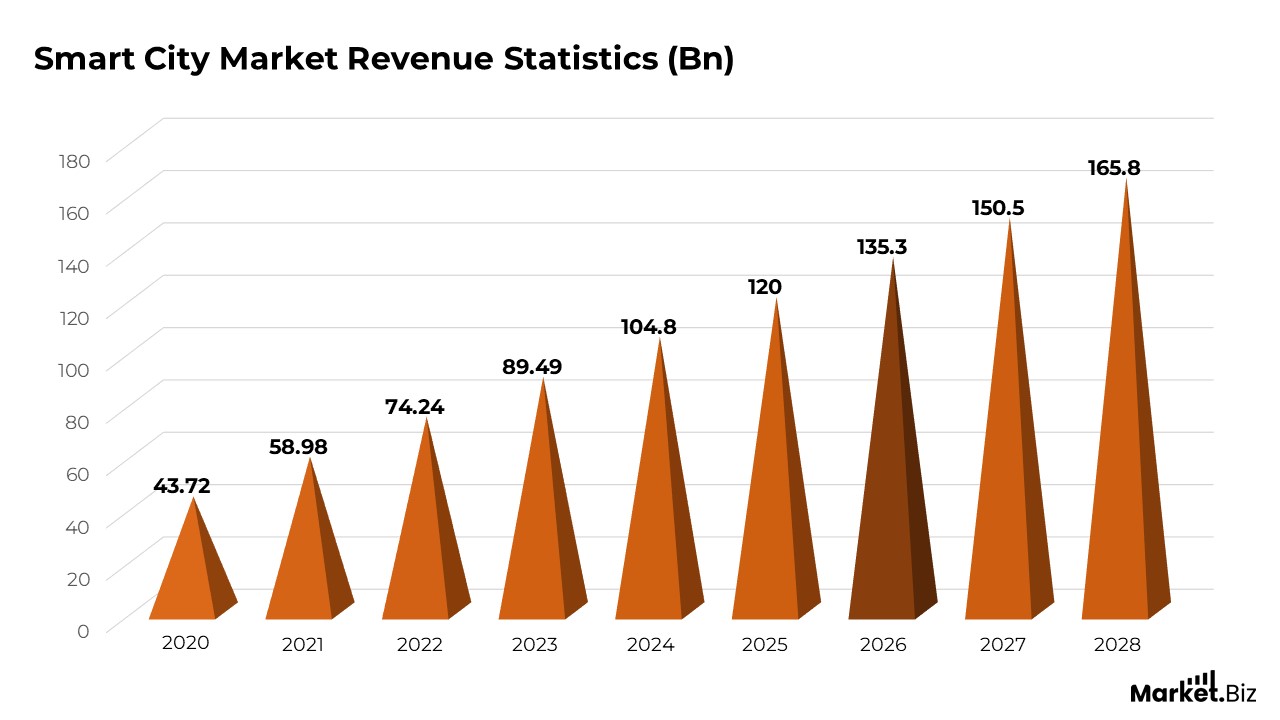
Smart City Market Revenue Statistics
- In 2020, the revenue from Smart Cities was recorded at $43.72 billion, which experienced a significant increase to $58.98 billion in 2021, indicating a remarkable growth.
- The upward trend persisted in 2022, achieving $74.24 billion; by 2023, it is anticipated to rise to $89.49 billion.
- The pattern of substantial growth continues, with expected revenues of $104.8 billion in 2024 and $120 billion in 2025.
- As we move towards 2026, Smart City revenue is projected to attain an impressive $135.3 billion.
- This illustrates the growing importance of smart urban developments.
- Looking further into the future, the outlook remains optimistic, with projected revenues of $150.5 billion in 2027 and $165.8 billion in 2028, highlighting the ongoing global economic significance of Smart Cities.
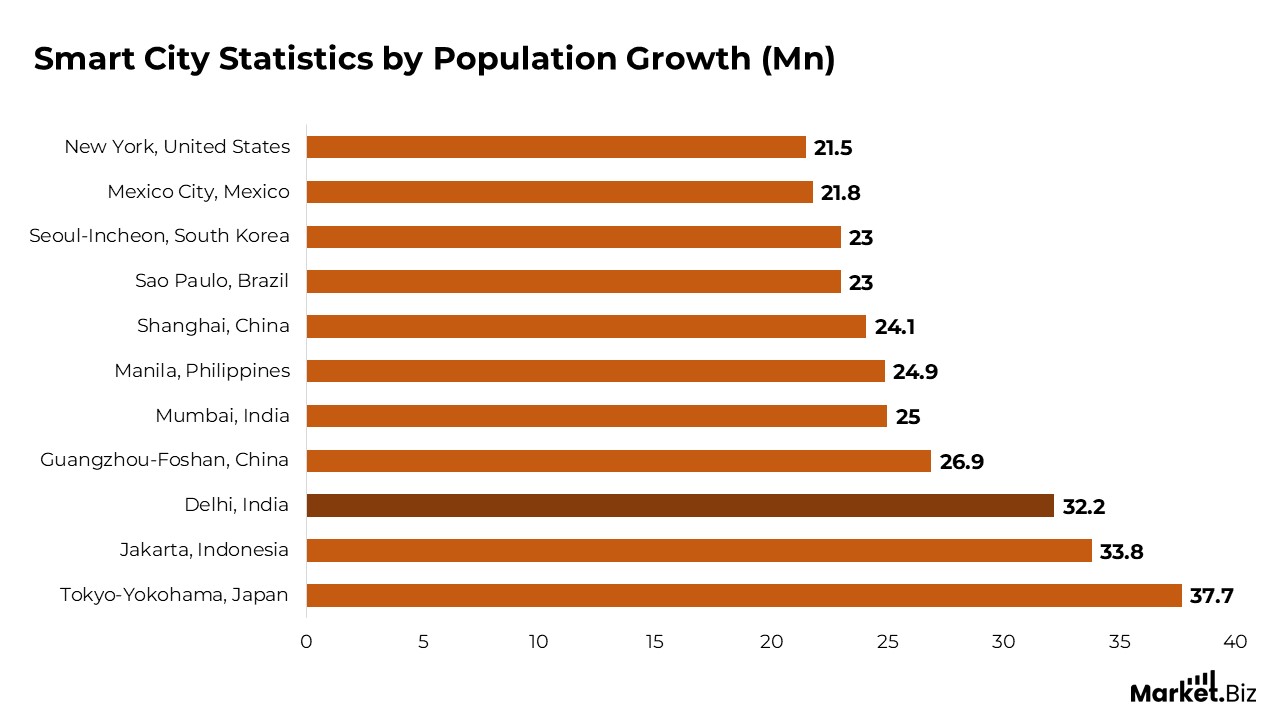
Smart City Statistics by Population Growth
- At present, 55% of the world’s population lives in urban areas, a figure projected to increase to 68% by the year 2050.
- This transition from rural to urban lifestyles, referred to as urbanisation, along with overall population growth, will lead to an additional 2.5 billion individuals residing in urban settings by 2050.
- It is estimated that around 90% of this increase will occur in Asia and Africa.
- Currently, the region with the highest level of urbanisation is Northern America, where 82% of the population was urban in 2018.
- Following this are Latin America and the Caribbean at 81%, Europe at 74%, and Oceania at 68%.
- In contrast, Asia’s urbanisation rate stands at roughly 50%.
- Meanwhile, Africa continues to be predominantly rural, with only 43% of its population living in urban environments.
Internet Access By Smart City Statistics
- In 2022, around 66% of the global population had internet access.
- Urban regions across the globe experienced an internet usage rate of approximately 82%, whereas rural areas trailed behind at 46%.
- The lowest level of internet connectivity was observed in rural regions of Landlocked Developing Countries (LLDCs), where merely 26% of the population had access to the internet.
- Conversely, small island developing nations exhibit a high rate of internet adoption.
- With 82% of their inhabitants connected to the internet.
- A report from Kaleido Intelligence forecasts a significant increase of over 140% in data usage by smart cities from 2023 to 2027.
- This growth will be fueled by the rising number of cellular connections in Internet of Things (IoT) initiatives within smart cities. The anticipated compound annual growth rate for these connections is 17.9% from 2022 to 2027, reaching more than 122 million.
- Particularly rapid growth is expected in the next two years.
- The majority of these connections will be utilised in smart lighting applications, with estimates indicating over 161 million interconnected lights employing cellular connections.
- Despite the implementation of Low Power Wide Area Networks (LPWAN), a considerable volume of data traffic is anticipated due to the extensive network endpoints.
- To effectively manage this, Edge Computing will play a vital role, potentially reducing data transfer by more than 80% in specific instances.
- Revenue per airtime in this sector is projected to exceed US$900 million by 2027, a significant rise from the US$292 million recorded in 2022.
Smart City Statistics by Investments Statistics
- Opportunities exist for investment in nature-based solutions and land-sparing initiatives that encourage sustainable urban development.
- They could potentially amount to around 600 billion U.S. dollars worldwide by the year 2030.
- In 2021, the total investments in nature-based solutions were merely 28 billion U.S. dollars, yet there is a possibility for this amount to rise to 113 billion U.S. dollars by 2030.
- As of October 2022, California’s High-Speed Rail Line emerged as one of the most significant infrastructure projects globally, whether in the planning phase or under construction.
- A considerable share of the prominent infrastructure projects currently underway around the world mainly involved railway systems.
- These railway initiatives extended across various areas, including Norway and Sweden, the United Kingdom, the United States, parts of Asia, Southeast Asia, and Japan.
- Significantly, India recorded the highest number of major infrastructure projects valued at over 25 million U.S. dollars.
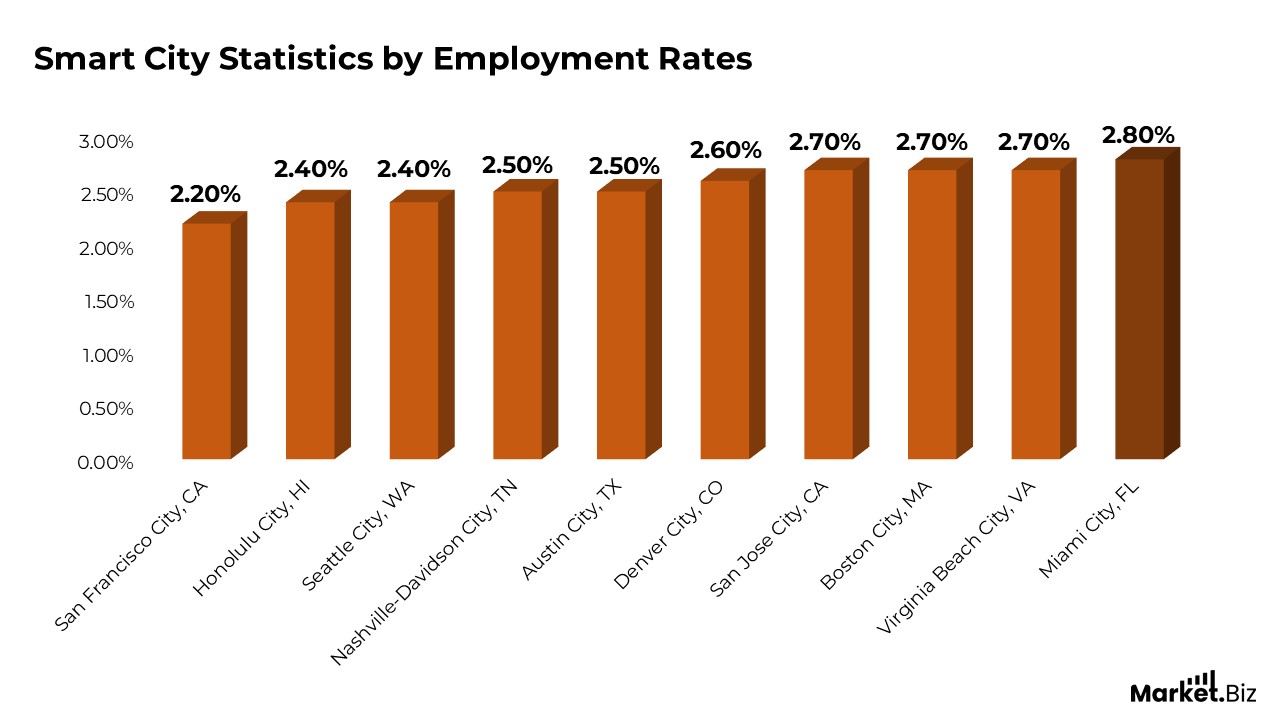
Smart City Statistics by Employment Rates
- In 2019, various major cities across the United States demonstrated differing rates of population growth, indicative of their vibrant attractiveness to residents.
- San Francisco City, CA, topped the list with an unemployment rate of 2.2%, achieving the highest rank.
- Following closely behind were Honolulu City, HI, and Seattle City, WA, both with a rate of 2.4%, which placed them in the second position.
- Nashville-Davidson City, TN, and Austin City, TX, were tied for the fourth position, each with an unemployment rate of 2.5%.
- Meanwhile, Denver City, CO, reported an unemployment rate of 2.6%, securing the sixth position.
- At the same time, San Jose City, CA, and Boston City, MA, shared the seventh position with an unemployment rate of 2.7%.
- Virginia Beach City, VA, also joined them in 7th place, with a rate of 2.7%.
- Finally, Miami City, FL, completed the list with an unemployment rate of 2.8%, making it the 10th-ranked city regarding unemployment in 2019.
Recent Developments
- In December 2021, the Australian Government declared an investment of USD 135.9 million aimed at transitioning the economy to a digital framework by the year 2030.
- In December 2021, Schneider Electric introduced EcoStruxure for eMobility within buildings.
- In February 2022, IBM completed the acquisition of Neudesic, a notable consultancy specialising in Microsoft Azure.
- In June 2022, Siemens Smart Infrastructure purchased Brightly Software, a leading provider of SaaS asset and maintenance management solutions based in the U.S., for an undisclosed sum.
- The energy management sector, which represented more than 55% of the smart utilities revenue in 2022, is experiencing considerable progress.
Smart City Future Predictions
- In the year 2027, the advancement of smart city initiatives will be propelled by the integration of cutting-edge technologies such as artificial intelligence, 5G/6G connectivity, and the Internet of Things, resulting in a market anticipated to be valued at approximately $2.8 trillion worldwide.
- The worldwide smart city market is expected to exceed $1.88 trillion by 2029, with the solutions segment representing the largest portion.
Conclusion
In an age marked by urban growth and technological progress, the idea of smart cities has surfaced as a significant influence in moulding the future of urban existence. These cities are distinguished by their dependence on data and technology to enhance services, boost efficiency, and improve the living standards of their inhabitants. Initiatives related to smart cities have a concrete effect on the lives of the populace.
Access to healthcare, education, cultural facilities, and safety are all crucial factors in determining a city’s livability. Furthermore, investments in innovation centres, start-ups, and technology industries drive economic growth and job creation, establishing smart cities as centres for talent and entrepreneurship.
FAQ’s
The primary objective of a smart city is to enhance urban functions and foster economic development while simultaneously improving the quality of life for residents through the application of smart technologies and data analytics. The significance lies in the manner in which this technology is utilised rather than merely the quantity of technology that is accessible.
Smart cities utilize technology to improve efficiency, sustainability, and the overall quality of life, providing benefits such as optimized traffic management, enhanced public services (including energy, waste, and water), increased safety through intelligent surveillance systems, greater citizen participation via digital platforms, and robust economic growth by attracting technology-oriented enterprises, all driven by data-informed decision-making and resource optimization.
As per the United Nations Economic Commission for Europe (UNECE), a smart city is characterised by features such as extensive home connectivity and public Wi-Fi, intelligent infrastructure, smart metering systems, the implementation of open data, and e-government initiatives.