









Introduction
Shaving Statistics: The Global Shaving Market was assessed at USD 3.8 billion in 2024 and is projected to grow to USD 42.15 billion by 2029. Shaving refers to the process of removing hair from the body, typically using an electric razor or other cutting instruments. This grooming method is commonly practiced, particularly for areas such as the face, legs, underarms, and the genital region.
Shaving constitutes a grooming activity that entails the removal of hair from the surface of the skin, employing techniques such as wet and dry shaving. Key tools for this practice include various types of razors (including straight, safety, disposable, and electric), along with shaving creams or gels that provide lubrication, and aftershave products for care following shaving.
Preparation for shaving includes cleansing and moisturizing the skin to soften the hair, followed by the application of shaving cream. It is usually advisable to shave in the direction of hair growth while applying light pressure to reduce the risk of irritation.
Editor’s Choice
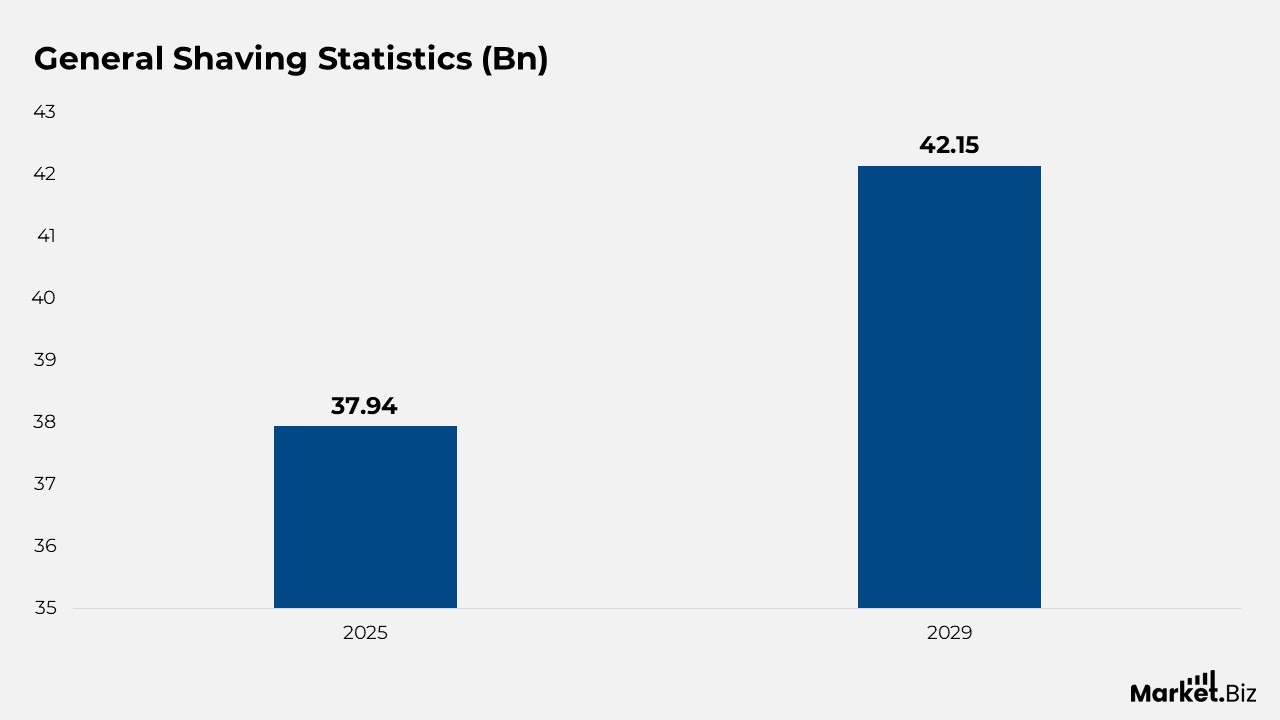
- By the year 2029, it is expected that the global revenue from the shaving market will reach around USD 42.15 billion.
- The total revenue generated in the global shaving market is projected to be US$37.94 billion in 2025.
- Shaving two to three times a month was less prevalent, with 7% in the 18-29 group, 3% in the 30-59 range, and 2% of those aged 60 and older.
- The market made a recovery in 2021, recording a revenue of USD 32.38 billion, and continued its expansion in 2022, reaching USD 33.46 billion.
- By 2027, the market is expected to generate USD 40.45 billion, followed by USD 41.99 billion in 2028.
- The United States ranks as the second-largest market, producing USD 3,995 million, closely followed by India, which accounted for USD 3,887 million in revenue.
- In 2019, expenditures rose once more to USD 21.62 before experiencing a sharp decline to USD 14.53 in 2020, likely due to shifts in consumer behavior during the pandemic.
General Shaving Statistics
- By the year 2029, it is expected that the global revenue from the shaving market will reach around USD 42.15 billion.
- A combination of well-established brands and new entrants defined the competitive environment of the global shaving market in 2022, with Gillette commanding the largest market share at 14%.
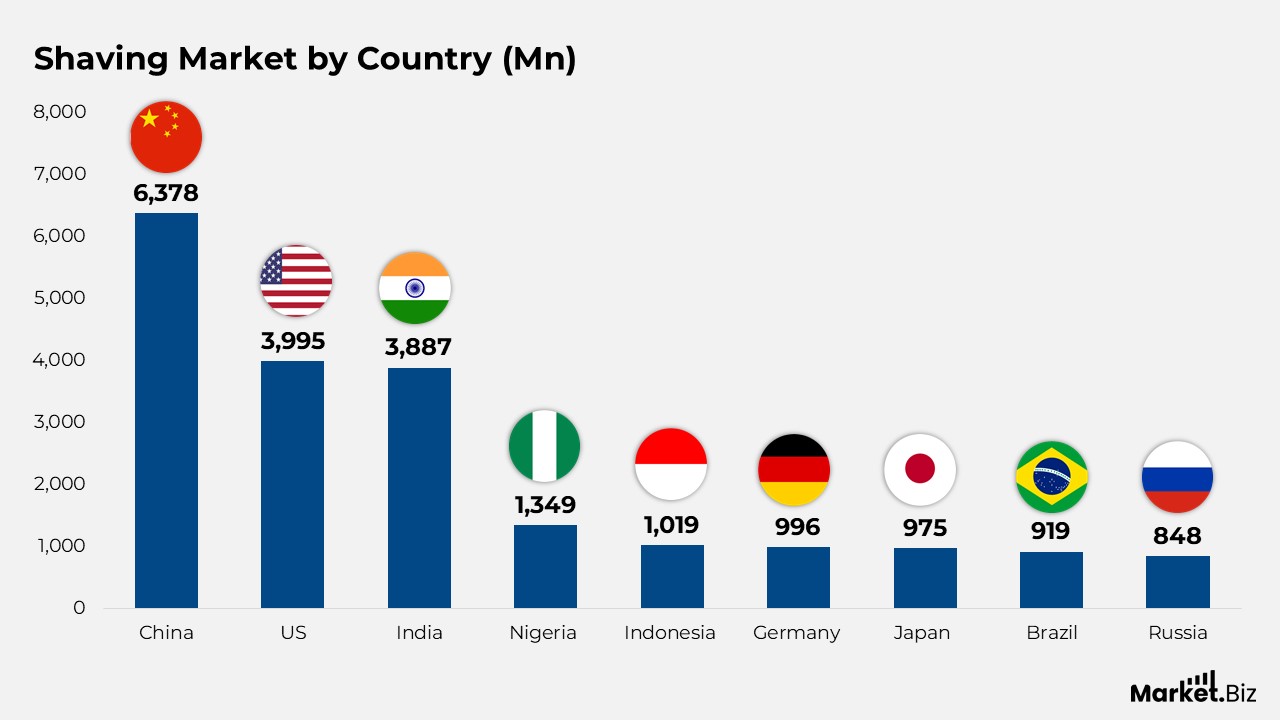
- The revenue distribution of the global shaving market by country in 2024 shows notable regional differences, with China at the forefront, generating USD 6,378 million.
- In 2018, the frequency of shaving among men in France showed considerable variation, with a significant 32% indicating that they shave daily.
- In 2016, the shaving habits of women in the Netherlands exhibited diverse practices, as a majority of 57% of female participants stated that they “always” shave, reflecting a regular grooming routine.
- In 2023, the level of brand constancy among men in the United States regarding shavers and razors varied among the leading brands, with Gillette achieving the highest loyalty, as 89% of respondents indicated a preference for it.
- In 2023, the attitudes of men in the United States towards shavers and razors displayed a spectrum of views, with the majority, 41%, expressing a reliance on familiar and trusted brands for their shaving requirements.
- The total revenue generated in the global shaving market is projected to be US$37.94 billion in 2025.
- It is anticipated to experience an annual growth rate of 3.18% (CAGR from 2025 to 2030).
- When assessed on a global scale, China is expected to generate the highest revenue of US$7 billion in 2025.
- In terms of revenue per capita, US$4.86 is projected to be generated in 2025.
- Despite the increasing popularity of electric razors, traditional wet shaving continues to be a valued practice in countries such as Italy and Germany.
Shaving Products Usage Statistics
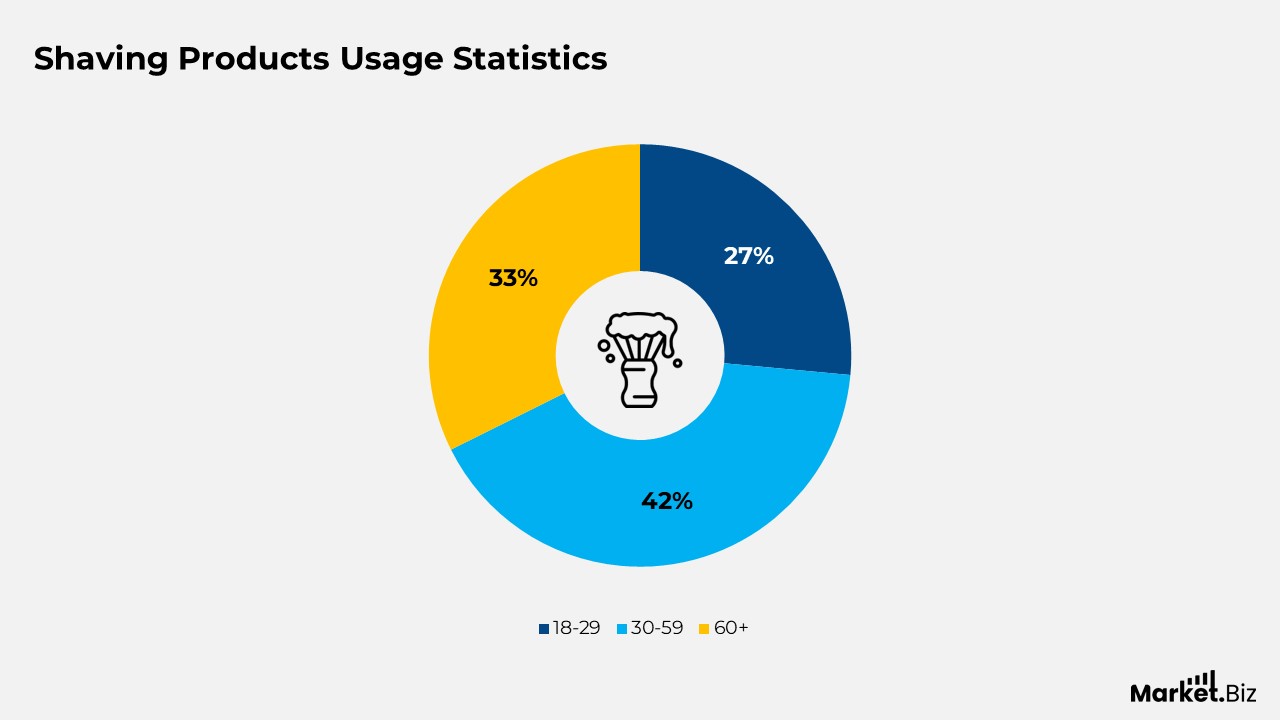
- As of May 2017, the usage frequency of shaving products among consumers in the U.S. showed significant variation across different age demographics.
- In the demographic of individuals aged 60 and above, 44% of respondents indicated that they shave daily, representing the highest daily usage rate across all age categories. In contrast, 32% of those aged 18-29 and 31% of individuals aged 30-59 reported shaving every day.
- When it comes to shaving several times a week, the age group of 30-59 had the highest percentage at 42%, followed by 33% of respondents aged 60 and older, and 27% of the 18-29 age group.
- Weekly shaving was mostly observed among younger adults aged 18-29, with 19% indicating that they shave once a week, compared to 13% of the 30-59 age group and 7% of those aged 60 and above.
- Shaving two to three times a month was less prevalent, with 7% in the 18-29 group, 3% in the 30-59 range, and 2% of those aged 60 and older.
- Monthly shaving frequency showed slight variation, with 5% of the 30-59 group and approximately 4% of those aged 60 and above reporting such frequency, while only 2% of the youngest demographic did so.
- Finally, 7% of consumers aged 60 and older indicated that they never use shaving products, in comparison to 5% of those aged 18-29 and 3% of individuals aged 30-59, underscoring a trend of decreasing shaving frequency with advancing age.
Shaving Market Size Statistics
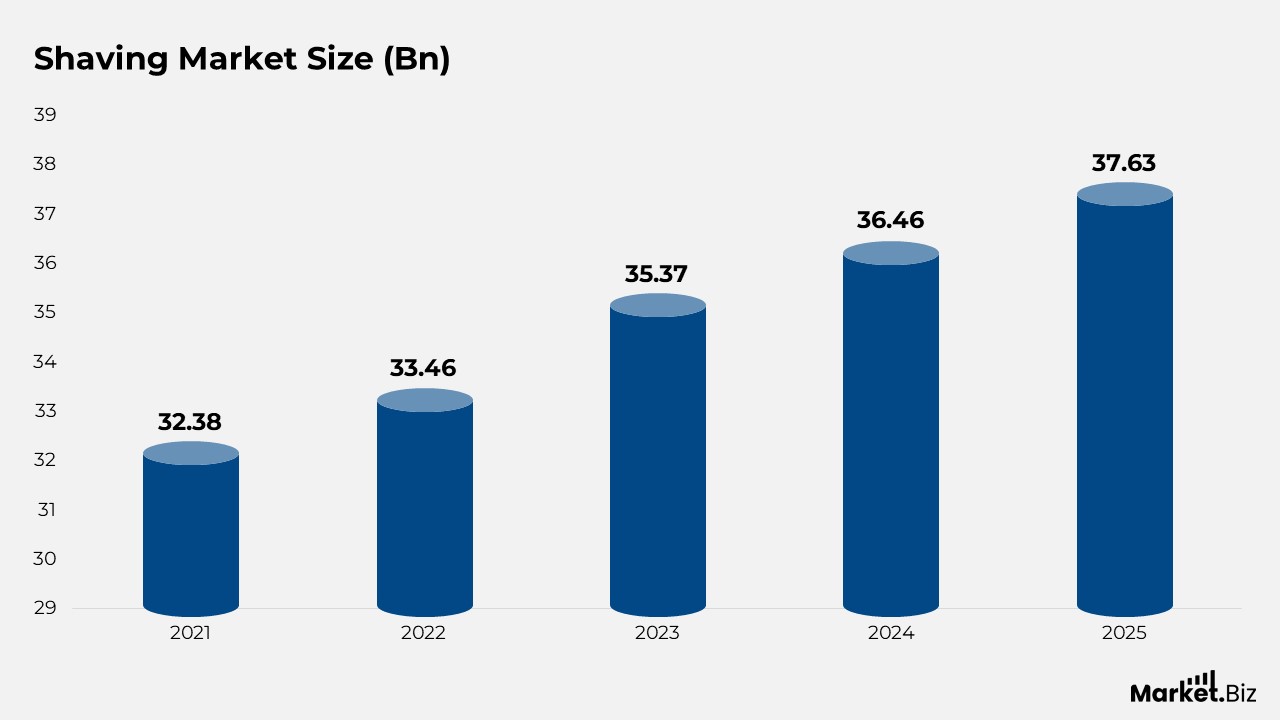
- The worldwide shaving industry has shown a consistent upward trend from 2018 to 2029, achieving a compound annual growth rate (CAGR) of 2.94%, albeit with some variations.
- In 2018, the market’s revenue was noted at USD 31.83 billion, which saw a modest rise to USD 32.08 billion in 2019.
- Nevertheless, 2020 experienced a slight downturn, with revenue falling to USD 31.11 billion.
- The market made a recovery in 2021, recording a revenue of USD 32.38 billion, and continued its expansion in 2022, reaching USD 33.46 billion.
- This positive trend intensified in the subsequent years, with revenues climbing to USD 35.37 billion in 2023 and further to USD 36.46 billion in 2024.
- Forecasts suggest that the market will sustain this growth path, with revenues projected to hit USD 37.63 billion in 2025 and USD 38.95 billion in 2026.
- By 2027, the market is expected to generate USD 40.45 billion, followed by USD 41.99 billion in 2028.
- By 2029, the revenue of the global shaving market is predicted to reach around USD 42.15 billion.
Revenue of the Shaving Market Statistics
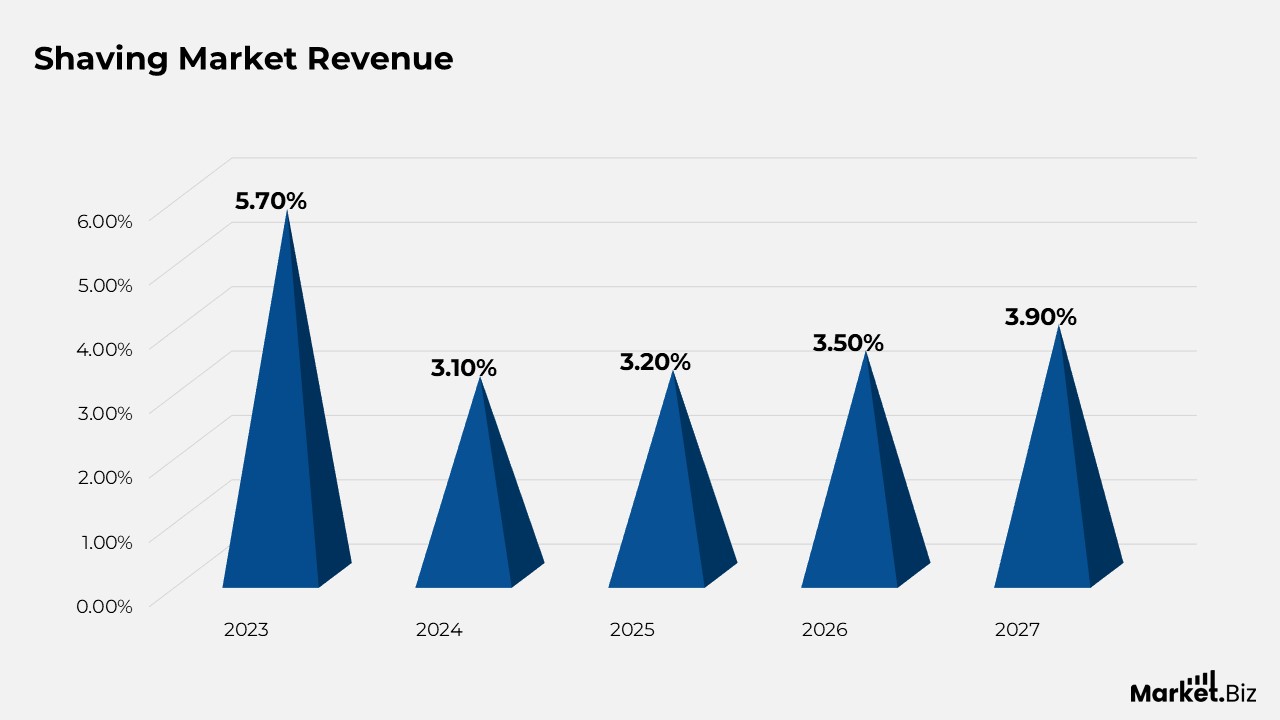
- The global shaving market has undergone fluctuating revenue growth rates from 2019 to 2029, indicative of changes in consumer behavior and market dynamics.
- In 2019, the market experienced a slight growth of 0.8%.
- However, 2020 brought a decline in revenue of 3.0%, likely attributed to disruptions from the global pandemic.
- Recovery commenced in 2021, showcasing a significant growth rate of 4.1%, followed by a 3.4% increase in 2022.
- Growth accelerated in 2023, achieving a remarkable revenue expansion of 5.7%, marking the highest rate observed during this timeframe.
- The growth rate then stabilized in the following years, with a 3.1% increase in 2024 and a comparable rise of 3.2% in 2025.
- In 2026, the market maintained its steady growth trajectory with a 3.5% increase, succeeded by a slightly higher growth of 3.9% in 2027.
- Nevertheless, growth rates began to taper off in the concluding years, with a 2.2% increase in 2028 and a further slight decline to 2.0% in 2029.
Shaving Market by Country
- In 2024, the revenue distribution of the global shaving market by country shows notable regional differences, with China at the forefront, generating USD 6,378 million.
- The United States ranks as the second-largest market, producing USD 3,995 million, closely followed by India, which accounted for USD 3,887 million in revenue.
- Nigeria is positioned as the fourth-largest market, with a revenue of USD 1,349 million, followed by Indonesia at USD 1,019 million.
- Among European countries, Germany leads with USD 996 million, while Japan adds USD 975 million to the market. Other key markets include Brazil, which reported USD 919 million, and Russia, with USD 848 million.
- France and the United Kingdom also play significant roles in the market, generating USD 601 million and USD 501 million, respectively.
- Italy and Turkey show similar market sizes, with revenues of USD 475 million and USD 476 million, respectively, while Canada’s market is valued at USD 450 million, slightly surpassing Spain at USD 446 million.
- Emerging markets with considerable growth potential include Egypt (USD 419 million), the Philippines (USD 383 million), and Mexico (USD 377 million).
- Finally, Argentina and Thailand contribute USD 320 million and USD 337 million, respectively, highlighting the global scope and varied demand within the shaving market.
Shaving Cream Sales Statistics
- In 2019, Barbasol dominated the U.S. shaving cream market, achieving the highest unit sales of 27.7 million.
- Private label brands closely trailed with 23.2 million units, indicating a consumer preference for budget-friendly options.
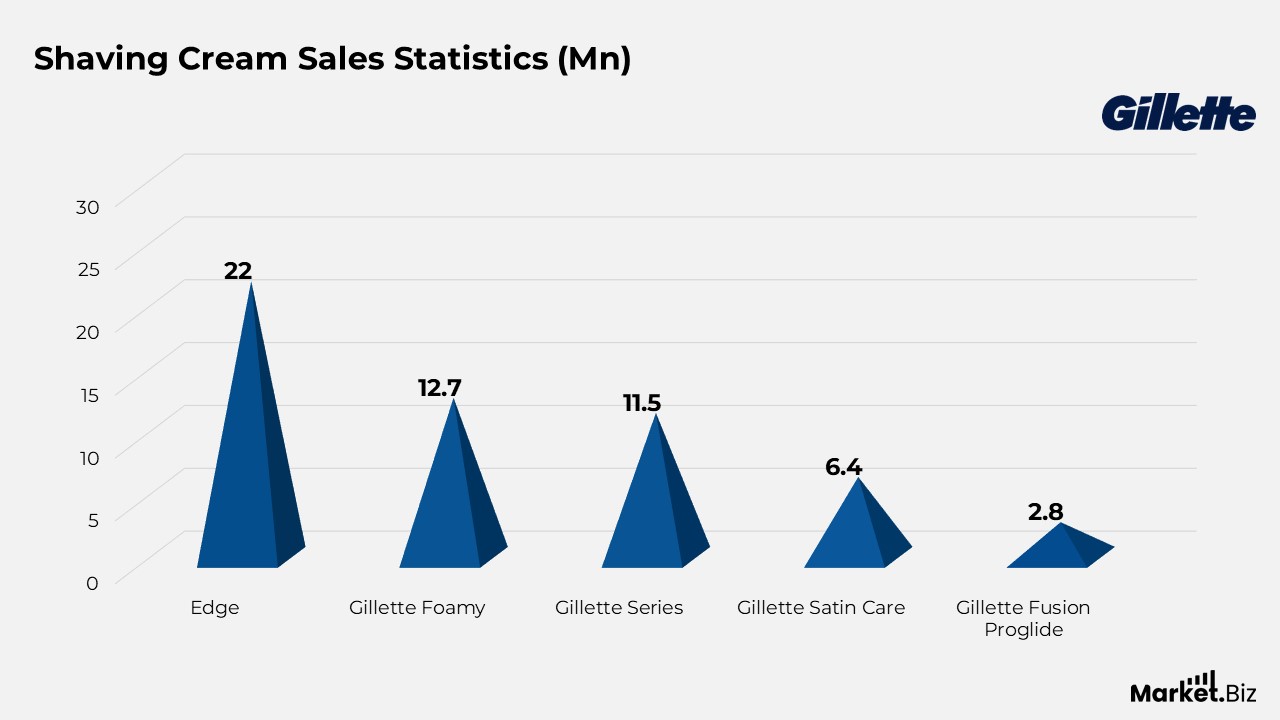
- Edge also maintained a significant market presence, selling 22 million units.
- Among other prominent brands, Gillette Foamy recorded sales of 12.7 million units, while the Gillette Series accounted for 11.5 million units.
- Skintimate products garnered positive feedback, with Skintimate Skin Therapy recording sales of 9.7 million units.
- Skintimate Signature Scents attaining 8.4 million units.
- Gillette Satin Care sold 6.4 million units, followed by e.o.s with 4.6 million units.
- Furthermore, Gillette Fusion Proglide shaving cream had sales totalling 2.8 million units.
Consumer Preferences on Shaving Statistics
- Between 2011 and 2020, the population of the United States demonstrated a variety of preferences regarding types of shaving cream, with regular shaving cream consistently being the most favored choice among consumers.
- In 2011, around 64.98 million individuals opted for regular shaving cream, a number that steadily increased to 72.6 million by the year 2020.
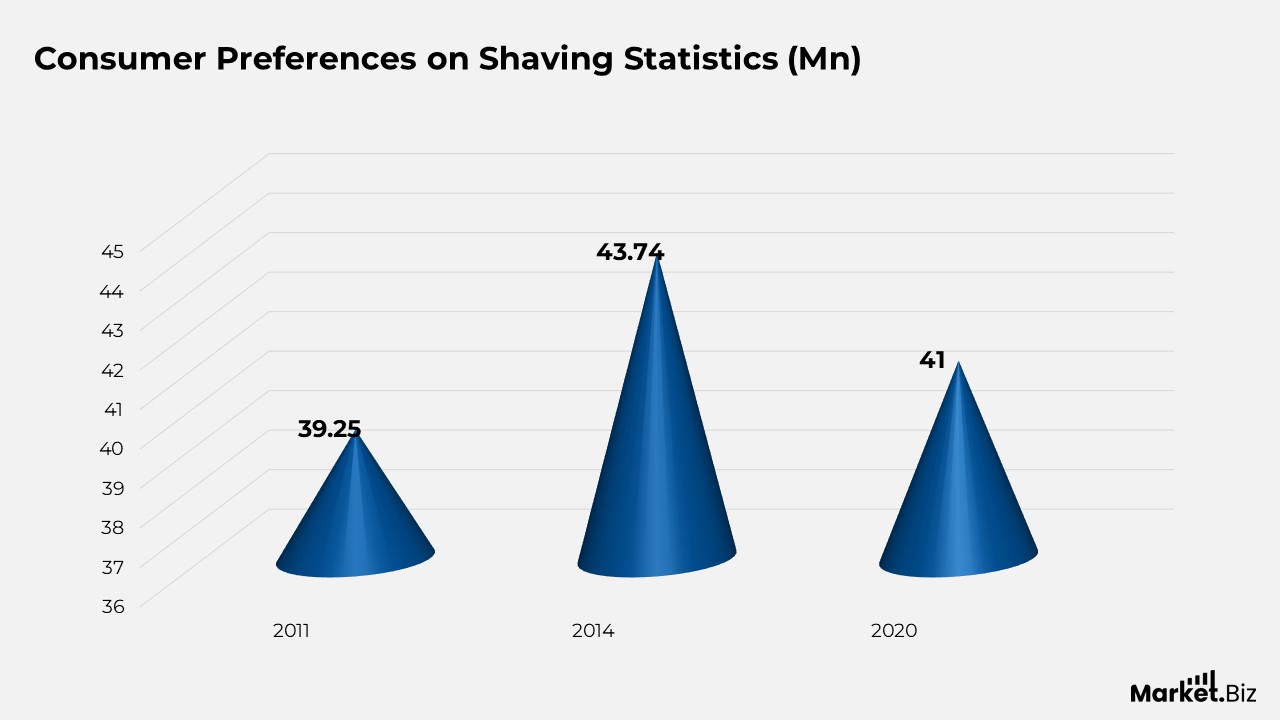
- Shaving cream formulated for sensitive skin also gained popularity, rising from 39.25 million users in 2011 to a high of 43.74 million in 2014, before experiencing a slight decline to 41 million in 2020.
- Conditioning shaving creams, or moisturizing, maintained a consistent user base, starting with 30.74 million consumers in 2011, reaching a peak of 33.14 million in 2013, and then slightly decreasing to 28.8 million by 2020.
- Products specifically designed for thick or coarse beards had the least preference but also showed variability. This category started with 3.05 million users in 2011 and saw a decrease over the years, culminating in 1.93 million in 2020.
Shaving Expenditure Statistics
- Between 2007 and 2022, the average yearly spending on shaving necessities per consumer unit in the United States showed variations.
- In 2007, the average expenditure was USD 14.94, which rose to USD 18.68 in 2008.
- There was a slight decrease in 2009 to USD 16.02, followed by an increase to USD 17.95 in 2010 and a small rise to USD 16.4 in 2011.
- In 2012, spending increased to USD 19.18 and continued to grow, reaching a high of USD 22.62 in 2013.
- After a minor decline to USD 18.69 in 2014, expenditures increased again in 2015 to USD 21.57 and remained relatively stable in 2016 at USD 21.53.
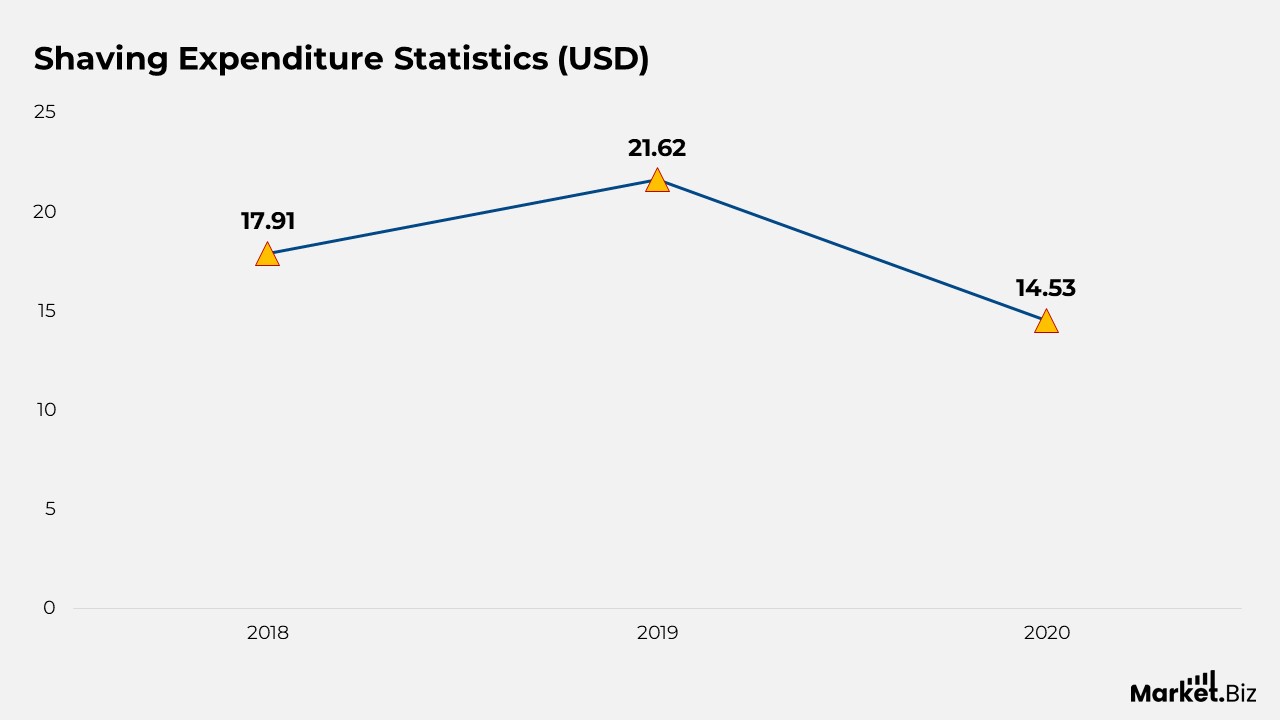
- However, starting in 2017, spending began to fluctuate, decreasing to USD 19.01 in 2017 and USD 17.91 in 2018.
- In 2019, expenditures rose once more to USD 21.62 before experiencing a sharp decline to USD 14.53 in 2020, likely due to shifts in consumer behavior during the pandemic.
- The downward trend persisted in 2021, reaching a low of USD 12.95, but expenditures recovered to USD 17.68 in 2022. This information illustrates the variability in spending on shaving necessities over the years, with significant declines noted during and following the pandemic period.
Recent Developments
- In 2023, Edgewell Personal Care, known for its Wilkinson and Schick razor brands, acquired Billie Inc., a subscription service catering to female-oriented razors, for $310 million.
- In 2023, the GilletteLabs Heated Razor was launched by Gillette, designed to deliver a hot towel shaving experience. Targeted at enhancing comfort and closeness, this premium product has seen strong market acceptance, with initial sales exceeding expectations by 20%.
- Supply, a startup specializing in shaving equipment and single-edge razors, secured $15 million in Series B funding in late 2023. This investment will be used to expand their product offerings and improve marketing efforts.
Conclusion
Shaving Statistics: The worldwide shaving industry is continually changing, propelled by consumer inclinations towards reliable brands, eco-friendly alternatives, and cutting-edge products. Although conventional razors still hold significant popularity, there is a noticeable trend towards a greater interest in natural and organic shaving items.
Shifts in grooming practices, shaped by changes in lifestyle and the impact of the pandemic, have resulted in a decrease in both shaving frequency and expenditure; however, a slow recovery is in progress.
Looking ahead, brands that prioritize quality, sustainability, and customization are strategically positioned to cater to the varied requirements of contemporary consumers, particularly as the demand for both high-end and budget-friendly shaving options increases.
FAQs
Body hair, particularly in sensitive regions such as the armpits and groin, serves as a protective barrier against friction and bacteria. Allowing hair to grow can help individuals minimize the likelihood of skin irritation and infections, thereby promoting overall skin health. Conversely, shaving may often result in redness, itching, and the discomfort of ingrown hairs.
Shaving on a daily basis can pose risks if proper precautions and techniques are not employed, especially for those with sensitive skin. Nevertheless, it remains the most effective method for individuals with patches of facial hair.
The prevailing trend concerning male pubic hair is typically to maintain it in a “manscaped” state for a more polished and orderly appearance, shifting away from a completely natural “bush”. Favored styles encompass a trimmed landing strip, a triangular shape, or merely a tidy trim to a shorter, uniform length for both comfort and hygiene, although individual preference continues to be the most significant consideration.