









Introduction
ERP Software Statistics: (ERP) software has become essential for organisations in the current competitive environment. It streamlines intricate operations and facilitates data-driven decision-making by consolidating functions such as finance, human resources, and inventory management into a unified platform. This consolidation enhances efficiency and productivity.
ERP software is now regarded as a necessity rather than a luxury, allowing companies to improve operational visibility, reduce costs, and comply with regulatory standards. Recent data indicate that the global ERP software market is consistently expanding. The increasing demand for digitisation, automation, and scalability drives this growth. It is anticipated that the ERP market will attain a substantial size in 2025, with cloud-based ERP solutions gaining popularity due to their adaptability and cost-effectiveness.
Furthermore, the adoption of ERP software is no longer confined to large corporations. Small and medium-sized enterprises are also acknowledging their importance, significantly contributing to the market’s growth.
Editor’s Choice
- The ERP Software Market is projected to expand at a compound annual growth rate (CAGR) of 10.5% from 2022 to 2032.
- A survey indicates that 89% of purchasers view accounting as the foremost feature they desire in an ERP system.
- Approximately two-thirds (67%) of organisations view their ERP implementation as either “highly successful” or “successful,” whereas only 2% categorize their ERP projects as “not very successful”.
- In the retail industry, over 55% of businesses are anticipated to choose hybrid ERP system implementations.
- Small enterprises typically allocate between USD 1,740 and USD 4,620 monthly for ERP software, which amounts to an annual total of USD 20,880 to USD 55,440.
General ERP Software Statistics
- The ERP Software Market is projected to expand at a compound annual growth rate (CAGR) of 10.5% from 2022 to 2032.
- A significant 89% of purchasers identify accounting as the foremost feature they seek in an ERP system.
- Between 33% and 48% of enterprises request moderate customisation levels, while 10% to 19% specifically seek tailored ERP solutions.
- 67% of organisations characterise their ERP implementation as either “very successful” or “successful,” whereas only 2% label their ERP projects as “not very successful.”
- Over 80% of small and medium-sized enterprises (SMEs) with annual revenues below 50 million dollars depend on ERP systems.
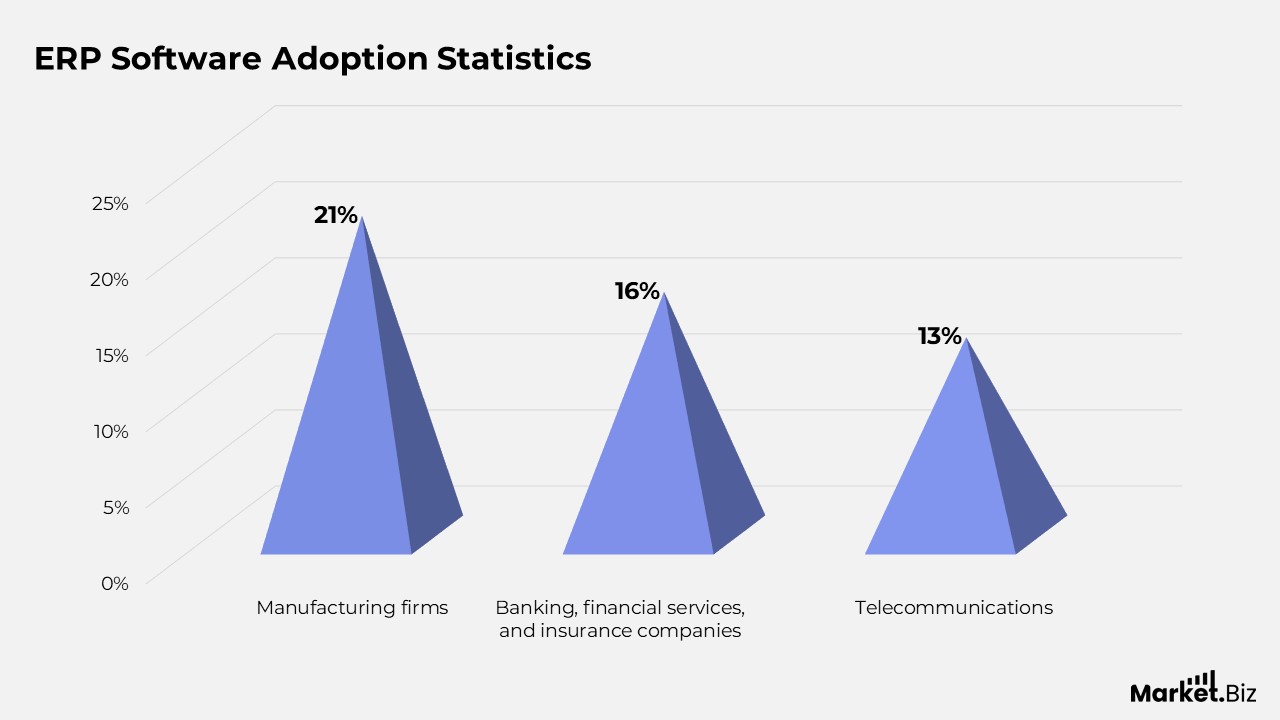
- Experts indicate that ERP software is especially preferred by manufacturing companies (21%), followed by banking, financial services, and insurance sectors (16%), along with telecommunications (13%).
- The pandemic has expedited digital transformation initiatives for 69% of private organisations, including the adoption of ERP solutions, with an additional 43% planning their digital transformation strategies in the upcoming year.
- In terms of ERP solutions, 53.1% of companies have adopted cloud-based ERP systems, while the remaining organisations continue to utilize on-premise systems.
- Approximately 85% of organisations have indicated a pressing need for a new ERP system, acknowledging its importance.
- Artificial Intelligence (AI) is particularly enhancing automation and accelerating results in ERP systems, with a significant 65% of Chief Information Officers (CIOs) anticipating the integration of AI into ERP by 2022.
Market Size Statistics of ERP Software
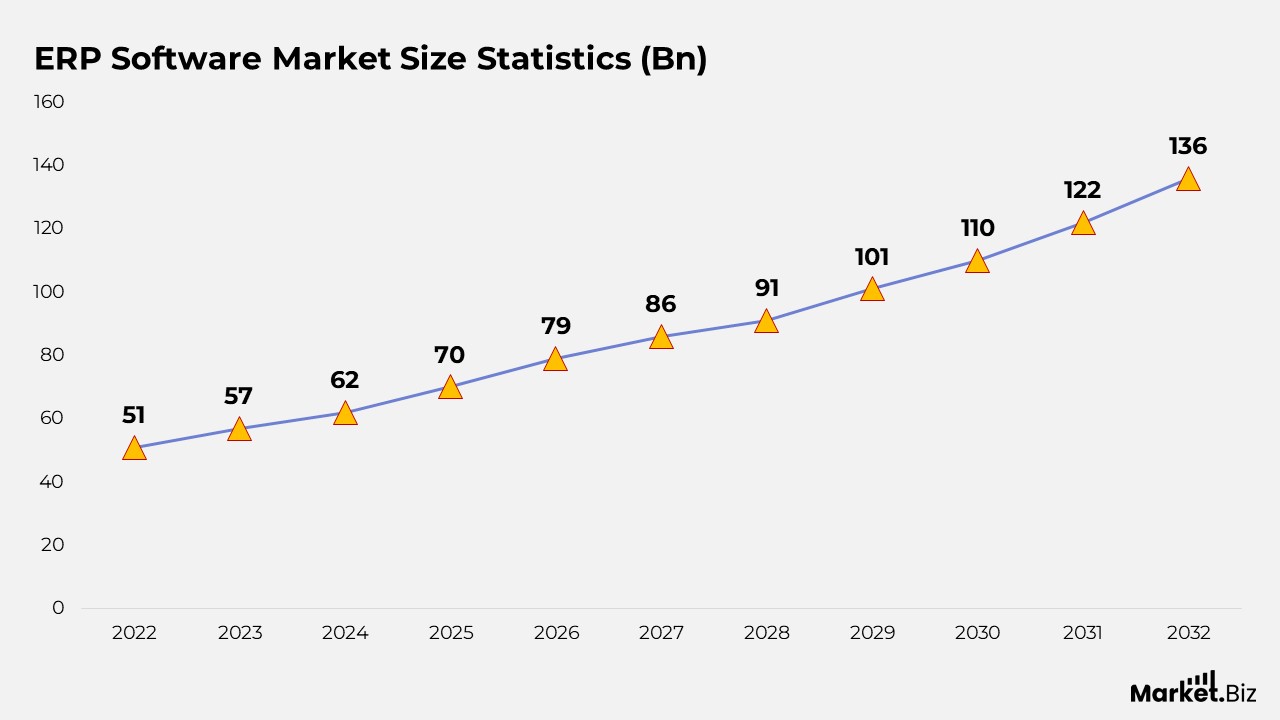
- The market is projected to experience a compound annual growth rate (CAGR) of 10.5% from 2022 to 2032.
- In 2022, the market was valued at 51 billion.
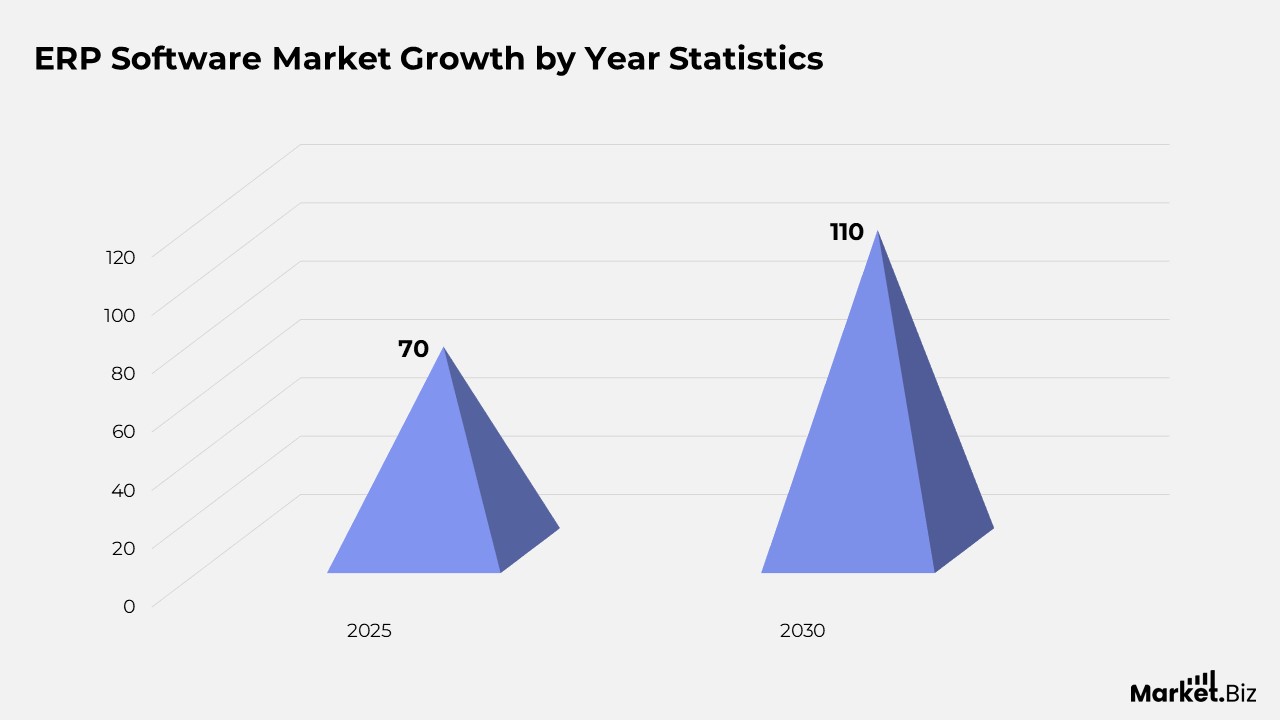
- It experienced a consistent increase in the following years, achieving 57 billion in 2023, 62 billion in 2024, and 70 billion in 2025.
- The growth trend persisted, with forecasts suggesting further development, reaching 79 billion in 2026, 86 billion in 2027, 91 billion in 2028, and a notable milestone of 101 billion in 2029.
- Looking forward, this upward trend is anticipated to carry on. The market size is expected to reach 110 billion in 2030, 122 billion in 2031, and a significant 136 billion in 2032.
ERP Software Features Statistics
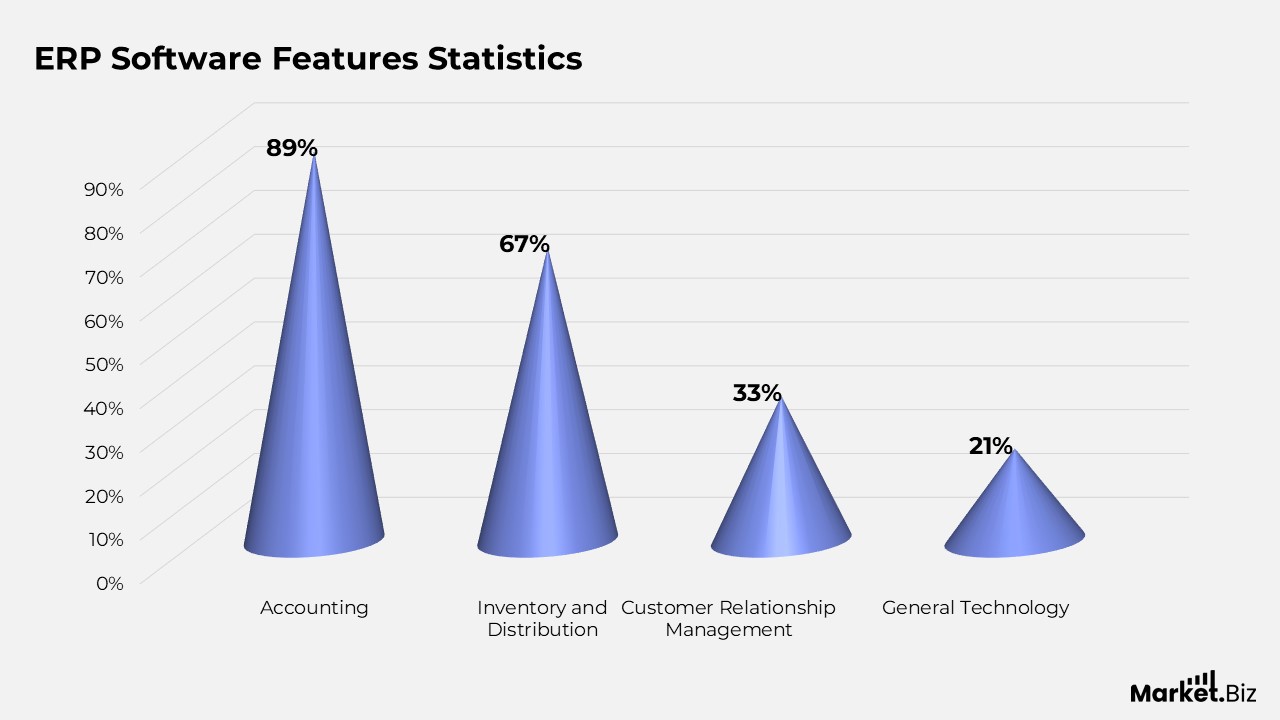
- A survey indicates that 89% of purchasers view accounting as the foremost feature they desire in an ERP system.
- Respondents also showed interest in modules about 67% of inventory and distribution, 33% of customer relationship management (CRM), and general technology (21%).
- Merely 3% of organisations rely on standard out-of-the-box functionality in ERP systems, whereas the vast majority opt for a certain level of customisation.
- Among individuals pursuing customisation, 33% to 48% of enterprises seek moderate degrees of customisation, while 10% to 19% explicitly request personalised ERP solutions.
ERP Projects Benefits Statistics
- Approximately two-thirds (67%) of organisations view their ERP implementation as either “highly successful” or “successful,” whereas only 2% categorize their ERP projects as “not very successful”.
- A substantial majority (80%) of organisations report achieving a return on investment (ROI) from their ERP implementation, regardless of whether it occurs early, on schedule, or on time.
- Nonetheless, merely 9% of organisations indicate that they have realised an ROI since the implementation of ERP.
- According to 80% of organisations, the centralised data system provided by ERP facilitates effective collaboration on new applications.
- Around 38% of organisations believe that ERP improves their ability to respond to evolving customer demands.
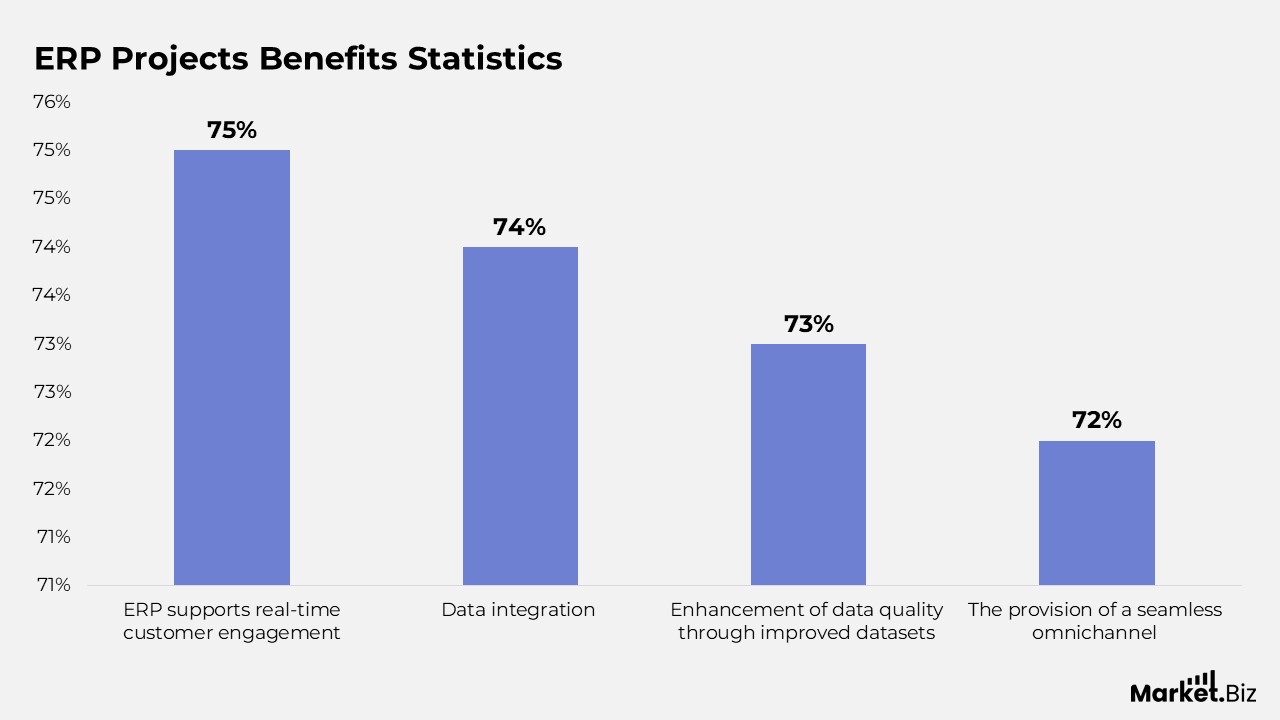
- For 75% of enterprises, ERP supports real-time customer engagement. Furthermore, additional advantages of ERP investments encompass data integration (74%), enhancement of data quality through improved datasets (73%), and the provision of a seamless omnichannel customer experience across various devices (72%).
Adoption Statistics of ERP Software
- According to specialists in the industry, ERP software is especially preferred by manufacturing firms (21%), followed by banking, financial services, and insurance companies (16%), as well as telecommunications providers (13%).
- In the retail industry, over 55% of businesses are anticipated to choose hybrid ERP system implementations.
- In terms of satisfaction rates, 31.6% of project team members and decision-makers indicate a high level of satisfaction with their ERP systems. Conversely, 21.1% express dissatisfaction with their current ERP solutions.
- Approximately half of the companies surveyed in 2020 were either in the process of planning or had already begun implementing an ERP system or upgrading their existing systems.
- The pandemic has expedited digital transformation initiatives for 69% of private organisations, which includes the adoption of ERP solutions. Additionally, 43% are planning their digital transformation strategies within the next year.
- When selecting an ERP solution, 25% of finance leaders emphasise the importance of capability fit.
ERP ROI Statistics
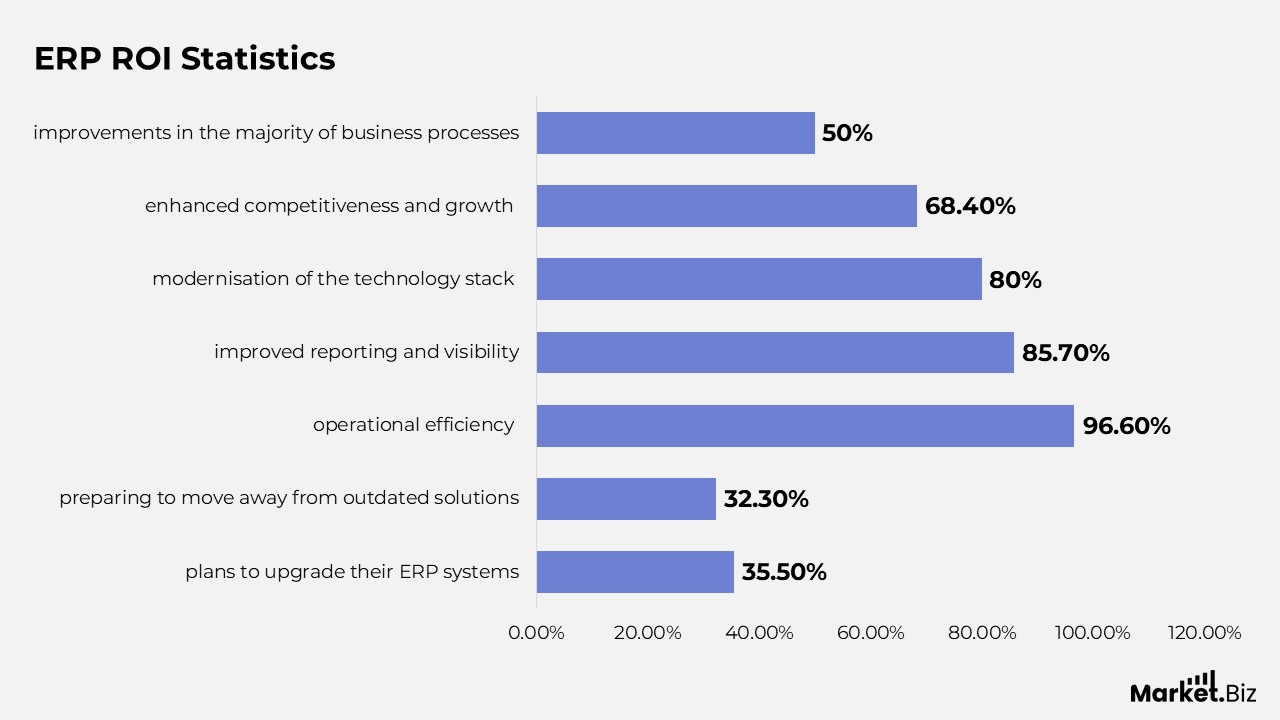
- A significant number of companies, amounting to 35.5%, indicate plans to upgrade their ERP systems. Additionally, 32.3% are preparing to move away from outdated solutions.
- ERP solutions are demonstrating considerable effectiveness for organisations, assisting them in reaching various objectives, such as operational efficiency (96.6%), improved reporting and visibility (85.7%), modernisation of the technology stack (80%), and enhanced competitiveness and growth (68.4%).
- Remarkably, 50% of organisations that have adopted ERP systems report notable improvements in the majority of their business processes, while another 43.8% observe enhancements in essential business processes.
- Moreover, 91.7% of enterprises that have finalised their ERP projects report overall success.
- It is noteworthy that companies that implement ERP systems generally realise a return on investment (ROI) within an average of 2.5 years, with around 82% indicating that they achieved ROI within the anticipated timeframe.
ERP Software Pricing Statistics
- Small enterprises typically allocate between USD 1,740 and USD 4,620 monthly for ERP software, which amounts to an annual total of USD 20,880 to USD 55,440.
- Conversely, mid-sized firms incur costs of approximately USD 4,620 to USD 5,160 each month, resulting in yearly expenses ranging from USD 55,440 to USD 61,920.
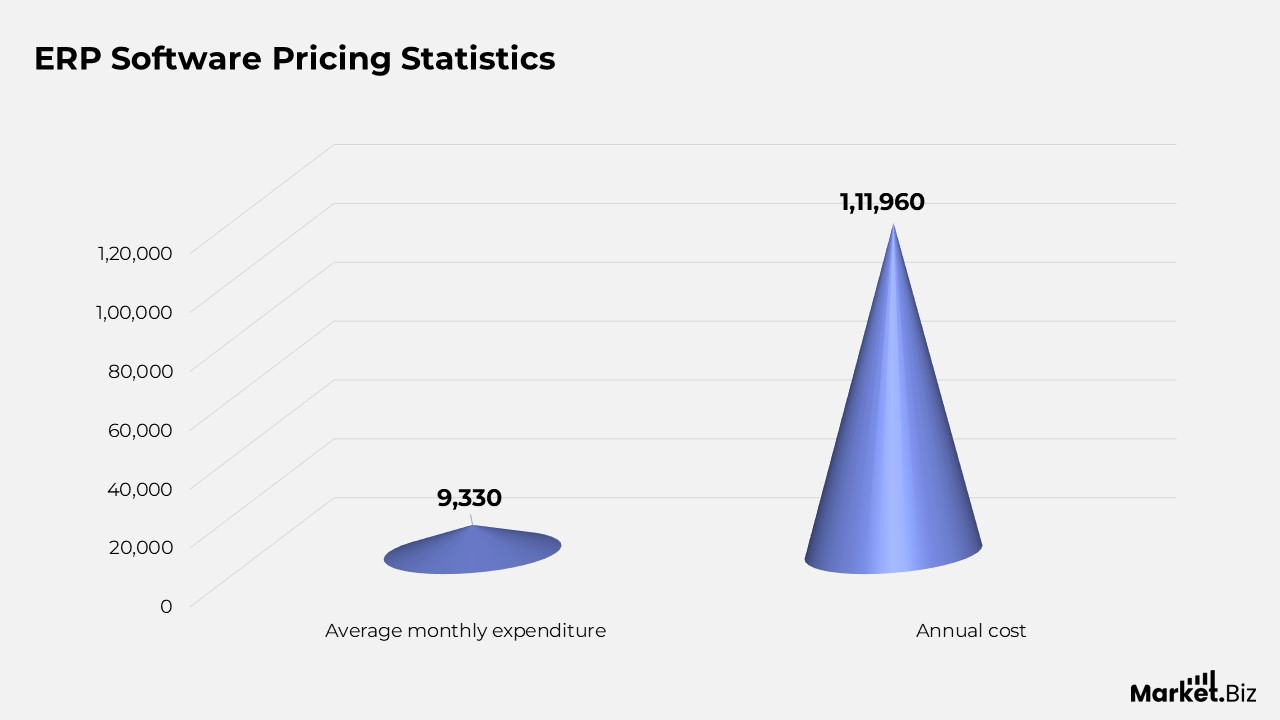
- For large corporations, the average monthly expenditure is around USD 9,330, culminating in an annual cost of USD 111,960.
Statistics of ERP Companies
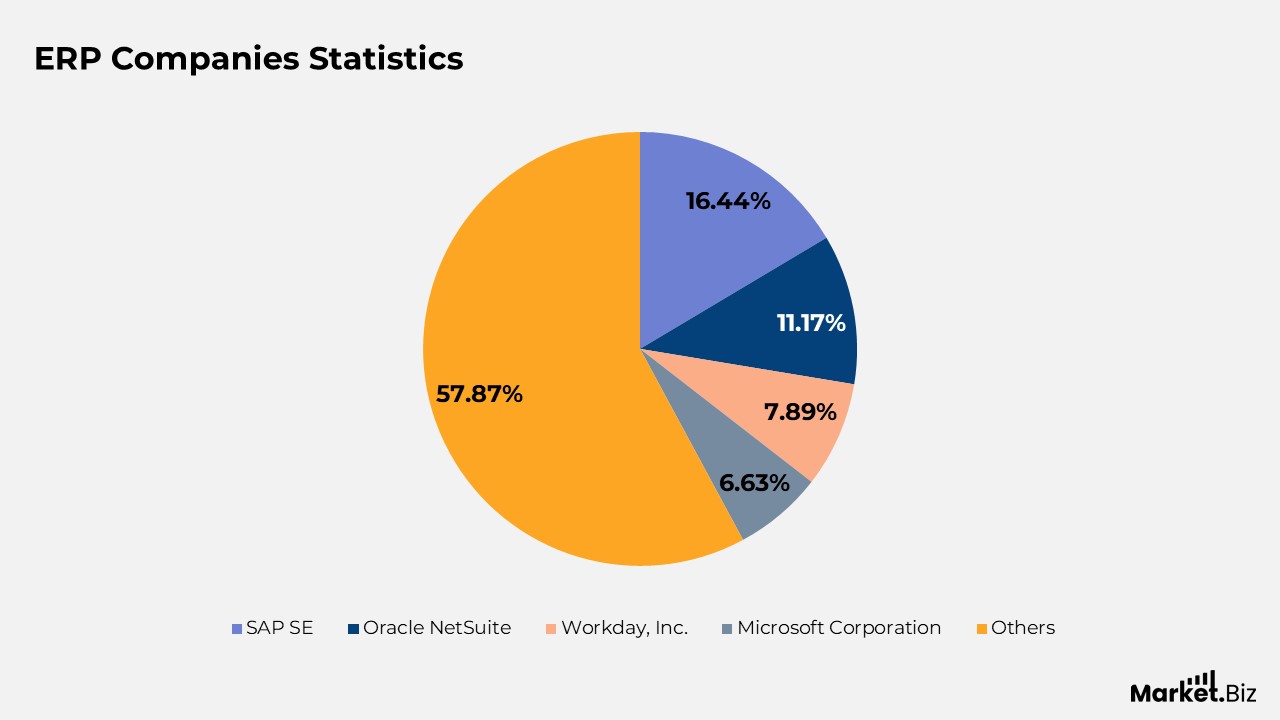
- SAP SE has captured the largest share of the ERP software market, accounting for 16.44% of total sales, followed by Oracle NetSuite with 11.17% and Workday, Inc. at 7.89%.
- Microsoft Corporation possesses a 6.63% market share, while other ERP vendors make up the remaining 57.87%.
- In April 2025, SAP SE revealed its Q1 FY 2025 results, recording total revenues of USD 9.01 billion, which represents a 12% increase compared to the previous year.
- Cloud revenue surged by 27% to USD 4.99 billion, and the cloud backlog expanded by 28%, reaching USD 18.2 billion.
- The Cloud ERP Suite experienced the most significant growth, increasing by 34% in comparison to the same period last year.
ERP Software Recent Development
- In the middle of 2023, Microsoft finalized the acquisition of Suplari, an AI-powered spend management platform, for a total of $180 million.
- In late 2023, SAP completed its acquisition of Signavio, a prominent player in business process management, for $1.2 billion.
- In 2023, Acumatica, a provider of cloud-based ERP solutions, secured $150 million in a funding round aimed at enhancing its platform capabilities and expanding its global market presence, with a particular focus on small and medium-sized enterprises.
- The global market for ERP software is anticipated to experience a compound annual growth rate (CAGR) of 10.2% from 2023 to 2028, fuelled by the growing demand for operational efficiency.
ERP Software Future Predictions
- The cloud ERP market is anticipated to experience substantial growth, with projections indicating it could reach $130.5 billion by the year 2028.
- Cloud-based systems are expected to lead the market, which is forecasted to expand at a compound annual growth rate (CAGR) ranging from 11.53% to 14.5% during the period from 2023 to 2028.
Conclusion
ERP Software Statistics: The growth of digitalization and international trade has generated a significant demand for ERP software, which helps organizations analyze data from various departments to enhance their business decision-making processes more effectively. Data regarding ERP implementation indicates that this trend is expected to continue in the foreseeable future.
A majority of large enterprises utilise some form of ERP system; however, the costs associated with implementation and maintenance can be substantial. Conversely, small businesses might not require all the functionalities offered by an ERP system, prompting them to explore alternative solutions such as CRM software.
FAQ’s
The statistics are quite concerning. Evidence indicates that approximately 70% of organisational transformations do not achieve their goals to some extent, with as many as 26% failing entirely. The typical success rate stands at merely 30%, and data specific to ERP does not show significant improvement.
Enterprise resource planning (ERP) analytics refers to the process of consolidating, mining, and querying business data to derive actionable insights. Such analyses assist users in recognising trends and patterns that can guide their decision-making, enhance their teams’ operations, increase profitability, and reduce expenses.
Coca-Cola adopted the SAP ERP system in 2003, integrating it into a diverse range of services across 45 countries, serving 15,000 users.