








Introduction
Biofuels Statistics: Biofuel is a regenerative energy source derived from organic materials (biomass) such as plants, algae, and animal waste. It serves as a cleaner alternative to fossil fuels for both transportation and heating. Biofuels can exist in solid, liquid (such as ethanol or biodiesel), or gaseous forms, and are produced through methods like fermentation or gasification. This helps to decrease reliance on oil and reduce emissions.
The utilisation of biofuels is on the rise, particularly in the transportation sector, with ethanol and biodiesel at the forefront, propelled by mandates in nations including the U.S., Brazil, India, and Indonesia, despite facing price challenges. In 2022, biofuels accounted for over 3.5% of global transport energy, with growth supported by various policies.
The International Energy Agency (IEA) forecasts nearly 30% growth in demand from 2023 to 2028, primarily driven by renewable diesel and ethanol, with emerging economies playing a significant role in this expansion. While the U.S. continues to be the leading producer, India is gaining ground, and there is an increasing focus on advanced biofuels.
Editor’s Choice
- In 2023, biofuel production recorded 960k litres.
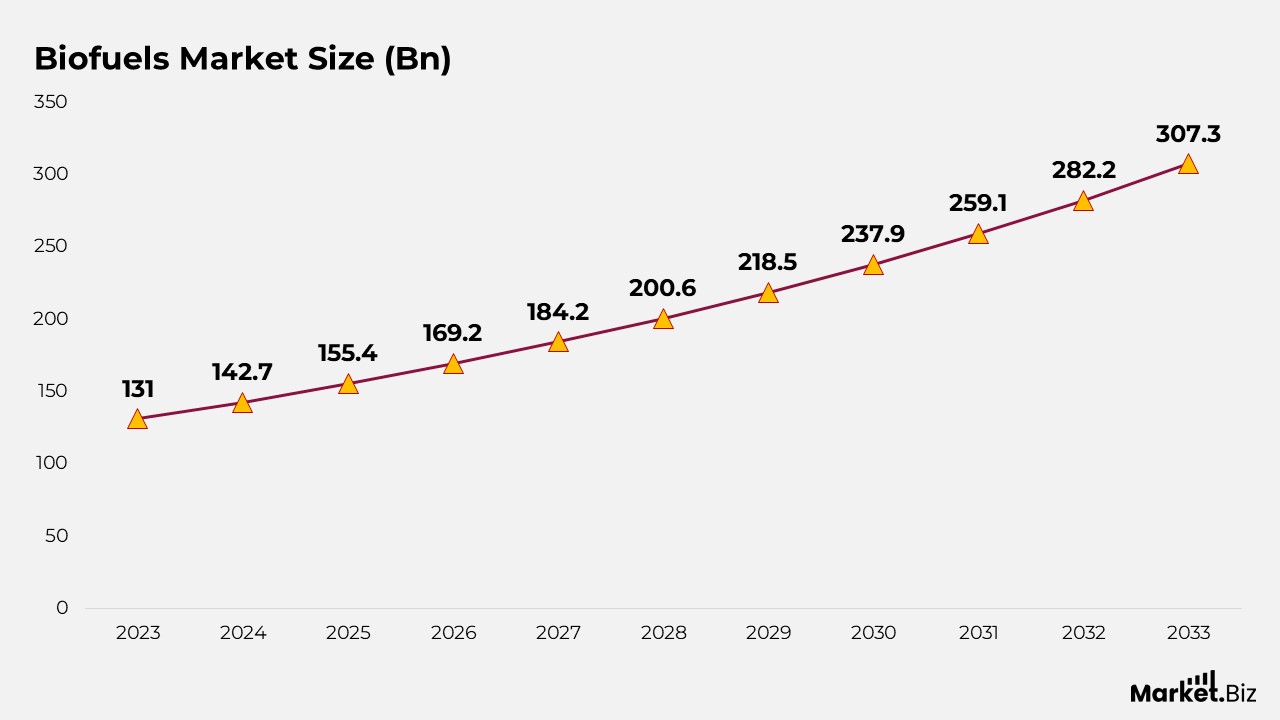
- The global biofuels market is anticipated to expand from USD 131 billion in 2023 to USD 307.3 billion by 2033.
- In 2023, biofuel consumption amounted to 197.47 million tons.
- According to biofuel statistics, it is anticipated that the revenue from fuel ethanol will attain 149 million metric tons by the year 2030.
- According to the statistics on biofuels, the global export value of biodiesel reached $41.71 billion.
General Biofuels Statistics
- The global biofuels market is anticipated to expand from USD 131 billion in 2023 to USD 307.3 billion by 2033, with a compound annual growth rate (CAGR) of 8.9%.
- Bioethanol is the leading segment in the biofuels market, accounting for a 41.3% market share in 2023, largely due to its extensive application in gasoline blending, particularly in the United States and Brazil.
- Liquid biofuels hold a dominant position in the market with a 46% share, mainly attributed to their utilisation in transportation and their compatibility with current engine infrastructure.
- In the feedstock category, sugar crops are predominant, capturing 41% of the market share in 2023, driven by the efficient production of ethanol from sugarcane in Brazil.
- North America is at the forefront of the global biofuels market, possessing a 41.8% share, bolstered by supportive policies and robust agricultural supply chains, especially in the U.S.
- The rapid industrialisation and urbanisation in the Asia-Pacific region offer substantial growth opportunities, with India targeting a 20% ethanol blending rate by 2025.
- Restraining Factor: Elevated production costs and limited scalability, particularly for advanced biofuels, pose significant challenges that impede the competitive advantage of the biofuels market against fossil fuels.
Biofuel Production Statistics
- In 2023, biofuel production recorded 960k litres.
- The global biofuel market is expected to reach a market size of $200 billion by the end of 2030.
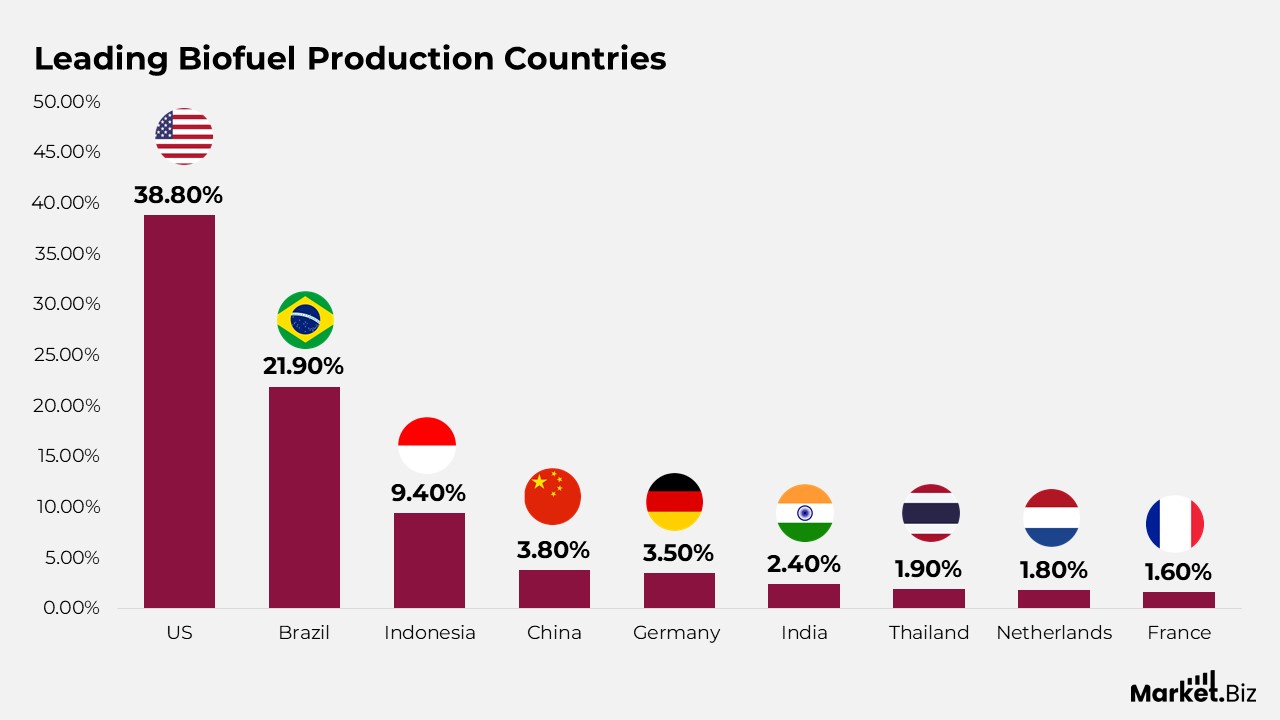
- Regarding biofuel statistics, it can be inferred that the United States has the highest biofuel production at 38.8% of the global share.
- Brazil and Indonesia are the 2nd and 3rd-highest biofuel production countries, boasting a share of 21.9% and 9.4%.
Statistics of Biofuel Consumption
- In 2023, biofuel consumption amounted to 197.47 million tons.
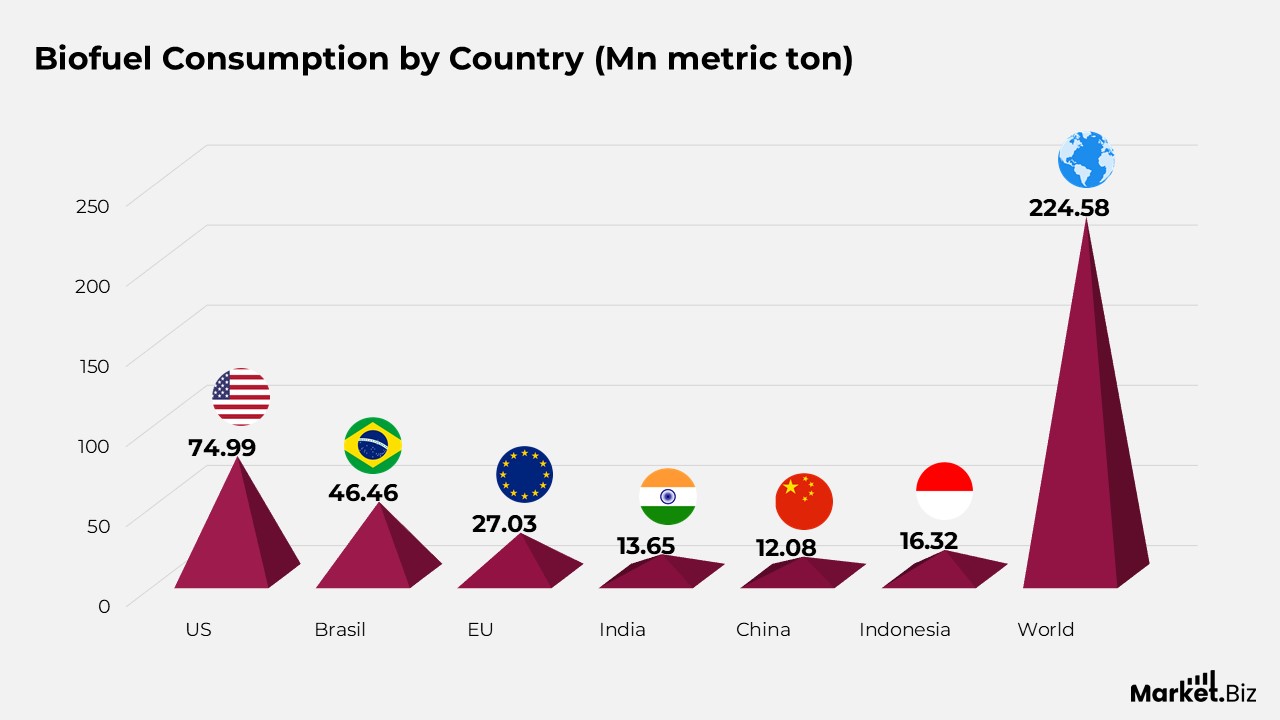
- According to biofuel statistics, it is anticipated that by 2030, consumption will rise to 224.58 million metric tons.
- By the year 2030, the global revenue from biofuel consumption is projected to reach 224.58 million metric tons.
- The United States is forecasted to achieve a production revenue of 76.69 metric tons.
- Brazil, the European Union, and India rank as the 2nd, 3rd, and 4th highest producers, with respective figures of 46.66 million, 27.03 million, and 13.65 million.
Biofuel Production Revenue Statistics
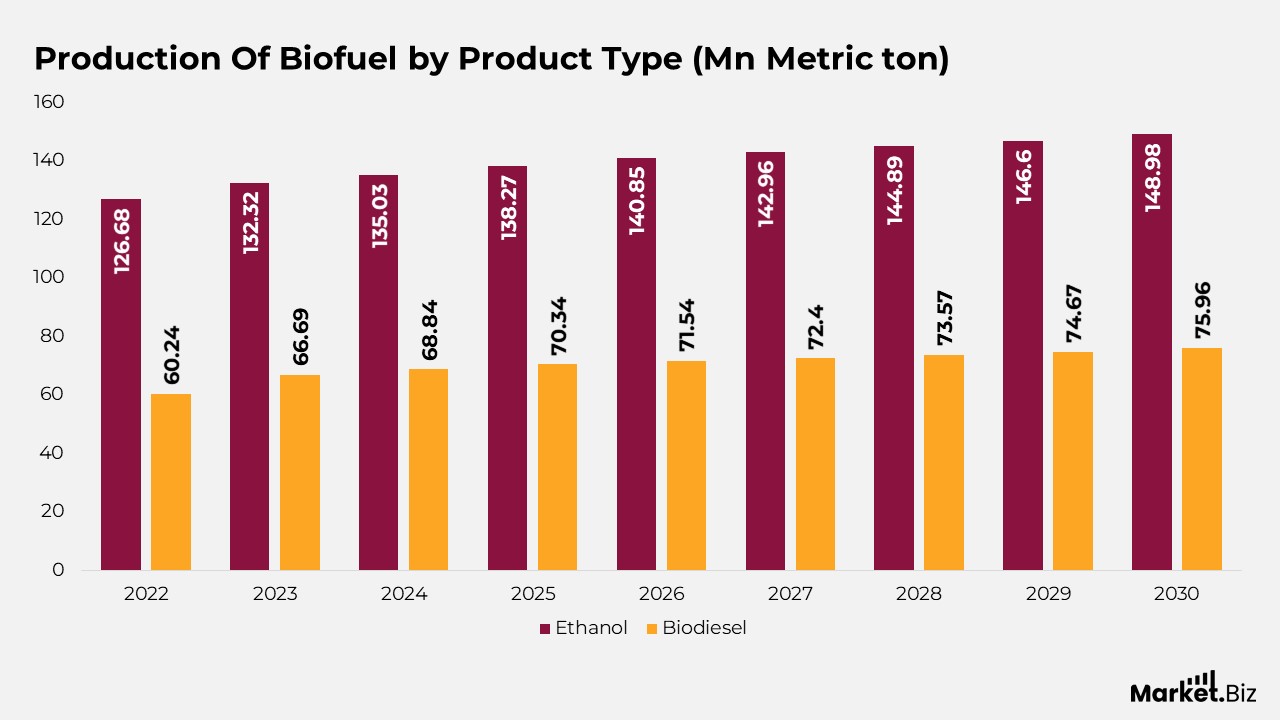
- According to biofuel statistics, it is anticipated that the revenue from fuel ethanol will attain 149 million metric tons by the year 2030.
- In the year 2030, the revenue generated from biodiesel is projected to be 75.96 million metric tons.
- Ethanol is forecasted to emerge as the most efficient biofuel globally.
Leading Biodiesel Producer Statistics
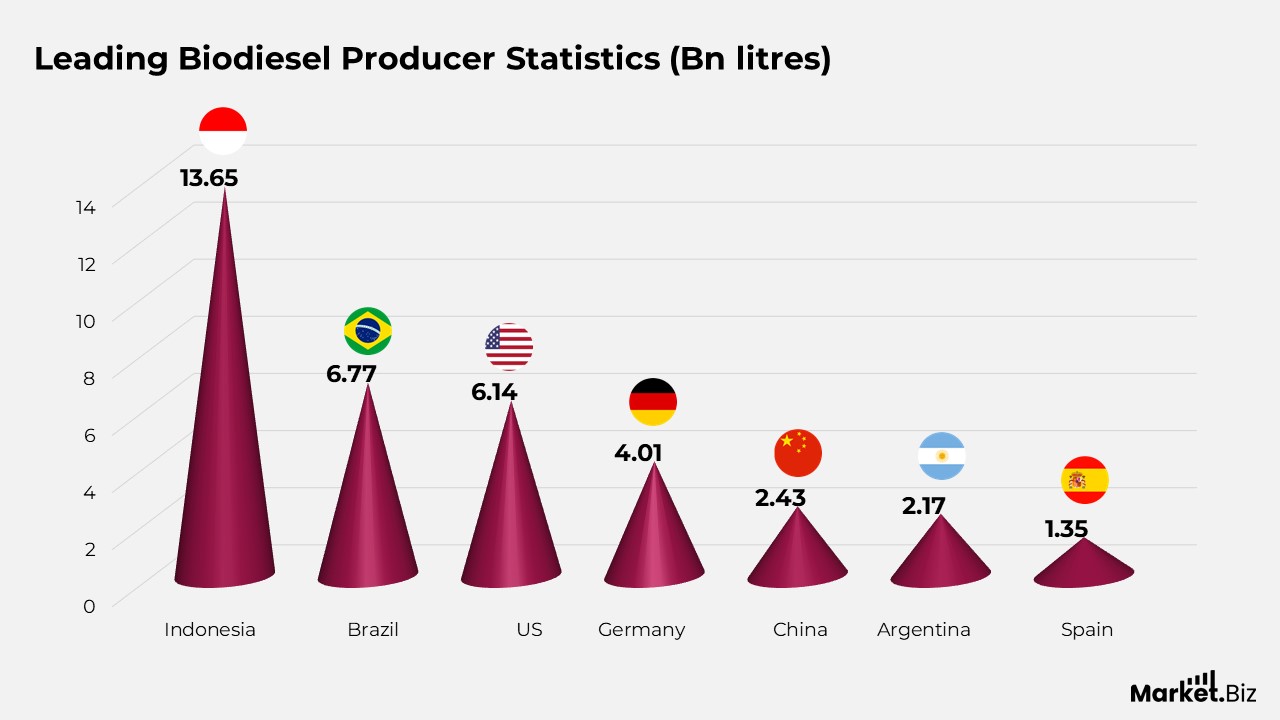
- In the analysis of biofuel statistics, it is noted that Indonesia stands out as the foremost producer of biodiesel, generating 13.65 billion liters.
- It is succeeded by Brazil, the United States, and Germany, which produce 6.77, 6.14, and 4.01 billion liters, respectively.
- According to biofuel statistics for 2022, it is deduced that the revenue for that year amounts to 40,619 metric tons.
- In contrast, the biofuel revenue recorded in 2014 was 28,360 metric tons of fuel revenue.
Biodiesel Export Statistics
- According to the statistics on biofuels, the global export value of biodiesel reached $41.71 billion.
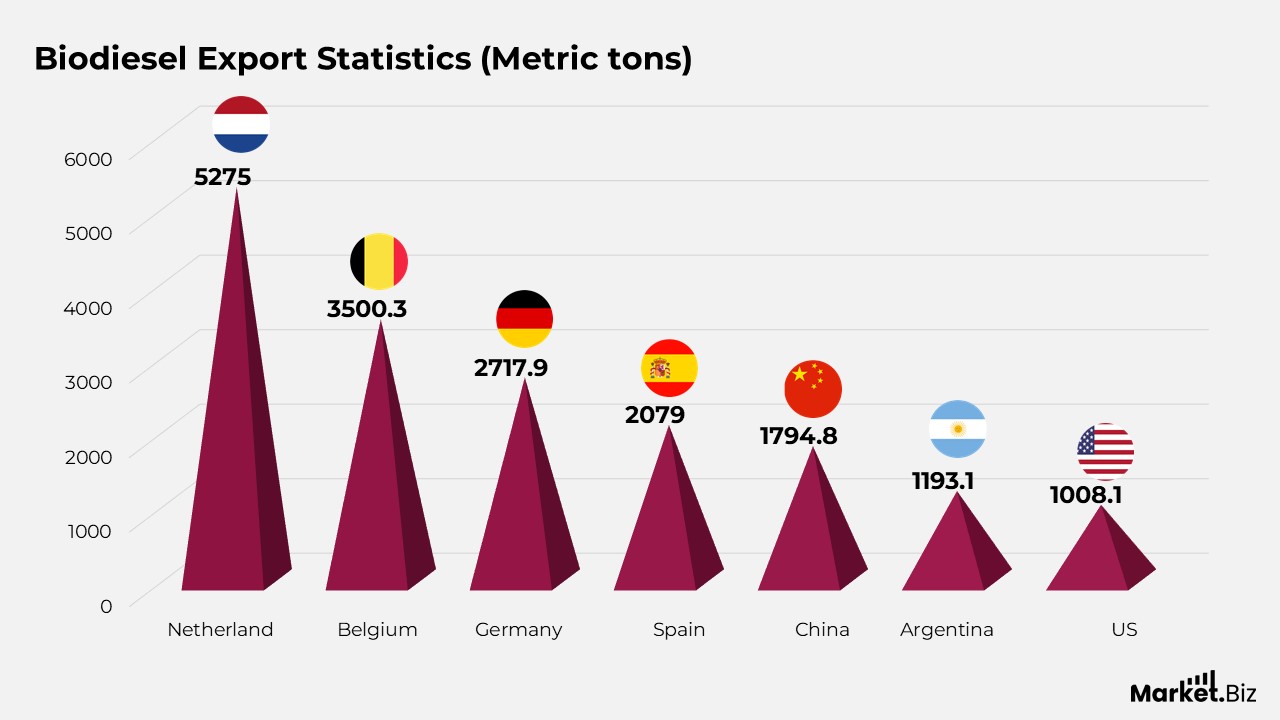
- In terms of biofuels statistics, it is noteworthy that the Netherlands holds the highest export volume. In 2022, the Netherlands reported a total export volume of 5,275 metric tons of biofuels.
- The graph indicates that European nations are the primary centers for biofuel exports on a global scale.
Biofuels Recent Development
- In 2024, advancements in biofuels concentrated on India’s rapid ethanol blending, which is set to increase to 15% with aspirations for 20%. This progress coincided with technological innovations in advanced biofuels, such as cellulosic ethanol produced by ADM/Velocys, a rise in biomass co-firing within power plants in India, and comprehensive policies in the EU and IMO that are advocating for maritime decarbonization through the use of biofuels.
- In 2023, India initiated the Global Biofuels Alliance, offered policy backing for E-20 (a blend containing 20% ethanol), and persisted in research and development of advanced biofuels (2G/3G) derived from waste and algae, utilizing technologies like alcohol-to-jet and gasification.
Biofuels Future Prediction
- The International Energy Agency (IEA) anticipates that the global biofuel supply will rise to approximately 3.65 million barrels per day (bpd) by 2026, an increase from the estimates for 2025, as reported by Quantum Commodity Intelligence.
- The U.S. Energy Information Administration (EIA) predicts a rise in the production and consumption of renewable diesel, estimating it will reach about 90,000 bpd by 2026, according to BioEnergy Times.
- By the year 2030, the global biofuel market is projected to experience substantial growth, exceeding $280 billion. This growth is expected to be fueled by the demand for clean energy, government mandates, and an increasing emphasis on sustainable aviation fuels (SAF), alongside a transition towards advanced feedstocks instead of food crops for sustainable production. However, potential challenges in policy and investment may hinder this progress.
Conclusion
Biofuel statistics indicate an increasing global demand, primarily driven by emerging economies such as Brazil, India, and Indonesia, which seek energy security and reductions in emissions. A rapid growth in renewable diesel, ethanol, and the developing biojet fuel sector accompanies this demand. In contrast, high-income countries are experiencing slower growth due to the rise of electric vehicles (EVs).
The key points to note include robust policy support, exemplified by India’s blending targets and the European Union’s Sustainable Aviation Fuel (SAF) objectives, as well as technological advancements in second and third-generation biofuels.
Additionally, there are ongoing discussions regarding the sustainability of feedstocks, particularly concerning land use and water resources, juxtaposed with the significant potential for greenhouse gas (GHG) reductions, foreign exchange savings, and increased farmer income. In conclusion, while biofuels play a vital role in the decarbonisation process, they encounter challenges in scaling sustainably to achieve ambitious net-zero goals.
FAQ’s
Global consumption of biofuels is on a consistent upward trajectory, anticipated to exceed 229 million metric tons by the year 2030. This increase is primarily fuelled by the demand for renewable diesel, ethanol, and biojet fuel, with emerging economies such as India playing a pivotal role. Despite previous slowdowns and ongoing challenges, including elevated costs, there is notable growth (approximately 6% annually) in the transport fuel sector. However, this still constitutes a minor portion (around 3.5%) of the total transport energy in 2022, as reported by IEA data.
The United States holds the position of the largest biofuel producer in the world, closely followed by Brazil. These two nations significantly influence global production, particularly in ethanol derived from corn and sugarcane. Meanwhile, India has recently ascended to become the third-largest producer overall, enhancing its crucial role in the global transition to clean energy.
The production and utilisation of biofuels present certain challenges, including the demand for land and water resources, as well as the potential for air and groundwater pollution. Depending on the type of feedstock and the production methods employed, biofuels may release even higher greenhouse gas emissions than some fossil fuels when assessed on an energy-equivalent basis.