









Introduction
Cakes Statistics: The cake industry constitutes a vital segment of the larger bakery market, providing a wide array of cake products and ranging from traditional sponge cakes to unique and artisanal varieties. Consumer preferences play a crucial role in shaping the demand for cakes. With an increasing inclination towards healthier options and personalised choices.
The industry features a diverse array of key players, from large commercial bakeries with well-known brands to smaller regional and local enterprises. Challenges faced include health-related concerns about sugar and calorie content, fierce competition, and disruptions in the supply chain. Nevertheless, there are opportunities to capitalise on trends favouring natural products, broaden product offerings, and tap into online sales channels.
The global cakes market represents a strong and expanding industry, propelled by a compound annual growth rate (CAGR) of 3.7%. Alongside a growing demand for customised, premium, and healthier cake options. Notable trends encompass the rising popularity of chocolate-flavoured products. An increasing demand for sugar-free and vegan alternatives, and significant growth within the Asia-Pacific region.
Editor’s Choice
- The global cake market achieved a revenue of USD 47.8 billion in 2023.
- Europe has a considerable market share of 31.3%, indicating a robust demand for cakes throughout European nations.
- MCKEE Foods stands out as the foremost entity in the cakes market, holding a significant 19% market share.
- Scone-flavoured cakes lead the way with a notable preference rate of 19.14%. This reflects a strong appreciation for the rich and crumbly texture that is characteristic of scones.
- Among these age demographics, individuals between the ages of 20 and 30 represent the largest segment. Accounting for a notable 44.9% of cake consumers.
- Among cake enthusiasts, women constitute the predominant segment of the consumer base, accounting for a majority share of 58.5%.
- In a research study involving nearly 1000 office workers in the UK. Their attitudes and behaviors towards workplace cake culture were examined.
General Cakes Statistics
- The global cake market achieved a revenue of USD 47.8 billion in 2023.
- In North America, it commands a notable share of 28.8%, underscoring the popularity of cakes in this area.
- MCKEE Foods stands out as the foremost player in the cakes market, holding a significant 19% market share.
- Significantly, a substantial 77% of consumers regard taste as the foremost criterion when selecting cake bars, cakes, or sweet baked items. While price ranks as the second most crucial factor.
- Among various age groups, individuals aged 20 to 30 represent the largest segment, making up a substantial 44.9% of cake consumers.
- Within the cake-loving demographic, females lead the consumer base, accounting for a majority share of 58.5%.
- Recent survey results indicated that cake is frequently found in the workplace, with 86% of respondents stating it is available at least “once or twice a week.”
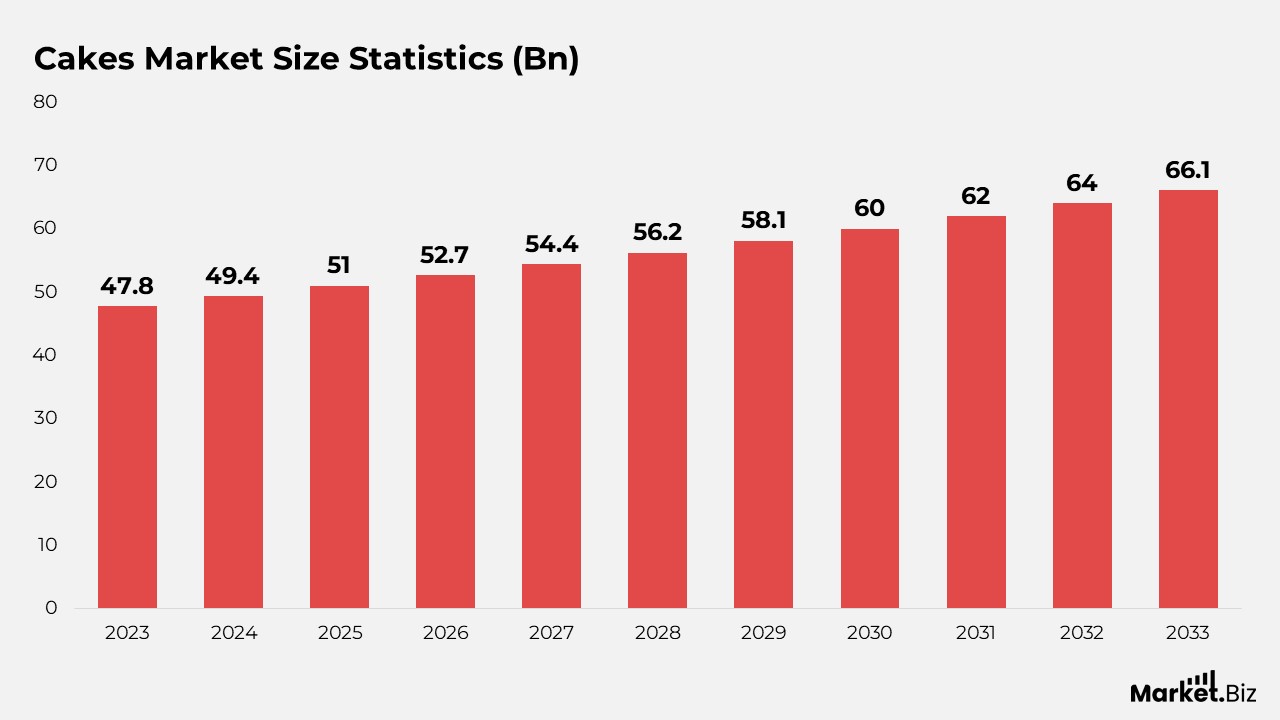
Statistics of the Cakes Market Size
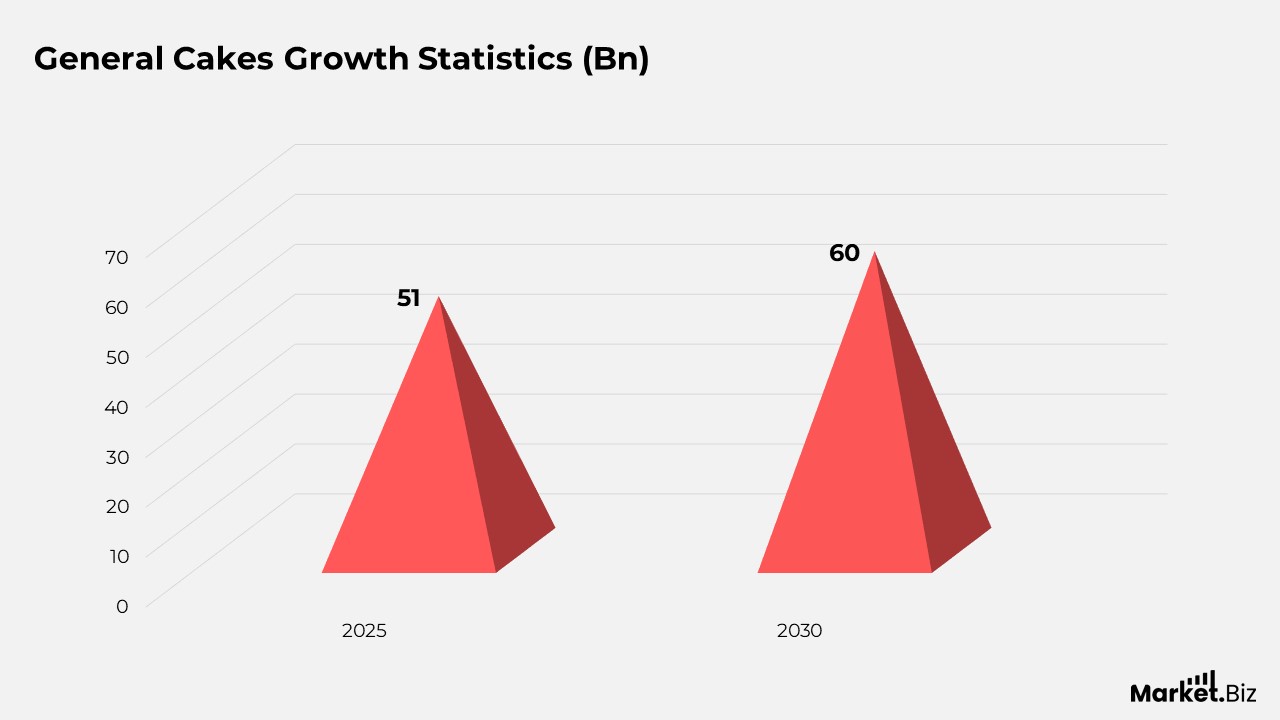
- Commencing at USD 47.8 billion in 2023, the market’s revenue is forecasted to progressively rise each year. By 2024, it is anticipated to attain USD 49.4 billion, followed by USD 51.0 billion in 2025.
- This positive trend persists with revenue estimates of USD 52.7 billion in 2026, USD 54.4 billion in 2027, and USD 56.2 billion in 2028.
- The market is expected to sustain its growth trajectory. Exceeding USD 60.0 billion by 2030, and reaching USD 66.1 billion by 2033.
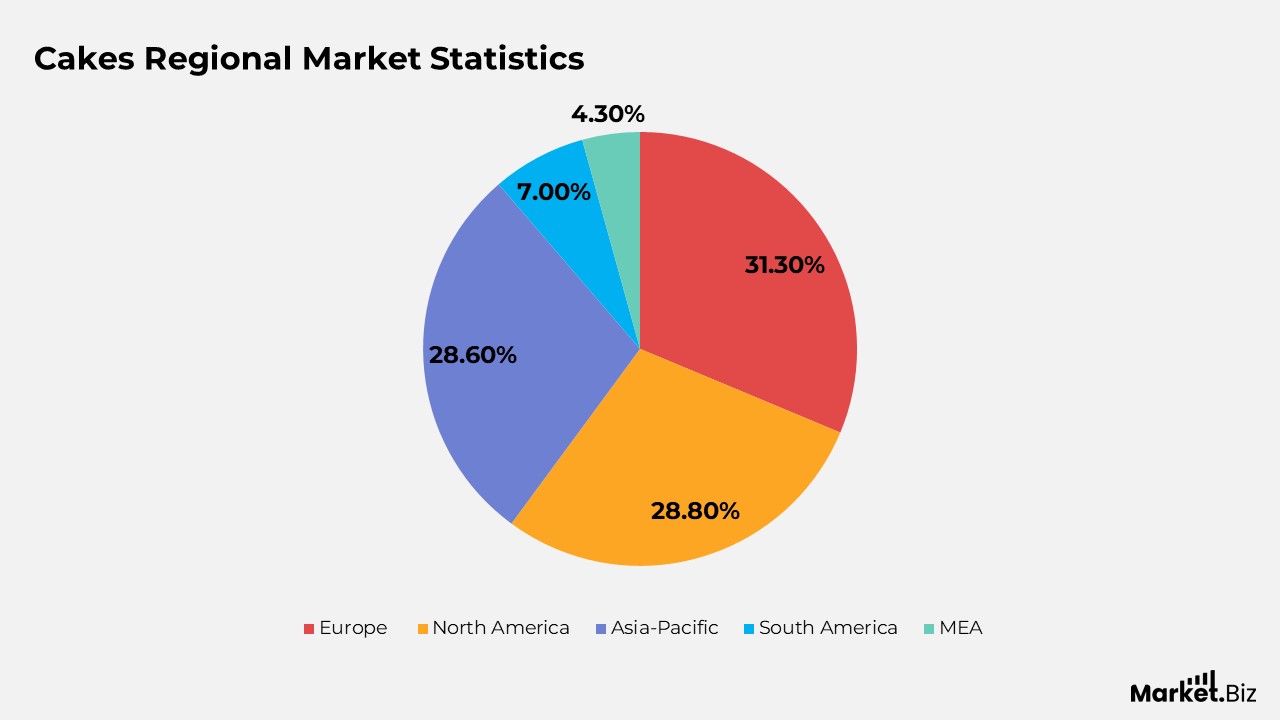
Cakes Regional Market Statistics
- In North America, the cake market commands a notable share of 28.8%, underscoring the popularity of cakes in this area.
- Europe follows closely with a considerable market share of 31.3%. Indicating a robust demand for cakes throughout European nations.
- The Asia-Pacific region holds considerable importance, accounting for 28.6% of the market share. Indicating an expanding consumer base for cakes in this varied and densely populated region.
- Meanwhile, the MEA and South America regions maintain smaller yet significant market shares of 4.3% and 7.0%. Respectively, illustrating the global influence of the cake industry.
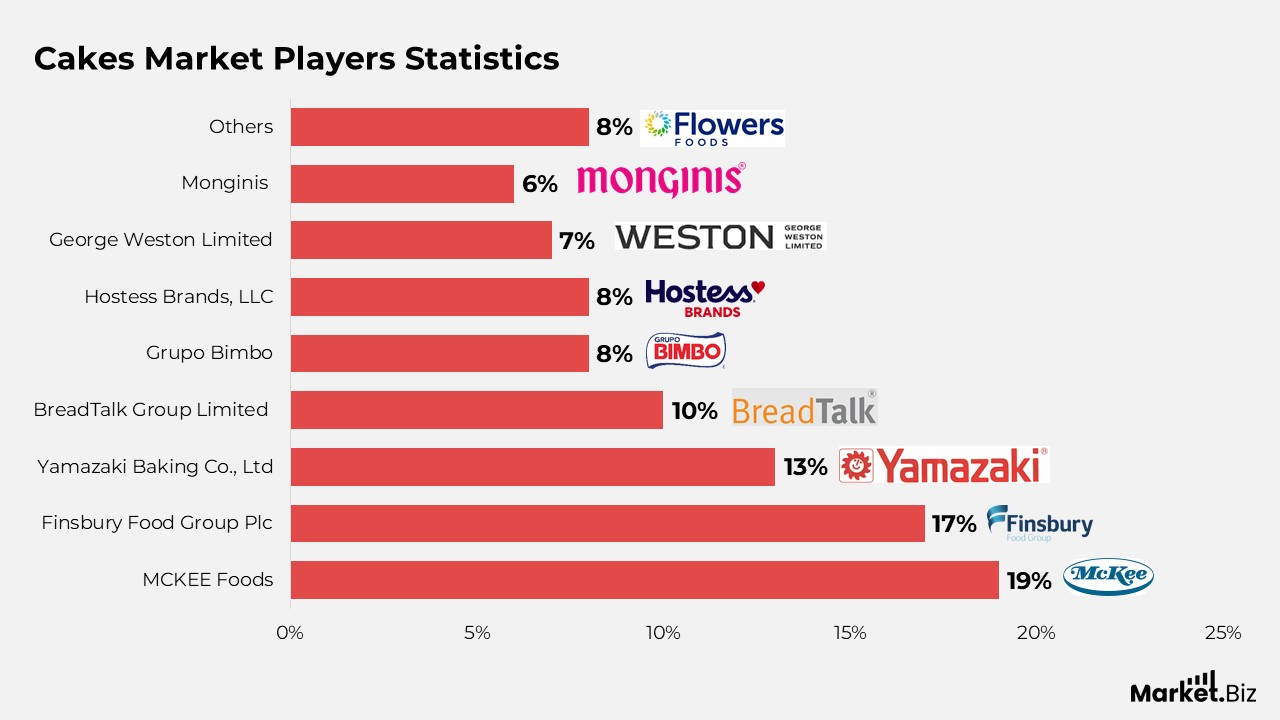
Statistics of Cakes Market Players
- MCKEE Foods stands out as the foremost entity in the cakes market, holding a significant 19% market share.
- Finsbury Food Group Plc follows closely, attaining the second-largest market share at 17%. This reflects a considerable market presence and competitive stance within the cake sector.
- Yamazaki Baking Co., Ltd possesses a notable 13% market share. Indicating a robust presence, likely fueled by innovation and product quality.
- 10% of the market share is held by BreadTalk Group Limited, underscoring its significance in the cake industry.
- Hostess Brands and Grupo Bimbo, LLC each hold an 8% market share, suggesting their parity within the sector.
- George Weston Limited captures a 7% market share, highlighting its importance in the cakes market.
- Monginis maintains a 6% market share, illustrating its competitiveness in the cake sector.
- The combined contribution of other significant players constitutes 8% of the market share.
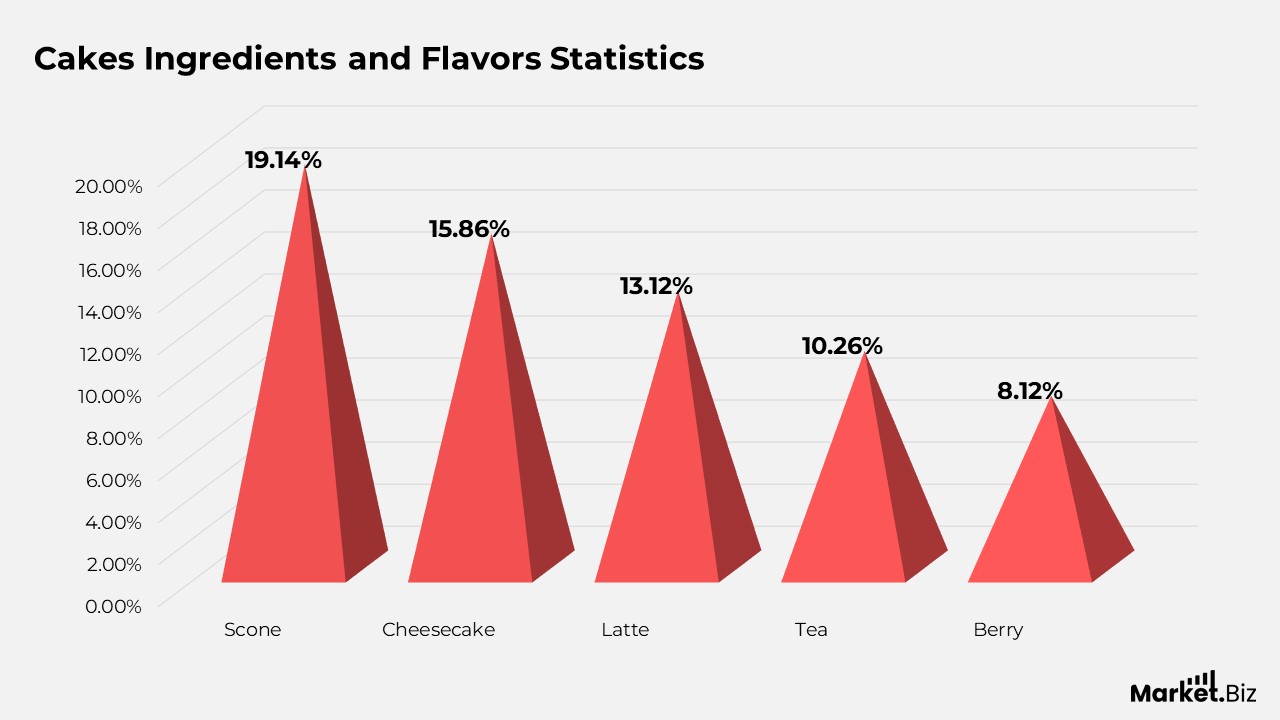
Cakes Ingredients and Flavors Statistics
- Scone-flavoured cakes lead the way with a notable preference rate of 19.14%. This reflects a strong appreciation for the rich and crumbly texture that is characteristic of scones.
- Cheesecake, celebrated for its creamy and indulgent nature, follows closely with a preference rate of 15.86%. This indicates a significant fondness for the essence of this beloved dessert in cake form.
- Latte-flavoured cakes, featuring aromatic and coffee-infused notes, account for 13.12% of consumer preferences. They appeal to those who relish the combination of coffee and cake.
- Tea-infused cakes, with a preference rate of 10.26%, highlight a growing trend where the subtle flavours of various teas are being integrated into cake recipes.
- Lastly, the classic and ever-popular berry flavour captures 8.12% of consumer preference. Providing a fruity and vibrant choice for cake lovers.
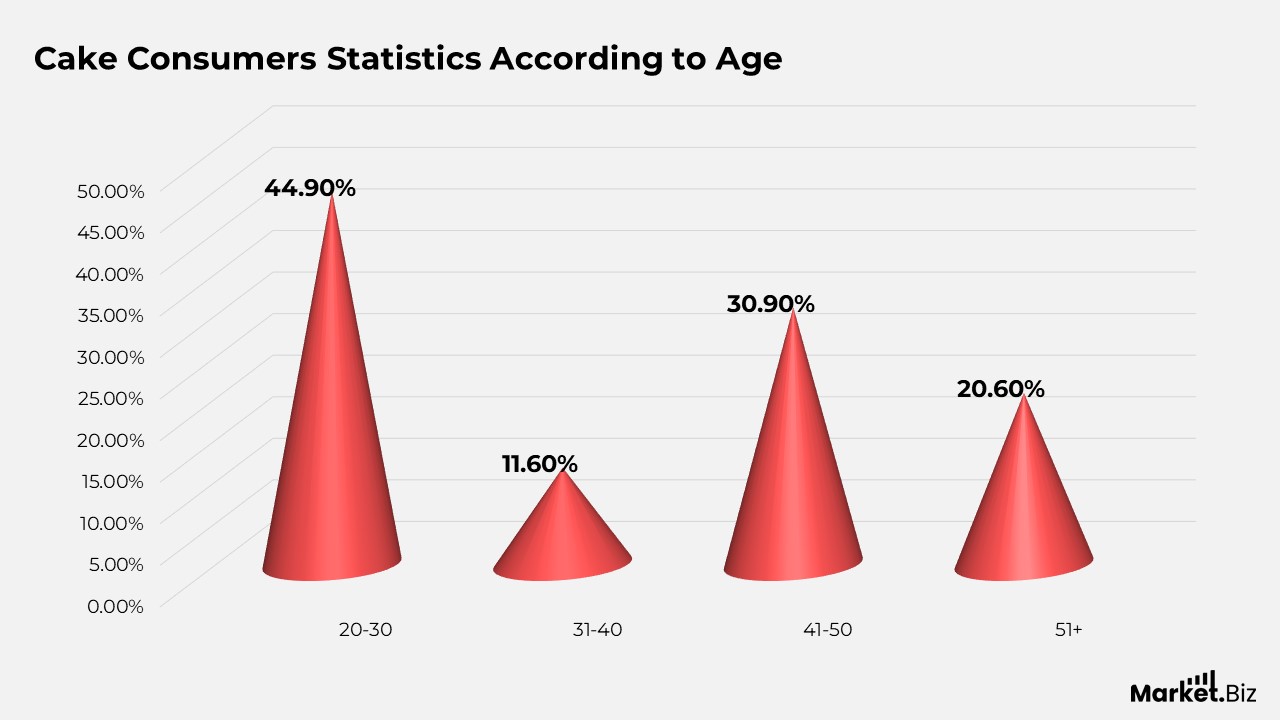
Cake Consumers Statistics According to Age
- Among these age demographics, individuals between the ages of 20 and 30 represent the largest segment, accounting for a notable 44.9% of cake consumers.
- This indicates that younger adults in their twenties exhibit a particular enthusiasm for indulging in cakes, likely due to their varied and adventurous tastes.
- In contrast, the age group of 31 to 40 comprises 11.6% of cake consumers. Signifying a smaller yet significant presence in the market.
- The 41 to 50 age range accounts for 30.9% of consumers. Illustrating a considerable portion of middle-aged individuals who enjoy cakes.
- Finally, those over the age of 51 contribute 20.6% to the consumer demographic, underscoring that even the older generation continues to relish cakes. Highlighting the enduring appeal of this delightful treat.
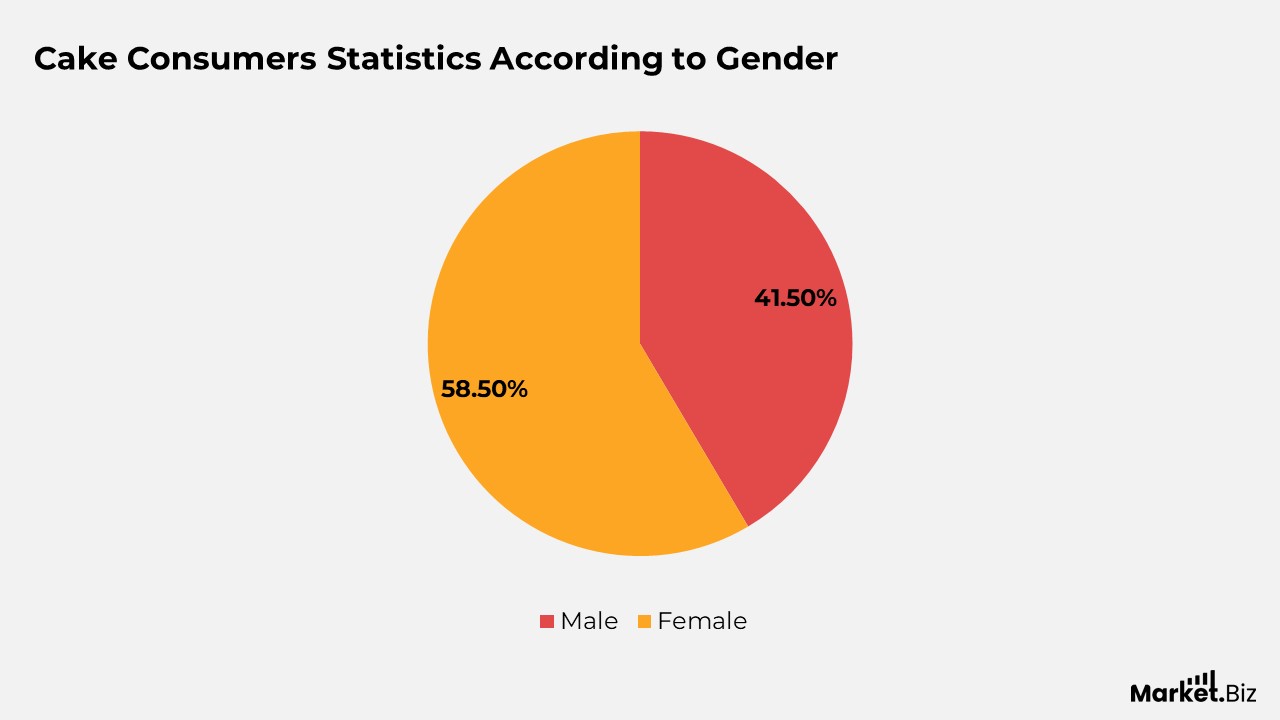
Cake Consumers Statistics According to Gender
- Among cake enthusiasts, women constitute the predominant segment of the consumer base, accounting for a majority share of 58.5%.
- This indicates that females are more likely to have a preference for cakes. Potentially due to their attraction to sweet and indulgent confections.
- Conversely, men represent 41.5% of cake consumers, highlighting their notable presence in the market.
Recent Cakes Consumer Trends Statistics
- A notable 46% of survey respondents have reported a decrease in their breakfast purchases at restaurants, presenting a significant opportunity to broaden the selection of breakfast offerings in in-store bakeries.
- While fresh bakery products are still more frequently linked to special occasions (67%) rather than regular consumption (52%), there is an emerging trend towards spontaneous indulgence and comfort buying.
- Interestingly, 31% of those surveyed indicated that they have increased their purchases of treats available at any time over the last two years compared to the period before the pandemic.
- Premium bakery items are mainly enjoyed in the comfort of home, with 68% of respondents indicating that they purchase these products as treats for themselves and their families.
- Special occasions (62%) and gatherings (42%) are also times when premium bakery items are typically enjoyed.
- When asked to describe what constitutes a “premium” bakery purchase, respondents most commonly cited fresh fruit (46%), visible inclusions (42%), and unique flavours (42%).
Health Concerns Statistics
- In a research study involving nearly 1000 office workers in the UK, their attitudes and behaviors towards workplace cake culture were examined.
- The results indicated that cake was frequently available in the office, with 86% of participants noting its presence at least “once or twice a week.”
- Interestingly, 31% of those surveyed linked weight gain to the consumption of office cake, while 38% felt it complicated their ability to maintain a healthy diet at work, and 59% believed it obstructed their attempts to follow weight loss diets.
- This preliminary data appeared to support the view that “office cake is harmful.”
- Nevertheless, an alternative viewpoint emerged strongly. Surprisingly, 61% of respondents viewed office cake as a beneficial element, with 81% asserting that it promotes camaraderie among coworkers, and 83% agreeing that it enhances morale.
Cakes Recent Statistics
- In 2023, venture capital funds in cake startups reached a total of $2.5 billion, emphasizing companies that provide innovative cake designs, flavours, and delivery services.
- Strategic acquisitions and partnerships among bakery chains, food retailers, and e-commerce platforms represented 55% of the overall investment activity within the cake market in 2023.
- In February 2024, a Series B investment round for a cake delivery startup that specialises in custom-designed cakes successfully raised $30 million to enhance delivery operations and invest in marketing initiatives.
- In April 2024, seed funding was secured for a cake mix company that offers gluten-free and vegan options, amounting to $8 million for product development and the expansion of distribution.
- In January 2024, bakery franchises launched gourmet cake flavours influenced by global cuisines, offering customers distinctive and fascinating cake selections.
- In March 2024, baking supply companies launched personalised cake decorating kits for home bakers, offering convenient tools and decorations for DIY cake projects.
Cakes Future Predictions
- The market is expected to sustain its growth trajectory, exceeding USD 60.0 billion by 2030, and reaching USD 66.1 billion by 2033.
Conclusion
In conclusion, the cake industry is marked by consistent growth and shifting consumer preferences. Innovation in flavors is vital, as both taste and pricing significantly affect consumer decisions.
The culture surrounding cakes in the workplace presents both advantages and disadvantages, underscoring the importance of achieving equilibrium. Grasping consumer demographics and ensuring product quality are critical for thriving in this ever-changing market. Adapting to evolving consumer needs is essential for sustained success in the cake industry.
FAQs
The list of the 10 most popular cakes consistently includes timeless favorites such as Chocolate Cake, Red Velvet Cake, Carrot Cake, and Vanilla Cake, along with fruity selections like Pineapple Cake, Strawberry Cake, and Lemon Cake. Additionally, Cheesecake, Black Forest Cake, and variations such as Pound Cake and Coconut Cake complete this compilation of universally cherished options for both celebrations and everyday indulgence.
The cake flavours that are commonly preferred encompass chocolate, vanilla, red velvet, and lemon. Nonetheless, individual tastes and regional preferences may lead to variations in these choices.
Among the widely used cake decorating techniques are frosting with buttercream or fondant, employing piping for detailed designs, and adding edible embellishments such as flowers, fondant figures, or sprinkles.