









Introduction
Vacuum Cleaner Statistics: Vacuum cleaners play a crucial role in ensuring cleanliness within homes, with their energy usage differing based on the type and frequency of use. Conventional vacuum cleaners generally consume between 500 and 3,000 watts per hour, with an average consumption of around 1,400 watts. On the other hand, robotic vacuum cleaners are designed to be more energy-efficient, utilizing roughly 60 to 100 watts per hour.
The typical household in the United States incurs an expense of about USD 0.11 per hour for the operation of a standard vacuum cleaner. Routine maintenance, such as filter cleaning, can improve efficiency and lower energy expenses. These statistics highlight the significance of choosing and maintaining vacuum cleaners to enhance energy efficiency and cost-effectiveness.
Editor’s Choice
- The global vacuum cleaner market is projected to experience steady growth from 2024 to 2029, with total revenues increasing by USD 8.9 billion (+19.69%).
- The revenue generated in the global Vacuum Cleaners segment in 2025 is projected to be US$46.87 billion.
- In 2027, the price is forecasted to rise to USD 182.7, followed by USD 187.1 in 2028, ultimately closing at USD 191.5 by 2029.
- At the end of 2023, the number of high-end buyers increased to 70,200, while the under-200 euros category experienced a significant reduction to 2.05 million.
- According to Vacuum Cleaner Statistics, over 60% of vacuum cleaners produced in 2023 featured smart capabilities.
- The global market for robotic vacuum cleaners was valued at USD 4.80 billion in 2023. It is projected to grow at an annual rate of 13.7%, reaching USD 9.12 billion in the coming years.
- Total sales of vacuum cleaners reached USD 1.9 billion, representing 61.5% of the market share.
- In 2017, the total imports amounted to £41,359,000, which increased consistently to £45,396,000 in 2018.
General Vacuum Cleaner Statistics
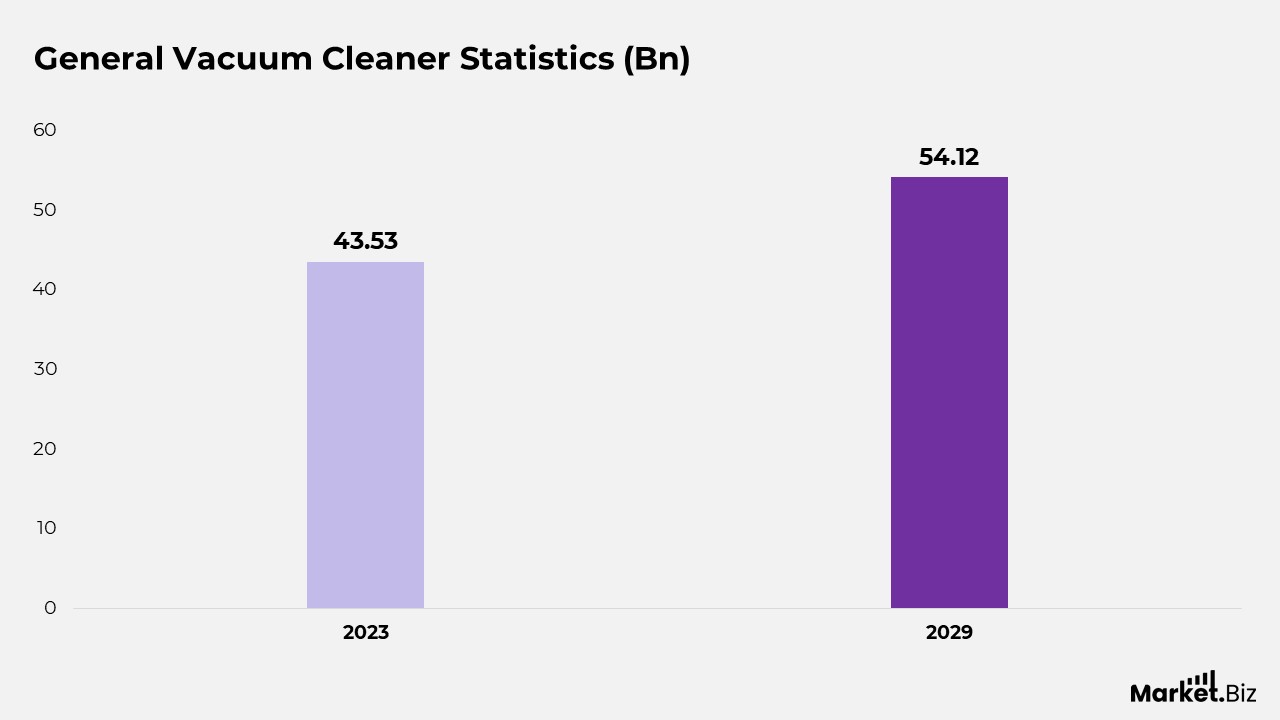
- The global vacuum cleaner market is projected to experience steady growth from 2024 to 2029, with total revenues increasing by USD 8.9 billion (+19.69%).
- The market is forecasted to achieve a record high of USD 54.12 billion by 2029, following seven consecutive years of growth.
- As reported by Vacuum Cleaner Statistics, the robotic vacuum cleaner sector has seen significant expansion over the years. In 2018, the market was valued at USD 37.59 billion, and experts predict it will reach USD 4.98 billion by the end of 2025.
- As of 2023, the overall vacuum cleaner industry was valued at USD 43.53 billion, with an expected annual growth rate (CAGR) of 10.0% from 2024 to 2030.
- Among various types, canister vacuums held the largest revenue share in 2023 (approximately 25%), due to their popularity for cleaning multiple surfaces, fitting into small spaces, and maneuvering around obstacles with ease.
- Robotic vacuums are anticipated to experience the fastest growth between 2024 and 2030, as more consumers seek convenient, automated cleaning solutions.
Moreover
- Furthermore, online sales of vacuum cleaners are expected to rise significantly during this timeframe.
- The commercial vacuum segment is likely to see the most expansion as more businesses and public facilities prioritize hygiene and cleanliness.
- The revenue generated in the global Vacuum Cleaners segment in 2025 is projected to be US$46.87 billion.
- It is expected to have an annual growth rate of 3.64% (CAGR 2025-2030).
- When comparing this market on a global scale, China is expected to generate the highest revenue, amounting to US$13.50 billion in 2025.
- In terms of revenue per household, the Vacuum Cleaners segment is projected to generate US$22.73 in 2025.
- Looking forward, the volume of the Vacuum Cleaners segment is expected to reach 286.13 million units by 2030.
- In 2026, a volume growth of 1.16% is anticipated.
- On average, each household is expected to possess 0.13 units in the Vacuum Cleaners segment in 2025.
- In the global vacuum cleaner market, the United States is at the forefront, demonstrating a strong demand for advanced, smart vacuum cleaners.
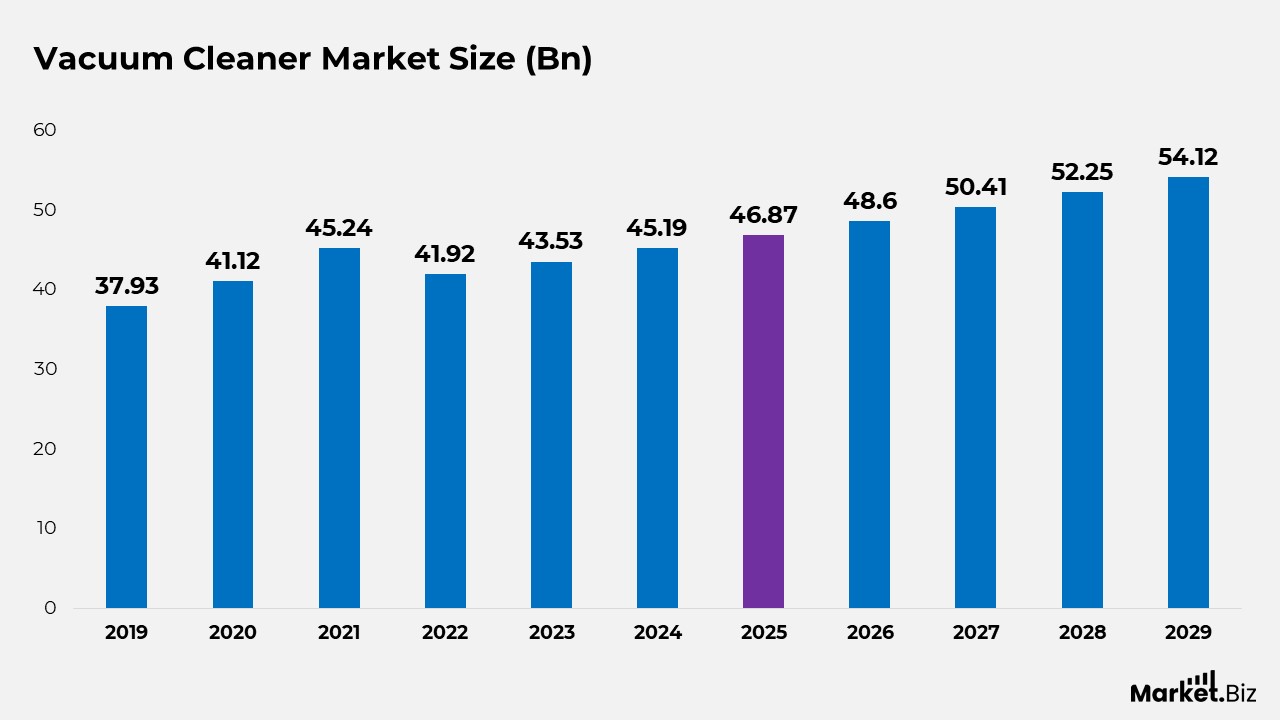
Vacuum Cleaner Market Size
- The global vacuum cleaner market has shown a consistent upward trend over the last ten years. Its market size has grown from USD 37.59 billion in 2018 to a projected USD 54.12 billion by 2029.
- After a modest increase from USD 37.59 billion in 2018 to USD 37.93 billion in 2019, the market saw substantial growth, reaching USD 41.12 billion in 2020.
- This upward momentum continued robustly through 2021, when the market size peaked at USD 45.24 billion.
- Nevertheless, a slight decrease to USD 41.92 billion was noted in 2022, likely due to market fluctuations or external economic influences.
- The recovery was rapid, with the market bouncing back to USD 43.53 billion in 2023.
- Projections indicate continued growth in the following years, with market sizes anticipated to be USD 45.19 billion in 2024, USD 46.87 billion in 2025, and USD 48.60 billion in 2026.
- By 2027, the market is expected to reach USD 50.41 billion, progressing to USD 52.25 billion in 2028 and culminating at USD 54.12 billion by 2029. This reflects a compound annual growth rate (CAGR) of 3.67%, indicative of strong demand and innovation within the industry.
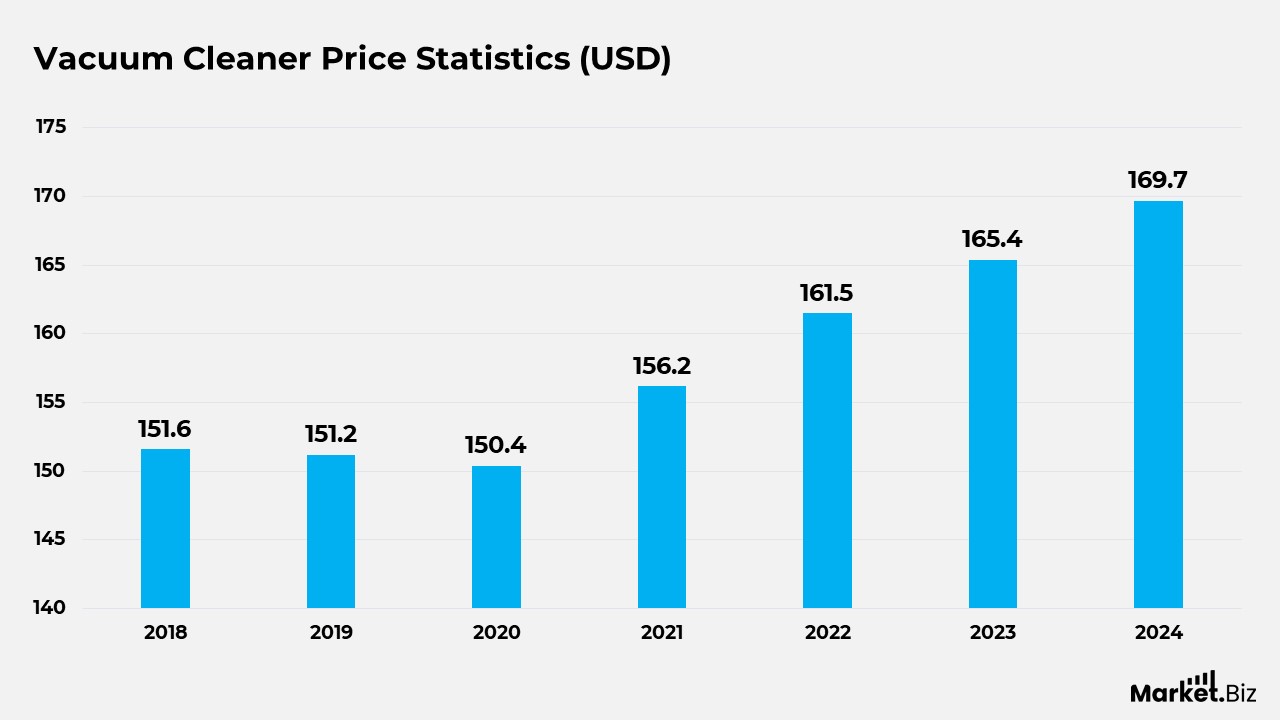
Price Statistics of Vacuum Cleaner
- The average unit price of vacuum cleaners has experienced a steady rise over the years, indicative of technological advancements, improved product features, and evolving consumer preferences.
- In 2018, the average price stood at USD 151.6, which saw a slight decline to USD 151.2 in 2019 and further decreased to USD 150.4 in 2020.
- Nevertheless, a significant increase to USD 156.2 was recorded in 2021, followed by a considerable jump to USD 161.5 in 2022.
- This upward trajectory is anticipated to persist, with projected prices of USD 165.4 in 2023 and USD 169.7 in 2024.
- By the end of 2025, the average price is expected to reach USD 174.0, with a further increase to USD 178.4 in 2026.
- In 2027, the price is forecasted to rise to USD 182.7, followed by USD 187.1 in 2028, ultimately closing at USD 191.5 by 2029.
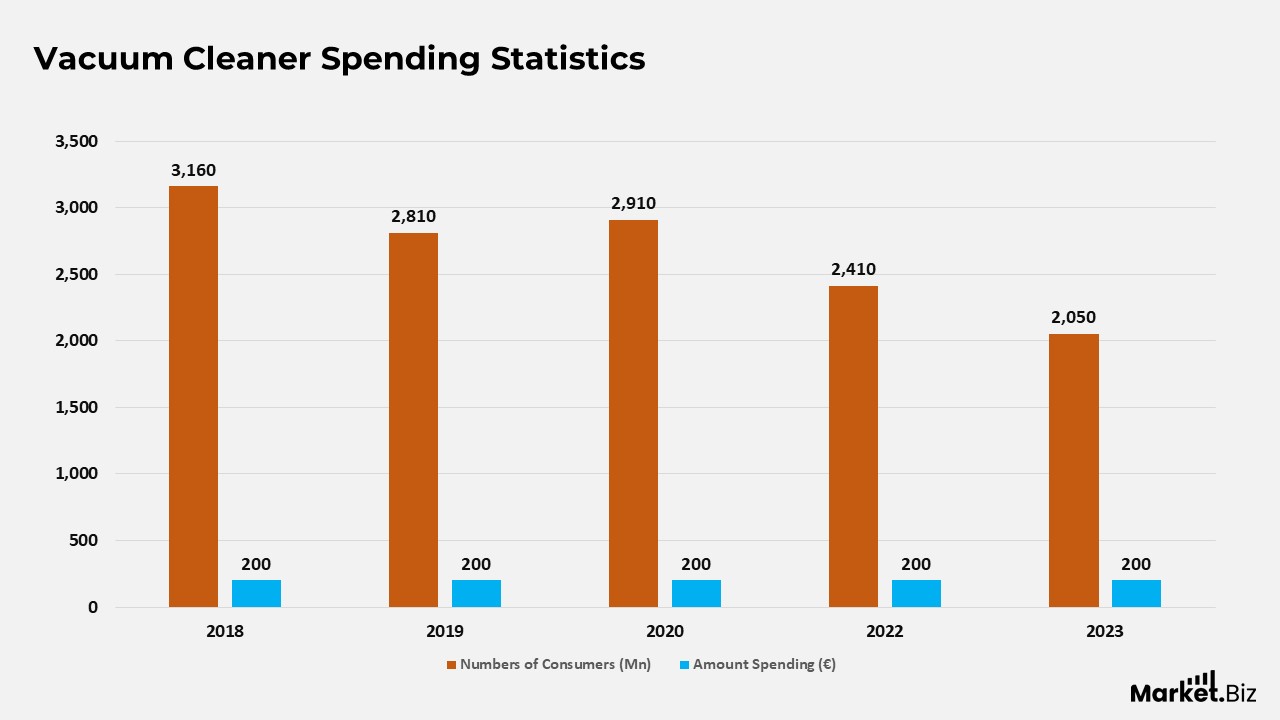
Vacuum Cleaner Spending Statistics
- Between 2016 and 2023, there were significant changes in the number of vacuum cleaner buyers in Great Britain across various spending categories.
- In 2016, the largest group of consumers (4.65 million) spent less than 200 euros, whereas only 58,000 individuals spent 500 euros or more.
- The mid-range spending categories of 200-299 euros and 300-399 euros had 1.38 million and 391,000 buyers, respectively, while 146,000 consumers spent between 400-499 euros.
- In 2018, spending behaviors changed again, with 3.16 million consumers buying vacuums for under 200 euros, while 49,000 spent 500 euros or more.
- The trend of increased spending persisted in 2019, with 82,300 buyers in the 500 euros or more category and 177,000 in the 400-499 euros range. Conversely, those spending under 200 euros decreased to 2.81 million.
- In 2020, the number of high-end buyers fell to 41,200, while mid-range purchases (200-299 euros) dropped to 1.17 million, and 2.91 million consumers spent under 200 euros.
- In 2022, 44,400 individuals spent 500 euros or more, alongside a further decline in the under-200 euros category to 2.41 million.
- At the end of 2023, the number of high-end buyers increased to 70,200, while the under-200 euros category experienced a significant reduction to 2.05 million.
Household Vacuum Cleaner Statistics
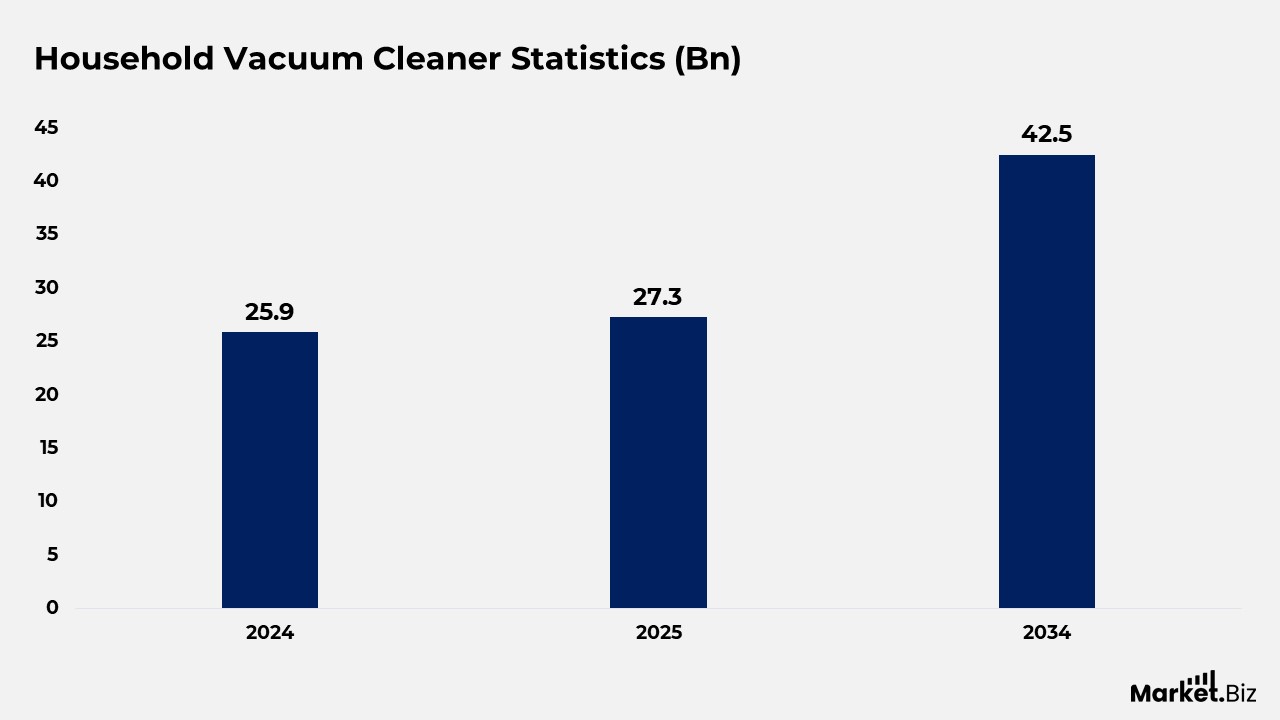
- The worldwide market for household vacuum cleaners was valued at USD 25.9 billion in 2024. Projections indicate growth from USD 27.3 billion in 2025 to USD 42.5 billion by 2034, with a compound annual growth rate (CAGR) of 5%.
- A significant number of consumers now favor cordless and battery-operated vacuums, as advancements in battery technology have enhanced their longevity and performance, rendering them a more practical option for households.
- Moreover, the integration of smart home technology has allowed vacuum manufacturers to embed Wi-Fi connectivity, app controls, and voice command functionalities into their products. These innovations enable users to initiate cleaning remotely, monitor progress, and receive maintenance notifications.
- According to Vacuum Cleaner Statistics, over 60% of vacuum cleaners produced in 2023 featured smart capabilities.
- Certain models even utilize artificial intelligence (AI) and machine learning to modify their cleaning strategies based on the layout of homes and the types of flooring.
- Contemporary consumers also show a preference for multi-functional appliances, resulting in an increase in vacuum cleaners that provide various capabilities.
Moreover
- Cordless vacuums commanded the largest market share, valued at USD 7.9 billion in 2024, and are projected to reach USD 14.2 billion by 2034.
- Robotic vacuums are increasingly sought after due to their intelligent navigation and automation features, which require minimal manual intervention.
- Stick vacuums are favored for their lightweight design, cordless operation, and ease of use, striking a balance between power and convenience.
- Upright vacuums are recognized for their powerful suction and broad cleaning path, making them ideal for extensive carpeted areas.
- Canister vacuums are easy to maneuver, making them well-suited for hard floors and compact spaces.
- Handheld vacuums are perfect for quick cleanups on furniture, stairs, and confined areas.
- Each type of vacuum addresses a specific cleaning requirement, rendering the market highly responsive to diverse consumer preferences.
- The vacuum cleaner market is segmented into online and offline sales channels.
- The offline segment represented 57.8% of total sales in 2024 and is anticipated to continue its growth through 2034.
Robotic Vacuum Cleaner Statistics
- The global market for robotic vacuum cleaners was valued at USD 4.80 billion in 2023. It is projected to grow at an annual rate of 13.7%, reaching USD 9.12 billion in the coming years.
- Smart homes are becoming increasingly widespread; by 2024, North America is expected to have 78 million smart homes, which will drive the demand for sophisticated robot vacuums.
- In 2022, approximately 59.5% of smart robot vacuums were utilized in commercial environments, while the remainder were employed for residential cleaning.
- The United States, Japan, and China are recognized as some of the fastest-growing markets for these intelligent cleaning devices.
- Currently, the Asia-Pacific (APAC) region represents the largest market for robot vacuums.
- From 2023 to 2027, the residential sector is anticipated to be the fastest-growing segment for robot vacuums.
- During this period, the APAC region is expected to account for 41% of the global growth.
- Total sales of vacuum cleaners reached USD 1.9 billion, representing 61.5% of the market share.
- According to Vacuum Cleaner Statistics, self-charging robotic vacuums are projected to be valued at USD 1.88 billion by the end of 2023, with a compound annual growth rate (CAGR) of 14.8%.
- India commands 8.6% of the global home robot vacuum market, which is valued at USD 258.4 million.
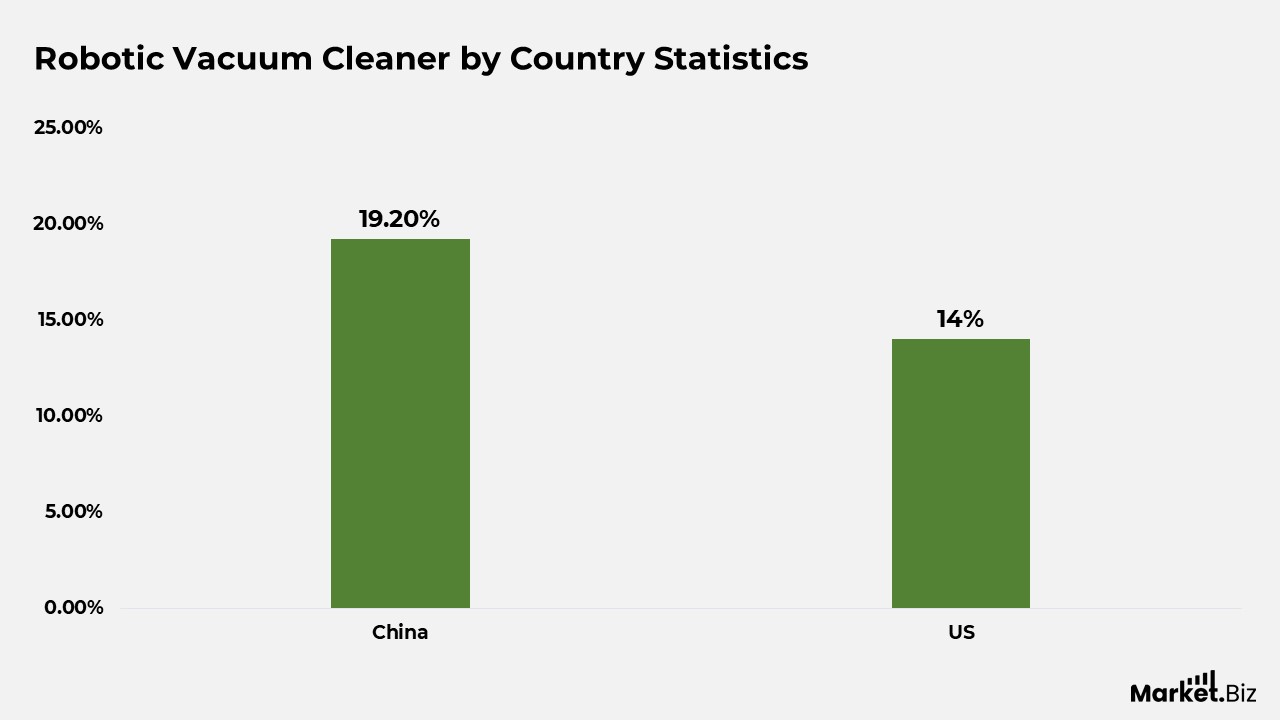
- China holds a 19.2% market share and is expected to experience a 15% CAGR by 2033.
- As of 2023, 14% of Americans possess a smart robot vacuum.
- The rise of smart home devices in North America has contributed to an increase in the adoption of robotic vacuums.
- By 2024, approximately 9 million households in the U.S. are projected to utilize smart home technology, representing over half of all homes. This indicates a 10% annual increase in adoption.
Vacuum Cleaner by Brands Statistics
- Between 2014 and 2020, the global market for robotic vacuum cleaners experienced notable changes in brand market shares.
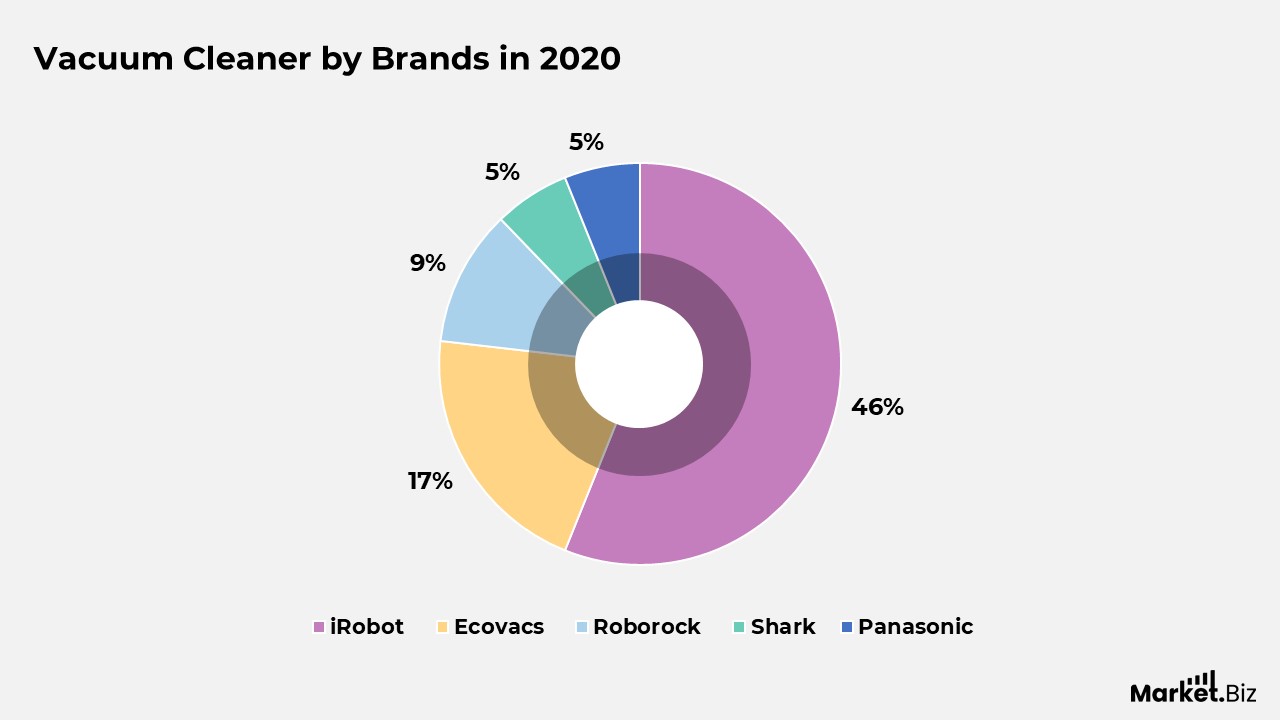
- iRobot retained its leading position throughout this timeframe, with its market share reaching a high of 64% in 2016, subsequently declining to 46% by 2020.
- Ecovacs steadily improved its standing, increasing its market share from 7% in 2014 to 17% in 2020, thereby establishing itself as a formidable competitor.
- Mi entered the market in 2017, securing a consistent share of 4-5% in the subsequent years.
- Roborock also emerged as a significant contender, expanding its share from 4% in 2018 to 9% in 2020.
- Shark’s market presence grew modestly from 1% in 2017 to 5% in 2020.
- Neato Robotics showed fluctuations, maintaining a small yet stable share of 2-4% during this period.
- Panasonic’s market presence waned after holding 3% in both 2016 and 2017, while Cecotec gained momentum, achieving 5% in 2020.
- Other brands, such as Samsung and Dyson, retained minor market shares, with Samsung’s presence diminishing from 6% in 2014 to 1% in later years.
- Simultaneously, the share of “Others” significantly decreased from 22% in 2014 to a low of 9% in 2019, before recovering to 19% in 2020, reflecting increased fragmentation and competition within the market.
Vacuum Cleaners Import Statistics
- Between 2017 and 2023, the import value of vacuum cleaner components in the United Kingdom displayed a variable pattern.
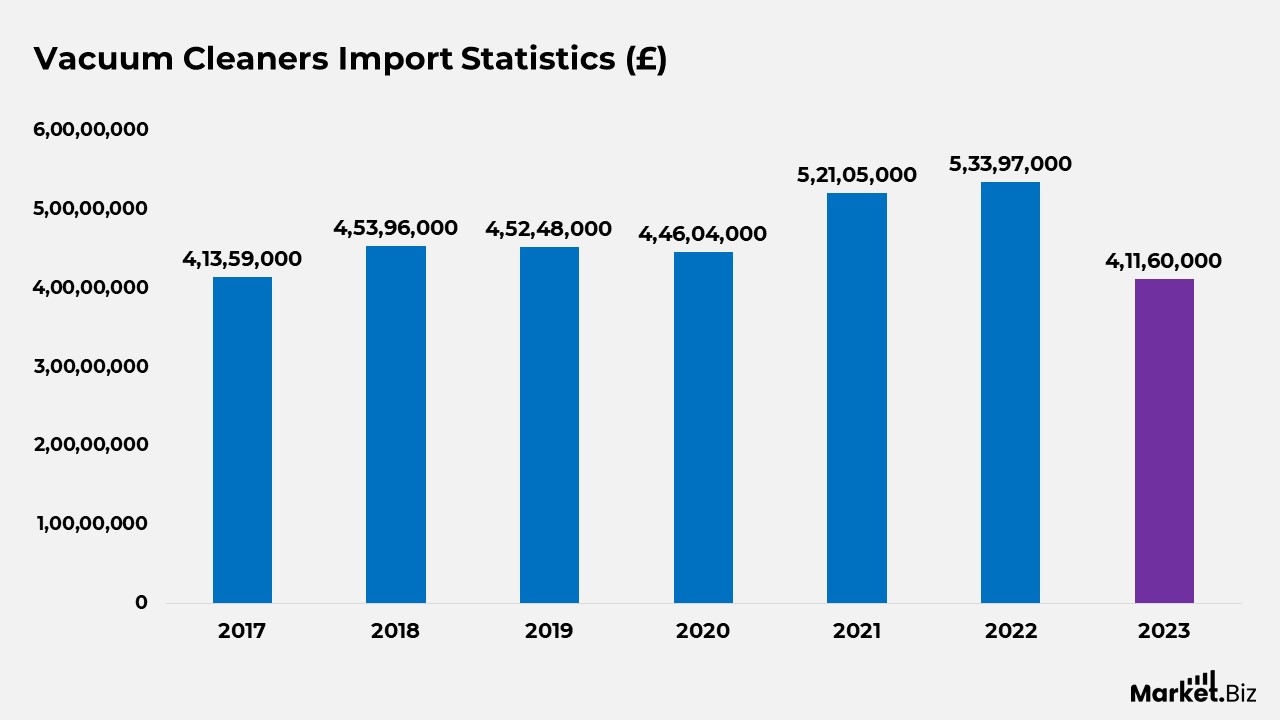
- In 2017, the total imports amounted to £41,359,000, which increased consistently to £45,396,000 in 2018.
- The value remained fairly constant in 2019, at £45,248,000, before experiencing a slight decline to £44,604,000 in 2020.
- A notable surge occurred in 2021, with the import value reaching £52,105,000, followed by an additional increase to £53,397,000 in 2022, representing the peak value during this timeframe.
- Nevertheless, in 2023, imports fell sharply to £41,160,000, indicating a return to levels comparable to those of 2017.
Recent Developments
- In January 2024, Dreame International, Ltd. unveiled its entire lineup of smart home products at the CES 2024 event. The company presented a variety of new smart cleaning devices, including the DreameBot L10s Pro Ultra, DreameBot X30 Ultra, Dreame H13 Pro Wet and Dry Vacuum, DreameBot L20 Ultra, and the Dreame Z10 Station Cordless Vacuum Cleaner.
- In January 2024, Samsung Electronics Co., Ltd. announced the launch of a new range of vacuum cleaners, the Bespoke Jet Bot Combo, which is equipped with advanced artificial intelligence capabilities at CES 2024. This new series combines vacuuming and mopping functions, offering steam cleaning and enhanced AI features to facilitate a more convenient cleaning experience for customers.
- In June 2023, Dyson introduced the next generation of cordless vacuums with the Dyson Gen5outsize and Gen5detect. The latter model is a robust cordless vacuum that incorporates a fifth-generation Hyperdymium motor, providing 280 air watts of powerful suction. These devices are equipped with a fully sealed HEPA filtration system designed to capture 99.9% of viruses and 99.99% of particles as small as 0.1 microns.
Conclusion
Vacuum Cleaner Statistics: The vacuum cleaner sector is witnessing consistent growth driven by technological innovations, enhanced compatibility with smart home systems, and evolving consumer preferences.
Individuals are increasingly choosing cordless, robotic, and versatile models due to their superior convenience, efficiency, and automation capabilities. Features like pet-friendly designs, HEPA filters that enhance air quality, and AI-driven navigation are also shaping purchasing behaviors.
Furthermore, China, the United States, and the Asia-Pacific region rank among the fastest-growing markets, with a notable shift towards online shopping and smart technologies.
As innovation progresses, the vacuum cleaner market is anticipated to further expand, offering smarter, environmentally friendly, and high-performance cleaning solutions tailored for contemporary households.
FAQs
40 to 50 million vacuum cleaners are sold annually in the United States, with the majority being upright models. The vacuum cleaner market is projected to grow at a rate of 9.6% from 2020 to 2028. Additionally, the global market for cleaning robots is estimated to be valued at $2.5 billion.
Typically, most vacuum cleaners can last between 5 and 8 years when properly maintained. However, if you observe a noticeable drop in performance, such as diminished suction, unusual sounds, or a lack of cleaning efficiency, it may be advisable to consider replacing the unit.
Indeed, a vacuum cleaner effectively removes dust by employing suction to lift and gather dust, dirt, allergens, and other debris from surfaces such as floors, carpets, and upholstery. The air and particles are drawn into the vacuum, where they are separated by a bag or tank and filter, and subsequently expelled, often resulting in cleaner air and a healthier home environment, particularly beneficial for individuals with allergies or respiratory conditions.