









Introduction
Cookies Statistics: Cookies, which are referred to as biscuits in certain regions, are widely enjoyed baked confections created from a blend of flour, sugar, fat, and flavourings such as chocolate chips or nuts. They are available in numerous varieties, including chocolate chip, oatmeal, and peanut butter, each offering its distinct flavour and texture.
The process of making cookies entails mixing the ingredients, forming the dough, and baking it until it achieves a golden brown color. Individuals frequently savor cookies on their own or paired with hot beverages.
In contemporary times, there is a growing preference for healthier alternatives such as gluten-free and vegan cookies, in addition to artisanal and gourmet options crafted from premium ingredients. In summary, cookies continue to be a cherished snack enjoyed by individuals of all ages around the globe.
Editor’s Choice
- The global cookies market achieved a revenue of 39.8 billion USD in 2023.
- PepsiCo Inc. and Ferrero International S.A. hold significant positions, each commanding an 11% share.
- Europe stands out as the leading region, commanding the largest market share at 36%.
- The nutritional profile of two large cookies, each weighing 54 grams, is varied.
- Sales increased by 27.5% compared to the same timeframe in 2022, totaling $991 million in revenue.
- Russia, Brazil, and France demonstrated notable consumption rates, ranging from 5.75 to 5.56 kilograms per capita.
- The leading exporters of cookies by country are Mexico, which has exports amounting to $1,168,551,000 and a growth rate of 24.2%.
General Cookies Statistics
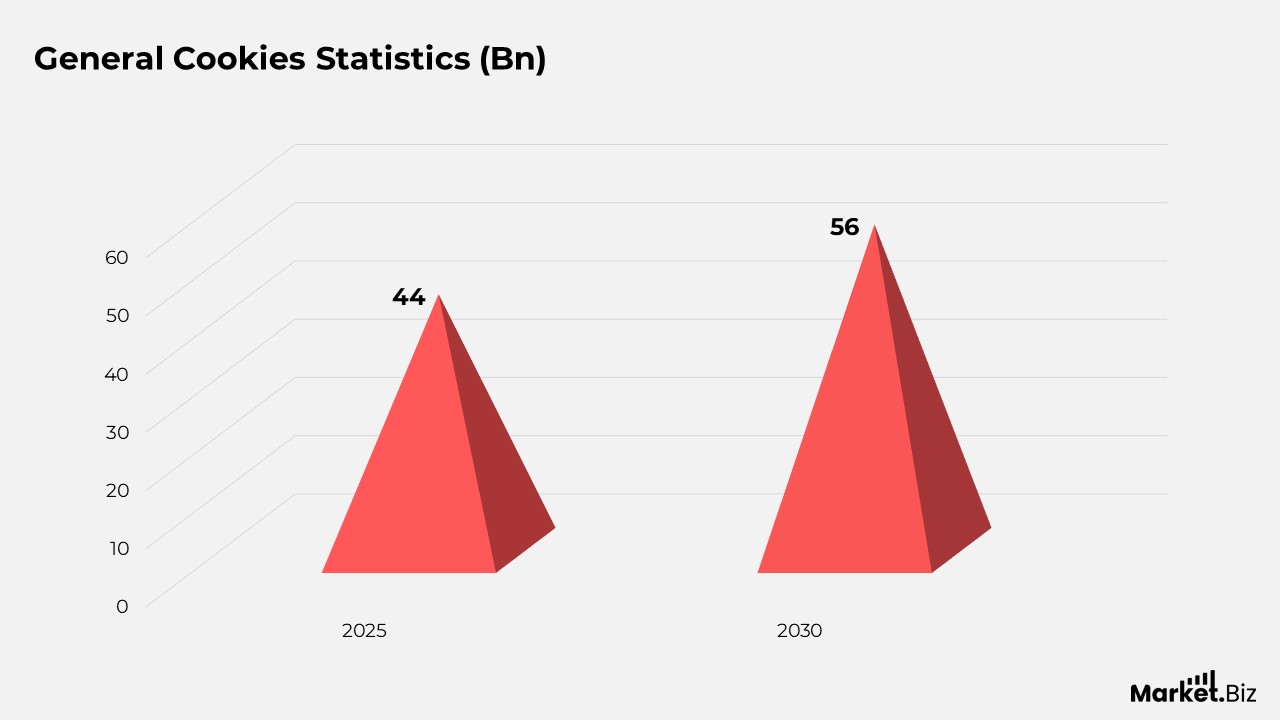
- The global cookies market achieved a revenue of 39.8 billion USD in 2023.
- Mondelez International leads the competitive arena, commanding a significant market share of 15%.
- Europe is recognised as the foremost region, holding the largest market share at 36.0%.
- Cookies contain a total caloric value of 171 calories, with 80 calories derived from fat.
- Among the various ingredients and flavours utilised in cookies, gingerbread is currently trending, exhibiting a remarkable growth rate of 26.32%, reflecting an increasing preference for its warm and spicy flavour profile.
- A significant portion of consumers expresses interest in trying a new cookie if it presents a unique flavour, whereas almost 25% of consumers indicate an increase in cookie ingesting relative to the previous year.
- In 2014, Argentina was ranked highest for cookie consumption, with individuals averaging 12.44 kilograms per year.
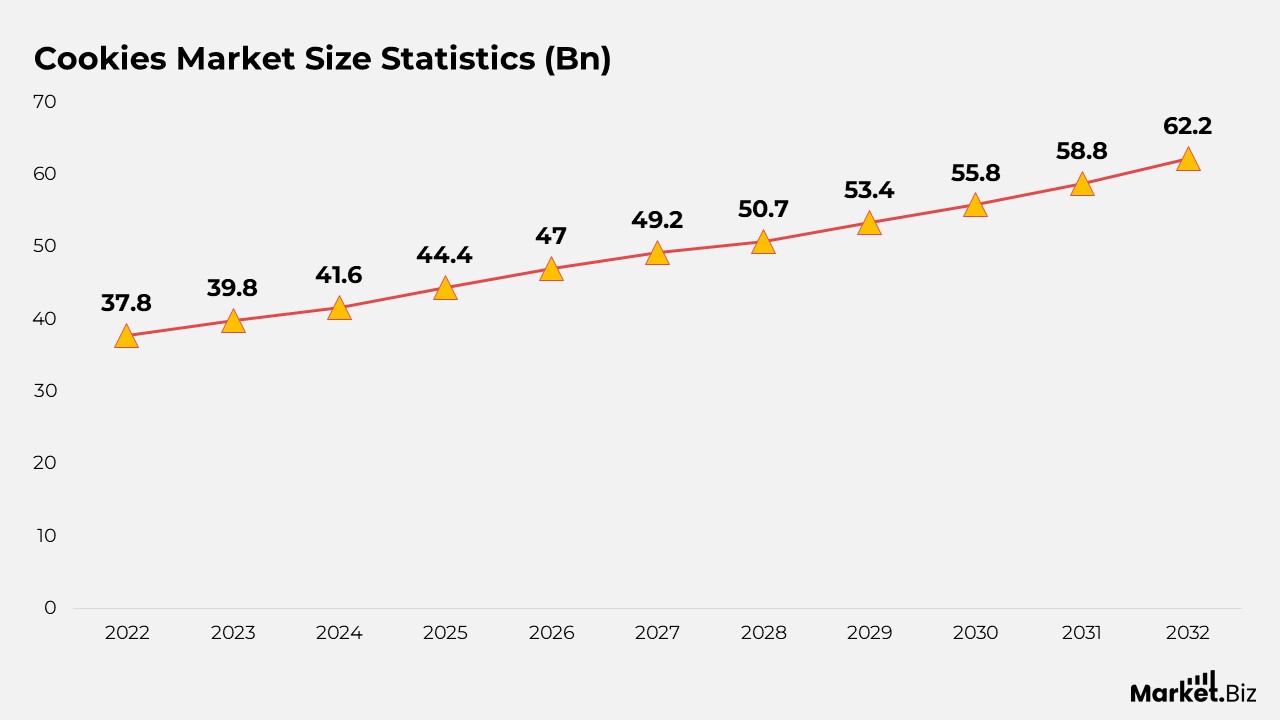
Cookies Market Size Statistics
- The global cookies market has shown consistent revenue growth over the years, with a significant rise from 37.8 billion USD in 2022 to 62.2 billion USD in 2032, reflecting a compound annual growth rate (CAGR) of 5.2%.
- The market saw gradual annual increases, with revenue reaching 39.8 billion USD in 2023 and steadily climbing to 41.6 billion USD in 2024, 44.4 billion USD in 2025, and 47.0 billion USD in 2026.
- This upward trend continued in the subsequent years, with revenue hitting 49.2 billion USD in 2027, 50.7 billion USD in 2028, and 53.4 billion USD in 2029.
- The market’s growth continued, culminating in revenues of 55.8 billion USD in 2030, 58.8 billion USD in 2031, and ultimately reaching 62.2 billion USD in 2032.
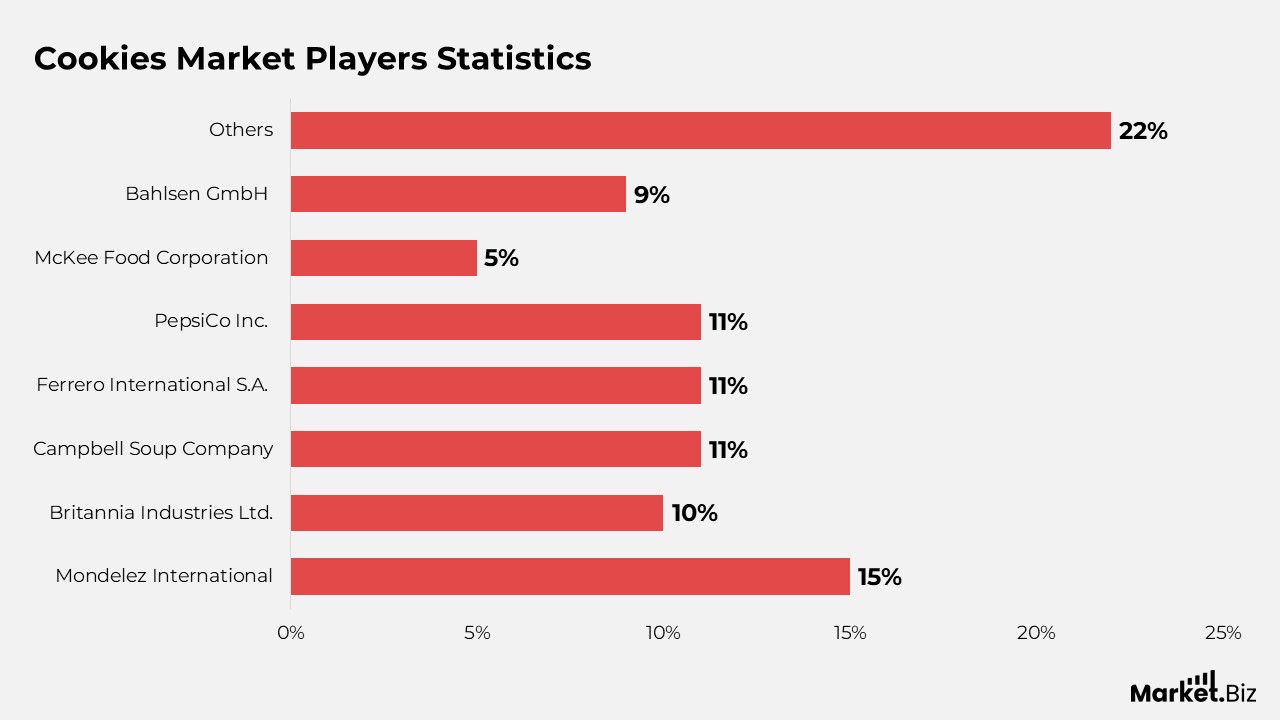
Cookies Market Players Statistics
- Mondelez International is at the forefront, boasting a considerable market share of 15%, with Britannia Industries Ltd. and Campbell Soup Company closely following, each possessing 10% and 11% respectively.
- PepsiCo Inc. and Ferrero International S.A. also hold significant positions, each commanding an 11% share.
- In addition, Bahlsen GmbH and McKee Food Corporation contribute 9% and 5% respectively. Another important participant in the market is Britannia Industries Ltd., which secures an 8% share.
- Together, these companies account for the majority of the market, while other significant players make up the remaining 22%.
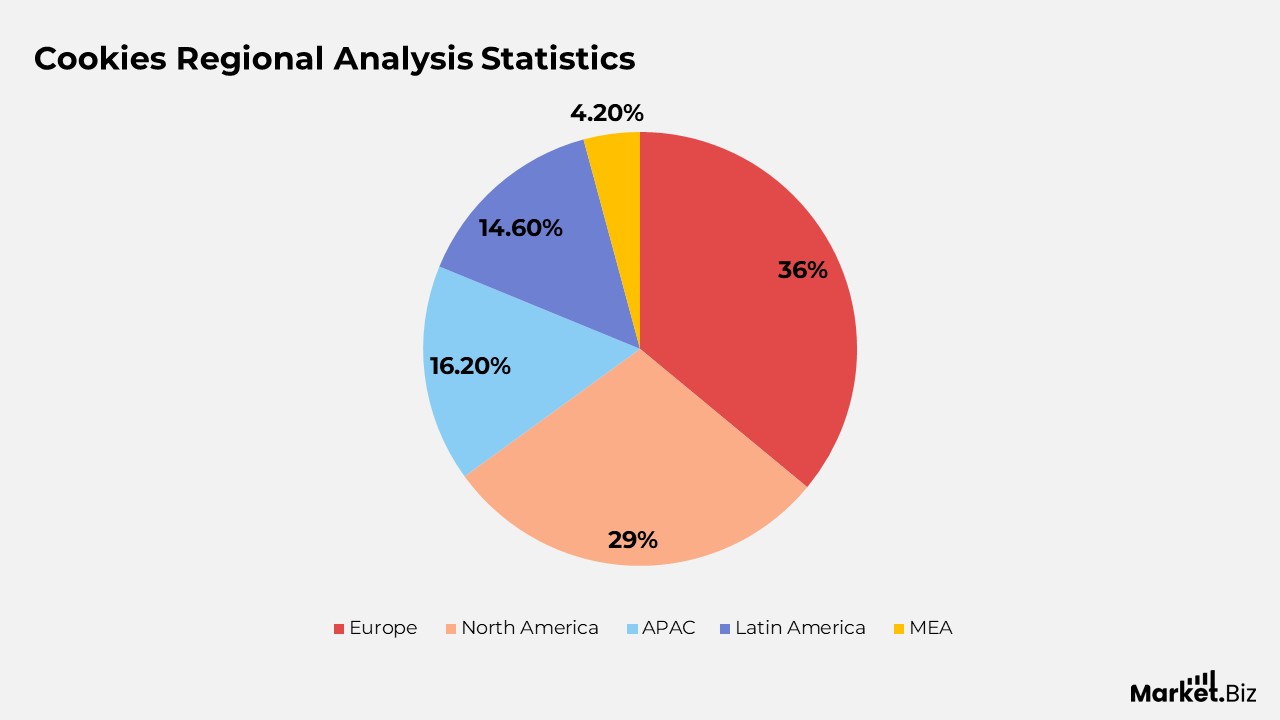
Regional Analysis Statistics
- Europe stands out as the leading region, commanding the largest market share at 36%.
- North America follows closely, possessing a considerable share of 29%.
- In the Asia-Pacific (APAC) region, the market share is recorded at 16.2%, indicating notable yet relatively lower consumption levels.
- The contributions from Latin America and the Middle East & Africa (MEA) regions are 14.6% and 4.2%, respectively, to the global market.
Cookies Nutritional Statistics
- The nutritional profile of two large cookies, each weighing 54 grams, is varied.
- These cookies have a combined total of 171 calories, with 80 calories coming from fat.
- They contain 8.8 grams of total fat, which makes up 14% of the suggested daily intake.
- The cholesterol level is low at 1 milligram, accounting for 0% of the daily value.
- The cookies offer 153 milligrams of sodium, which contributes 6% to the daily intake recommendation. Furthermore, each serving includes 2.5 grams of protein.
- Total carbohydrates reach 22.0 grams, representing 7% of the daily value, which includes 2.0 grams of dietary fiber.
- Regarding vitamins and minerals, the cookies provide 0% of the recommended daily intake for Vitamin A, 2% for calcium, and 4% for iron.
Cookies Ingredients & Flavors Statistics
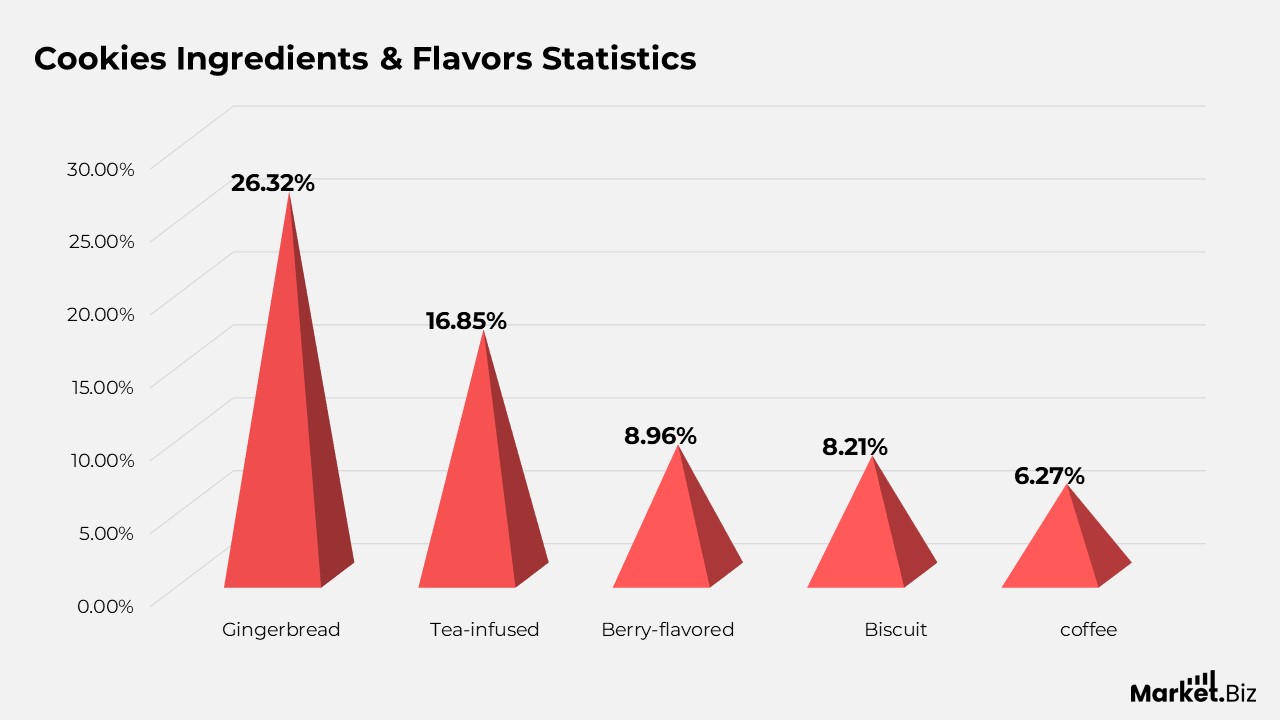
- Among the diverse range of ingredients and flavors used in cookies, certain selections have demonstrated remarkable growth rates, signifying an increase in consumer popularity.
- Gingerbread tops the trend with an impressive growth rate of 26.32%, showcasing a growing preference for its warm and spicy flavour profile.
- Tea-infused cookies are not far behind, experiencing a substantial rise in demand with a growth rate of 16.85%.
- Cookies flavoured with berries also saw a significant increase in popularity, achieving a growth rate of 8.96%.
- Biscuit and coffee flavours complete the list, with growth rates of 8.21% and 6.27% respectively, reflecting a continued interest in these traditional flavours among cookie lovers.
Statistics of Cookies Sales
- In the 52 weeks ending on March 26, 2023, data from Circana in Chicago indicates a notable expansion in the center store cookies segment, which encompasses pre-packaged bakery products.
- Sales in this segment increased by 27.5% compared to the same timeframe in 2022, totaling $991 million in revenue.
- In the centre store traditional cookies segment, sales amounted to $833 million, representing a 26.7% rise.
- Conversely, the centre store iced/frosted cookies segment achieved $142 million in sales, reflecting a 30.4% growth.
- Importantly, the centre store assorted/multi-pack cookies subsection recorded sales of $11.3 million, showcasing an impressive 73.6% increase from 2022.
Cookies Consumption Statistics
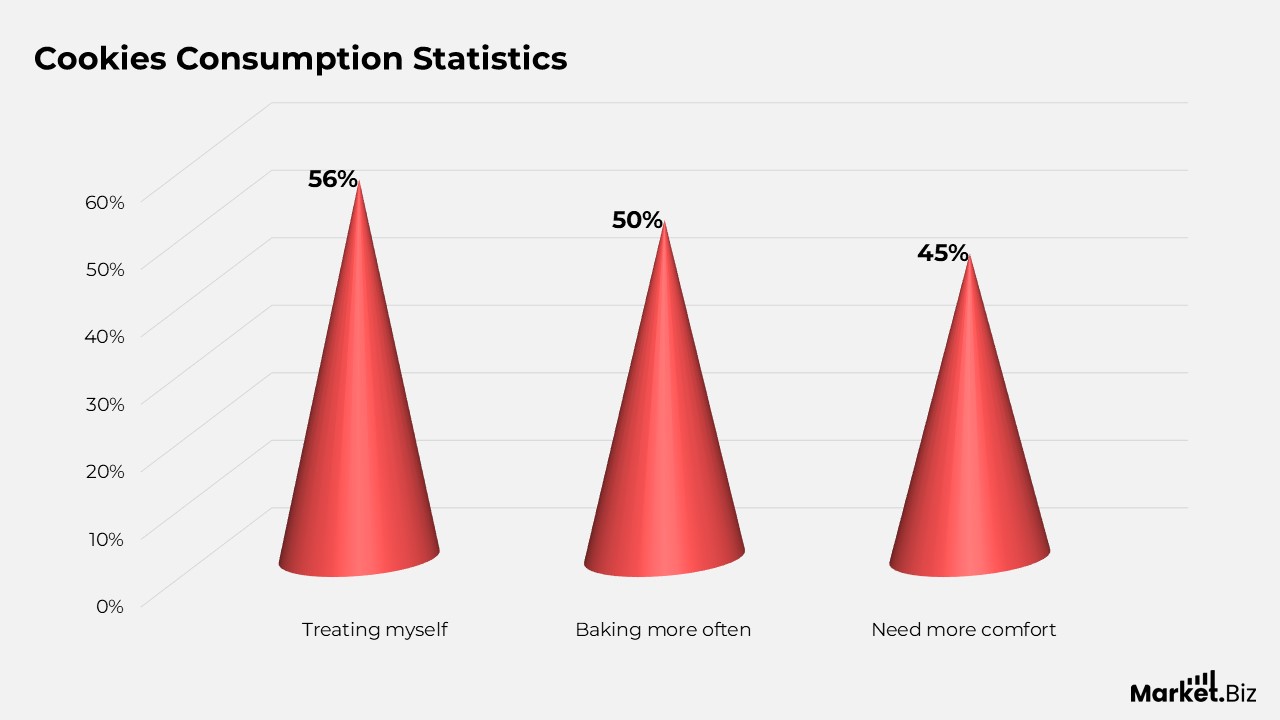
- The main motivations for cookie consumption differ from person to person; however, certain patterns can be identified from consumer feedback.
- A considerable majority, representing 56%, indicates that treating themselves or their families is a primary reason for enjoying cookies. This highlights a yearning for minor indulgences and moments of self-care.
- Furthermore, 50% of participants report that baking more frequently is a reason for cookie consumption, implying a rise in home baking activities and a preference for freshly prepared treats.
- In addition, 45% convey a desire for greater comfort, suggesting that cookies provide a source of comfort and nostalgia during difficult times.
Cookie Consumption by Country Statistics
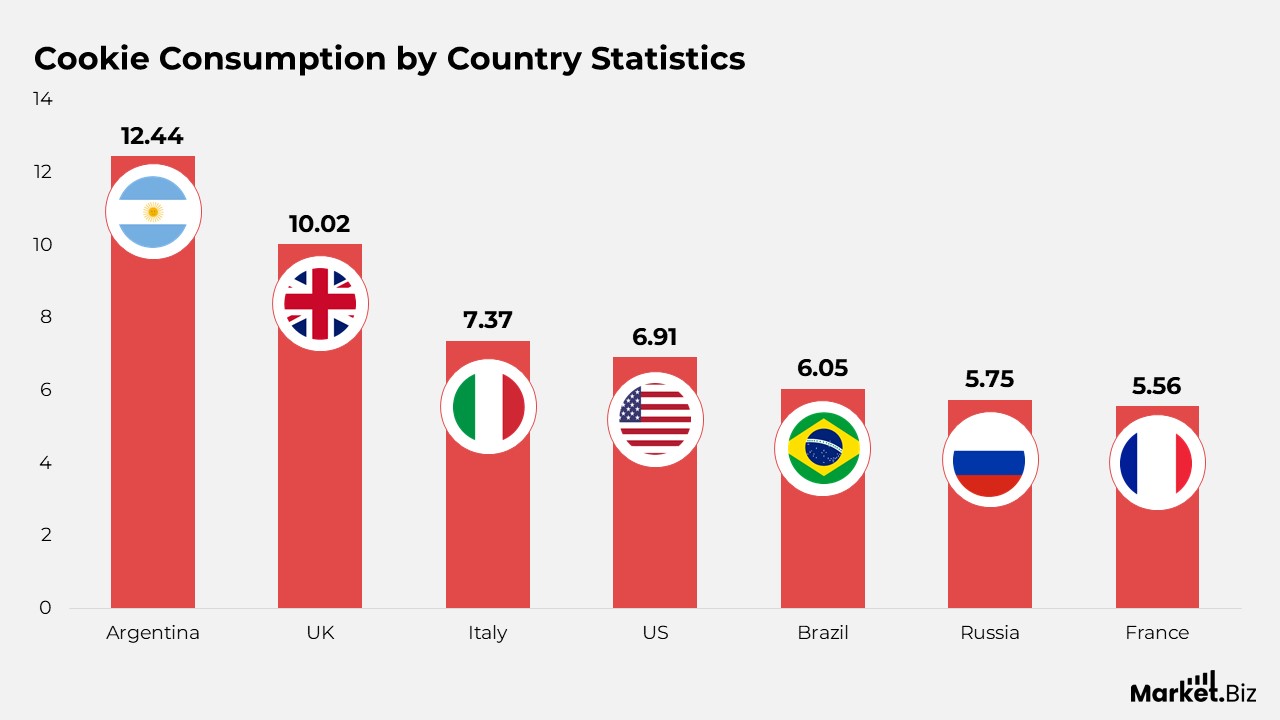
- In 2014, the per capita intake of crackers and cookies displayed significant differences among various countries.
- Argentina led the rankings with the highest consumption, with individuals averaging 12.44 kilograms annually.
- The United Kingdom was not far behind, with a per capita consumption of 10.02 kilograms.
- The United States and Italy reported consumption levels of 6.91 kilograms and 7.37 kilograms, respectively.
- Russia, Brazil, and France also demonstrated notable consumption rates, ranging from 5.75 to 5.56 kilograms per capita.
- In contrast, Mexico had a slightly lower consumption rate of 4.75 kilograms.
- In sharp contrast, India and China exhibited significantly lower consumption rates, with individuals averaging 1.37 kilograms and 2.23 kilograms, respectively.
Cookies Exporting Nations Statistics
- The leading exporters of cookies by country are Mexico, which has exports amounting to $1,168,551,000 and a growth rate of 24.2%.
- Close behind are the Netherlands and Germany, with exports valued at $840,811,000 and $840,333,000, respectively, both showing modest growth rates.
- Canada and Belgium also rank highly on the list, exporting cookies worth $564,494,000 and $618,510,000, respectively, with significant growth rates.
- Italy and Turkey follow, with exports of $405,173,000 and $431,826,000, respectively, both demonstrating strong growth.
Cookies Recent Statistics
- Ferrero, the renowned Italian confectionery company, has acquired the Keebler brand along with its cookie and cracker business from Kellogg Company.
- The acquisition, which is valued at $1.3 billion, enhances Ferrero’s footprint in the cookie market and is in line with its strategic goal of diversifying its product offerings.
- In August 2022, Mondelez International launched eight products that are free from HFSS, spanning various categories such as biscuits and chocolate beverages.
- Additionally, General Mills unveiled a brand new flavour of Pillsbury mini soft-baked cookies in August 2022, aimed at convenience stores and featuring options like peanut butter and chocolate chip with a chocolatey drizzle.
Conclusion
In conclusion, cookies continue to be a cherished and versatile snack across the globe. With traditional favorites such as chocolate chip and creative varieties like tea-infused or gingerbread, there is a cookie available to please every taste.
The worldwide cookies market experiences steady growth, fueled by convenience, flavor, and shifting consumer demands for healthier and gourmet selections. Whether they are packaged or freshly baked, cookies provide a convenient and enjoyable snack suitable for a range of occasions, from quick bites to social events.
Regulatory standards uphold the quality and nutritional value of cookies, fostering consumer trust. As dietary awareness progresses, the market adapts with a variety of options to cater to evolving preferences. Ultimately, cookies remain an enduring treat, offering comfort and happiness to consumers of all ages.
FAQs
Cookies, referred to as biscuits in certain areas, are small, sweet baked goods typically composed of a blend of flour, sugar, fat, and flavorings such as chocolate chips or nuts. They are available in a variety of shapes, sizes, and flavors, and are commonly enjoyed as snacks or desserts.
The origin of cookies can be traced back to 7th-century AD Persia, where they were known as “test cakes” (kolompeh/qoluche) made from nuts, honey, and spices. These early confections, likely developed alongside the initial cultivation of sugar, transformed into biscuit-type cookies in 14th-century Europe.
Indeed, healthier cookie options exist, including gluten-free, sugar-free, and vegan varieties. These cookies typically incorporate alternative ingredients such as almond flour, coconut sugar, and plant-based fats to lower calorie content and enhance nutritional value.