









Introduction
Data science statistics provide a quantitative lens into how organizations generate, manage, and apply data-driven technologies across industries. These statistics capture critical indicators such as data volume growth, analytics and AI adoption rates, workforce demand, technology usage, and measurable business outcomes, translating complex data ecosystems into actionable insights.
By revealing patterns in investment, capability development, and performance impact, data science statistics help organizations assess digital maturity, understand competitive positioning, and evaluate the effectiveness of data governance and analytical strategies.
Overall, they serve as a foundational framework for understanding how data, algorithms, and human expertise collectively drive decision-making, innovation, and value creation in an increasingly AI-driven global economy.
Editor’s Choice
- 66% of data leaders are increasing investments in data and analytics to drive enterprise-wide innovation.
- Organizations allocate nearly 55% of their IT budgets to big data initiatives, highlighting the central role of data-driven decision-making.
- Companies investing in data science report an average 8% increase in business revenue, demonstrating measurable ROI.
- Nearly 90.5% of organizations consider data and AI as top strategic priorities for long-term competitiveness.
- About 72% of manufacturing companies already use advanced data analytics to improve productivity and operational efficiency.
- Employment demand for data scientists is projected to grow by 36% between 2023 and 2033, reflecting sustained talent needs.
- Global data volumes reached approximately 149 zettabytes in 2024 and are projected to rise sharply to 394 zettabytes by 2028.
Data Science Adoption and Investment Trends
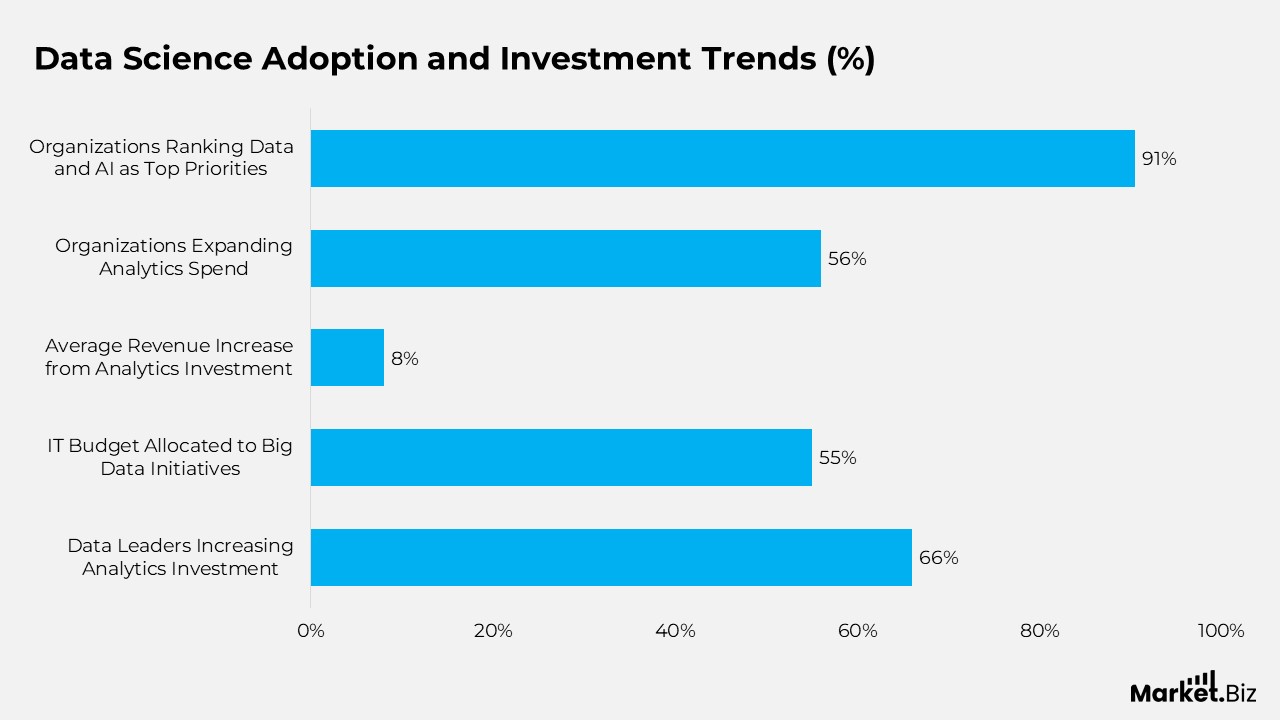
- A growing 66% of data leaders are prioritizing higher investment in data and analytics services to stimulate innovation across business functions.
- On average, organisations now dedicate close to 55% of their IT budgets specifically to big data initiatives that support data-driven decision-making.
- Companies that actively invest in big data and analytics solutions report an average 8% increase in revenue, highlighting a measurable financial impact.
- Approximately 56% of data leaders indicate that their organizations are further increasing spending on analytics and big data platforms.
- Data and artificial intelligence have become strategic imperatives, with nearly 90.5% of organizations ranking them as top business priorities.
(Source: Edge Delta, Harvard Business Review, MindInventory)
Industry-Wise Adoption of Data Science
Healthcare
- More than 55% of healthcare organisations plan to aggregate unstructured data, such as medical images, audio files, and documents, to reduce manual review and improve clinical insights.
- Nearly 30% of healthcare leaders report that analytics initiatives are directly improving workforce productivity while uncovering cost-saving opportunities.
(Source: Arcadia, HIMSS, MindInventory)
Finance
- By 2026, around 45% of financial institutions aim to maximize the value of enterprise data through advanced analytics adoption.
- Approximately 36% of financial organizations currently leverage data science for risk management and fraud mitigation use cases.
- Data and AI adoption are improving efficiency across finance, with over 35% of firms using analytics to streamline operations and nearly 33% reducing costs by more than 10%.
(Source: Business Wire, NVIDIA, MindInventory)
Education
- Nearly 99.4% of higher education institutions in the US recognize data and AI as a source of long-term competitive advantage.
- Data-driven academic analytics have enabled institutions to identify at-risk students early and significantly improve academic success rates.
(Source: IDC, Google For Education, MindInventory)
Retail
- Around 62% of retailers report enhanced competitiveness after integrating big data and analytics into operations.
- Insight-driven retail organizations achieve up to 20% revenue growth and outperform less mature peers by nearly 8.5 times.
(Source: IBM, Forrester, MindInventory)
Role of Data Science in AI and Machine Learning
- Nearly 85% of AI initiatives fail primarily due to poor data quality and ineffective data preparation during model training.
- Organizations with mature data governance frameworks achieve 2.5 times higher returns on AI investments compared to less structured peers.
- AI adoption has become mainstream, with about 72% of companies deploying AI in at least one business function supported by centralized data science teams.
(Source: Gartner, MIT, McKinsey & Company, MindInventory)
Data Science Growth Across Key Use Cases
Predictive Analytics
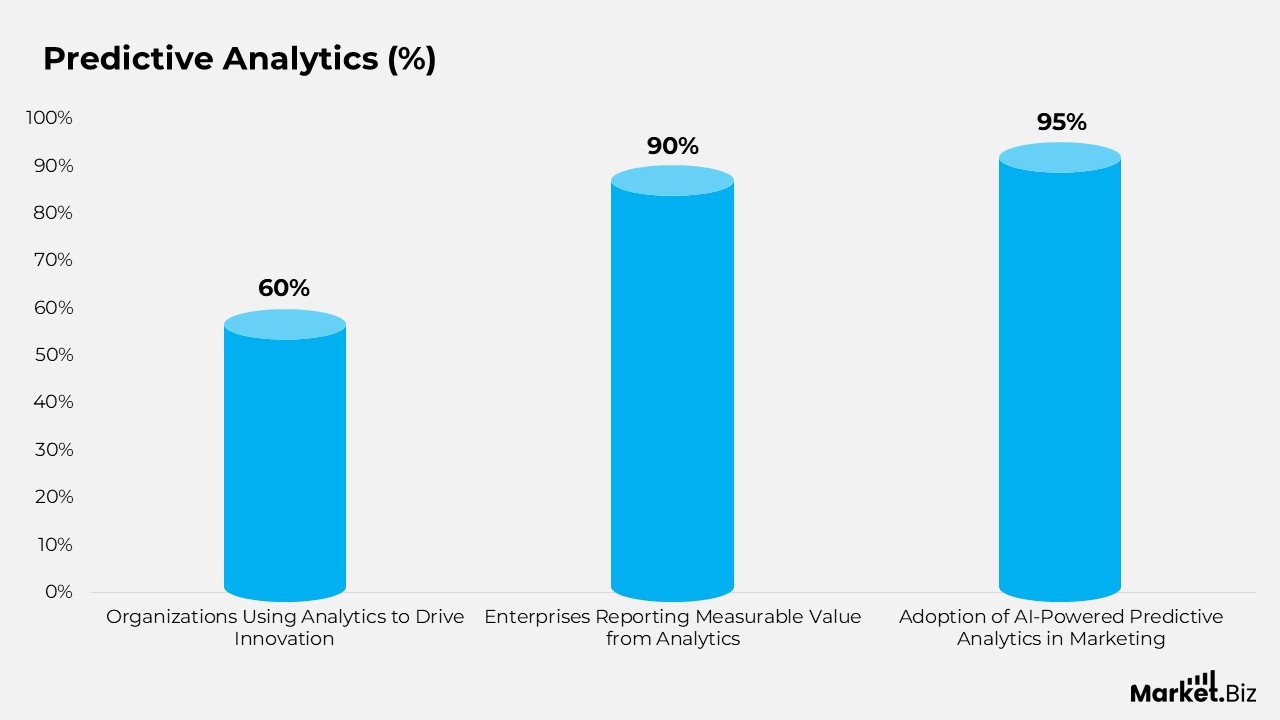
- Roughly 60% of organizations now use data analytics as a core driver of business innovation.
- More than 90% of enterprises report tangible, measurable value from their analytics investments.
- Over 95% of organisations have incorporated AI-powered predictive analytics into their marketing strategies, with deep integration accelerating personalisation.
(Source: New Vantage Partners, VentureBeat)
Customer Segmentation and Personalization
- Hyper-personalization strategies enabled by data science reduce customer acquisition costs by up to 50% while increasing revenues by 5–15%.
- About 30% of marketing leaders face data quality challenges when executing personalization initiatives, reinforcing the need for robust data pipelines.
(Source McKinsey & Company, Forrester)
Fraud Detection and Risk Scoring
- More than 50% of global fraud cases now involve AI-enabled techniques, increasing the risk and complexity.
- Nearly 92% of financial institutions identify generative AI as a major contributor to modern fraud attempts.
- In response, around 90% of institutions deploy AI-driven fraud-prevention systems trained using data science methods.
(Source Feedzai)
Inventory and Supply Chain Optimization
- Approximately 85% of organizations plan to use AI and analytics to optimize inventory and supply chain operations.
- Nearly 81% of supply chain professionals believe analytics is essential for reducing operational costs and improving efficiency.
(Source MHI, Michigan Tech University)
AI Model Training and Optimization
- Around 72% of AI teams depend on data science to clean, transform, and label data for reliable model training.
- Data-centric AI approaches deliver productivity improvements of up to 10 times compared to traditional model-centric methods.
(Source: Stanford AI Index, Industry Publications)
Hiring and Talent Demand for Data Scientists
- Data science roles consistently rank among the top 10 most in-demand technology and STEM professions.
- Demand for data scientists is projected to grow at an annual rate of 28% through 2026, reflecting rapid adoption across sectors.
- Employment in data science is forecasted to expand by 36% between 2023 and 2033.
- Job postings show that 38.1% seek domain specialists, while 53.5% favor versatile data professionals.
(Source: Simplilearn, U.S. Bureau of Labor Statistics)
Hiring Challenges
- Nearly 60% of hiring managers report difficulty filling data science and analytics roles due to skill shortages.
- Across Europe, between 75% and 80% of employers face challenges in hiring qualified data and AI professionals.
- In the Middle East, approximately 32% of organizations struggle to source experienced analytics talent.
(Source: Upwork, Next Level Jobs, Datamites, Alteryx)
Work Model Trends
- Fully remote data science roles remain limited, accounting for only 5% of total openings.
- About 53% of professionals work in hybrid environments that balance flexibility and collaboration.
- In emerging markets, the majority of data science roles remain on-site to support close cross-functional coordination.
(Source: Statista, Alteryx)
Compensation and Cost Considerations
- Global annual salaries for data scientists typically range from $60,000 to $200,000, depending on experience and region.
- Recruitment and hiring fees account for approximately 15–25% of annual salaries.
- Organizations allocate 1–5% of payroll budgets toward training and upskilling data science teams.
- Outsourcing and offshore hiring models can reduce labor costs by 70–80%.
(Source: HeroHunt, Data Society, Accsource)
Programming Languages and Tools Adoption
- Python dominates the data science ecosystem with approximately 68% market shareacross projects.
- Around 84.6% of data science job postings list Python as a required skill.
- R remains widely used for 38% of biostatistics applications and 65% of academic research workloads.
- SQL expertise is required in 58.5% of data science roles, reflecting its importance in data management.
(Source: Index DEV, Accsource)
Cloud Platforms for Data Science
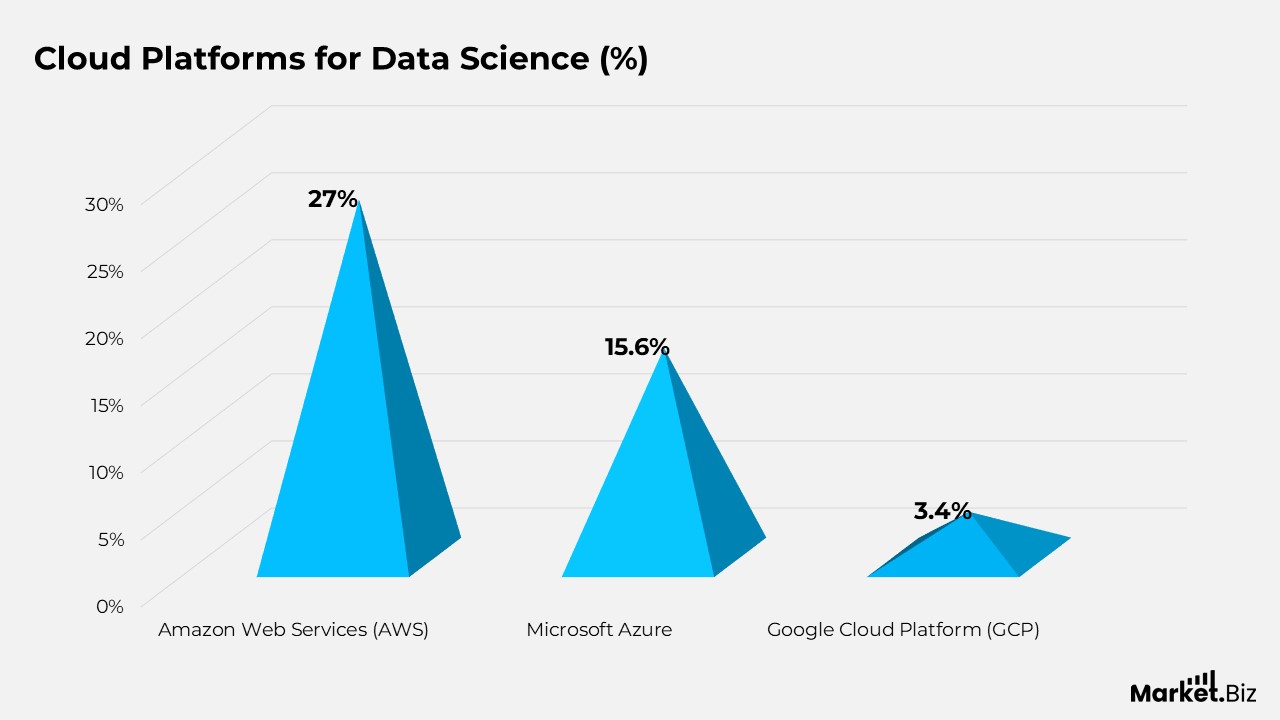
- About 26.7% of data science job roles require proficiency in AWS cloud services.
- Microsoft Azure skills appear in 15.6% of data science job listings.
- Google Cloud adoption remains comparatively limited, cited in 3.4% of roles.
(Source: Index DEV, Accsource)
ROI Delivered by Data Science
- Data-driven organizations are 23 times more likely to acquire customers and 19 times more likely to achieve profitability.
- Predictive maintenance use cases deliver 15–20% improvements in operational efficiency.
- AI-driven diagnostics reduce error rates by 20–50% across healthcare and industrial applications.
- Advanced fraud detection systems achieve accuracy levels as high as 99.9%.
- Smart city and personalization initiatives deliver measurable efficiency and engagement gains ranging from 25% to 68%.
(Source: Forbes, McKinsey & Company, Industry Case Studies)
Data Challenges, Skills Gaps, and Tool Adoption in Data Science
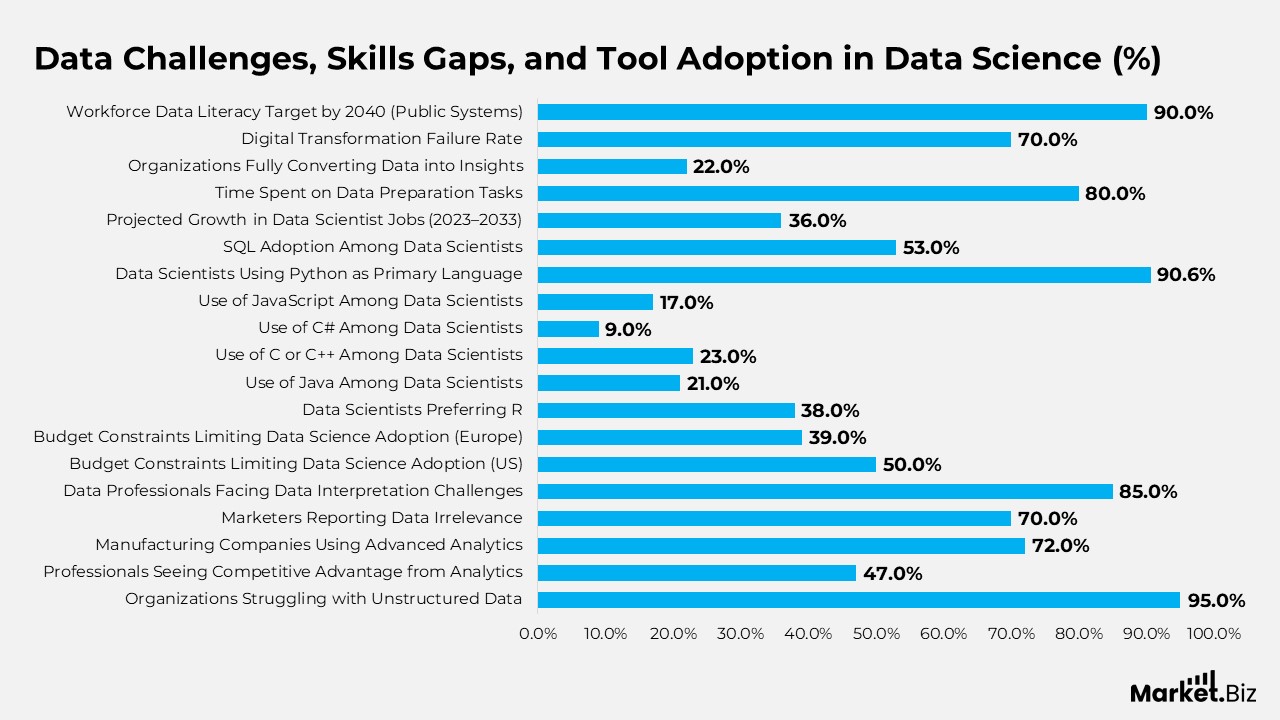
- Nearly 95% of organizations report that handling unstructured data remains a major challenge within their industries.
- Around 47% of professionals indicate that data analytics has reshaped competitive dynamics, giving data-driven organisations a measurable advantage.
- About 72% of manufacturing companies apply advanced data analytics to improve productivity and operational efficiency.
- Close to 70% of marketers believe the data available to them is not relevant for effective decision-making.
- Poor data quality continues to erode performance, contributing to estimated operating revenue losses of 15–25% for large multinational companies.
- In the US alone, the economic cost of low-quality data is estimated at approximately $3.1 trillion per year.
- Roughly 85% of data professionals report difficulty interpreting business data to support strategic decisions.
- Budget limitations remain a key obstacle to data science adoption, cited by 50% of executives in the US and 39% in Europe.
- Among data scientists, 38% prefer R for analytical tasks.
Moreover
- Programming language usage remains diverse: 21% use Java, 23% use C or C++, 9% use C#, and 17% use JavaScript.
- Python dominates the data science ecosystem, with 90.6% of practitioners identifying it as their primary language.
- SQL remains a critical skill set, ranking second among preferred languages with 53% adoption.
- Employment opportunities for data scientists are projected to expand by 36% between 2023 and 2033.
- Data scientists typically spend nearly 80% of their time cleaning, organizing, and preparing data rather than building models.
- Only about 22% of organizations report being able to convert data into actionable business insights fully.
- Approximately 70% of digital transformation initiatives fail to achieve their intended outcomes, often due to data and execution challenges.
- Long-term workforce readiness is becoming critical, with plans requiring nearly 90% of employees in large public systems to achieve data literacy by 2040.
(Source: Boston Consulting Group (BCG), World Economic Forum (WEF), Sigma Computing, ZoomInfo, U.S. Bureau of Labor Statistics, Harvard Business Review, MIT Sloan Management Review, National Health Service (UK))
Global Data Generation, Usage, and Infrastructure
- Worldwide data creation continues to accelerate, with an estimated 1.145 trillion megabytes generated every day.
- Global data volumes reached approximately 149 zettabytes in 2024 and are projected to expand to nearly 394 zettabytes by 2028, reflecting exponential growth in data usage.
- Text-based information remains the dominant data type in data science, accounting for close to 90% of overall data usage.
- The unstructured data landscape extends beyond text, with images accounting for about 33%, video for 15%, audio for 11%, and other formats for roughly 20% of total unstructured content.
- The global datasphere is expected to reach 175 zettabytes by 2025, with nearly 90% of data duplicated.
- Unstructured information continues to dominate digital content, making up roughly 80–90% of all data generated worldwide.
- The scale of digital information is so vast that it would take an average internet user an estimated 181 million years to download all the data available online.
- The United States hosts one of the world’s largest data centre ecosystems, with more than 5,381 facilities worldwide.
- Data centre revenues in the US reached approximately 99.16 billion USD by the end of 2024, highlighting strong infrastructure demand.
- On an individual level, the average internet user generated about 1.7 MB of data per second in 2023, translating to nearly 146,880 MB per day.
- Despite growing demand, gender diversity remains limited, with women representing only about 15% of data science professionals worldwide.
(Source: Techjury, Statista, IDC, CIO Magazine, CrowdFlower (Data Scientist Report), U.S. Data Center Industry Reports)
Data Science Salary Trends
- Experienced data scientists in the United States earn strong compensation, with average base salaries typically ranging from $91,000 to $100,000 per year.
- Across the broader market, data scientists receive competitive pay, with average annual salaries standing at approximately $108,000, reflecting sustained demand for analytical expertise.
- Salary progression in data science remains steady, with average annual pay increases of around 2.25%.
- Data science managers are the highest-earning segment, with annual compensation generally ranging from $76,061 to $235,288, depending on experience and organisational scale.
- Core technical roles also command high salaries: data scientists typically earn between $78,218 and $193,646 per year, while data engineers earn between $82,804 and $189,543 annually.
- Employment demand continues to expand rapidly, with projections indicating the creation of approximately 11.5 million data science-related roles by 2026.
(Source: Glassdoor, U.S. Bureau of Labor Statistics, PayScale, Industry Salary Surveys)
Conclusion
Data science statistics demonstrate that the discipline has moved beyond a niche analytical role to become a central driver of business strategy across industries. Organizations increasingly depend on data science to fuel innovation, enhance efficiency, and support evidence-based decision making, delivering clear improvements in revenue performance, operational cost control, and customer experience.
The rapid integration of AI and advanced analytics further reinforces the importance of reliable data, mature governance practices, and scalable data platforms in generating consistent business value. At the same time, these statistics point to ongoing challenges related to talent shortages, data readiness, and execution complexity. Strong demand for data professionals, rising compensation levels, and gaps in specialized skills are reshaping workforce models and encouraging hybrid and outsourced approaches.
Looking ahead, data science is expected to remain a cornerstone of AI-led transformation, with growing influence across predictive analytics, personalisation, risk mitigation, and automation. Overall, the data confirms that sustainable success in data science depends as much on organisational readiness and talent development as on technological capability.
FAQ’s
Data science statistics are structured quantitative representations that describe the behavior, scale, and impact of data-driven systems within organizations and industries. They translate complex analytical activities, technological adoption, and decision processes into measurable indicators that support theoretical and empirical analysis.
From a theoretical perspective, data science statistics serve to explain how data, algorithms, and human decision-making interact within socio-technical systems. They provide evidence for theories of information value, knowledge creation, organisational learning, and technological diffusion.
Data science statistics operationalize concepts from classical statistics, probability theory, and computational modeling by applying them to large-scale, real-world datasets. They reflect how theoretical models perform under practical constraints such as data quality, bias, scale, and uncertainty.
Data science statistics examine multiple theoretical dimensions, including data generation, data governance, analytical capability, algorithmic performance, economic outcomes, and human capital. Together, these dimensions offer a systems-level view of how data science functions within modern organizations.
Data science statistics provide empirical grounding for innovation theory by quantifying how data-driven capabilities accelerate experimentation, reduce uncertainty, and enable scalable innovation. They help explain why organisations with advanced analytics often outperform their less data-mature peers.

