









Introduction
Cloud Computing Statistics: Cloud computing has become an essential component of modern business infrastructure, providing organizations with the flexibility, scalability, and cost efficiency necessary to excel in the digital age. It allows businesses to access powerful computing resources without the need for extensive on-site infrastructure, transforming operations across a wide range of industries.
The adoption of cloud services, including Software as a Service (SaaS), Infrastructure as a Service (IaaS), and Platform as a Service (PaaS), continues to gain momentum as companies embrace digital transformation and incorporate emerging technologies like Artificial Intelligence (AI) and the Internet of Things (IoT).
The need for improved collaboration drives this rapid shift to the cloud, real-time data analysis, and greater operational efficiency, with sectors such as healthcare, finance, retail, and manufacturing leading the way in cloud adoption.
Editor’s Choice
- Global spending on public cloud services is expected to reach nearly $597.3 billion in 2023.
- In 2022, Amazon Web Services (AWS) held the largest market share in public cloud services at around 31%, followed by Microsoft Azure at 20% and Google Cloud Platform (GCP) at 9%.
- A recent survey found that 94% of enterprises utilize cloud services in some form, with 83% implementing a multi-cloud approach.
- In 2022, the global public cloud services market created $312 billion in revenue, representing a 24.1% increase over the previous year.
- Data breaches remain the top security concern in cloud computing, with 68% of organizations citing it as their primary worry.
- By 2023, it is projected that 67% of enterprise infrastructure will be based in the cloud, representing a significant increase from the 10% reported in 2015.
- More than 20% of organizations report having little to no understanding of the costs associated with different aspects of their business related to the cloud.
- 97% of enterprise cloud applications are unauthorized, as departments, teams, or individual employees independently purchase new tools to enhance their productivity.
(Source: Gartner, CloudZero, Synergy Research Group, spacelift, IDC, Flexera, Deloitte, LogicMonitor’s Cloud Vision )
General Cloud Computing Statistics
- More than 20% of organizations lack a clear understanding of the costs associated with different aspects of their business related to cloud computing.
- A cloud bill can contain vast amounts of data, potentially reaching hundreds of millions or even billions of rows.
- Unauthorized cloud applications make up 97% of enterprise cloud usage, as departments, teams, or individual employees purchase new tools to enhance their productivity.
- 80% of organizations rely on a mix of both public and private cloud services.
- Globally, 2.5 quintillion bytes of data are generated every day.
- Amazon Web Services continues to lead the public cloud market, commanding 32% of the share.
- 96% of companies have adopted the public cloud for their operations.
- 84% of businesses are utilizing private cloud solutions.
- By 2025, the global data volume is expected to reach 200 zettabytes, equivalent to a trillion gigabytes.
- The primary challenge for cloud decision-makers is managing cloud expenditures, with 82% citing it as a key concern.
- 94% of organizations have reported enhanced security following their transition to the cloud.
- By the end of this year, half of the world’s data is projected to be stored in the cloud.
- The term “cloud computing” was first introduced by George Favaloro from Compaq in 1996.
- 96% of companies use at least one public cloud service.
- The global data volume is expected to reach 200 zettabytes (one trillion gigabytes) by the end of this year.
- Despite economic challenges, 80% of enterprises are planning to increase their cloud investments.
- Over 60% of corporate data is stored in cloud storage.
- The primary concern for clients using cloud-based services is managing cloud spending, with 82% prioritising this issue.
(Source: FinOps Certification, Osterman Research, Knowledgehut, G2, Osterman Research, Spacelift, Inc.)
Investment in Public Cloud Service and Infrastructure
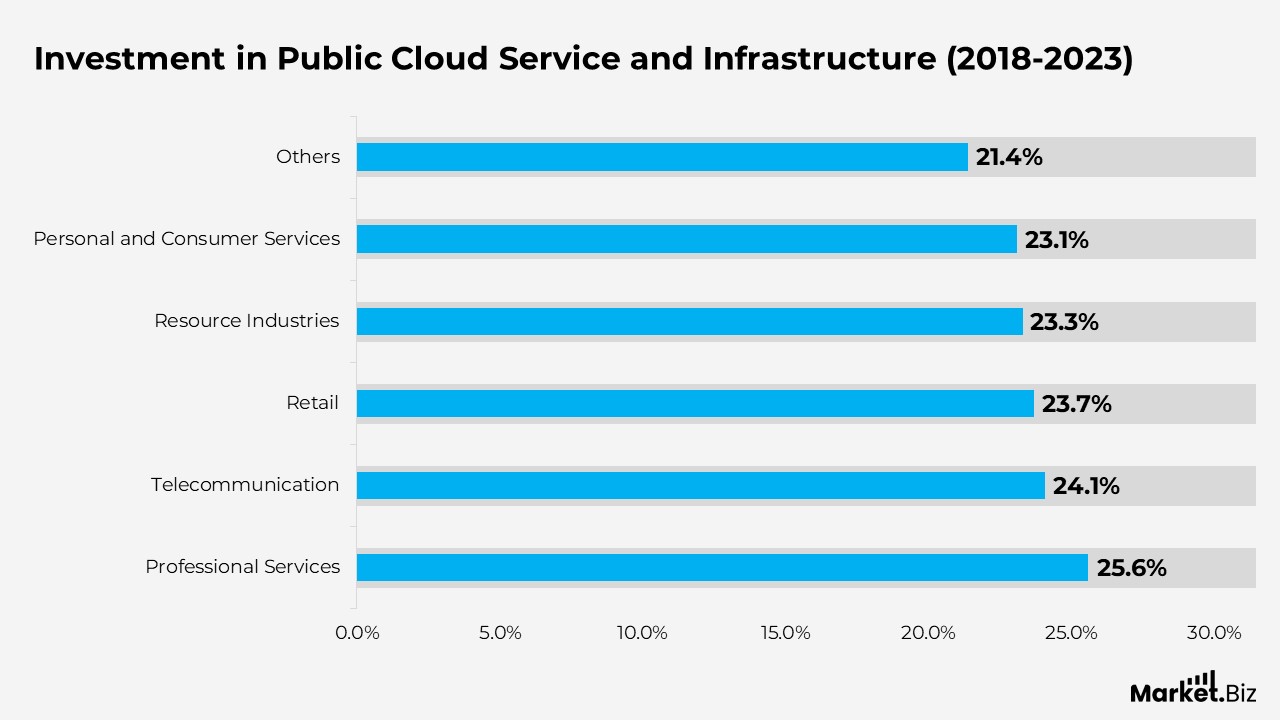
(Source: International Data Corporation)
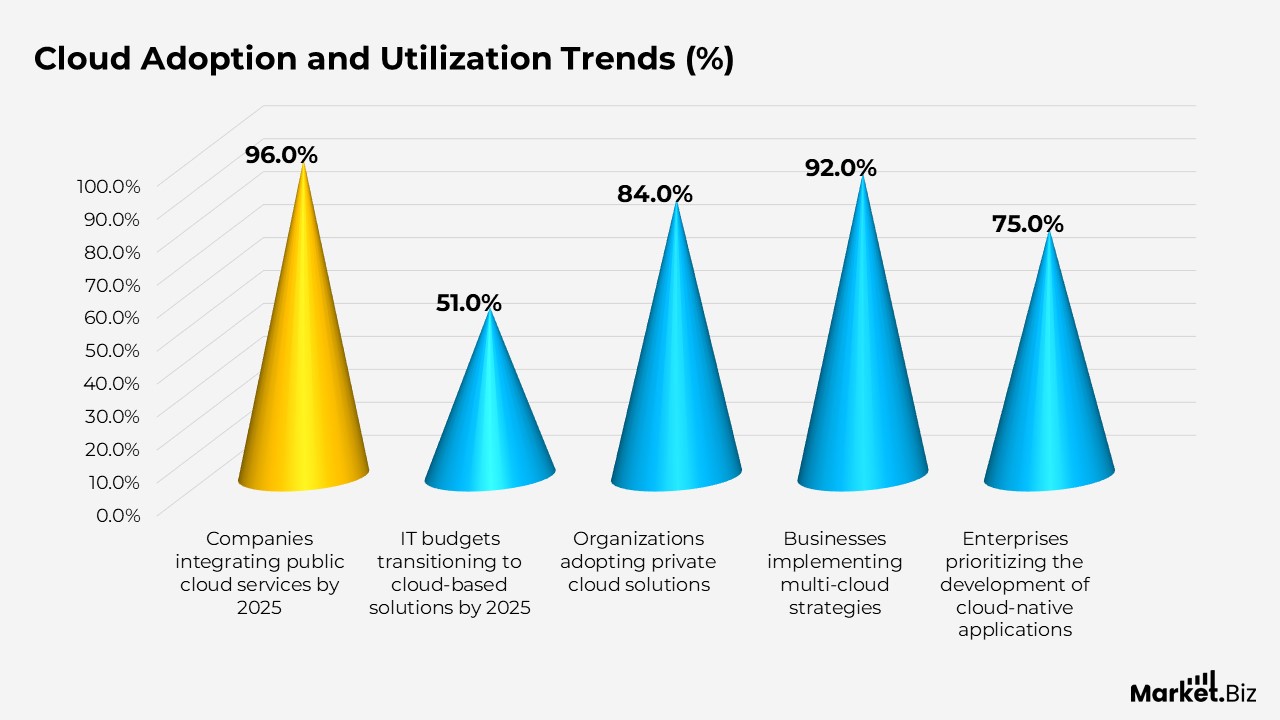
Cloud Adoption and Utilization Trends
- By 2025, 96% of companies are projected to integrate public cloud services into their operations.
- 51% of IT budgets are forecasted to transition from traditional tools to cloud-based solutions by 2025.
- 84% of organizations are expected to adopt private cloud solutions.
- 92% of businesses are predicted to implement multi-cloud strategies.
- 75% of enterprises are prioritizing the development of cloud-native applications.
(Source: network)
Public Cloud Statistics
- The worldwide Public Cloud market is expected to generate US$980.30 billion in revenue by 2025.
- Software as a Service (SaaS) is anticipated to lead the market, with a projected revenue of US$428.78 billion in 2025.
- The market is projected to grow at a compound annual growth rate (CAGR) of 17.12% from 2025 to 2030, reaching a total volume of US$2.16 trillion by 2030.
- The average spend per employee in the Public Cloud market worldwide is forecasted to be US$264.51 in 2025.
- The United States is projected to generate the highest revenue, contributing US$457.71 billion in 2025.
- Hybrid cloud solutions are becoming increasingly dominant in the global public cloud market, driven by the growing demand for flexibility and scalability from businesses.
- 96% of companies worldwide are utilizing at least one public cloud service.
- Companies are running an average of 50% of their workloads on public cloud platforms.
- On average, businesses are relying on 2.2 public clouds for their operations.
- Around 48% of organizational data is stored in public cloud environments.
- The revenue for private cloud services is projected to reach US$528.36 billion by 2029.
- 84% of companies are using at least one private cloud solution.
- On average, 32% of a company’s workloads are run in private cloud environments.
- The telecommunications industry leads in private cloud usage, with 64% of companies utilising private cloud infrastructure, making it the only sector where private cloud adoption surpasses public cloud usage.
(Source: Statista, Cloud Data Insights, SpceLift)
Cloud Computing Market Size
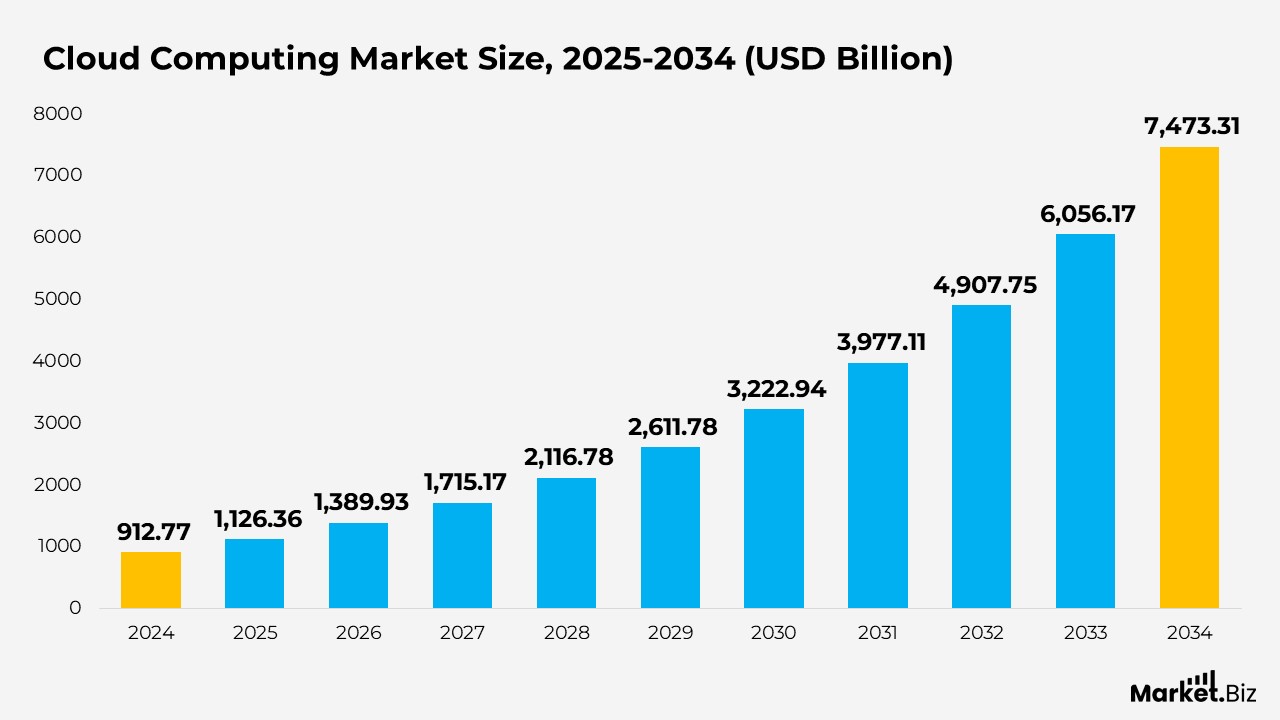
- According to the market.us, in 2025, the cloud computing market is projected to generate $1,126.36 billion, growing to $7,473.31 billion by 2034, with a compound annual growth rate (CAGR) of 23.4% between 2025 and 2034.
- The increasing adoption across various sectors, including IT, telecommunications, and consumer goods, drives the growth of the cloud computing market.
- In 2024, the SaaS segment dominated the cloud market, holding a market share of over 60.2% due to its cost-effectiveness and ease of deployment.
- In 2024, the hybrid cloud segment captured a market share of more than 45.7%, favoured for its enhanced security and control.
- In 2024, large enterprises led the market, accounting for over 60.5% of the share, supported by their substantial IT needs and budgets.
- In 2024, the BFSI sector accounted for over 23.7% of the market, driven by digital transformation initiatives within the industry.
- In 2024, North America led the market, accounting for over 39.5% of the share, driven by technological advancements and key cloud service providers.
(Source: Market.us)
Healthcare Cloud Computing Market Size
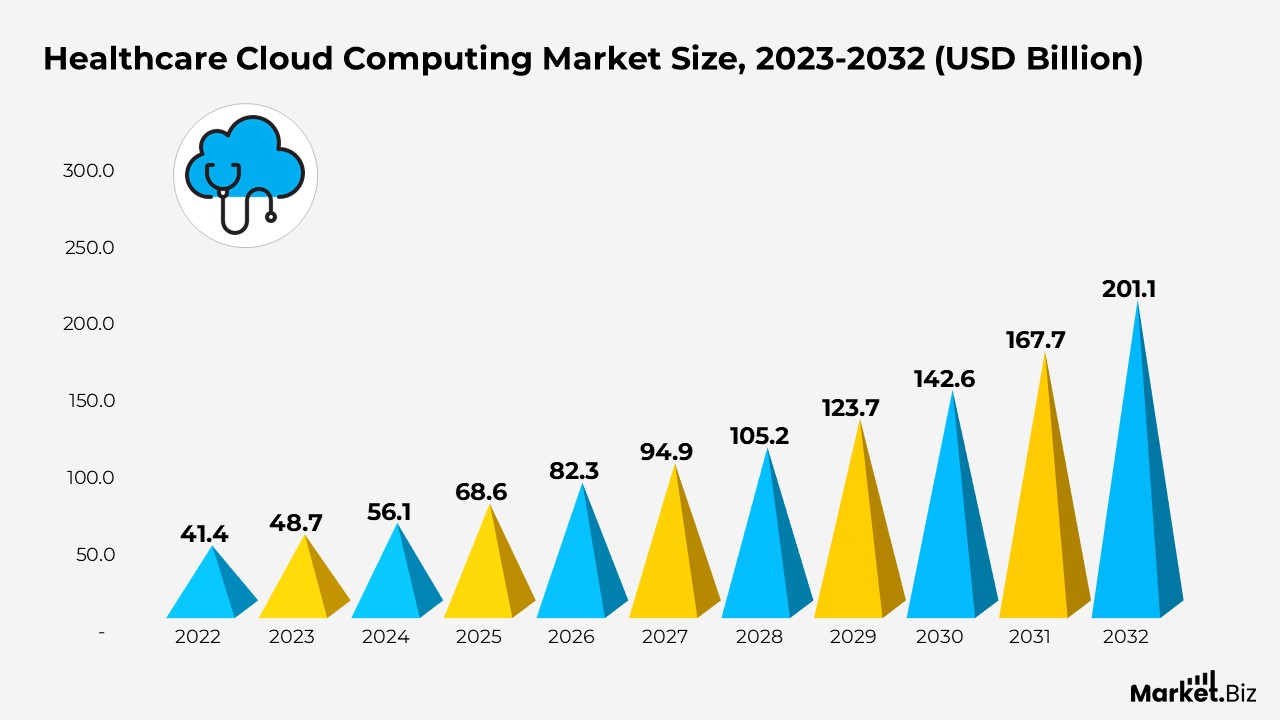
- According to the market.us, the HC cloud computing market is expected to increase from $46.3 billion in 2025 to $180.2 billion by 2034, reflecting a compound annual growth rate (CAGR) of 16.3% from 2025 to 2034.
- The growth of the healthcare cloud computing market is driven by rising healthcare costs, increasing patient needs, and the evolving landscape of healthcare IT.
- The private cloud segment is the most lucrative in the healthcare cloud computing market, offering secure computing environments for healthcare organizations.
- The clinical information systems segment dominates the market due to the growing demand for efficient patient management systems and the increasing number of health-related research activities.
- SaaS services held the largest revenue share in 2022, driven by advantages such as enhanced security, faster deployment, and lower total cost of ownership.
- The healthcare provider segment dominated the market in 2022, accounting for over 62% of the revenue, driven by increased cloud connectivity to hospitals.
- North America held a dominant market share of 51% in 2022, contributing significantly to the growth of the healthcare cloud computing market.
(Source: Market.us)
Global Public Cloud Revenue Analysis
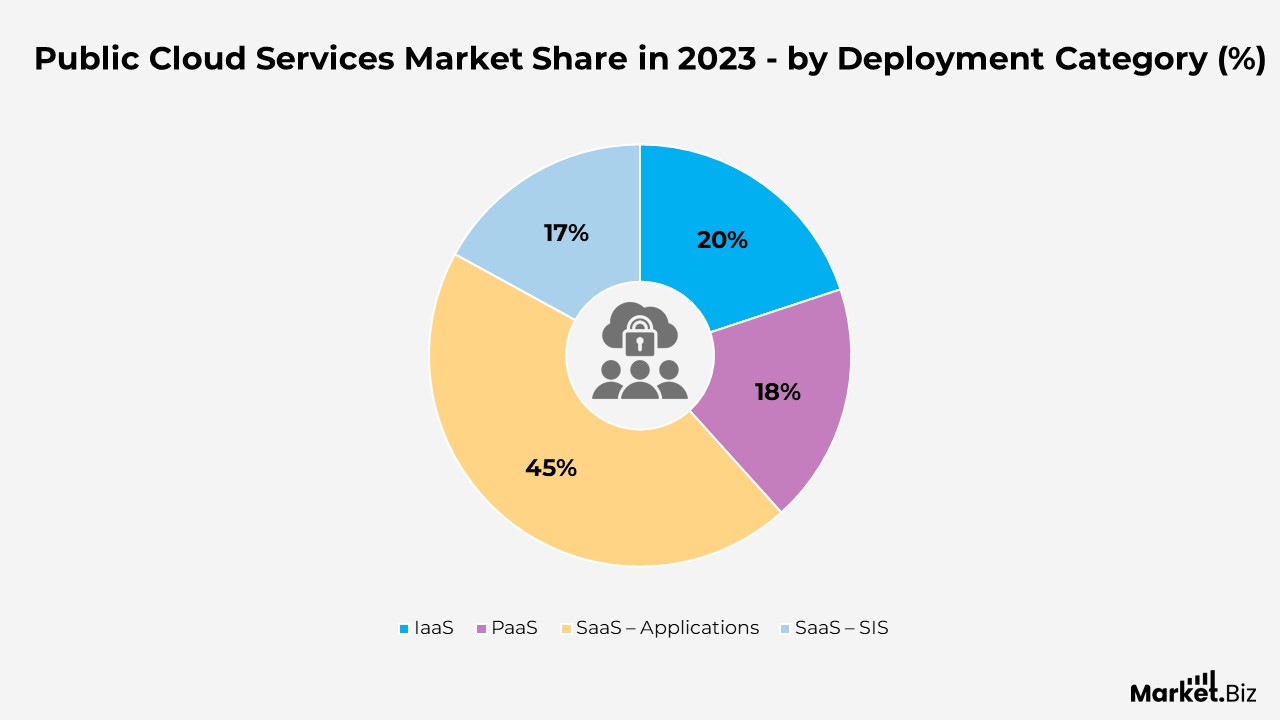
- In 2023, global revenue for public cloud services reached $669.2 billion, reflecting a 19.9% increase compared to the previous year, according to the International Data Corporation (IDC).
- Software as a Service Applications (SaaS – Applications) was the largest revenue contributor in 2023, accounting for nearly 45% of the total market share.
- Infrastructure as a Service (IaaS) followed as the second-largest segment, capturing 19.9% of the market.
- Platform as a Service (PaaS) and Software as a Service – System Infrastructure Software (SaaS – SIS) represented 18.4% and 17.0% of overall public cloud revenue, respectively.
- PaaS and SaaS – SIS were the fastest-growing segments year-over-year.
Global Public Cloud Services Revenue and Growth Overview
| Deployment Category | 2023 Revenue ($ Billion) | 2023 Market Share | 2022 Revenue ($ Billion) | 2022 Market Share | 2023/2022 Growth |
|---|---|---|---|---|---|
| IaaS | $133.4 | 19.9% | $115.5 | 20.7% | 15.6% |
| PaaS | $123.3 | 18.4% | $95.4 | 17.1% | 29.3% |
| SaaS – Applications | $298.5 | 44.6% | $254.4 | 45.6% | 17.4% |
| SaaS – SIS | $114.0 | 17.0% | $93.1 | 16.7% | 22.5% |
| Total | $669.2 | 100% | $558.3 | 100% | 19.9% |
(Source: International Data Corporation)
Private Cloud Computing Insights
- A survey conducted by Flexera reveals that 91% of enterprises adopted a private cloud strategy in 2021.
- Global spending on private cloud infrastructure is expected to reach $40.6 billion in 2021, reflecting a 12.6% year-over-year growth.
- Key benefits of private cloud adoption include enhanced security and compliance (68%), improved performance and reliability (59%), and greater control over resources (52%).
- However, organisations face challenges in implementing private clouds, with the main obstacles being the complexity of setup (45%), a lack of internal expertise (40%), and high initial costs (37%).
- Leading private cloud vendors include VMware, Microsoft, IBM, Dell Technologies, and Oracle.
- Despite the growing popularity of public cloud services, private cloud remains a strong choice for many organizations. A survey by IDG reveals that 59% of companies employ a hybrid cloud strategy, integrating both private and public cloud services.
- Around 84% of companies incorporate private cloud solutions into their IT infrastructure.
- Currently, 63% of workloads from small and medium-sized businesses (SMBs) are hosted on private cloud platforms.
- Organizations report various advantages of using the private cloud: 68% highlight enhanced security and compliance, 59% mention improved performance and reliability, and 52% value greater control over resources.
- 45% of organizations face challenges with the complexity of implementation, 40% struggle with a lack of internal expertise, and 37% experience high upfront costs when adopting private cloud solutions.
- The telecommunications sector leads in private cloud adoption, with 64% of its infrastructure utilizing private cloud services.
(Source: International Data Corporation, IDG, Flexera, Google Cloud, Mind Inventory)
Hybrid Cloud Statistics
- Nearly 80% of organizations utilize multiple public clouds, while 60% report using more than one private cloud.
- Among companies generating over $500 million in revenue, 56% have adopted a hybrid cloud approach.
- 70% of IT leaders believe that achieving a successful digital transformation is challenging without a robust hybrid cloud strategy.
- By 2024, around 73% of enterprises are expected to have implemented a hybrid cloud strategy.
- A Flexera report indicates that nearly 80% of enterprises are leveraging hybrid cloud models.
- 56% of companies with revenues exceeding $500 million have embraced hybrid cloud approaches.
- 70% of IT leaders view a hybrid cloud strategy as essential for driving successful digital transformation.
- Organizations find that a hybrid cloud strategy is 2.5 times more effective than relying on a single cloud platform.
- Companies with a hybrid cloud approach report increased flexibility, a 42% improvement in agile development environments, and a 40% boost in corporate agility and innovation speed.
- 94% of enterprises implement a hybrid cloud strategy to strengthen their organizational security.
- 77% of organizations believe they can accelerate application delivery thanks to their hybrid cloud strategy.
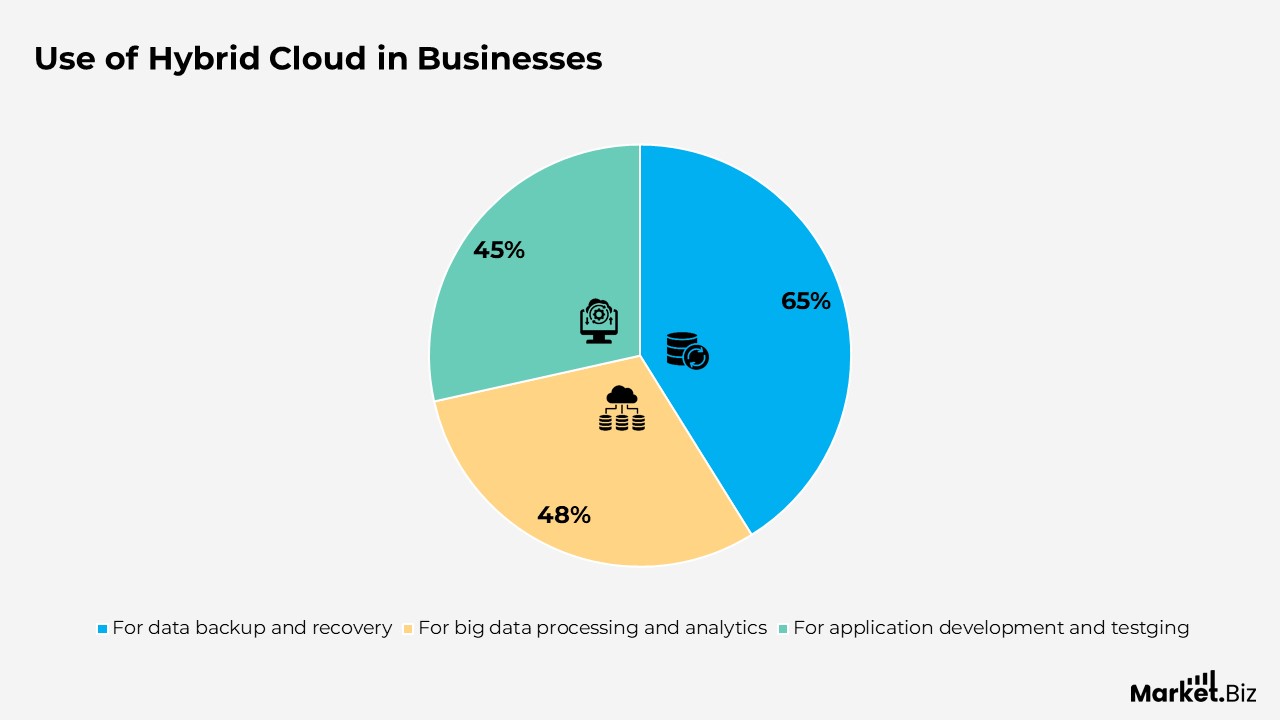
- 65% of organizations leverage hybrid cloud for enhanced data backup and recovery, 48% for big data processing and analytics, and 45% for application development and testing.
- During hybrid cloud implementation, 62% of companies encounter challenges related to security and compliance, 47% face a lack of cloud expertise, and 47% struggle with integrating cloud and on-premises systems.
(Source: Spacelift, Inc., MindInventory, Flexera, Statista )
Security Cloud Computing Statistics
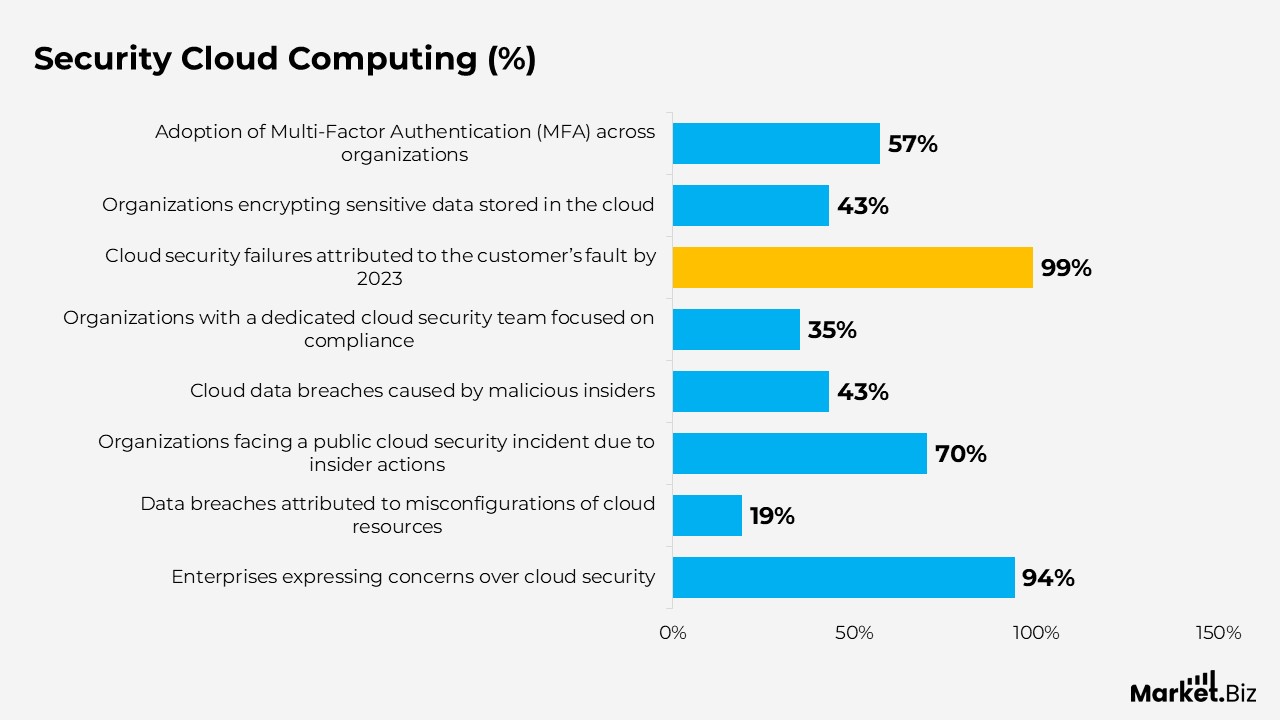
- 94% of enterprises express concerns over cloud security.
- In 2021, the average cost of a data breach was $4.24 million.
- 19% of data breaches were attributed to misconfigurations of cloud resources.
- 70% of organizations faced a public cloud security incident due to insider actions.
- 43% of cloud data breaches were caused by malicious insiders.
- Only 35% of organizations have a dedicated cloud security team focused on compliance.
- By 2023, 99% of cloud security failures are expected to be attributed to the customer’s fault.
- Just 43% of organizations encrypt their sensitive data stored in the cloud.
- Encrypting data in the cloud can reduce the average cost of a data breach by $360,000.
- Adoption of Multi-Factor Authentication (MFA) has risen to 57% across organizations.
- Organizations that fully implement security automation save an average of $3.58 million per breach.
(Source: Microsoft, McAfee, Deloitte, International Business Machines Corporation, Verizon )
Multi-cloud Statistics
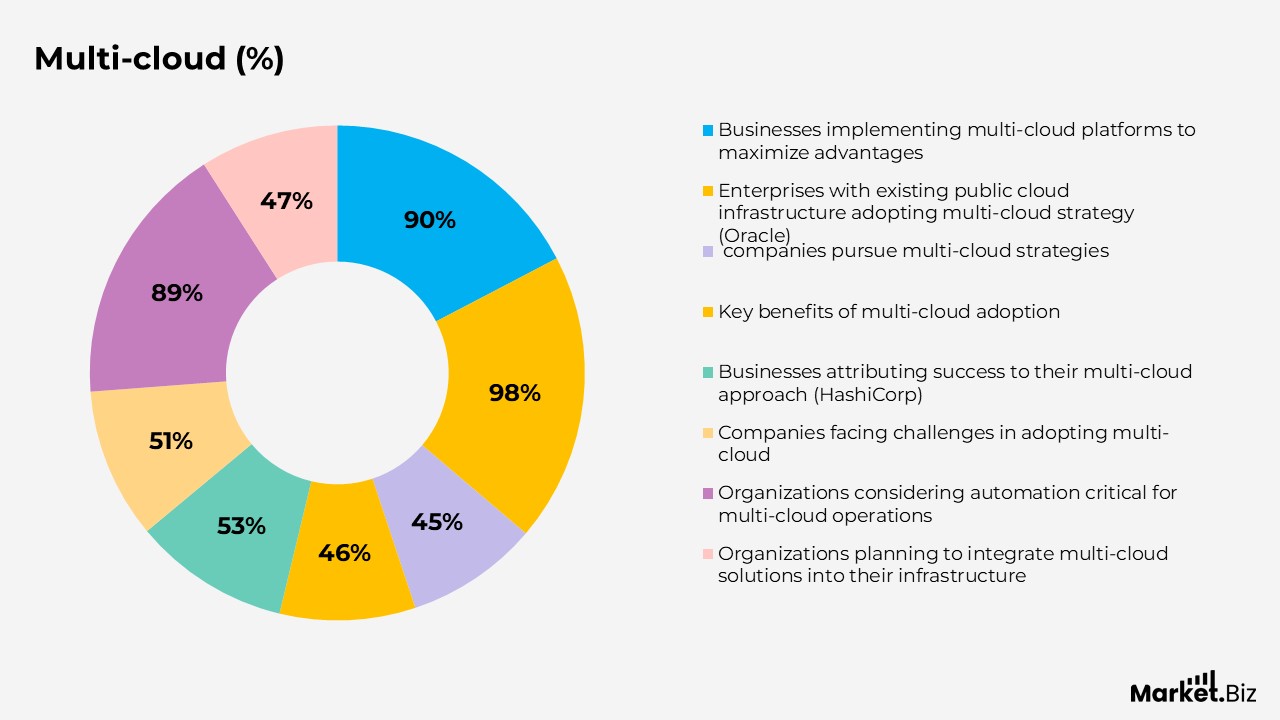
- 90% of businesses are driven to implement multi-cloud platforms to maximize their advantages.
- According to Oracle, 98% of enterprises with existing public cloud infrastructure have adopted a multi-cloud strategy to lower costs and enhance data control.
- Companies pursue multi-cloud strategies for various reasons, including 46% citing reliability, 43% focusing on digital transformation, 42% seeking scalability, and 41% emphasising improved security and governance.
- Key benefits of multi-cloud adoption include 46% valuing its durability, 43% appreciating its adaptability to technological shifts, 42% recognizing its flexibility, and 41% noting its enhanced governance.
- According to HashiCorp, 53% of businesses attribute their success in achieving goals to their multi-cloud approach.
- 51% of companies face challenges in adopting multi-cloud, with 47% experiencing security concerns, 41% facing skill shortages, 35% struggling with complexity, and 33% dealing with compliance challenges.
- 89% of organizations consider automation a critical factor in streamlining and optimizing multi-cloud operations.
- 47% of organizations plan to integrate multi-cloud solutions into their infrastructure soon.
(Source: Mind Inventory, Statista, HashiCorp, Oracle)
Cloud Computing Skills and Workforce Trends
- The demand for cloud computing skills is expected to rise by 25% by 2025.
- By 2025, 70% of IT professionals are projected to hold cloud-related certifications.
- The adoption of remote work, facilitated by cloud technologies, is anticipated to grow by 30% in 2025.
- Cloud-native development expertise is predicted to growth by 40%.
(Source: nextwork)
Healthcare Cloud Computing
- A survey of healthcare organizations found that 82% are utilizing cloud-based services, while 67% are leveraging cloud-based applications.
- 48% of healthcare organizations are using the cloud for data storage, while 41% are utilizing it for backup and disaster recovery.
- Cloud adoption in healthcare is largely driven by cost savings, with organizations reporting an average cost reduction of 12.1% after implementing cloud solutions.
- The main drivers behind cloud adoption in healthcare include scalability and flexibility (61%), cost savings (58%), and data storage capacity (52%).
- 80% of healthcare IT leaders consider cloud computing to be the most secure IT infrastructure for managing sensitive patient data.
- Healthcare providers in the U.S. spent an estimated $3.73 billion on cloud computing services in 2020, with projections indicating an increase to $10.24 billion by 2025.
- The use of cloud-based electronic health record (EHR) systems is growing, with 63% of healthcare organizations adopting or planning to adopt cloud-based EHR solutions.
(Source: Healthcare Information and Management Systems Society, HIMSS Analytics, Statista, HIMSS Analytics, Frost & Sullivan, Market.us, KLAS Research)
Cloud Security Breaches Statistics
- 82% of organizations attribute most cloud security breaches to human error.
- 45% of data breaches occur within cloud environments.
- 80% of organizations experienced a cloud security breach within the last year.
- 83% of companies reported experiencing a cloud security breach in the past 18 months.
- Companies believe that most cloud security breaches stem from unauthorized data access.
- 82% of cloud security breaches are linked to a lack of visibility, particularly in hybrid cloud setups.
- 31% of companies spend over USD 50 million annually to secure their cloud infrastructure and prevent data breaches.
- The public sector and startups were the most affected by cloud security breaches last year.
- 25% of organizations worry that they may have experienced a cloud data breach without being aware of it, and 58% of developers predict an increased risk of cloud security breaches in the coming year.
(Source: SentinelOne, Statista)
Cloud Compliance and Security
Data Breaches and Security Incidents:
- The average cost of a cloud data breach is $3.86 million.
- 94% of organizations experienced a cloud data breach within the past year.
- Misconfigurations of cloud services are the leading cause of cloud-related data breaches.
(Source: Sophos, IBM, Trend Micro)
Security Concerns:
- 60% of organizations list data loss and leakage as their top security concerns in the cloud.
- 94% of businesses report improved security after migrating to the cloud.
- 66% of IT professionals identify security as the greatest concern when adopting cloud services.
(Source: CSA, McAfee, IDG)
Cloud Security Practices:
- 85% of organizations have encountered a cloud security incident due to misconfigurations.
- Only 29% of organizations have a formal cloud security strategy in place.
- 74% of IT professionals express concerns about unauthorized access to sensitive data in the cloud.
(Source: IDG, McAfee)
Compliance in the Cloud:
- 54% of businesses consider compliance to be the primary factor driving their decision to adopt cloud services.
- 77% of organizations believe that cloud adoption has helped them meet their compliance requirements.
- The global cloud compliance market is projected to reach $6.12 billion by 2025.
(Source: McAfee, LogicMonitor)
Conclusion
Cloud computing is becoming a crucial component of the healthcare sector, offering key advantages such as cost reductions, enhanced data storage capabilities, and increased scalability. The growing adoption of cloud-based services and applications signifies a shift toward more efficient and secure IT infrastructures, with healthcare organisations increasingly recognising the benefits of cloud solutions in managing sensitive patient information.
As cloud technology continues to advance, its role in enhancing operational efficiency, ensuring business continuity, and driving digital transformation in healthcare will expand. With rising healthcare investments in cloud services, it is evident that cloud computing will be a cornerstone of the future of healthcare IT.
FAQ’s
Surveys indicate that 82% of healthcare organizations have adopted cloud-based services, with 67% utilizing cloud-based applications.
Cloud computing in healthcare offers numerous benefits, including cost reductions (with an average savings of 12.1%), enhanced scalability, flexibility, and improved data storage capabilities.
Healthcare organizations achieve substantial cost savings after implementing cloud solutions, with an average expense reduction of 12.1%. This is due to the efficiency and scalability of cloud services, which minimize the need for large-scale on-site infrastructure.
The primary drivers for cloud adoption in healthcare include scalability and flexibility (61%), cost savings (58%), and the ability to improve data storage capacity (52%).
A notable 80% of healthcare IT leaders agree that cloud computing offers the most secure infrastructure for managing sensitive patient data, providing enhanced security features and compliance with regulations.
Cloud-based electronic health record (EHR) systems are gaining popularity, with 63% of healthcare organisations either adopting or planning to adopt these cloud solutions.
While cloud solutions offer numerous benefits, healthcare organizations face challenges such as concerns about security, data privacy, and compliance. Additionally, there may be resistance to change and a need for specialized cloud expertise within the organization.