









Introduction
Condom Statistics: Condoms are among the most commonly used methods of contraception and disease prevention around the world. As a barrier method, they help avoid unintended pregnancies but also offer protection against sexually transmitted infections (STIs), including HIV.
The widespread use of condoms is crucial in public health efforts, especially in promoting safer sexual behaviors and reducing the transmission of diseases.
These statistics are related to condom use, demographic patterns, trends, and regional differences. It also investigates the factors that influence condom adoption, the impact of condom usage on public health outcomes, and the role of education and access.
By analyzing these statistics, we can better understand the contribution of condoms to global sexual health and identify areas where improvements in awareness, availability, and societal attitudes are necessary.
Editor’s Choice
- Male condoms continue to be the most widely used contraceptive method globally. Despite the availability of newer contraceptive options, male condoms remain a preferred choice for preventing both pregnancy and sexually transmitted infections (STIs).
- Studies indicate that when used properly, male condoms offer a 98% effectiveness rate, making them one of the most reliable methods for both contraception and protection against sexually transmitted infections (STIs).
- Consistent and correct condom use has been shown to reduce the risk of HIV transmission by approximately 85%, providing a significant protective measure against the virus.
- In 2022, Karex Berhad generated revenue of $421.642 million, underscoring its solid foothold and competitive strength in the global condom market.
- Condoms are considered one of the most effective methods for preventing the transmission of sexually transmitted infections (STIs). When used correctly, condoms can reduce the risk of HIV transmission by 80-90%, and they also protect against other STIs such as chlamydia, gonorrhea, and syphilis.
- Condoms are 98% effective in preventing pregnancy, meaning that each year, approximately 2 out of every 100 individuals relying on condoms for contraception may still experience an unintended pregnancy.
Condom Market Size
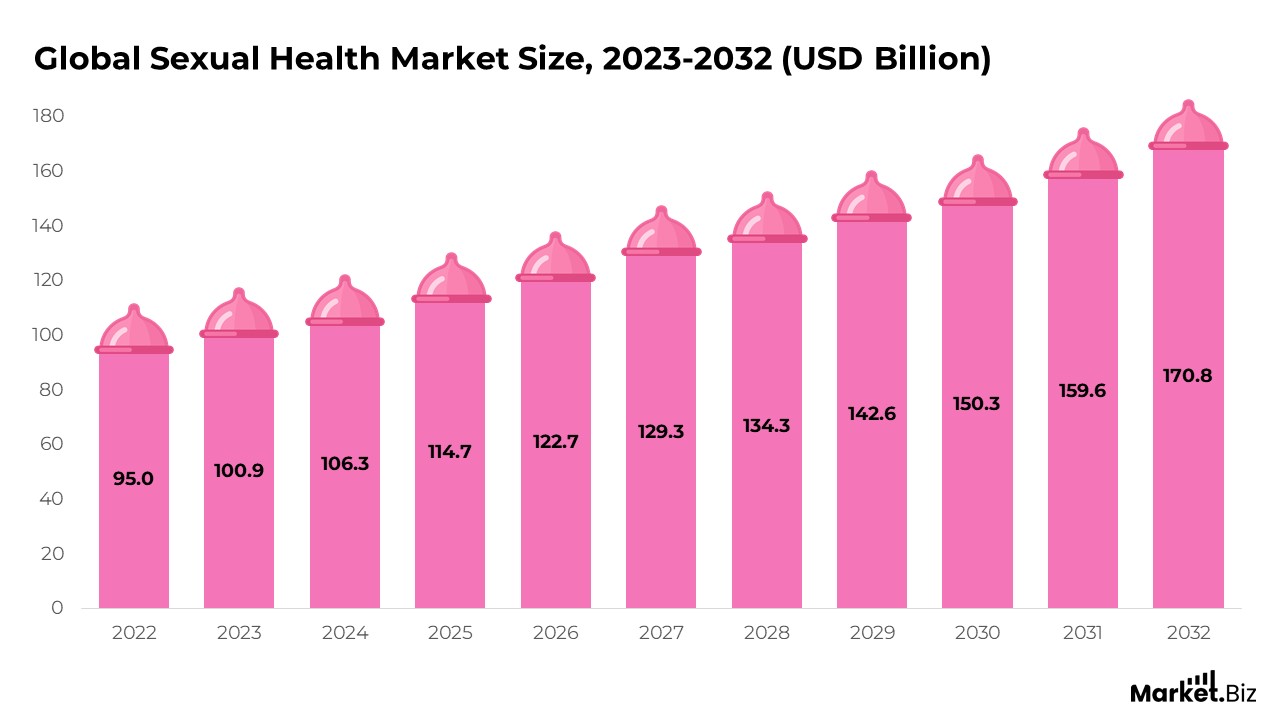
- According to Market.us, the global condoms market is projected to grow from $9.4 billion in 2025 to $17.2 billion by 2032, with a CAGR of 9.5% from 2022 to 2032.
- The expansion of the condom market is primarily fueled by increasing awareness of sexual health, substantial initiatives from both governmental and public health organizations, as well as advancements in condom materials and designs.
- Latex condoms dominate the market in terms of revenue share. The analysis covers both latex and non-latex segments, highlighting that the growth of the condom market is anticipated due to new product innovations and a rise in demand from aging populations, such as baby boomers.
- The male condom segment has witnessed significant growth, largely due to manufacturers’ focus on male contraceptives rather than female alternatives.
- The shift towards e-commerce has been accelerated by pandemic-related restrictions and lockdowns, resulting in a 9.11% compound annual growth rate (CAGR) for this segment during the forecast period. This growth is attributed to the availability of discreet delivery options and the convenience of selecting products from a wide range of online platforms.
- Europe’s condom market is projected to grow at a compound annual growth rate (CAGR) of 7.14%, driven by increasing awareness and demand for sexual health products.
- North America holds the second-largest market share, with demand growing significantly among sex workers and the lesbian, gay, bisexual, and transgender (LGBT) community, particularly men who have sex with men (MSM).
- Countries such as France, Germany, and the U.K. have introduced government-led initiatives to promote the use of condoms and prevent the transmission of HIV, particularly among their youth populations.
(Source: Market.us)
Types of Condoms
- Latex Condoms
- Non-Latex Condoms
- Internal Condoms
- Lambskin Condoms
- Flavored Condoms
- Glow-In-The-Dark Condoms
- Ribbed Condoms
- Spermicide Condoms
- Ultra-Thin or Thin Condoms
- Lubricated Condoms
- Tingling Condoms
(Source: Health, Verywell Health)
Evaluating the Effectiveness of Male vs. Female Condoms
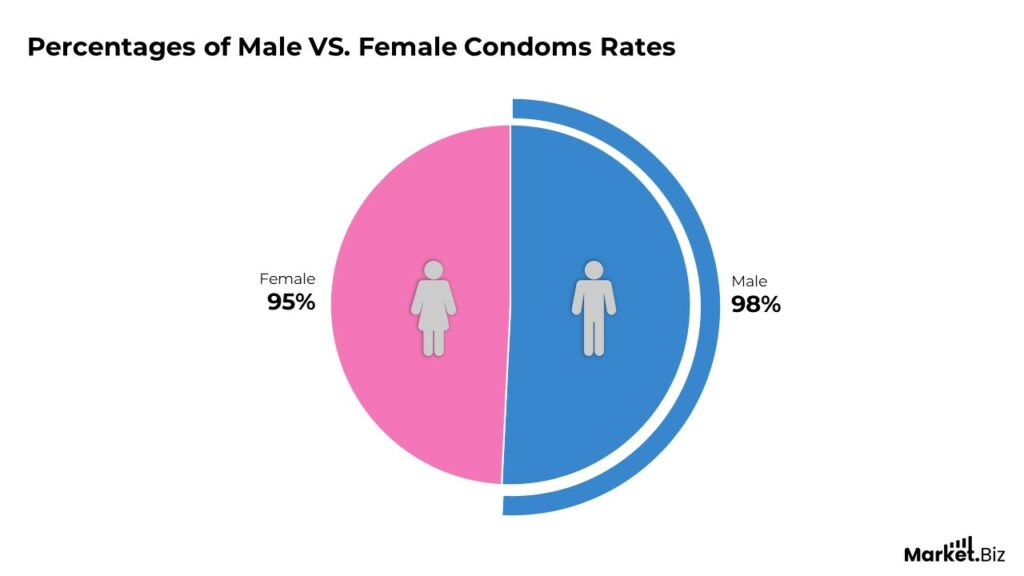
- Research shows that male condoms boast an effectiveness rate of 98% when used correctly, making them a leading option for contraception and STI prevention.
- This high rate of effectiveness positions male condoms as one of the most dependable methods of sexual health protection, provided they are used consistently and correctly.
- Female condoms, while still a valid option, have a slightly lower effectiveness rate of 95% when used properly.
- Despite their effectiveness, female condoms are not as widely used as male condoms, which could explain their slightly reduced effectiveness rate in real-world applications.
- A 3% difference in effectiveness between the two types suggests that male condoms generally provide slightly superior protection against unintended pregnancies and sexually transmitted infections, including HIV.
- Both male and female condoms are proven to be highly effective in preventing pregnancy and protecting against STIs, underscoring their importance in sexual health.
- The decision to use either male or female condoms is largely driven by personal preference and comfort, with male condoms being the more commonly chosen option due to greater familiarity and ease of use.
(Source: Market.us, News-Medical.Net, Verywell Health)
Demographic Trends in Condom Use
Age
15-19 Years (Adolescents)
- Condom use among sexually active adolescents has decreased in recent years. Between 2014 and 2022, the percentage of sexually active boys using condoms during their last sexual encounter dropped from 70% to 61%, while the proportion of girls using condoms fell from 63% to 57%. This decline highlights a concerning trend in safe sex practices among younger populations.
20-29 Years (Young Adults)
- This age group tends to have higher condom use rates, largely driven by greater awareness and education on sexual health.
30-44 Years (Adults)
- Condom use tends to decline with age, especially among individuals in long-term relationships or marriages.
(Source: Health Behaviour in School-Aged Children, TIME USA, LLC., National Institute of Health)
Gender
Male
- Research indicates that men are generally more inclined to use condoms, with 60.8% of never-married men reporting consistent use. In contrast, only 35.2% of formerly married men and 23.5% of cohabiting men report using condoms. This suggests that marital status and living arrangements have a significant influence on condom usage patterns.
Female
- In certain regions, such as Botswana, women tend to have lower rates of consistent condom use. Specifically, data from Botswana reveals that only 43% of women reported using condoms consistently over the past year, highlighting a gap in adherence to safe sex practices among women in this area.
(Source: Centers for Disease Control and Prevention, SAGE Publications Ltd)
Analysis of Financial Trends and Market Share in the Condom Sector Statistics
- Karex Berhad, a condom manufacturer, reported revenue of $421.642 million in 2022, reinforcing its strong position in the global condom industry.
- In the 2022 financial year, Reckitt Benckiser produced a revenue of $14.453 billion, with a substantial contribution from its well-known condom brand, Durex.
- Church & Dwight, a U.S. company, reported revenue of $5.376 billion in 2022, indicating robust performance in the sexual wellness market.
- In the Indian market, for instance, in 2021, Manforce emerged as the leading brand, holding the largest market share at 32%, followed by Kamasutra and Durex, each at 14%.
- The maximum retail price for Manforce condoms in India is 120 Indian rupees, positioning it as an affordable and competitive option within the market.
(Source: Statista)
Sexually Transmitted Diseases
Condoms are essential in preventing the spread of sexually transmitted infections (STIs). By acting as a barrier that limits the exchange of bodily fluids during sexual intercourse, condoms effectively reduce the risk of transmitting STIs, including HIV. Thus, the rising prevalence of STDs boosts the demand for condoms.
- Every day, more than 1 million new curable STIs are acquired globally among individuals aged 15–49, with the majority remaining asymptomatic.
- Approximately 374 million new infections of one of four curable STIs, such as gonorrhea, chlamydia, trichomoniasis, and syphilis, were detected among people aged 15–49.
- An estimated 8 million adults aged 15–49 were infected with syphilis in 2022.
- Over 500 million people aged 15–49 live with a genital herpes simplex virus infection globally.
- Human papillomavirus infections contribute to more than 311,000 cervical cancer-related deaths annually.
- In 2022, around 1.1 million pregnant women were infected with syphilis, resulting in over 390,000 adverse birth outcomes.
(Source: World Health Organization)
Condoms as a Tool for STI Prevention Statistics
- Condoms are also effective in reducing the risk of Hepatitis B transmission, with studies indicating a reduction of approximately 90% when used consistently and correctly.
- Consistent and correct condom use has been shown to reduce the risk of HIV transmission by approximately 85%, providing a significant protective measure against the virus.
- Male condoms are likely to have a 90% efficiency rate in reducing the spread of HIV, making them a highly effective barrier method for preventing the virus.
- In terms of Genital Herpes, consistent condom use can reduce the transmission risk by approximately 40%, though it is less effective compared to its impact on other STIs.
- Female condoms offer a slightly higher level of protection, with the potential to decrease HIV spread by as much as 94%, highlighting their effectiveness in sexual health.
- A successful program by the New York City Department of Health and Mental Hygiene caused a significant increase in the monthly delivery of male condoms, which rose from around 500,000 to 1.5 million, demonstrating the positive impact of targeted public health interventions.
(Source: National Institute of Health, United States Agency for International Development)
Recent Developments
New Product Launches and Approvals
- In September 2024, the condom brand Durex introduced the Durex Close Fit Invisible Condom, designed to offer a thinner profile for couples seeking a more intimate experience without sacrificing protection.
- In November 2023, Bombae Condoms launched BOMBAE SILK, an ultra-thin condom that aims to deliver a more natural and heightened sensation while providing maximum protection.
Partnerships and Collaborations
- In March 2024, a strategic partnership between a leading condom producer and a reproductive health clinic was formed, aiming to offer discounted condoms and provide comprehensive contraceptive counseling to patients. This collaboration is designed to improve access to affordable sexual health products while promoting informed decision-making.
- In November 2023, a condom brand joined forces with a sexual health nonprofit organization to distribute free condoms and enhance awareness of safe sex practices. The initiative focuses on broadening access to sexual health resources while fostering education on the importance of condom use in preventing STIs and unintended pregnancies.
Fundings Rounds
- In February 2024, a condom technology startup completed its Series C funding and raised $40 million to advance the development of new condom materials and enhance manufacturing processes. This funding aims to drive product innovation and improve the overall quality and accessibility of condoms.
- In April 2024, a condom delivery initiative secured $8 million in seed funding to support efforts to increase condom education and access in underserved societies. The funding will expand outreach programs, raise awareness, and address gaps in sexual health resources in these regions.
Innovation in Product Design
- Innovations in condom materials, including non-latex alternatives like polyurethane and polyisoprene, ultra-thin designs, and self-lubricating condoms, improve comfort, sensitivity, and overall reliability. These advancements meet the needs of diverse consumers, especially those with latex allergies, while enhancing both pleasure and protection.
- The industry also prioritizes sustainable options, such as biodegradable and vegan condoms, to lessen environmental impact. Additionally, the development of custom-fit condoms is aimed at providing a more personalized experience, boosting comfort and effectiveness for better sexual health outcomes.
Investment Opportunities and Trends
- In 2023, venture capital funds in condom startups reached $2.7 billion, primarily directed toward companies developing innovative condom materials and designs, signaling strong market interest in product differentiation and technological advancements.
- Strategic acquisitions and partnerships involving healthcare firms, sexual wellness brands, and nonprofit organisations accounted for 55% of investment in the condom market in 2023. This trend highlights a growing focus on industry collaboration to advance sexual health and wellness globally.
Conclusion
Condom Statistics: Condoms remain one of the most effective and widely used methods for contraception and the prevention of sexually transmitted infections worldwide. With a 98% effectiveness rate for male condoms and 95% for female condoms, when used correctly, they provide reliable protection against unintended pregnancies and a range of STIs, like HIV.
The demand for condoms continues to grow, fueled by public health campaigns, increased awareness, and a focus on safer sexual practices. However, the effectiveness of condoms can decrease with typical use due to inconsistent application, making proper and consistent usage crucial for their success.
Despite their proven effectiveness, challenges such as inconsistent use, cultural barriers, and limited access in some regions persist. Nonetheless, condoms remain a critical tool in sexual health, offering an affordable and accessible means of avoiding pregnancy and reducing STI transmission.
Moving forward, continued improvements in education, accessibility, and product innovation are essential to meeting the diverse needs of consumers. Overall, condoms play a vital role in public health, supporting both family planning and STI prevention efforts, and remain central to advancing global sexual health outcomes.
FAQ’s
The number of condoms used globally varies, with millions being used annually. This number fluctuates based on factors like population growth, public health campaigns, and increased awareness of safe sex practices.
Yes, alternative materials are offered for individuals with latex sensitivities or allergies. These include polyurethane and polyisoprene condoms, both of which are non-latex options. Additionally, female condoms are commonly made from materials like polyurethane or nitrile, offering further choices for protection.
Condoms act as a physical barrier that prevents direct contact with bodily fluids during sexual activity, significantly reducing the risk of transmitting STIs such as HIV, chlamydia, gonorrhea, and herpes. Both male and female condoms are effective in STI prevention when used consistently and correctly.
Condoms are extremely effective in preventing pregnancy and STIs when used properly. Male condoms have an effectiveness rate of about 98% with perfect use and around 85% with typical use. Female condoms have a 95% effectiveness rate with perfect use and approximately 79% with typical use.
While condoms are very effective at preventing many STIs, they do not offer 100% protection against all infections. They are less effective against STIs transmitted through skin-to-skin contact, such as human papillomavirus (HPV) and herpes, as condoms may not cover all affected areas. However, they still provide significantly better protection than if no barrier method were used.
Condoms are generally safe for most people, but some may experience irritation or allergic reactions, particularly to latex or certain lubricants. It’s important to choose the right type of condom, such as latex-free options for those with allergies, and ensure that condoms are not expired or damaged before use.
Condoms should be stored in a dry place, cool, away from direct, sharp objects such as sunlight and heat. Avoid storing them in wallets or hot environments like cars for protracted periods, as heat and friction can weaken the material, reducing their effectiveness.