









Introduction
Dental Care Statistics: Oral health is crucial to overall wellness, with a growing global emphasis on proper dental hygiene practices. Increased understanding of the link between oral health and broader systemic conditions has intensified the focus on prevention and early intervention.
Advances in dental technology and greater availability of dental services have changed the way individuals manage their oral care. Moreover, evolving consumer preferences for customized and aesthetically pleasing dental treatments are influencing the industry landscape. Public awareness initiatives and educational efforts have also promoted more proactive dental habits, driving shifts in market trends and boosting demand for a wide range of dental care solutions.
Editor’s Choice
- Nearly 50% of the older population worldwide suffers from dental caries, underscoring the ongoing oral health challenges faced by older adults.
- Over 40% of individuals reported experiencing oral pain within the past year, highlighting the widespread impact of dental discomfort on daily life.
- By the age of 34, approximately 80% of people develop at least one cavity, indicating that dental decay is a common issue from a young age.
- In the UK, nearly 2 out of 5 adults neglect regular dental check-ups, which may contribute to preventable oral health problems.
- Around 49% of the older population worldwide is affected by dental caries.
- Approximately 25 of adults in the U.K. fail to brush their teeth twice daily with fluoride toothpaste, potentially increasing their risk of
- Around 400 commonly prescribed medications can cause xerostomia (dry mouth), which in turn increases the risk of developing oral diseases by reducing the protective effects of saliva.
- The use of fluoride toothpaste has been shown to lower the incidence of cavities in children and adolescents by around 24 to 30%.
(Source: Centers for Disease Control and Prevention, World Health Organization, Dental Health Association, Research Gate)
Oral Care Market Size
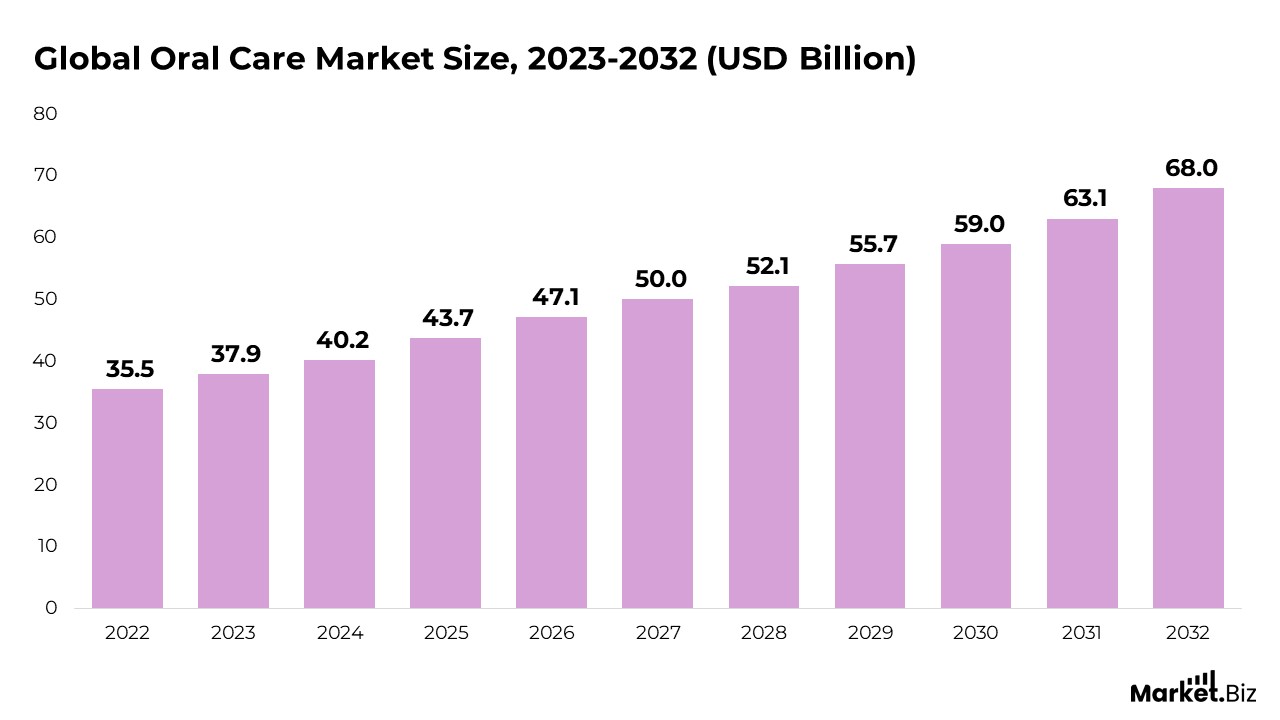
- According to Market.us, the global oral care market is projected to grow from $43.7 billion in 2025 to $68.0 billion by 2032, representing a compound annual growth rate (CAGR) of 6.9% from 2023 to 2032.
- Market growth is driven by increased awareness of oral health care to prevent dental problems.
- Toothpaste accounts for the largest revenue share, around 25.0%, and is widely used across all income levels.
- Various types of toothpaste exist to meet different consumer preferences, including Colgate Trolls Mild Fruit Toothpaste.
- The Household segment dominated in 2022, with a revenue share of over 70.3%, driven by the rising use of home oral irrigators.
- Hypermarkets and supermarkets hold a significant market share due to the availability of everyday oral care products and frequent promotions and discounts.
- Asia Pacific is the largest regional market, driven by a large older population with oral health needs.
- Countries like Japan and China contribute significantly to the Asia Pacific market dominance through high product consumption.
(Source: Market.us)
Global Dental Consumables Market Size
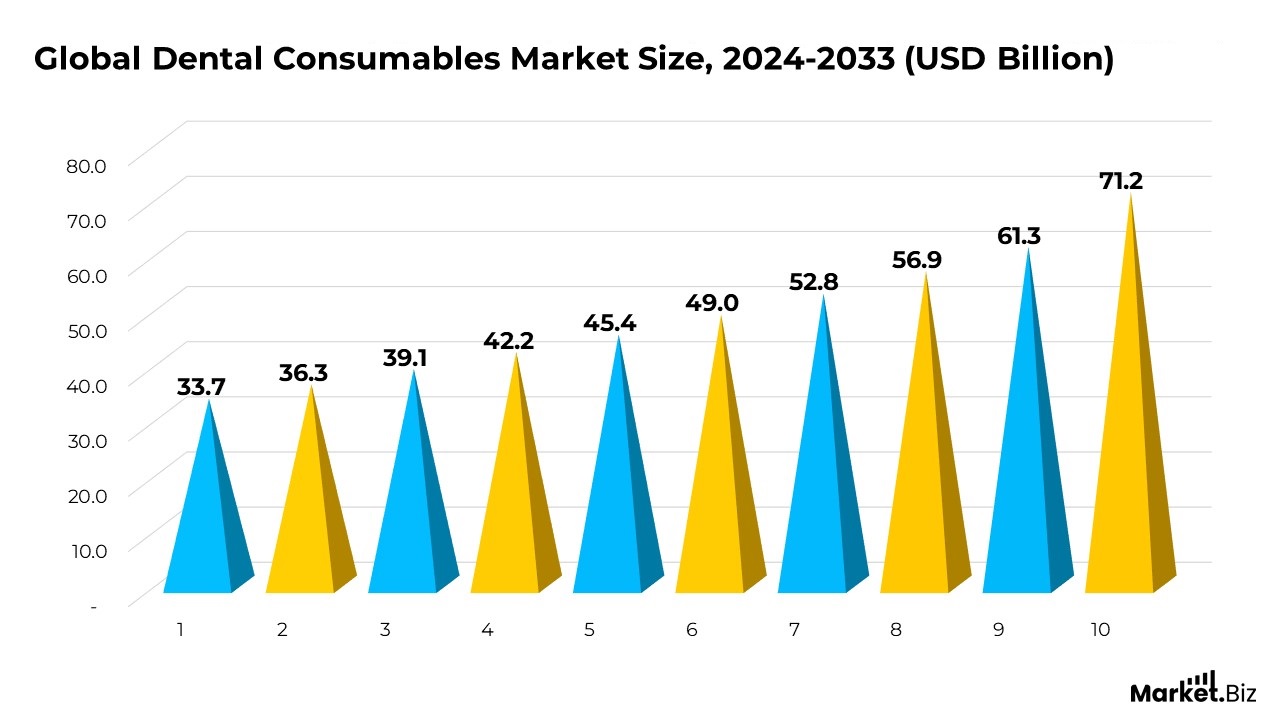
- According to Market.us, the global dental consumables market is projected to grow from $36.3 billion in 2025 to $61.3 billion by 2032, representing a compound annual growth rate (CAGR) of 7.8% from 2025 to 2032.
- Market expansion is driven by growing oral health awareness, advancements in dental technologies, and an ageing population.
- The dental implants segment accounted for the largest market share at 17.8% in 2023 and is expected to maintain its dominance during the forecast period, owing to their durability, functionality, and natural appearance, which are favoured over dentures and bridges.
- Dental clinics lead the dental consumables market, serving as primary providers of diverse treatments that utilize consumables such as implants, crowns, and hygiene products, with their expertise and patient trust driving demand.
- North America dominated the global market with a 36.7% share in 2023 and is forecasted to hold this lead, supported by advanced healthcare systems, high spending, and strong preventive oral care awareness.
(Source: Market.us)
Global Prevalence of Dental Disease Statistics
Dental diseases represent a significant health challenge worldwide, impacting individuals across all ages and leading to pain, discomfort, facial disfigurement, and in severe cases, mortality.
- Current estimates suggest that nearly 3.7 billion people globally suffer from various oral health conditions, reflecting a widespread public health concern.
- Periodontitis is highly prevalent among diabetic patients, affecting 78.8% of those with type 1 diabetes, compared to 70.5% in individuals with type 2 diabetes, indicating a strong link between diabetes and periodontal health deterioration.
- Untreated dental caries affected around 2.5 billion individuals, making it one of the most common oral health issues worldwide.
- Nearly 1 billion people suffer from severe periodontal disease, which can lead to tooth loss and other serious complications if left untreated.
- Approximately 350 million individuals have experienced complete tooth loss, which severely affects their quality of life and daily functioning.
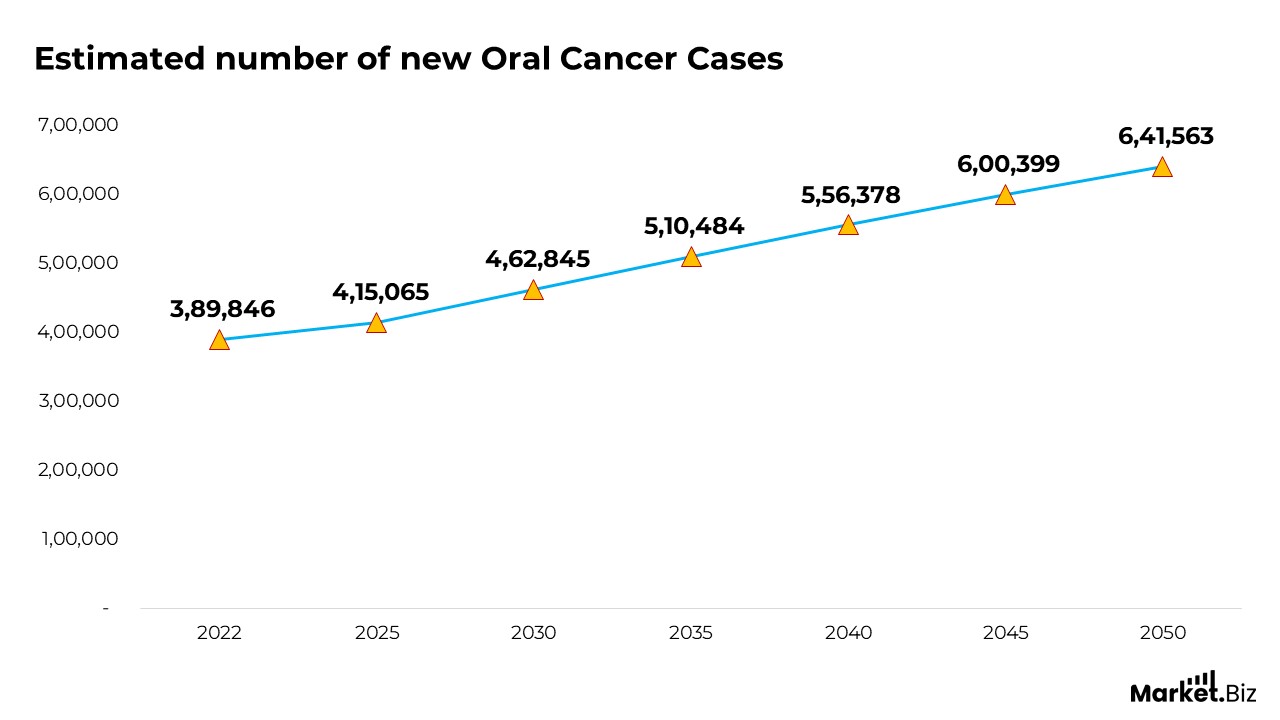
- Oral cancer affected approximately 380,000 people globally, underscoring the need for early detection and preventive measures.
- Nearly 47.2% of individuals aged over 30 suffer from some form of gum disease, with periodontitis and plaque-induced gingivitis being the most prevalent conditions.
- Gum diseases occur more frequently in men (56.4%) compared to women (38.4%) and are particularly common among lower-income groups (65.4%) and smokers (64.2%).
- Squamous cell carcinomas represent the majority of oral cancer cases, accounting for 90%, while less common types include adenoid cystic carcinoma (ACC) and mucoepidermoid carcinoma (MEC).
- Among congenital oral defects, cleft palate is the most prevalent (44%), followed by cleft lip (24%) and unilateral cleft lip and palate (22%), with bilateral cleft lip and palate being the rarest form.
(Source: The Oral Cancer Foundation, Journal of Clinical Medicine World Health Organization, Followapp Care, Centers for disease control and prevention, Dental Health )
Common Symptoms of Dental Disease
- Persistent tooth pain or aching
- Sensitivity when consuming hot, cold, or sweet foods and beverages
- Gum inflammation or redness
- Bleeding gums, particularly during brushing or flossing
- Chronic bad breath (halitosis) that does not resolve
- Teeth that feel loose or have shifted position
- The presence of pus around the gums indicates infection
- Noticeable cavities or holes in the teeth
- Gums that are receding or pulling away from the teeth
- Difficulty or discomfort while chewing or biting
- Alterations in bite alignment or tooth positioning
- Mouth sores or ulcers that fail to heal
- White or red lesions appearing inside the mouth
(Source: World Health Organization, WebMD LLC, Mayo Clinics, America Dental Association)
Dental Products Statistics
- Antiseptic mouthwash products are about 4.6 times more effective at reducing dental plaque compared to traditional flossing methods, highlighting their growing role in oral hygiene routines.
- Globally, approximately 3.5 billion toothbrushes are purchased each year, reflecting the sustained demand for essential dental care tools.
- In 2020, around 24 million individuals adopted electric toothbrushes, indicating a significant shift toward advanced oral care technologies.
- The global market for electric toothbrushes was valued at approximately US$1.6 billion in 2019 and is projected to reach around US$2.2 billion by 2026, driven by increasing consumer awareness and technological advancements.
- In the United Kingdom, an estimated 34 million people used electric toothbrushes in 2022, with 12 million new users adopting them between 2015 and 2020, demonstrating rapid market penetration.
- Studies show that water flossers outperform traditional string floss by approximately 29% in overall plaque removal, particularly on approximal tooth surfaces, suggesting their effectiveness as an alternative oral hygiene tool.
(Source: WWF Australia, Periodontal Health Center, Oral Health Foundation, Electronic Specifier, Statista, Lost Canyon Family Dental)
Demographics of Dental Care
Children
- Children typically miss around 3 days of school each year due to dental issues, which can negatively affect their academic performance and overall growth.
- About 67% of parents indicate that their children have experienced dental pain, highlighting the significant discomfort caused by oral health problems among youth.
- Dental pain and related issues disturb the sleep of 38% of children, impacting their rest and daily activities.
- In the United States, more than 50% of children aged 6 to 8, as well as a similar percentage of adolescents, have had cavities in their primary teeth, showing the extensive prevalence of tooth decay among young individuals.
- Cavities affect children from low-income households disproportionately, with 25% experiencing dental caries compared to 11% among those from higher-income families, pointing to socioeconomic inequalities in oral health.
- Data from the National Centre for Health Statistics (NCHS) in 2021 revealed that the proportion of children aged 1 to 17 who visited a dentist for an exam or cleaning decreased from 83.8% in 2019 to 80.9% in 2020, likely due to the COVID-19 pandemic disrupting regular dental care.
- The largest decline in dental visits, a 7.3% drop, occurred among children aged one to four in 2021, raising concerns about reduced early childhood dental care engagement.
(Source: Office For Health Improvement & Disparities, Government of the UK, Centers for Disease Control and Prevention, National Center for Health Statistics)
Older Adults
- In 2021, Australia recorded the lowest dental caries rate at 25%, while South Africa experienced the highest rate, with nearly 99% of the population affected, highlighting significant regional disparities in oral health.
- In 2021, the prevalence of root caries was notably high in parts of Asia, with 62% of individuals affected in China and 46% in India, indicating a substantial burden of this condition in these countries.
- Untreated root caries rates vary widely, with the lowest rates observed in Finland at 8%. In comparison, Brazil faces a significantly higher rate of 74%, highlighting differences in dental care access and treatment outcomes in 2021.
- In the United States, about 25% of adults over the age of 60 have lost all their natural teeth, a condition known as edentulism, which impacts nutrition and quality of life.
- The prevalence of tooth loss among older adults also shows geographic variation, with 42% of aged people in West Virginia being toothless compared to just 13% in California, reflecting socioeconomic and healthcare access factors.
- Tooth decay occurs more frequently in adults over 60 than in children, underscoring the ongoing need for oral health interventions across the lifespan.
- Severe gum disease affects nearly 23% of Americans aged 65 to 74, posing significant risks for overall health and well-being.
- Older adults who face economic hardship, lack dental insurance, or belong to minority groups tend to have the poorest oral health outcomes, highlighting the intersection of social determinants with oral disease prevalence.
(Source: International Journal of Environmental Research and Public Health, Centers for Disease Control and Prevention, Shrotlister )
Race
(Source: John Wiley & Sons, Inc, Journal of Periodontology)
Key Measures to Prevent Tooth Decay and Promote Oral Health
Maintaining good dental hygiene and infection control is essential for preventing tooth decay and promoting oral health.
- Fluoride varnish applications can decrease the risk of cavities in baby teeth by roughly 33%, providing important early protection.
- Dental sealants applied to the chewing surfaces of teeth can prevent up to 80% of cavities, especially in molars that are prone to decay.
- Antiseptic mouthwash products are about 4.6 times more effective than flossing in reducing dental plaque.
- Reducing the consumption of simple sugars and carbohydrates lowers the chances of developing dental caries.
- Fluoridated drinking water strengthens teeth and helps reduce tooth decay by approximately 25% across populations.
(Source: Centers for Disease Control and Prevention, Shrotlister, Listerine Professional, Shrotliseter )
Economic Benefits of Preventive Dental Care and Community Health Programs
- Access to fluoridated water reduces the incidence of cavities by 25% and generates annual savings of approximately US$32 per person by preventing dental treatments and reducing missed work or school days.
- The Centers for Disease Control and Prevention (CDC) estimates that providing optimally fluoridated water to communities across the US for one year results in dental treatment savings of approximately US$6.5 billion, delivering a return of US$20 for every dollar invested in water fluoridation.
- Integrating screenings for diabetes, high blood pressure, and high cholesterol into dental visits could help the healthcare system save up to $ 100 million annually through early detection and intervention.
- School-based dental sealant programs have the potential to save up to US$300 million by targeting low-income children, helping prevent tooth decay.
- These programs are cost-effective, with each sealed tooth saving over US$11 in future dental treatment costs, making sealants an impactful preventive measure for high-risk populations.
(Source: American Dental Association, American Dental Education Association, Centers for Disease Control and Prevention, National Council on Disability, Shortlister)
Dental Care Statistics – By Country
- In 2022, about 75% of American adults intended to see a dentist within the next year, and 65% of adults aged 18 and older had already visited a dental professional in the previous year.
- During the 2021–22 fiscal year, Australia spent approximately US$11.1 billion on dental care services. Patients covered the majority of this expense, approximately US$6.7 billion, or 60%, with individuals spending an average of US$259 on dental treatments per year, excluding private health insurance premiums.
- In the U.K., nearly 39% of adults do not attend regular dental check-ups.
- In the U.K., Visible plaque is present in approximately 66% of adults.
- About one in four Canadians (26%) experienced oral pain or avoided certain foods due to issues with their mouth in 2022.
- The French Society of Dental Health reports that almost 95% of people in France have experienced at least one dental cavity.
(Source: Government of Australia, Pediatric Dentistry and Orthodontics, Oral Health Foundation, Government of Canada)
Conclusion
Dental care statistics highlight a considerable global challenge posed by oral diseases, impacting individuals of all ages and socioeconomic groups. Effective preventive strategies, including the use of fluoride, application of dental sealants, and maintaining good oral hygiene, have proven successful in reducing the prevalence of cavities and gum disease. Nevertheless, significant disparities continue, as underserved populations continue to face greater risks due to barriers in accessing care and socioeconomic disadvantages.
Economic evidence further emphasizes the substantial cost savings achievable through community-based dental initiatives and early detection programs. An ongoing commitment to prevention, education, and ensuring equitable access to dental care is crucial for enhancing oral health outcomes and mitigating the broader health and economic burdens associated with dental conditions.
FAQ’s
Dental diseases impact nearly 3.7 billion people globally, making oral health a major public health concern worldwide.
The most frequently occurring dental issues are tooth decay (dental caries), gum diseases (periodontal diseases), and oral cancers, with cavities being highly prevalent among both children and adults.
The use of fluoride can decrease tooth decay by as much as 25%, and dental sealants can prevent about 80% of cavities on the chewing surfaces of molars.
Yes, dental health disparities exist, with higher incidences of dental diseases among vulnerable populations, including low-income groups, smokers, and older individuals, largely due to barriers in accessing care and socioeconomic challenges.
Poor dental health can lead to pain, impaired nutrition, and disturbed sleep, and has been associated with systemic diseases such as diabetes and heart conditions.

