








Introduction
Cancer Statistics: Cancer continues to pose a major global health challenge, ranking among the top causes of mortality and disease burden worldwide. New cancer cases are rising steadily, influenced by factors such as an aging population, changing lifestyles, and environmental factors. Reliable and current cancer data are essential for comprehending the disease’s scale, shaping public health strategies, optimizing resource distribution, and driving scientific research.
These statistics provide a comprehensive overview of recent global cancer incidence, mortality, and survival trends, emphasizing prominent cancer types and geographical differences. Through this analysis, policymakers and healthcare professionals can better focus efforts on prevention, early diagnosis, and treatment to lessen Cancer’s impact on communities globally.
Editor’s Choice
- Cancer continues to be one of the top causes of death worldwide, responsible for nearly 10 million fatalities each year.
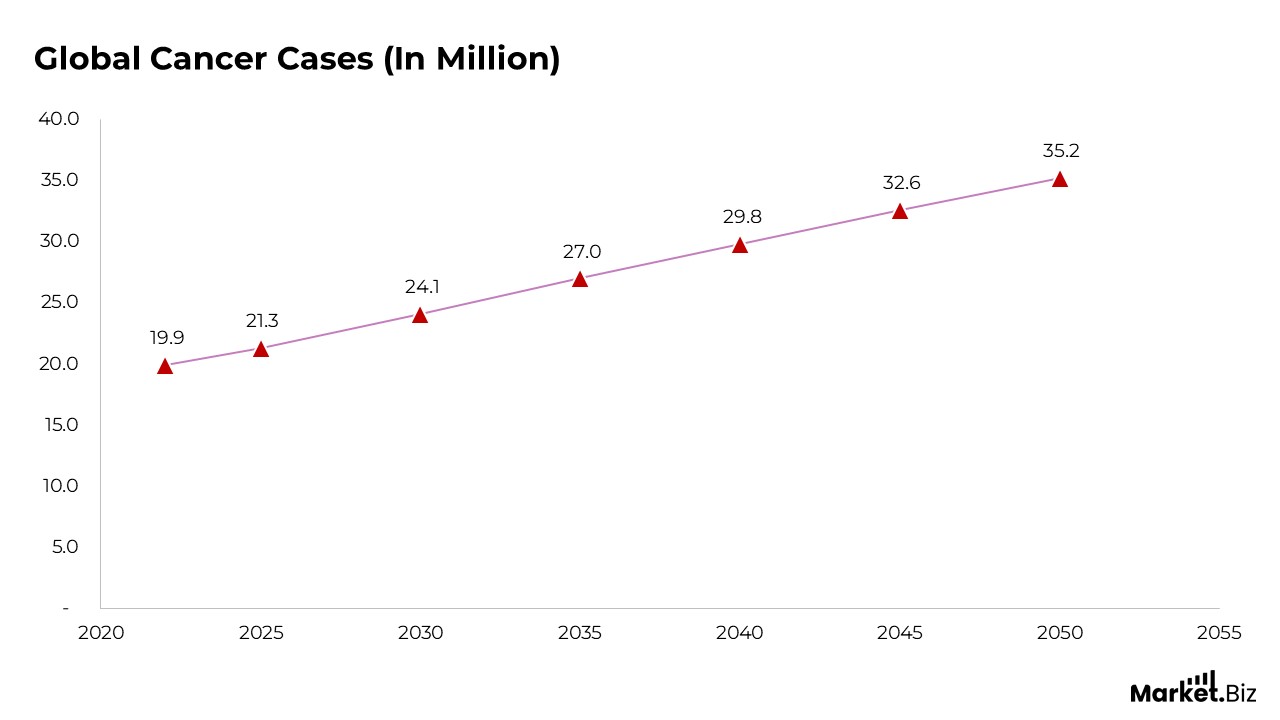
- In 2022, 19.9 million new cancers were detected all over the world. This number is expected to increase by 24.1 million new cancer cases globally.
- Recent progress in early diagnosis and treatment has led to improved survival rates for prevalent cancers like breast, colorectal, and lung cancer.
- The worldwide number of cancer cases is expected to increase substantially, driven by aging populations and lifestyle factors including tobacco use, diet, and environmental influences.
- In 2024, breast cancer remains the most frequently diagnosed Cancer among women, whereas lung cancer accounts for the highest number of cancer-related deaths globally.
- Marked differences in cancer rates and outcomes are observed across regions, socio-economic groups, and levels of healthcare access.
- Cancer funding and research efforts have grown, emphasizing targeted therapies and immunotherapy advancements.
- Screening initiatives for cervical and colorectal cancers have proven effective in lowering death rates by enabling earlier detection.
- Innovative methods such as liquid biopsy and artificial intelligence-based diagnostics are poised to transform cancer detection and patient monitoring.
(Source: World Health Organization )
Oncology Market Size
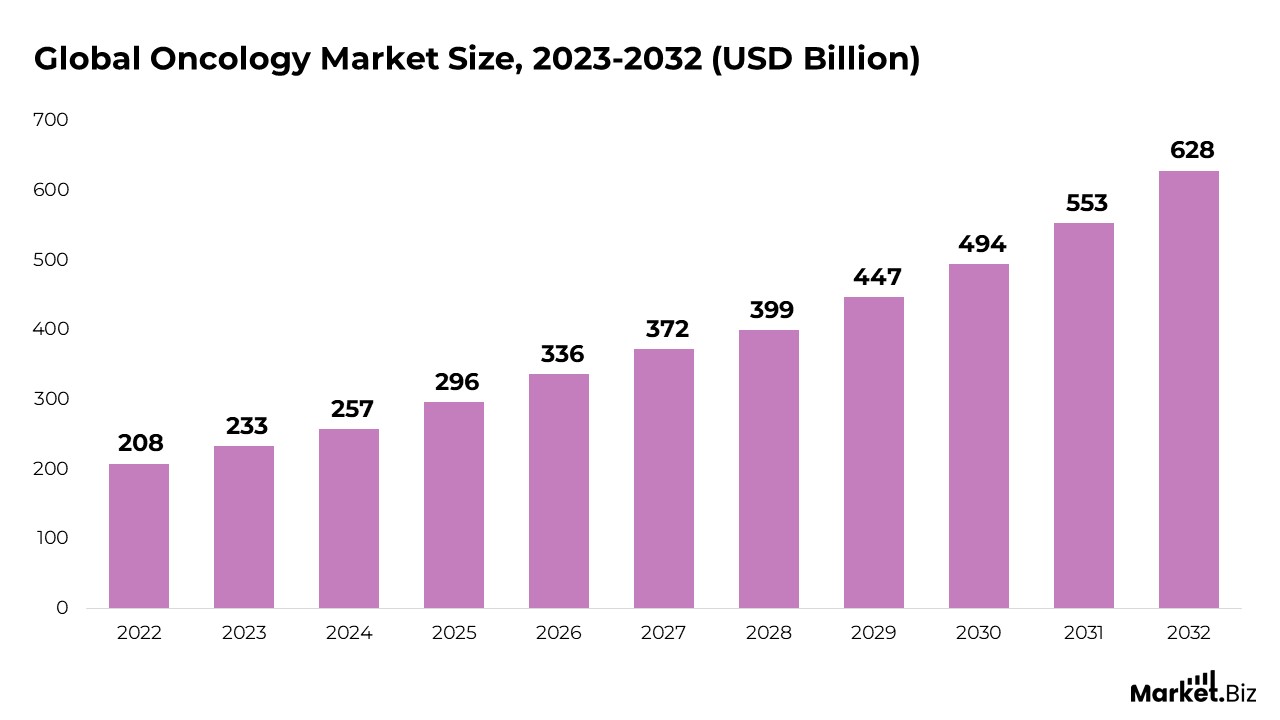
- As per Market.us, the global oncology market is anticipated to expand from $296 billion in 2025 to $628 billion by 2032, reflecting a compound annual growth rate (CAGR) of 12.0% from 2022 to 2032.
- The oncology market is experiencing significant growth, primarily fueled by the rising incidence of cancer cases worldwide, ongoing technological innovations in cancer detection methods, and the expansion of cancer screening and diagnostic initiatives.
- The in vitro diagnostic testing segment is expected to witness the fastest growth during the forecast period from 2022 to 2030. This surge is largely driven by the increasing adoption of in vitro diagnostics, crucial in early and accurate cancer detection and propelling overall market expansion. This segment has also led the market to growth in recent years.
- The cancer treatment segment constitutes a substantial portion of the oncology market. This trend is attributed to the widespread reliance on conventional treatment modalities such as chemotherapy and immunotherapy, which remain central to cancer management across the globe.
- The hospitals and clinics segment has emerged as the dominant end-user sector and is projected to register a higher compound annual growth rate between 2022 and 2030. Factors contributing to this growth include heightened awareness of personalized medicine, improved accessibility to healthcare services, and various strategic efforts by healthcare providers.
- In 2022, North America led the global oncology market, primarily driven by the escalating cancer prevalence in key markets like the United States, which has intensified demand for advanced oncology solutions.
- Europe accounted for approximately 24.1% of the global oncology market revenue in 2022, reflecting its strong healthcare infrastructure and increasing investment in cancer care technologies..
(Source: Market.us)
Cancer Diagnostics Market Size
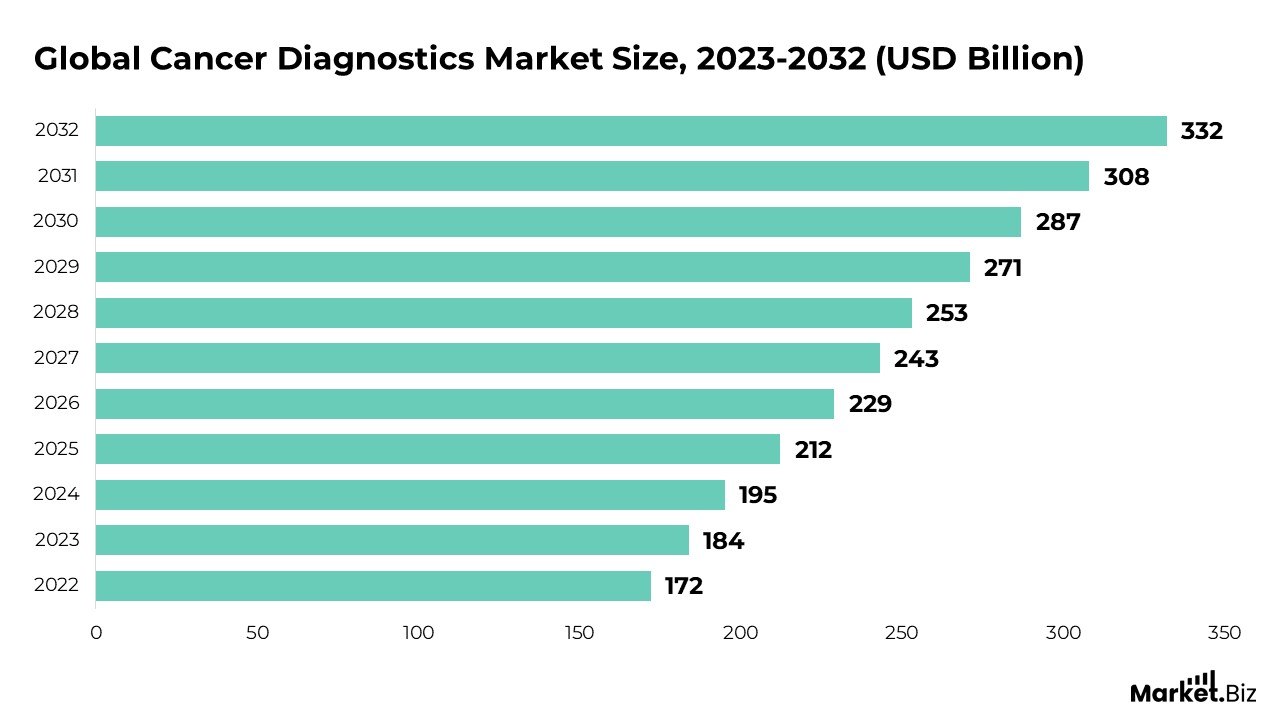
- According to Market.us, the global cancer diagnostics market is anticipated to expand from $212 billion in 2025 to $332 billion by 2032, reflecting a compound annual growth rate (CAGR) of 7% from 2022 to 2032.
- The cancer diagnostics market is witnessing robust expansion, driven by rising cancer prevalence, increased government funding, and growing collaboration to adopt cutting-edge technologies.
- In 2022, consumables dominated the market landscape, accounting for over 60.0% of the total share. This dominance is expected to continue throughout the forecast period, supported by advances in diagnostic kits and reagents, higher usage of consumables, and the global trend of an aging population requiring more frequent testing.
- Breast cancer emerged as the largest application segment in 2022, capturing the highest market share. Numerous government and private sector initiatives bolstered this by promoting early detection and prevention through heightened awareness campaigns.
- The hospitals and clinics segment led the global market 2022, generating more than half of the total revenue. Its growth is attributed to improved affordability of healthcare services, strategic partnerships, and increasing focus on personalized medicine awareness among patients and healthcare providers.
- Between 2022 and 2032, North America is projected to remain the most lucrative region for cancer diagnostics in revenue and market share.
- In 2022 alone, the regional market accounted for a significant 45% share, propelled by numerous biotechnology firms and medical device manufacturers. Sustained investments in research and development, coupled with the rapid adoption of innovative diagnostic technologies, are expected to maintain North America’s market leadership throughout the forecast period.
Global Cancer Statistics
- Cancer continues to rank among the top causes of mortality globally.
- In 2022, nearly 20 million new cancer cases were reported alongside approximately 9.7 million deaths attributed to the disease worldwide.
- Projections indicate that by 2050, annual new cancer diagnoses could surge to 33 million, with cancer-related fatalities rising to around 18.2 million.
- Cancer incidence rates are typically highest in nations with longer life expectancy, higher education, and better living standards. However, certain cancers, such as cervical Cancer, exhibit higher prevalence in countries where these socio-economic indicators are comparatively low.
(Source: International Agency for Research on Cancer, World Health Organization)
Different Types of Cancer
- Adenoid cystic carcinoma (ACC)
- Anal Cancer
- Appendix cancer
- Bladder cancer
- Bowel cancer
- Bone cancer
- Breast cancer
- Brain cancer
- Cervical Cancer
- Children, teens, and young adults’ cancers
- Gallbladder cancer
- Neck and Head cancers
- Hodgkin lymphoma
- Kidney cancer
- Lung cancer
- Liver cancer
- Leukaemia
- Lymphoma
- Melanoma
- Mesothelioma
- Mouth cancer
- Myeloma
- Neuroendocrine Tumours
- Non-Hodgkin lymphoma
- Non-melanoma skin cancer
- Oesophageal Cancer
- Ocular (eye) melanoma
- Ovarian Cancer
- Prostate cancer
- Pancreatic Cancer
- Penile Cancer
- Pseudomyxoma peritonei (PMP) tumor
- Rare cancers
- Skin cancer
- Small bowel cancer
- Stomach cancer
- Soft tissue sarcoma
- Testicular Cancer
- Thyroid cancer
- Throat cancer
- Uterine Cancer
- Upper tract urothelial Cancer (UTUC)
- Vaginal Cancer
- Vulvar Cancer
(Source: Cancer Council)
Causes of Cancer
- Insufficient physical exercise
- Excess body weight
- Exposure to polluted air
- Tobacco use
- Consumption of alcoholic beverages
- Diets high in processed and preserved meats
(Source: SingleCare)
Demographics of Cancer
Age
Cancer occurrence differs markedly across various age groups and genders, influenced by biological, environmental, and lifestyle factors. Recognizing these differences is essential for developing effective, targeted prevention and treatment approaches.
- Among individuals aged 55 and older, cancer rates tend to be higher in men compared to women, highlighting a gender disparity in older populations.
- Age is a major risk factor for Cancer, with nearly 58% of all cancer diagnoses occurring in adults aged 65 years and above, emphasizing the vulnerability of the older people.
- In children under 15 years of age, boys experience a higher incidence of Cancer than girls, indicating a gender difference even at young ages.
- For adolescents and adults aged 15 to 54 years, women show an elevated risk of developing Cancer compared to their male counterparts, suggesting varying risk profiles across life stages.
- Leukemia is predominantly diagnosed in children but also presents a notable burden among adolescents, underlining its impact on younger populations.
- Each year, more than 4,000 children are diagnosed with tumors of the brain and spinal cord, representing a significant pediatric oncology concern.
(Source: SingleCare, Centers for Disease Control and Prevention, National Cancer Institute, American Cancer Society)
Race
- White women face a higher likelihood of being diagnosed with breast cancer compared to Black, Hispanic, and Asian women.
- Despite this, the breast cancer mortality rate is disproportionately higher among Black women than their White counterparts, underscoring disparities in outcomes.
- Non-Hispanic Black men experienced the highest rate of new cancer diagnoses between 2016 and 2022, indicating a significant disease burden in this group.
- From 1999 to 2019, Cancer claimed the lives of over one million Black individuals of all genders aged 20 years and older, highlighting the long-term impact of the disease on this population.
- Encouragingly, cancer death rates among Black individuals of all genders declined by approximately 2% annually during the same period, reflecting progress in cancer prevention and treatment.
- Cervical Cancer presents a higher fatality risk for Black women compared to women of other ethnicities in the United States, pointing to ongoing challenges in early detection and care.
(Source: Centers for Disease Control and Prevention, National Cancer Institute, American Cancer Society, National Institute of Health, Breastcancer.org)
Country-wise Cancer Statistics
| Country/Region | New Cancer Cases (2022) | Age-Standardized Rate (ASR) per 100,000 |
|---|---|---|
| China | 4,775,419 | 199.7 |
| India | 1,401,721 | 97.7 |
| Japan | 992,806 | 264.8 |
| Russia | 614,275 | 240.9 |
| Brazil | 591,660 | 203.7 |
| Germany | 529,955 | 250.4 |
| France (Metropolitan) | 435,114 | 316.6 |
| Italy | 407,240 | 272.4 |
| Indonesia | 400,820 | 134.2 |
| Spain | 264,528 | 265.5 |
| South Korea | 232,963 | 230.9 |
| Canada | 232,074 | 292.4 |
| Turkey | 231,784 | 218.6 |
| Poland | 202,037 | 256.8 |
| Mexico | 198,533 | 135.6 |
| Philippines | 187,806 | 184.2 |
| Thailand | 180,337 | 152.0 |
| Vietnam | 179,123 | 149.7 |
| Bangladesh | 166,093 | 104.9 |
| Australia | 151,529 | 322.4 |
| Egypt | 148,639 | 163.9 |
| Argentina | 129,689 | 210.7 |
| Nigeria | 124,735 | 111.1 |
| Netherlands | 116,224 | 312.4 |
| Colombia | 114,573 | 173.7 |
| South Africa | 100,897 | 183.6 |
| Romania | 100,471 | 267.8 |
| Myanmar | 76,043 | 132.7 |
| Belgium | 72,680 | 301.7 |
| Peru | 69,765 | 167.7 |
| Portugal | 66,600 | 286.3 |
| Algeria | 63,306 | 138.2 |
| Greece | 63,176 | 253.8 |
| Morocco | 63,110 | 148.7 |
| Hungary | 62,509 | 321.2 |
| Sweden | 61,794 | 288.9 |
| North Korea | 61,212 | 165.2 |
| Chile | 57,082 | 181.5 |
| Malaysia | 51,133 | 140.7 |
| Switzerland | 48,153 | 255.2 |
| Cuba | 45,705 | 204.6 |
| Austria | 45,525 | 241.7 |
(Source: World Cancer Research Fund)
The U.S.
Cancer continues to be a significant public health concern in the United States, with a substantial number of new cases and deaths expected shortly. The disease’s impact spans all age groups and demographics, underscoring the ongoing need for effective prevention, early detection, and treatment strategies.
- In 2025, it is projected that approximately 2,041,910 new cancer cases will be diagnosed in the U.S., accompanied by an estimated 618,120 cancer-related deaths.
- The most frequently diagnosed cancers, ranked by anticipated new cases in 2025, include breast, lung and bronchus, prostate, melanoma of the skin, colorectal, bladder, kidney and renal pelvis, uterine corpus, non-Hodgkin lymphoma, liver, pancreatic, leukemia, thyroid, and intrahepatic bile duct cancers.
- Among men, prostate, colorectal, and lung cancers are expected to account for nearly 48% of all new cancer diagnoses. For women, lung, breast, and colorectal cancers are predicted to represent about 51% of new cases.
- The overall cancer incidence rate is approximately 445.8 cases per 100,000 individuals annually, based on data from 2018 to 2022.
Further
- The mortality rate due to Cancer stands at about 145.4 deaths per 100,000 individuals per year, as reported between 2019 and 2023.
- Cancer death rates are higher among men (171.5 per 100,000) than among women (126.3 per 100,000). When considering race and ethnicity, non-Hispanic Black men experience the highest mortality rate at 203.6 per 100,000, while non-Hispanic Asian/Pacific Islander women have the lowest at 83.1 per 100,000.
- As of January 2022, the U.S. had an estimated 18.1 million cancer survivors, a figure expected to grow to 26 million by 2040, reflecting improved survival and aging populations.
- Lifetime cancer diagnosis affects roughly 38.9% of all genders, based on 2018–2021 data (excluding 2020 due to the COVID-19 pandemic).
- In 2025, around 14,690 children and adolescents aged 0 to 19 are projected to be diagnosed with Cancer, with an estimated 1,650 deaths within this group.
- The estimated national expenditure for cancer care in 2020 reached US$208.9 billion, a cost expected to rise in the coming years due to population aging and the adoption of newer, often more costly treatments.
(Source: National Cancer Institute)
Canada
Cancer continues to pose a significant health challenge in Canada, affecting thousands of individuals each year across all genders. The distribution of cancer types highlights key areas for focused screening and prevention efforts.
- In 2024, it is projected that approximately 127,100 men and 120,000 women in Canada will receive a cancer diagnosis.
- Prostate cancer is expected to represent about 22% of all new cancer cases among men, accounting for nearly one-fifth of male diagnoses.
- Among women, breast cancer is anticipated to constitute roughly 25% of all newly diagnosed cancers, making it the most prevalent cancer type in females.
- Lung and bronchus cancer will rank as the second most common Cancer for all genders, following prostate cancer in men and breast cancer in women.
- Notably, a higher number of women (17,300) than men (14,800) are projected to be diagnosed with lung cancer in 2024, reflecting emerging trends in cancer incidence.
(Source: Canadian Cancer Society)
Germany
Germany leads Europe in the total number of cancer diagnoses and deaths, largely due to its status as the most populous nation within the European Union. However, when cancer incidence is measured per 100,000 people, Germany ranks below the EU median, reflecting a relatively moderate rate compared to other countries.
- In 2022, breast cancer was the most frequently diagnosed Cancer among women in Germany, with an incidence rate of approximately 150 cases per 100,000 population, amounting to nearly 75,300 new cases.
- Prostate cancer and colorectal Cancer followed closely, registering about 65,300 and 62,500 new diagnoses, respectively, making them the next most common cancers in the country that year.
- Pediatric cancers differ significantly from those seen in adults; for instance, lymphoid leukemias represent the most prevalent cancer type among children of both sexes. Encouragingly, the 10-year survival rate for these childhood leukemias is around 90%, indicating substantial progress in pediatric oncology care.
(Source: Statista)
France
Germany leads Europe in the total number of cancer diagnoses and deaths, largely due to its status as the most populous nation within the European Union. However, when cancer incidence is measured per 100,000 people, Germany ranks below the EU median, reflecting a relatively moderate rate compared to other countries.
- In 2022, breast cancer was the most frequently diagnosed Cancer among women in Germany, with an incidence rate of approximately 150 cases per 100,000 population, amounting to nearly 75,300 new cases.
- Prostate cancer and colorectal Cancer followed closely, registering about 65,300 and 62,500 new diagnoses, respectively, making them the next most common cancers in the country that year.
- Pediatric cancers differ significantly from those seen in adults; for instance, lymphoid leukemias represent the most prevalent cancer type among children of both sexes. Encouragingly, the 10-year survival rate for these childhood leukemias is around 90%, indicating substantial progress in pediatric oncology care.
(Source: Statista)
The U.K.
- Nearly 3.5 million individuals are living with Cancer in the United Kingdom.
- On average, a new cancer diagnosis occurs at least once every 90 seconds across the country.
- Each year, Cancer claims the lives of approximately 167,000 people in the UK, which translates to about 460 deaths daily.
| Nation | Annual Diagnoses | Monthly Diagnoses | Weekly Diagnoses | Daily Diagnoses |
|---|---|---|---|---|
| England (2022) | 346,200 | 28,900 | 6,660 | 950 |
| Scotland (2022) | 36,000 | 3,000 | 690 | 100 |
| Wales (2021) | 19,600 | 1,640 | 380 | 50 |
| Northern Ireland (2021) | 10,500 | 880 | 200 | 30 |
| United Kingdom (Total) | 412,400 | 34,300 | 7,900 | 1,130 |
(Source: Macmillan Cancer Support)
Types of Cancer Treatment
- Chemotherapy: This approach involves using drugs to destroy or reduce cancer cells. Physicians may suggest chemotherapy before surgery or radiation to improve treatment effectiveness. Common side effects include nausea, hair loss, and mouth sores.
- Radiation Therapy: This method employs high-energy radiation to eliminate cancer cells, with treatment often spanning several weeks before the Cancer is fully eradicated. Because radiation can impact healthy tissues, patients might experience fatigue, hair thinning, and memory difficulties.
- Immunotherapy: This treatment boosts the body’s immune system to identify and attack cancer cells more effectively. Possible side effects include skin irritations, tiredness, and muscle aches.
- Hormone Therapy: Targeting cancers that rely on hormones, such as breast and prostate cancers, this therapy works to halt or slow their progression. It is often used in combination with other treatments like chemotherapy, surgery, or radiation. Side effects may include erectile difficulties, increased weight, and hot flashes.
(Source: SingleCare)
Cancer Research Fundings
| Disease Area | 2016 ($M) | 2017 ($M) | 2018 ($M) | 2019 ($M) | 2020 ($M) | 2021 ($M) | 2022 ($M) |
|---|---|---|---|---|---|---|---|
| Breast Cancer | 520.1 | 545.1 | 574.9 | 545.3 | 514.6 | 558.3 | 580.6 |
| Cervical Cancer | 65.6 | 68.0 | 71.5 | 86.0 | 69.3 | 73.7 | 76.6 |
| Colorectal Cancer | 212.2 | 208.4 | 256.0 | 238.8 | 211.6 | 248.0 | 257.9 |
| Head & Neck Cancers | 58.9 | 63.6 | 62.1 | 71.5 | 49.7 | 69.0 | 55.1 |
| Hodgkin Disease | 12.8 | 13.0 | 13.3 | 12.2 | 14.3 | 15.9 | 16.5 |
| Leukemia | 241.0 | 250.5 | 258.3 | 256.6 | 244.5 | 276.0 | 287.0 |
| Liver Cancer | 75.7 | 72.7 | 94.6 | 107.8 | 96.3 | 111.5 | 116.0 |
| Lung Cancer | 283.8 | 320.6 | 350.1 | 418.4 | 402.8 | 459.0 | 477.4 |
| Melanoma | 142.9 | 153.2 | 158.4 | 191.9 | 155.6 | 179.2 | 186.4 |
| Multiple Myeloma | 52.1 | 60.7 | 61.5 | 58.2 | 43.3 | 51.3 | 53.4 |
| Non-Hodgkin Lymphoma | 116.7 | 119.5 | 121.0 | 120.4 | 119.5 | 137.7 | 143.2 |
| Ovarian Cancer | 95.3 | 109.8 | 120.8 | 121.5 | 116.5 | 134.7 | 140.1 |
| Pancreatic Cancer | 152.6 | 178.3 | 182.1 | 187.0 | 178.5 | 218.1 | 226.8 |
| Prostate Cancer | 241.0 | 233.0 | 239.1 | 244.8 | 209.4 | 269.7 | 280.5 |
| Stomach Cancer | 13.3 | 13.4 | 14.2 | 14.8 | 10.6 | 15.4 | 16.0 |
| Uterine Cancer | 16.8 | 17.5 | 17.5 | 17.9 | 13.6 | 14.4 | 15.0 |
(Source: National Cancer Institute)
Conclusion
Cancer continues to pose a major global health challenge, with increasing incidence and mortality influenced by demographic changes, lifestyle habits, and unequal access to healthcare. Although progress in early detection, treatment, and awareness has led to better survival rates in many areas, notable disparities remain among different age groups, sexes, and ethnic communities.
The anticipated rise in cancer cases worldwide highlights the critical need for stronger prevention efforts, fair healthcare access, and sustained investment in research and innovation. Addressing the global cancer burden effectively requires a coordinated and focused effort from governments, medical professionals, and society to ensure improved outcomes for everyone.
FAQ’s
The cancers most frequently diagnosed globally are lung, breast, colorectal, prostate, and stomach cancers.
No, cancer incidence tends to be higher in countries with greater life expectancy and better living conditions. In contrast, mortality rates are often elevated in low- and middle-income countries due to limited access to quality healthcare.
The risk of Cancer increases with age, with nearly 58% of cases diagnosed in individuals aged 65 and older.
Men aged 55 and above generally have higher cancer rates than women of the same age group, while women between 15 and 54 years old tend to have higher rates compared to men in that age range.
Key contributors include tobacco smoking, poor diet, lack of physical activity, alcohol use, certain infections, and exposure to environmental hazards.
Variations in genetics, social and economic conditions, healthcare accessibility, and cultural factors play significant roles in these disparities.

