









Introduction
Teenage Pregnancy Statistics: Teenage pregnancy remains a major global issue, with statistics shedding light on its far-reaching effects on young women, their families, and society as a whole. These figures offer critical insights into the prevalence, trends, and underlying factors that contribute to teenage pregnancies.
They highlight the various challenges adolescents face, including health risks, socioeconomic obstacles, and limited access to education and healthcare. By analyzing these statistics, we can better understand the root causes of teenage pregnancies and develop targeted solutions to support young mothers and reduce the occurrence of teenage pregnancy globally.
Editor’s Choice
- Each year, approximately 21 million pregnancies occur among teenagers aged 15–19 years in middle – and – low-income countries (LMICs), with around 50% of these pregnancies being unintended, leading to an estimated 12 million births.
- As of 2021, adolescent fertility rates showed considerable variation by region, with West and Central Africa experiencing the highest rate of 107 births per 1,000 girls aged 15–19.
- In 2023, the birth rate for teenagers and young adult women aged 15–19 in the United States was 13.1 births per 1,000 women, reflecting the trends observed from 1991 to 2023.
- In 2021, Niger had the maximum teenage fertility rate in Africa, recording 170.5 births per 1,000 women aged 15–19, followed by Mozambique with 165.8. Sub-Saharan Africa had an average adolescent fertility rate of 100.4 births per 1,000 girls that same year.
- The African region continues to have high fertility rates across all age groups, with adolescent pregnancies being prevalent due to early marriages. In contrast, North African countries such as Tunisia and Libya reported significantly lower rates, with Tunisia at 6.7 and Libya at 6.9 births per 1,000 women in 2021.
- In 2022, Afghanistan had the highest number of adolescent births, recording approximately 79.7 births per 1,000 adolescent women. Conversely, Hong Kong had the lowest teenage fertility rate in the Asia-Pacific region, with just 1.6 births per 1,000 women aged 15–19.
Digital Pregnancy Test Kit Market Size
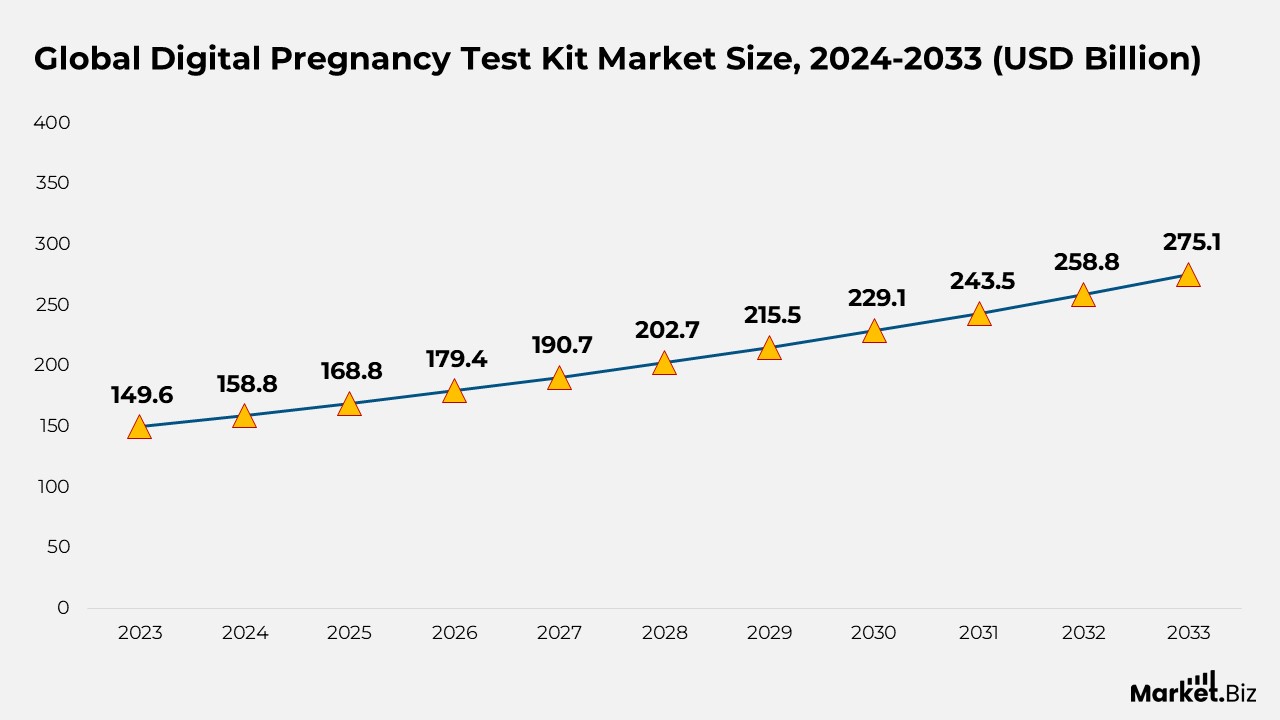
- According to Market.us, the global digital pregnancy test kit market is projected to grow from $168.8 billion in 2025 to $258.8 billion by 2032, representing a compound annual growth rate (CAGR) of 6.3% from 2024 to 2033.
- The market growth is driven by factors such as rising unplanned pregnancies, increased disposable income, changing lifestyles, and improved literacy rates among women.
- In 2023, the Branded Test Kits segment led the market with a significant 84.6% share, indicating strong consumer trust in established and reliable products driven by consumer preference for reliability and ease of use.
- Retail Pharmacies secured a 43.2% share in the digital pregnancy test kit market in 2023, highlighting their key role in offering convenient and dependable testing solutions.
- The Digital Pregnancy Test Kit market in North America experienced notable growth in 2023, holding a dominant 48.3% market share and reaching a market value of USD 72.1 million, driven by advanced healthcare technologies and infrastructure.
(Source: Market.us)
Global Teenage Pregnancy Statistics
- In 2023, approximately 13% of young women and girls globally gave birth before the age of 18.
- According to WHO2024 data, teenagers aged 15–19 in middle – and low-income countries had an estimated 21 million pregnancies annually, with about 50% being unintended, leading to approximately 12 million births in 2019.
- Based on 2019 data, 55% of unplanned pregnancies among teenage girls aged 15–19 ended in abortions, many of which were risky in LMICs.
- Data on childbearing for girls aged 10–14 is becoming more accessible. In 2023, the teenage birth proportion for girls aged 10–14 globally was projected at 1.5 per 1,000 women, with complex rates in Latin America and the Caribbean (2.3) and Sub-Saharan Africa (4.4).
- Globally, the adolescent birth rate (ABR) has reduced from 64.5 births per 1,000 women aged 15–19 in 2000 to 41.3 births per 1,000 women in 2023.
- In the WHO African Region, the projected adolescent birth rate (ABR) in 2023 was 97 per 1,000 adolescents, compared to 13.1 per 1,000 adolescent girls in the European Region.
- The highest number of births among 15–19-year-olds in 2021 occurred in Sub-Saharan Africa (6.1 million), while Central Asia had far less births (68,000). For teenagers aged 10–14, Sub-Saharan Africa had 332,000 births, associated with 22,000 in South-East Asia (SEA) at the same time.
- In 2023, 84% of pregnant teenagers aged 15–19 attended at least one antenatal care visit, compared to 87% of all women aged 15–49. Fewer adolescent girls received skilled delivery care (77% vs. 86%) and postnatal care (64% vs. 69%) compared to all women and girls.
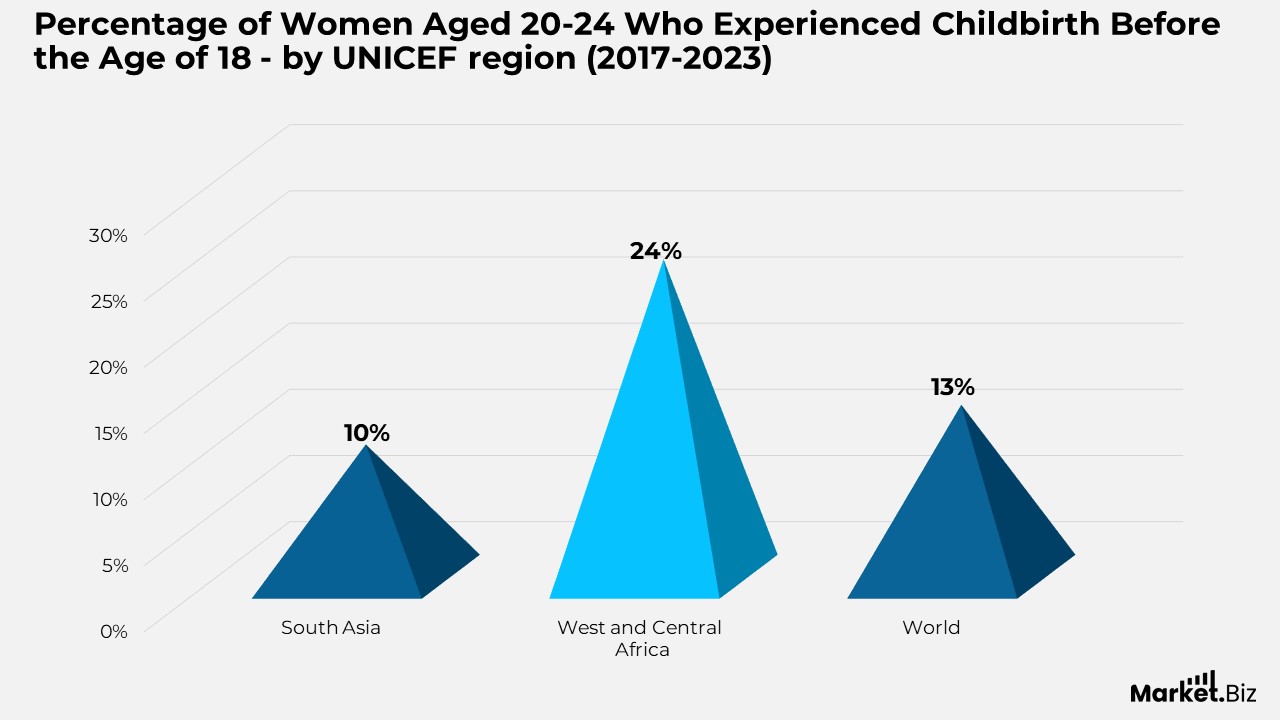
(Source: World Health Organization, United Nations International Children’s Emergency Fund )
Women Who Received at Least One Antenatal Care Visit
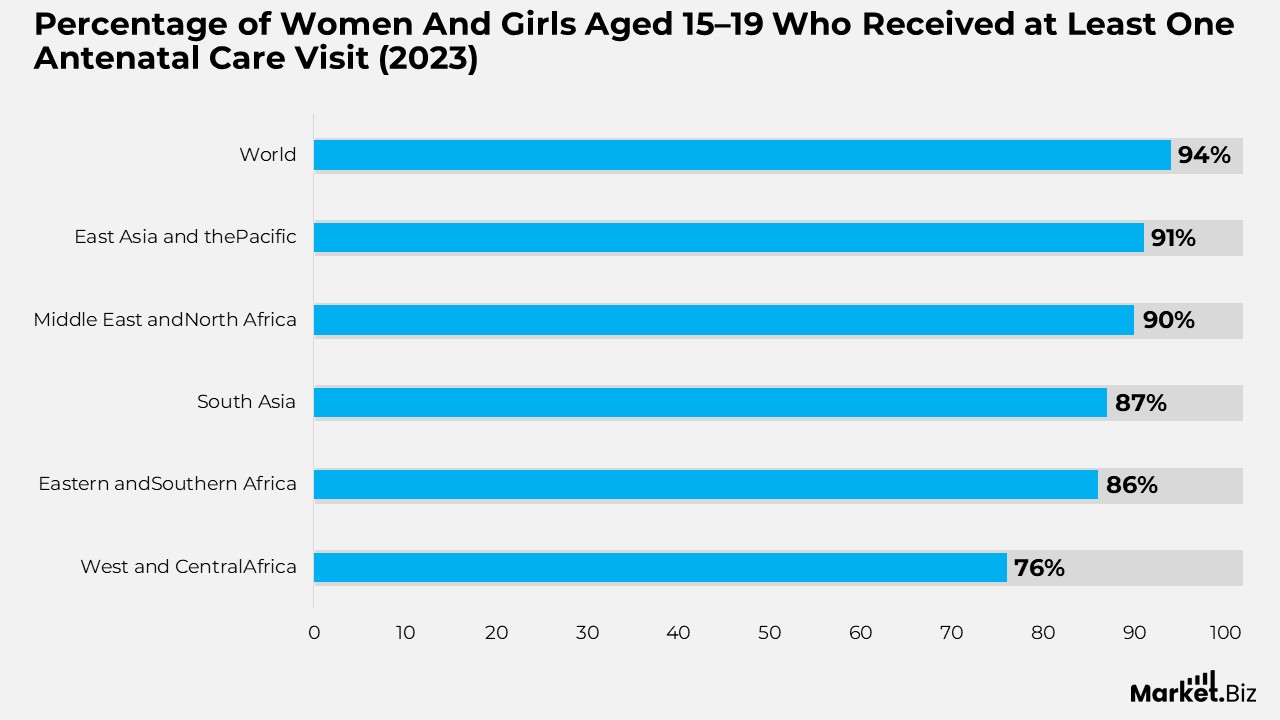
(Source: United Nations International Children’s Emergency Fund )
Countries with the Highest Birth Rates
- Niger holds the highest fertility rate, with 6.6 children per woman.
- In 2024, Niger also had the world’s highest birth rate, at 46.6 births per 1,000 inhabitants.
- The fertility rate in the Central African Republic for 2022 was 4.45, showing a 1.68% decline from 2021.
- In 2024, Tajikistan had the highest fertility rate in the Commonwealth of Independent States (CIS) at 3.6 children per woman. Uzbekistan and Kazakhstan followed, with fertility rates of 2.76 and 2.58, respectively.
- With an average of 4.3 births per woman, Afghanistan recorded the highest fertility rate in the Asia-Pacific region in 2024.
- Pakistan and Papua New Guinea had the second and third-highest fertility rates in the region, while South Korea and Hong Kong had the lowest.
- The total fertility rate in the EU in 2023 was 1.38 live births per woman, ranging from 1.06 in Malta to 1.81 in Bulgaria.
- The average age of women in the EU at the birth of their first child in 2023 was 29.8 years, with a range from 26.9 in Bulgaria to 31.8 in Italy.
- Sub-Saharan Africa has the highest global fertility rate, averaging 4.6 children per woman. Niger leads the region with 6.7 children per woman, followed by Angola (5.8), Democratic Republic of Congo (5.6), Mali (5.5), and Benin (5.4).
- Taiwan has the lowest fertility rate in both Asia and globally, at 1.09 children per woman, thoroughly followed by South Korea (1.11), Singapore (1.17), and Hong Kong (1.23).
- In Europe, France holds the highest fertility rate at 1.9, though it is still below the replacement level of 2.1 births per woman.
Countries with the Highest Adolescent Birth Rates Globally
- Niger recorded the maximum adolescent fertility rate in 2022, with 168 births per 1,000 adolescent women.
- Mali exhibited a high rate of 148 births per 1,000 adolescent women.
- The Central African Republic had an adolescent fertility rate of 159 births per 1,000.
- Mozambique followed closely with a rate of 165 births per 1,000 adolescent women. Equatorial Guinea, Angola, and Chad reported rates of 136 births per 1,000 adolescent women.
- Somalia had a rate of 116 births per 1,000 adolescent women, while Tanzania had an adolescent fertility rate of 123 births per 1,000 adolescent women.
- Malawi and Zambia had similar rates at 117 and 116 births per 1,000, respectively. Madagascar reported an adolescent fertility rate of 118 births per 1,000.
- Liberia recorded a rate of 122 births per 1,000 adolescent women.
- The Democratic Republic of Congo had an adolescent fertility rate of 107 births per 1,000.
- Burkina Faso and Cameroon each reported a rate of 109 births per 1,000 adolescent women.
- Guinea had a slightly lower rate at 112 births per 1,000 adolescent women.
- Côte d’Ivoire and the Republic of Congo had rates of 103 and 101 births per 1,000, respectively.
- Uganda followed closely with a rate of 106 births per 1,000 adolescent women.
(Source: Statista)
Demographics of Teenage Pregnancy
Age:
- In 2022, the temporary birth degree for females aged 10–14 years was 0.2 births per 1,000 women, remaining unaffected since 2015.
- The interim birth rate for females aged 20–24 in 2022 was 60.4 births per 1,000 women, reflecting a 2% decrease from 2021.
- For women aged 25–29, the provisional birth rate in 2022 was 93.4 births per 1,000 women, showing a slight increase of less than 1% compared to 93.0 in 2021.
- In 2022, the temporary birth rate for women aged 30–34 was 97.0 births per 1,000 women, a 1% decline from 97.6 in 2021, with the number of births to females in their initial 30s remaining virtually unchanged from 2021.
- The temporary birth rate for females aged 35–39 in 2022 was 54.9 births per 1,000 females, marking a 2% increase from 53.7 in 2021, with the number of births to women in their late 30s also rising by 2% compared to the previous year.
- For women aged 40–44, the provisional birth rate in 2022 was 12.5 births per 1,000 women, reflecting a 4% increase from 12.0 in 2021. The rate for this age group has shown a consistent upward trend since 1985, with the number of births rising by 6% from 2021 to 2022.
- The provisional birth rate for women aged 45–49 (including those aged 50 and over) was 1.1 births per 1,000 ladies in 2022, an increase from 0.9 in 2021. This marked the first rise in this rate since 2015, with the number of births in this age group rising by 12% from 2021 to 2022.
(Source: Centers for Disease Control and Prevention, U.S. Department of Health and Human Services, National Vital Statistics System, National Center for Health Statistics)
Public Opinion on Abortion for Teenage Pregnancies
- As of March 2024, public opinion in South Korea on the acceptability of abortion in cases of teenage pregnancy showed varying views depending on the pregnancy stage.
- 16% of respondents believed that abortion should not be allowed under any circumstances.
- The largest group, 28%, supported the legality of abortion up to the 8th week of pregnancy.
- 15% favored allowing abortion up to the 15th week, while 8% were in favor of permitting it until the 23rd week.
- Remarkably, 22% of the accused supported abortion even after the 23rd week of pregnancy.
- Additionally, 12% of participants were uncertain or did not express a clear stance on the matter.
(Source: Statista)
Teenage Pregnancy Statistics – by Country/Regions
- Over 1 in 4 young women in Sub-Saharan Africa give birth before the age of 18.
- A survey conducted in South Korea in 2024 found that around 28% of respondents considered abortion acceptable in cases of pregnancy among minors or teenagers up to the eighth week of pregnancy. 73% of respondents supported abortion at some point during teenage pregnancy, though opinions on time limitations were divided.
- In 2023, Canada reported 4.1 births per 1,000 females aged 15 to 19 years, indicating a decline in the teenage fertility rate over recent years.
- In 1991, approximately 3.4% of all births in Germany were to teenage mothers. By 2021, this rate dropped to about 1.2%.
- In 2023, Spain’s fertility rate for women aged 15 to 19 years remained steady at approximately 4.81 births per 1,000 women.
- In 2023, China experienced a decrease of 0.2 births per 1,000 women aged 15 to 19, representing a 3.66% decline from 2022. This represents the lowest fertility rate for this group during the observed period, with a continued decrease in recent years.
- In 2022, approximately 266,960 pregnancies were carried to term by teenagers under the age of 20.
- In 2022, teenagers under the age of 20 accounted for 1.6% (4,649) of all mothers who gave birth.
(Source: Statista, Australia Institute of Health and Welfare)
Recent Developments
New Initiatives and Programs
- UK Launches Digital Support for Teen Parents: In 2023, the UK National Health Service (NHS) introduced a digital support platform for teenage parents. The platform offers resources on contraception, pregnancy health, and parenting, aiming to reduce teen pregnancy rates and provide enhanced support for young parents.
- U.S. Government Expands Teen Pregnancy Prevention Programs: In 2023, the U.S. Department of Health and Human Services (HHS) announced a $50 million expansion of the Teen Pregnancy Prevention (TPP) Program. This initiative focuses on providing evidence-based education and intervention programs aimed at reducing teen pregnancies, with an emphasis on reaching underserved communities.
Funding Initiatives
- Bill & Melinda Gates Foundation Grants$80 Million for Reproductive Health: In 2024, the Bill & Melinda Gates Foundation allocated $80 million to enhance reproductive health services for teenagers in Africa and South Asia. The funding will support educational programs and improve access to contraceptives, with a primary focus on preventing unintended teenage pregnancies.
- The United Nations Population Fund (UNFPA) raised $100 million for teenage prenatal programs. In 2023, the UNFPA secured $100 million in funding from various international donors to expand its initiatives aimed at reducing teenage pregnancies in Sub-Saharan Africa and Latin America. These funds will enhance access to contraception, education, and healthcare for young women.
Conclusion
Teenage pregnancy remains a critical global challenge, with varying rates across regions and age groups. While countries in Sub-Saharan Africa continue to face high adolescent fertility rates, many developed nations have seen a decline in teenage birth rates over time. These statistics emphasize the importance of providing comprehensive sexual and reproductive health education, improving access to contraception, and enhancing healthcare services to reduce unintended pregnancies among young women.
Tackling the underlying causes of teenage pregnancy, such as socioeconomic factors, early marriages, and limited educational opportunities, is vital for empowering young women and improving health outcomes for both mothers and their children. Ongoing monitoring of these trends and the implementation of targeted interventions are crucial steps in further reducing teenage pregnancies worldwide.
FAQ’s
Teenage pregnancy refers to pregnancies occurring in females under the age of 20, typically between the ages of 15 and 19. It may also include pregnancies among younger adolescents, such as those aged 10 to 14.
In 2023, about 13% of adolescent girls and young women globally gave birth before the age of 18. The prevalence varies greatly across regions, with notably higher rates in low- and middle-income countries, especially in Sub-Saharan Africa.
Sub-Saharan Africa has the highest adolescent fertility rates, with nations like Niger, Mozambique, and the Central African Republic among the top globally. Latin American countries and parts of South Asia also show relatively higher rates of teenage pregnancies.
Teenage pregnancy poses serious health risks, including premature birth, low birth weight, and childbirth complications. It also has significant socioeconomic consequences, often limiting young mothers’ educational opportunities and career prospects, leading to higher rates of poverty.
Contributing factors include limited access to comprehensive sexual and reproductive health education, inadequate contraceptive use, early marriages, socioeconomic disparities, and prevailing cultural norms. Additionally, the lack of proper healthcare and support systems in some regions exacerbates the issue.