









Introduction
Confectionery Statistics: The Confectionery market encompasses food products that contain a relatively high amount of sugar. Confectionery items feature a range of flavorings, colorings, and other ingredients that contribute to their unique taste, texture, and visual appeal. This market is categorized into four submarkets: chocolate confectionery, ice cream, preserved pastry goods and cakes, and sugar confectionery.
The global confectionery market is anticipated to reach approximately $214 billion by 2025, with substantial growth fueled by factors such as increasing disposable incomes and evolving consumer preferences towards healthier and premium choices. Key segments consist of chocolate, sugar confectionery, and baked goods, with North America and Western Europe currently being the largest consuming regions. Prominent companies in this sector include Mars, Ferrero, and Mondelez International.
Editor’s Choice
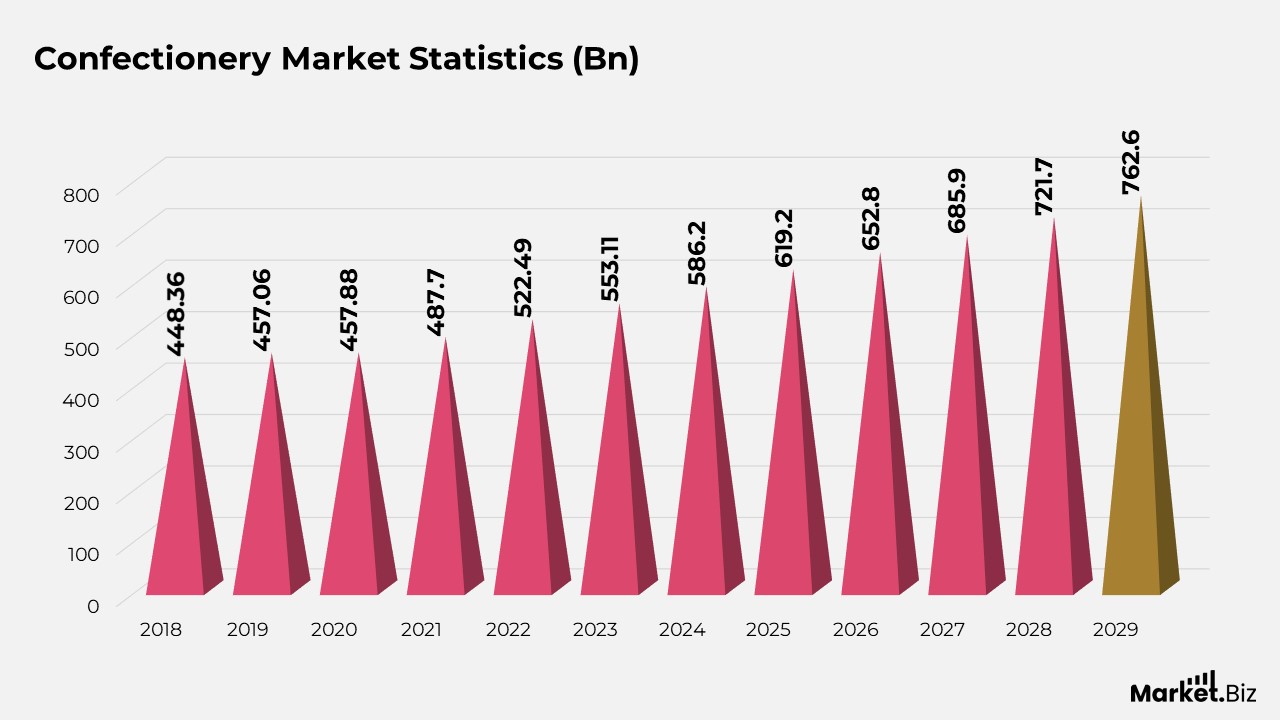
- The worldwide revenue of the confectionery market is expected to attain USD 762.60 billion by 2029.
- In 2018, the market was assessed at around USD 448.36 billion.
- In 2019, the sales of preserved pastry goods and cakes accounted for USD 0.18 trillion.
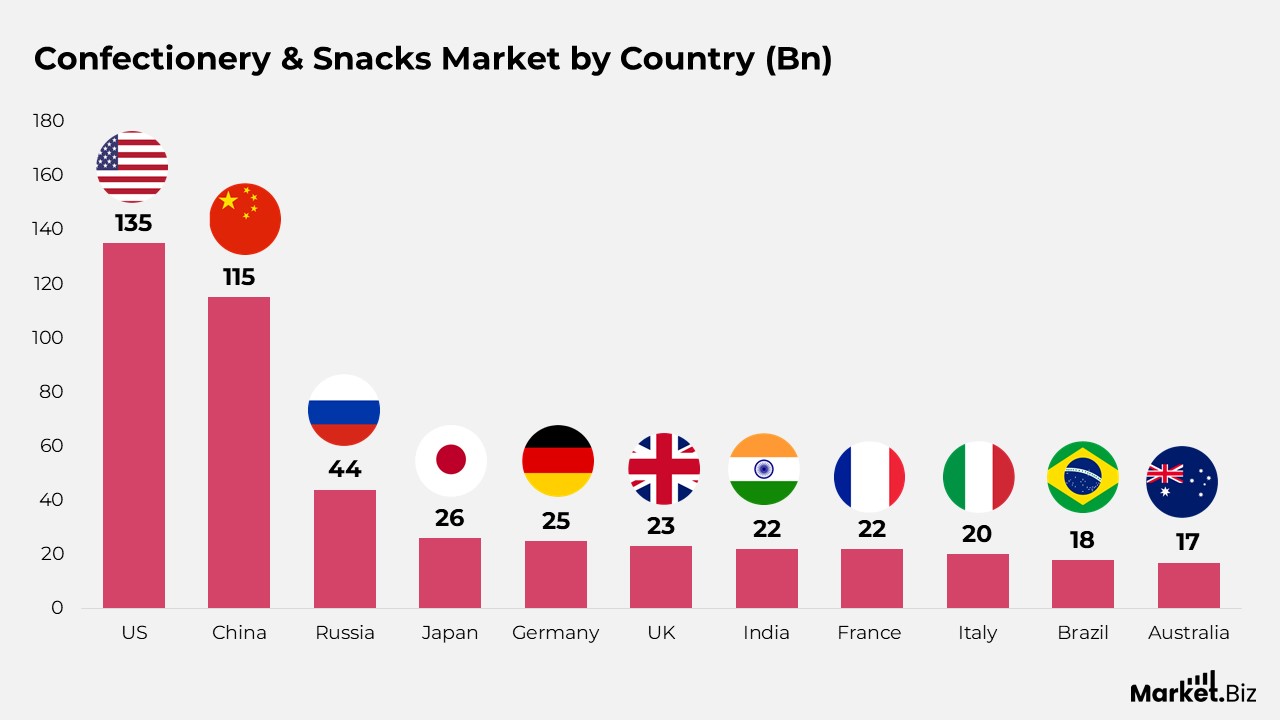
- The United States is projected to dominate the market with an estimated revenue of USD 135 billion, followed closely by China with USD 115 billion.
- In 2017, 17% of men and 20% of women indicated that they consumed confectionery on a daily basis.
What is Confectionery?
Confectionery denotes food items that are sweet in nature, composed of sugar, chocolate, or alternative sweeteners, and are consumed for enjoyment or as a dessert following a meal. The primary purpose of confectionery is to deliver pleasure and indulgence, often substituting other possible meals that might be included in a more balanced diet.
Confectionery products may incorporate ingredients like cocoa, fruits, nuts, dairy, and flavoring substances. Confectionery can take on various forms, textures, and flavors that vary according to cultural preferences or manufacturing methods.
General Confectionery Statistics
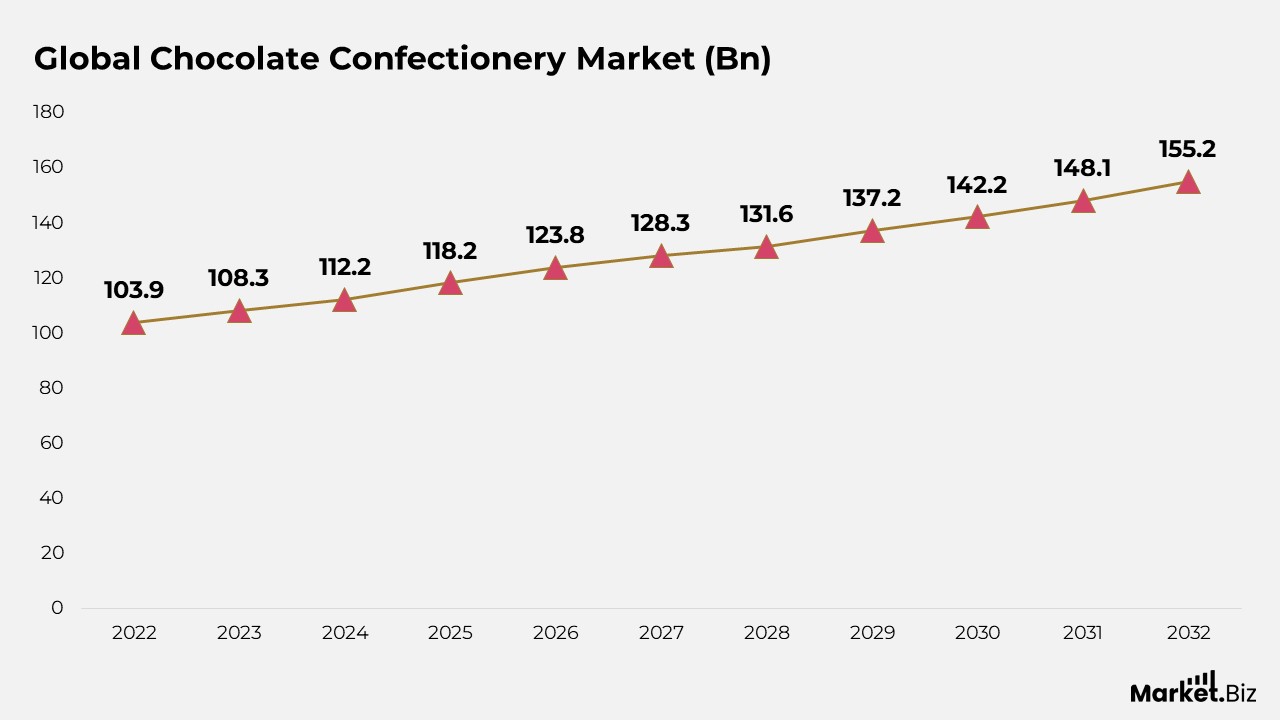
- In 2022, the Chocolate Confectionery market accounted for USD 103.9 bn and is expected to reach USD 155.2 bn in 2032 at a CAGR of 4.2%.
- The worldwide revenue of the confectionery market is anticipated to reach USD 762.60 billion by the year 2029.
- In 2023, the global confectionery market experienced substantial revenue generation across multiple nations.
- China emerged as the market leader with an estimated revenue of USD 79.56 billion.
- The global chocolate confectionery market is expected to achieve a revenue of USD 316.3 billion by 2028.
- In 2023, the age distribution of consumers within the U.S. confectionery market indicates that individuals aged 35-44 accounted for the largest market share at 23%.
- As of August 2023, the main factors affecting snack brand preferences in Indonesia were primarily influenced by taste.
- A notable 75% of respondents preferred brands they believed to have superior taste compared to others.
- Additionally, as of March 2020, the COVID-19 pandemic had a diverse impact on the purchasing volume of bakery items, biscuits, and chocolate in Thailand.
- Among the respondents, 43% reported that they would sustain their current purchasing levels.
- From 2013 to 2017, the global confectionery market experienced a significant rise in product launches aimed at vegan and vegetarian consumers.
- Moreover, vegan confectionery product launches saw an impressive growth of 140%, highlighting a strong trend towards plant-based and animal-free alternatives.
Confectionery Market Statistics
- In 2018, the market was estimated to be worth around USD 448.36 billion.
- This amount increased to USD 457.06 billion in 2019, followed by a modest rise to USD 457.88 billion in 2020.
- The market saw more significant growth starting in 2021, reaching USD 487.40 billion that year and then advancing to USD 522.49 billion in 2022.
- By 2023, the market value had surged to USD 553.11 billion.
- The upward trajectory is projected to persist, with forecasts for 2024 estimating the market at USD 586.20 billion and a further rise to USD 619.20 billion in 2025.
- The market is expected to expand to USD 652.80 billion in 2026 and USD 685.90 billion in 2027.
- The projections indicate continued growth, reaching USD 721.70 billion by 2028 and achieving a market size of USD 762.60 billion by 2029.
Market Revenue
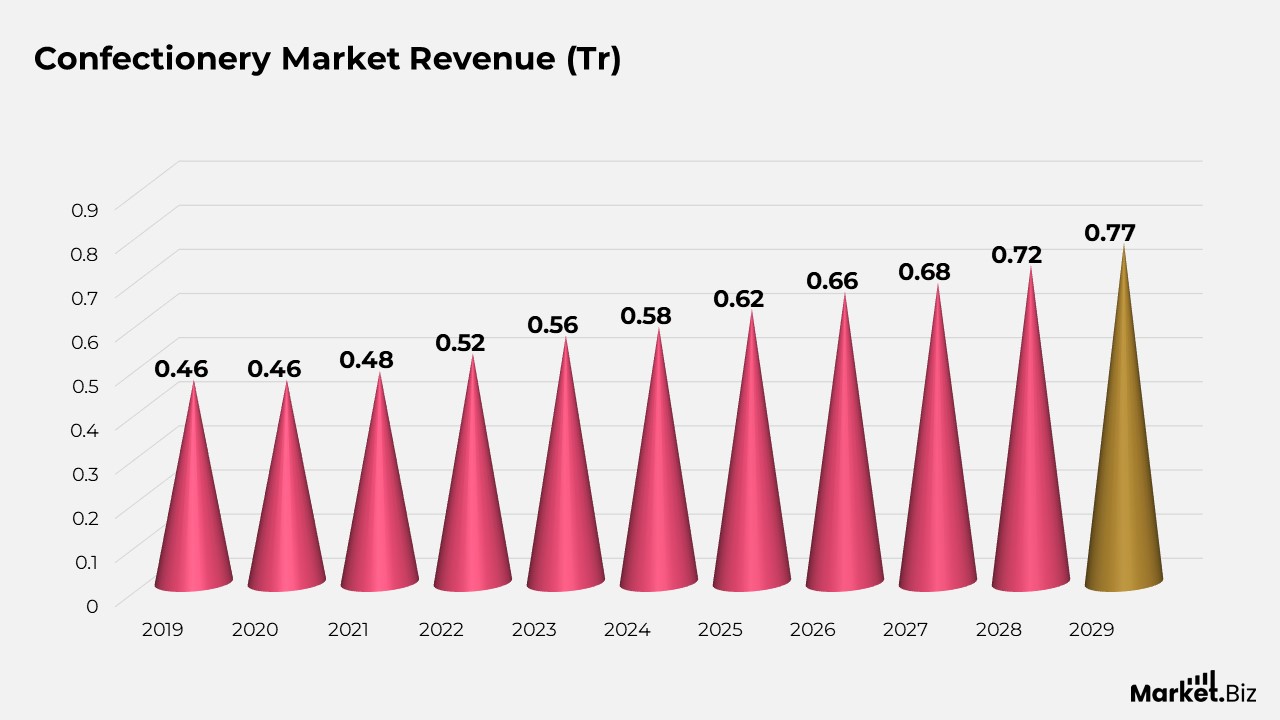
- In 2019, the market for preserved pastry goods and cakes accounted for USD 0.18 trillion.
- This figure remained consistent throughout 2020 before witnessing gradual growth in the following years, ultimately reaching an expected USD 0.31 trillion by 2029.
- Chocolate confectionery commenced with a market size of USD 0.11 trillion in both 2019 and 2020.
- It has been steadily increasing year after year, projected to attain USD 0.17 trillion by 2029.
- Sugar confectionery began at USD 0.09 trillion in 2019.
- It has shown consistent growth, with projections indicating it will reach USD 0.15 trillion by 2029.
- Ice cream started with a revenue of USD 0.08 trillion in 2019.
- It has experienced moderate annual increases, expected to reach USD 0.14 trillion by 2029.
Confectionery & Snacks Market Statistics
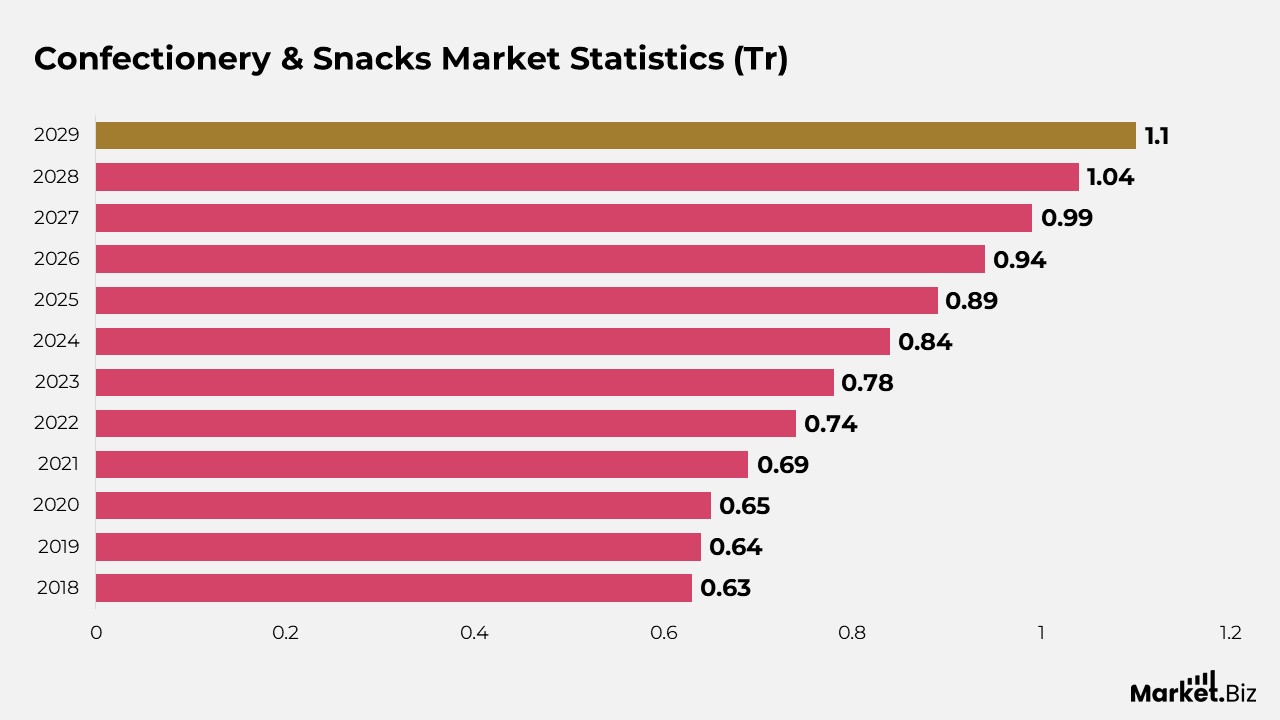
- In 2018, the market produced an estimated USD 0.63 trillion. This figure saw a slight increase to USD 0.64 trillion in 2019, followed by a rise to USD 0.65 trillion in 2020.
- The growth of the market accelerated starting in 2021, with revenues increasing to USD 0.69 trillion in that year and reaching USD 0.74 trillion in 2022.
- By 2023, the market is projected to attain USD 0.78 trillion, with ongoing growth anticipated in the subsequent years.
- In 2024, the market is expected to generate USD 0.84 trillion, further increasing to USD 0.89 trillion in 2025 and achieving USD 0.94 trillion in 2026.
- By 2027, revenues are forecasted to near the USD 1 trillion threshold, estimated at USD 0.99 trillion.
- The upward trend is set to continue, with forecasts for 2028 and 2029 indicating revenues of USD 1.04 trillion and USD 1.10 trillion, respectively.
Confectionery & Snacks Market by Country Statistics
- The United States is projected to dominate the market with an estimated revenue of USD 135 billion, followed closely by China with USD 115 billion.
- Russia is anticipated to secure the third spot with a market size of USD 44 billion. Meanwhile, Japan and Germany are expected to generate USD 26 billion and USD 25 billion, respectively.
- The United Kingdom is forecasted to achieve USD 23 billion, while both India and France are estimated to reach USD 22 billion each.
- Italy’s market is anticipated to produce USD 20 billion, and Brazil is expected to attain USD 18 billion.
- Other significant contributors include Australia with USD 17 billion, Canada with USD 16 billion, and Spain with USD 13 billion.
- Mexico is projected to contribute USD 12 billion, followed by Indonesia and Turkey, each estimated at USD 11 billion.
- Romania, South Korea, and Thailand are expected to generate USD 9 billion each, while the Philippines is forecasted to reach USD 8 billion in revenue.
Sales Statistics
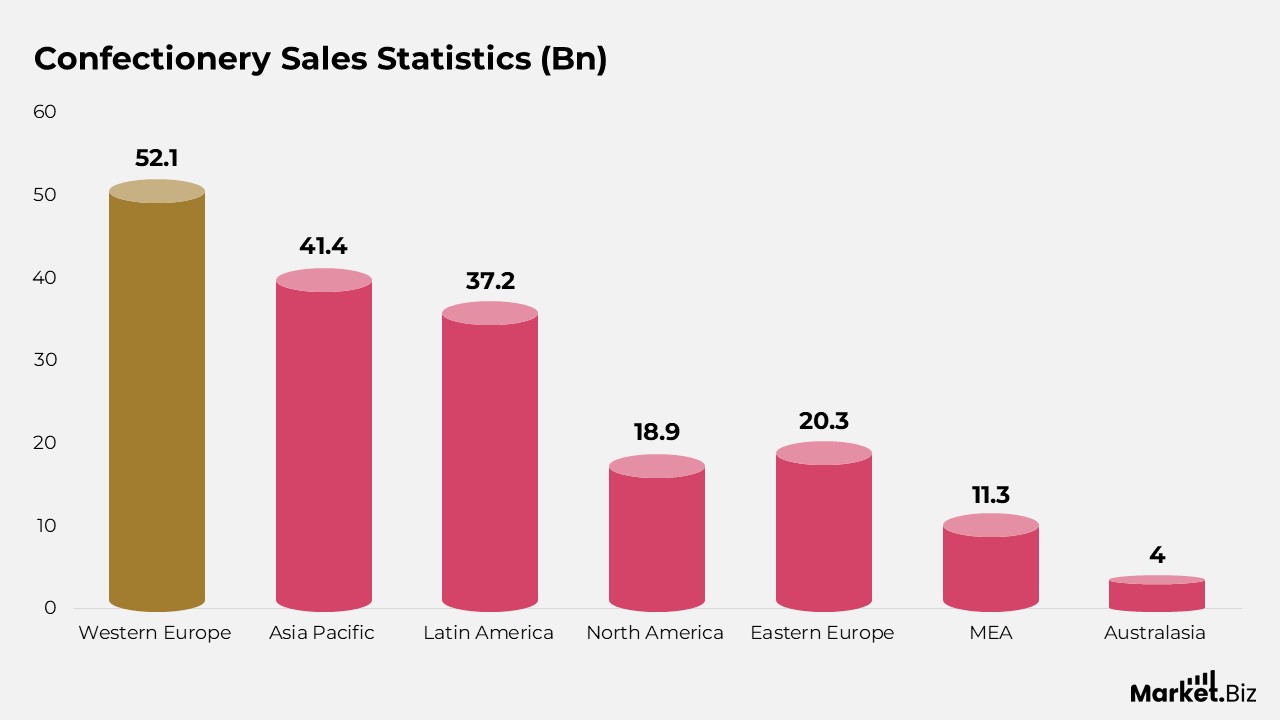
- In 2017, there was a notable disparity in global confectionery sales across different regions.
- Western Europe dominated the market with sales amounting to USD 52.1 billion. The Asia Pacific region followed closely behind, generating USD 41.4 billion.
- Latin America also constituted a significant market, contributing USD 37.2 billion in confectionery sales.
- North America and Eastern Europe reported lower yet significant sales figures of USD 18.9 billion and USD 20.3 billion, respectively.
- The Middle East and Africa region represented USD 11.3 billion, whereas Australasia recorded the smallest market size with sales amounting to USD 4 billion.
- This distribution underscores the supremacy of Western Europe and the Asia Pacific in the global confectionery market in 2017.
Confectionery Price Statistics
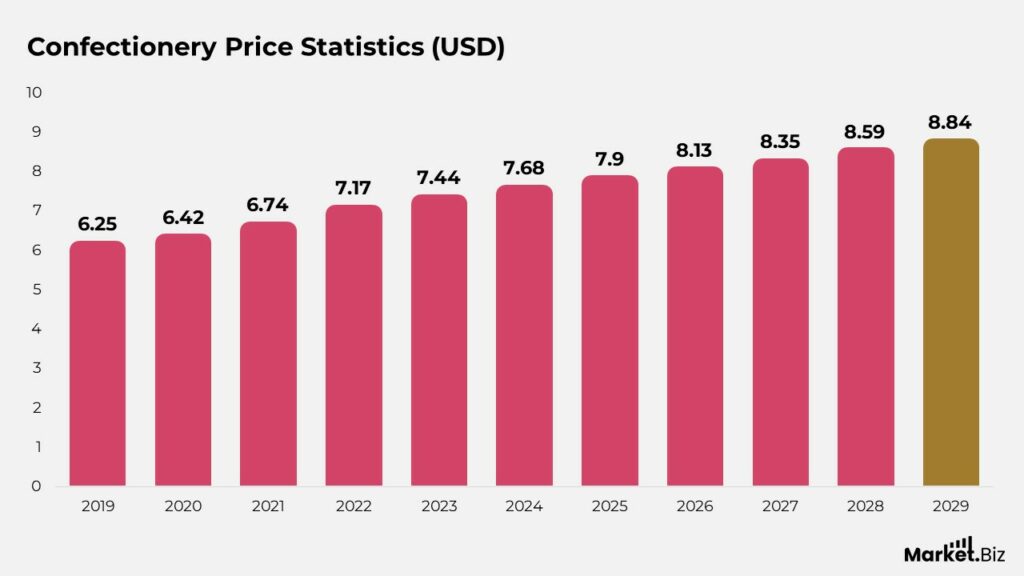
- In 2019, the average unit price was USD 6.25, which rose to USD 6.42 in 2020.
- The increase continued into 2021, with the price per unit (PPU) reaching USD 6.74, and further rising to USD 7.17 in 2022.
- In 2023, the average price per unit is anticipated to be approximately USD 7.44.
- Projections suggest a sustained increase in the average unit price, with the PPU expected to attain USD 7.68 in 2024 and USD 7.90 in 2025.
- By 2026, the price is forecasted to escalate to USD 8.13 and USD 8.35 in 2027.
- The rising trend continues in 2028, with an expected PPU of USD 8.59, getting USD 8.84 by 2029.
- Prices across all categories saw a minor increase in 2020, with chocolate priced at USD 11.08, sugar confectionery at USD 6.70, ice cream at USD 4.03 and conserved pastry goods at USD 6.39.
- The trend persisted in 2021, with chocolate increasing to USD 11.69.
- Sugar confectionery to USD 7.01, ice cream to USD 4.20.
- While sugar confectionery design to USD 7.51, ice cream to USD 4.47.
- This growth is projected to persist, with forecasts for 2024 indicating an average price of USD 13.35 for chocolate, USD 8.07 for sugar confectionery, USD 4.81 for ice cream, and USD 7.66 for preserved goods.
Confectionery Consumers by Age Statistics
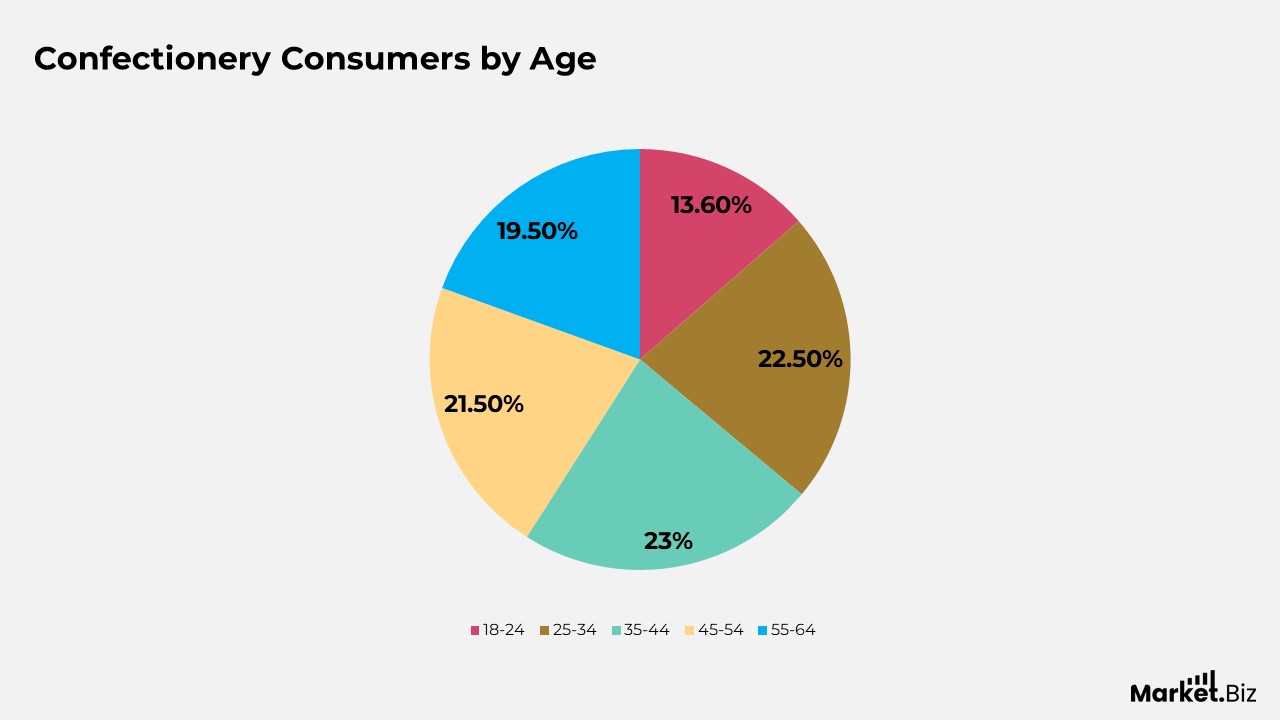
- In 2023, the age distribution of consumers within the U.S. confectionery market indicates that individuals aged 35-44 constituted the largest segment, accounting for 23% of the market.
- This was closely trailed by the 25-34 age demographic, which made up 22.5% of consumers, suggesting a strong inclination towards confectionery products among younger to middle-aged adults.
- The 45-54 age group also represented a notable share, comprising 21.5% of consumers, while those in the 55-64 age range accounted for 19.5% of the market.
- Conversely, younger consumers aged 18-24 held the smallest share at 13.6%.
- These statistics underscore the widespread appeal of confectionery items across different age brackets, particularly among individuals aged 25 to 54.
Consumers by Generation
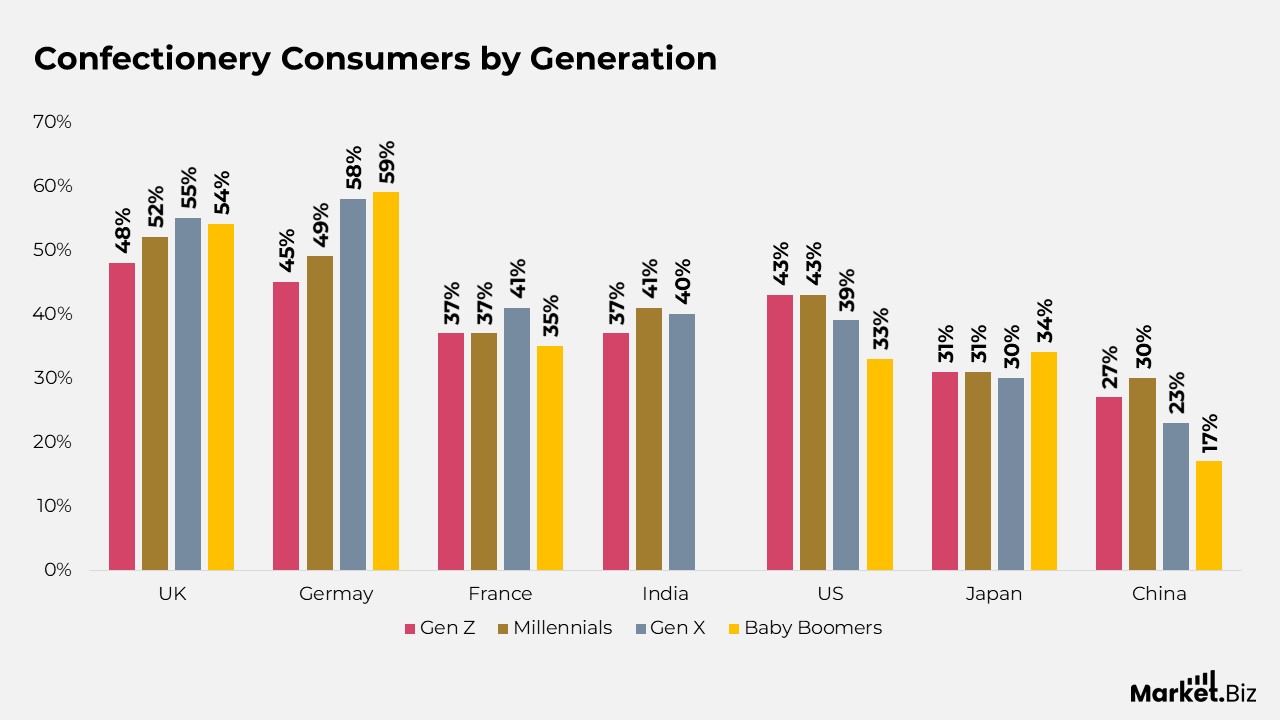
- In the United Kingdom, 48% of Generation Z, 52% of Millennials, 55% of Generation X, and 54% of Baby Boomers indicated that they regularly consume sweets. This suggests a high and relatively uniform level of consumption across different age demographics.
- In Germany, a significant percentage of each generational cohort also indulged in sweets, with 45% of Generation Z, 49% of Millennials, 58% of Generation X, and 59% of Baby Boomers partaking in this habit.
- Conversely, in France, the frequency of sweet consumption was lower, with 37% of both Generation Z and Millennials, 41% of Generation X, and 35% of Baby Boomers reporting regular consumption.
- India displayed moderate levels of sweet consumption, with 37% of Generation Z, 41% of Millennials, and 40% of Generation X consuming sweets, although data for Baby Boomers was not available.
- In the United States, 43% of both Generation Z and Millennials, 39% of Generation X, and 33% of Baby Boomers stated daily sweet consumption.
- China and Japan showed the lowest rates of regular sweet consumption. In Japan, 31% of Generation Z and Millennials, 30% of Generation X, and Baby Boomers reported 34% of consuming sweets regularly.
- China had the lowest figures, with only 27% of Generation Z, 30% of Millennials, 23% of Generation X, and 17% of Baby Boomers engaging in regular sweet consumption.
Confectionery Consumers by Gender
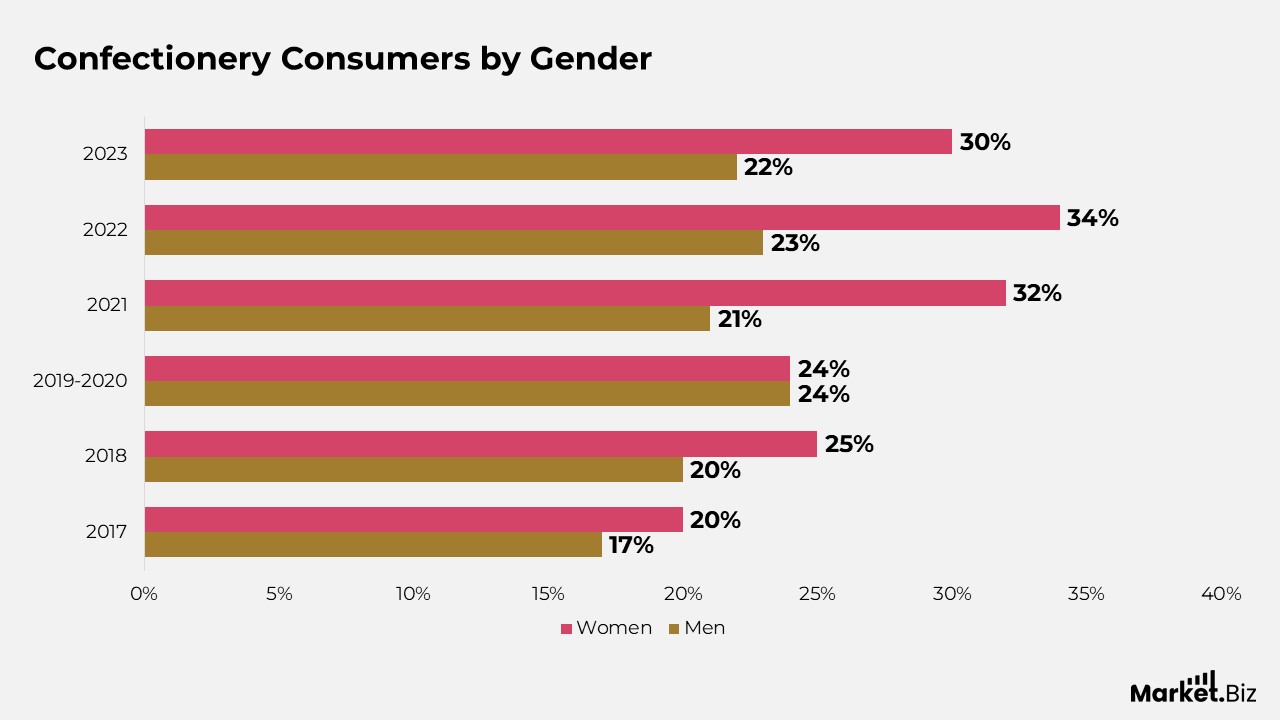
- In 2017, 17% of men and 20% of women indicated that they consumed confectionery on a daily basis.
- By 2018, this figure rose to 20% for men and 25% for women.
- Between 2019 and 2020, both persons achieved an equal percentage of 24% in daily consumption.
- In 2021, the proportion of women consuming confectionery daily surged to 32%, while the percentage for men experienced a slight decline to 21%.
- This pattern persisted into 2022, with 34% of women and 23% of men reporting daily consumption.
- By 2023, there was a slight decrease in daily confectionery consumption for both humans, with 22% of men and 30% of women engaging in daily consumption.
Recent Development
- In 2023, Mondelez International, a prominent company in the snack and confectionery sector, purchased Gourmet Food Company for $500 million.
- In early 2024, Ferrero declared a merger with Barilla, a company primarily recognized for its pasta but also engaged in the production of confectionery products, for $1.2 billion.
Confectionery Future Prediction
- The size of the Global Confectionery Market is projected to reach approximately USD 413.3 billion by 2034, increasing from USD 287.4 billion in 2024, with a compound annual growth rate (CAGR) of 3.7% anticipated during the forecast period spanning from 2025 to 2034.
Conclusion
Confectionery Statistics: The global confectionery market is experiencing growth, propelled by innovations in product development, the expansion of e-commerce, and consumer preferences for both classic sweets and healthier, premium choices.
Nevertheless, the industry encounters obstacles due to heightened health awareness and lifestyle-related diseases such as diabetes, resulting in a surge of sugar-free and low-calorie options.
Prominent trends encompass an emphasis on sustainability, ethical sourcing practices, and the incorporation of “functional” ingredients that combine indulgence with health benefits.
FAQs
Confectionery is categorized into two main and somewhat overlapping groups: Bakers’ Confections and Sugar Confections. These confections tend to be low in micronutrients and protein while being high in calories. Although some confections can be fat-free, certain types, particularly fried doughs, are known to be high in fat.
Sugar confectionery, often referred to as candy making in the United States, encompasses a variety of items, including candies (commonly known as sweets or sweetmeats in many English-speaking regions), candied nuts, chocolates, chewing gum, bubble gum, pastillage, and other confections primarily composed of sugar.
Historically, in ancient civilizations, Egyptians, Arabs, and Chinese crafted candies using fruits and nuts that were caramelized with honey. The two most ancient types of candy are licorice and ginger. The origins of licorice trace back to the early days of humanity, with many licorice products consumed by Pharaohs and Prophets.