









Introduction
Consumer Electronics Statistics: All electronic devices that serve a function in everyday life are classified as consumer electronics. The primary technology used to power these electronic devices is semiconductor technology. These devices are used for communication, entertainment, and various home or office values. The vast majority of these products incorporate digital and information technologies.
The term “consumer electronics” includes a wide range of electronic products that fulfil one or more functions within a household or for an individual user. At first, this term referred to electrical devices that were installed or used solely within a home or residence. However, it now also includes portable and computing devices that can be carried outside the home, such as tablets or mobile phones.
There is an extensive collection of consumer electronics available in the market, including, but not limited to, televisions, refrigerators, washing machines, computers, laptops, and tablets.
Editor’s Choice
- In 2025, the global revenue generated by the Consumer Electronics market reached an impressive US$1.00 trillion.
- The Telephony segment holds the largest share within the Consumer Electronics market, with a market volume of US$504.08 billion in 2025.
- A variety of drivers and elements affect the global consumer electronics market.
- The production volume of consumer electronics, quantified in millions of units, has shown significant growth across various sectors from 2018 to 2028.
- The unit price for various segments of consumer electronics has demonstrated a combination of stability and minor fluctuations from 2018 to 2028.
- China stands as the foremost importer, with a total import value of USD 455.5 billion.
- Taiwan adds USD 141.5 billion, and Singapore’s electronics exports reach USD 124.1 billion.
What is Consumer Electronics?
Consumer electronics include a variety of electronic devices, appliances, and gadgets intended for daily use by individuals. The market is notably diverse, including numerous product categories such as personal computing devices, audio and video systems, mobile devices, and smart home technology.
These products are created to improve personal productivity, communication, and entertainment. Factors driving the consumer electronics market include technological advancements, changing consumer preferences, and an increasing demand for cost-effective, user-friendly, and high-performance devices.
General Consumer Electronics Statistics
- In 2025, the global revenue generated by the Consumer Electronics market reached an impressive US$1.00 trillion.
- It is anticipated that the market will witness an annual growth rate of 2.81% from 2025 to 2030 (CAGR 2025–2030).
- The Telephony segment holds the largest share within the Consumer Electronics market, with a market volume of US$504.08 billion in 2025.
- When analyzing revenue across various countries, it is significant to note that China leads with the highest revenue of US$212.9 billion in 2025.
- Examining the per capita contributions, in 2025, each individual is expected to contribute around US$128.03 to the overall revenue in the Consumer Electronics market.
- It is forecasted that by 2025, online sales will represent 31.4% of the total revenue in this sector.
- By 2030, the Consumer Electronics market volume is projected to reach 8.58 billion units.
- Additionally, a volume growth of 1.5% is expected in 2026.
- On average, each individual is predicted to contribute a volume of 1.018 pieces to the Consumer Electronics market in 2025.
- The demand for smart home devices currently dominates the consumer electronics market in the United States.
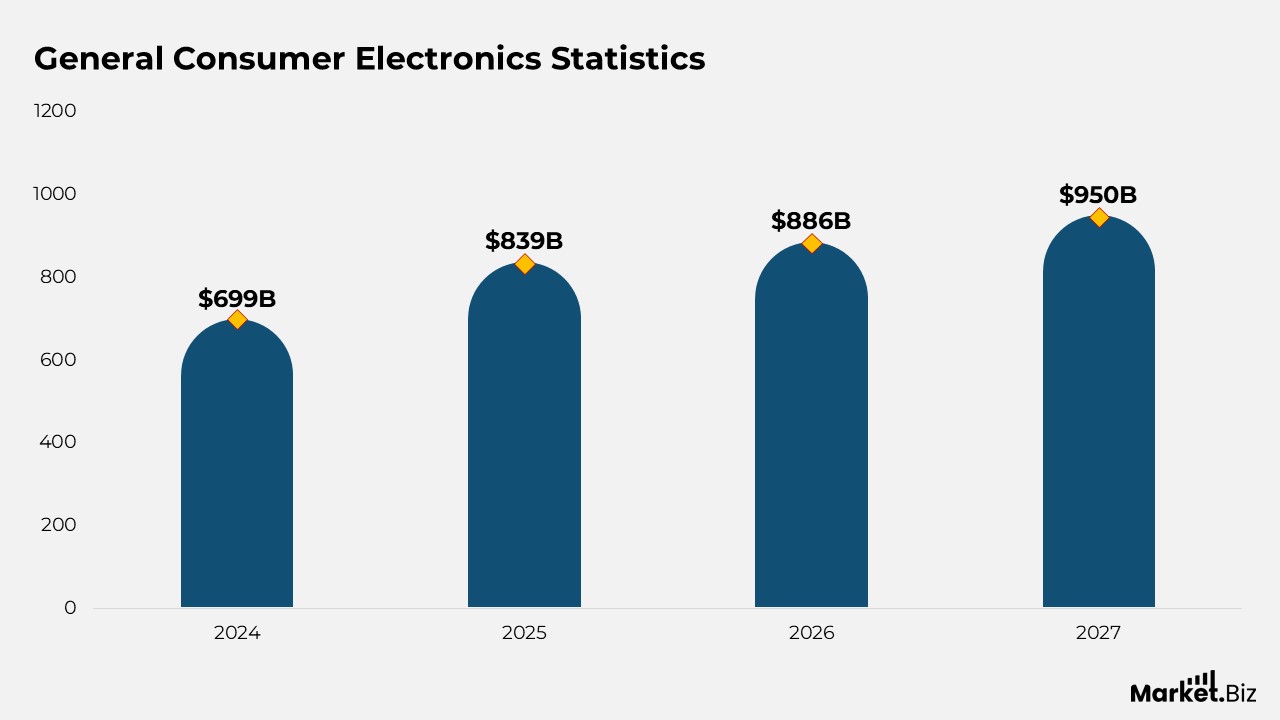
- Industry analysis of consumer electronics suggests a promising outlook, with revenue forecasts of $699 billion in 2024 (15.9% growth), $839 billion in 2025, and $886 billion in 2026.
- By 2027, the consumer electronics market is projected to reach $950 billion, sustaining an average annual growth rate of 12.1%.
Consumer Electronics Market Size
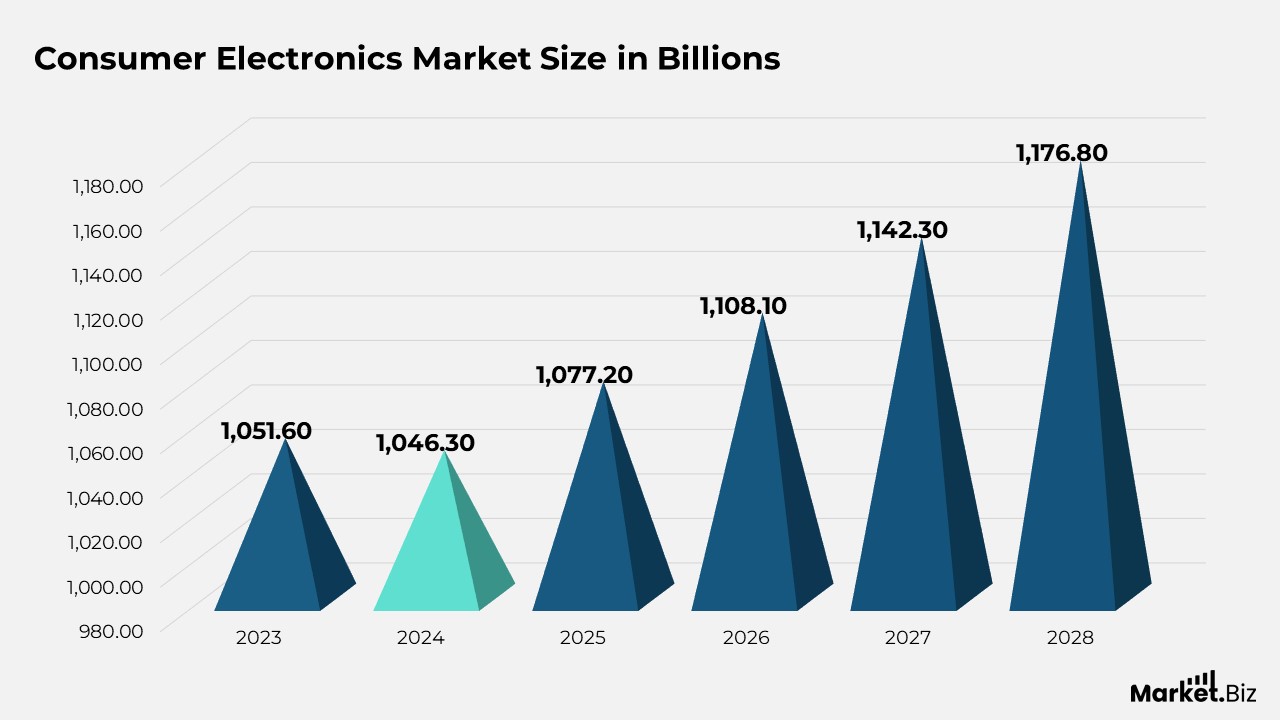
- The global consumer electronics market has witnessed considerable growth over the last ten years, achieving a compound annual growth rate (CAGR) of 2.99%, accompanied by significant variations in yearly revenue.
- In 2018, the market’s revenue was noted at USD 940.4 billion. This figure rose to USD 974.8 billion in 2019 and further increased to USD 984.3 billion in 2020.
- A marked increase was recorded in 2021, with revenue reaching USD 1,057.1 billion.
- Nevertheless, in 2022, the market experienced a minor decline to USD 1,011.7 billion.
- The recovery was rapid, with revenue rebounding to USD 1,051.6 billion in 2023.
- Future projections suggest a consistent upward trajectory, with anticipated revenues of USD 1,046.3 billion in 2024, USD 1,077.2 billion in 2025, USD 1,108.1 billion in 2026, USD 1,142.3 billion in 2027, and USD 1,176.8 billion in 2028.
- This information illustrates the dynamic characteristics of the consumer electronics market, shaped by technological innovations, consumer preferences, and economic factors.
Consumer Electronics Revenue Statistics
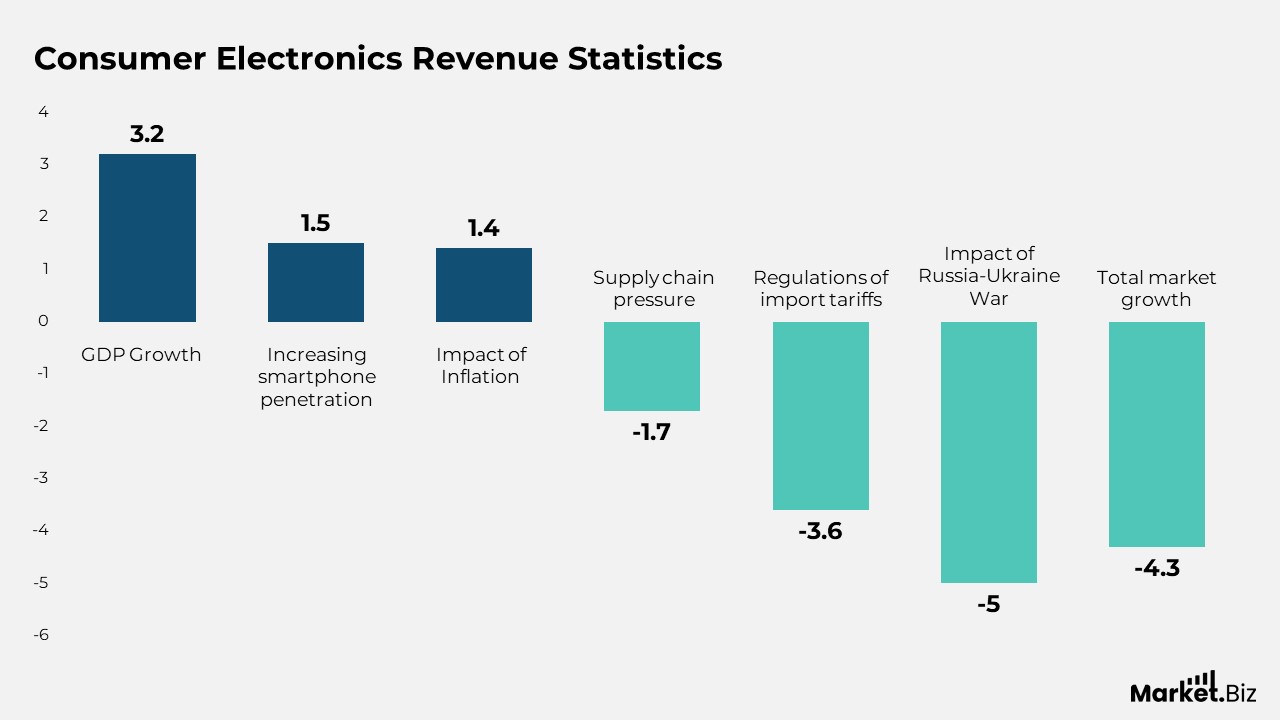
- A variety of drivers and elements affect the global consumer electronics market.
- Positive influences include GDP growth, which contributes 3.2%, and the rising penetration of smartphones, which adds 1.5%.
- Moreover, inflation has a slight positive impact of 1.4%.
- Conversely, several adverse factors counterbalance these benefits. Supply chain pressures lead to a 1.7% decrease, while import tariff regulations account for a 3.6% reduction.
- The ongoing conflict between Russia and Ukraine has a considerable negative effect, diminishing market growth by 5.0%.
- In summary, these factors together result in an overall market growth decline of 4.3%.
- This information underscores the intricate relationship between economic, geopolitical, and regulatory elements that influence the consumer electronics market.
Production Statistics of Consumer Electronics
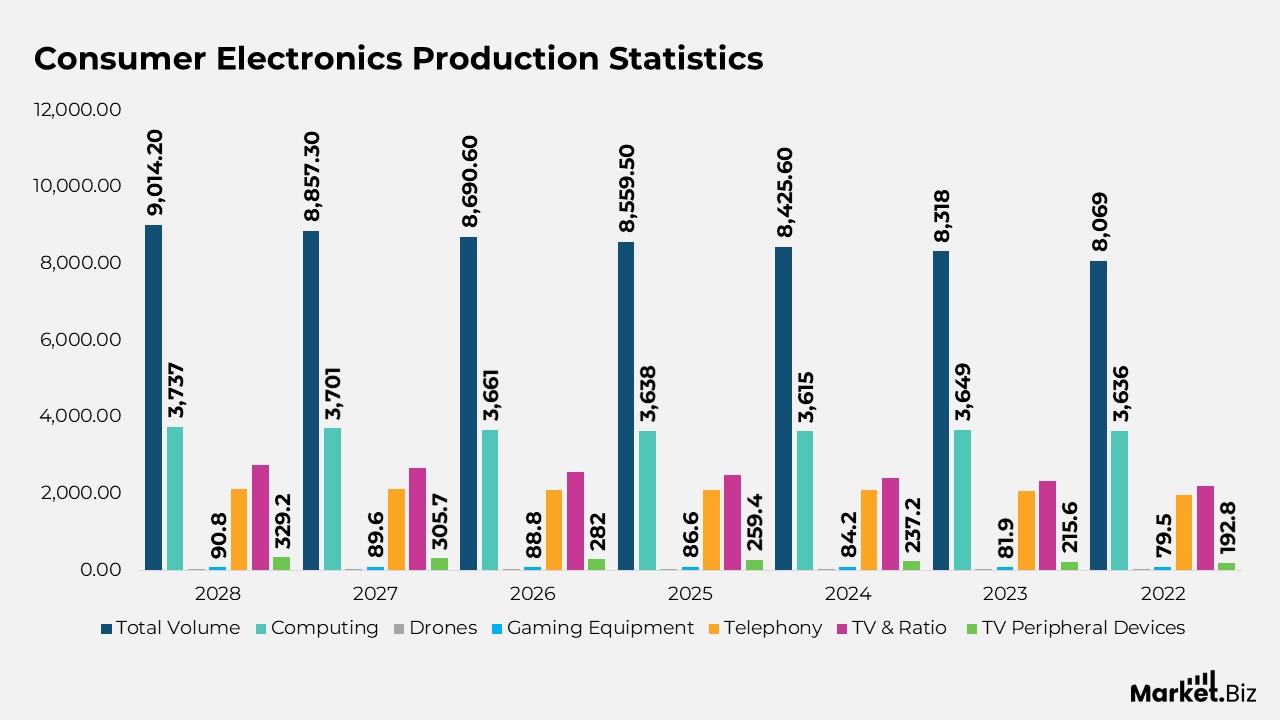
- The production volume of consumer electronics, quantified in millions of units, has shown significant growth across various sectors from 2018 to 2028.
- Within this aggregate, the computing sector increased from 3,620.0 million units in 2018 to 3,737.0 million units in 2028.
- The drone sector, although smaller in size, grew from 4.6 million units in 2018 to 9.3 million units in 2028.
- Production of gaming equipment experienced notable growth, escalating from 48.3 million units in 2018 to 90.8 million units in 2028.
- Telephony, a significant contributor to the overall volume, faced fluctuations but ultimately rose from 2,043.0 million units in 2018 to 2,113.0 million units in 2028.
- The TV, radio, and multimedia sector demonstrated a consistent increase from 1,912.0 million units in 2018 to 2,735.0 million units in 2028.
- Finally, the TV peripheral devices sector displayed the most remarkable growth, increasing from 121.3 million units in 2018 to 329.2 million units in 2028.
- This information underscores the dynamic and expanding nature of the consumer electronics production environment, propelled by technological innovations and rising consumer demand.
Consumer Electronics Price Statistics
- The unit price for various segments of consumer electronics has demonstrated a combination of stability and minor fluctuations from 2018 to 2028.
- In the computing segment, the unit price commenced at USD 256.7 in 2018 and is anticipated to increase to USD 270.2 by 2028.
- The drones segment experienced a decline from USD 574.6 million in 2018 to USD 472.5 million in 2028, reflecting a gradual decrease in unit prices over the years.
- Prices for gaming equipment remained fairly stable, beginning at USD 312.9 in 2018 and reaching USD 331.6 in 2028.
- The telephony segment saw a slight rise in unit prices, moving from USD 114.9 in 2018 to USD 129.5 in 2028.
- Likewise, the TV, radio, and multimedia segment experienced a minor drop from USD 135 in 2018 to USD 127.8 in 2028.
- The segment for TV peripheral devices showed a gradual decline in unit prices, in 2018, opening at USD 60.19 and by 2028, falling to USD 54.14.
Consumer Electronics Importers & Exporters
Importers
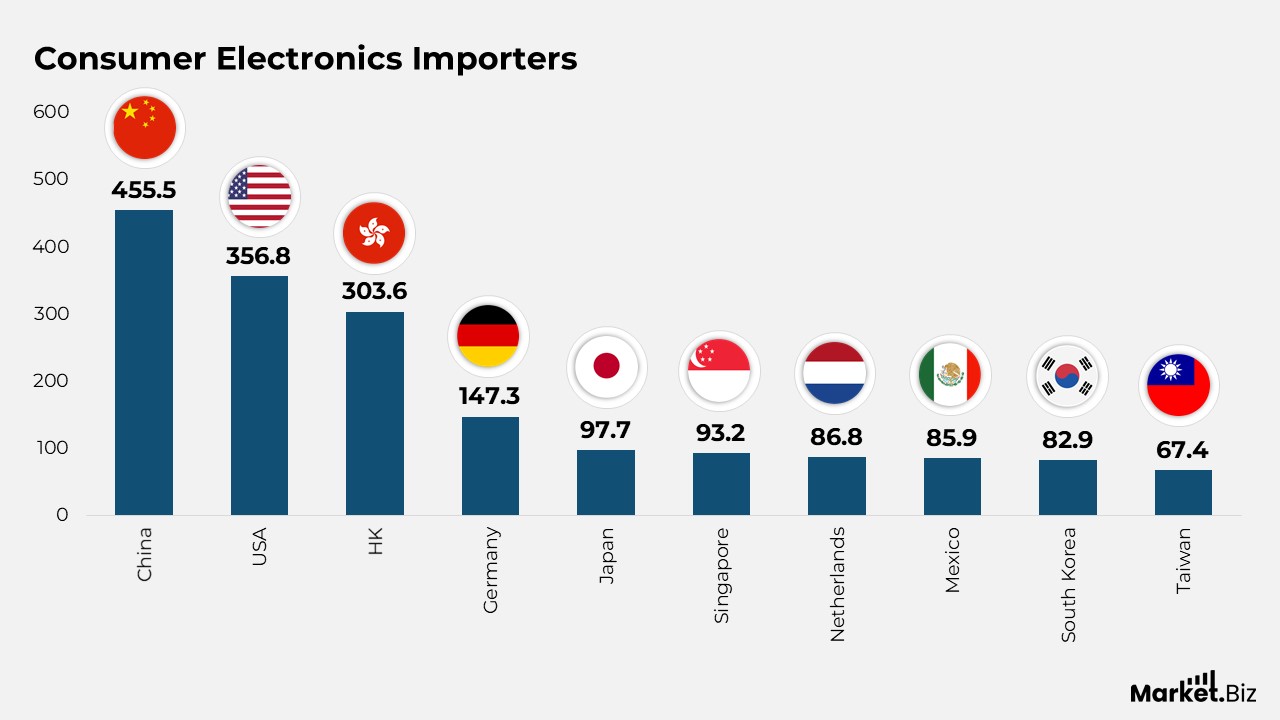
- The leading countries in electronics imports, quantified in USD billions, highlight the primary global markets for electronic products.
- China stands as the foremost importer, with a total import value of USD 455.5 billion.
- The United States closely follows, with imports amounting to USD 356.8 billion.
- Hong Kong secures the third position, importing electronics valued at USD 303.6 billion.
- Germany and Japan also play a significant role in imports, with figures of USD 147.3 billion and USD 97.7 billion, respectively.
- Singapore’s electronics imports are valued at USD 93.2 billion, while the Netherlands and Mexico contribute USD 86.8 billion and USD 85.9 billion, respectively.
- South Korea’s electronics imports total USD 82.9 billion, and Taiwan completes the top ten with imports worth USD 67.4 billion.
Exporters
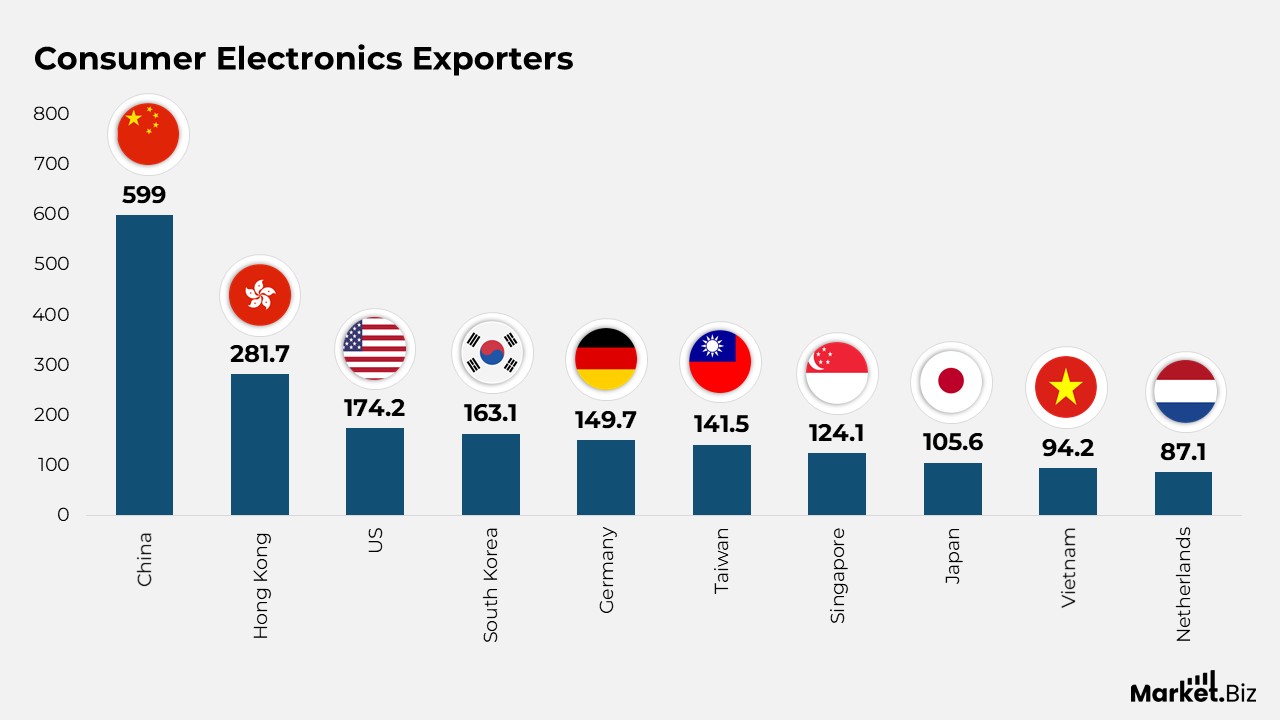
- The leading electronics exporters by nation, measured by export value, underscore the global frontrunners in the electronics sector.
- China is at the forefront, having exports worth USD 599 billion.
- Following closely is Hong Kong with USD 281.7 billion, while the United States holds the third position with USD 174.2 billion.
- South Korea and Germany also have substantial contributions, with exports amounting to USD 163.1 billion and USD 149.7 billion, respectively.
- Taiwan adds USD 141.5 billion, and Singapore’s electronics exports reach USD 124.1 billion.
- Japan’s total electronics exports are USD 105.6 billion, whereas Vietnam and the Netherlands export USD 94.2 billion and USD 87.1 billion, respectively.
Customer Preferences on Consumer Electronics
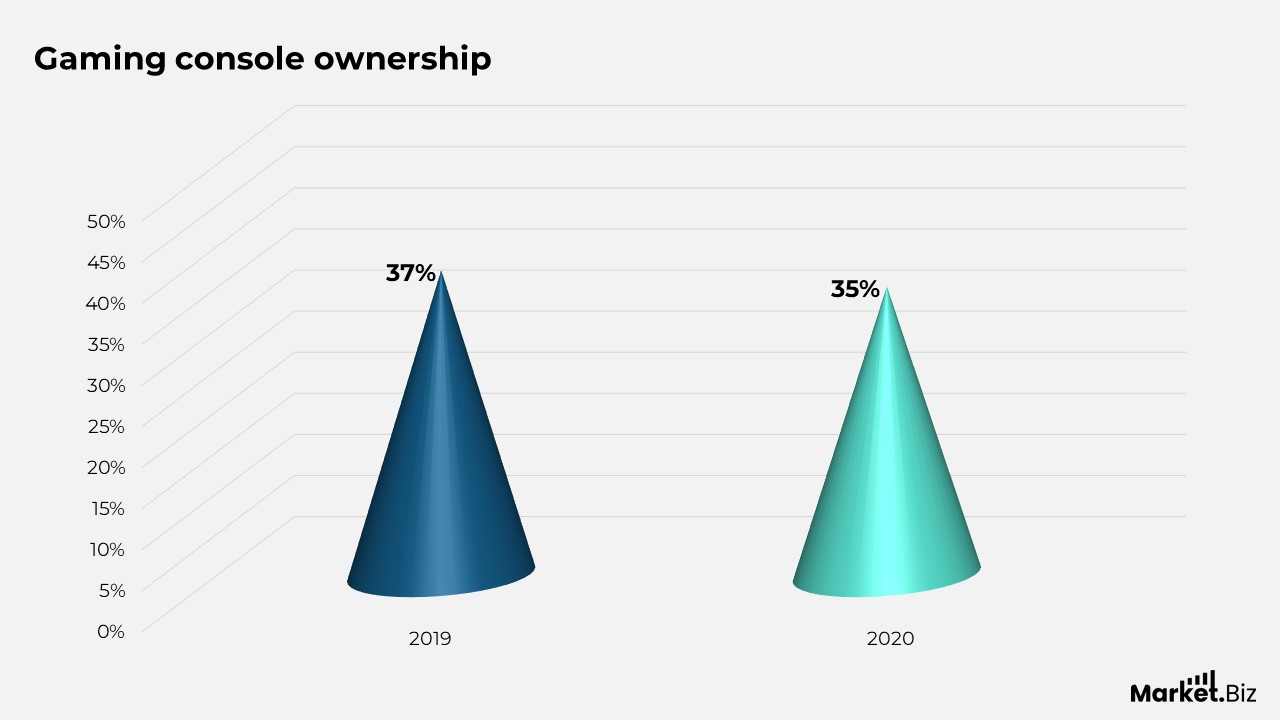
- A survey conducted on consumer device ownership in 2019 and 2020 highlighted significant trends in the uptake of various electronic devices.
- The percentage of smartphone ownership remained constant at 89% across both years.
- Gaming console ownership experienced a minor decrease from 37% in 2019 to 35% in 2020.
- The ownership of smart TVs rose from 51% to 56%, while the prevalence of smart home devices increased from 18% to 22%.
- The adoption rate of smartwatches expanded from 15% to 20%, and the ownership of smart speakers grew from 26% to 31%.
Recent Developments
- AI is increasingly becoming widespread, providing tailored experiences across a range of devices and platforms. Edge AI, in particular, is improving both performance and privacy by processing data directly on the devices.
- Wearable technology is advancing beyond mere fitness tracking, now including health diagnostics, mental well-being monitoring, and augmented reality capabilities. Smartwatches, smart rings, and AR/XR glasses are delivering continuous health monitoring and personalized insights.
- The growth of 5G networks and edge computing is facilitating quicker connectivity and improved performance for various devices.
- Recent product introductions in the consumer electronics sector feature the realme Narzo 70x 5G, which has a 120Hz display and a 50MP camera, alongside the boAt Airdopes 121 Pro Plus TWS earbuds that provide 100 hours of playtime.
- Other significant launches include the iQOO Z9x 5G, equipped with a substantial 6000 mAh battery, and the OnePlus Buds 3, which offer adaptive noise cancellation. Furthermore, Samsung’s Galaxy Ring, a smart ring, is gaining attention for its health tracking capabilities.
Conclusion
The consumer electronics (CE) industry has demonstrated resilience and potential for growth, even in the face of recent obstacles, including the global economic downturn experienced in 2022. Sales of televisions are anticipated to increase, propelled by advancements in technology, while developments in artificial intelligence and innovative designs are expected to stimulate growth in the smartphone sector.
Additionally, wearable devices such as smartwatches and earphones are gaining traction, and augmented reality glasses, virtual reality headsets, and AI-driven gadgets are emerging as new segments within the market. The consumer electronics market is projected to maintain its growth trajectory, fueled by continuous technological innovations, rising consumer demand, and the expansion of e-commerce.
Nevertheless, companies must confront challenges related to sustainability, supply chain management, and shifting consumer preferences to stay competitive.
FAQs
The global consumer electronics market represents a substantial and expanding industry, valued at over $800 billion in 2024, with forecasts indicating it will reach $1.4 trillion by 2032. The Asia Pacific region is the largest market, with India demonstrating considerable growth potential.
Devices powered by artificial intelligence will remain pivotal in high-end smartphones, laptops, and graphics cards. As AI gains broader acceptance, consumers will anticipate its presence in their products, making it essential to understand how AI is integrated into your best-selling items.
The industry is highly competitive, with new entrants consistently emerging and vying against established giants such as Apple, Samsung, and Sony. The consumer electronics sector has exhibited resilience and growth potential, even in the face of recent challenges, including the global economic downturn in 2022.