









Introduction
Social Media Statistics: Over the last twenty years, social media has evolved from specialized online communities into a worldwide network comprising over 5.3 billion users.
The growth of social media has been remarkable in recent times. Our methods of interaction have undergone a significant transformation following the emergence of social media. As an inescapable force, social media must occupy a central role in your marketing strategy.
Platforms such as Instagram, Facebook, YouTube, and WhatsApp are instrumental in the distribution of news and information. Given the extensive audience available, it is unthinkable for a business in 2025 to disregard the influence of social media. Social media can improve your engagement with your audience while expanding your market reach and inspiring brand awareness.
Editor’s Choice
- As of July 2024, approximately 5.17 billion individuals worldwide were using social media.
- The number of social media users has surged dramatically, growing from 25 million in the 2000s to over 5 billion in 2024.
- In 2024, there were 5.04 billion active social media users, which increased to 5.31 billion in April 2025 globally.
- In a survey, 93% of marketers expressed the belief that social media has played a vital role in their growth.
- Ad spending is projected to increase at an annual rate of 3.76%, resulting in a projected market volume of US$1.49 billion by 2027.
- Engagement rates are 1.6 times greater when the original creator responds to your comment.
- The consumption of YouTube videos via mobile devices constitutes 70% of the total viewership.
- 71% of social media marketers use AI tools.
General Social Media Statistics
- As of July 2024, approximately 5.17 billion individuals worldwide were using social media.
- About 64% of the global population is engaged on social platforms.
- In 2023, China ranked first in terms of social media users, with over a billion people active across various platforms.
- The average time spent daily on social media is 2 hours and 23 minutes. Currently, Brazil leads in daily social media engagement, with users averaging 3 hours and 49 minutes online each day.
- Individuals allocate around 14% of their waking hours to social media. Collectively, the world dedicates over 12 billion hours to social platforms daily, which equates to more than 1.38 million years of human existence.
- On average, users engage with 6.7 social platforms each month.
- The primary motivation for using social media platforms is to maintain connections with friends and family, with over 49% indicating this as their reason for being online.
- Approximately 38% use social media to pass the time, while 34.3% do so to read news. One in five users follows celebrities and influencers on these platforms.
- Not only are people spending more time on social media, but they are also increasingly using it to interact with brands.
- Social media usage increased by 43% for discovering new products, 42% for learning about them, and 36% for purchasing products and services.
- Trust in influencers is on the rise. The percentage of Gen Z and millennials who trust social media influencers increased from 51% in 2019 to 61% in 2023. This underscores the considerable influence and reach of influencer marketing platforms.
Moreover
- Brands depend on influencers to engage with Gen Z, with 46% of them following over 10 influencers on social media.
- Facebook continues to be the leading social media platform in 2024, boasting over 3 billion monthly active users. Chinese platforms, including WeChat, Weibo, QQ, and Douyin, collectively have 3.9 billion users.
- Following Facebook, YouTube has 2.5 billion monthly active users. WhatsApp and Instagram are tied for third place with 2 billion users each. TikTok, with 1.6 billion users, is experiencing growth, while WeChat’s 1.3 billion users are primarily located in China.
- Nearly 90% of adults globally engage with social media.
- YouTube boasts the largest audience for social media advertising, engaging 2.5 billion users each month. This figure surpasses Facebook’s 2.24 billion users by over 10%. Instagram holds the third position, with advertisements reaching 1.68 billion users as of July 2024.
- TikTok’s advertisements now connect with 1.60 billion users aged 18 and over monthly. LinkedIn claims an advertising reach of 1.10 billion, although this number encompasses all registered members rather than solely monthly active users.
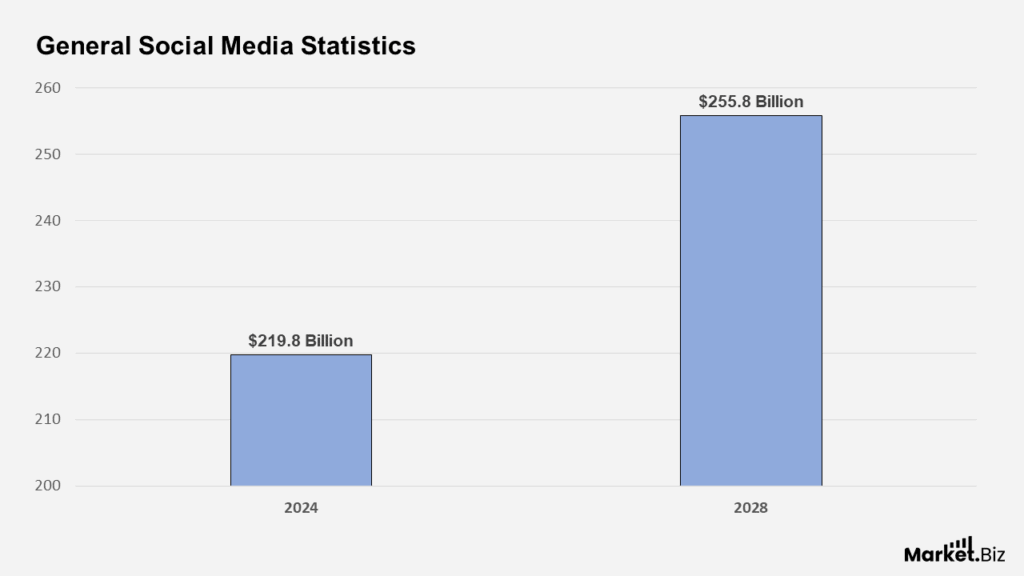
- Projected social media advertising expenditure is anticipated to reach $219.8 billion in 2024, with the United States expected to lead this spending at $76.4 billion.
- By 2028, mobile advertising is forecasted to constitute $255.8 billion of the total advertising expenditure.
Growth of Social Media Statistics
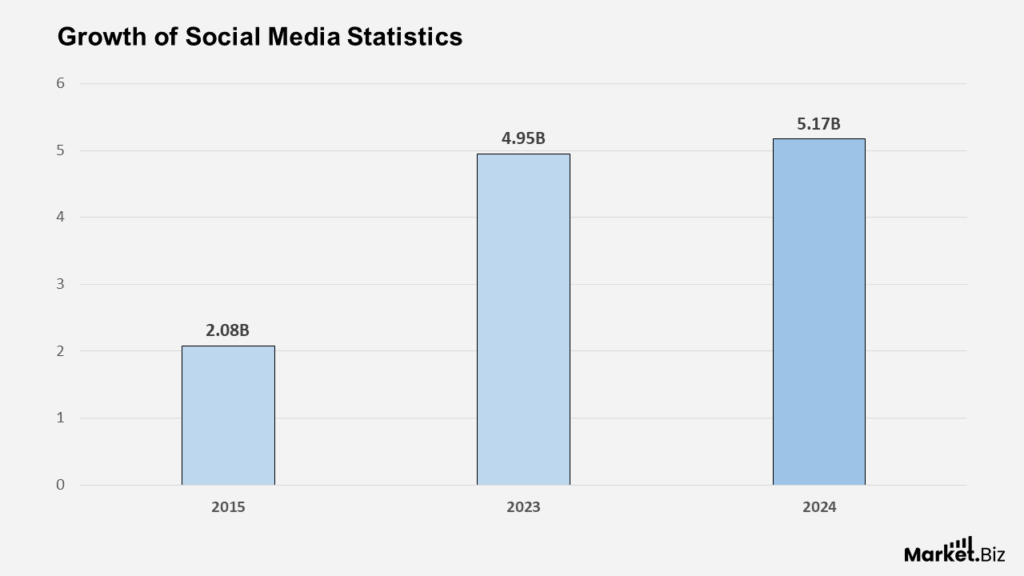
- In 2024, approximately 5.17 billion individuals are utilizing social media, reflecting a 4.44% increase from 4.95 billion in 2023. This marks a 2.49-fold rise from the 2.08 billion users recorded in 2015.
- As of 2024, the average time spent on social media daily is 143 minutes. Between 2012 and 2018, daily usage escalated from 90 to 142 minutes. It remained stable at 145 minutes from 2019 to 2021, increased to 147 minutes in 2022, and reached 151 minutes in 2023 before experiencing a slight decline this year.
- The number of social media users has surged dramatically, growing from 25 million in the 2000s to over 5 billion in 2024.
- Early platforms such as Friendster and MySpace laid the groundwork, with MySpace achieving one million monthly users in 2004. The launch of Facebook in the same year significantly accelerated the growth of social media.
- Last year, social media users increased by 5.6%, with 266 million new users joining in 2023. This translates to an average of 8.4 new users every second.
Moreover
- When comparing social media usage among US adults from May 2023 to January 2024, YouTube experienced an increase from 68% to 71%, while TikTok rose from 34% to 37%. Conversely, Facebook’s usage declined from 71% to 68%, and X (formerly Twitter) saw a notable drop from 30% to 23%.
- Instagram’s usage increased slightly from 40% to 42%. Other platforms, including Reddit, LinkedIn, Tumblr, Twitch, Snapchat, and Pinterest, showed minor fluctuations or remained stable.
- Lemon8, a photo-sharing application owned by ByteDance, reported a 200% surge in usage according to HubSpot’s 2024 Consumer Trends Survey. Tumblr, which was launched in 2007, has seen an 8% growth since 2023.
- Despite facing regulatory challenges, TikTok’s usage rose by 20% from May 2023 to January 2024, with growth observed across all age demographics, including older users.
- Nearly all major platforms, except Snapchat, have experienced a significant increase in the average age of their users, particularly since 2022.
Usage Statistics of Social Media
- Social media has emerged as one of the most prevalent activities among the digital populace.
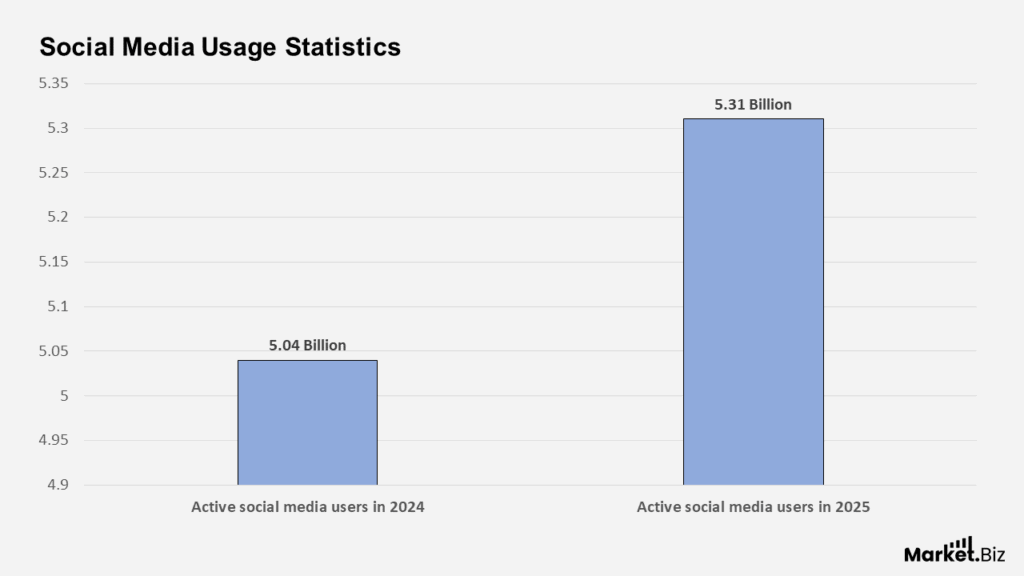
- In 2024, there were 5.04 billion active social media users, which increased to 5.31 billion in April 2025 globally.
- A significant factor contributing to this online presence is the extensive availability of mobile devices and internet access.
- In recent years, the costs associated with internet usage have declined, coinciding with the rise of smartphones. It is anticipated that by 2024, two-thirds of the global population will be online.
- The leading social media platforms include Facebook, owned by Meta, which continues to be the most widely used platform worldwide, having 3.07 billion monthly users and 2.11 billion daily active users.
- It is vital to understand that active users are defined as those who log in at least once a month. The number of active users on Facebook surpasses the combined total populations of India and China.
- Approximately 68.85% of Facebook users access the platform daily. For marketers, establishing a strong presence on Facebook is essential, given the extensive audience it serves.
- India ranks first in terms of active Facebook users, with 375 million, followed by the United States, which has 194.1 million users.
- Among the total Facebook user base, 43.3% are female, while 56.7% are male, reflecting the global trend where men generally have greater access than women.
Moreover
- YouTube stands as the second most popular social media platform, with 2.70 billion monthly users and significant revenue generated from its advertising initiatives.
- The third most popular messaging application is WhatsApp, boasting 3.14 billion monthly users. It is succeeded by Instagram with 2 billion users, WeChat with 1.38 billion, Telegram with 1 billion, and Snapchat with 850 million monthly users.
- On average, a user dedicates at least 19 minutes each day to YouTube, with an astonishing 500 hours of video content uploaded every minute.
- Google purchased YouTube in 2006 and began monetizing the platform with advertisements in 2007. There are over 100 versions of YouTube, depending on the country from which it is accessed.
- The estimated annual growth rate of social media stands at 4.8%. At this pace, social media is gaining 7.6 new users every second. The majority of social media platforms are offered as mobile applications, facilitating the downloading and access to content.
- It can be accurately stated that individuals are increasingly becoming addicted to social media. Recent statistics indicate that people spend an average of 141 minutes each day browsing through social media platforms. A typical YouTube user watches videos for 23.7 hours per month, while Facebook users spend an average of 19.6 hours per month on the platform.
Social Media Business Statistics
- In a survey, 93% of marketers expressed the belief that social media has played a vital role in their growth.
- This indicates that businesses have successfully expanded by using effective social media strategies. 37% of respondents feel that COVID-19 has had a significant impact on their social media usage.
- The primary objective for marketers on social media is to promote their products or services. The majority post on their respective platforms four to six times each week.
- The most prevalent format on social media is short-form videos, used by 85% of social media users. Following this are user-generated content, live streaming, and live audio chatrooms.
- Within the realm of influencer marketing, 89% of marketers collaborate with influencers to promote their products or services.
- Influencer marketing is a potent strategy where media influencers and brands join forces to enhance awareness of the specified product.
- The influencer marketing sector is valued at $32.55 billion in 2023. The service offerings through influencers have increased by 26%, with 18,900 companies providing influencer marketing services.
- 64% of marketers engage with micro-influencers (those with 10k-100k followers) to reach every niche segment of the audience.
Moreover
- This approach has enabled thousands of businesses to achieve growth with the rise of the internet and social media. Only 27% of respondents reported collaborating with mega-influencers who have over 1 million followers.
- One of the significant challenges that advertisers encounter is the use of ad-blockers, which have also seen a 9% rise in adoption. Currently, 45.6% [416 million] of desktop users are employing ad-blocking tools to prevent unwanted advertisements.
- Social media users engage in a variety of activities, with 73% using these platforms to gather information about brands. They often scroll through their feeds to find reviews and recommendations for their favorite brands before making a purchase.
- Additionally, 25% of marketers believe that humorous content is the most desirable on social media, particularly resonating with the Gen-Z demographic.
- Instagram stands out as the preferred platform for influencer marketing. According to Meta’s annual report, Instagram’s advertising reach increased by 21%, reaching 1.74 million users at the beginning of 2022.
- Despite facing bans in major economies such as India, Russia, Indonesia, and Brazil, TikTok continues to experience rapid growth. In 2025, TikTok’s advertising reach is projected to approach approximately 159 billion users.
- Furthermore, 89% of marketers express a preference for using Facebook, while LinkedIn is identified as the most effective channel for B2B marketers.
- The global perception rate of social media stands at 63.90%.
Advertising Statistics By Social Media
- With the rapid growth of social media and users dedicating hours to it, it is foreseeable that companies will invest heavily to capture the attention of their target demographics.
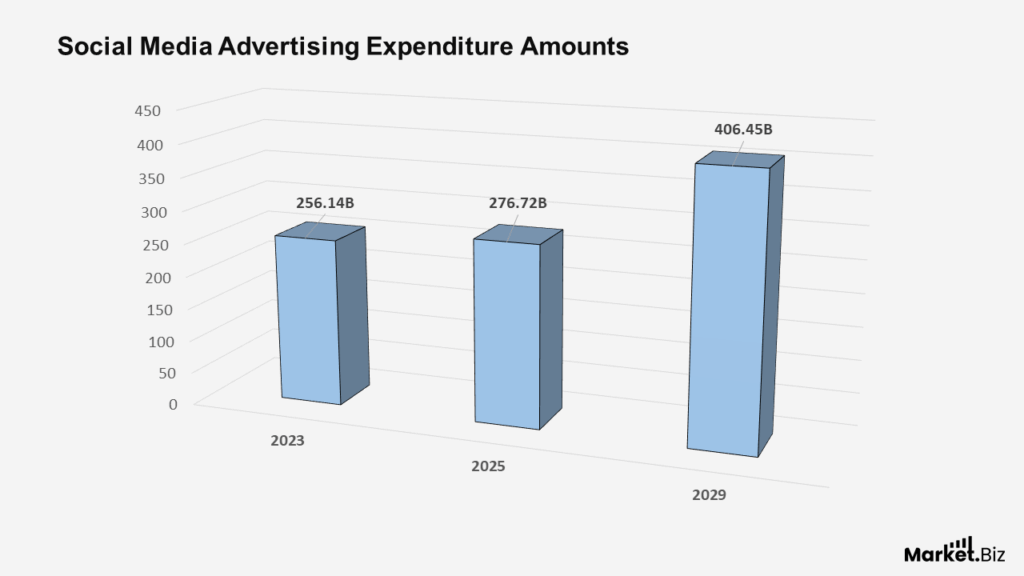
- As of 2023, social media advertising expenditure amounts to $256.14 billion. Social media continues to dominate the time users spend online.
- The United States leads in social media advertising expenditure.
- Projected spending on social media video ads is estimated at $24.35 billion. Advertising on these platforms enables brands to connect with an extensive audience eager for engagement.
- When a platform ensures user privacy, 52% of social media users report feeling significantly more inclined to trust the advertisements displayed in their feeds.
- In 2025, the total advertising expenditure on social media is anticipated to reach $276.72 billion, with projections of $406.45 billion by 2029. It is also crucial to recognize that brands are expected to redirect their advertising budgets from traditional channels.
- Social media advertisements are a form of native advertising that is less intrusive and more effective for businesses.
- For Meta-owned Instagram, the potential audience for its advertisements is 1.74 billion individuals, which represents half of the total Instagram user base in 2022. Instagram stories alone are forecasted to generate $20.03 million in revenue.
- Facebook has achieved $55.1 billion in advertising revenue. In relation to its total user base, approximately 67% constitutes Facebook’s advertising audience.
- Meta’s “Family of Apps,” which includes Facebook, Instagram, WhatsApp, and Messenger, is a formidable force in advertising.
- Ad spending is projected to increase at an annual rate of 3.76%, resulting in a projected market volume of US$1.49 billion by 2027.
Social Media Engagement Statistics
- Comments that range from 10 to 99 characters generate the highest level of engagement; any comments that are shorter or longer, including those consisting solely of emojis, fail to perform effectively.
- Engagement levels significantly decline when commenting on an original post that is older than 24 hours.
- Engagement rates are 1.6 times greater when the original creator responds to your comment.
- Nano- and micro-influencers, defined as those with follower counts between 1,000 and 50,000, show the highest responsiveness.
- The comment sections of creators may soon become overcrowded with brands vying for attention. Consequently, creators will likely become selective in their responses, steering clear of comments that might jeopardize their authenticity and credibility.
- In 2025, as an increasing number of brands attempt proactive engagement, the most effective strategies will extend beyond the comments section (and even beyond social media) to foster genuine relationships with creators and influencers, which will be essential for developing successful outbound engagement strategies.
Video Statistics of Social Media
- Currently, 89% of businesses use videos as a primary marketing instrument. On average, individuals dedicate 17 hours each week to watching videos online, with 60% favoring online videos over traditional television.
- YouTube continues to be a dominant video social media platform, having over 1 billion hours of video content viewed each day.
- The consumption of YouTube videos via mobile devices constitutes 70% of the total viewership.
- TikTok also demonstrates considerable engagement, as adults in the United States spend an average of 56 minutes each day watching TikTok videos. Interestingly, more than half of adult TikTok users have never uploaded a video themselves.
- In a global survey conducted among social media marketers in 2023, 56% indicated they would improve their video efforts on Instagram over the next year, while 59% expressed similar intentions for YouTube.
- Testimonial and explainer videos are the most frequently employed formats in global marketing.
- YouTube stands out as the premier platform for video marketing, with 90% of marketers leveraging it.
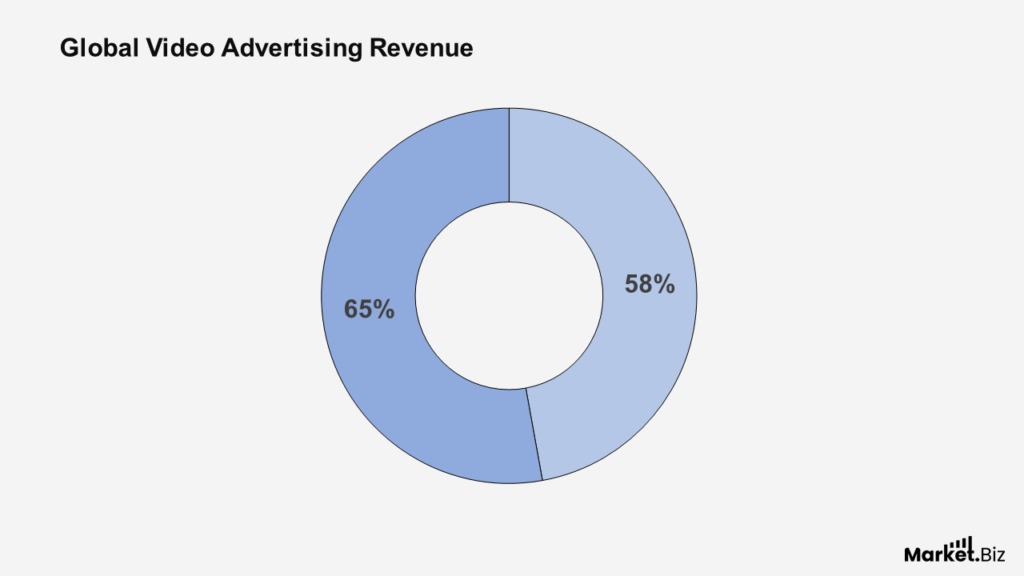
- Instagram and TikTok also play vital roles in video marketing strategies, with TikTok projected to represent nearly 65% of global video advertising revenue by 2027.
Social Media in the US Statistics
- LinkedIn and X display a higher proportion of male users in the United States. In contrast, platforms such as Facebook, YouTube, Instagram, TikTok, and Snapchat are predominantly female-oriented. Pinterest stands out with approximately 70% of its users being female.
- Nearly all (93%) adults in the US aged 18 to 29 use YouTube. Instagram ranks second with 78%, while Facebook engages 67% of this demographic. Snapchat’s usage is at 65%, and TikTok is accessed by 62% of young adults.
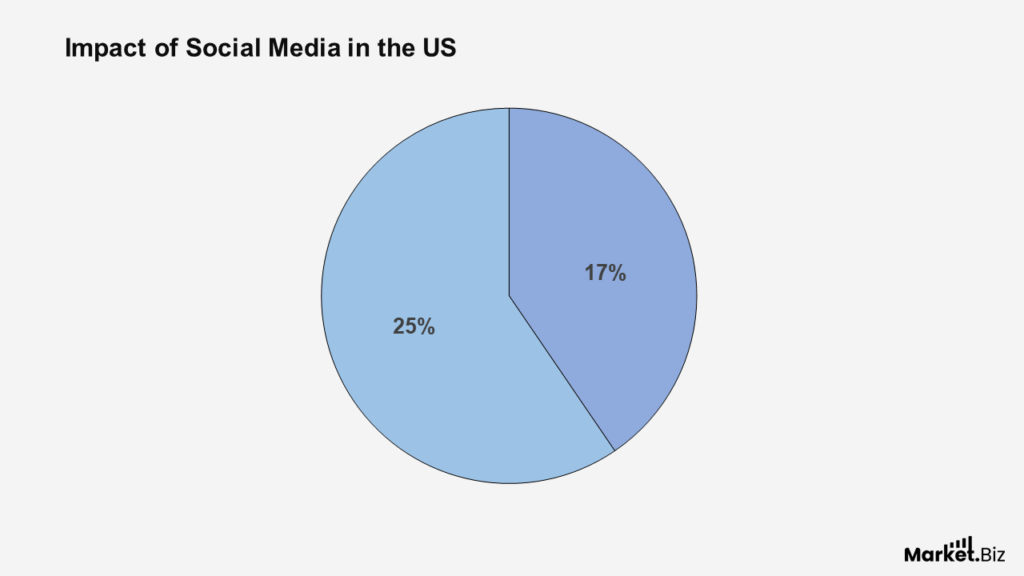
- Over the past four years, the percentage of US adults obtaining news from social media has remained consistent, with only slight variations noted. The percentage of individuals who reported ‘never’ getting news from social media decreased from 32% in 2020 to 28% in 2024.
- In 2022, 17% of respondents frequently received news from social media, which increased to 25% in 2024, marking the highest level recorded.
- An increasing number of Americans are turning to social media, particularly short videos, for election-related news. In the past month, half of Gen Z and millennials have engaged with US politics through this medium.
- Additionally, concerns regarding the influence of AI on campaigns and news have escalated, coinciding with a 26% decline in media trust since 2020.
AI in Social Media Statistics
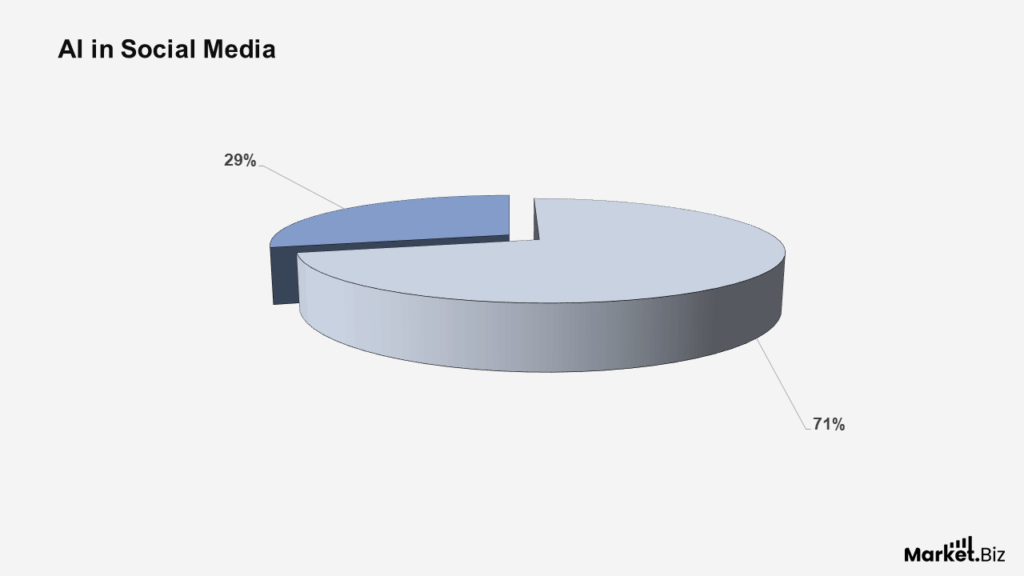
- 71% of social media marketers use AI tools.
- As of May 2024, almost 4 out of 10 marketers globally (38%) report that generative AI improves the efficiency of social media marketing, while 34% highlight the ease of idea generation.
- 87% of social media marketers assert that the implementation of AI tools will be crucial in formulating a social media strategy.
- The global market for AI writing assistant software was valued at $1.7 billion in 2023 and is projected to expand at a compound annual growth rate (CAGR) exceeding 25% from 2024 to 2032, driven by the increasing demand for content creation.
- The market size for AI image generation was valued at $336.3 million in 2023 and is anticipated to grow at a CAGR of more than 17.5% from 2024 to 2032.
Time Spent on Social Media
- In the third quarter of 2024, the global average daily time spent on social media for users aged 16 and older across all devices is 2 hours and 21 minutes.
- In contrast, the average individual in the United States spends 2 hours and 9 minutes on social networks, which is 12 minutes shorter than the global average.
- Worldwide, the typical daily time a person dedicates to social media is 2 hours and 21 minutes, equivalent to 141 minutes.
- Among the 53 countries surveyed, individuals in Kenya allocate the most time to networking daily, averaging 4 hours and 13 minutes.
- Conversely, people in Japan spend the least amount of time on networking each day, averaging just 46 minutes.
Future of Social Media
- Instagram will continue to be a primary focus for marketers, with 44% of those surveyed intending to prioritize it as their principal platform.
- In contrast, LinkedIn (20%) is expected to be a formidable player in professional networking, followed by TikTok (18%) for its entertainment appeal and YouTube (11%) for its long-form video offerings.
- Short-form video content, defined as 60 seconds or less, is prevalent, with 47% of marketers concentrating on it.
- Brands are likely to decrease their dependence on memes, particularly those that pose legal challenges, as audiences show a preference for authenticity rather than merely following trends.
- Artificial Intelligence will improve workflows, deliver predictive analytics, and expedite content creation; however, content that is genuine and human-driven will be more prominent.
- To stay relevant, brands must weave social media into their fundamental strategies and leverage its cultural impact to foster enduring relationships.
- AI-generated Reels are anticipated to inundate feeds as Meta significantly invests in video to boost engagement.
- Prepare for sophisticated AI-enhanced advertising targeting, using in-app performance metrics to more accurately forecast user actions and clicks on Meta.
- LinkedIn is set to allocate resources towards business-oriented live streams and video events as video interaction continues to rise.
- TikTok is expected to intensify its efforts in live-stream shopping and interactive avatar-based commerce.
Conclusion
Social media statistics are continually changing, mirroring the dynamics of online platforms. Active users, engagement patterns, usage, demographics, and content types are rapidly developing.
Various social media concepts rise and decline. As a marketer, it is crucial to stay flexible and responsive. It is essential to monitor social media trends and use analytics. By keeping abreast of the intricacies of social media, you will be able to refine your strategies to guarantee ongoing success.
FAQs
Social media usage remains extensive worldwide, with billions of individuals participating across different platforms. In 2025, it is projected that over 5.24 billion people, representing 63.9% of the global population, will be active on social media. On average, users dedicate 2 hours and 21 minutes each day to these platforms.
In 2025, YouTube is widely regarded as the most lucrative social media platform for content creators, especially those who produce long-form videos. Although other platforms such as TikTok, Instagram, and Facebook provide monetization options, YouTube’s revenue-sharing model with creators via AdSense and its diverse monetization features (including channel memberships, Super Chat, etc.) position it as a leading source of income.
China has the most users who use social media.