








Introduction
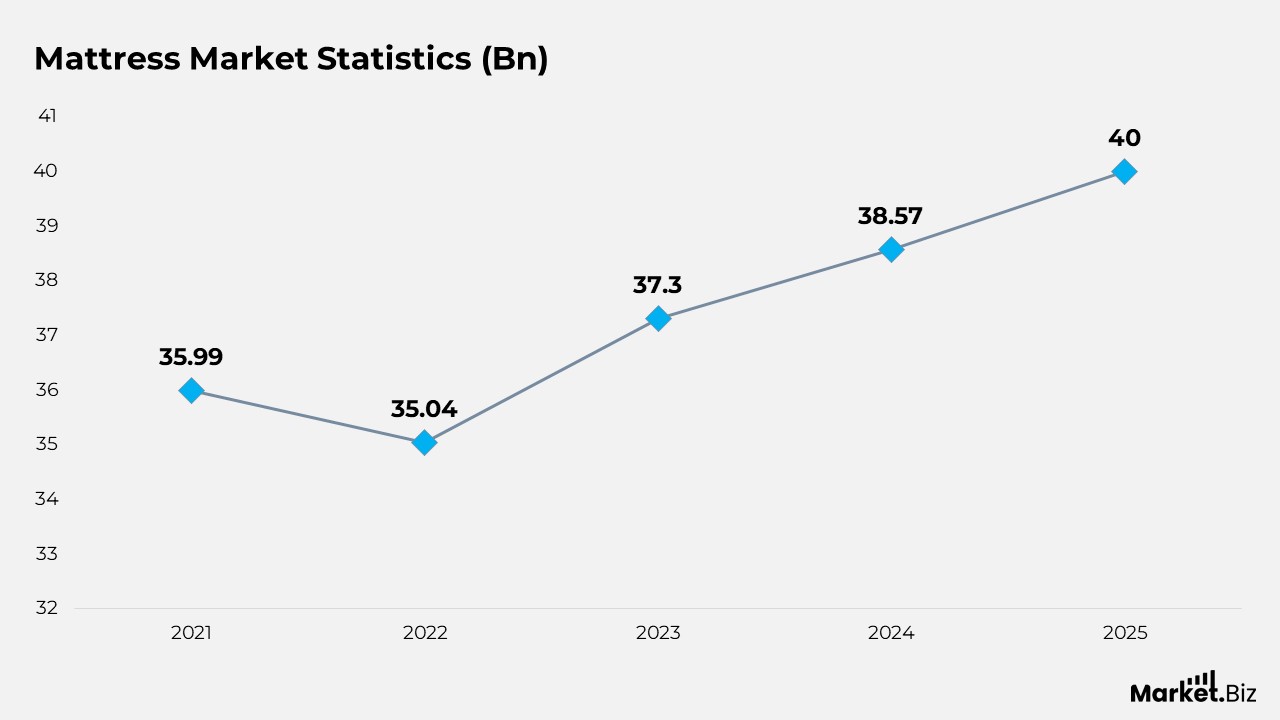
Mattress Statistics: The worldwide mattress market was valued at USD 37.30 billion in 2023 and is projected to expand at an annual growth rate of 4.92% from 2024 to 2033, finally reaching USD 60.30 billion by 2033. This growth is being propelled by several factors, such as increased awareness of sleep health, a growing population, and rising urbanization, all of which are contributing to a heightened demand for mattresses.
Furthermore, advancements in technology and a heightened focus on health and wellness have sparked greater interest in specialized and orthopedic mattresses. The market is also experiencing growth due to rising incomes among younger consumers, an increased emphasis on healthy living, and a rise in respiratory issues, which are affecting purchasing behaviors.
In this article, we will provide further insights into mattress statistics. Key factors that influence mattress selection encompass firmness level, sleep position, temperature regulation, and material sensitivities. Grasping these aspects can assist consumers in making well-informed decisions that cater to their individual sleep requirements and preferences.
Editor’s Choice
- In the United States, approximately 36 million mattresses are sold annually.
- Currently, 54% of consumers opt to purchase mattresses online rather than in physical stores.
- In 2023, foam mattresses dominated the market, holding a 45% share, attributed to their comfort and ability to adapt to body shapes.
- 40% of millennials favor a bed-in-a-box that is delivered directly to their residence.
- Latex mattresses, recognized for their durability and comfort, were significantly pricier, averaging $2,000.
- 38% of men are familiar with direct-to-consumer mattress brands, whereas only 29% of women are aware of them.
- The global grid mattress market is expected to develop at a compound annual growth rate of 10.3%, projected to reach USD 3.7 billion by 2033, up from USD 1.37 billion in 2023.
General Mattress Statistics
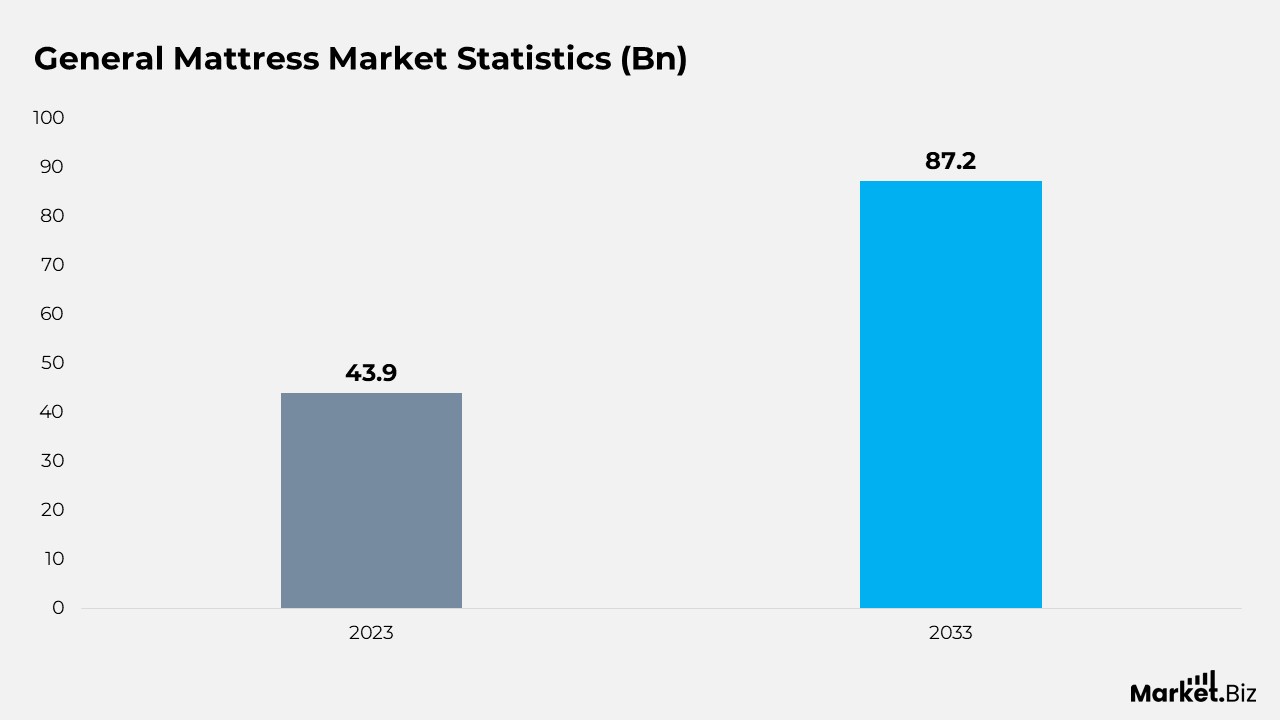
- According to Market.us, the Global Mattress Market is projected to reach approximately USD 87.2 billion by 2033, increasing from USD 43.9 billion in 2023, and is anticipated to grow at a compound annual growth rate (CAGR) of 7.1% from 2024 to 2033.
- In the United States, approximately 36 million mattresses are sold annually.
- While innerspring mattresses are the most frequently purchased, memory foam mattresses are preferred by many, with 66% of individuals indicating they are the best type of foam.
- Mattress Statistics reported that the mattress industry in the United States employs over 75,000 individuals.
- Currently, 54% of consumers opt to purchase mattresses online rather than in physical stores.
- The United States disposes of 50,000 mattresses daily. Although over 75% of mattresses can be recycled, only 5% are actually recycled.
- The mattress industry is projected to expand at an annual growth rate (CAGR) of 7% for the remainder of the decade.
- A significant factor contributing to this growth is the increasing awareness of the benefits of quality sleep on health.
- With profit margins typically ranging from 40% to 50%, the mattress industry is highly lucrative.
- This implies that a mattress priced at USD 1,000 will likely incur production and shipping costs of approximately USD 600 to USD 700.
- Mattress Statistics indicated that nearly 35.9 million mattresses are sold each year in the United States.
- By 2025, it is expected that there will be around 600 mattress companies in the United States dedicated to the design and production of mattresses.
- Additionally, there are approximately 16,000 mattress stores and retailers across the nation.
Mattress Market Statistics
- In 2023, foam mattresses dominated the market, holding a 45% share, attributed to their comfort and ability to adapt to body shapes.
- In 2023, the household segment was the leading end-use category, accounting for a 78% share, fueled by a heightened emphasis on home comfort and sleep quality.
- In 2023, offline distribution channels led the market with a 68% share, as many consumers prefer to physically test mattresses prior to making a purchase.
- In 2023, the Asia-Pacific region was the market leader, capturing a 38% share and generating USD 16.68 billion, driven by rising urbanization and increasing disposable incomes.
- The primary target demographic consists of adults aged 25 to 60 with middle to upper income levels.
- The growing demand is primarily from health-conscious consumers who are seeking advanced and luxury bedding options to enhance sleep quality and provide personalized comfort.
- Memory foam mattresses are priced between USD 800 and USD 2,500 for a queen-size, while hybrid mattresses range from USD 1,200 to USD 2,000.
Further
- Hybrid mattresses are becoming increasingly popular due to their superior edge support and temperature regulation, appealing to consumers who prioritize both comfort and durability.
- According to ResMed’s 2023 Global Sleep Survey, 80% of adults across 12 countries reported experiencing symptoms of disrupted sleep.
- Over 85% of respondents in countries such as Mexico and South Korea reported poor sleep quality, whereas Japan had a lower incidence rate of 60%.
- The U.S. economy incurs an annual loss exceeding USD 411 billion due to productivity declines and health issues associated with insufficient sleep.
- Product differentiation is increasingly influenced by technology and sustainability, with innovations like King Koil’s SmartLife Mattress, which features body-sensing technology, and Ziwi, which leverages over 80 years of expertise to introduce cutting-edge products.
- Opportunities for value chain optimization are emerging, as investments such as Bassett Bedding LLC’s USD 1.7 million in new machinery improve production efficiency and decrease reliance on imports.
Demographics
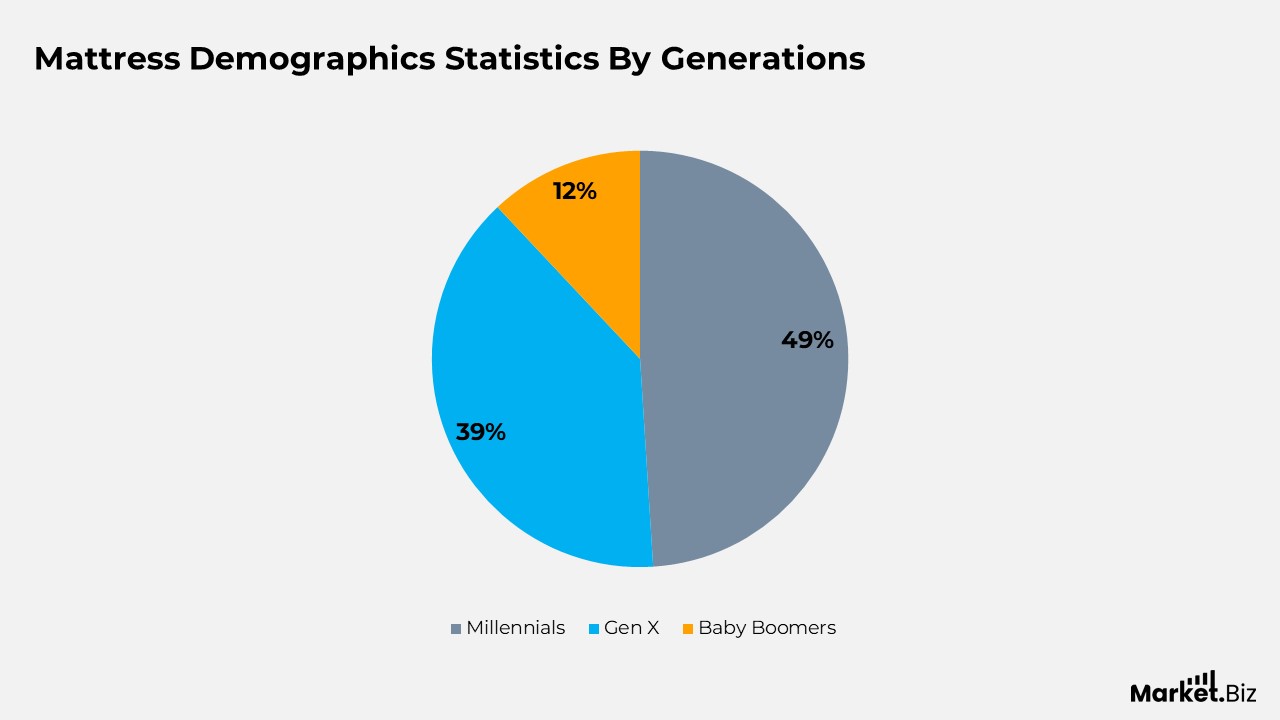
- According to Mattress Statistics, approximately 46% of millennials, aged 18 to 35, have a preference for soft mattresses.
- 33% of millennials opt for either a king or California king-size mattress, in contrast to merely 21% of baby boomers.
- Furthermore, 40% of millennials favor a bed-in-a-box that is delivered directly to their residence.
- Additionally, 32% seek hypoallergenic mattresses, indicating a rising trend in this area.
- Millennials find mattress shopping more enjoyable than older generations; they are twice as likely to perceive it as easy and five times more likely to describe it as fun.
- Moreover, millennials generally replace their mattresses more frequently than older generations, purchasing a new mattress approximately every 5.7 years.
- In contrast, older adults, particularly those aged 56 and above, tend to retain their mattresses for an extended period, typically around 12.3 years, before considering a replacement.
- For many baby boomers, health issues serve as the primary motivation for acquiring a new bed, with around 36% purchasing a new mattress in hopes of improving their sleep and health conditions.
Moreover
- Additionally, 70% prefer to shop in physical stores rather than online.
- Mattress Statistics also revealed that nearly 43% of consumers shop alone rather than with a partner or family members.
- When making a purchasing decision, they prioritize factors such as price, size, type of mattress, and the availability of free delivery.
- Generation X, often overlooked in consumer research, exhibits unique mattress shopping behaviors that distinguish them from both millennials and baby boomers.
- Similar to baby boomers, the majority of Generation X consumers prefer shopping in brick-and-mortar stores instead of online.
- 58% of them select pillow-top or innerspring mattresses for enhanced comfort and support.
- According to Mattress Statistics, nearly 74% of consumers avoid foam mattresses, deeming them outdated.
- Furthermore, 87% prefer larger mattress sizes, such as king or queen.
- Only 22% express a preference for soft mattresses, with the majority leaning towards firmer options.
- Lastly, 26% utilize apps or devices to monitor their sleep, in comparison to 49% of millennials and 12% of baby boomers.
Mattress Price Statistics
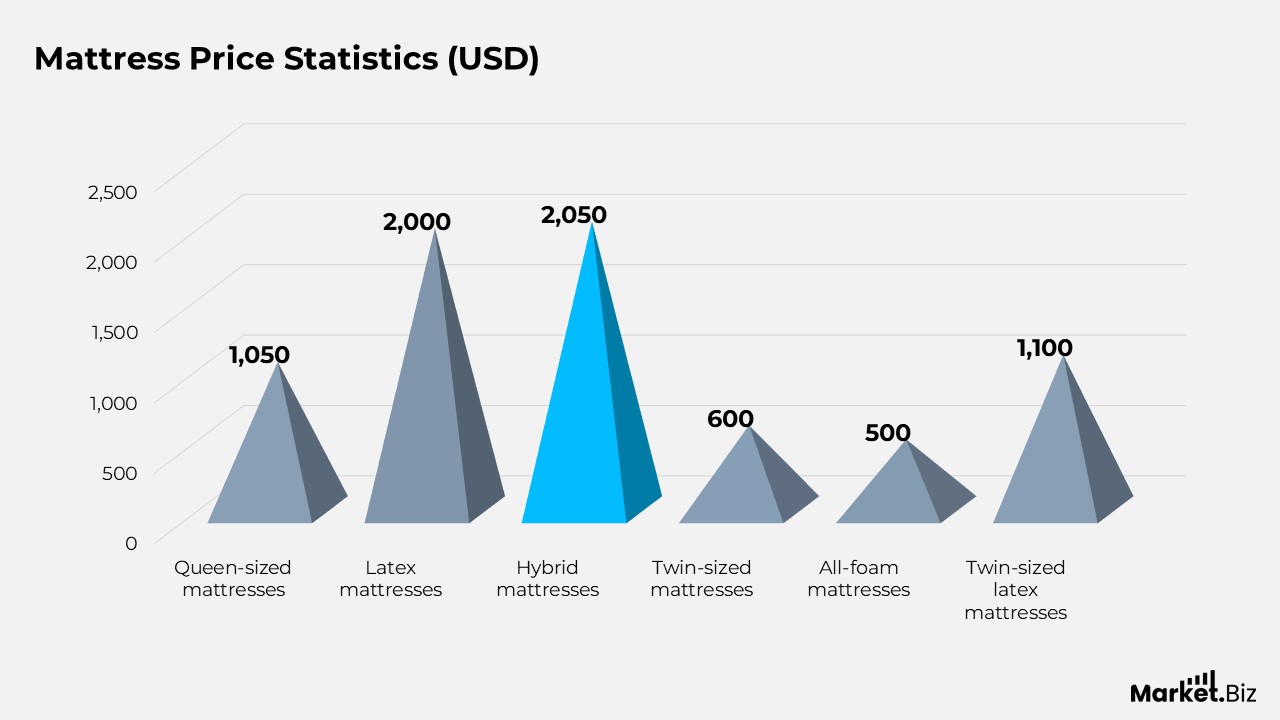
- In 2023, the average costs of mattresses in the United States showed considerable variation depending on the type and size.
- For Queen-sized mattresses, both innerspring and all-foam varieties were priced at $1,050.
- Latex mattresses, recognized for their durability and comfort, were significantly pricier, averaging $2,000.
- Hybrid mattresses, which integrate features of both innerspring and foam, reached the highest price point at $2,050 for the Queen size.
- In contrast, Twin-sized mattresses were generally less expensive across all categories. Innerspring models were the most economical, priced at $600, trailed by all-foam mattresses at $500.
- Twin-sized latex mattresses were available at $1,100, while hybrid mattresses were marginally more costly at $1,150.
Mattress Advertising and Branding Statistics
- Mattress Statistics reported that nearly 70% of mattress purchases are influenced by online research and advertisements.
- As much as 90% of purchasing decisions occur without individuals being aware of it.
- 38% of men are familiar with direct-to-consumer mattress brands, whereas only 29% of women are aware of them.
- Almost 48% of consumers have heard of Purple mattresses, and 83% would contemplate buying one.
- 53% of individuals initiate their mattress search online, while 48% start their search in brick-and-mortar stores.
- 57% of consumers claim they have never encountered an advertisement for direct-to-consumer mattress brands.
- Mattress Statistics indicated that approximately 60% of mattress brands allocate funds for paid social media advertising.
- Companies may spend up to USD 37 per click to bid on popular mattress-related keywords on Google.
- Casper was previously the most recognized online mattress brand, but recent studies indicate that Purple has now taken the lead in recognition.
- 48% of individuals are aware of Purple, and 83% have considered making a purchase.
Grid Mattress Statistics
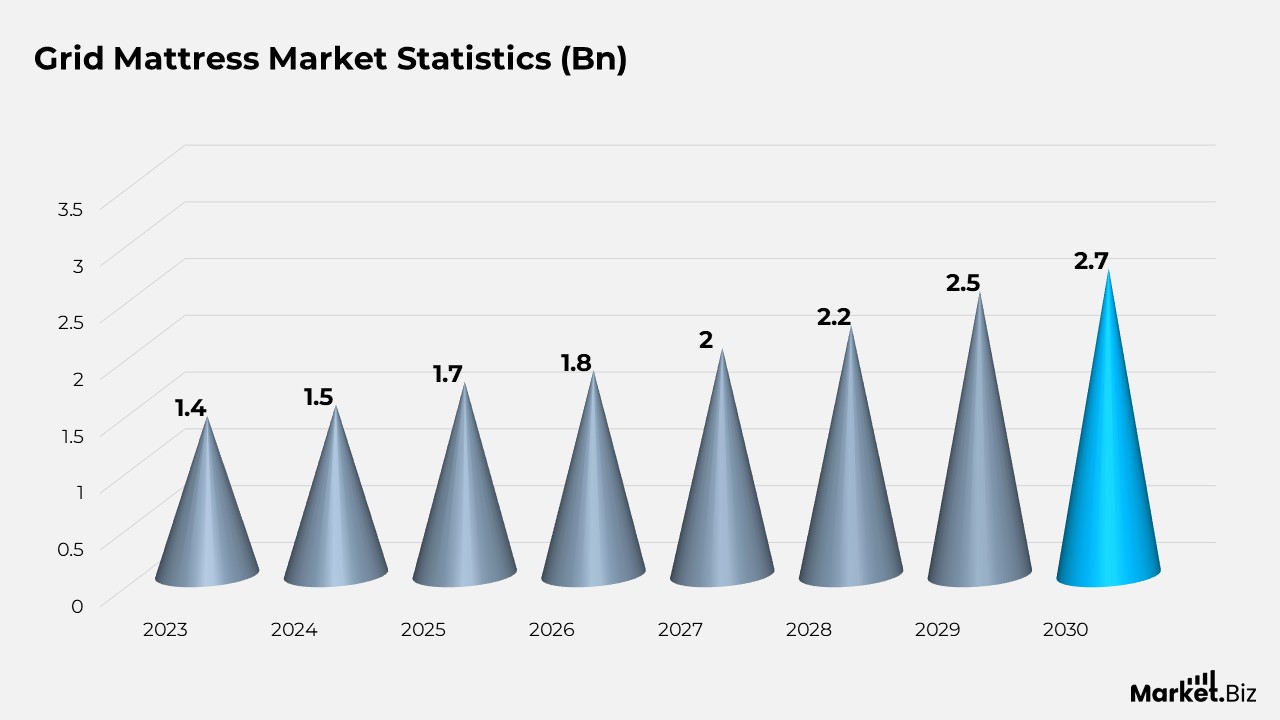
- The global grid mattress market is expected to develop at a compound annual growth rate of 10.3%, projected to reach USD 3.7 billion by 2033, up from USD 1.37 billion in 2023.
- The grid mattress sector benefits from the overall mattress market, which recorded sales of 16.8 million mattresses in the United States in 2023, indicating strong and sustained demand.
- Around 50% of respondents indicated a decrease in stress levels, while 65.2% reported improved overall mental health as a result of using the optimal mattress, underscoring the significant influence of mattress quality on well-being.
- King-sized mattresses maintain a prominent position with a 43.5% share of the market, fueled by consumer preference for larger sleeping arrangements.
- The hospitality industry represents 40% of the end-user segment, prioritizing comfort and durability to enhance the experiences of guests.
- Independent retailers and specialty stores lead the distribution channels, offering personalized services that cater to the specific needs of consumers.
- The Asia Pacific region commands a substantial 37% market share, bolstered by urbanization, increasing income levels, and strong demand in both China and India.
Recent Developments
- In the middle of 2023, Purple Mattress unveiled a new series of mattresses that utilize GelFlex Grid™ technology, aimed at delivering exceptional pressure relief and cooling.
- In the beginning of 2024, Casper, a prominent player in online mattress sales, launched a new collection of hybrid mattresses crafted from recycled materials, which include eco-friendly foams and sustainable fabrics.
- Towards the end of 2023, Eight Sleep, a firm that specializes in technology-driven sleep products, secured $86 million to advance the development of its smart mattresses, designed to monitor sleep patterns and adjust temperature accordingly.
- In 2023, Helix Sleep, recognized for its customizable mattresses, obtained $50 million to broaden its product range and improve its mattress customization algorithms.
- By the year 2025, it is anticipated that 30% of premium mattresses will integrate AI technology to track and analyze sleep data, assisting users in enhancing their sleep quality through real-time modifications in temperature and firmness.
- As sustainability becomes increasingly important, it is forecasted that 25% of mattresses manufactured by 2026 will feature eco-friendly materials such as organic cotton, recycled foam, and natural latex, thereby minimizing the environmental impact of mattress production.
Conclusion
Mattress Statistics: The mattress market is characterized by diverse consumer preferences and dynamic trends. Comfort and support are of utmost importance, with memory foam and hybrid mattresses becoming increasingly popular due to their superior attributes.
Pricing is highly variable, catering to both budget-conscious consumers and those in search of luxury items, alongside a significant shift towards online shopping, which enhances convenience and expands the options available to consumers.
The competitive environment is intense, with leading brands competing for customer satisfaction through quality and service. Furthermore, a growing number of consumers are emphasizing eco-friendly and health-conscious selections in their mattress choices, indicating a rising trend towards sustainability within the industry.
In summary, the mattress market is continually evolving, propelled by technological innovations and shifting consumer behaviors, with successful companies adjusting to these trends while upholding high standards of quality and customer service.
FAQs
Studies indicate that latex and memory foam mattresses generally have the longest lifespan, followed by high-quality innerspring mattresses. When evaluating the value of a mattress, it is essential to consider both comfort and support alongside durability. Various indicators suggest it may be time to replace your mattress.
When selecting a mattress, it is important to take into account your sleeping position, body type, and any personal preferences such as temperature regulation or pain relief. Align your firmness preference (soft, medium, or firm) with your requirements, opting for softer mattresses for side sleepers and firmer options for stomach sleepers to maintain proper spinal alignment. Choose a mattress type (memory foam, innerspring, hybrid, latex) that provides the appropriate combination of comfort and support, while also considering your budget and the necessity for motion isolation if you share your bed.
Recent advancements in mattress technology frequently include smart sensors, adjustable bases, and responsive materials, which address a variety of needs, from alleviating back pain to improving athletic recovery.