









Introduction
Athleisure Statistics: This sector has witnessed remarkable growth, fueled by increasing health and fitness trends, the impact of fashion influencers, and the rise of e-commerce. This industry merges athletic clothing with casual wear, catering to a wide range of consumers who value both comfort and style.
Prominent product categories encompass leggings, joggers, sports bras, and sneakers, with leading brands such as Lululemon, Nike, and Adidas dominating the market. However, challenges like sustainability requirements, market saturation, and evolving consumer preferences demand innovative and distinct strategies.
The future outlook suggests ongoing growth, especially in emerging markets, propelled by advancements in fabric technology and the potential incorporation of smart textiles.
Editor’s Choice
- The worldwide revenue for the sports apparel market is anticipated to reach USD 293.73 billion by the year 2030.
- By 2028, the global yoga wear market is estimated to achieve a value of USD 39,910 million.
- The global athleisure market has witnessed remarkable growth in recent years, achieving a compound annual growth rate (CAGR) of 8.70%, with the market size reaching USD 328.4 billion in 2022.
- In 2021, the market was assessed at USD 303.44 billion, and it increased to USD 319.37 billion in 2022.
- Amongst the youngest demographic, aged 18-29, 19% demonstrated a strong preference for the trend (“Love”), followed by 21% of individuals aged 30-44.
General Athleisure Statistics
- The worldwide revenue for the sports apparel market is anticipated to reach USD 293.73 billion by the year 2030.
- By 2032, the global athleisure market revenue is projected to attain USD 740.7 billion.
- The revenue for the global activewear market is expected to reach USD 451.1 billion by 2028.
- By 2028, the global yoga wear market is estimated to achieve a value of USD 39,910 million.
- In 2023, the sales data for the largest companies in athletic apparel, accessories, and footwear across the globe exhibited considerable variation, reflecting their respective market standings and scale.
- Nike Inc. led the industry with the highest sales figures, totaling USD 51,542 million.
- In 2023, consumer preferences for athleisure brands in the United States displayed clear trends.
- Lululemon emerged as the market leader, with a notable 50% of consumers identifying it as their ideal brand for athleisure purchases.
- In 2016, a survey examining the preferences of French women regarding sportswear uncovered a clear hierarchy of criteria they prioritize when making purchases.
- Comfort was overwhelmingly regarded as the most important factor, with 99% of respondents emphasizing its significance, highlighting its critical role in the selection of sportswear.
Athleisure Market Growth
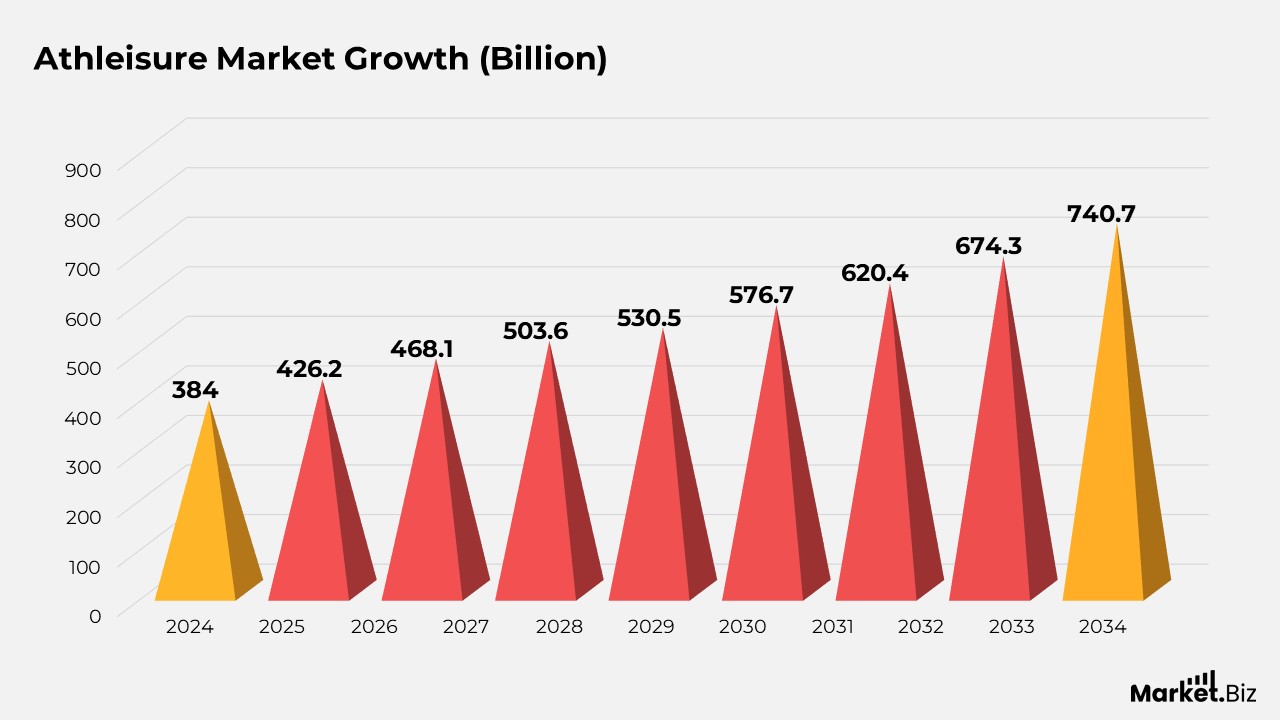
- The global athleisure market has witnessed remarkable growth in recent years, achieving a compound annual growth rate (CAGR) of 8.70%, with the market size reaching USD 328.4 billion in 2022.
- This positive trend persisted into 2023, as the market expanded to USD 357.0 billion.
- Forecasts suggest continued growth in the upcoming years, with expectations for the market to reach USD 384.0 billion in 2024, followed by an increase to USD 426.2 billion in 2025.
- By 2026, the market is projected to grow to USD 468.1 billion, and by 2027, it is likely to attain USD 503.6 billion.
- The market is anticipated to exceed USD 530.5 billion in 2028 and rise to USD 576.7 billion by 2029.
- As we move into the next decade, the market is expected to maintain its upward trend, reaching USD 620.4 billion in 2030 and further growing to USD 674.3 billion in 2031.
- By 2032, the global athleisure market is forecasted to achieve an impressive USD 740.7 billion.
Sports Apparel Market Growth
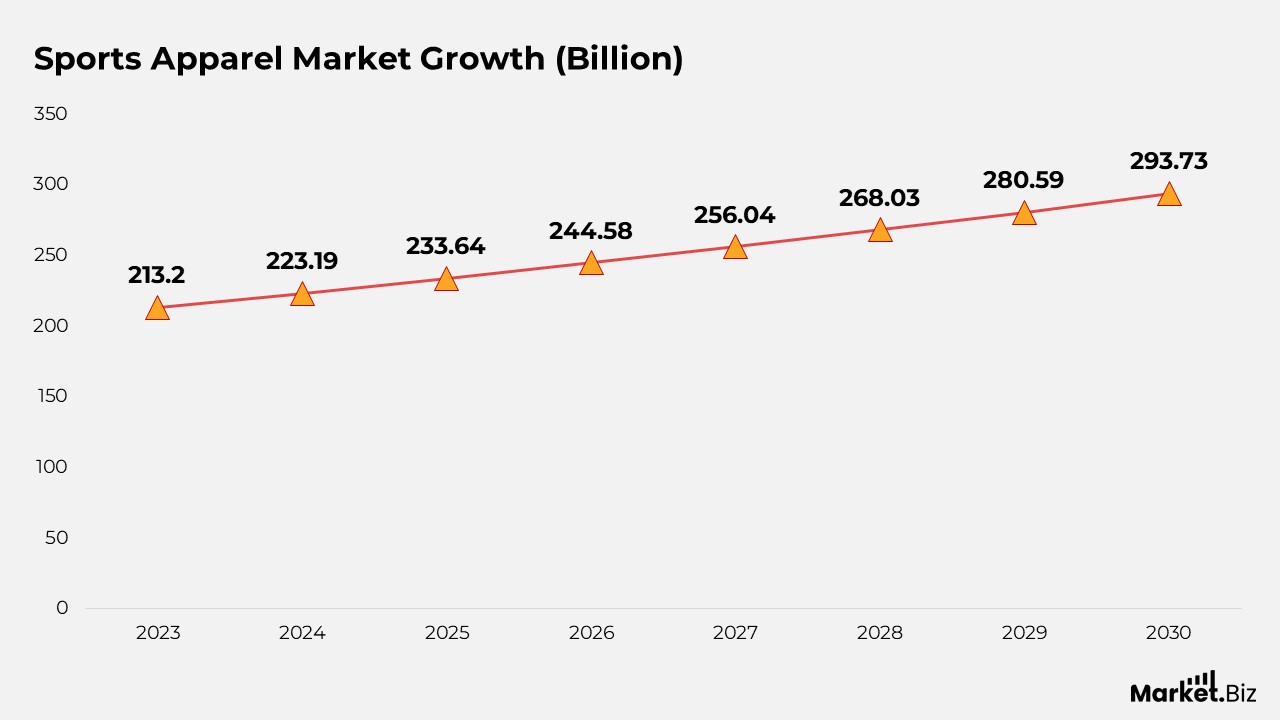
- Commencing with a market size of USD 213.2 billion in 2023, the industry is projected to experience consistent growth annually, achieving USD 223.19 billion in 2024.
- By 2025, the market size is forecasted to rise to USD 233.64 billion, followed by an increase to USD 244.58 billion in 2026.
- The growth trajectory is anticipated to be maintained, with the market size reaching USD 256.04 billion in 2027 and USD 268.03 billion by 2028.
- The upward trend is expected to persist, with market sizes of USD 280.59 billion in 2029 and USD 293.73 billion by 2030.
Active Wear Market Growth
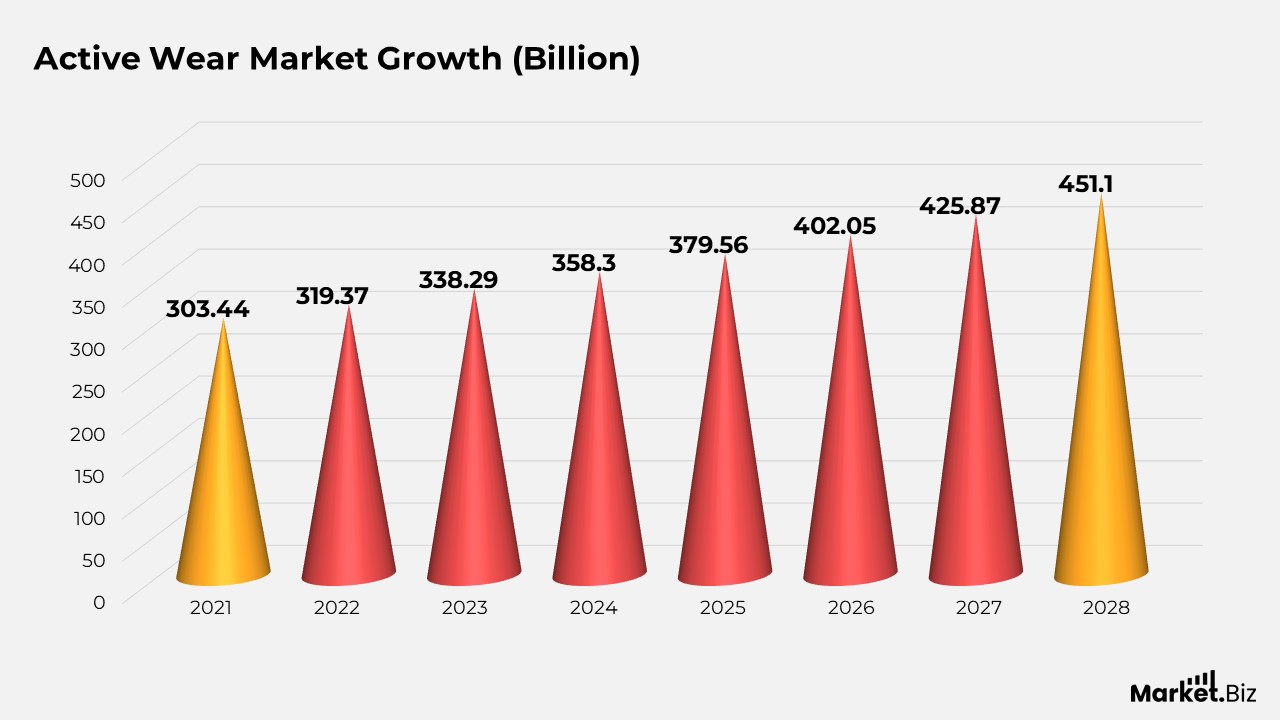
- In 2021, the market was assessed at USD 303.44 billion, and it increased to USD 319.37 billion in 2022.
- The growth trend persisted, with the market size attaining USD 338.29 billion in 2023, and it is anticipated to rise to USD 358.33 billion by 2024.
- By 2025, the market is projected to further grow to USD 379.56 billion.
- The upward trajectory is expected to continue, with market valuations estimated at USD 402.05 billion in 2026, USD 425.87 billion in 2027, and ultimately reaching USD 451.1 billion by 2028.
Global Sports & Swimwear Industry
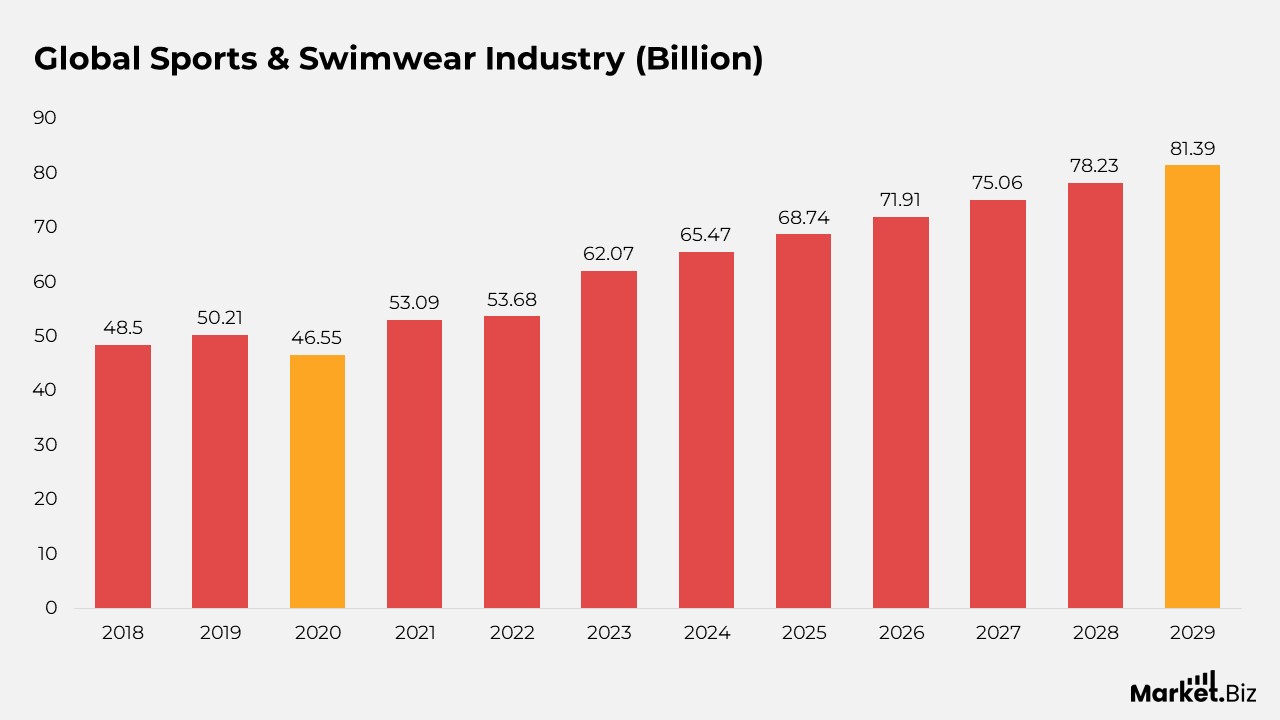
- In 2018, the market was assessed at USD 48.50 billion. It saw an increase in 2019, attaining USD 50.21 billion, before experiencing a decline in 2020 to USD 46.55 billion, likely influenced by global economic difficulties.
- A robust recovery was noted in 2021, with the market size increasing to USD 53.09 billion, followed by a modest increase to USD 53.68 billion in 2022.
- Significant growth was recorded in 2023, with the market size soaring to USD 62.07 billion.
- This upward trend is anticipated to persist, with projections indicating the market will reach USD 65.47 billion in 2024, USD 68.74 billion in 2025, USD 71.91 billion in 2026, USD 75.06 billion in 2027, USD 78.23 billion in 2028, and USD 81.39 billion by 2029.
Men’s Sports and Swimwear Statistics
- Beginning with a revenue of USD 48.5 billion in 2018, the market saw a modest increase to USD 50.21 billion in 2019.
- However, in 2020, revenue fell to USD 46.55 billion, likely as a result of external market disruptions.
- A recovery was observed in 2021, with revenues climbing to USD 53.1 billion and experiencing a slight rise to USD 53.67 billion in 2022.
- A notable growth trajectory commenced in 2023, with revenue surging to USD 62.07 billion, followed by additional growth to USD 65.46 billion in 2024.
- The upward trend persisted, with revenues reaching USD 68.74 billion in 2025, USD 71.9 billion in 2026, and USD 74.91 billion in 2027, with projections suggesting it will attain USD 77.97 billion by 2028.
Women’s Sportswear Market Statistics
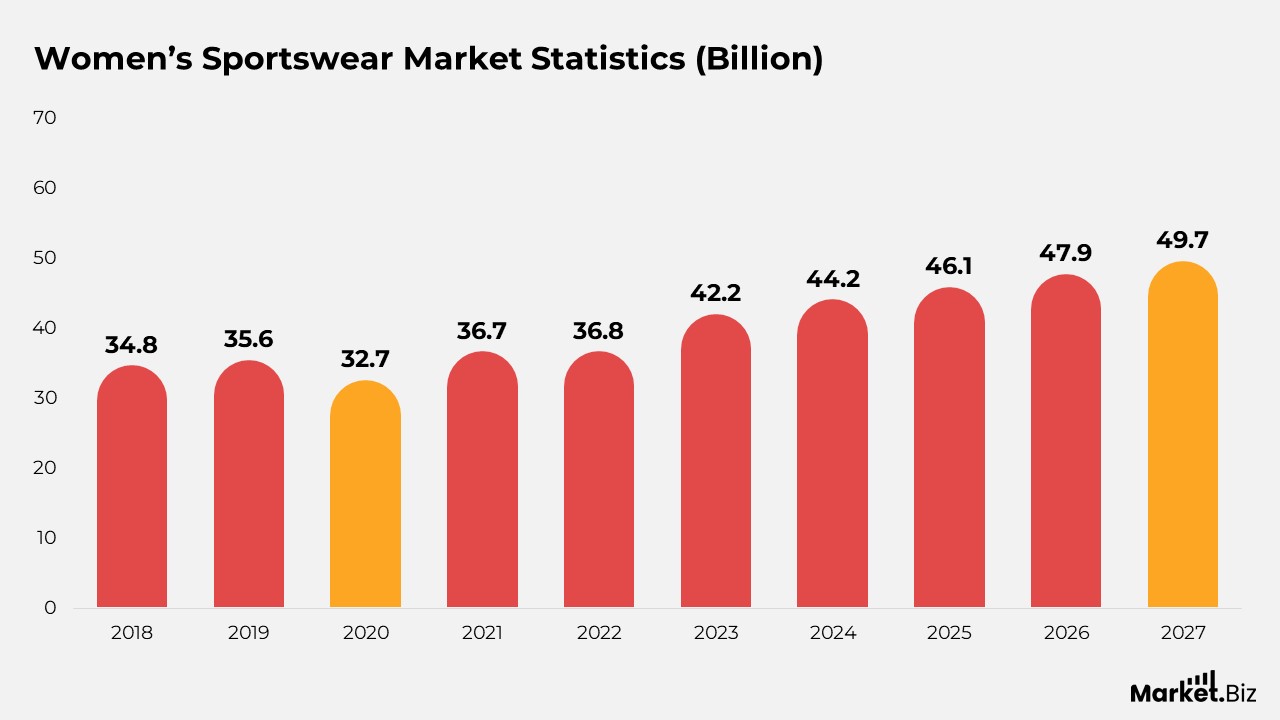
- Initially, the market size was recorded at USD 34.82 billion in 2018, experiencing a slight increase to USD 35.55 billion in 2019.
- A decline was noted in 2020, with the market size falling to USD 32.73 billion, likely influenced by global economic factors.
- Nevertheless, the market made a recovery, reaching USD 36.7 billion in 2021 and sustaining a comparable figure of USD 36.81 billion in 2022.
- Starting from 2023, notable growth was witnessed as the market size surged to USD 42.24 billion, with projections indicating a continued upward trend, aiming for USD 44.21 billion in 2024.
- Additional growth is anticipated, with the market size expected to rise to USD 46.1 billion in 2025, USD 47.92 billion in 2026, and ultimately reaching USD 49.67 billion by 2027.
Athleisure Sales Statistics
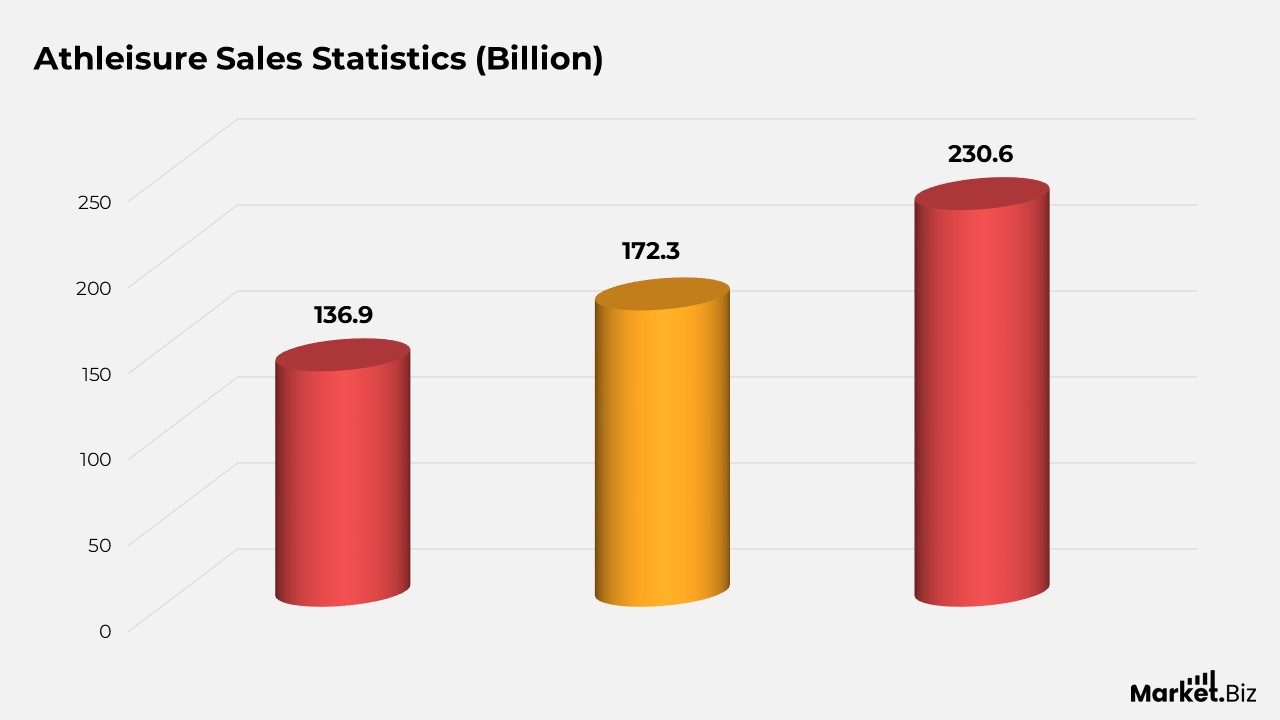
- In 2012, the retail sales of the market were estimated at USD 136.9 billion.
- In 2016, over the next four years, the market saw significant growth, resulting in retail sales of USD 172.3 billion.
- This positive trend continued, and by 2021, the market had further grown to a value of USD 230.6 billion.
Statistics of Athleisure Companies
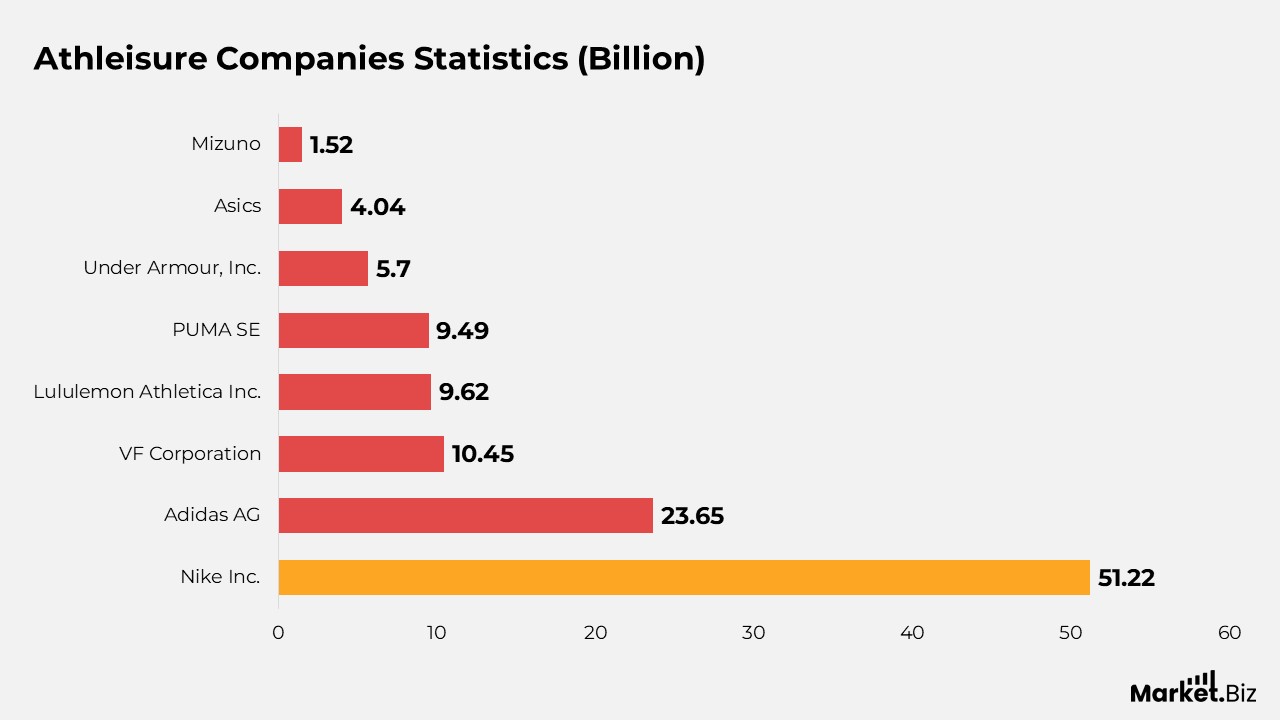
- Nike Inc. topped the industry with an impressive revenue of USD 51.22 billion, significantly surpassing its nearest rival.
- Adidas AG came in second with a revenue of USD 23.65 billion, solidifying its status as a key player in the market.
- VF Corporation, which encompasses a range of apparel brands, achieved a notable revenue of USD 10.45 billion.
- PUMA SE and Lululemon Athletica Inc. closely followed, reporting revenues of USD 9.49 billion and USD 9.62 billion, respectively, reflecting their robust market presence and consumer attraction.
- Under Armour, Inc. also retained a considerable market share with a revenue of USD 5.7 billion.
- Asics and Mizuno, although smaller compared to the leading companies, still maintained significant standings with revenues of USD 4.04 billion and USD 1.52 billion, respectively.
Athleisure Users Demographic Statistics
Age
- Amongst the youngest demographic, aged 18-29, 19% demonstrated a strong preference for the trend (“Love”), followed by 21% of individuals aged 30-44.
- This enthusiasm was less evident in the older age categories, with 16% of those aged 45-64 and merely 6% of those aged 65 and above sharing the same sentiment.
- The trend received a “Liked” response from a greater proportion of the 45-64 age group, at 25%, in contrast to 21% of 18-29-year-olds and 20% of 30-44-year-olds, while older adults (65+) exhibited an 18% approval rate.
- “Neutral” responses were most prevalent among the 30-44 age group at 36%, whereas 28% of the youngest demographic, 29% of the 45-64 group, and 32% of those aged 65 and older expressed similar feelings.
- Dislike and hatred towards athleisure were relatively uniform across all age groups, with approximately 8% expressing dislike and 2-5% indicating hatred towards the trend.
- Nevertheless, a notable degree of uncertainty or lack of awareness regarding athleisure was apparent, particularly among older adults (65+), with 32% stating they were unaware of the trend, compared to 19% of the 18-29 group, 13% of the 30-44 group, and 17% of the 45-64 group.
Generation
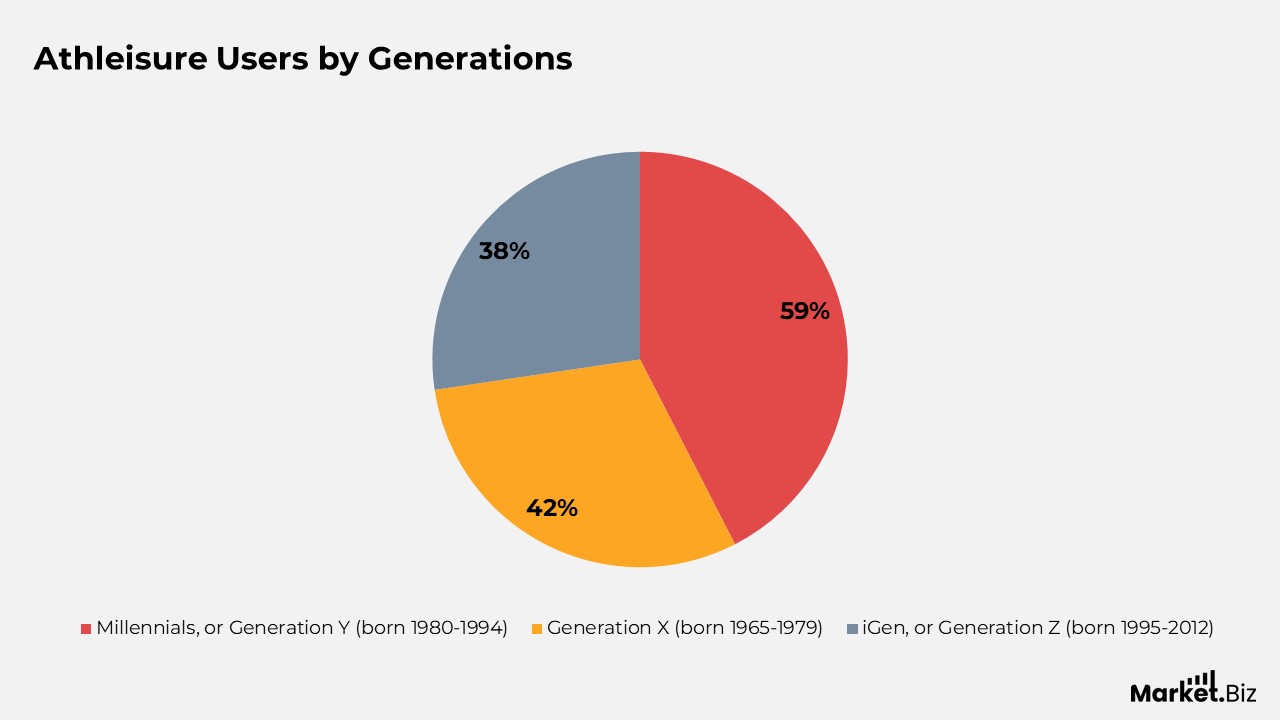
- Millennials, also known as Generation Y (born 1980-1994), exhibited the highest level of engagement with sportswear, as 59% of respondents reported having made a sportswear purchase in the past 24 months.
- This notable level of involvement underscores the strong relationship between Millennials and trends related to active lifestyles.
- Generation X (born 1965-1979) similarly displayed considerable interest, with 42% indicating they had bought sportswear, which reflects their continued commitment to personal health and fitness.
- In contrast, Generation Z (born 1995-2012) recorded a lower participation rate of 38%, implying a diverse range of interests or financial considerations among the youngest demographic.
Gender
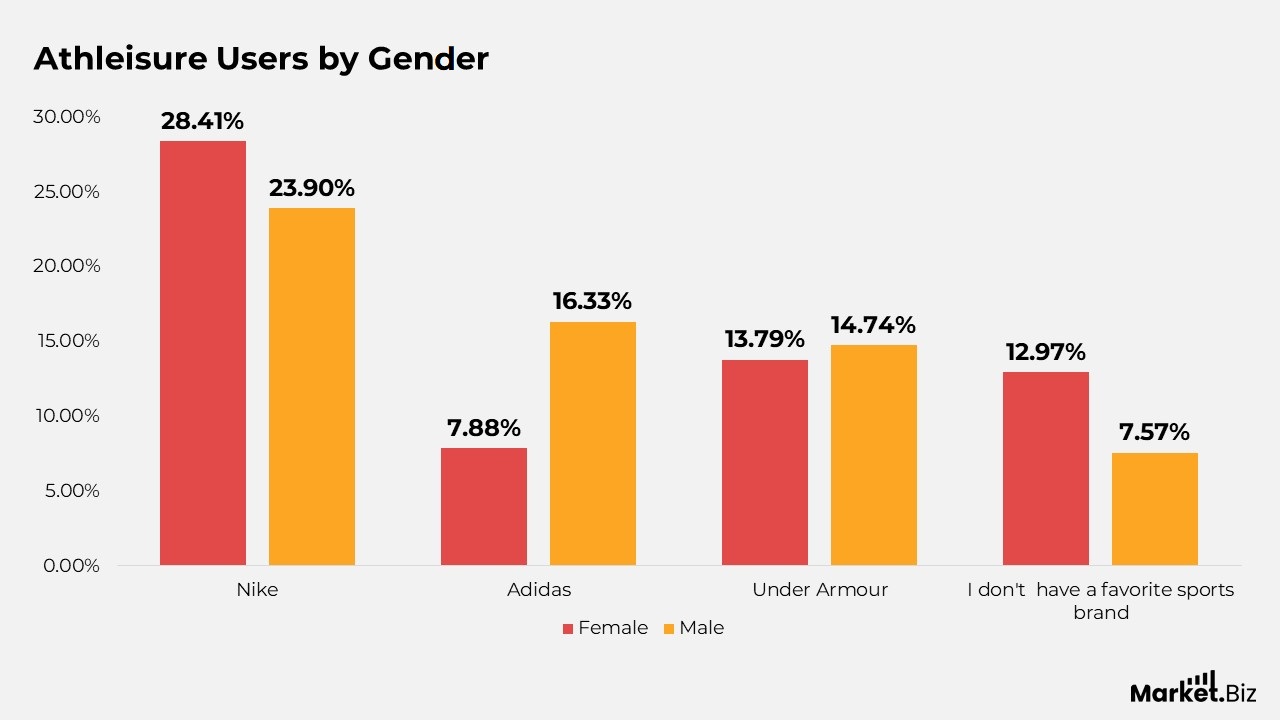
- In a survey conducted in 2018 that examined U.S. consumers’ preferred sports apparel brands by gender, Nike stood out as the predominant choice for both women and men, securing 28.41% and 23.90% of preferences, respectively.
- Adidas was more popular among men (16.33%) than among women (7.88%). Under Armour also enjoyed considerable popularity, with 13.79% of women and 14.74% of men identifying it as their favorite brand.
- A significant portion of respondents indicated they did not have a specific sports brand, with 12.97% of women and 7.57% of men stating no particular preference.
- Among other brands, Champion was favored by 6.37% of men and 2.30% of women, indicating a stronger preference among males. Columbia and Reebok each attracted approximately 2.63% to 4.78% across both genders.
- Although less mainstream, The North Face and Danskin were particularly favored by women, achieving 5.25% and 4.43%, respectively, in comparison to under 2.39% from men.
- Lululemon also had a higher popularity among women at 4.11% compared to just 1.20% among men.
Income Group
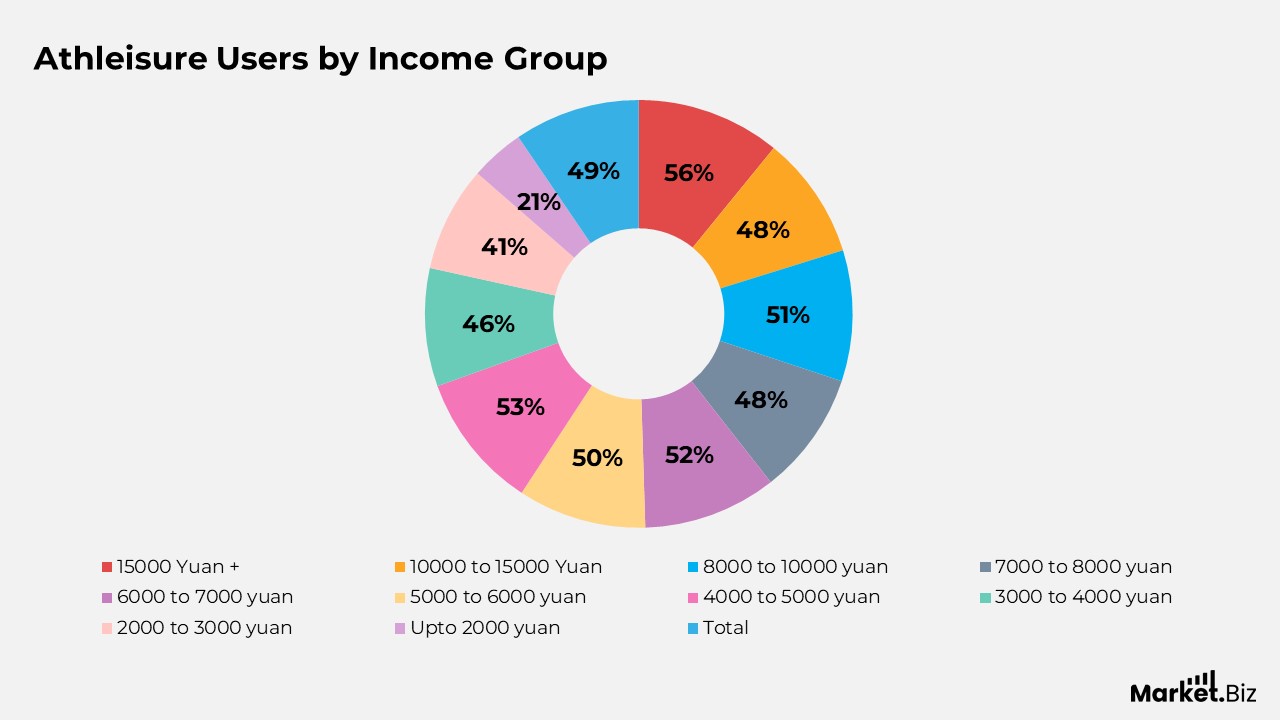
- In total, 49% of the individuals surveyed indicated that they had purchased sportswear. Among those earning up to 2,000 yuan, the likelihood of buying sportswear was the lowest, with only 21% reporting such purchases.
- The likelihood of purchasing sportswear rose with increasing income: 41% of respondents earning between 2,000 and 3,000 yuan, and 46% of those with incomes ranging from 3,000 to 4,000 yuan reported buying sportswear.
- The highest rates of purchase were noted in the upper income brackets. For example, 53% of individuals earning between 4,000 and 5,000 yuan and 50% of those earning between 5,000 and 6,000 yuan purchased sportswear.
- Likewise, 52% of the group earning between 6,000 and 7,000 yuan, as well as 51% of those with incomes from 8,000 to 10,000 yuan, reported buying sportswear.
- Individuals earning between 7,000 and 8,000 yuan and those with incomes from 10,000 to 15,000 yuan exhibited slightly lower purchase rates at 48%.
- Conversely, individuals earning more than 15,000 yuan demonstrated the highest rate of sportswear purchases at 56%.
Recent Developments
- In 2023, Nike purchased RTFKT Studios, a firm that focuses on virtual sneakers and digital clothing, for $200 million. This acquisition is intended to enhance Nike’s digital and athleisure products by integrating the physical and virtual realms, addressing the increasing demand for wearable technology and digital fashion.
- In early 2024, Adidas launched its new “Made to Be Remade” athleisure collection. This line is composed of 100% recyclable materials, enabling customers to return used items in exchange for new products. This sustainable initiative demonstrates Adidas’ dedication to environmentally friendly athleisure, with projections indicating that the collection will represent 10% of sales by the conclusion of 2025.
- By 2025, it is anticipated that 30% of athleisure clothing will incorporate integrated wearable technology, including fitness tracking and performance monitoring sensors, showcasing the convergence of fitness technology and fashion.
Conclusion
The athleisure sector has experienced significant growth over the past ten years, evolving from a niche market into a prominent fashion trend. This transformation is attributed to a shift towards casual and versatile clothing that is appropriate for both fitness activities and everyday use.
The industry’s rapid expansion has been fueled by an increasing awareness of health and the emergence of more relaxed workplace environments, allowing it to surpass traditional apparel markets and drive innovation among various brands. Both long-established sportswear companies and newer fashion labels have expanded their product lines, integrating advanced and sustainable materials along with technologies such as smart fabrics.
Given its robust economic performance and its compatibility with modern lifestyles, the athleisure market is poised for continued growth, particularly as remote work reshapes dress codes, ensuring that fashion and functionality remain closely linked.
FAQs
Athleisure in 2026 emphasizes intelligent selections – garments that serve multiple purposes across various contexts. Whether you are investing in luxury items or curating a capsule wardrobe from affordable brands, prioritize adaptable pieces made from premium materials that truly enhance your way of life.
Nike Inc., Adidas AG, and Puma SE stand out as the foremost competitors in the global sportswear market. Insights from their respective Annual Reports indicate significant trends in revenue over the past five years for these top sportswear brands.
Lululemon has established itself as a benchmark for high-quality athleisure, having set industry standards since its inception in 1998. Renowned for its cutting-edge designs and technical fabrics, Lululemon provides an extensive array of products, including leggings, sports bras, tops, and accessories that appeal to both men and women.