









Introduction
Chocolate Confectionery Statistics: Chocolate confectionery pertains to sweet treats where chocolate serves as the primary ingredient or a defining element. This category encompasses items such as truffles, chocolate bars, and chocolate-coated products, all derived from chocolate, cocoa, or non-fat cocoa solids.
The chocolate confectionery sector is witnessing significant growth, propelled by an increase in consumer interest for high-quality, indulgent, and innovative offerings.
Europe leads the market, attributed to its high per capita consumption and a strong inclination towards artisanal and luxury chocolates, whereas the Asia Pacific region is swiftly growing, driven by rising incomes, urbanization, and changing lifestyles.
Notable trends include the increasing popularity of milk and dark chocolates, the emergence of online retail platforms, and a heightened demand for convenient, snack-sized, and gift-oriented chocolate options.
Manufacturers are concentrating on product innovation, distinctive flavors, sustainable sourcing practices, and premium packaging to meet evolving consumer preferences and enhance brand loyalty in a competitive and ever-changing market.
Editor’s Choice
- In 2018, the market was assessed at around USD 185.6 billion, rising to USD 190.4 billion in 2019.
- The global chocolate confectionery market experienced growth from $144.66 billion in 2024 to $153.73 billion in 2025.
- In the financial year 2022/23, the global chocolate confectionery market was chiefly led by Western Europe, which commanded the largest market share at 33%.
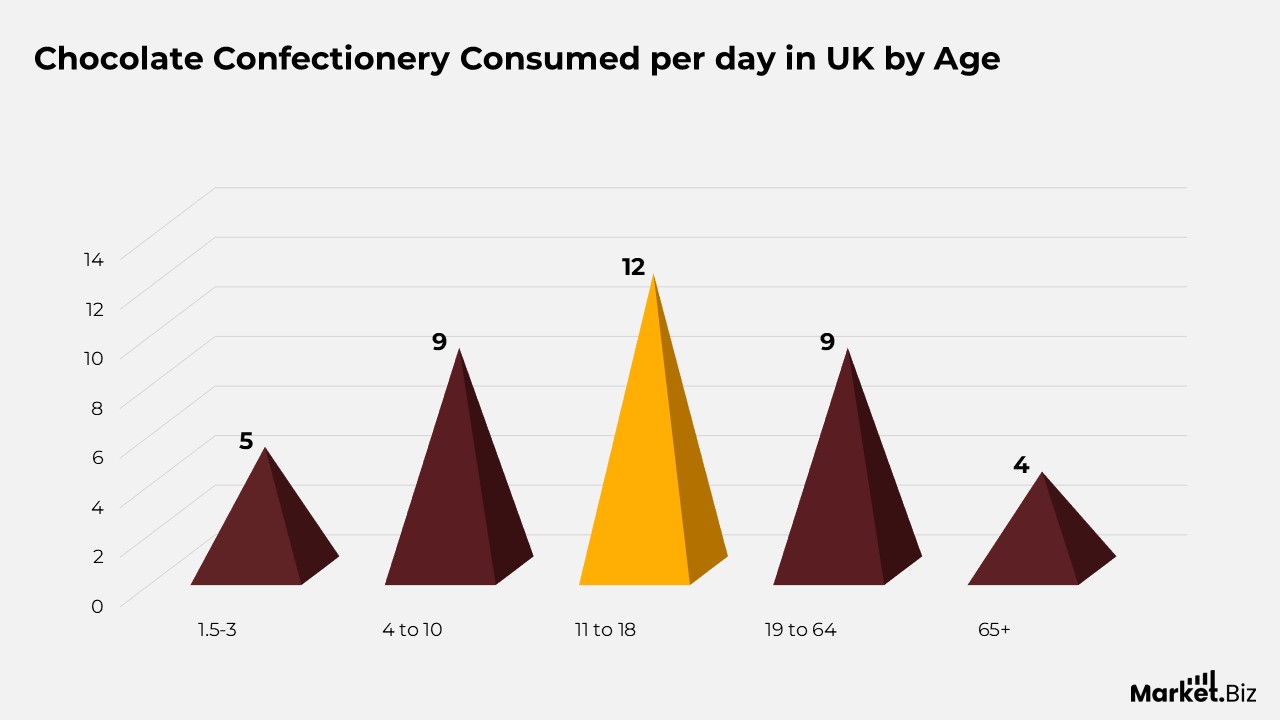
- Children between the ages of 1.5 and 3 years consumed around 5 grams of chocolate each day. In contrast, those aged 4 to 10 years had a higher intake, averaging 9 grams daily.
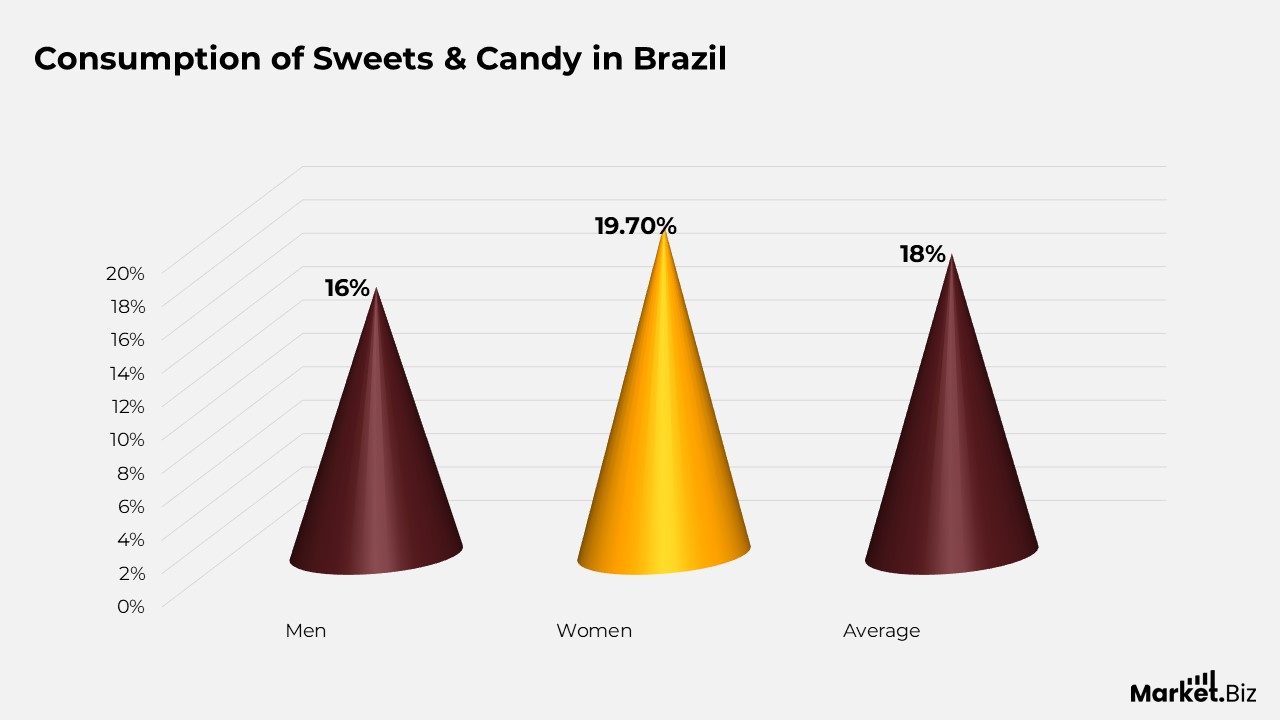
- In 2016, the percentage of the Brazilian population that consumed sweets and candies five or more days a week varied by gender.
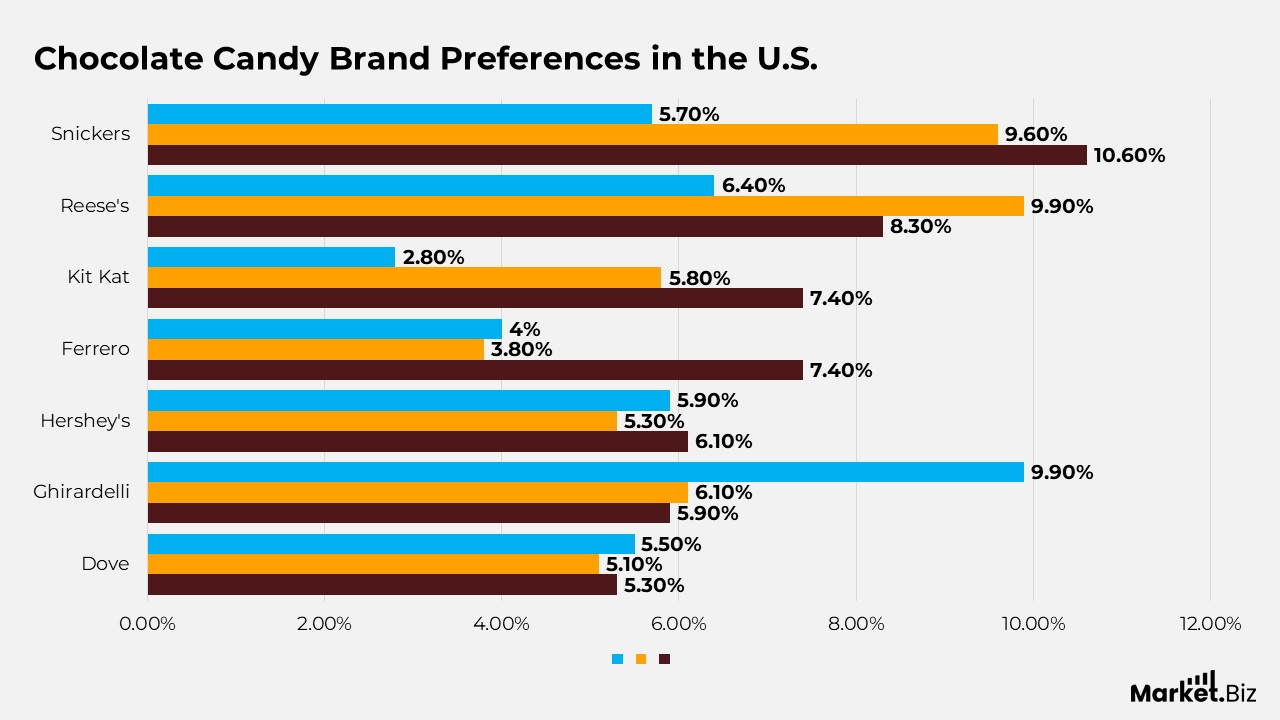
- Among consumers aged 18 to 34, Snickers emerged as the leading brand, favored by 10.6%, followed by Reese’s at 8.3%, and both Kit Kat and Ferrero Rocher, each at 7.4%.
General Chocolate Confectionery Statistics
- The global chocolate confectionery market experienced growth from $144.66 billion in 2024 to $153.73 billion in 2025.
- Increasing consumer interest in premium, indulgent, and distinctive flavors, which include organic and allergen-free alternatives.
- The online segment is anticipated to expand the most rapidly due to hectic lifestyles and the growth of e-commerce. Offline channels represented the largest market share in 2022.
- Europe currently leads the market, but the Asia Pacific region is growing swiftly due to increasing incomes and urbanization.
- There is an increasing emphasis on sustainable sourcing and ethical practices within the industry.
- Switzerland boasts the highest per capita chocolate consumption globally, at approximately 10 kg per person each year.
- In 2025, the projected revenue per person in India was estimated to be $1.12.
- The average volume per person in India is expected to reach 0.1 kg in 2025.
Chocolate Confectionery Market Statistics
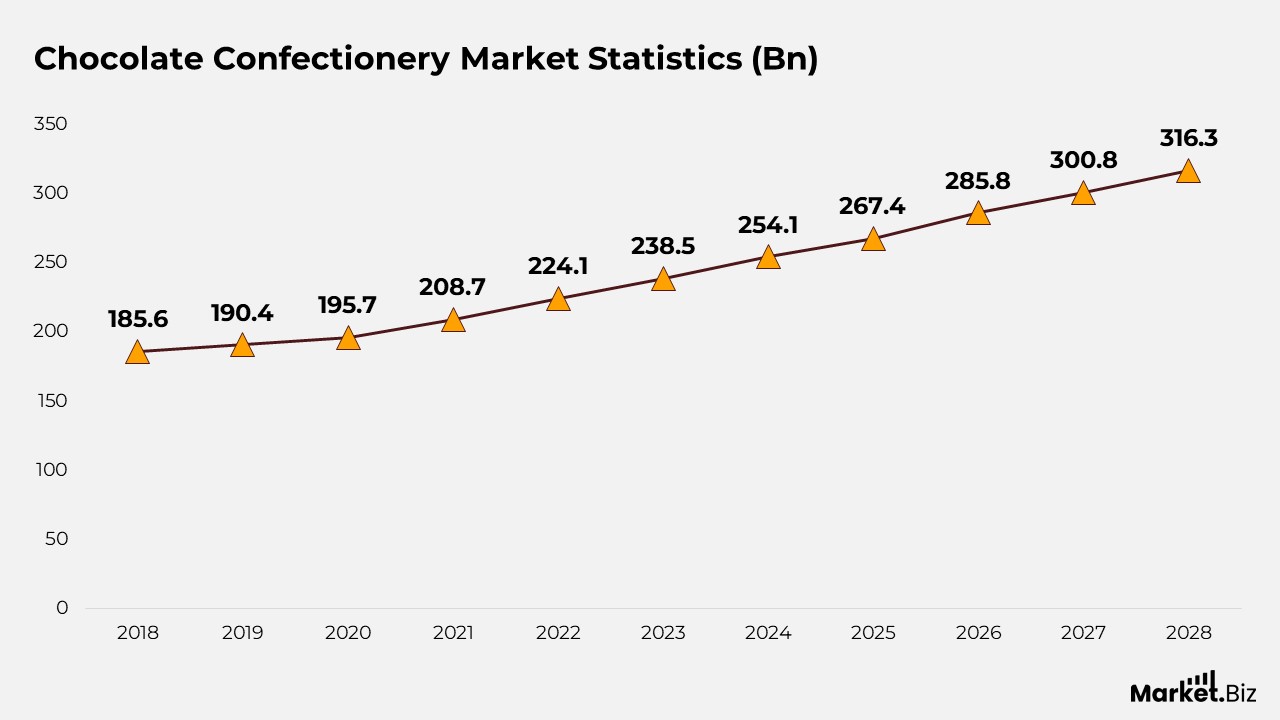
- In 2018, the market was assessed at around USD 185.6 billion, rising to USD 190.4 billion in 2019.
- The upward trend persisted in 2020, with the market size attaining USD 195.7 billion.
- By 2021, the chocolate confectionery market had further expanded to USD 208.7 billion, followed by an increase to USD 224.1 billion in 2022.
- This growth trajectory is expected to continue, with the market projected at USD 238.5 billion in 2023 and anticipated to reach USD 254.1 billion in 2024.
- The subsequent years indicate ongoing expansion, with the market size forecasted to increase to USD 267.4 billion in 2025 and USD 285.8 billion in 2026.
- By 2027, the market is expected to attain USD 300.8 billion, with projections for 2028 indicating a further rise to USD 316.3 billion.
Region Statistics of Chocolate Confectionery
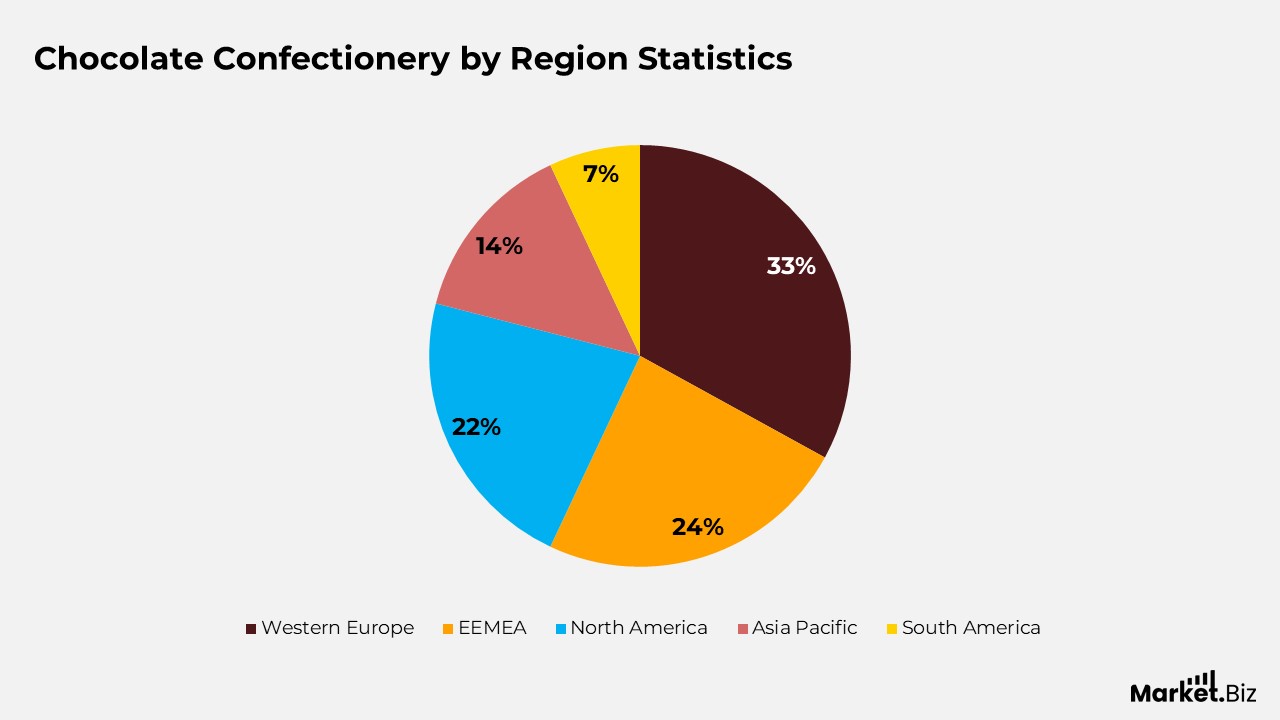
- In the financial year 2022/23, the global chocolate confectionery market was chiefly led by Western Europe, which commanded the largest market share at 33%.
- The EEMEA region (Eastern Europe, the Middle East, and Africa) came next with a notable share of 24%.
- North America represented 22% of the market, positioning it as the third-largest region for chocolate confectionery consumption.
- The Asia Pacific region accounted for a 14% share, indicating its increasing significance in the market. Meanwhile, South America made up the remaining 7%.
Chocolate Consumption in the US by Age
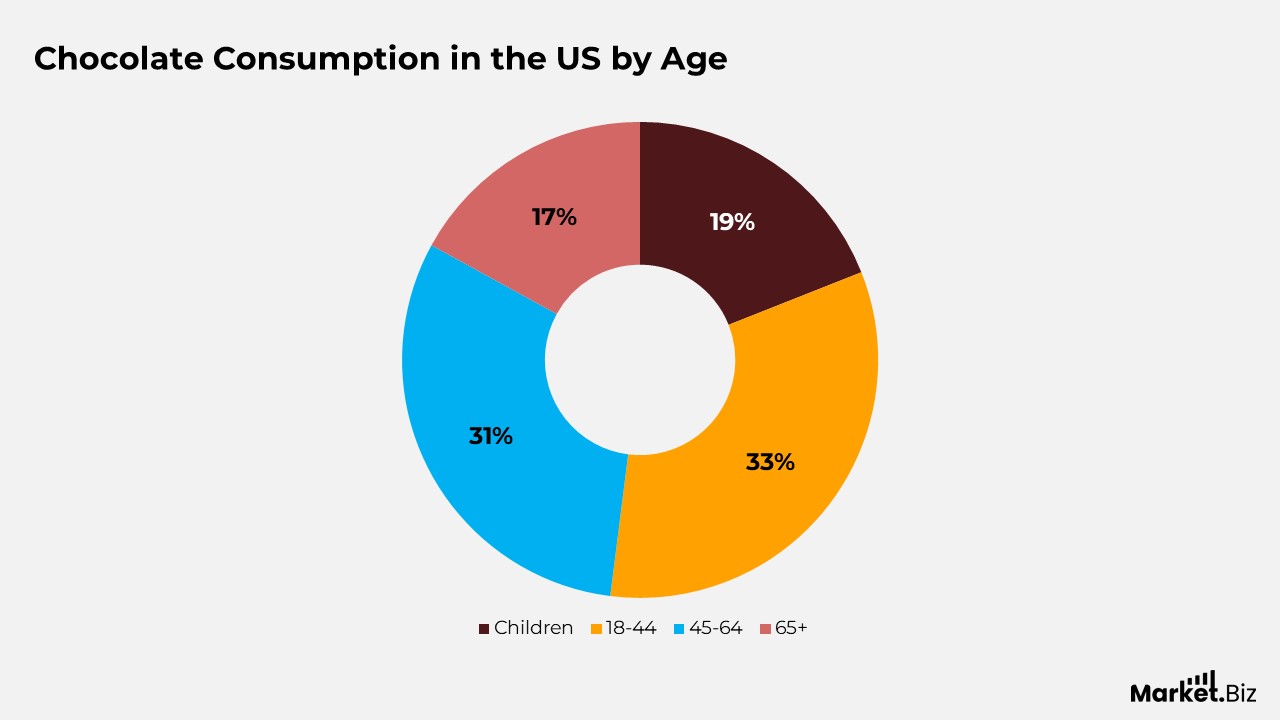
- In 2010, the distribution of chocolate consumption in the United States varied among different age demographics, with adults between the ages of 18 and 44 representing the largest segment at 33%.
- Adults aged 45 to 64 were not far behind, making up 31% of the chocolate consumption.
- Children accounted for 19% of chocolate consumers, demonstrating a significant attraction to chocolate among younger individuals.
- The smallest portion of the market was held by adults aged 65 and older, who contributed 17% to the overall chocolate consumption.
- This distribution underscores the widespread appeal of chocolate across various age groups, particularly highlighting the high consumption rates among adults aged 18 to 64.
Chocolate Confectionery UK Consumers
- Children between the ages of 1.5 and 3 years consumed around 5 grams of chocolate each day. In contrast, those aged 4 to 10 years had a higher intake, averaging 9 grams daily.
- Teenagers aged 11 to 18 years exhibited the highest chocolate consumption, with an average of 12 grams per day.
- Adults aged 19 to 64 years consumed approximately 9 grams daily, which is comparable to the consumption of younger children.
- The lowest chocolate consumption was recorded among adults aged 65 years and older, who averaged 4 grams per day.
UK Chocolate Consumption in the Festive Season
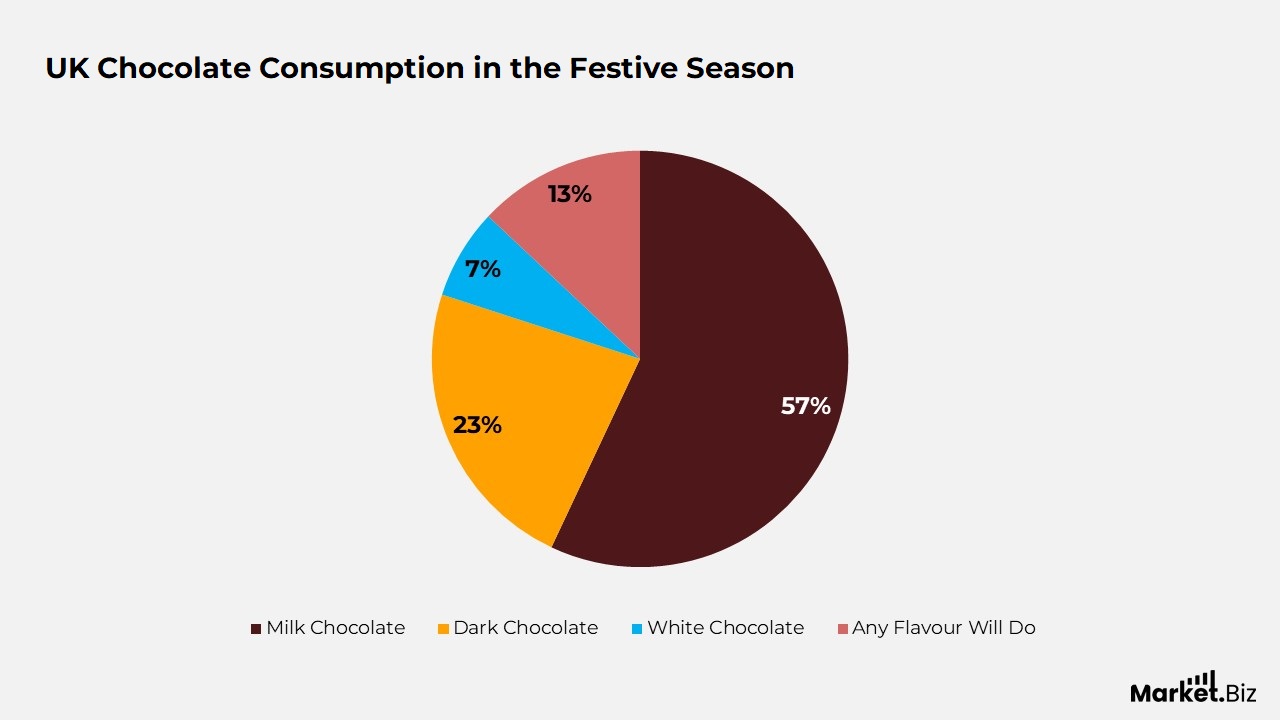
- During the festive season of 2013 in the United Kingdom, milk chocolate emerged as the favored option among chocolate consumers, with 57% of participants expressing a preference for this flavor.
- Dark chocolate was selected by 23% of those surveyed, whereas white chocolate attracted a smaller audience of 7%.
- Furthermore, 13% of respondents reported having no particular flavor preference and stated they would be pleased to enjoy any variety of chocolate.
Consumption of Sweets & Candy in Brazil
- In 2016, the percentage of the Brazilian population that consumed sweets and candies five or more days a week varied by gender.
- Among the participants, 16% of men reported regular consumption of confectionery, while a greater percentage of women, 19.7%, indicated similar habits.
- The worldwide average for both sexes stood at 18%, indicating a marginally greater tendency for regular candy consumption among women than among men in Brazil during that year.
Chocolate Candy Brand Preferences in the U.S.
- Among consumers aged 18 to 34, Snickers emerged as the leading brand, favored by 10.6%, followed by Reese’s at 8.3%, and both Kit Kat and Ferrero Rocher, each at 7.4%.
- Hershey’s and Ghirardelli were selected by 6.1% and 5.9%, respectively. Meanwhile, Dove and M&M each garnered 5.3% of preferences. Lindt and Godiva were favored by 4.7% and 3.6% of this younger demographic, respectively.
- For individuals aged 35 to 49, Reese’s gained a slight edge in popularity, with 9.9% favoring it, while Snickers closely followed at 9.6%.
- Ghirardelli was preferred by 6.1% in this age bracket, along with M&Ms at 6.3% and Godiva at 6.3%. Ferrero Rocher, Kit Kat, Dove, and Hershey’s were less favored, with percentages ranging from 5.8% to 5.1%, and Lindt was selected by 3.5%.
- Among consumers aged 50 and above, Ghirardelli and Godiva stood out as the top choices, each preferred by 9.9% and 7.3%, respectively. Reese’s also enjoyed popularity within this demographic, with a preference rate of 6.4%.
- Hershey’s, Lindt, and Dove each received support in the range of 5.5% to 5.9%, while M&Ms captured 5%. Snickers experienced a decline in preference among older consumers at 5.7%, and Kit Kat was selected by only 2.8%.
Recent Development
- Recent advancements in the chocolate confectionery sector in 2024 reflect an increasing consumer demand for “healthy indulgence” and “mindful indulgence.” This trend is fueled by individuals looking for products that are not only delicious but also regarded as beneficial for their physical and mental health.
- Companies have introduced chocolates that incorporate functional components, such as prebiotics, or that boast enhanced nutritional profiles, including added fiber or lower sugar content.
Chocolate Confectionery Future Prediction
- The worldwide chocolate confectionery market is anticipated to attain around USD 161.1 billion by the end of 2026.
- The global chocolate confectionery market is expected to expand considerably, with multiple reports predicting it will reach between approximately $259 billion and $312 billion by the year 2030.
Conclusion
The summary of chocolate confectionery statistics indicates that the market is anticipated to undergo substantial growth, supported by a favorable Compound Annual Growth Rate (CAGR) attributed to elements such as changing consumer preferences, innovation, and the shift towards online sales. Significant challenges encompass health-related issues and calorie considerations, which are fueling a demand for healthier and ethically sourced alternatives, including vegan, organic, and reduced-sugar chocolates.
FAQs
Snickers is generally regarded as the top-selling chocolate bar globally, with annual sales exceeding $380 million. However, it is essential to recognize that the leading chocolate brand may differ depending on the region or the criteria used. Other brands such as Cadbury and Milka also enjoy significant popularity worldwide, while Mars stands as the largest chocolate manufacturer overall.
An examination of the trends regarding the percentage of individuals consuming chocolate daily reveals a consistent and gradual increase, rising from 11% of adults in 2018 to the current rate of 14%. Among those who indulge in chocolate on a daily basis, milk chocolate is the preferred choice, enjoyed by 84% of this demographic.
Switzerland is recognized as the country with the highest chocolate consumption globally. On average, each citizen of Switzerland consumes approximately 10 kilograms of chocolate each year.