









Introduction
Luggage Statistics: The worldwide luggage market is projected to be valued at USD 41.04 billion in 2025 and is expected to grow to USD 56.78 billion by 2030, achieving a compound annual growth rate (CAGR) of 6.71%.
This market growth is largely due to the resurgence of both international and domestic travel in key tourism hotspots and business hubs. Luggage plays a vital role in travel, as it is specifically designed to carry personal items in a secure and efficient manner.
There are various types of luggage available, including soft-shell and hard-shell suitcases, backpacks, carry-ons, duffel bags, garment bags, and children’s trolley bags, each catering to distinct travel requirements. When choosing luggage, important features to consider include size and capacity, wheels and handles, weight, security features, durability, and organizational compartments.
Additionally, factors such as the frequency and type of travel, budget, and brand reputation significantly affect luggage selection. Ultimately, choosing the appropriate luggage enhances the travel experience by offering convenience and efficiency that align with individual preferences.
Editor’s Choice
- The worldwide market for luggage and bags achieved a size of USD 176.98 billion in 2023.
- It is expected to grow at an annual rate of 6.57% (CAGR 2025-2030).
- The global market for luggage and bags has shown fluctuating growth from 2018 to 2029, with a compound annual growth rate (CAGR) of 4.32%.
- The United States led the market with a remarkable revenue figure of USD 28,729.39 million, closely followed by China, which accounted for USD 19,508.33 million.
- Projections for 2023 and 2024 suggest ongoing growth in this specialized market segment, with anticipated values of USD 7.5 billion and USD 8.8 billion, respectively.
- In 2022, China dominated the global market for travel handbags and goods, achieving a remarkable trade value of USD 35,770 million, far surpassing other nations.
- The United States emerged as the foremost importer, acquiring goods valued at USD 14,718.5 million, underscoring its considerable consumer market for these items.
General Luggage Statistics
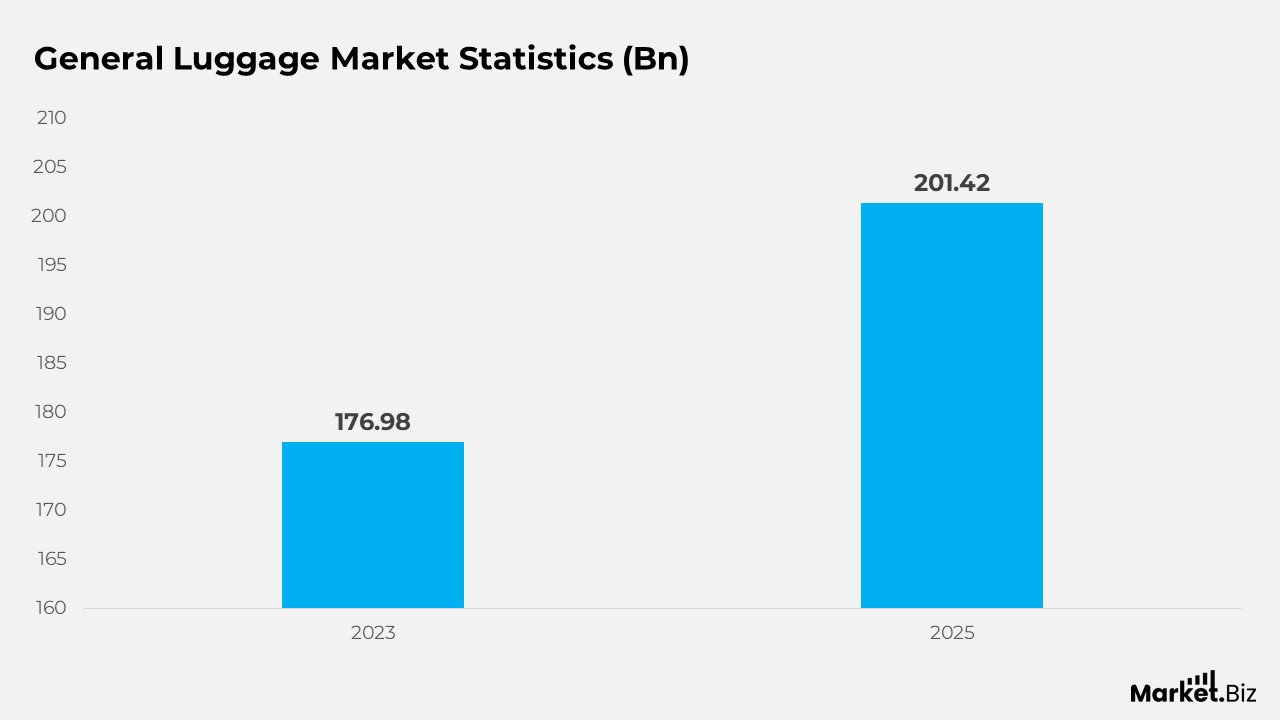
- The worldwide market for luggage and bags achieved a size of USD 176.98 billion in 2023.
- The anticipated market value for anti-theft luggage is expected to reach USD 8.8 billion by 2024.
- Samsonite, a prominent brand, reported sales of USD 1,250 million in 2008, which fell to USD 1,029 million in 2009 amid the economic downturn, before recovering to USD 1,215 million in 2010.
- In 2025, the global revenue in the Luggage & Bags sector is projected to be US$201.42 billion.
- It is expected to grow at an annual rate of 6.57% (CAGR 2025-2030).
- Among all nations, the United States is forecasted to generate the highest revenue, reaching US$30 billion in 2025.
- When accounting for population size, the revenue per person in 2025 is estimated to be US$25.78.
- Furthermore, by 2025, 61% of the sales in the Luggage & Bags market are expected to come from Non-Luxury items.
- Despite the global economic challenges, the demand for luxury luggage and bags in countries such as France and Italy continues to be robust, owing to their esteemed reputation for high-quality craftsmanship and trendsetting designs.
Luggage Market Size Statistics
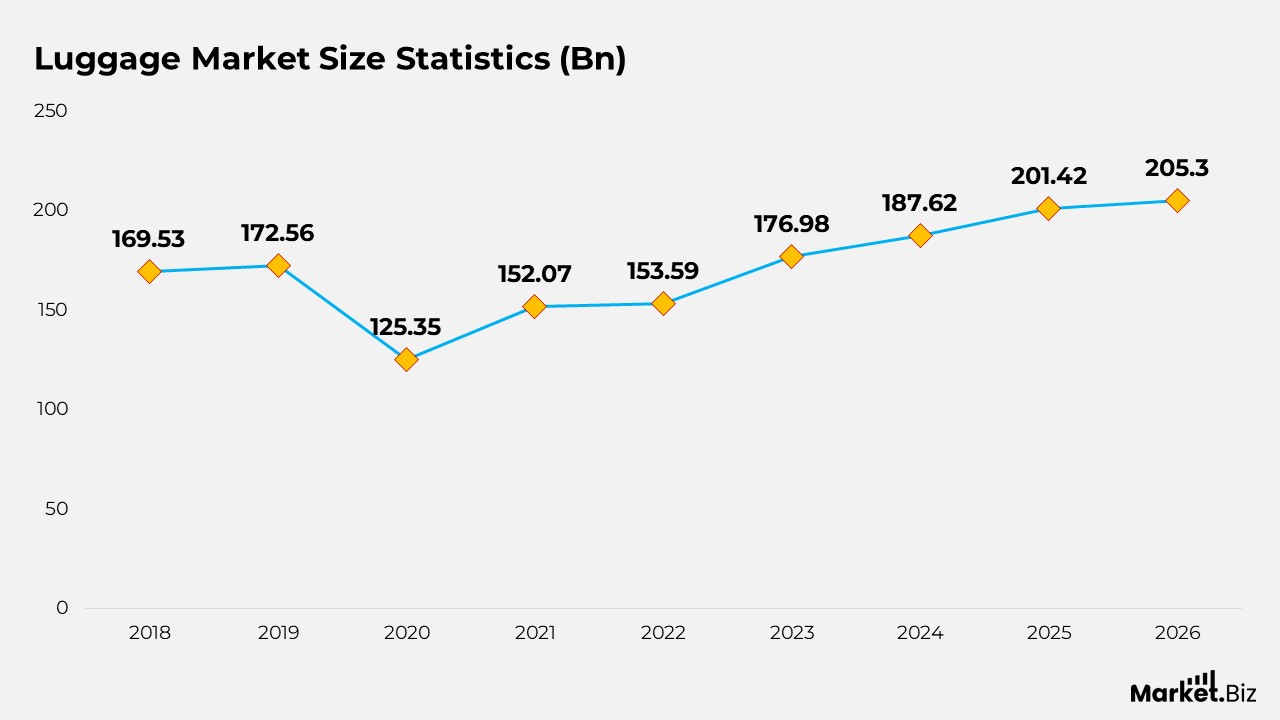
- The global market for luggage and bags has shown fluctuating growth from 2018 to 2029, with a compound annual growth rate (CAGR) of 4.32%.
- In 2018, the market was assessed at USD 169.53 billion, which saw a modest rise to USD 172.56 billion in 2019.
- A notable downturn occurred in 2020, when the market size fell to USD 125.35 billion, likely influenced by external factors impacting market conditions.
- Recovery commenced in 2021, with the market size increasing to USD 152.07 billion and further rising to USD 153.59 billion in 2022.
- The positive trend persisted in the following years, reaching USD 176.98 billion in 2023, USD 187.62 billion in 2024, and USD 201.42 billion in 2025.
- The market is anticipated to continue its growth trajectory in the coming years, with projections of USD 205.30 billion in 2026, USD 214.16 billion in 2027, USD 222.97 billion in 2028, and ultimately reaching USD 231.79 billion by 2029.
Luggage Market Size by Sales Statistics
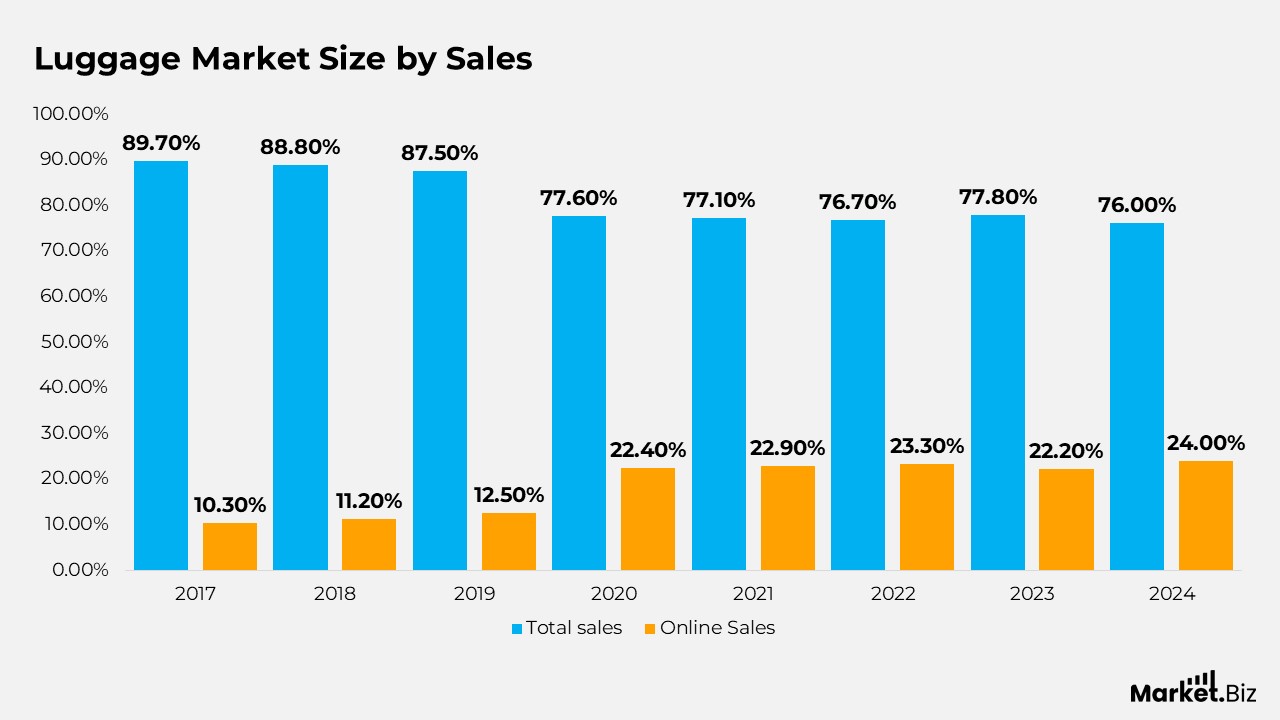
- The dynamics of market share between offline and online sales channels in the global luggage and bags market from 2017 to 2022 reveal a notable transition towards digital commerce.
- In 2017, the offline market held a commanding lead with 89.7% of total sales, while online channels accounted for a mere 10.3%.
- This trend of offline predominance persisted into 2018 and 2019, with offline sales representing 88.8% and 87.5%, respectively, as online sales gradually increased to 11.2% and 12.5%.
- A significant transformation took place in 2020, when the offline market share plummeted to 77.6%, while online sales experienced a remarkable rise to 22.4%.
- This transition can be linked to external factors that likely impacted consumer behavior and retail logistics.
- The inclination towards online shopping continued to gain momentum into 2021 and 2022, with online market shares advancing to 22.9% and 23.3%, while offline shares adjusted to 77.1% and 76.7%, respectively.
- In 2023, there was a minor rebound in offline sales to 77.8%, accompanied by a decrease in online sales to 22.2%, indicating a momentary stabilization.
- Nevertheless, the trend towards online sales persisted from 2024 onwards, with online sales projected to reach 24.0% that year and anticipated to grow to 26.2% by 2025 and 26.7% by 2026.
- In contrast, offline sales were expected to decline to 76.0% in 2024, further dropping to 73.8% in 2025 and ultimately reaching 73.3% by 2026.
Country-wise Luggage Market Size Statistics
- In 2023, the revenue generated from the global luggage and bags market exhibited notable fluctuations across various countries.
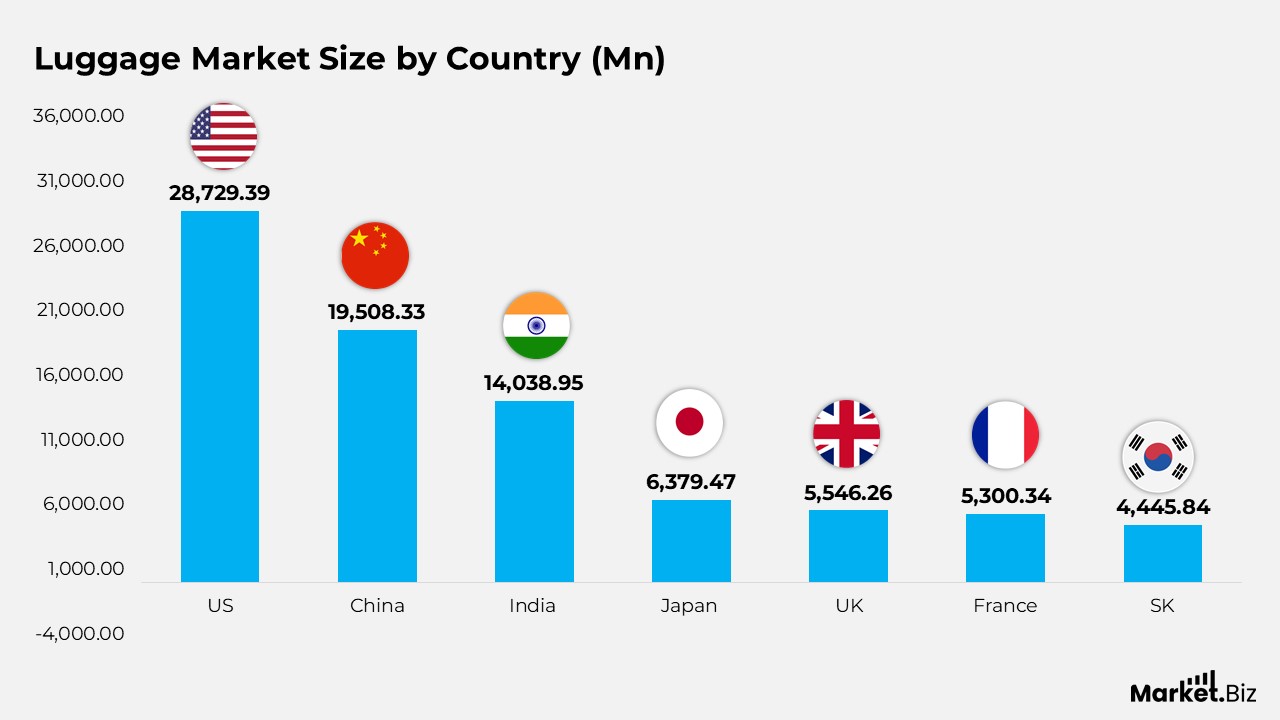
- The United States led the market with a remarkable revenue figure of USD 28,729.39 million, closely followed by China, which accounted for USD 19,508.33 million.
- India also held a significant position, with its market size reaching USD 14,038.95 million, indicating strong demand in the sector.
- Japan and the United Kingdom reported considerable revenue figures, amounting to USD 6,379.47 million and USD 5,546.26 million, respectively.
- The South Korean and French markets were similarly strong, with revenues of USD 4,445.84 million and USD 5,300.34 million, respectively.
- Russia, Germany, and Nigeria each made significant contributions to the market, with revenues approaching or exceeding USD 4,000 million.
- Additional noteworthy contributions came from Indonesia, Italy, Brazil, and Mexico, each making revenues ranging from USD 3,000 million to just above USD 4,000 million.
- Other countries such as Canada, Hong Kong, Iran, Spain, and Egypt also demonstrated strong market presences, each adding revenues between USD 2,000 million and USD 3,500 million.
- The market landscape was further enriched by contributions from Pakistan, Bangladesh, Ethiopia, the Philippines, Vietnam, and Turkey, each reporting revenues below USD 2,500 million but still reflecting significant engagement in the global market.
Luggage Sales Statistics
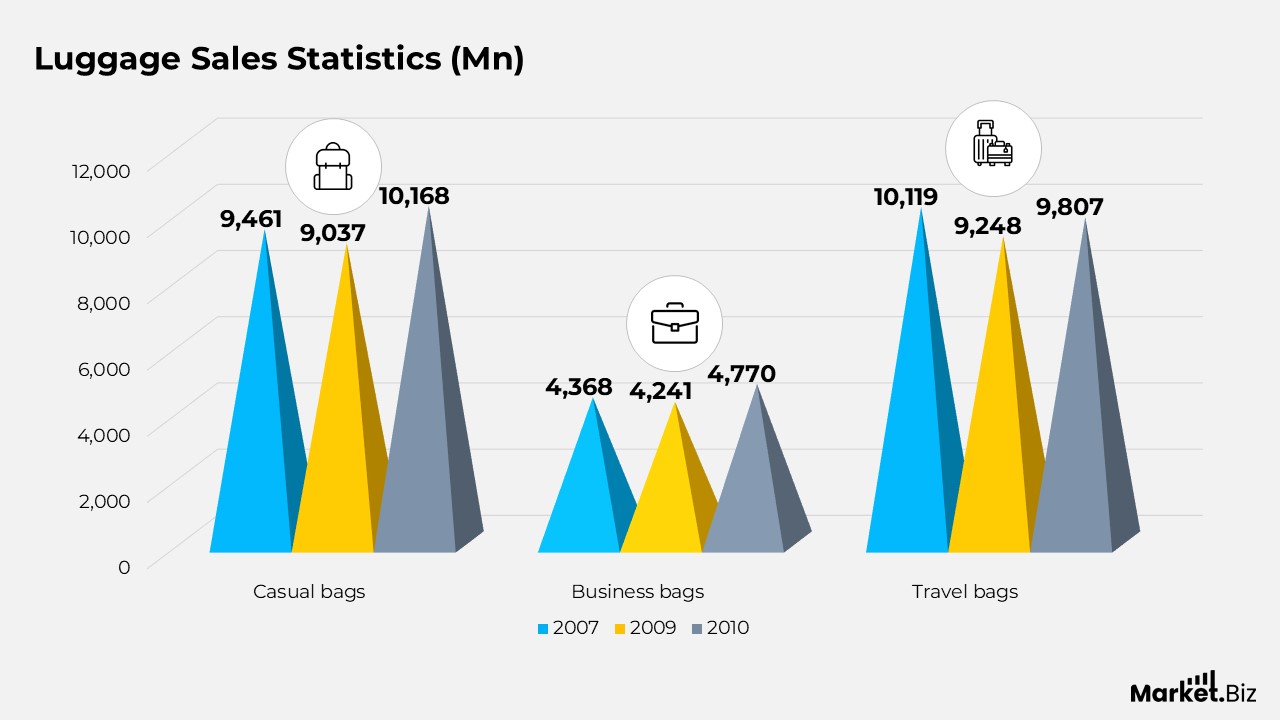
- Between 2006 and 2015, the global luggage market’s retail sales value saw significant growth across three main categories: casual bags, travel bags, and business bags.
- In 2006, the recorded sales values were $8,703 million for casual bags, $9,127 million for travel bags, and $4,158 million for business bags. Each segment demonstrated consistent growth over the years.
- By 2007, sales for casual bags increased to $9,461 million, business bags to $4,368 million, and travel bags to $10,119 million.
- This upward trend continued through 2008 but experienced a slight decline in 2009 due to the global economic downturn, with casual bags dropping to $9,037 million, travel bags to $9,248 million, and business bags to $4,241 million.
- Nevertheless, the market recovered in 2010, with casual bags rising to $10,168 million, while travel bags saw a minor decrease to $9,807 million, and business bags increased to $4,770 million.
- From 2011 onward, a consistent rise was noted across all categories. By 2015, the casual bag segment achieved a sales value of $12,721 million, travel bags reached a peak of $12,887 million, and business bags totaled $6,014 million.
Luggage Companies Sales Statistics
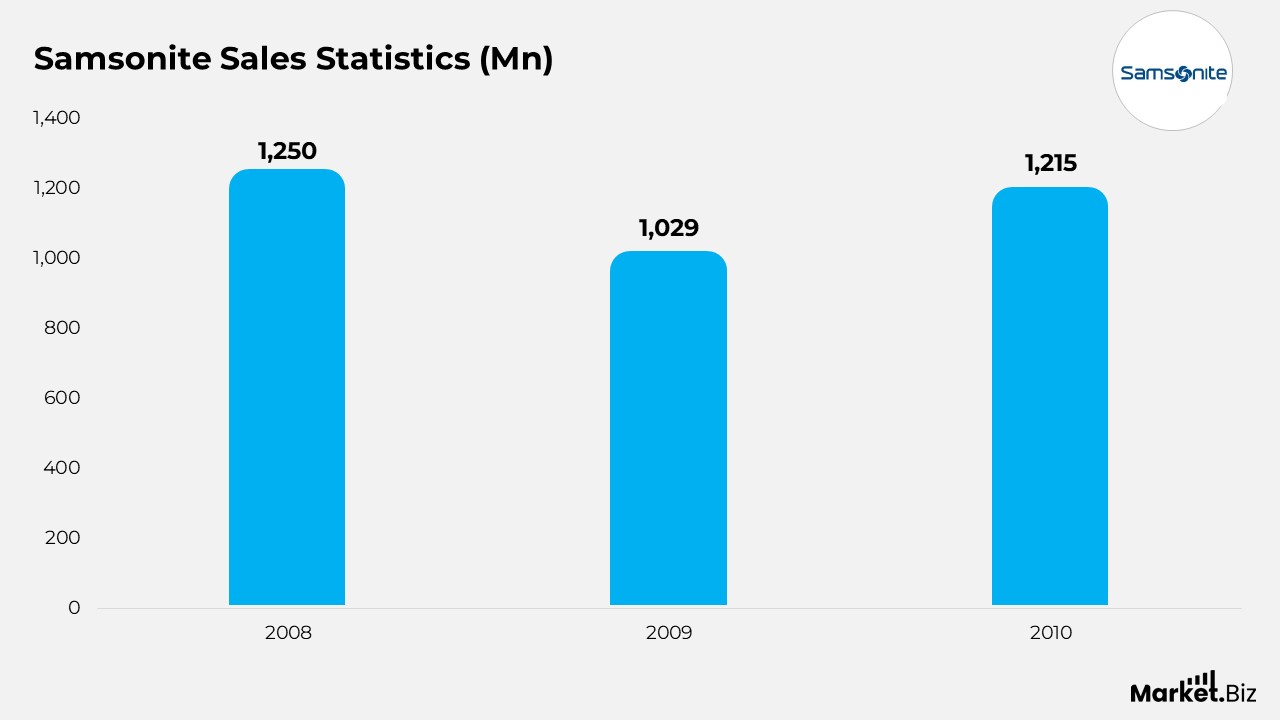
- Between 2008 and 2010, the global sales data for selected luggage companies indicated diverse performance across the sector.
- Samsonite, a prominent brand, reported sales of USD 1,250 million in 2008, which fell to USD 1,029 million in 2009 due to the economic downturn, before recovering to USD 1,215 million in 2010.
- Dapai, on the other hand, faced a decline in sales during the same timeframe, beginning at USD 318 million in 2008, decreasing to USD 296 million in 2009, and further declining to USD 270 million in 2010.
- Conversely, VIP Industries exhibited a different pattern, with sales rising each year from USD 122 million in 2008 to USD 138 million in 2009, ultimately reaching USD 169 million in 2010.
- In a similar vein, Powerland also demonstrated notable growth, starting at USD 78 million in 2008, increasing to USD 117 million in 2009, and further advancing to USD 153 million in 2010.
Anti-Theft Luggage Market Statistics
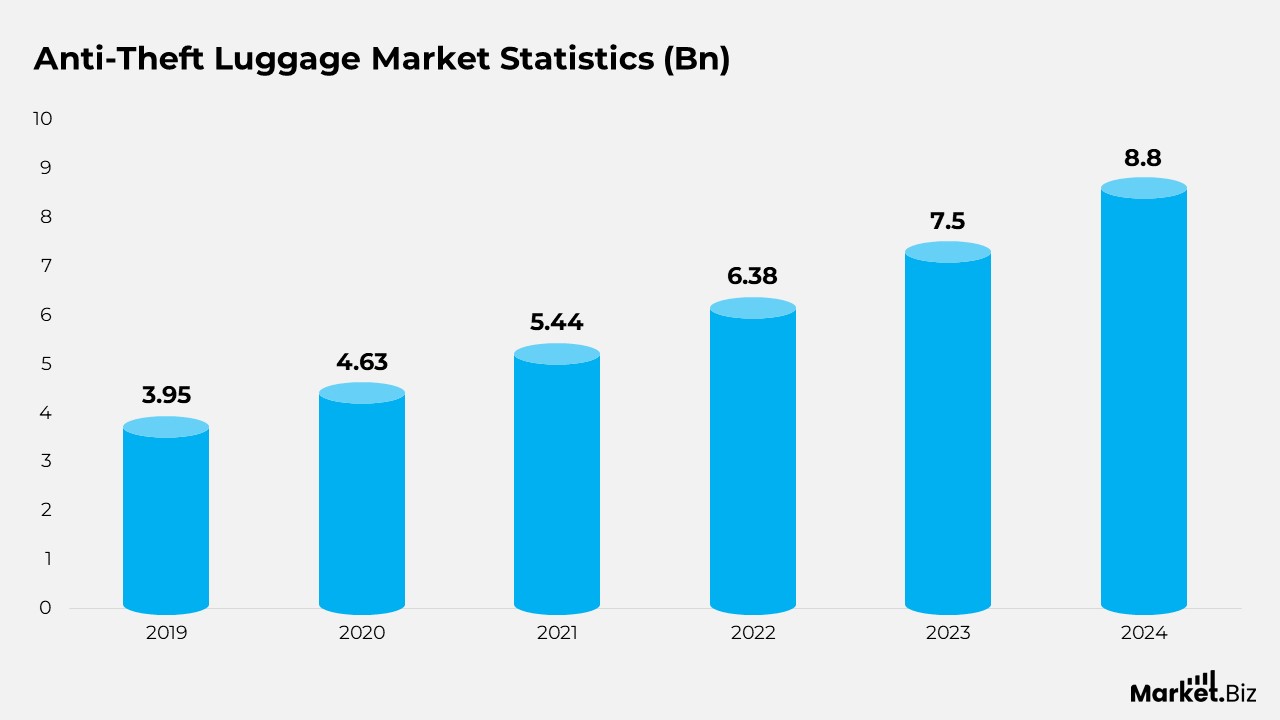
- The market value of anti-theft luggage has consistently increased from 2016 to 2024, indicating a rising consumer interest in protecting their belongings during travel.
- Starting in 2016, the market was valued at USD 2.44 billion and experienced a steady rise to USD 2.86 billion in 2017.
- This upward trend persisted, with the market reaching USD 3.36 billion in 2018, and further growth was observed as the value climbed to USD 3.95 billion in 2019.
- The market’s growth became more significant from 2020 onwards, when the market value surged to USD 4.63 billion and further accelerated to USD 5.44 billion in 2021.
- In 2022, there was a notable increase to USD 6.38 billion, indicating strong consumer demand for luggage that provides enhanced security features.
- Projections for 2023 and 2024 suggest ongoing growth in this specialized market segment, with anticipated values of USD 7.5 billion and USD 8.8 billion, respectively.
Luggage, Suitcases & Briefcases Statistics
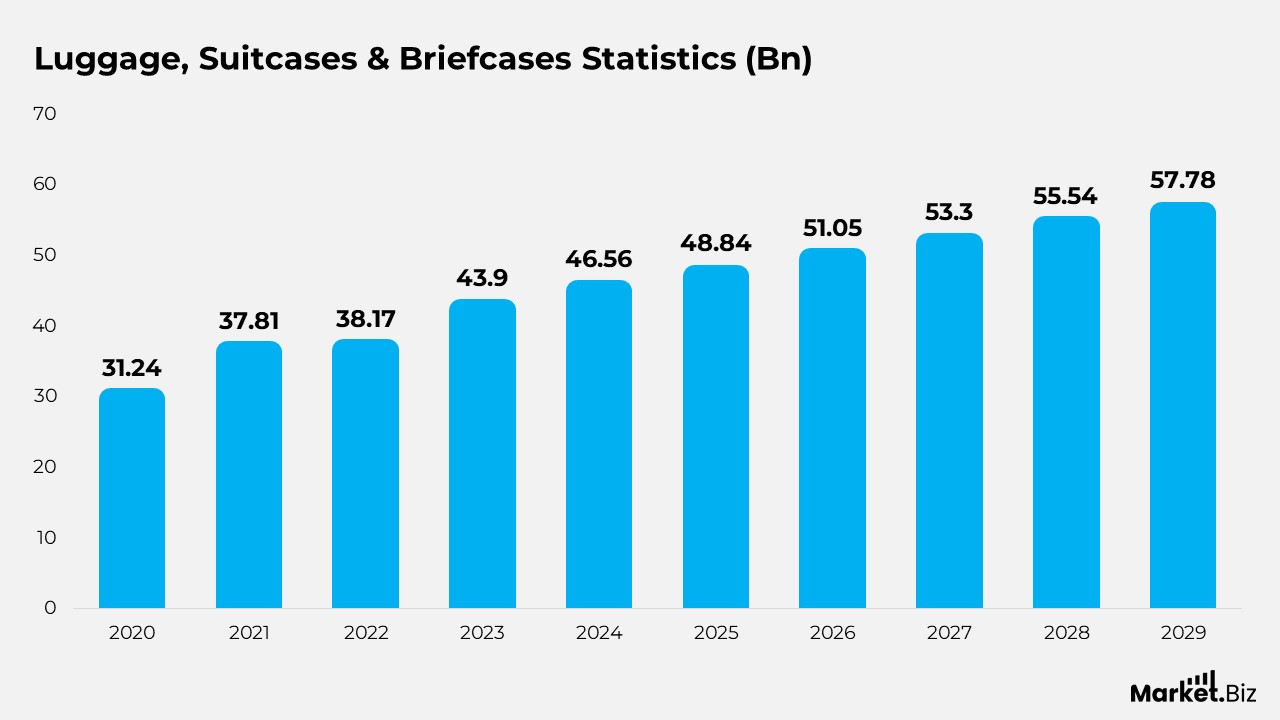
- The worldwide market for suitcases and briefcases has shown diverse growth patterns from 2018 to 2029.
- In 2018, the market was valued at USD 42.39 billion, which saw a modest rise to USD 43.05 billion in 2019.
- However, a notable decline occurred in 2020, when the market size plummeted to USD 31.24 billion, likely due to global economic influences and shifts in travel habits.
- A gradual recovery took place in 2021, with the market size increasing to USD 37.81 billion, followed by a slight uptick to USD 38.17 billion in 2022.
- The market continued its recovery, reaching USD 43.90 billion in 2023. The growth trend became more evident in the following years, with market sizes of USD 46.56 billion in 2024, USD 48.84 billion in 2025, and surpassing the USD 50 billion threshold to USD 51.05 billion in 2026.
- The upward trend maintained its momentum, resulting in market sizes of USD 53.30 billion in 2027, USD 55.54 billion in 2028, and concluding the period at USD 57.78 billion in 2029.
Export of Luggage Products by Countries
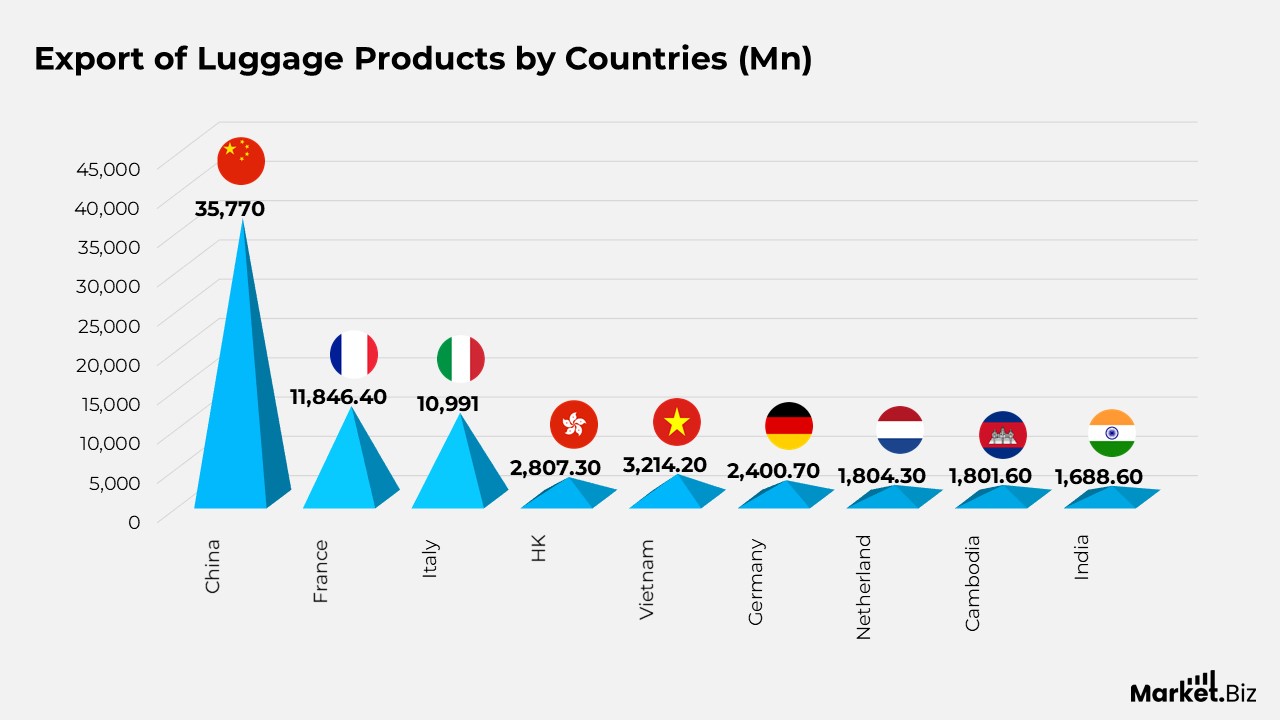
- In 2022, China dominated the global market for travel handbags and goods, achieving a remarkable trade value of USD 35,770 million, far surpassing other nations.
- France emerged as a significant exporter with a trade value of USD 11,846.4 million, while Italy closely followed with USD 10,991 million, highlighting Europe’s robust position in the luxury travel goods sector.
- Hong Kong, SAR of China, also contributed significantly with exports amounting to USD 2,807.3 million.
- Vietnam and Germany were also important participants in the market, with export values of USD 3,214.2 million and USD 2,400.7 million, respectively, reflecting their increasing influence in the global travel goods industry.
- The Netherlands, Cambodia, India, and Singapore completed the list of top exporters, with trade values of USD 1,804.3 million, USD 1,801.6 million, USD 1,688.6 million, and USD 1,622.5 million, respectively.
Imports of Luggage Products by Countries
- In 2022, the global travel handbags and goods market was notably influenced by key importing nations.
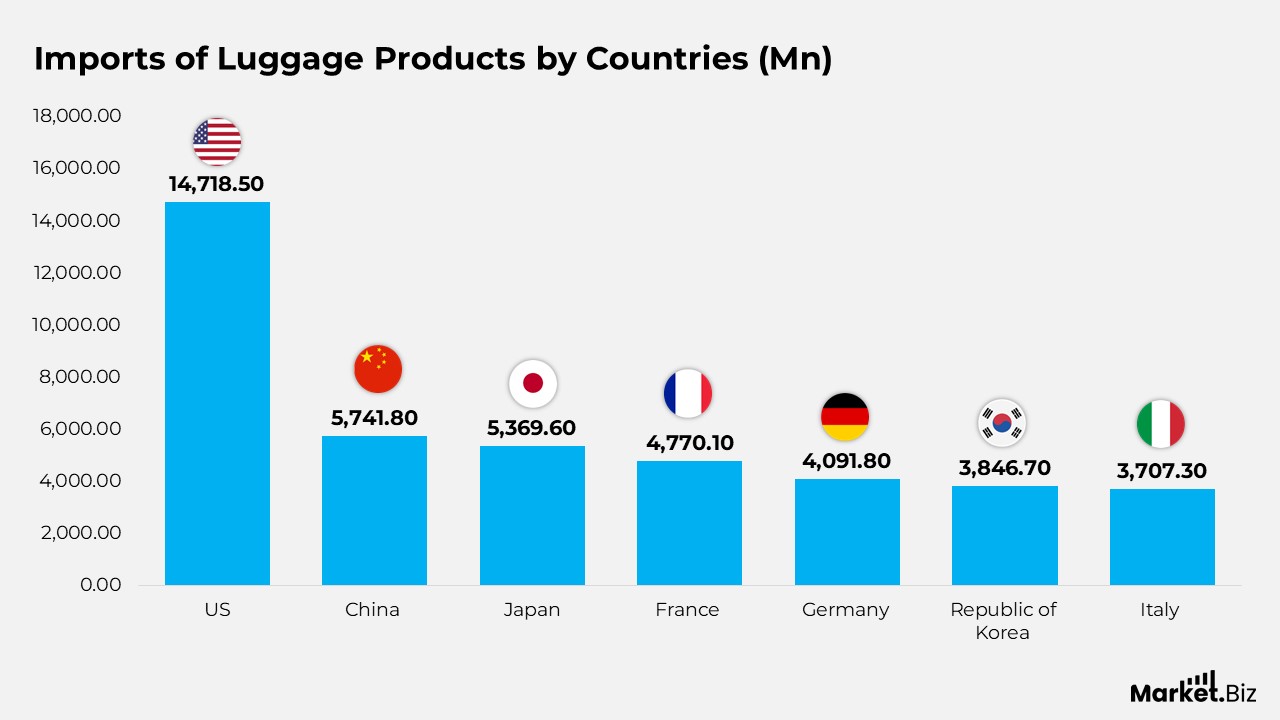
- The United States emerged as the foremost importer, acquiring goods valued at USD 14,718.5 million, underscoring its considerable consumer market for these items.
- China also played a crucial role, with imports amounting to USD 5,741.8 million, closely followed by Japan, which imported goods worth USD 5,369.6 million.
- France and Germany were significant importers within the European market, with import values of USD 4,770.1 million and USD 4,091.8 million, respectively.
- Italy and the Republic of Korea further boosted the demand globally, with imports of USD 3,707.3 million and USD 3,846.7 million, respectively, reflecting strong market activity in both nations.
- The United Kingdom and Hong Kong, along with the SAR of China, also demonstrated robust import figures, with USD 3,034.3 million and USD 3,003.7 million, respectively.
- Singapore completed the list with imports adding USD 2,311.4 million, highlighting its position as a key hub in the Southeast Asian region for travel and luxury-related products.
Recent Developments
- In 2023, Samsonite, recognized as the largest luggage manufacturer globally, purchased Tumi, a high-end travel and business luggage brand, for $1.8 billion.
- In early 2024, Away, a luggage brand that sells directly to consumers, acquired Baboon to the Moon, a startup celebrated for its vibrant and sturdy adventure bags, for $40 million.
- In April 2025, Samsonite partnered with Indian fashion designer Manish Malhotra to launch a luxury luggage collection. This collaboration merges high-quality travel gear with elements of fashion design.
- By the year 2025, it is anticipated that 35% of high-end luggage brands will integrate biometric technology, including fingerprint recognition for locks, thereby improving security and user convenience.
- The demand for environmentally friendly materials is on the rise. By 2026, it is expected that 40% of newly launched luggage products will utilize recycled or sustainable materials, indicating a transition towards eco-conscious travel gear.
Conclusion
Luggage Statistics: The luggage market has shown significant growth, fueled by a rise in travel, advancements in technology, and changing consumer preferences. This growth is bolstered by innovations in materials, particularly a trend towards lightweight and durable options such as polycarbonate.
Features of smart luggage, including GPS tracking and USB charging capabilities, are becoming commonplace, addressing the needs of contemporary travelers for security and connectivity. When making purchasing decisions, consumers place considerable importance on factors like size, weight, durability, and price, while there is an increasing interest in stylish and eco-friendly products.
The market also encounters challenges such as luggage mishandling, which has led to investments in enhanced logistics and tracking technologies.
FAQs
No, American Tourister is not a brand under VIP. It is a luggage brand that belongs to Samsonite. VIP Industries is an independent Indian company that owns brands such as Skybags, Carlton, Caprese, and Aristocrat. Although VIP Industries plays a significant role in the Indian luggage market, particularly in the mass segment, it does not possess the American Tourister brand.
American Airlines Group Inc. carried more luggage than any other major airline last December. The Fort Worth-based airline lost or damaged 60,032 bags out of 9.2 million handled, resulting in a rate of 6.5 mishandled bags for every 1,000.
Toiletries can significantly increase the weight of your luggage, adding unnecessary heaviness. Depending on your destination, it is likely that standard items such as shower gel, shampoo, and conditioner will be available for purchase upon arrival. Therefore, consider buying toiletries once you reach your destination.

