








Introduction
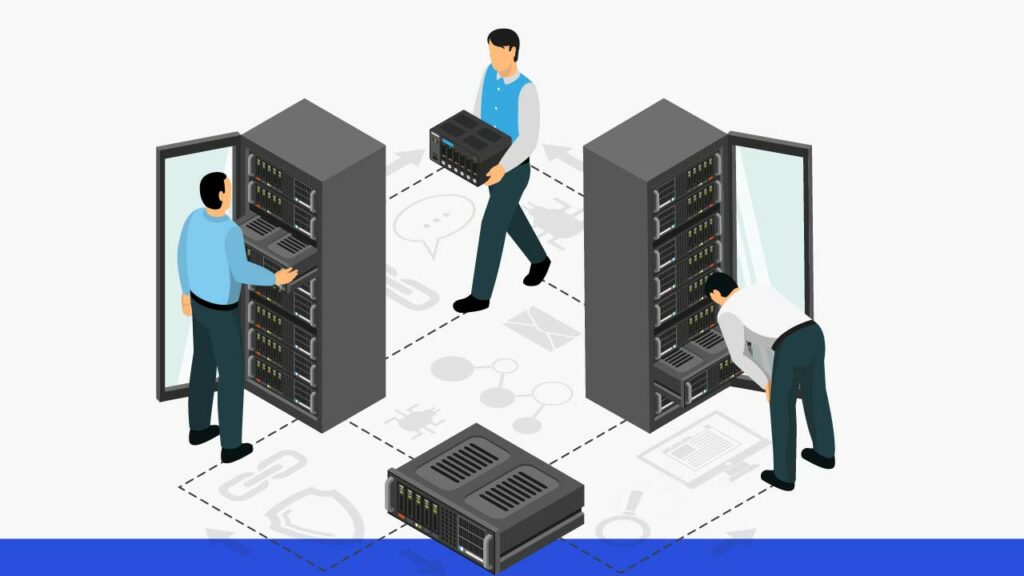
Thin Client Statistics: Thin clients are streamlined computing devices that depend on centralised servers for both processing and storage, enabling users to access applications and data from a distant location.
Functioning on a client-server architecture, they employ protocols like Remote Desktop Protocol for connectivity. With minimal hardware requirements and optimised operating systems, thin clients provide cost efficiency, centralised management, improved security, and scalability.
This renders them especially appropriate for corporate settings, educational institutions, and remote work situations. Nevertheless, they may encounter performance constraints, reliance on stable network connectivity, and restricted offline functionalities. Organisations must take these aspects into account when deploying these solutions.
Editor’s Choice
- The global revenue for the thin client market reached $1.43 billion in 2023.
- According to the most recent data, the retail sector commands the largest market share at 30%, indicating a strong utilisation of thin clients within this industry.
- By 2020, the market’s sales were projected to reach an impressive total of 62 billion Yen.
- The HP t630 Thin Client is prepared with an extensive set of specifications designed to provide both performance and flexibility.
- A significant portion of respondents, 75%, indicated that a decline in productivity was the most prevalent outcome.
- The analysis of yearly CO2 emissions from PCs and thin clients in a scenario with 5,000 users reveals notable disparities in their environmental effects.
General Thin Client Statistics
- The phrase “thin client” was introduced in 1993, signifying a transition towards more efficient computing endpoints that delegated intensive tasks to centralised servers.
- The global revenue for the thin client industry reached $1.43 billion in 2023.
- By 2032, the market is projected to attain a total valuation of $1.70 billion, with mobile units accounting for $0.53 billion, standalone units accounting for $0.68 billion, and units equipped with monitors $0.49 billion.
- The worldwide thin client market is categorised by application, showcasing diverse market shares across various sectors.
- As per the most recent data, the retail sector commands the largest share at 30%, indicating a notable uptake of thin clients in this domain.
- In 2015, the thin-client virtual desktop infrastructure (VDI) market in Japan recorded sales amounting to 42.5 billion Japanese Yen.
- When evaluating student attitudes towards the utilisation of thin clients, survey results indicate that challenges related to saving and retrieving work are relatively rare.
- Specifically, approximately 11% of students encountered issues in managing revisions to their computer work while utilising thin clients.
- A research study conducted in the UK by Winmark, drawing inspiration from the Pepsi Challenge, surveyed 110 users about their favourites between thin and fat client computing.
- The results revealed that 72% of respondents felt that thin clients booted up more quickly than desktop PCs, while 23.6% favored the boot-up speed of desktop PCs, and 4.5% remained undecided.
Thin Client Market Size Statistics
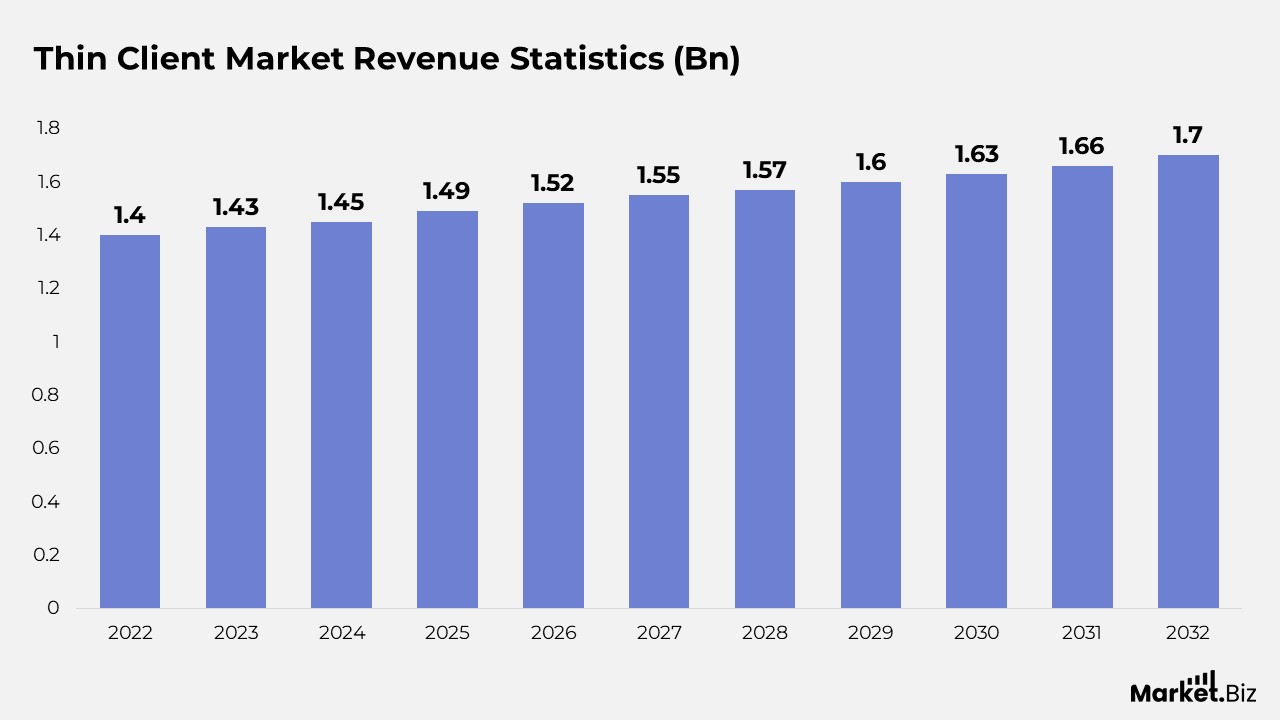
- In 2022, the market generated a revenue of $1.40 billion.
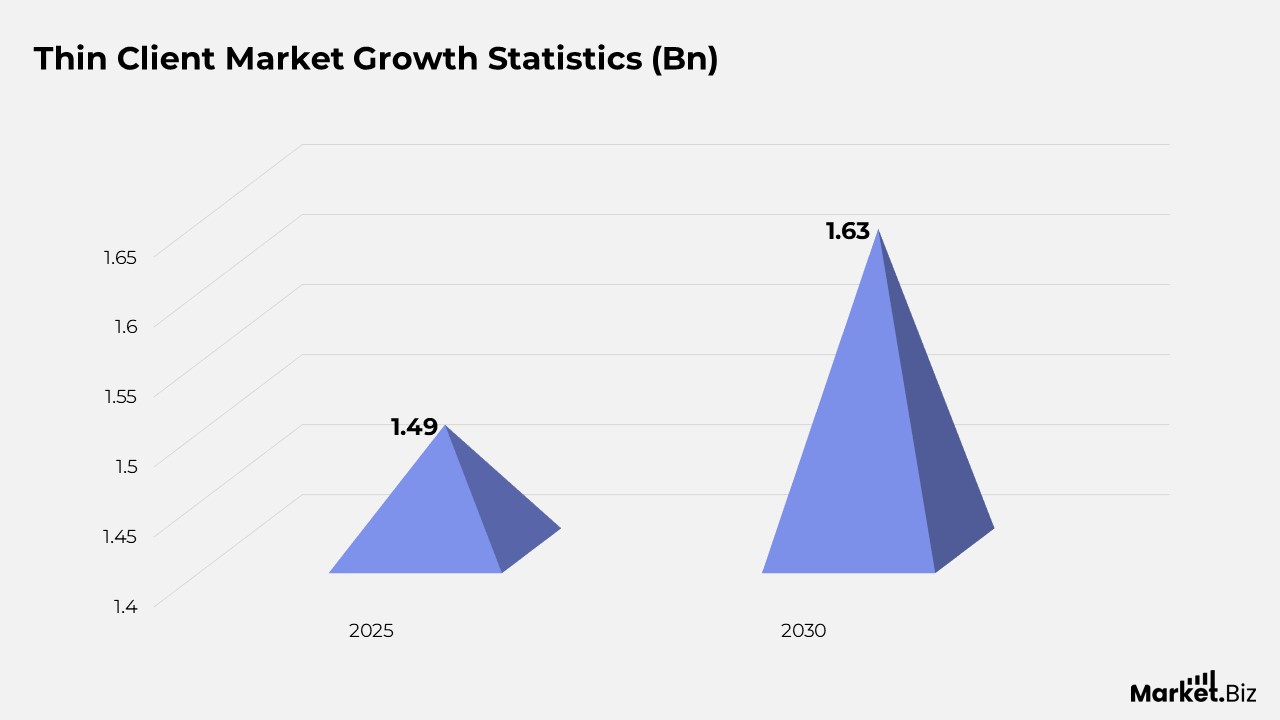
- This amount is projected to experience a slight increase to $1.43 billion in 2023. This will be followed by a gradual rise to $1.45 billion in 2024.
- By 2025, revenue was expected to grow to $1.49 billion.
- The upward trend continues, with revenues anticipated to reach $1.52 billion in 2026, $1.55 billion in 2027, and $1.57 billion in 2028.
- The market is forecasted to achieve $1.60 billion by 2029, with further growth anticipated in the following years.
- Revenues are expected to be $1.63 billion in 2030, $1.66 billion in 2031, and to reach $1.70 billion by 2032.
Thin Client Market by Application Statistics
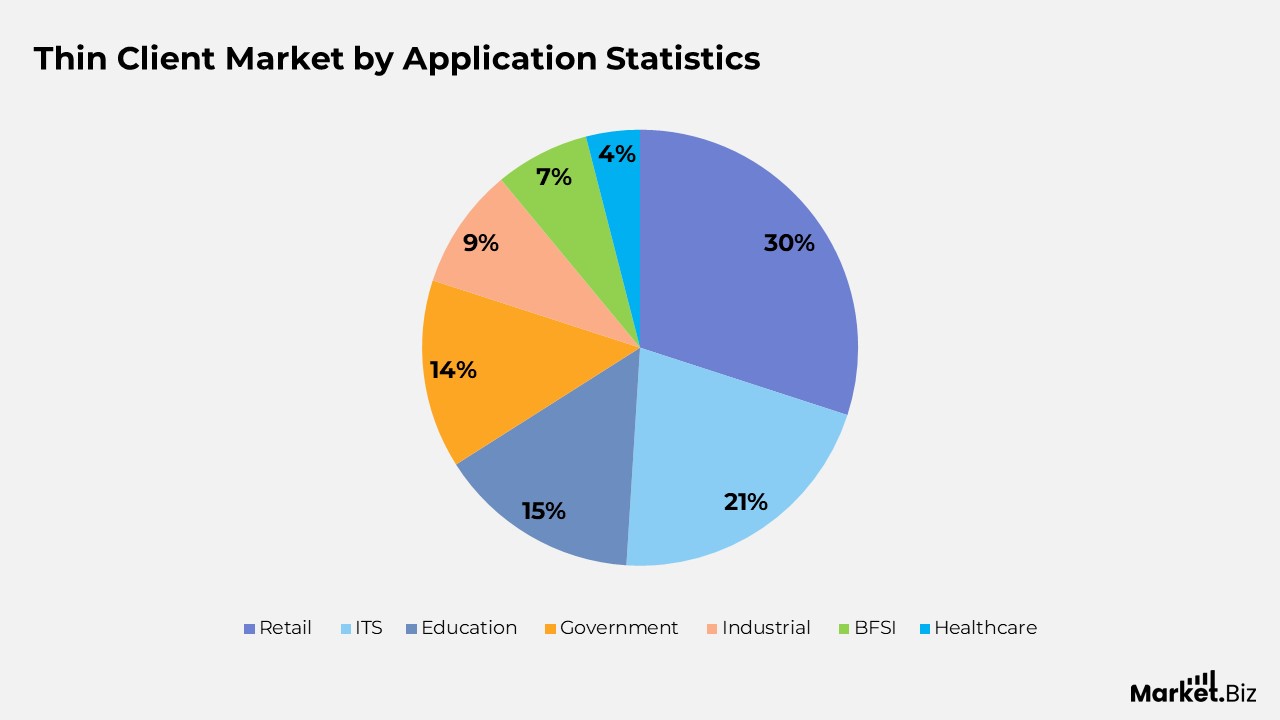
- According to the most recent data, the retail sector commands the largest market share at 30%, indicating a strong utilisation of thin clients within this industry.
- The Information Technology Services (ITS) sector follows closely with a 21% market share, demonstrating significant adoption in technology-driven operations.
- Education comprises 15%, illustrating the importance of thin clients in academic environments.
- The government sector also constitutes a considerable segment of the market at 14%, highlighting its strategic significance in public administration.
- Furthermore, the industrial sector holds a 9% market share, pointing to the increasing penetration of thin clients in manufacturing and production settings.
- The Banking, Financial Services, and Insurance (BFSI) sector accounts for 7%, which underscores the adoption of thin clients in financial institutions that seek enhanced security and efficiency.
- Finally, the healthcare sector, while possessing the smallest share at 4%, indicates targeted usage where data security and reliability are of utmost importance.
Thin-client VDI Market Size in Japan
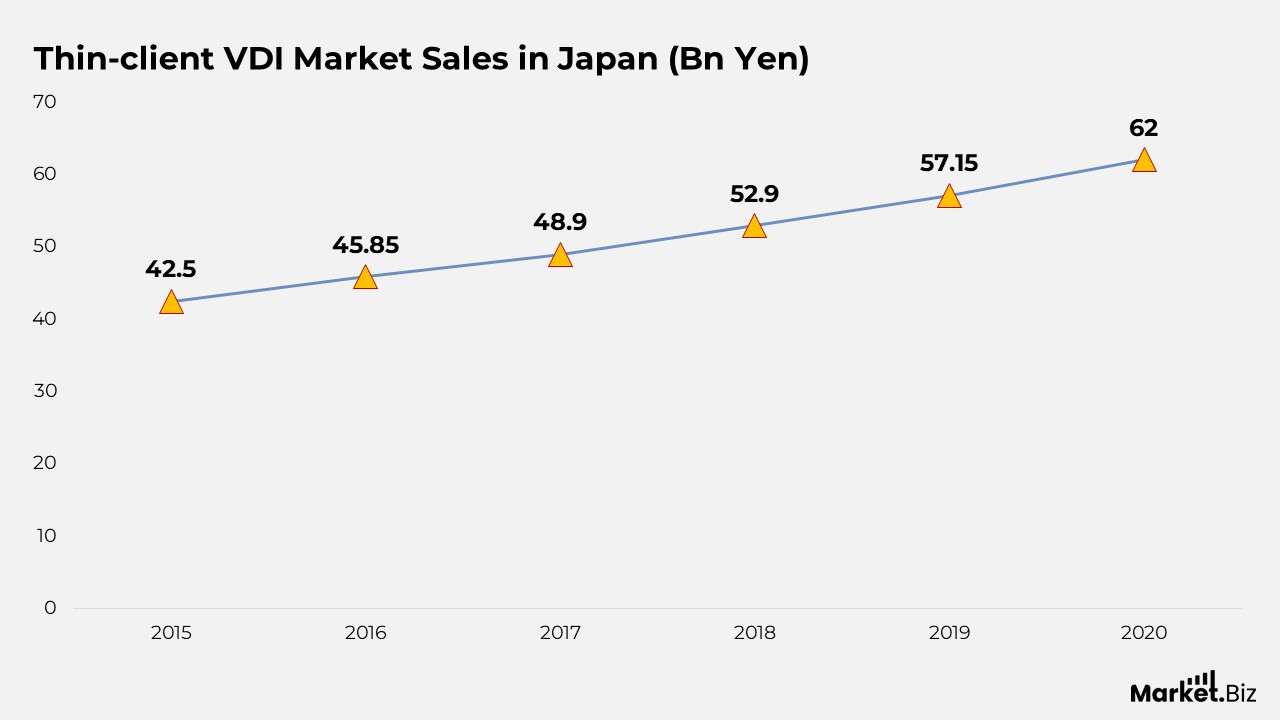
- In 2015, the market recorded sales amounting to 42.5 billion Japanese Yen.
- This amount experienced consistent growth in the following years, reaching 45.85 billion Yen in 2016 and further escalating to 48.9 billion Yen in 2017.
- The upward trend persisted, with sales increasing to 52.9 billion Yen in 2018 and 57.15 billion Yen in 2019.
- By 2020, the market’s sales were projected to reach an impressive total of 62 billion Yen.
HP Thin Client Statistics
- The HP t630 Thin Client is prepared with an extensive set of specifications designed to provide both performance and flexibility.
- It is driven by an AMD GX-420GI SOC, which is a quad-core APU with a processing speed ranging from 2.0 to 2.2 GHz and includes integrated Radeon R7E graphics.
- The device offers various memory configurations, including flash storage options of 8GB, 16GB, 32GB, 64GB, and 128GB, as well as RAM selections of 4GB, 8GB, 16GB, or 32GB.
- Connectivity is facilitated through a variety of ports, including a 10/100/1000 network interface, four USB 2.0 ports, three USB 3.0 ports (two located at the front and one internal), one serial port, and one parallel port.
- Additionally, it supports two Display Port video outputs capable of resolutions up to 3840 x 2160 at 60Hz, along with one VGA port that supports a resolution of 1920 x 1200 at 60Hz.
- The power requirements include a supply of 19.5V at 3.33A, featuring a coax male plug with dimensions of 7.4mm/5.0mm at the center pin.
- The device takes about 0.5W when powered off, about 12W during idle states, and about 28W while in use.
- The dimensions of the HP t630 Thin Client are 240 mm in height, 42 mm in width, and 220 mm in depth.
Dell Thin Client Statistics
- The Dell Wyse 3040 Thin Client is engineered for optimal efficiency and performance. It is powered by an Intel Atom x5-Z8350 quad-core processor, which has a base frequency of 1.44 GHz and can be boosted to 1.92 GHz.
- This device comes with integrated Intel HD Graphics and provides versatile memory configurations, including options for 8GB or 16GB eMMC flash storage and 2GB or 4GB DDR3L RAM.
- For connectivity, the unit features a 10/100/1000 Ethernet port, four USB 2.0 ports (two located at the front and two at the rear), and two USB 3.0 ports (one at the front and one at the rear).
- Moreover, it supports dual DisplayPort outputs with resolutions reaching up to 3840 x 2160 at 60Hz, in addition to a VGA port that accommodates resolutions up to 1920 x 1200 at 60Hz. It also includes a headphone/microphone combo jack for audio purposes.
- The power requirements entail a 19V, 3.42A power supply, with power consumption metrics of less than 0.5W when powered off, around 6W during the idle state, and approximately 12W while in operation.
- The compact design of the Wyse 3040 has dimensions of 197 mm in height, 25 mm in width, and 205 mm in depth, with a weight of roughly 1.1 kg.
ClearCube Thin Client Statistics
- ClearCube CD8805 Thin Client is powered by an Intel Celeron J4125 CPU, which features four cores and four threads, functioning at a base clock speed of 2.0 GHz and capable of reaching up to 2.5 GHz during boost mode.
- It is engineered to facilitate dual 4K video output, rendering it ideal for high-resolution applications.
- The memory architecture of the CD8805 employs DDR4 RAM, with a recommended capacity of 8GB, ensuring seamless performance.
- Regarding storage, it comes with a 128GB M.2 SSD and provides the option to incorporate a SATA 2.5-inch drive, allowing for storage expansion flexibility.
- This thin client is compatible with a range of operating systems, including Windows 10 IoT, Windows 10 Pro, Windows 11 Pro, and StratoDesk, and it also accommodates optional SIPR tokens for enhanced security, in addition to supporting IGEL OS.
User Preferences Statistics By Thin vs. Fat Clients
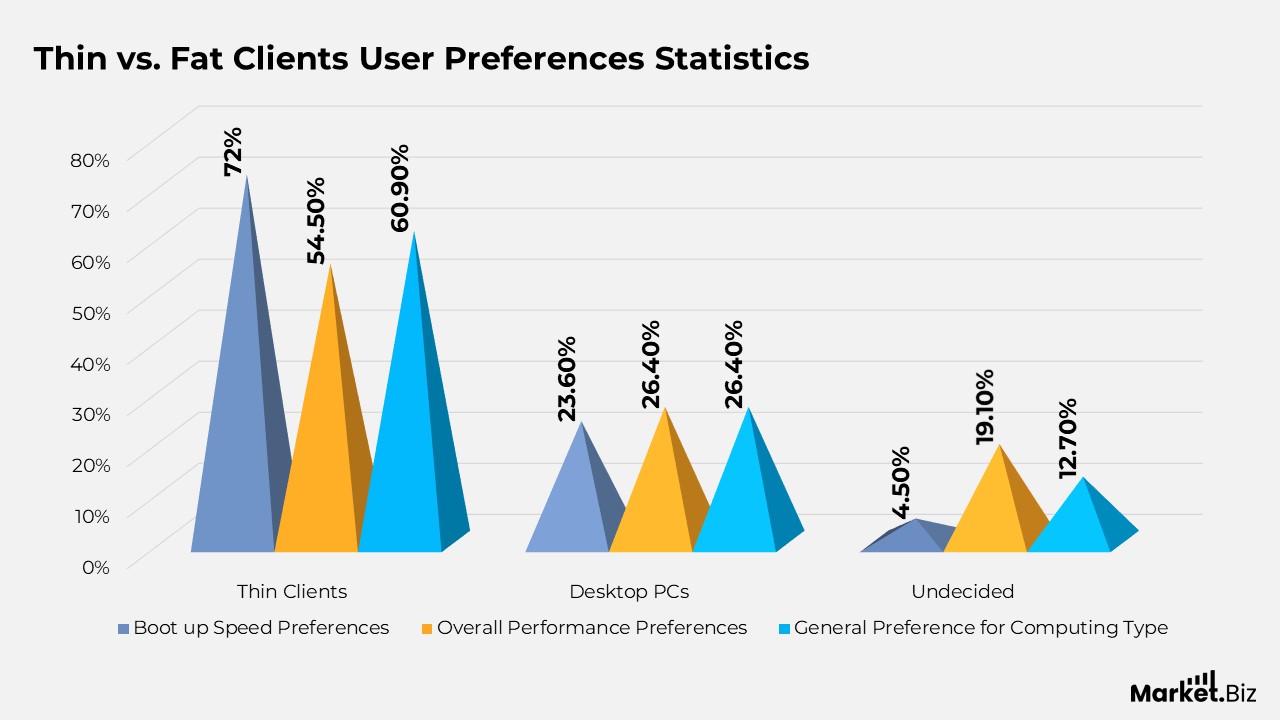
- A research study carried out by the UK-based market research company Winmark resembled the format of a Pepsi Challenge. It investigated user preferences regarding thin versus fat client computing with a sample of 110 participants.
- The findings revealed a notable preference for thin clients.
- Approximately 72% of respondents indicated that thin clients booted up more quickly than desktop PCs, while around 23.6% disagreed, and 4.5% remained undecided.
- Regarding overall performance, 54.5% of participants believed that thin clients functioned more efficiently, in contrast to 26.4% who preferred desktop PCs, and 19.1% who perceived no difference between the two.
- In summary, 60.9% of users favoured thin clients, 26.4% chose desktop PCs, and 12.7% did not express a strong preference for either option.
Thin Client Vulnerabilities Statistics
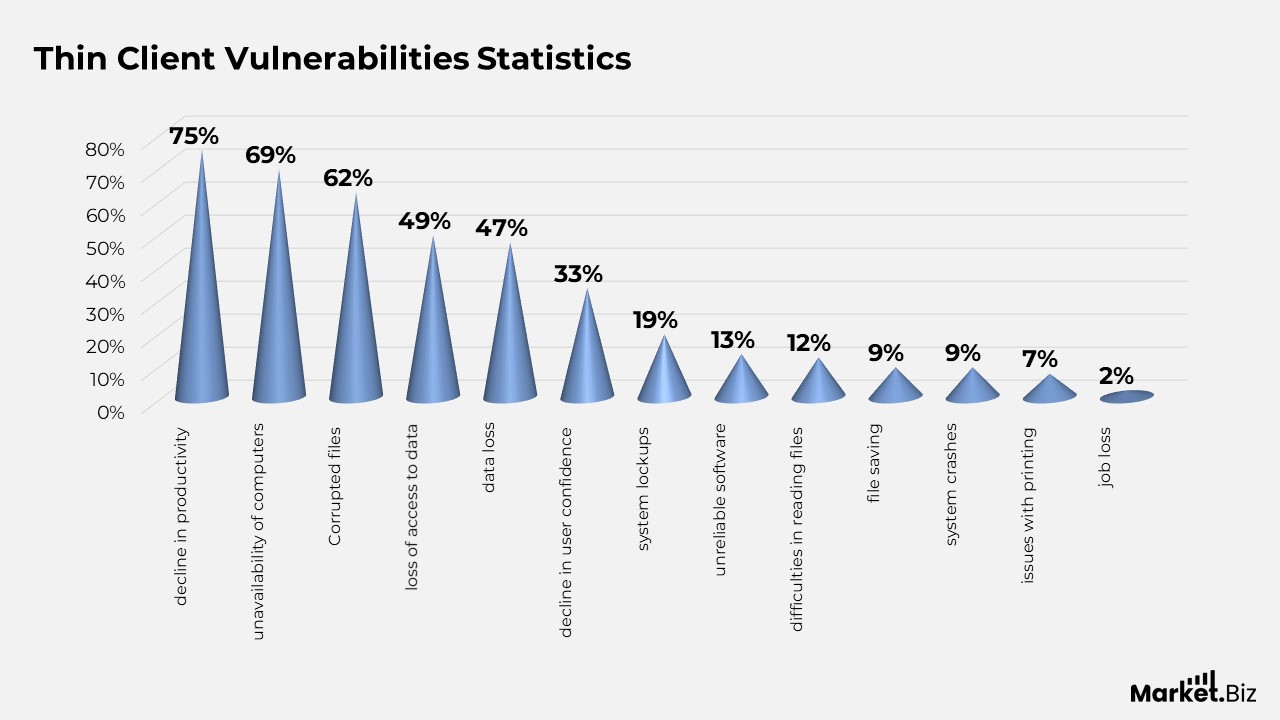
- A significant portion of respondents, 75%, indicated that a decline in productivity was the most prevalent outcome.
- This was succeeded by 69% of users facing the unavailability of their computers.
- Corrupted files emerged as another significant concern, impacting 62% of those surveyed.
- Almost half, 49%, reported a loss of access to their data, while 47% actually experienced data loss. A decline in user confidence was observed by 33% of the participants.
- Additional repercussions included disruptions or system lockups mentioned by 19%, unreliable software reported by 13%, and difficulties in reading files noted by 12%.
- Problems with file saving, system crashes, and issues with printing were reported by 9% and 7% of users, respectively.
- Finally, a small fraction, 2%, expressed concerns about potential job loss due to these computing vulnerabilities.
Environmental Impact Statistics By Thin Client
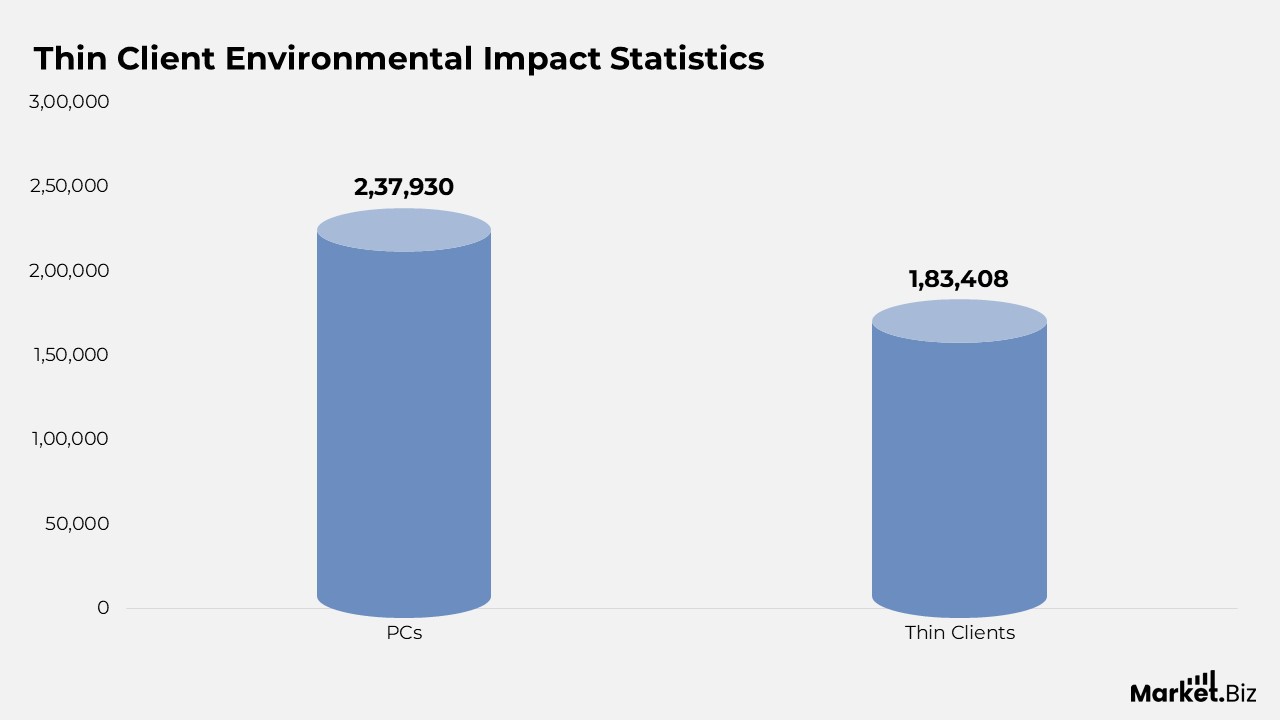
- The analysis of yearly CO2 emissions from PCs and thin clients in a scenario with 5,000 users reveals notable disparities in their environmental effects.
- In particular, PCs contribute to the emission of roughly 237,930 kilograms of CO2 each year.
- Conversely, thin clients generate considerably fewer emissions, amounting to about 183,408 kilograms annually.
Thin Client Recent Development
- In 2025, it was anticipated that 50% of thin client devices would be managed via the cloud. This would include improved security features and AI-driven diagnostics, thereby decreasing the necessity for on-site IT support.
- In 2023, Dell Technologies revealed a merger with Wyse Technology, a significant entity in the thin client sector. The $1 billion agreement is intended to bolster Dell’s portfolio of thin client solutions.
- In the middle of 2023, IGEL introduced the IGEL UD3 Thin Client, which is tailored for secure and high-performance remote work.
- By the end of 2023, VXL Instruments, a manufacturer of thin clients, secured $40 million to improve its thin client offerings for remote desktop settings.
Thin Client Future Predictions
- By the end of 2026, it is anticipated that 40% of organisations utilising thin clients will implement AI-driven systems to enhance data security, oversee performance, and optimise resources.
- Future projections for thin clients indicate a market value surpassing $2 billion by the years 2030 to 2032, with growth rates around 3-4% CAGR.
Conclusion
Thin Client Statistics: Thin clients serve as a viable substitute for conventional PCs, particularly in settings where security, cost-effectiveness, and sustainability are paramount. They contribute to decreased power usage, reduced operational expenses, and a smaller ecological impact. By centralising data and applications, thin clients also improve security and streamline IT management, although their performance is contingent upon network reliability and server capacity.
Especially appropriate for industries such as education, healthcare, and corporate environments, thin clients are well-suited to meet contemporary IT requirements for greater efficiency and lower costs, rendering them a practical option for enhancing organizational performance.
FAQ’s
A thin client is commonly defined as a computer that relies on resources located within a central server rather than utilizing a hard drive. It connects to a server-based environment that manages the majority of applications, memory, and sensitive data required by the user.
The 3 primary types of thin clients include Hardware Zero Clients, Thin Clients, and Software Thin Clients. These types vary based on their local processing capabilities, operating systems, and management features; hardware types provide basic operating systems and applications, zero clients are streamlined for specific protocols, while software clients operate on standard PCs, virtualising the desktop environment, with emerging options for browser-based access.
In a Thick client architecture, the majority of the application logic is situated on the client device, which decreases the reliance on the server. Conversely, thin clients assign most processing responsibilities to the server, with the client mainly tasked with rendering the user interface and managing user input.

