









Introduction
Data Catalog Statistics: Data catalogs serve as essential tools for managing metadata, centralising and organising an organisation’s data assets, which improves data discovery, accessibility, and governance. They streamline the collection and management of metadata from various data sources, making it easier to search and utilise data efficiently throughout the organisation.
Moreover, data catalogs are vital for data governance and compliance, as they monitor data lineage for assessments of quality and reliability, while also promoting collaboration among teams.
The primary features of data catalogs encompass advanced search and discovery capabilities, tools for user collaboration, visualisation of data lineage, seamless integration options, and strong security and access controls. These features collectively enable organisations to utilise their data more effectively, thereby ensuring informed decision-making and enhancing operational efficiency.
Editor’s Choice
- The global data catalog market generated revenue of USD 880.4 million in 2023.
- The allocation of the global data catalog market according to deployment mode indicates a strong inclination towards on-premises solutions, which represent a 56% share.
- At the forefront is the category of non-relational analytic data stores, which has exhibited an impressive compound annual growth rate (CAGR) of 38.60%.
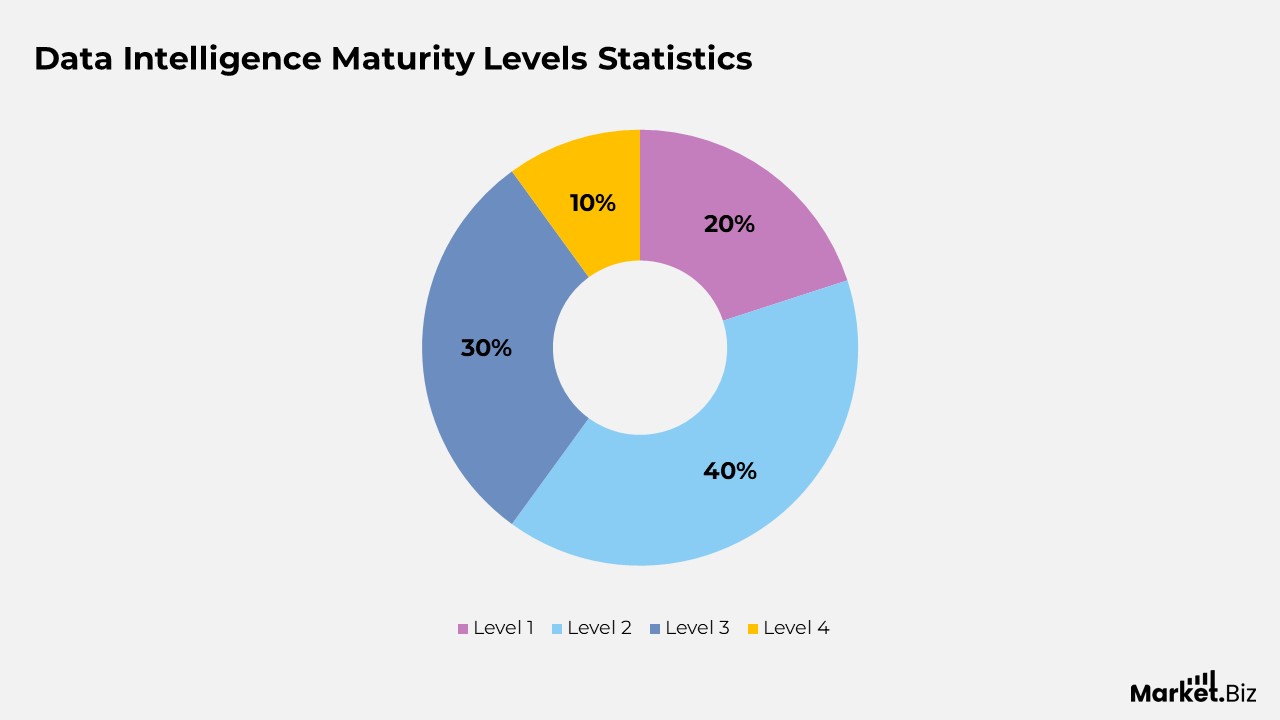
- At the foundational level, Level 1, 20% of respondents are situated at the initial stages of their data intelligence journey.
- A substantial majority of data, estimated at 88%, frequently remains underutilised and is not subjected to thorough examination.
General Data Catalog Statistics
- Global data catalog market generated revenue of USD 880.4 million in 2023.
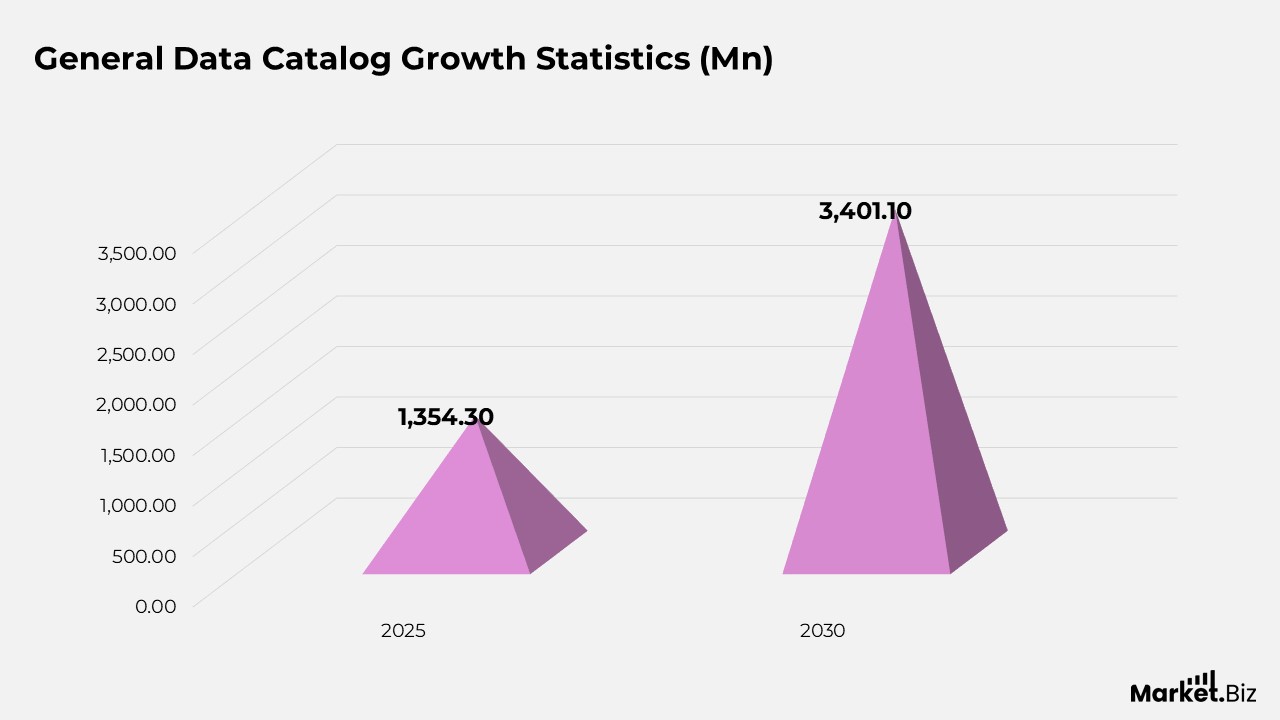
- This upward trend is expected to persist in the coming years, with projections indicating a rise to USD 4,169.7 million by 2031, ultimately reaching a peak of USD 5,235.2 million in 2032.
- The solutions segment consistently surpassed the services segment, resulting in USD 4,198.6 million from solutions and USD 1,036.6 million from services in the final year.
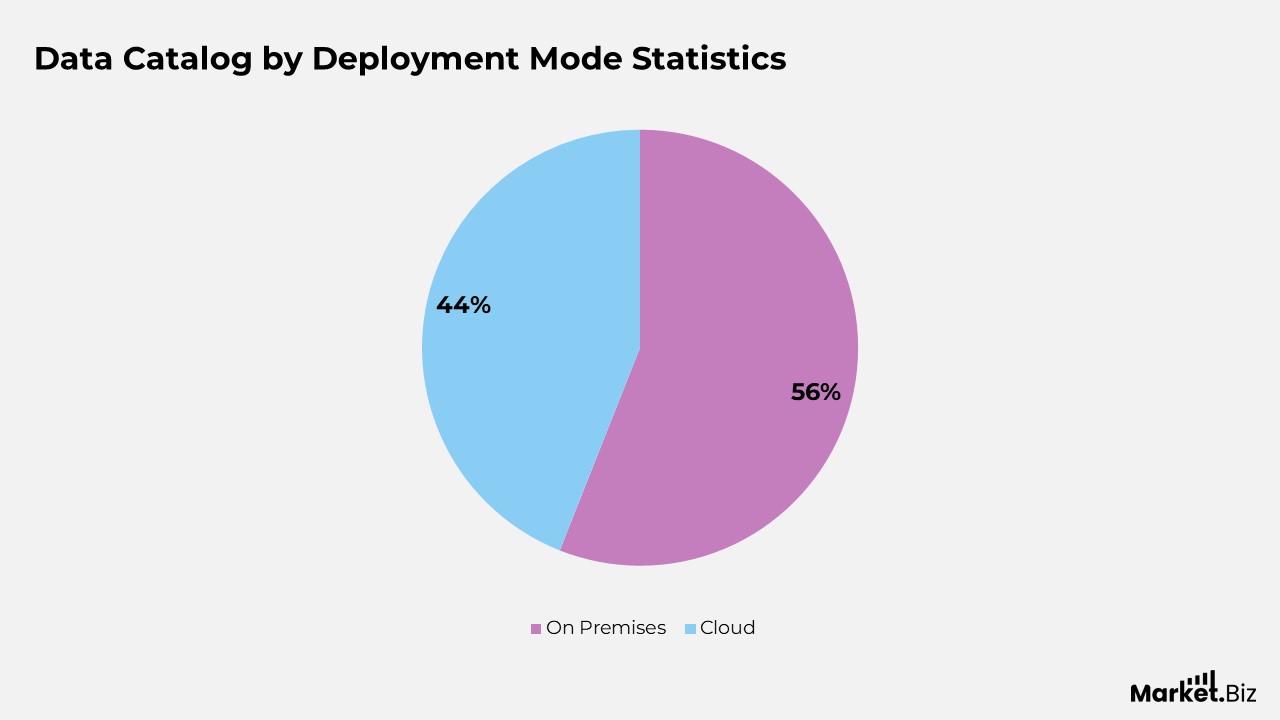
- Global data catalog market by deployment mode reveals a strong preference for on-premises solutions, which hold a 56% market share, while cloud-based deployments constitute the remaining 44%.
- The volume of data and information created, captured, copied, and consumed globally is expected to soar to 181 zettabytes by 2025.
- Over a span of five years, in the field of big data technology, the category of non-relational analytic data stores has demonstrated a remarkable compound annual growth rate (CAGR) of 38.60%..
- A notable 93% of organisations at Level 4 have established business data lineage, in contrast to only 26% at Level 1, with an overall adoption rate among respondents of 51%.
- Among Level 4 organisations, a significant 93% perform regular audits of data requests, a practice that is only seen in 27% of Level 1 organisations, resulting in an overall adoption rate of 51%.
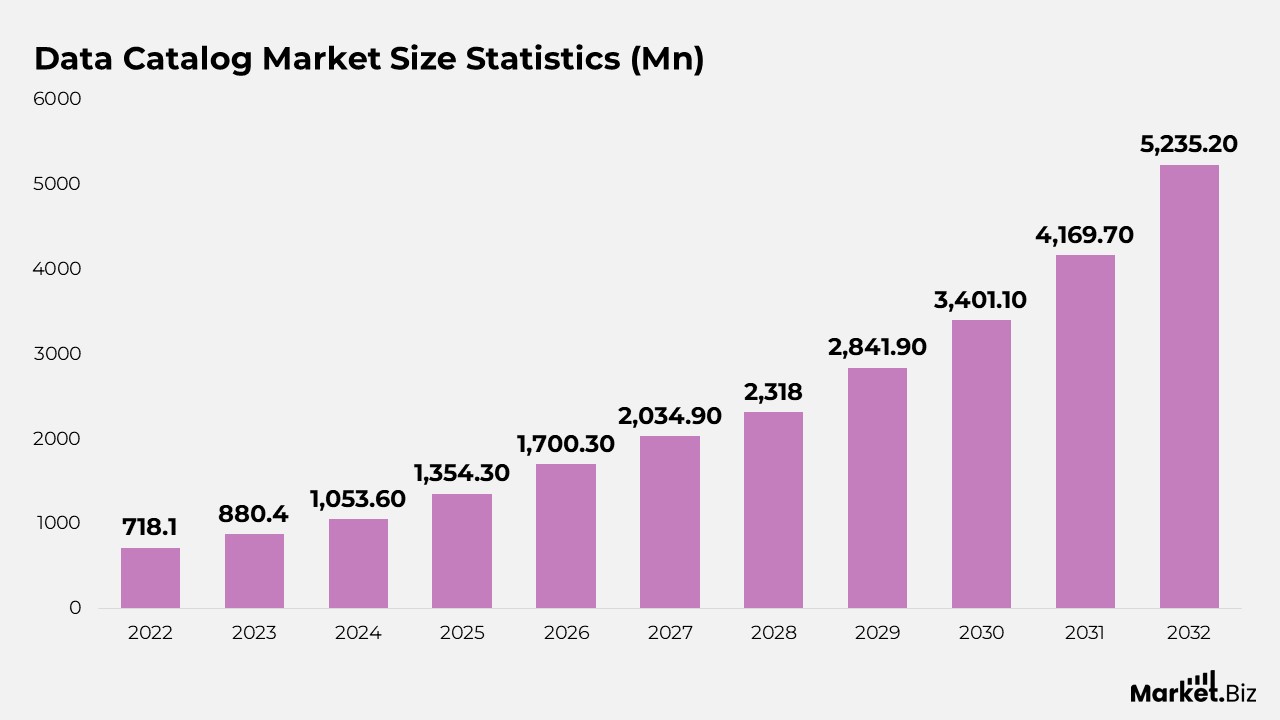
Data Catalog Market Size Statistics
- Global data catalog market has showed a remarkable growth trajectory, achieving a compound annual growth rate of 22.6%. Revenue has escalated from USD 718.1 million in 2022 to an anticipated USD 5,235.2 million by 2032.
- This rising trend underscores the increasing worth of data catalogs in promoting effective data catalog management and accessibility.
- The market has demonstrated steady growth, with revenue climbing to USD 880.4 million in 2023 and surpassing the billion-dollar mark in 2024, reaching USD 1,053.6 million.
- The energy continued with substantial growth each year, reaching USD 1,354.3 million in 2025 and progressing to USD 1,700.3 million by 2026.
- In the subsequent years, the market maintained its upward trajectory, with revenues hitting USD 2,034.9 million in 2027, USD 2,318.0 million in 2028, and experiencing a significant rise to USD 2,841.9 million in 2029.
- The growth rate intensified as the forecast period came to a close, with market size expanding to USD 3,401.1 million in 2030 and ultimately surging to USD 4,169.7 million in 2031 before reaching a peak of USD 5,235.2 million in 2032.
Data Catalog by Deployment Mode Statistics
- The allocation of the global data catalog market according to deployment mode indicates a strong inclination towards on-premises solutions, which represent a 56% share, whereas cloud-based deployments constitute the remaining 44%.
- This distinction highlights the continuing importance of on-premises infrastructure in the field of data cataloging, mirroring organisational priorities concerning control, security, and data sovereignty.
- On the other hand, the significant market share held by cloud deployments signifies a vigorous and expanding acceptance of cloud services, propelled by their scalability, flexibility, and cost-effectiveness.
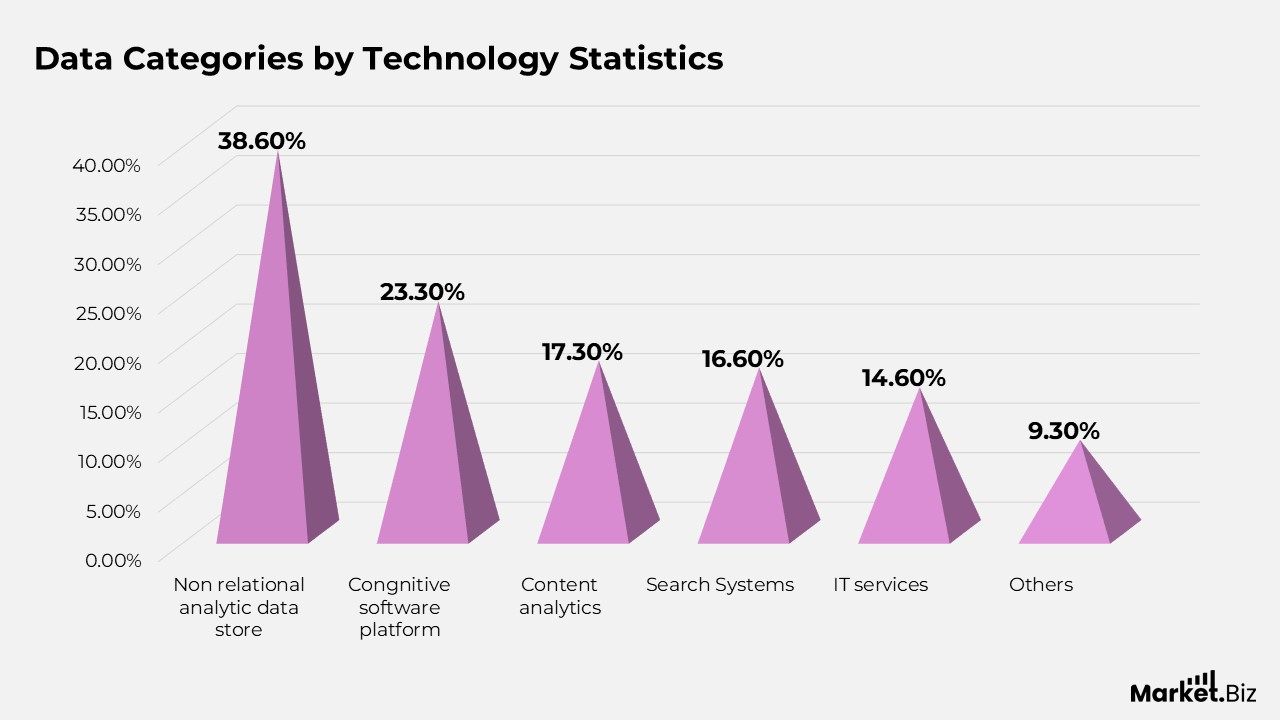
Technology Statistics By Data Categories
- At the forefront is the category of non-relational analytic data stores, which has exhibited an impressive compound annual growth rate (CAGR) of 38.60%.
- In addition, cognitive software platforms have recorded a significant growth rate of 23.30%.
- Content analytics, with a CAGR of 17.30%, alongside search systems, which stand at 16.60%, also reflect considerable growth, emphasising the necessity of extracting insights from unstructured data and the demand for sophisticated search functionalities within extensive data repositories.
- IT services associated with big data have experienced a growth rate of 14.60%, highlighting the essential role of these services in the implementation, management, and optimization of big data technologies.
- Finally, the “Others” category, which includes a variety of other big data technologies, has achieved a CAGR of 9.30%, signifying a robust expansion throughout the wider big data ecosystem.
Data Intelligence Maturity Levels Statistics
- At the foundational level, Level 1, 20% of respondents are situated at the initial stages of their data intelligence journey.
- A considerable segment, 40%, is positioned at Level 2, indicating that a plurality of respondents has established a fundamental yet robust framework for utilizing data intelligence in their operations.
- Advancing to Level 3, 30% of respondents exhibit a more sophisticated application of data intelligence principles.
- Finally, at the apex, Level 4, a smaller percentage, 10%, represents the highest maturity level in data intelligence.
Data Catalog Challenging Aspects Statistics
- A substantial majority of data, estimated at 88%, frequently remains underutilised and is not subjected to thorough examination.
- This indicates that only 12% of data in most organisations is analysed in detail, suggesting a significant pool of unexploited opportunities.
- Approximately 40% of companies consistently face challenges in managing unstructured data, underscoring the widespread nature of this problem.
- Furthermore, an impressive 95% of companies acknowledge the necessity of managing unstructured data as a vital requirement.
- In addition, there is a level of scepticism regarding data accuracy among 27% of individuals, which reflects concerns about data reliability.
Recent Developments
- In February 2024, a data catalog technology firm completed a Series B funding round, successfully raising $40 million to enhance product innovation and broaden its market presence.
- In April 2024, a data catalog startup that focuses on AI-driven data discovery and classification secured seed funding amounting to $12 million, aimed at advancing product development and acquiring customers.
- In 2023, venture capital investments in data catalog startups reached a total of $1.2 billion, primarily targeting companies that provide innovative solutions in data cataloging, metadata management, and data governance.
- In 2023, strategic acquisitions by major technology firms and established software vendors represented 40% of the overall investment activity within the data catalog market, indicating an increasing interest in data management and analytics capabilities.
Data Catalog Future Predictions
- Quadrant Knowledge Solutions has disclosed that the Intelligent Data Catalog (IDC) Market is anticipated to achieve a compound annual growth rate (CAGR) that exceeds the average by 2028 in Japan.
- Moreover, the rate of growth intensified towards the conclusion of the forecast period, with the market size projected to increase to USD 3,401.1 million by 2030, subsequently rising to USD 4,169.7 million in 2031, and ultimately peaking at USD 5,235.2 million in 2032.
Conclusion
The transition towards data catalogs signifies a crucial transformation in data management, emphasising their significance in organising, accessing, and overseeing vast amounts of data within organisations. Market forecasts suggest strong growth for these solutions, underscoring their worth across various sectors.
Although challenges such as implementation difficulties and the handling of unstructured data exist, the advantages of enhanced governance and decision-making are irrefutable, particularly in entities with sophisticated data intelligence.
As the digital environment progresses with increasingly advanced analytics and AI, the essential role of data catalogs for gaining strategic advantages becomes more apparent. Moreover, the movement towards cloud-based solutions illustrates the flexibility of data catalogs in meeting modern demands for security and operational efficiency in a data-centric world.
FAQ’s
A data catalog serves as a structured inventory of an organisation’s data assets. It utilizes metadata to assist organisations in managing their data effectively. Additionally, it aids data professionals in collecting, organising, accessing, and enhancing metadata to facilitate data discovery and governance. Explore OCI Data Catalog.
Catalogs are utilised to showcase and promote products to customers. These printed materials include images and comprehensive descriptions of the products offered. They also provide pricing details. Notable examples of catalogs from prominent brands include Wayfair, Williams-Sonoma, and Everlane.
Mainly utilised by data scientists, analysts, and other professionals who require the ability to discover and comprehend data. Database: Employed by a broader spectrum of users, including developers, administrators, and end-users who interact with applications.