









Introduction
Ischemic Heart Disease Statistics: Ischemic Heart Disease (IHD), also called Coronary Heart Disease (CHD) or Coronary Artery Disease (CAD), is a significant global public health challenge that places heavy pressure on healthcare systems and communities. This condition develops gradually, primarily due to the accumulation of plaque in the arteries, which limits the flow of oxygen-rich blood to the heart. It is marked by reduced blood supply to the heart muscle, often leading to serious complications such as heart attacks and heart failure.
Monitoring and analyzing data related to IHD is crucial for understanding its prevalence, identifying risk factors, and assessing patient outcomes. Such statistical insights are crucial for shaping effective prevention and treatment strategies, enabling policymakers and healthcare professionals to distribute resources efficiently and enhance the quality of care provided.
Editor’s Choice
- In lower-middle-income countries, the increase in mortality has occurred in IHD, with deaths climbing by more than 1.4 million to a total of 3.2 million in 2021.
- In upper-middle-income countries, this increase of over 1.4 million deaths ranks as the second-highest rise among income groups, just 40,000 fewer than the increase seen in lower-middle-income countries.
- In high-income countries, ischemic heart disease and stroke remained among the top 3 causes of death within this income group, contributing to over 2.6 million fatalities in 2021.
- In the U.S., Coronary heart disease stands as the most prevalent form of heart disease, resulting in 371,506 deaths in 2022.
- Approximately 1.4 million individuals in the UK are living as survivors of a stroke or transient ischemic attack (TIA).
- In 2022, Spain recorded a mortality rate of approximately 53.33 deaths per 100,000 people due to ischemic heart disease.
- Maintaining a regular exercise regimen is associated with a 20-30% lower risk of death from cardiovascular causes.
(Source: Centers for Disease Control and Prevention, World Health Organization, British Heart Foundation )
Cardiovascular Market Size
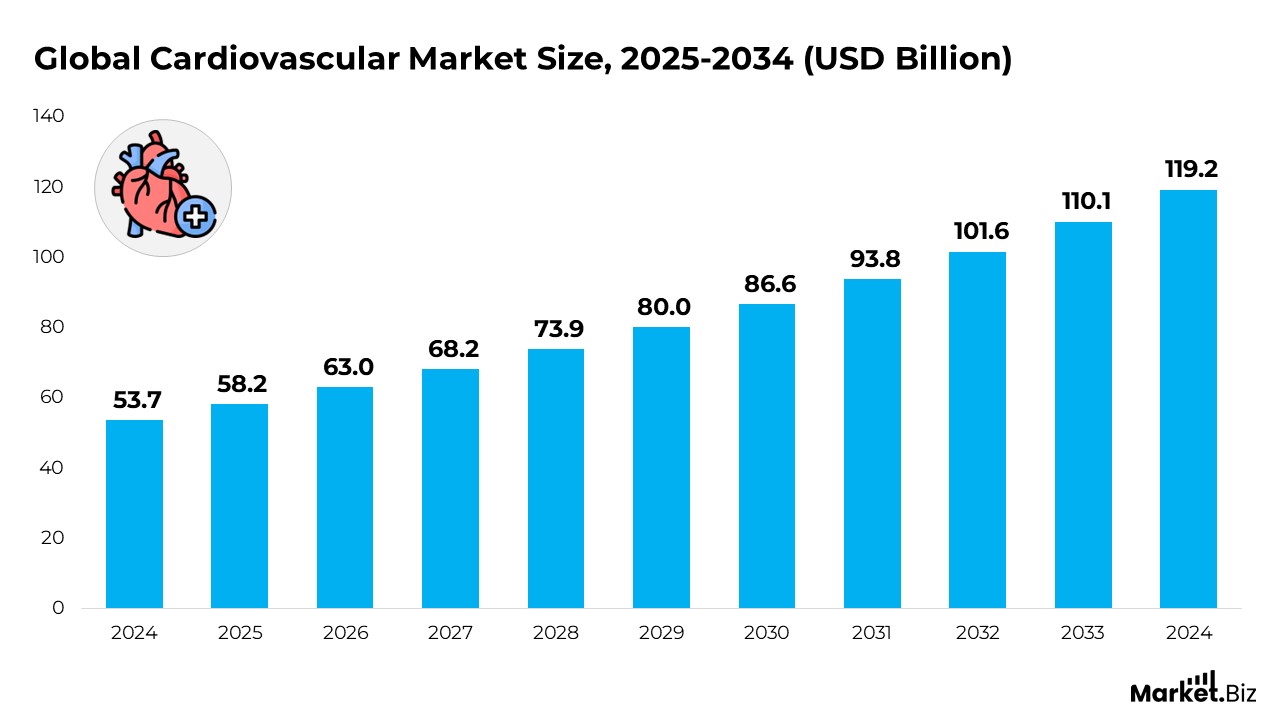
- According to Market.us, the global cardiovascular market is projected to grow from $58.2 billion in 2025 to $101.6 billion by 2032, representing a compound annual growth rate (CAGR) of 8.3% from 2025 to 2034.
- The market’s expansion is fueled by the rising incidence of ischemic heart disease, increased awareness campaigns focused on diagnosis and prevention, and lifestyle factors such as sedentary behavior, poor diet, high tobacco use, and elevated stress levels, all contributing to a surge in cardiovascular conditions.
- The diagnostic and monitoring devices segment dominated in 2023, with a 65.3% share, driven by an emphasis on early detection and ongoing cardiovascular monitoring.
- The coronary artery disease (CAD) segment accounted for 48.5% of the market, with rising risk factors and increased awareness boosting demand for diagnosis and treatment.
- The hospital segment experienced significant growth, accounting for a 58.2% revenue share, primarily due to an increase in complex cardiovascular procedures performed in these settings.
- North America led with a 44.7% market share in 2024, mainly due to the aging U.S. population increasing demand for cardiovascular healthcare.
(Source: Market.us)
Acute Ischemic Stroke Therapeutics Market Size
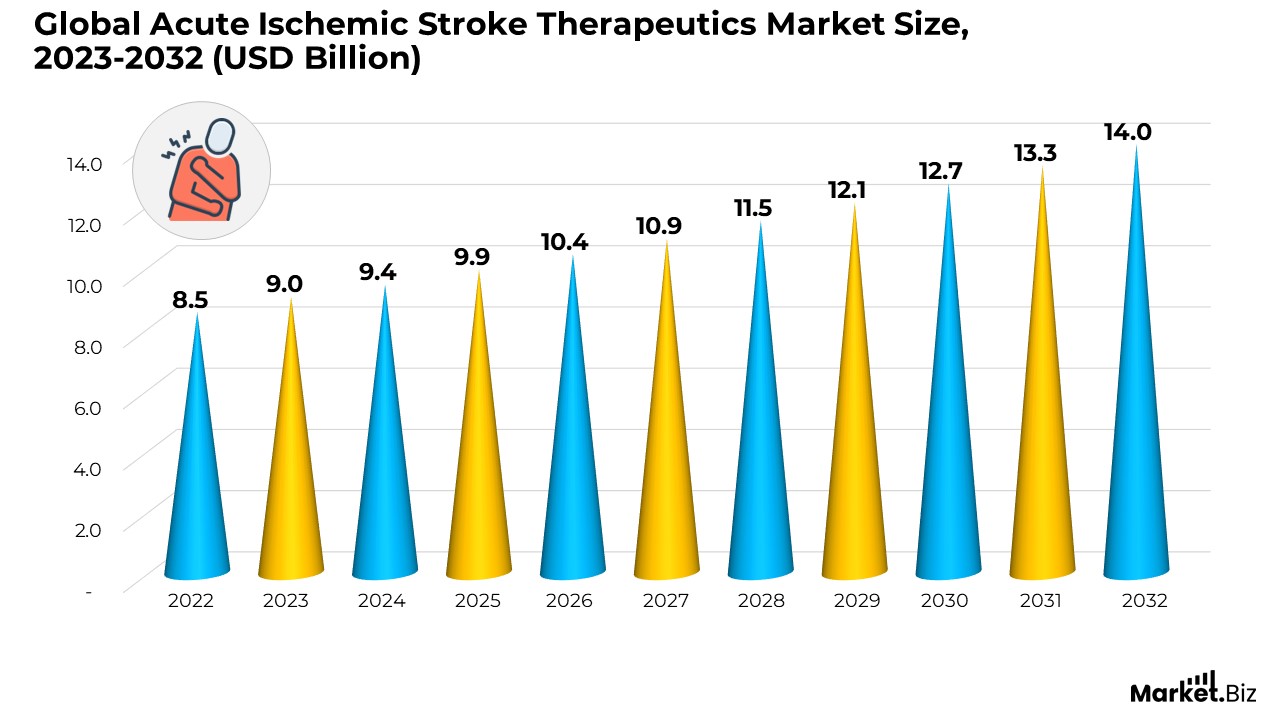
- According to Market.us, the global acute ischemic stroke therapeutics market is projected to grow from $9.9 billion in 2025 to $14.0 billion by 2032, representing a compound annual growth rate (CAGR) of 4.6% from 2025 to 2034.
- The rising global prevalence of stroke cases is primarily driving market growth.
- The thrombolytic segment generated the highest revenue, capturing a 31% market share due to its role in primary stroke treatment.
- The parenteral segment dominates the acute ischemic stroke therapeutics market, with a 66.5% share, serving as the first-line medical treatment. Oral therapies contribute less revenue and are typically used as secondary care.
- Hospital pharmacies hold the largest share at 47%, reflecting that acute ischemic stroke care is mainly delivered in medical facilities.
- North America leads the market with a 38% share, supported by high stroke prevalence and well-developed healthcare systems in the U.S. and Canada.
- The Asia-Pacific region is witnessing a surge in acute ischemic stroke cases and is projected to grow at an approximate CAGR of 6% from 2023 to 2032.
(Source: Market.us)
Global Ischemic Heart Disease Statistics
- Cardiovascular diseases are responsible for nearly 1/3rd of all deaths worldwide, with ischemic heart disease (IHD) being the most prevalent condition within this group, underscoring its significant impact on global health.
- Globally, IHD affects around 126 million individuals, equivalent to 1,655 cases per 100,000 people, or approximately 1.72% of the total population. It leads to an estimated 9 million deaths each year, highlighting its critical severity.
- As the foremost cause of death worldwide, ischemic heart disease accounts for 13% of all fatalities, making it the leading contributor to mortality across populations.
- Since 2000, the number of deaths linked to IHD has risen sharply by 2.7 million, reaching 9.1 million in 2021, reflecting ongoing difficulties in controlling and treating the disease despite advances in healthcare.
- In 2021, IHD was the 2nd leading cause of death worldwide, closely trailing stroke and surpassing COVID-19 by one rank, emphasizing its ongoing threat.
- Deaths from hypertensive heart disease have more than doubled since 2000, moving from the 16th to the 10th leading cause of death by 2021, highlighting an increasing public health challenge alongside IHD.
(Source: National Institute of Health, World Health Organization, Centers for Disease Control and Prevention)
What are the Common Symptoms of Ischemic Heart Disease?
- Discomfort or pain in the chest, particularly following physical activity
- Dizziness or loss of consciousness
- Sensations of irregular or rapid heartbeats, such as skipped beats or fluttering
- Difficulty breathing or breathlessness
- Swelling around the ankles or feet
(Source: Advocate Health Care, Artemis Cardiac Care)
Types of Ischemic Heart Disease?
Stable Angina
- The occurrence of stable angina rises with age in both individuals in 2022.
- Among women aged 45–64 years, the prevalence ranges from 5% to 7%.
- Men within the same age group have a prevalence between 4% and 7%.
- For women aged 65–84 years, prevalence increases to 10%–12%.
- Men aged 65–84 years experience an even higher prevalence, ranging from 12% to 14%.
Unstable Angina
- In 2022, approximately 18 million people in the United States are estimated to be affected by this disease.
- The condition is more common in men overall.
- However, after the age of 75, the incidence rates in individuals tend to equalize.
Silent Ischemia
- The American Heart Association estimates that 3 to 4 million Americans experience episodes of silent ischemia.
- In people with stable angina pectoris, silent ischemia accounts for approximately 70% of all ischemic events.
- This proportion rises to nearly 80% in people with unstable angina.
- Silent myocardial infarctions represent about 20 to 30% of all heart attacks.
Heart Attack
- Every 33 seconds, one person dies from cardiovascular disease.
- In 2022, heart disease caused 702,880 deaths in the United States, accounting for 1 in every 5 deaths nationwide.
- Annually, approximately 805,000 people in the U.S. suffer a heart attack.
- Among these, 605,000 are experiencing their first heart attack, while 200,000 have had a previous heart attack.
(Source: The British Journal of Cardiology, National Institute of Health, The Texas Heart Institute, Centers For Disease Control and Prevention, American Heart Association, Artemis Cardiac Care)
What methods are used to diagnose Ischemic Heart Disease?
- Wearable monitor
- Cardiac catheterization
- Echocardiogram
- Electrophysiology study
- Imaging Tests ( MRI, CT Scan, and Chest X-ray)
- Stress Test
- Electrocardiogram (EKG)
- Blood Tests
(Source: Advocate Health Care, Artemis Cardiac Care)
Demographics for Ischemic Heart Disease
Race
- In 2021, ischemic heart disease accounted for 15.5% of deaths among Native American or Alaska Native populations.
- The Asian population experienced 18.6% of deaths attributed to this condition.
- Among Black (non-Hispanic) individuals, ischemic heart disease was responsible for 22.6% of deaths, the highest percentage among the groups listed.
- Native Hawaiians or Other Pacific Islanders had 18.3% of deaths due to ischemic heart disease.
- For White (Non-Hispanic) populations, IHD accounted for 18.0% of mortalities.
- The Hispanic population saw a lower percentage, with 11.9% of deaths caused by ischemic heart disease.
Gender
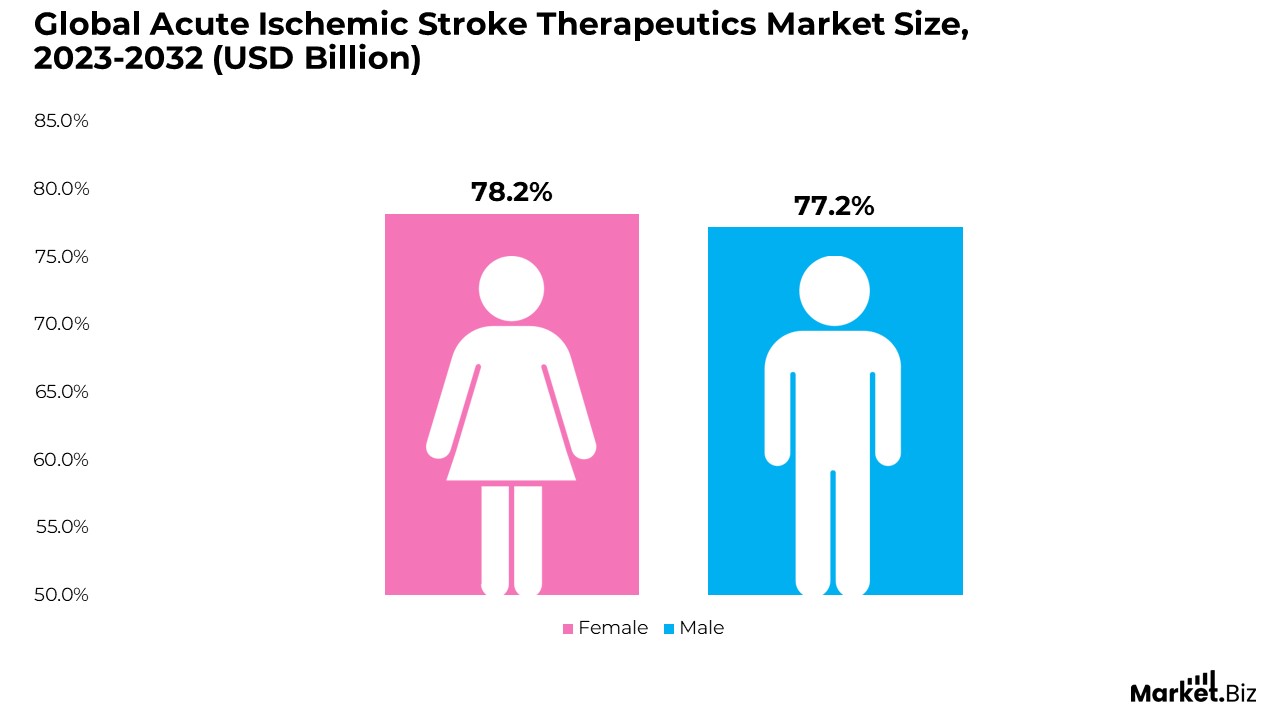
(Source: Centers for Disease Control and Prevention, Springer)
Prevention and Management of Ischemic Heart Disease
- Intention for at minimum 150 minutes of adequate aerobic exercise or 75 minutes of vigorous aerobic activity each week, or a mix of both, ideally distributed throughout the week.
- Following a balanced diet that includes five servings of fruits and vegetables daily can lower the risk of heart disease by roughly 20%.
- Statins have been associated with a 30% decrease in cardiovascular events, as reported in clinical trial data.
- Participation in cardiac rehabilitation programs can reduce overall mortality rates by 20-30% among patients with heart disease.
- For individuals with a previous heart attack, long-term aspirin use may cut the risk of another heart attack by approximately 40%.
- Aspirin is advised for patients with stable coronary artery disease, where it lowers the chance of non-fatal heart attacks by around 30%.
Moreover
- The introduction of drug-eluting stents has significantly reduced artery re-narrowing rates to below 10%, thereby enhancing long-term patient outcomes.
- Maintaining proper blood pressure control can decrease the risk of stroke by around 35-40% and reduce the risk of heart attack by approximately 20-25%.
- Effective management of hypertension can reduce the likelihood of heart failure by as much as 64%.
- A reduction of just 10 mmHg in systolic blood pressure is associated with a 15% decline in the risk of cardiovascular events.
- Stopping smoking at any age offers significant health advantages, including a 50% reduction in heart disease risk within 1 to 2 years after quitting.
- Individuals who quit smoking experience a 70% lower risk of death from coronary heart disease compared to those who continue to smoke.
- Participating in consistent aerobic activities can decrease the likelihood of developing coronary heart disease by approximately 20-25%.
- Engaging in moderate-intensity workouts, such as brisk walking for 30 minutes daily, may reduce the risk of heart disease by 30-40%.
(Source: American Heart Association, UCSF Health, European Heart Journal, World Heart Federation, World Heart Federation, Mayo Clinic)
Lifestyle Risk Factors for Ischemic Heart Diseases
- In 2021, poor dietary habits were linked to 10.6% of all deaths, with cardiovascular disease being the primary condition associated with unhealthy eating patterns.
- Physical inactivity contributes to roughly 5.3 million deaths globally, ranking it among the top risk factors for heart disease and overall mortality.
- Consuming a diet high in processed and unhealthy foods raises the risk of developing coronary heart disease by approximately 30%.
(Source: Institute For Health Metrics and Evaluation, Circulation)
Economic Impact of Ischemic Heart Disease
- Cardiovascular disease imposes an annual financial burden of €282 billion across the 27 countries of the European Union, averaging approximately € 10,000 per citizen.
- In the United States, healthcare expenses linked to ischemic heart disease (IHD) exceed $219 billion each year.
- Additionally, the U.S. incurs indirect costs from IHD, including lost productivity and workforce effects, which amount to roughly $105 billion annually.
(Source: National Institute of Health, Centers for Disease Control and Prevention, European Union)
Ischemic Heart Disease Statistics – by Country
The U.S.
- In the U.S., approximately 5% of adults aged 20 and above are affected by coronary artery disease (CAD), equating to 1 in every 20 individuals in 2022.
- According to the Centers for Disease Control and Prevention (CDC), ischemic heart disease was responsible for approximately 371,506 deaths in the United States in 2023.
- Nearly 18.2 million adults in the U.S. have been diagnosed with ischemic heart disease.
- The total economic impact of ischemic heart disease in the U.S., including medical expenses and lost productivity, exceeds $252.2 billion annually.
- Smoking remains a major risk factor, with about 20% of American adults identified as smokers.
- In 2022, nearly 20% of cardiovascular disease-related deaths occurred in adults under the age of 65 in the U.S.
(Source: Centers for Disease Control and Prevention, National Institute of Health, American Heart Association)
Canada
- During the fiscal year 2022-2023, approximately 7% of Canadian adults aged 20 and over were living with ischemic heart disease.
- Among the provinces and territories, Alberta reported the highest prevalence of the condition of ischemic heart disease.
(Source: Centers for Disease Control and Prevention, Government of Canada, ScienceDirect)
France
- In France, the prevalence of ischemic heart disease (IHD) was estimated at 5.6% of the adult population.
- In France, in 2022, 242,227 adults were hospitalized due to IHD, while in 2021, the disease accounted for 31,391 deaths, representing 4.8% of all deaths in the country.
(Source: National Institute of Health, Statista)
U.K.
- In 2023, about 2.3 million people in the UK were living with ischemic heart disease (IHD). Each year, CHD causes approximately 66,000 deaths across the country, averaging 180 deaths daily, equivalent to 1 every 8 minutes.
- In the UK, coronary heart disease claims the lives of 1 in 8 men, making it the leading cause of death for males and 1 in 14 women.
- More than 29% of adults in the UK are classified as higher-weight person, which elevates their risk of developing ischemic heart disease.
- 50% of ischemic heart disease patients in the UK fail to adhere properly to their prescribed medication regimens.
- Coronary heart disease (CHD) ranks among the top causes of death in the UK and is the leading contributor to premature mortality.
(Source: British Heart Foundation)
Australia
- In 2022, around 600,000 Australians aged 18 and older, representing 3.0% of the adult population, had experienced coronary heart disease (CHD) at some point in their lives.
- During 2021–22, there were 148,000 hospital admissions with CHD listed as the primary diagnosis, accounting for 1.3% of all hospitalizations in the country.
(Source: Australian Institute of Health and Welfare)
Public Health Awareness and Programs Efforts
Heart Health Awareness Program
During the Heart Health Awareness campaign held in February 2022, public understanding of ischemic heart disease symptoms and risk factors rose by 15%.
Know Your Numbers Screening Campaign
The “Know Your Numbers” campaign, which promotes regular health screenings and blood pressure monitoring, resulted in a 25% increase in hypertensive individuals seeking medical care, potentially leading to a reduction in ischemic heart disease rates.
Quit Smoking for a Healthy Heart
Within its first year, the Smoke-Free for a Stronger Heart initiative helped 10,000 people quit smoking, resulting in an estimated 20% decline in ischemic heart disease risk among the targeted group.
Healthy Heart Schools Initiative
Following the Healthy Heart Schools Initiative, 75% of participating schools observed increased physical activity levels among students, which may contribute to lower ischemic heart disease risk over time.
Recent Developments
Drug Approvals
- In September 2024, the U.S. Food and Drug Administration approved Flyrcado (flurpiridaz F 18) to be used in adult patients with known or suspected coronary artery disease (CAD) for the assessment of myocardial ischemia and infarction.
- In March 2024, the FDA approved Wegovy (semaglutide) injection to help reduce the risk of cardiovascular death, heart attack, and stroke in adults with cardiovascular disease who are higher-weight person.
Global Expansion of the Diagnostic Electrocardiograph Market
- The diagnostic electrocardiograph market has experienced significant growth, with projections indicating an increasing demand across diverse regions, including the Asia-Pacific, South America, the Middle East, and Africa.
- Detailed market size and share data for individual countries within these areas reflect a widening adoption of electrocardiograph technology. This expansion underscores the growing reliance on diagnostic tools for ischemic heart disease and other cardiovascular disorders worldwide.
Conclusion
Ischemic heart disease continues to be a major global health concern. Contributing significantly to illness and death across the world. The increasing rates of prevalence and mortality, along with considerable economic costs, emphasize the critical need for improved prevention, timely diagnosis, and innovative treatment approaches.
Differences in disease occurrence among various regions and populations underscore the need for targeted public health strategies and lifestyle modifications. Ongoing initiatives in education, medical advancements, and the management of risk factors are vital to reducing the burden of ischemic heart disease and enhancing health outcomes worldwide.
FAQ’s
Ischemic heart disease occurs when the heart muscle receives insufficient blood flow, usually due to narrowing or blockage of the coronary arteries, which can result in heart attacks and other related cardiovascular problems.
Approximately 126 million people worldwide are affected by IHD, accounting for roughly 1.7% of the global population.
IHD is the top cause of death worldwide, responsible for approximately 13% of all fatalities and over 9 million deaths each year.
Key risk factors include smoking, obesity, lack of physical activity, poor diet, high blood pressure, and diabetes.
Preventive measures like lifestyle modifications and quitting smoking, combined with medical treatments such as statin use and cardiac rehabilitation, can lower the risk of cardiovascular events by 30-40%.