









Introduction
Chronic Care Management Statistics: Chronic Care Management (CCM) plays a vital role in meeting the needs of individuals with long-term health conditions. As the global prevalence of chronic diseases rises, the need for efficient management strategies grows. Data on CCM underscores the increasing strain on healthcare systems, with a large share of healthcare resources dedicated to managing these conditions.
These insights shed light on the impact of chronic diseases on healthcare delivery and patient outcomes, highlighting the need for more effective care models. By examining key statistics and trends, we can better understand the effectiveness of CCM initiatives and their potential for future expansion.
Editor’s Choice
- The global prevalence of chronic diseases is rising, creating an increasing need for healthcare systems to adopt effective management strategies.
- Many healthcare budgets are allocated to chronic disease management, making Chronic Care Management (CCM) vital for controlling healthcare costs.
- CCM is key to improving patient outcomes by enhancing disease control, preventing hospital readmissions, and improving quality of life.
- Integrating digital tools and telehealth platforms is transforming CCM by allowing remote monitoring and the development of personalized care plans.
- About 60% of adults in the United States are affected by at least one chronic disease, with 40% suffering from multiple conditions.
- Chronic diseases account for approximately 75% of total healthcare costs in the US.
- The global economic impact of chronic diseases is estimated to reach $47 trillion by 2030.
- Individuals with chronic conditions make up 81% of hospital admissions, 91% of prescriptions filled, and 76% of physician visits in the US.
- Chronic diseases are the leading cause of mortality worldwide, accounting for nearly 70% of all deaths.
- Depression is notably more common among those with chronic conditions, affecting 9.3-25% of individuals with these diseases.
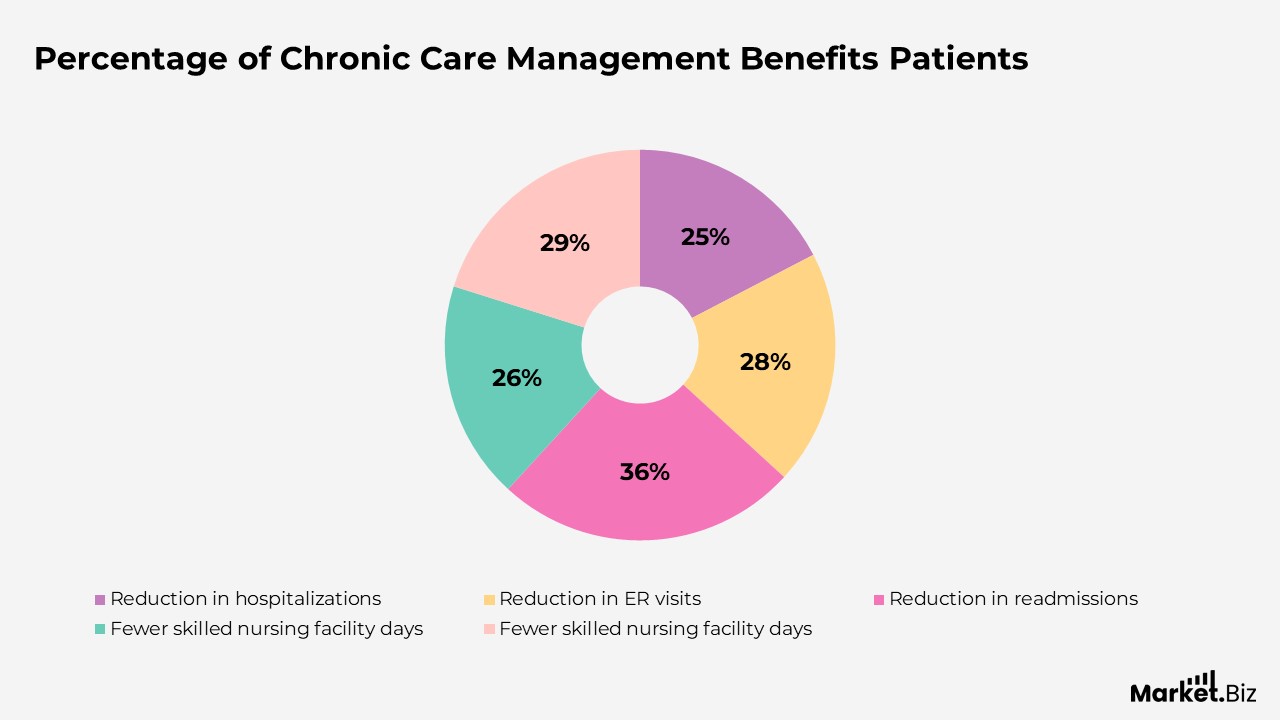
- Effective chronic care management programs can reduce hospitalisations by 25%, emergency department visits by 35%, and mortality rates by 45%.
(Source: Mayo Clinic, NantHealth, Healthline, Market.us)
Chronic Pain Treatment Market Size
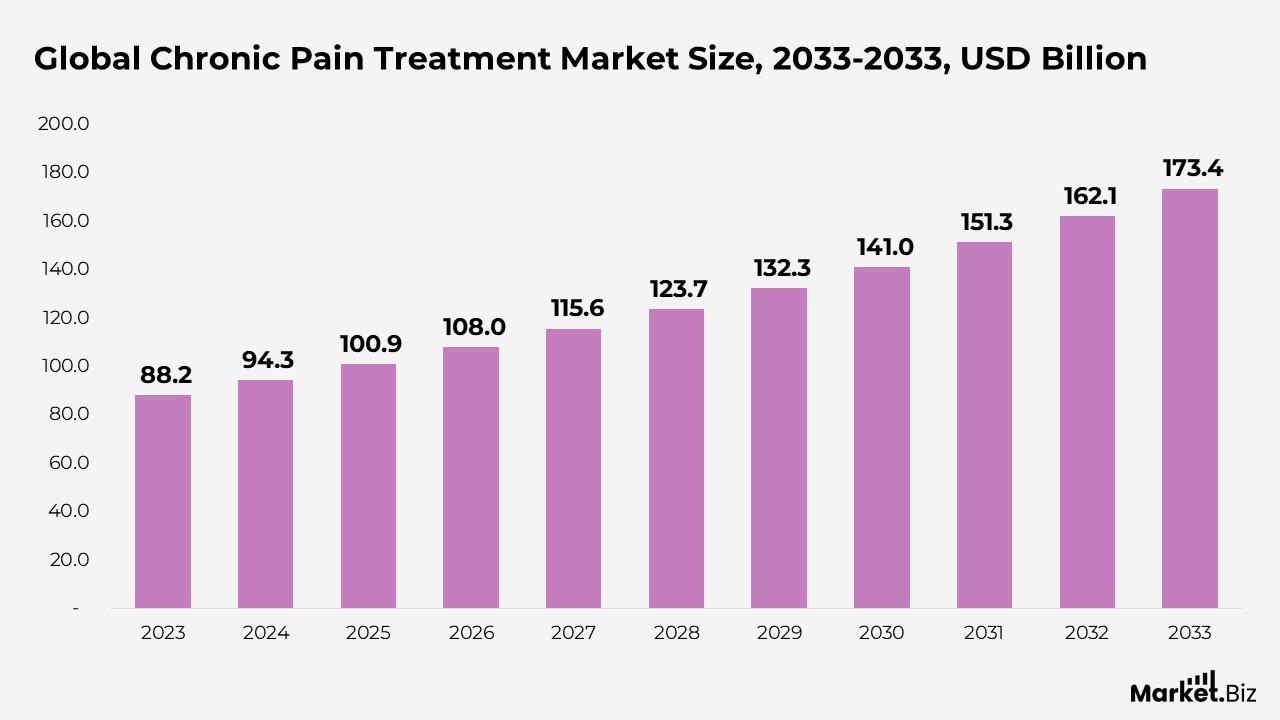
- According to Market.us, the global chronic pain management market is projected to grow from $100.9 billion in 2025 to $173.4 billion by 2033, with a compound annual growth rate (CAGR) of 7.0% from 2023 to 2033.
- The expansion of this market is primarily driven by the rising incidence of chronic diseases and the continuous innovation in chronic pain management technologies.
- In the Type Analysis segment, drugs dominate chronic pain treatment, accounting for 53.2% of the market. These drugs primarily focus on pharmacological approaches to managing chronic pain, with analgesics and anti-inflammatory medications playing a pivotal role in addressing persistent discomfort.
- Neuropathic pain holds a notable 31.6% share in the chronic pain treatment market, emphasizing its importance and prevalence among chronic pain conditions. Market offerings cater to various conditions, including postoperative pain, fibromyalgia, migraines, bone fractures, muscle sprains/strains, cancer pain, arthritic pain, and acute appendicitis.
- Hospitals dominate the chronic pain treatment market, accounting for 61.2% of the market. They are crucial in providing comprehensive, personalized care for individuals with chronic pain, offering a broad spectrum of services and expert care. Clinics and nursing homes also contribute by providing alternative care settings for patients.
- North America is expected to maintain its dominant position, with an estimated 46.5% market share and a global value of approximately USD 41 billion for chronic pain treatments. This dominance is driven by key pharmaceutical players in the region and their ongoing contributions to the development of innovative chronic pain therapies, thereby ensuring North America’s leadership in the market.
(Source: World Health Organization, USA Facts, Centers For Disease Control and Prevention, National Institute of Health )
Prevalence of Chronic Diseases
- Chronic disease accounted for approximately 71% of all deaths worldwide.
- NCDs, including cardiovascular diseases, Cancer, chronic respiratory diseases, and diabetes, are responsible for 41 million deaths each year, equivalent to 74% of all deaths globally.
- NCDs are the leading cause of death and disability worldwide, disproportionately affecting low- and middle-income countries.
- CVDs are the leading cause of death globally, with an estimated 20.5 million deaths in 2021.
- The global cancer burden is projected to reach 29.8 million new cancer cases per year by 2040.
- Chronic respiratory diseases, including chronic obstructive pulmonary disease (COPD) and asthma, affect more than 1 billion people globally.
- COPD is responsible for 3.5 million deaths per year, accounting for 5% of all deaths worldwide.
(Source: World Health Organization, National Institute of Health, World Health Federation)
Chronic Disease Prevalence by Category
Cardiovascular Diseases
- Cardiovascular diseases (CVDs) remain the leading cause of death worldwide, accounting for a significant portion of global mortality.
- Every year, cardiovascular diseases result in approximately 20.5 million deaths worldwide, highlighting the global health burden.
- In the United States, heart disease is responsible for around 702,880 deaths annually, representing 1 in every five deaths in the country.
- CVDs were responsible for an estimated 17.9 million deaths globally in 2019, making up 32% of all deaths worldwide that year.
- Heart attacks and strokes account for about 85% of all cardiovascular disease-related fatalities.
- Hypertension is a key risk factor for CVDs, with around 1.13 billion people globally living with high blood pressure.
- A study projected that the total economic cost of stroke and cardiovascular diseases among US adults would nearly triple from $627 billion in 2020 to $1.85 trillion by 2050, underscoring the escalating financial burden.
- Approximately 6.2 million adults in the United States live with heart failure, further contributing to the country’s cardiovascular disease crisis.
- In 2020, cardiovascular disease (CVD) was the primary cause of death in the United States, resulting in 928,741 deaths that year.
(Source: World Heart Federation, Centers for Disease Control and Prevention, NCD Alliance, World Health Organization, American Heart Association Journals, National Institute of Health, Professional.heart.org)
Cancer
- Cancer remains the second leading cause of death worldwide, with its prevalence varying across different types of the disease.
- In 2022, it was estimated that there were 19.9 million new cases of Cancer and 9.7 million cancer-related deaths globally.
- The most common types of Cancer include lung, breast, colorectal, prostate, and stomach cancers, each with varying incidence rates across regions.
- In the United States, approximately 2.4 million new cancer cases were diagnosed in 2022, leading to around 608,570 cancer-related deaths.
- Lung cancer continues to be the leading cause of cancer-related mortality globally, contributing significantly to the overall mortality burden.
- Globally, 2022 saw an estimated 2.2 million new cases and 2.4 million deaths from lung cancer, underscoring its impact.
- Breast cancer is the most frequently diagnosed Cancer in women. In 2022, an estimated 2.29 million new cases of breast cancer were reported worldwide.
- Colorectal Cancer was diagnosed in approximately 1.9 million individuals worldwide in 2022, highlighting its widespread occurrence.
- An estimated 1.46 million new cases of prostate cancer were recorded globally in 2022, contributing to the rising cancer burden.
- In the US, excluding non-melanoma skin cancer, around 40% of newly diagnosed cancers in adults are preventable. This includes approximately 811,000 avoidable cases in 2025, with 19% of cancers attributed to smoking, 8% to excessive body weight, and 5% to alcohol consumption.
(Source: World Health Organization, American Cancer Society)
Diabetes
- In 2022, more than half of individuals living with diabetes did not receive medication for their condition, with treatment coverage being particularly low in low- and middle-income countries, highlighting the global disparities in diabetes care access.
- Diabetes is a leading cause of serious health complications, including blindness, kidney failure, heart attacks, strokes, and lower-limb amputations, all of which contribute to the heavy healthcare burden.
- By 2024, diabetes is expected to affect approximately 589 million adults globally, with the prevalence projected to increase to 643 million by 2030 and 853 million by 2050, reflecting the growing global epidemic.
- Type 1 diabetes affects over 9.5 million people worldwide in 2024, including 1.9 million children and adolescents under the age of 20, highlighting the prevalence of this autoimmune disease in younger populations.
- An estimated 635 million people globally are predicted to have impaired glucose tolerance in 2024, while 488 million are expected to have impaired fasting glucose, both of which are significant risk factors for the progression to type 2 diabetes.
- Diabetes-related deaths are projected to exceed 3.4 million in 2024 among individuals aged 20–79, underscoring the deadly consequences of unmanaged diabetes.
Moreover
- Type 2 diabetes is the most prevalent form of diabetes, comprising approximately 90-95% of all cases worldwide, while type 1 diabetes, which typically develops in childhood or adolescence, remains less common.
- The prevalence of diabetes is notably higher in individuals aged 65 and older, with 1 in 5 adults in this age group living with the condition, signaling the aging population’s increased vulnerability to diabetes.
- The Western Pacific region, including countries such as China and Japan, has the highest number of diabetes cases globally, with Europe and North America also experiencing significant prevalence.
- The annual economic burden of diabetes is estimated at $966 billion globally, driven by direct medical costs, lost productivity, and other related expenses, underscoring the economic strain of the disease.
- In the United States, approximately 38.4 million individuals have diabetes, with 1 in 5 unaware of their condition. Additionally, around 97.6 million American adults have prediabetes, putting them at high risk of developing type 2 diabetes if not managed properly.
- Studies have shown that lifestyle changes, including a healthier diet, regular physical activity, and weight loss, can prevent or delay the onset of type 2 diabetes by as much as 40-70%, offering a pathway for reducing the diabetes burden.
- Type 1 diabetes is among the most common chronic diseases in children, with an estimated 1.1 million children and adolescents globally affected by the condition, underscoring its significant impact on younger populations.
(Source: International Diabetes Foundation, Hi-Tech Medical College & Hospital, National Institute of Health, Centers for Disease Control and Prevention)
Respiratory Diseases
- COPD impacts nearly 200 million people worldwide, representing about 4% of the global population, with 3.2 million deaths attributed to it annually as of 2021.
- Respiratory diseases rank among the leading causes of death globally, accounting for approximately 8 million deaths every year, or about 12% of all deaths worldwide.
- Asthma affects around 262 million people globally, with the disease causing approximately 461,000 deaths annually. The prevalence of asthma continues to increase, particularly among children and young adults, signaling a rising public health challenge.
- Smoking is the leading cause of many respiratory diseases, including chronic obstructive pulmonary disease (COPD) and lung cancer. It is responsible for around 90% of lung cancer deaths and contributes to 80% of COPD-related deaths, emphasizing the need for anti-smoking initiatives.
- In 2023, air pollution significantly contributed to respiratory diseases, with approximately 4.2 million deaths attributable to outdoor air pollution and 3.8 million to indoor air pollution. These figures underline the critical role of air quality in respiratory health.
Moreover
- Regions such as the Western Pacific, Southeast Asia, and Africa bear the heaviest burden of respiratory diseases, largely due to limited access to healthcare and preventive measures, highlighting the disparities in healthcare availability across the globe.
- Chronic obstructive pulmonary disease (COPD) is projected to incur a global economic cost of $4.33 trillion between 2020 and 2050, underscoring the substantial financial strain the disease imposes on global health systems.
- Influenza affects 5-15% of the global population annually, resulting in 3-5 million severe cases and between 290,000 and 650,000 respiratory-related deaths, emphasizing the seasonal impact of respiratory infections.
- More than 251 million people worldwide are affected by chronic obstructive pulmonary disease (COPD), reflecting its widespread prevalence and the ongoing need for better prevention and management strategies.
- In 2021, the European Union saw 324,300 deaths from respiratory diseases, accounting for 6.1% of all deaths in the region, highlighting the significant health impact of respiratory diseases in this area.
(Source: Forum of International Respiratory Societies, World Health Organization, American Lung Association)
Mental Health Disorders
- Approximately 20% of children and adolescents worldwide experience a mental health condition, highlighting the significant global burden of mental health issues in younger populations.
- Suicide is the leading cause of death among individuals aged 15-29, reflecting the urgent need for targeted mental health interventions and prevention strategies for young people.
- Around 1 in 5 people globally are affected by post-conflict mental health conditions, underscoring the long-term psychological impact of conflict and the importance of mental health support for affected populations.
- Globally, the median government spending on mental health accounts for less than 2% of total health expenditure, illustrating the underfunding of mental health services despite the rising prevalence of mental health conditions.
- Depression and anxiety are the two most prevalent mental health conditions worldwide, affecting millions of people and contributing significantly to global health burdens.
- Mental health conditions cost the global economy approximately USD 1 trillion annually, due to lost productivity and healthcare expenses, emphasizing the economic impact of mental health challenges..
(Source: World Health Organization, Market.us)
Economic Benefits and Effectiveness of Chronic Care Management Programs
- The Centers for Medicare and Medicaid Services (CMS) reported that CCM services generated an estimated savings of $74 per patient per month for Medicare beneficiaries, highlighting the cost-effectiveness of these programs in managing healthcare expenses.
- A study in the Journal of General Internal Medicine found that chronic care management (CCM) programs led to a 15% reduction in hospitalizations and emergency department visits, underscoring the effectiveness of proactive care in reducing the need for urgent medical interventions.
- A study published in JAMA showed that CCM programs contributed to an 8.3% improvement in medication adherence among patients with chronic conditions, emphasizing the role of consistent care management in ensuring better treatment compliance.
- Research published in the Journal of Medical Economics found that CCM programs reduced healthcare costs by 20% over two years, demonstrating long-term financial benefits for patients and the healthcare system.
- According to a Health Affairs study, comprehensive CCM programs can yield an average annual savings of $1,560 per patient, underscoring the value of structured chronic disease management in improving patient outcomes while reducing costs.
- The CMS estimates that CCM services could yield annual savings of up to $300 billion in healthcare costs across the US, underscoring the significant economic impact of widespread adoption of chronic care management strategies.
(Source: Centers for Medicare and Medicaid Services, Journal of General Internal Medicine, Health Affairs, Market.us)
Benefits of Chronic Care Management
- Improved patient outcomes
- Decreased hospital admissions
- Better adherence to treatment plans
- Enhanced patient involvement in care
- Expanded access to healthcare services
- Streamlined care coordination
- Increased revenue generation
(Source: ChartSpan Medical Technologies, Inc.)
Role of Technology in Chronic Care Management
- Remote patient monitoring (RPM) has been shown to reduce hospital readmissions by up to 50% for chronic conditions such as heart failure, diabetes, and COPD, demonstrating the effectiveness of continuous monitoring in preventing unnecessary hospitalizations.
- More than 80% of healthcare providers now incorporate telemedicine or telehealth technologies into their chronic care management strategies, underscoring the widespread adoption of digital tools for managing long-term health conditions.
- The use of wearable health devices for chronic care management has increased substantially, with more than 20% of US adults now owning a wearable device, reflecting growing interest in technology-driven solutions for managing chronic health conditions.
- AI-driven proactive care models have the potential to reduce hospitalisations by 17% and emergency department visits by 18% among patients with chronic diseases, underscoring the impact of artificial intelligence on improving patient outcomes and reducing healthcare utilisation.
- Studies have shown that RPM interventions can lead to a reduction in mortality rates by 20-60% for patients with chronic conditions, underscoring the life-saving potential of proactive remote monitoring.
- More than 325,000 mobile health apps are available worldwide, many offering valuable features for chronic disease management and self-care, thereby facilitating individuals’ ability to track and manage their conditions.
(Source: Accenture, Journal of Medical Internet Research, Health Affairs, Market.us)
Chronic Care Management Benefits to Patients
(Source: Neolytix LLC)
Recent Developments
Product Launches
- In February 2025, Validic launched Validic Impact, a digital remote patient monitoring (RPM) platform designed to analyse and summarise patient data trends. This solution enables healthcare providers to quickly and efficiently gain a comprehensive view of their patients’ health.
- In June 2024, Prevounce Health, a company specialising in RPM devices, software, and services, launched the Pylo GL1-LTE, a remote BGM device designed for the remote monitoring of patients with diabetes.
Investment and Funding
- In February 2024, HealthSnap, a provider of Chronic Care Management and Remote Patient Monitoring solutions, secured USD 25 million in funding to fuel the expansion of its Remote Patient Monitoring and Chronic Care Management platform.
- HealthPlus introduced a new mobile app to enhance chronic care management. The app offers features such as medication reminders, symptom tracking, and virtual consultations with healthcare providers, and has reached 500,000 downloads within the first six months.
Enhanced Healthcare Collaboration
- Chronic care management services have been incorporated into primary care settings and specialized clinics, promoting collaboration among healthcare professionals and enhancing care coordination for patients with complex health issues.
- Value-based care models have encouraged healthcare organisations to prioritise chronic care management programs, with the aim of improving patient outcomes while reducing hospital admissions and emergency department visits.
Strategies to Enhance Patient Involvement in Chronic Care
- Healthcare providers introduced engagement strategies to support patients in managing their chronic conditions. These initiatives include educational programs, self-management tools, and peer support networks.
- Digital health technologies, such as mobile applications and wearable devices, enable remote patient monitoring and promote active participation in chronic care management.
Regulatory Landscape
- Regulatory bodies have introduced reimbursement policies and quality performance standards for chronic care management services, encouraging healthcare providers to offer high-quality, coordinated care for individuals with chronic conditions.
Conclusion
Chronic Care Management Statistics: Chronic care management (CCM) is essential in tackling the increasing global prevalence of chronic diseases. Chronic conditions account for a significant share of healthcare spending and hospital admissions, making the demand for efficient CCM strategies greater than ever. By integrating digital technologies and tailored care plans, CCM enhances patient outcomes while lowering healthcare costs, reducing hospital readmissions, and decreasing mortality rates.
With the rise in chronic diseases, especially among ageing populations, prioritising the optimisation of CCM programs will be key to improving quality of life, achieving better disease management, and ensuring the sustainability of healthcare systems in the long term.
FAQ’s
Chronic Care Management (CCM) entails a coordinated approach to the care of individuals with long-term health conditions. Its primary goals are to enhance health outcomes, reduce hospital readmissions, and cut healthcare costs. This process includes consistent monitoring, developing customized care plans, and integrating digital health tools to support patient management.
CCM is vital as chronic conditions account for healthcare spending and hospital admissions. By effectively managing these conditions, CCM improves patient well-being, reduces healthcare costs, and helps prevent complications, such as unnecessary hospitalisations and early mortality.
Digital health technologies, including remote monitoring and telehealth services, have significantly transformed CCM. These tools facilitate ongoing patient tracking and create individualized care strategies, boosting patient involvement and enhancing overall health outcomes.
CCM positively impacts patient health by improving the control of chronic conditions, minimizing complications, and fostering healthier lifestyle choices. It also helps manage multiple chronic conditions simultaneously, improving the patient’s overall quality of life.
Common chronic conditions include diabetes, hypertension (high blood pressure), cardiovascular disease, chronic obstructive pulmonary disease (COPD), asthma, osteoarthritis, kidney disease, and mental health conditions like depression and anxiety.