







Introduction
Honey Statistics: Honey, a delightful substance created by bees from the nectar of blossoms, is well-known for its long-standing use in culinary practices, traditional medicine, and healing methods. Its makeup includes sugars such as glucose and fructose, in addition to water and other natural elements. Bees collect nectar from flowers using their proboscis and undergo a digestive transformation to turn it into honey.
There are various types of honey available, each with a distinct flavor shaped by the particular flowers that bees visit. Individuals utilise honey as a natural sweetener in their cooking, value its possible health advantages, and incorporate it into both beauty products and culinary applications, thanks to its natural properties.
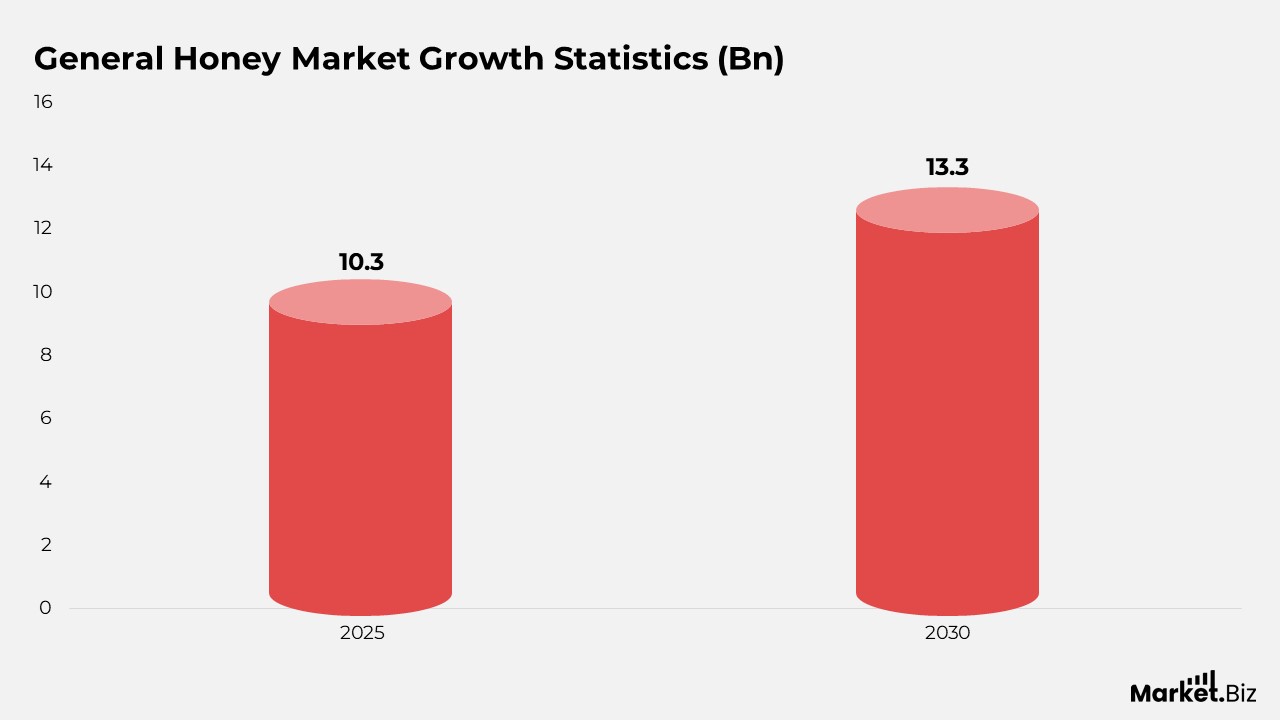
In 2018, global honey production was approximately 1,870 thousand tonnes, with China being the leading producer and exporter (accounting for 24% of production and 18% of exports). The worldwide honey market is anticipated to expand from USD 6.43 billion to over USD 8 billion by 2028-2032. Fuelled by the increasing demand for natural sweeteners. Significant growth regions include Africa, while major producers frequently encounter price fluctuations due to climatic and environmental issues.
Editor’s Choice
- Organic honey holds a significant 78% market share, reflecting a strong consumer preference for natural and sustainably sourced honey products.
- Sugars and related compounds represent a substantial part of honey’s makeup, comprising 30% of its total composition. This not only imparts a sweet flavor but also acts as a source of energy.
- In 2023, the worldwide honey market achieved a revenue of USD 9.3 billion.
- The Central African Republic holds the top position in the rankings by a significant margin.With its residents consuming an average of 9.62 grams of honey each day.
- In 2021, China emerged as the leading producer of natural honey globally. Achieving an impressive production volume of 472.7 thousand metric tons.
- China took the lead with a remarkable export value of USD 277.7 million. Underscoring its status as a significant exporter of honey products.
General Honey Statistics
- In 2023, the worldwide honey market achieved a revenue of USD 9.3 billion.
- Organic honey holds a significant 78% market share, reflecting a strong consumer preference for natural and sustainably sourced honey products.
- Carbohydrates are the primary component of honey, constituting 17.3 grams of its overall content.
- Honey consumption per capita shows considerable variation among different nations. The Central African Republic stands out, with its residents consuming an average of 9.62 grams of honey each day.
- In 2021, China led the global production of natural honey, establishing itself as the clear frontrunner with a remarkable output of 472.7 thousand metric tons.
- The United States (U.S.A) topped the import rankings. With a notable import volume of 220,232 metric tonnes, valued at USD 667 million.
- The Codex Alimentarius Commission has set forth 15 parameters regarding honey standards. For example, the moisture content in honey, excluding heather honey, must not surpass 20%.
Honey Market Size Statistics
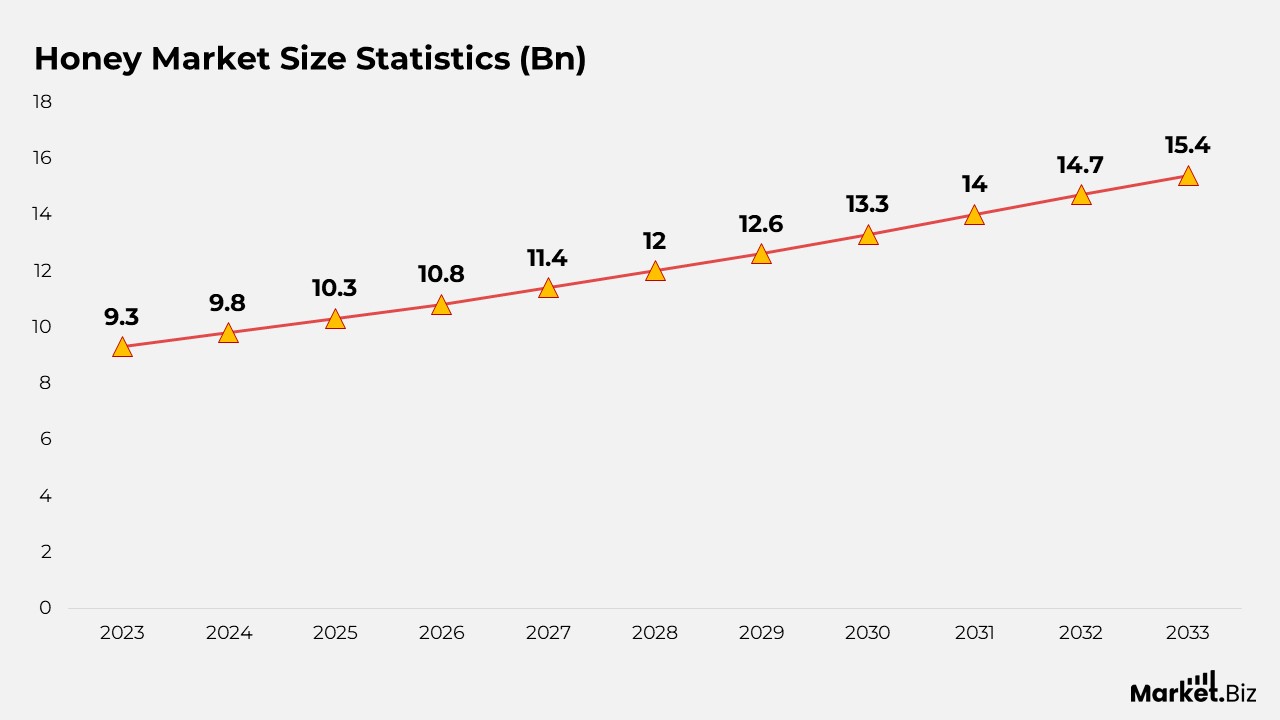
- In 2023, the market achieved a revenue of USD 9.3 billion, which is projected to rise to USD 9.8 billion in 2024.
- This favorable trend is expected to continue, with estimated revenues of USD 10.3 billion in 2025, USD 10.8 billion in 2026, and natural and organic USD 11.4 billion in 2027.
- The market’s growth can be attributed to several factors, including heightened consumer awareness regarding the health benefits of honey. An increasing demand for natural and organic products, and broader applications within the food and beverage sector.
- Moreover, the market is anticipated to reach USD 12.0 billion in 2028, USD 12.6 billion in 2029, and a remarkable USD 13.3 billion in 2030.
- This growth trajectory is expected to continue, with projected revenues of USD 14.0 billion in 2031 and USD 14.7 billion in 2032. Ultimately culminating in a forecasted revenue of USD 15.4 billion by 2033.
Honey by Processing Statistics
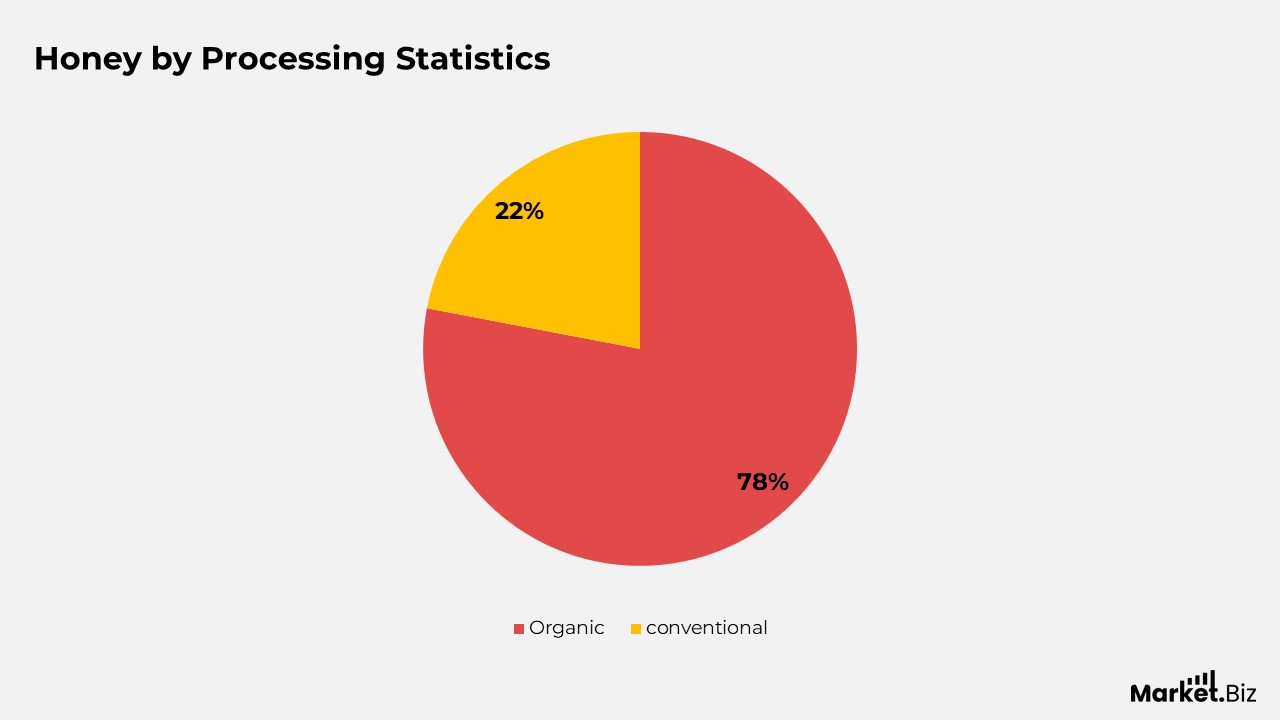
- Organic honey holds a significant position in the market, commanding a substantial 78% market share. This indicates a strong consumer preference for honey products that are natural and sustainably produced.
- This impressive market presence of organic honey illustrates the increasing awareness among health-conscious consumers who prefer products devoid of synthetic chemicals and pesticides.
- Conversely, conventional honey occupies a relatively minor market share, representing 22% of the total market.
Statistics of Honey Constituents
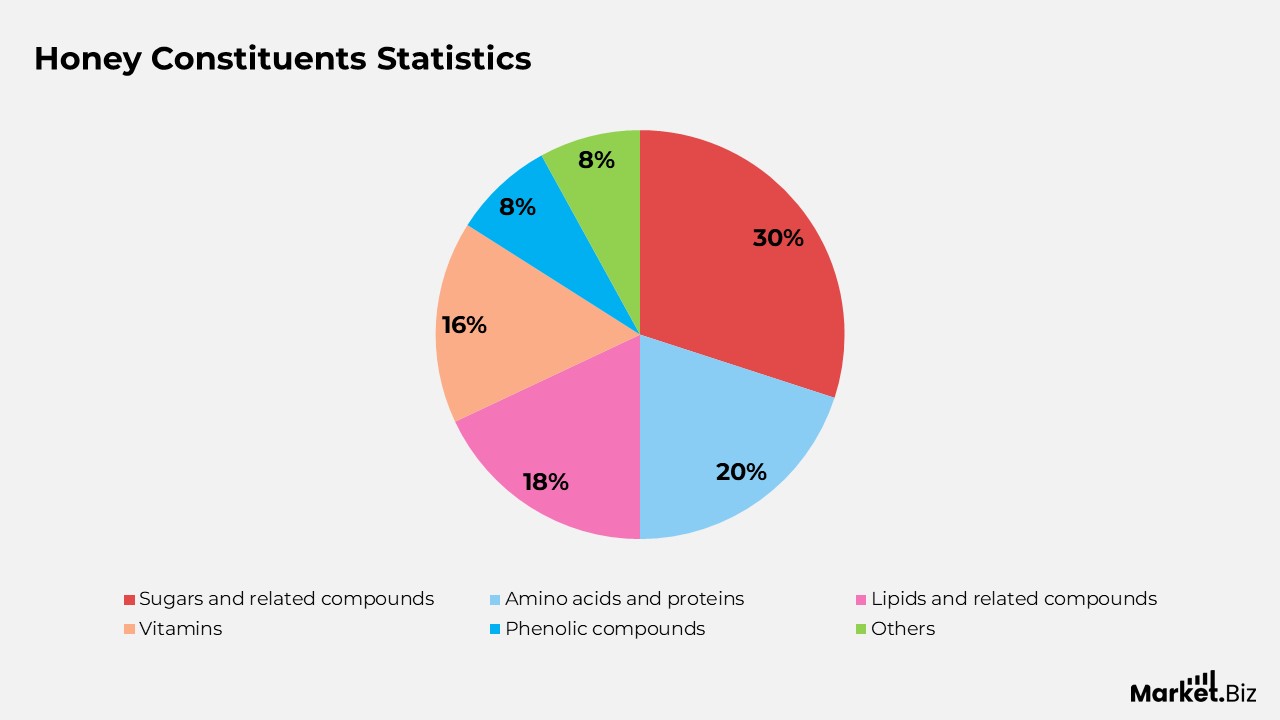
- Sugars and related compounds represent a substantial part of honey’s makeup, comprising 30% of its total composition. This not only imparts a sweet flavor but also acts as a source of energy.
- Amino acids and proteins account for 20%, providing vital building blocks necessary for the body’s tissues and enhancing honey’s possible nutritional advantages.
- Lipids and related compounds, which make up 18%, supply certain fats and lipid-based substances that. Although present in smaller amounts, contribute to the overall nutritional profile.
- Vitamins, which constitute 16%, deliver essential micronutrients to honey, thereby increasing its attractiveness as a nutritious food.
- Phenolic compounds, comprising 8%, offer antioxidant properties and potential health benefits. Additionally, another 8% includes various other compounds, further enriching honey’s nutritional diversity.
Honey Consumers by Nationwide Statistics
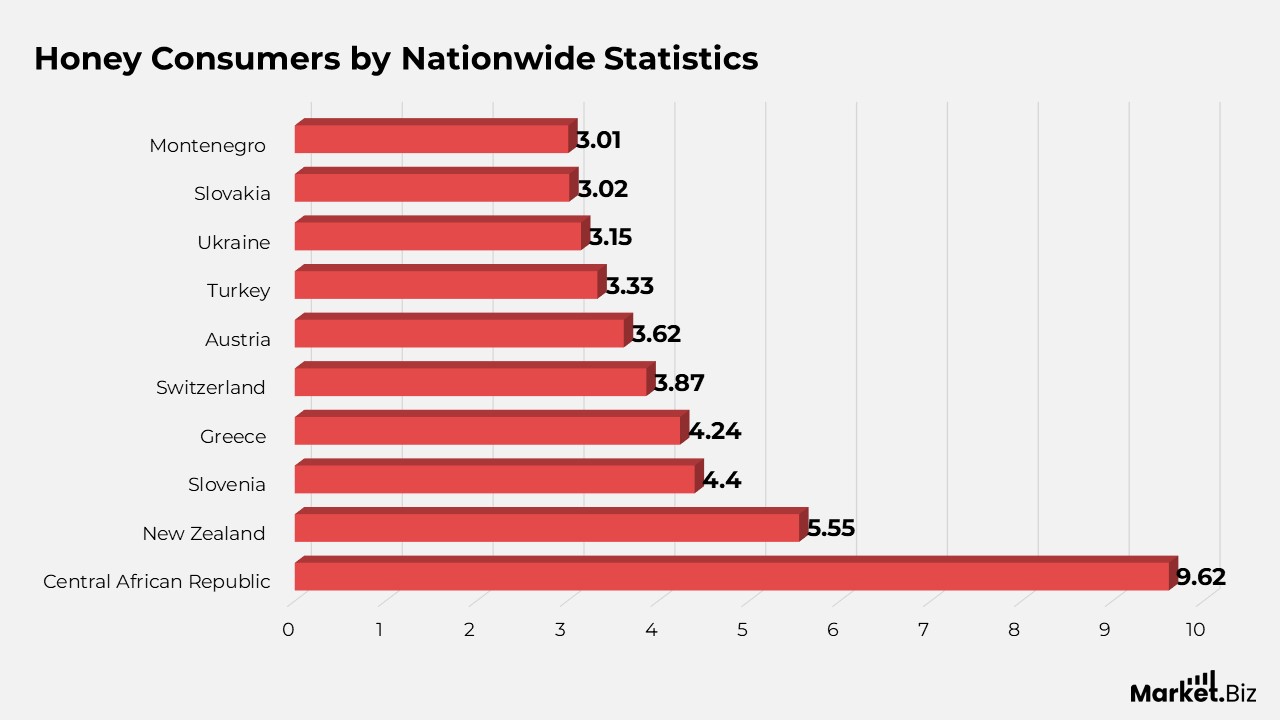
- The Central African Republic holds the top position in the rankings by a significant margin. With its residents consuming an average of 9.62 grams of honey each day.
- New Zealand is in a close second place, where the daily per capita consumption is recorded at 5.55 grams, underscoring the popularity of honey in that region.
- Slovenia holds the third position with an average daily consumption of 4.4 grams. Indicating a significant fondness for honey among its population.
- Switzerland and Greece exhibit a significant inclination towards honey. With daily per capita consumption levels of 3.87 grams and 4.24 grams, respectively.
Nations Statistics By Honey Production
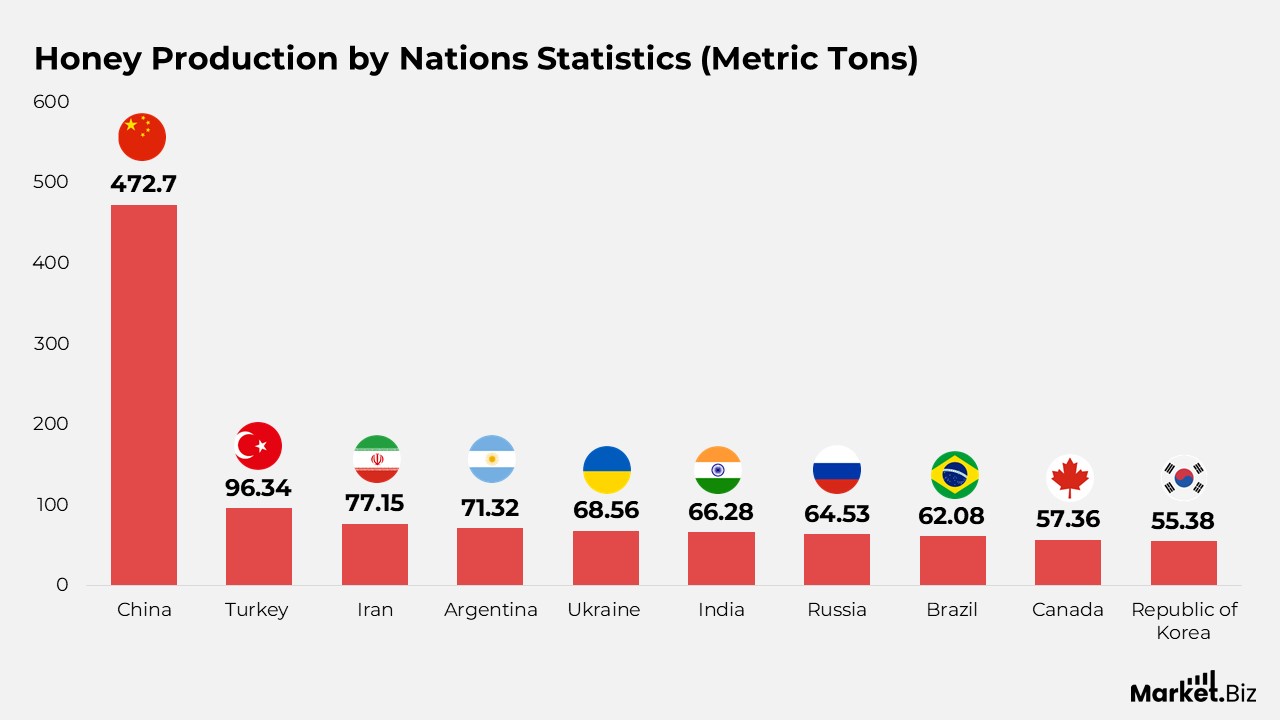
- In 2021, China emerged as the leading producer of natural honey globally. Achieving an impressive production volume of 472.7 thousand metric tons.
- This significant contribution from China highlights its extensive agricultural resources and expertise.
- Turkey followed in second place with a production of 96.34 thousand metric tons. Marking a notable presence in the global honey market.
- Additionally, Iran, Argentina, and Ukraine made considerable contributions. With honey production figures of 77.15 thousand metric tons, 71.32 thousand metric tons, and 68.56 thousand metric tons, respectively.
- India, Russia, Brazil, Canada, and the Republic of Korea also ranked among the top global honey producers. Each generates substantial quantities ranging from 55.38 thousand to 66.28 thousand metric tons.
Honey Exporting Nations Statistics
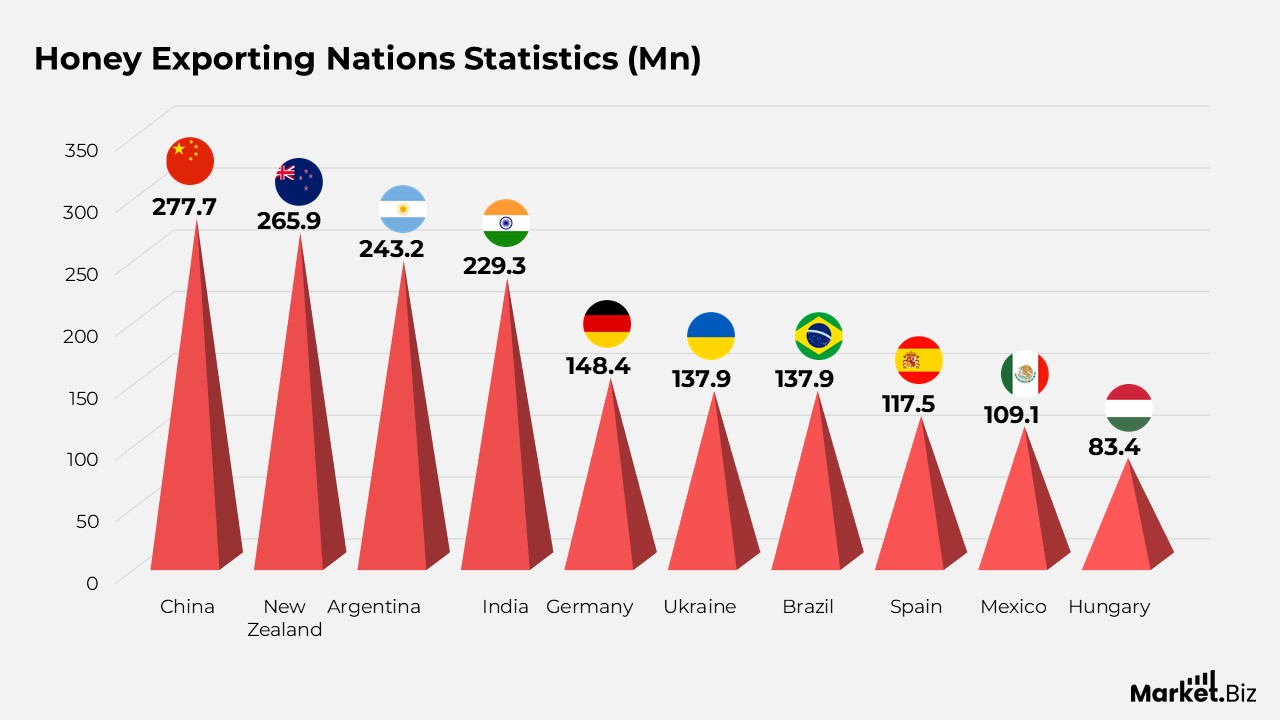
- China took the lead with a remarkable export value of USD 277.7 million. Underscoring its status as a significant exporter of honey products.
- New Zealand followed closely, achieving the second rank with an export value of USD 265.9 million, recognised for its premium honey offerings.
- Argentina also made a notable contribution, with honey exports amounting to USD 243.2 million, highlighting its role in the global honey market.
- India, with an export value of USD 229.3 million, exhibited a strong position in the international arena, propelled by its varied honey production.
- Germany, Ukraine, and Brazil each played a part, contributing USD 148.4 million, USD 137.9 million, and USD 137.9 million, respectively, emphasising their significance as key exporters.
- Mexico, Spain, and Hungary, with export values of USD 109.1 million, USD 117.5 million, and USD 83.4 million. Completed the list of leading honey-exporting countries.
Honey Import Nations Statistics
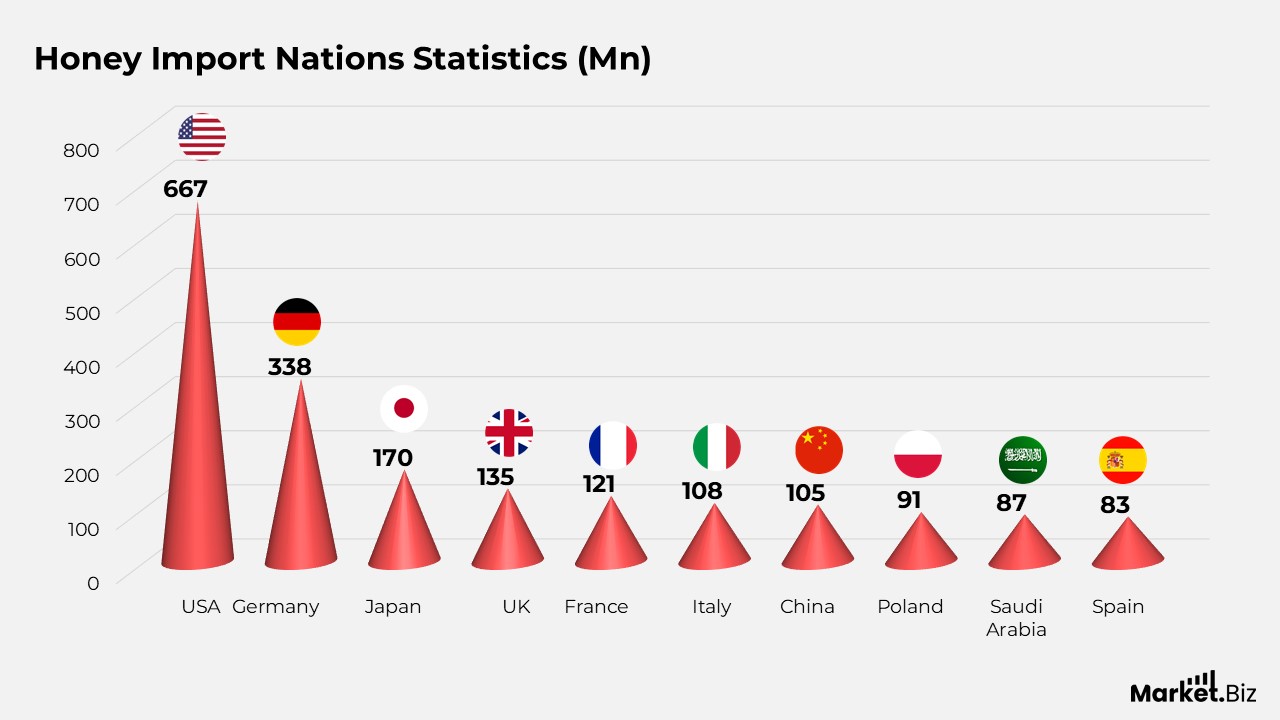
- The United States (U.S.A) demonstrated a remarkable import volume of 220,232 metric tonnes, which equated to a value of USD 667 million.
- Germany ranked as a notable honey importer, bringing in 82,529 mt valued at USD 338 million.
- The United Kingdom and Japan occupied the third and fourth spots, importing 46,863 metric tonnes and 47,132 metric tonnes. With corresponding values of USD 135 million and USD 170 million.
- Italy and France also stood out as important importers, with honey imports of 23,586 metric tonnes and 29,279 metric tonnes. Along with import values of USD 108 million and USD 121 million, respectively.
- Moreover, China imported 4,809 mt of honey, with a total value of USD 105 million.
- Saudi Arabia, Poland, and Spain rounded out the list of honey importers, with import quantities varying from 21,187 to 37,594 metric tonnes, and corresponding import values ranging between USD 83 million and USD 91 million.
Recent Statistics
- In July 2021, Dabur introduced ‘Dabur Honey Tasties’, a healthier option compared to traditional syrups, containing no added sugar.
- In January 2022, Sweet Harvest Foods Inc. purchased McKinney-based Nature Nate’s Honey Co., with the goal of enhancing its footprint in the natural sweeteners sector.
- In March 2023, Comvita Limited unveiled “Comvita Kids Yummy Honey” alongside the Comvita UMF 5+ Honey Squeeze bottles, targeting a younger audience.
Honey Future Predictions
- The market is projected to attain USD 12.0 billion by 2028, USD 12.6 billion by 2029, and an impressive USD 13.3 billion by 2030.
- This upward trend is anticipated to persist, with expected revenues of USD 14.0 billion in 2031 and USD 14.7 billion in 2032. Ultimately leading to a forecasted revenue of USD 15.4 billion by 2033.
Conclusion
In conclusion, honey is a precious natural substance produced by bees from the nectar of flowers. It primarily consists of glucose and fructose, along with water and other natural components, with its unique taste shaped by the types of flowers visited by the bees.
Honey acts as a sweetener in culinary applications, provides potential health benefits, and is utilised in both cosmetics and food preparations. The global honey market is experiencing growth due to heightened consumer awareness regarding its benefits.
International standards and regulations, such as those established by the Codex Alimentarius Commission and regional organisations like the European Union, guarantee the quality and safety of honey. Honey remains a valued and adaptable resource with a bright future ahead.
FAQs
There is no definitive “world No. 1 honey,” as preferences and quality differ; however, Dabur Honey is prominently advertised as the “World’s No. 1 Honey Brand” based on its sales in India, recognized for its purity and absence of added sugars. For distinctive flavors and specific regional varieties, options such as Turkish Pine Honeydew, Tasmanian Leatherwood, or Pefkothymaromelo Kritis (Greek Thyme/Pine) are highly esteemed for their exceptional taste and unique characteristics, as noted by taste tests and culinary websites.
Honey is a naturally occurring sweet substance created by honeybees from the nectar of flowers. It is a thick liquid that possesses a distinctive flavor and has a wide range of applications.
Bees gather nectar from blossoms using their proboscis (tongue) and store it in their honey stomach. They subsequently convert the nectar into honey through a process that involves enzymes and the reduction of moisture within the hive.