








Introduction
Loyalty Management Statistics: Loyalty management has become an essential strategy for businesses aiming to boost customer retention, encourage repeat purchases, and cultivate lasting relationships. In the face of heightened competition and shifting consumer expectations, well-designed loyalty programs have proven to be key in fostering brand loyalty and enhancing customer lifetime value.
The adoption of advanced technologies, such as AI and data analytics, has revolutionized loyalty management by allowing for more personalized and adaptive reward systems. As companies continue to prioritize customer-centric approaches, optimizing loyalty management solutions has gained even more importance. This shift is reflected in the increasing implementation of loyalty programs across various industries, with businesses dedicating more resources to tailored solutions that drive customer engagement and strengthen connections.
The rise of digital transformation and AI-driven solutions has been pivotal in this transition, allowing organizations to offer more personalized rewards and experiences. Loyalty management platforms have become essential tools for enhancing customer engagement, helping businesses analyze consumer behavior, improve customer experiences, and cultivate lasting loyalty.
Editor’s Choice
- 69% of consumers are expected to remain loyal to precise brands, retailers, and stores in 2024, marking a decline from 77% in 2022.
- 73% of Millennials show the strongest brand loyalty compared to other generations.
- True loyalty, driven by emotional connections, has grown by 26% since 2021, reaching 34% in 2024.
- 30% of consumers now factor in ethical considerations when determining brand loyalty, reflecting an increase from previous years.
- 54% of customers demonstrate strong loyalty to clothing and fashion brands, highlighting the sector’s robust brand attachment.
- 72% of consumers are loyal to at least one company.
- 88% of consumers believe it takes three or more purchases to establish brand loyalty.
- 64% of loyalty program members are willing to spend more to earn points.
- 84% of consumers are more likely to shop with brands that offer loyalty programs.
- Loyalty programs can boost revenue by 12% to 18%.
- 70% of consumers consider loyalty programs a significant factor in demonstrating their loyalty.
- Amazon ranks as the top brand, with 67.8% of consumers remaining loyal to it.
General Loyalty Program Statistics
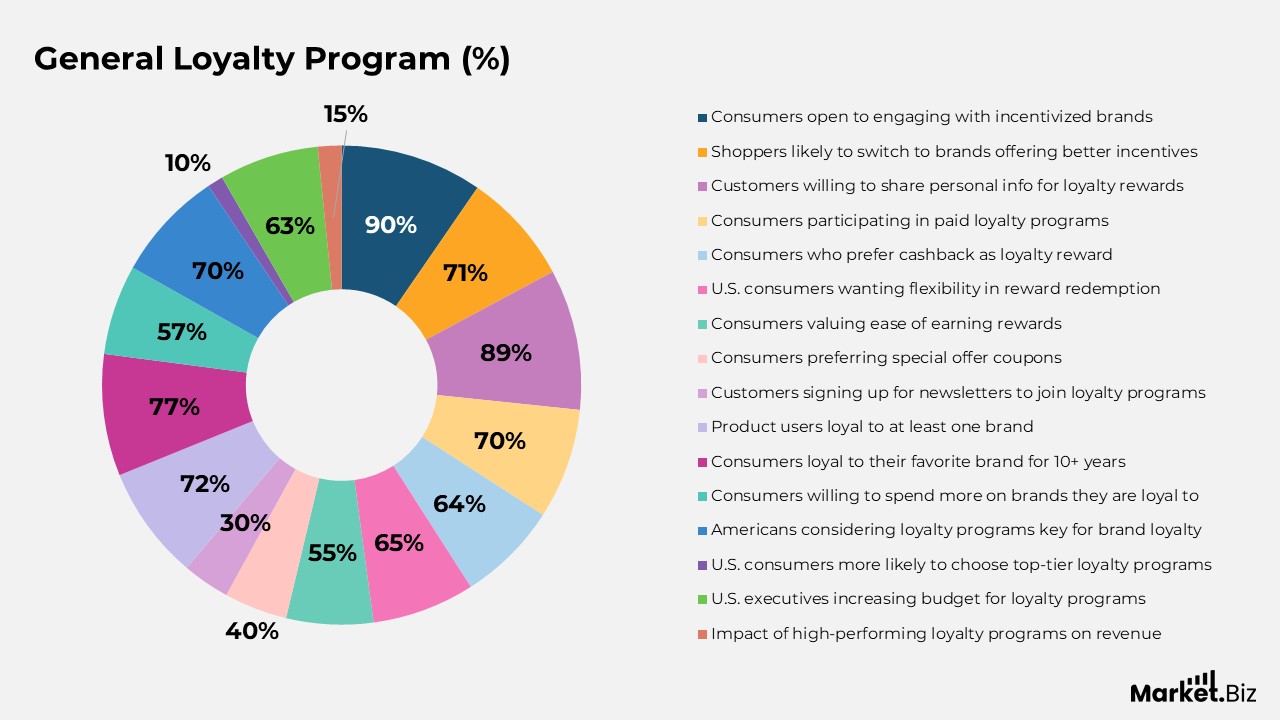
- 90% of consumers are open to engaging with a brand that offers incentives for their interactions.
- 71% of shoppers are likely to switch to a brand that provides better incentives for engagement.
- 89% of customers are willing to share personal information in exchange for loyalty points or rewards.
- 70% of consumers participate in paid loyalty programs, and nearly half of non-members would be willing to pay for membership if offered the right incentives.
- 64% of consumers prefer cashback as their primary loyalty reward, followed by 58% who favor free products, gifts, or samples.
- 65% of U.S. consumers believe they should have the flexibility to redeem rewards at their convenience.
- 55% of users value the ease of earning rewards as a crucial feature of loyalty programs.
- 40% of U.S. consumers prefer receiving special offer coupons as part of their loyalty rewards.
- 30% of customers sign up for a company’s newsletter to gain access to its loyalty program.
- 72% of product users are loyal to at least one brand or company.
- 77% of consumers remain loyal to their favourite brand for 10 years or more.
- 57% of consumers are willing to spend more on brands they feel loyal to.
- 70% of Americans consider loyalty programs a key factor in securing their loyalty to their favourite brands.
- U.S. consumers are 10% more likely to select top-tier loyalty programs, 14% more likely to shop frequently, and 12% more inclined to recommend these brands compared to lower-performing programs.
- 63% of executives in the U.S. reported collective their company’s reason for loyalty programs.
- High-performing loyalty programs can boost annual revenue from customers who redeem points by 15% to 25%.
(Source: Digital Silk, Statista, DemandSage, Joy Loyalty Program & Reward)
Customer Loyalty Software Market Size
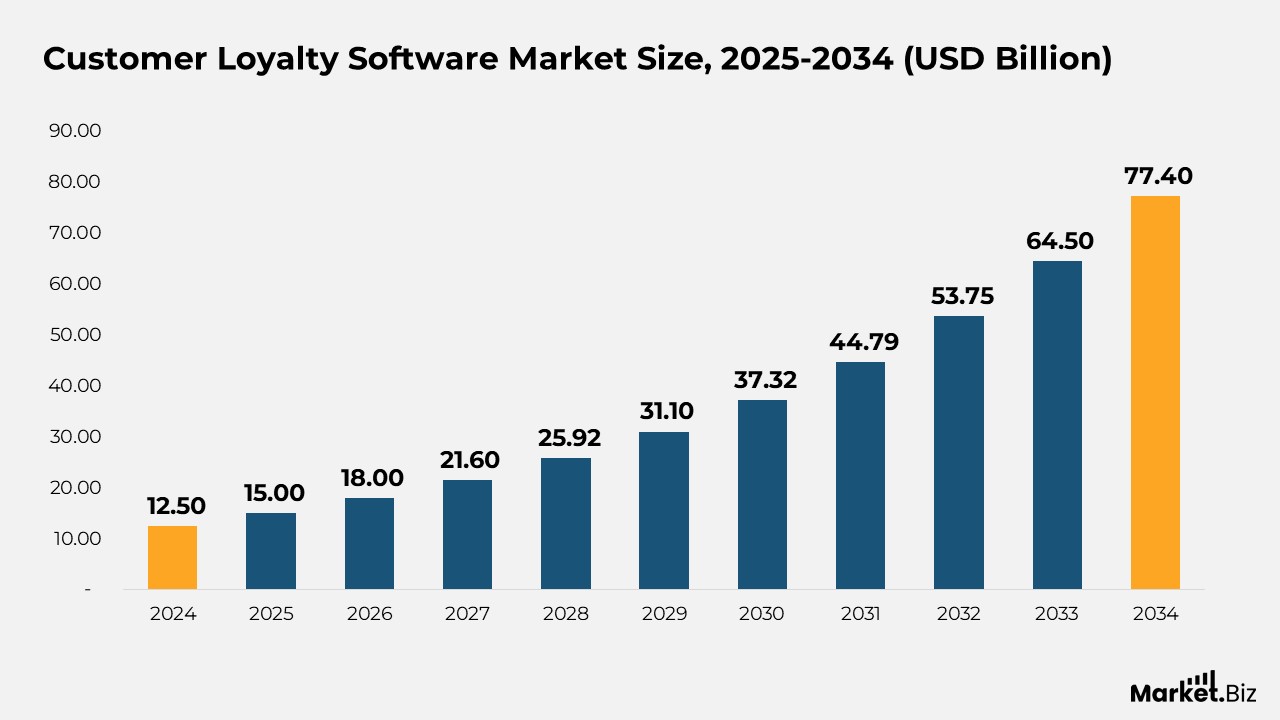
- According to Market.us, the global customer loyalty software market is anticipated to rise from $15.0 billion in 2025 to $53.8 billion by 2032, representing a compound annual growth rate (CAGR) of 11.5% from 2025 to 2034.
- Market growth is driven by increasing demand for personalized customer experiences and businesses’ need to strengthen retention, with loyalty programs enhancing purchase frequency and customer lifetime value.
- The software segment dominates the Customer Loyalty Software Market, holding 76.4% of the share, offering features like segmentation, reward tracking, and analytics.
- The Business-to-Business (B2B) operator segment accounts for 65.2% of the market, with B2B providers enabling efficient loyalty programs targeting businesses’ own customers or partners.
- Large enterprises represent the largest segment by organization size, capturing 70.2% of the market, requiring advanced solutions to support high transaction volumes and complex reward schemes.
- The US Customer Loyalty Software market, valued at USD 3.54 billion in 2024, is forecasted to reach USD 8.85 billion by 2034, growing at a CAGR of 9.6%.
- North America leads the Customer Loyalty Software market in 2024 with USD 4.42 billion, driven by digital infrastructure, AI adoption, and strong customer strategies.
- 91% of companies now run loyalty programs, generating 12-18% more incremental revenue from members, according to Clickpost.ai.
- Customers emotionally connected to a brand are worth 306% more, with personalization shown to boost engagement and purchase rates.
- 90% of businesses report positive ROI from loyalty initiatives, highlighting their importance in driving customer retention.
- 65% of revenue comes from repeat customers, with acquiring new ones costing 5–25 times more than retaining existing ones, according to Queue-it data.
- 77% of consumers remain loyal to a brand for over a decade, and a 5% increase in retention is linked to a 25% profit boost, demonstrating the business case for investing in loyalty.
(Source: Market.us)
Why Loyalty Matters?
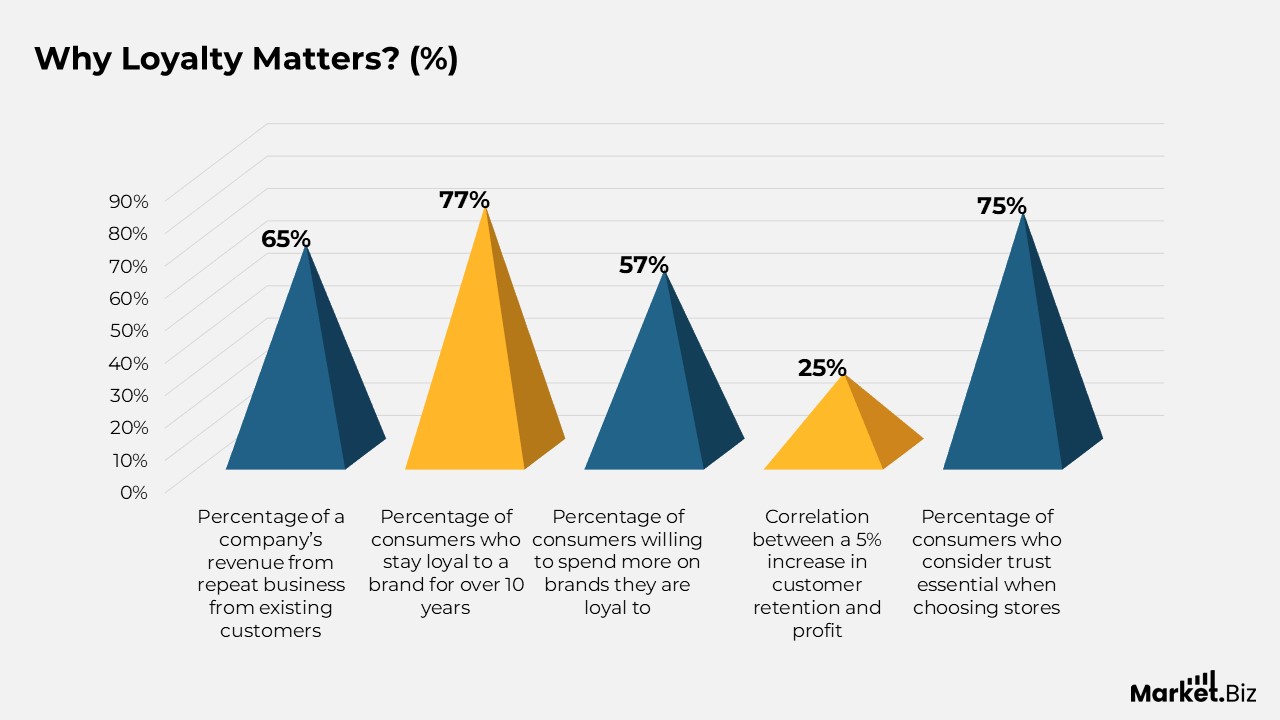
- 65% of a company’s revenue comes from repeat business from existing customers.
- Acquiring a new customer is 5-25 times more expensive than retaining an existing one.
- 77% of consumers stay loyal to a brand for over 10 years.
- You have a 60-70% chance of selling to an existing customer, compared to 5-20% for new prospects.
- 57% of consumers are willing to spend more on brands they are loyal to.
- A 5% growth in customer holding correlates with a 25% increase in profit.
- 3 in 4 consumers consider trust essential when choosing stores.
(Source: Queue.it, Statista)
Do Loyalty Programs Boost Sales?
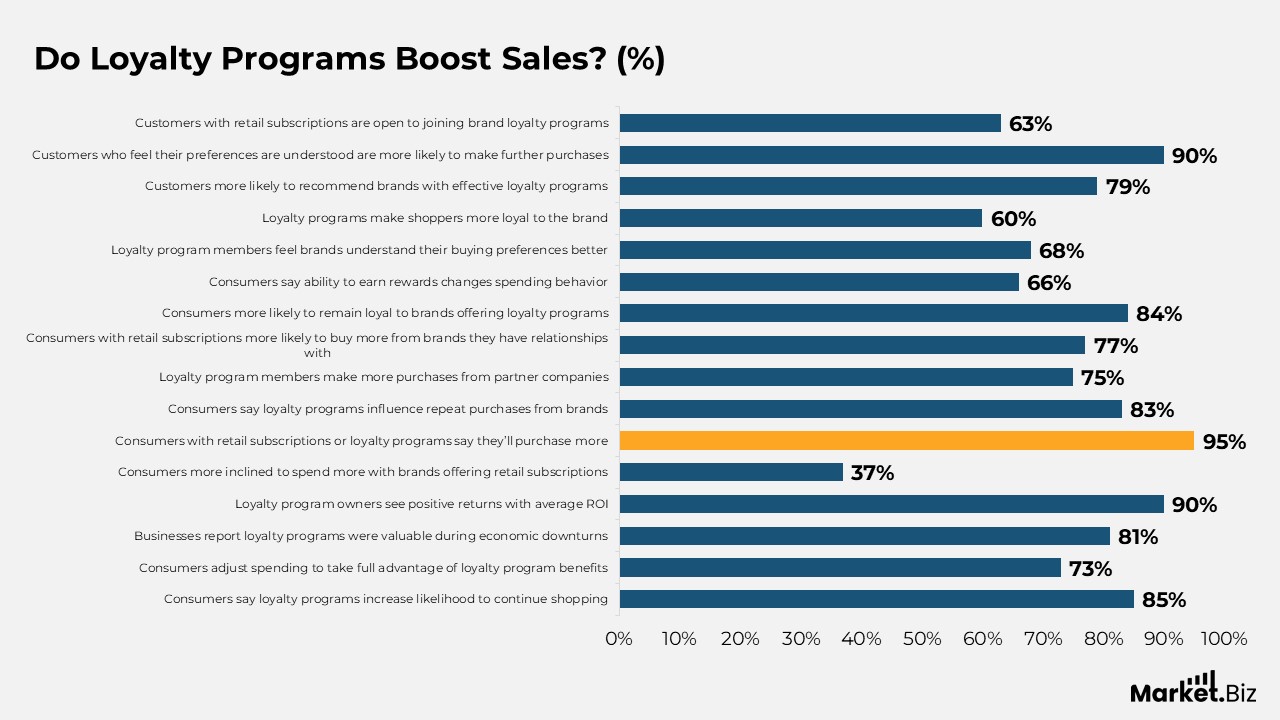
- 85% of consumers say loyalty programs increase their likelihood to continue shopping with brands.
- 73% of consumers adjust their spending habits to take full advantage of loyalty program benefits.
- 81% of businesses report that their loyalty programs were valuable during economic downturns.
- 90% of loyalty program owners see positive returns, with an average ROI of 4.8x.
- Loyalty program members spend, on average, 3.1x more annually than non-members who don’t redeem rewards.
- Members of loyalty programs contribute 12-18% more incremental revenue annually than non-members.
- The best-performing loyalty programs increase customer revenue by 15-25% each year.
- 37% of consumers are more inclined to spend more with brands offering retail subscriptions, compared to 28% for membership programs and 27% for loyalty program members.
- 95% of consumers with retail subscriptions or loyalty programs say they’ll purchase more from brands they feel connected to.
- 83% of consumers say being part of a loyalty program impacts their decision to repeat purchases from a brand.
- 75% of loyalty program members make more purchases from the companies they partner with.
- 77% of consumers with retail subscriptions are more likely to buy more from brands they have relationships with.
- 84% of consumers say they’re more likely to remain loyal to brands that offer a loyalty program.
- 66% of consumers say the ability to earn rewards changes their spending behavior.
- 68% of loyalty program members feel brands understand their buying preferences better.
- 60% of loyalty programs make shoppers more loyal to the brand.
- 79% of customers are more likely to recommend brands with effective loyalty programs.
- Companies understand that 90% of customers who feel their preferences are more likely to make further purchases.
- 63% of customers with retail subscriptions are open to joining the brand’s loyalty program, with 47% interested in obtaining a membership.
(Source: Queue.it, Statista)
Global Loyalty Management Market Size
- According to Market.us, the global loyalty management market is projected to rise from $8,220 million in 2021, representing a compound annual growth rate (CAGR) of 8% from 2023 to 2032.
- The growth of the market is driven by increasing customer numbers and engagement, with many companies integrating loyalty programs with referral initiatives, offering rewards like discounts, coupons, or free subscriptions.
- The customer retention market is expected to expand at a CAGR of 8.2% between 2023 and 2032, driven by the ability of loyalty management programs to enhance brand loyalty.
- In 2021, the on-premise deployment mode held the majority of revenue due to data security and privacy concerns, with the cloud segment expected to experience the highest growth during the forecast period.
- The consumer goods and retail segment was a significant contributor to global revenue in 2021, with loyalty programs driving repeat purchases through points, cashback, and discounts.
- North America accounted for 36% of revenue in 2021, with customer preferences for loyalty-based retail brands and financial incentives like cashback and discounts driving market growth.
(Source: Market.us)
Trust & Loyalty in Brands
- 70% of Gen Z consumers are more likely to spend more with a brand they trust, compared to 60% of Millennials and Gen X.
- 69% of Gen Z consumers are more likely to stay loyal to a brand they trust, compared to 63% of older generations.
- 76% of Gen Z are more likely to recommend a trusted business, compared to 71% of Millennials and Gen X.
- 68% of Gen Z consumers are more likely to join a brand’s loyalty program if they trust the brand, compared to 64% of older consumers.
- 90% of consumers will spend 10% or more on a product they trust over a competitor.
(Source: Queue.it, Statista)
The Impact of Trust on Loyalty
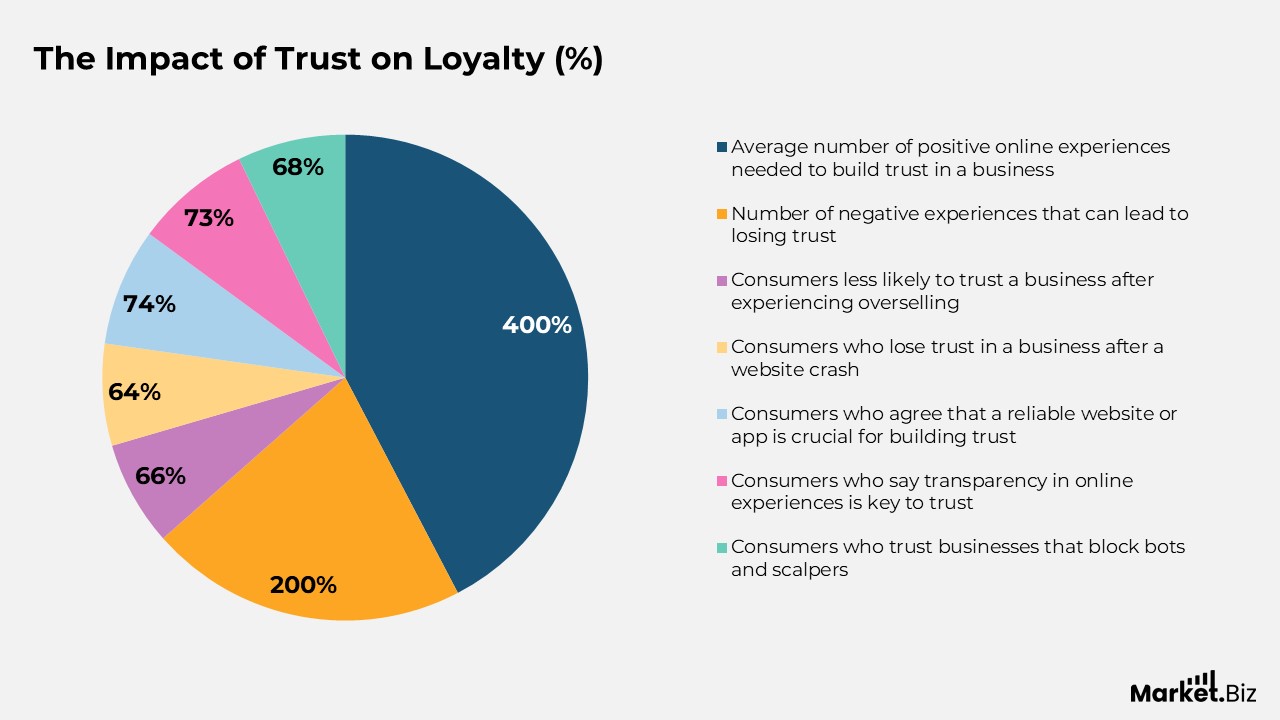
- It takes an average of 4 positive online experiences for consumers to trust a business, but only two negative experiences to lose that trust.
- 66% of consumers are less likely to trust a business after experiencing overselling.
- 64% of consumers lose trust in a business after a website crash.
- 74% of consumers agree that a reliable website or app is crucial for building trust.
- 73% of consumers say transparency in online experiences is key to trust.
- 68% of consumers trust businesses that block bots and scalpers.
(Source: Queue.it, Statista)
What Makes Loyalty Programs Effective?
- Consumers prioritize access to deals, discounts, and exclusive benefits when joining loyalty programs.
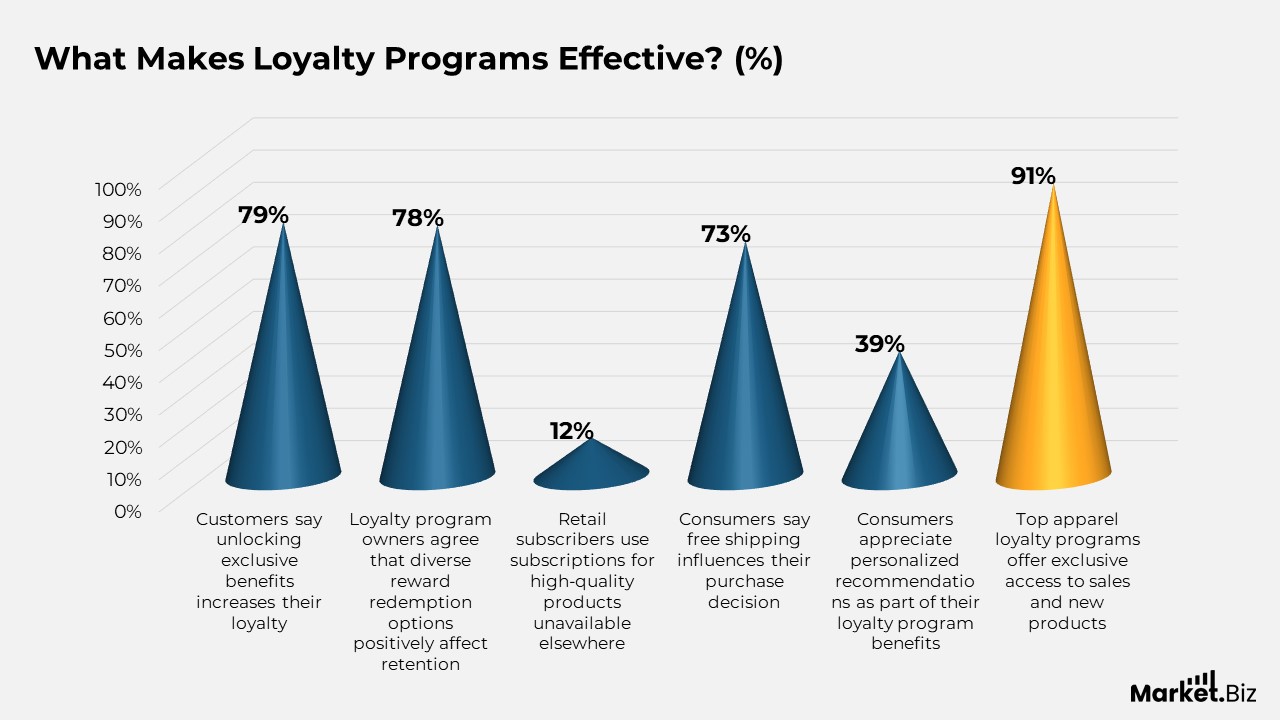
- 79% of customers say unlocking exclusive benefits increases their loyalty.
- 78% of loyalty program owners agree that diverse reward redemption options positively affect retention.
- 12% of retail subscribers use subscriptions for high-quality products unavailable elsewhere.
- 73% of consumers say free shipping influences their purchase decision.
- 60% of consumers value early access to sales, and 50.8% want early access to new products.
- 38.9% of consumers appreciate personalized recommendations as part of their loyalty program benefits.
- 91% of top apparel loyalty programs offer select contact to sales and new products.
(Source: Queue.it, Statista)
How Brand Values Influence Customer Decisions
- 63% of consumers are more likely to engage with brands whose values align with their own.
- 60% of consumers prioritize sustainability when making purchasing choices.
- 34% of shoppers are willing to pay a premium for eco-friendly products and services.
- 39% of Gen Z and 42% of Millennials would spend more for sustainable options.
- When a brand reflects a customer’s values, that customer is:
- 3.4x more likely to recommend your brand.
- 9.8x more likely to engage proactively with your brand.
- 9.9x more likely to increase spending with your brand.
(Source: Queue.it, DemandSage, Statista)
Brand Loyalty Statistics
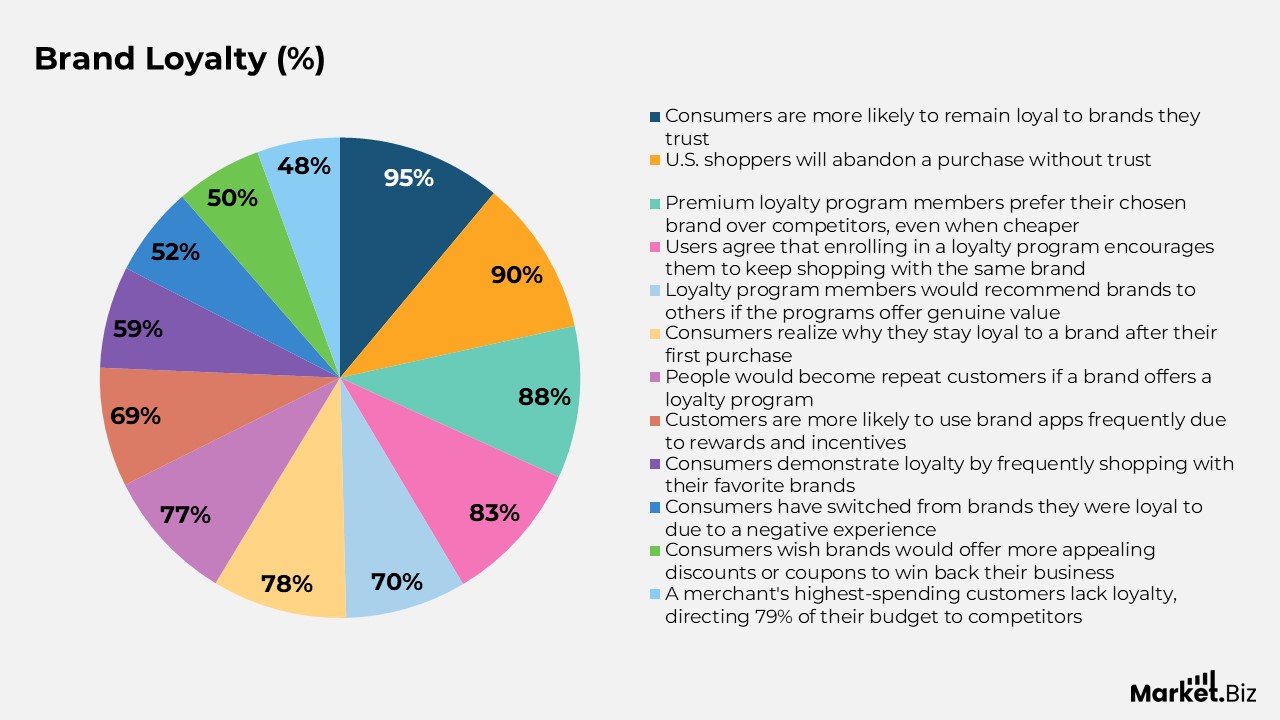
- 95% of consumers are more likely to remain loyal to brands they trust.
- Without trust, 90% of U.S. shoppers will abandon a purchase.
- Band-Aid leads as the most trusted brand in the U.S., with 60.6% of consumers, followed by UPS at 57.2%.
- 88% of premium loyalty program members choose their chosen brand over competitors, even when other options are cheaper.
- 83% of users agree that enrolling in a loyalty program encourages them to keep shopping with the same brand.
- 70% of loyalty program members would recommend brands to others if the programs offer genuine value.
- 78% of consumers say they only realize why they stay loyal to a brand after their first purchase.
- 77% of people would become repeat customers if a brand offers a loyalty program.
- 69% of customers are more likely to use brand apps frequently due to the rewards and incentives offered.
- 59% of consumers demonstrate loyalty to brands by frequently shopping with them.
- 52% of consumers have transferred from brands they were once loyal to due to a negative experience.
- 67% of men label themselves as brand-loyal, likened to 59% of women.
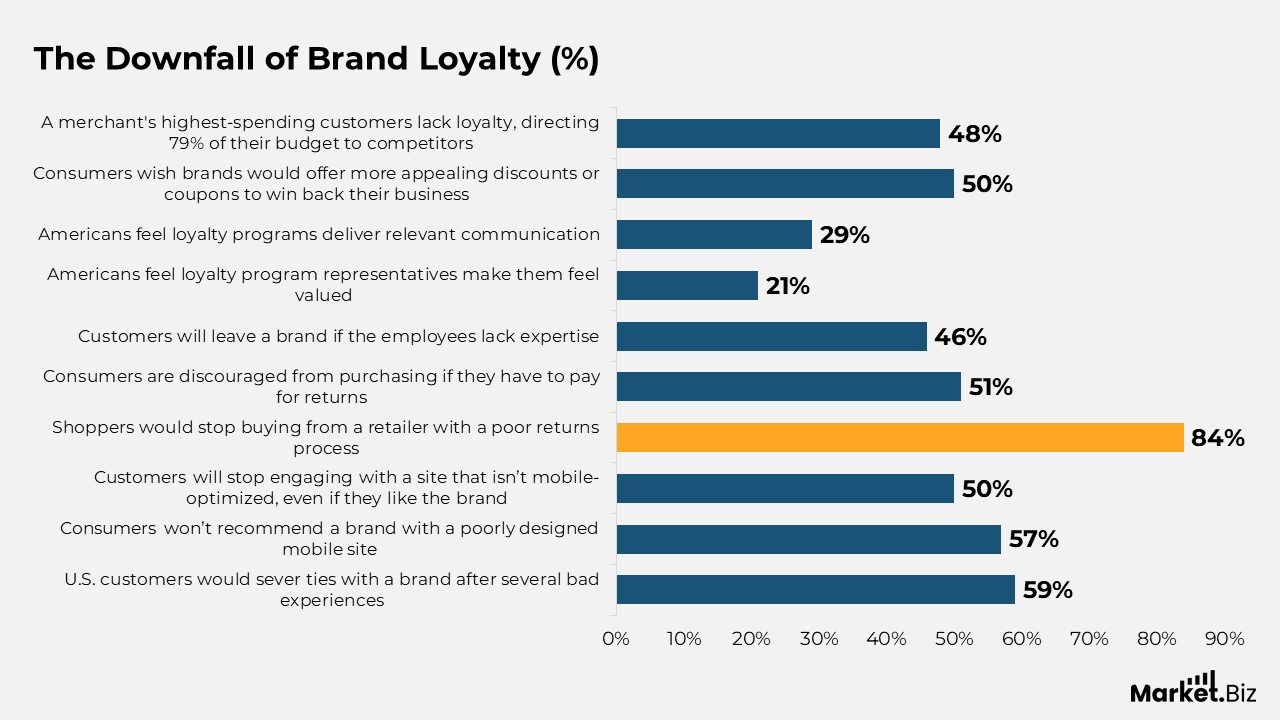
- 50% of consumers wish brands would offer more appealing discounts or coupon codes to win back their business.
- 48% of a merchant’s highest-spending customers lack loyalty, directing 79% of their budget to competitors.
(Source: Salesforce, Inc., Statista, KPMG, Edelman Holdings, Inc., Okendo, SAP Emarsys, PwC)
The Downfall of Brand Loyalty
- 1 in 3 customers will leave a brand they love after a single negative experience.
- 59% of U.S. customers would sever ties with a brand after several bad experiences.
- 57% of consumers won’t recommend a brand with a poorly designed mobile site.
- 50% of customers will stop engaging with a site that isn’t mobile-optimized, even if they like the brand.
- 84% of shoppers would stop buying from a retailer with a poor returns process.
- 51% of consumers are discouraged from purchasing if they have to pay for returns.
- 46% of customers will leave a brand if the employees lack expertise.
- Retail subscription services could lose up to $2.2 billion per month by neglecting the subscriber experience.
- Only 21% of Americans feel loyalty program representatives make them feel valued.
- Just 29% of Americans feel loyalty programs deliver relevant communication.
(Source: Queue.it, DemandSage, Statista)
Consumer Loyalty and Brand Engagement Trends
- 51% of consumers appreciate when companies recommend products and services tailored to their personal preferences.
- 47% of consumers are more likely to engage with ads or emails that feature personalized content, including special offers.
- Despite the popularity of loyalty programs, 22% of consumers feel that it is increasingly difficult for brands to maintain their loyalty.
- 60% of consumers believe that only loyalty program members receive a personalized shopping experience, while 65% feel that subscribing to membership programs and sharing preferences didn’t enhance their shopping experience.
- Meal kit brands enjoy the highest level of loyalty, with 70% of consumers expressing strong loyalty, followed by luxury goods at 65%. Among retailers, last-mile delivery services like Instacart lead, followed by e-tailers at 68% and 65%, respectively.
- Key factors driving loyalty in grocery stores include quick delivery, product variety, loyalty programs, and a seamless omnichannel experience.
- In fashion and apparel stores, factors influencing loyalty include product assortment, loyalty programs, product customization, and a seamless omnichannel shopping experience.
- 69% of brands reward their most loyal customers, 68% reward existing customers, and 45% reward new customers.
- 61% of brands that offer rewards and benefits have a formal loyalty program or plan in place.
- 66% of brands offering rewards require customers to sign up for a plan to access benefits.
- 44% of consumers are willing to share personal data in exchange for additional loyalty rewards, while 36% are unwilling, and 20% are unsure.
Moreover
- 46% of brands say that customer referrals through brand advocates are the top benefit of rewarding loyalty, while 44% cite improved customer lifetime value, 42% mention increased retention, and 37% say it’s access to valuable customer data.
- 33% of brands use referrals or advocacy to measure loyalty, despite it being identified as one of the top benefits of reward programs.
- Only 6% of brands use the Net Promoter Score (NPS), the long-established metric for customer satisfaction and loyalty.
- 67% of brands that reward customers utilize customer data to personalize benefits, with 49% of these using AI or machine learning to do so.
- 51% of brands reward loyalty with select offers or discounts, 49% with exclusive experiences or events, and 48% with personalized recommendations.
- 72% of brands believe creating a sense of exclusivity around their loyalty programs would be beneficial.
- 70% of brands with loyalty programs offer tiered benefits, and 42% of these use AI or machine learning to support the system and provide customized experiences.
- More than 90% of companies have a form of loyalty program in place.
- The customer loyalty management market is expected to surpass USD 24 billion by 2028.
- The average person holds 19 memberships, with 9 being active.
- Customers who trust a brand are 88% more likely to make a repeat purchase.
- 62% of consumers will almost exclusively shop with brands they trust.
- Trust increases spending, with customers 3.8x more likely to spend more on reliable brands.
- 79% of consumers maintain a relationship with brands, whether through memberships, retail subscriptions, or loyalty programs.
- 77% of consumers retract their loyalty faster than they did three years ago.
- 61% of consumers switched brands or providers within the last year.
(Source: Queue.it, DemandSage, Statista)
Conclusion
Loyalty management is essential for cultivating long-term customer relationships and driving business growth. As the statistics show, aligning brand values with customer expectations, especially around sustainability and trust, enhances customer engagement, repeat purchases, and overall revenue.
The impact of loyalty programs is evident, directly contributing to increased spending, repeat business, and stronger brand loyalty. However, businesses must be cautious of factors that can undermine loyalty, such as poor customer experiences, a lack of responsive customer service, and subpar digital platforms.
By consistently improving loyalty programs and prioritizing customer satisfaction, companies can establish lasting relationships that lead to sustained profitability and long-term brand success.
FAQ’s
Loyalty management plays a crucial role in enhancing customer retention, increasing customer lifetime value, and fostering repeat business. By establishing effective loyalty programs, companies can build lasting relationships with customers, which in turn drives consistent revenue growth and overall success.
Loyalty programs often lead to increased spending, as customers who are part of such programs tend to make more frequent and higher-value purchases compared to non-members. Personalized rewards and incentives provided through these programs motivate customers to spend more, thereby boosting company revenue.
The success of a loyalty program hinges on its ability to resonate with customer values, offer meaningful rewards, and deliver personalized experiences. Important factors for success include simplicity, ease of use, the perceived value of rewards, and the program’s capacity to cater to the unique preferences of individual customers.
Sustainability has become a significant factor for many consumers when selecting brands. Loyalty programs that focus on sustainable practices, such as offering eco-friendly products and promoting ethical business operations, tend to attract customers who prioritize these values, fostering greater loyalty and improving customer retention.
Several factors, such as poor customer service, negative experiences with returns, inefficient website or app performance, and unmet expectations, can break customer loyalty. Such negative experiences may lead customers to abandon a brand or turn to competitors, undermining long-term loyalty.