









Introduction
Teenage Smokers Statistics: Teenage smoking remains a significant public health issue, with adolescents particularly susceptible to peer influence, media messaging, and easy access to tobacco and nicotine-based products. Although educational campaigns and regulatory frameworks have advanced, a considerable number of teens continue to experiment with smoking, often overlooking its serious long-term health effects.
The rising appeal of e-cigarettes and flavored tobacco has added complexity to the challenge, making youth nicotine dependence harder to combat. Gaining insights into the behavioral drivers, social influences, and emerging trends of teenage smoking is crucial for designing focused prevention initiatives and shaping effective public health interventions.
Editor’s Choice
- Campaigns 88.2% of high school undergraduates and 85.7%like the Truth Initiative’s youth-targeted programs have played a crucial role in raising awareness of nicotine addiction, contributing to a reduction in vaping rates among 12th graders from 27.3% to 23.2% in 2023.
- The U.S. FDA upholds stringent regulations, such as setting a minimum purchase age of 21 for tobacco products, imposing penalties on retailers selling to minors, and running educational campaigns like “The Real Cost” to educate young people about the risks of smoking.
- Approximately 32% of teens aged 13 to 15 in Bulgaria were regular cigarette smokers, positioning the country among those with the highest youth smoking rates globally in 2019.
- A Global Youth Tobacco survey by IIPS on tobacco use among Indian school students revealed that over 23% of high school students smoked at home, and about 20% smoked on school grounds, with roughly 9% using tobacco products frequently.
- A 2023 survey found that e-cigarettes and vape products were the most commonly used tobacco items among U.S. college students, with 75% of students reporting use in the past three months. The same survey showed that 24% of college students used tobacco daily or nearly every day during this period, while 26% used it only occasionally.
- 90% of individuals who smoke started before turning 19.
- Approximately 30% of teenage smokers will continue the habit into adulthood and face an early death due to a smoking-related illness.
- According to the Surgeon General, adolescents who smoke are three times more expected to drink alcohol, eight times more likely to use marijuana, and 22 times more likely to try cocaine.
E-Cigarettes Market Size
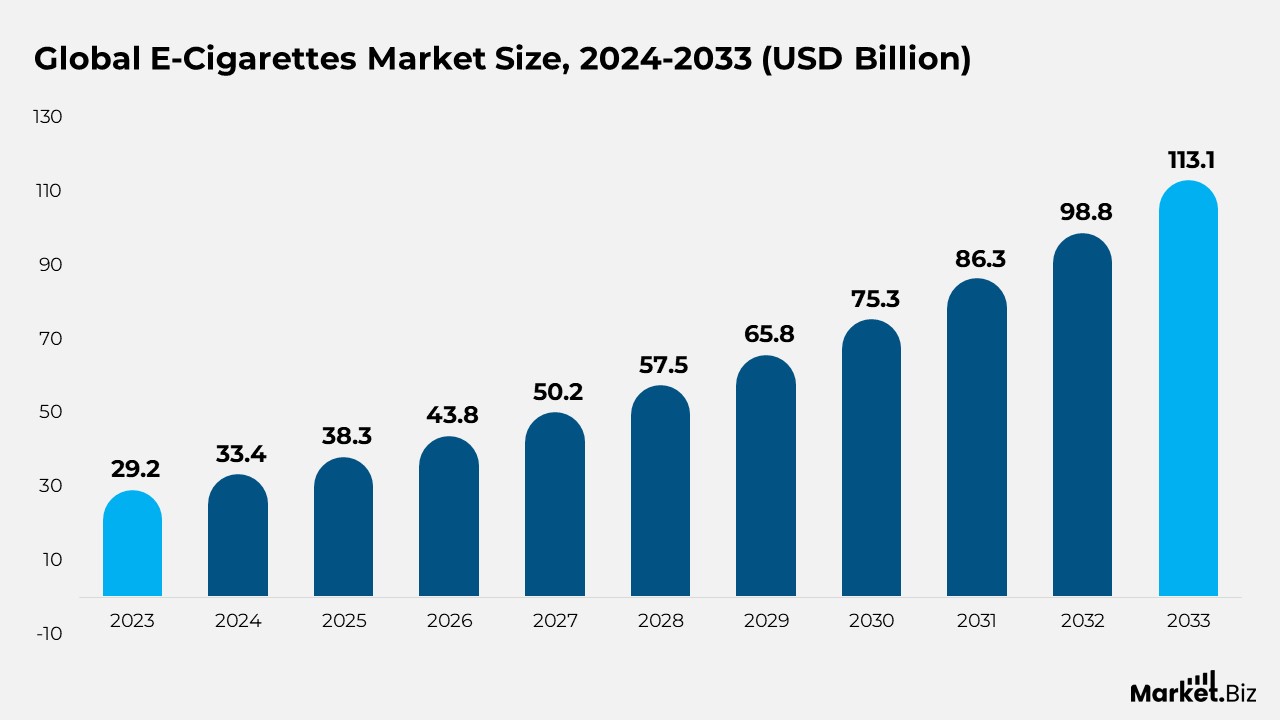
- According to Market.us, the global e-cigarette market is projected to grow from $38.3 billion in 2025 to $98.8 billion by 2032, representing a compound annual growth rate (CAGR) of 14.5% from 2024 to 2033.
- Technological innovation, aggressive marketing, and a diverse range of flavoured e-liquids are fueling the expansion of the e-cigarette market.
- The rechargeable e-cigarette segment led in 2023 with over 41% share, driven by cost efficiency and sustainability benefits.
- Open-system e-cigarettes dominated the market with a more than 56% market share in 2023, thanks to their refillable and customizable features.
- Offline distribution channels captured over 78% of the market in 2023, owing to the strong presence of physical retail stores.
- North America led the global market in 2023 with a 37% share and USD 10.8 billion in revenue, supported by high health awareness and demand for smoking alternatives.
(Source: Market.us)
Premium Cigarette Market Size
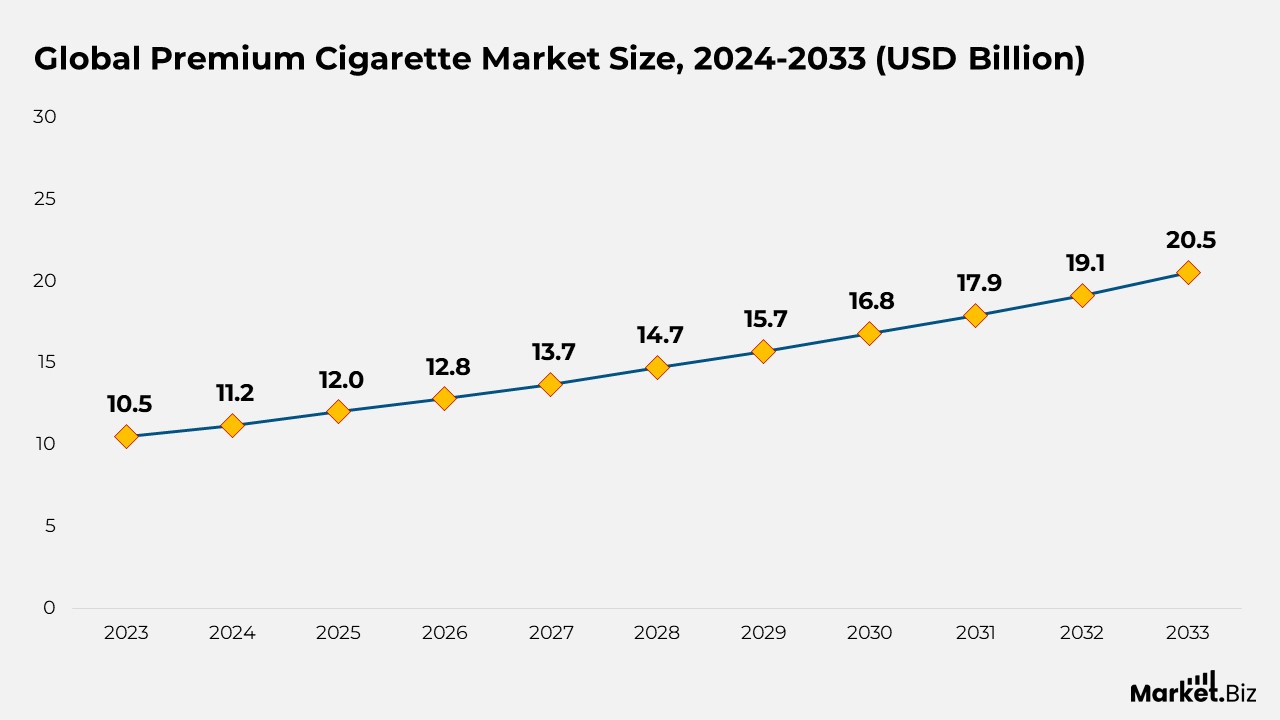
- According to Market.us, the premium cigarette market is projected to grow from $12.0 billion in 2025 to $19.1 billion by 2032, representing a compound annual growth rate (CAGR) of 6.9% from 2024 to 2033.
- Rising smoking rates are a primary factor propelling the growth of the premium cigarette market.
- In 2023, flavored premium cigarettes led the market due to strong demand for unique taste profiles and appealing packaging.
- Younger consumers are driving growth in the flavored segment, prompting manufacturers to expand their flavor offerings.
- Speciality stores dominated the sales channel segment in 2023, offering personalized service and curated premium selections. These stores are preferred by discerning buyers seeking luxury cigarette brands with expert guidance.
- North America accounted for 20.6% of the market in 2023, valued at USD 2.1 billion, supported by demand for premium-quality tobacco products. Despite strict regulations, strong brand presence and consumer willingness to spend on premium cigarettes fuel regional growth.
(Source: Market.us)
General Teenage Smoker Statistics
- It is anticipated that the global prevalence of tobacco smoking will decline to 15.4% by 2025, down from 27% in 2000, illustrating the projected decrease in tobacco smoking rates from 2000 to 2020 and the forecast for 2025.
- The data highlights the prevalence of cigarette smoking among teens aged 13 to 15 in various countries as of 2019, with a notable gender disparity. Timor-Leste shows the highest smoking rate among males at 39.40%, while females have a significantly lower rate of 6.40%.
- A 2023 survey revealed that e-cigarettes and vape products were the most commonly used tobacco items among U.S. college students, with 75% of those who had used tobacco products in the past three months reporting e-cigarette or vape product use. Among all college students who had ever used tobacco, 24% reported daily or nearly daily use, while 26% had used tobacco just once or twice.
- E-cigarette use is notably more prevalent among younger adults. In 2021, 11% of individuals aged 18 to 24 used e-cigarettes, compared to 5% who smoked combustible cigarettes.
(Source: Statista, National Institute of Health)
General Number of Smokers Statistics
- Around 80% of the world’s 1.3 billion tobacco users reside in low- and middle-income countries, highlighting the disproportionate prevalence of smoking in these regions.
- The global smoker population is projected to grow by 13.9 million individuals (+1.29%) annually between 2024 and 2029. By 2029, the number of smokers is expected to reach 1.1 billion, marking a new peak after an ongoing increase for 11 consecutive years.
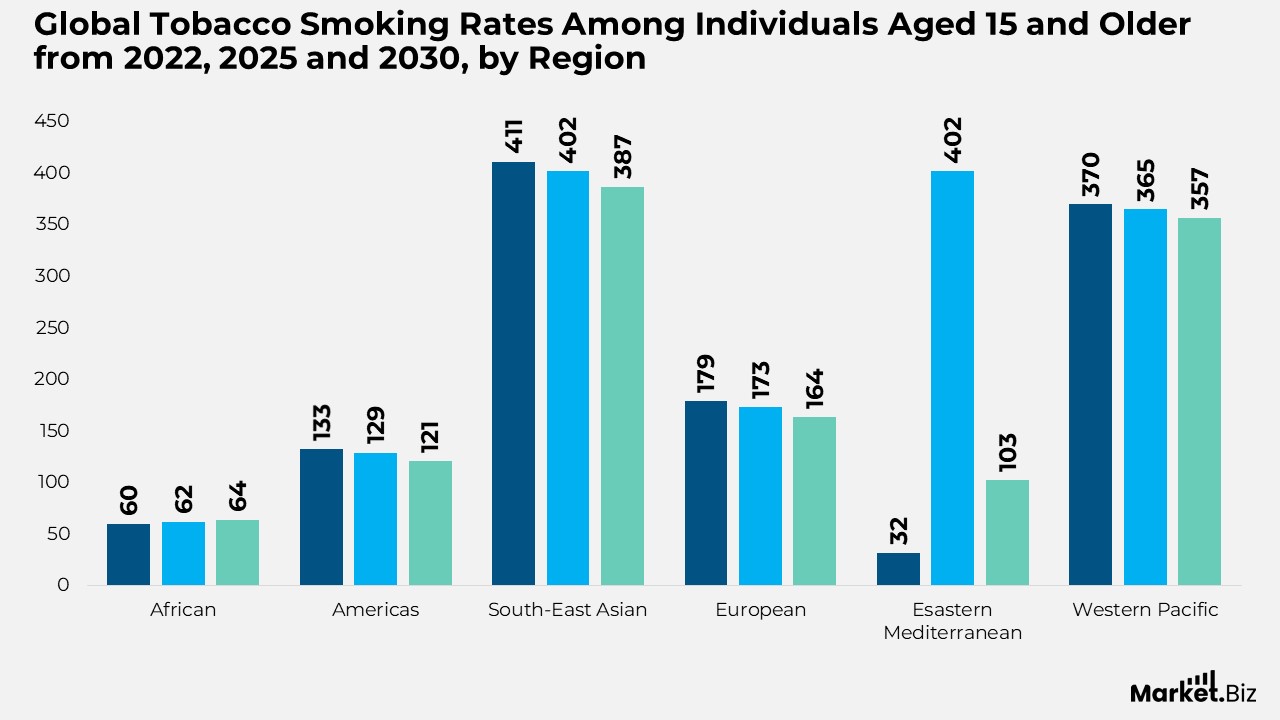
- The global number of tobacco smokers has been steadily rising. From 2000 to 2022, regional data indicate that the number of smokers in the Western Pacific is expected to increase from 353 million in 2000 to 365 million in 2025.
(Source: Statista, World Health Organization)
Smoking Rates Among Individuals Aged 15 and Older
Countries with the Highest Proportion of Current Smokers Among Adolescent Teens
- Palau and Bulgaria recorded the highest smoking rates among teens, with 32.50% and 32%, respectively.
- Romania followed closely with a smoking prevalence of 31%.
- Both Croatia and Slovakia reported a teen smoking rate of 29%, while Austria had a rate of 25%.
- Czechia and Chile also had notable smoking rates at 23.60% and 23.30%, respectively.
- Other countries with significant figures include Kiribati, at 22.80%, and Poland and Ukraine, each at 22%.
- Lithuania reported a prevalence of 21%, while Papua New Guinea, Micronesia, and Timor-Leste had slightly higher rates, just above 20%.
- Estonia, Monaco, and North Macedonia all recorded a prevalence of 20%, with Indonesia and Slovenia reporting rates of 19.20% and 19%, respectively.
(Source: Statista)
Impact of Early Smoking Initiation and Flavorings on Youth Usage
- Nearly 90% of adults who smoke daily began smoking before reaching 18 years of age.
- In 2024, approximately 40% of students who had ever tried tobacco products continued to use them.
- Flavorings in tobacco products increase their appeal to younger audiences. In the United States in 2024:
- 88.2% of high school students and 85.7% of middle school undergraduates who used e-cigarettes in the historical 30 days informed using seasoned e-cigarettes.
- This highlights the widespread use of flavored e-cigarettes among adolescent users during this period.
Current Tobacco Use Among Middle and High School Youth
| Tobacco Product | Percentage of Tobacco Use |
|---|---|
| Any Tobacco | 8.1% |
| E-cigarettes | 5.9% |
| Nicotine Pouches | 1.8% |
| cigarettes | 1.4% |
| Cigars | 1.2% |
| Smokeless Tobacco | 1.2% |
| Other Oral Nicotine Products | 1.2% |
| Heated Tobacco | 0.8% |
| Hookah’s | 0.7% |
| Pipe Tobacco | 0.5% |
Tobacco Product Usage Among Middle School Students
| Tobacco Product | Overall (2024) | Girls | Boys |
|---|---|---|---|
| Any tobacco product | 5.4% | 5.5% | 5.3% |
| Electronic cigarettes | 3.5% | 3.9% | 3.1% |
| Nicotine Pouches | 1.0% | 0.9% | 1.1% |
| Cigarettes | 1.1% | 1.2% | 0.9% |
| Cigars | 0.8% | 0.8% | 0.7% |
| Smokeless tobacco | 0.8% | 0.7% | 1.0% |
| Other oral nicotine products§ | 0.9% | 0.9% | 0.8% |
| Heated tobacco products | 0.7% | 0.7% | 0.8% |
| Hookah | 0.6% | 0.7% | 0.4% |
| Pipe tobacco | 0.5% | 0.4% | 0.5% |
(Source: Centers for Disease Control and Prevention)
Electronic Cigarettes (E-cigarettes)
- In 2024, 3.5% of middle school students, or 1 in every 29, reported using electronic cigarettes in the past 30 days.
- In 2024, 7.8% of high school students, or 1 in every 13, reported using electronic cigarettes in the past 30 days.
- In 2024, 1.1% of middle school students, or 1 in every 91, reported smoking cigarettes in the past 30 days.
- In 2024, 1.7% of high school students, or 1 in every 59, reported smoking cigarettes in the past 30 days.
(Source: Centers for Disease Control and Prevention)
Demographics of Teenage Smokers
- . In 2022, a U.S. survey on tobacco dependence revealed that 53.5% of women who smoked sought advice from health professionals to quit, while 52.2% received assistance from health professionals.
- Among men, 47.7% received professional advice, while 53.5% of women did the same, resulting in an overall total of 50.5%.
- When it comes to counseling, 6.9% of men and 7.8% of women used this method, with an average of 7.3%.
- Medication use was more common, with 34.7% of men and 38.2% of women using it, resulting in a total of 36.3%.
- Finally, 36.9% of men and 40% of women reported using either counseling or medication, with an overall total of 38.3%.
- This data underscores gender differences in smoking cessation methods, showing that women are more likely to seek professional guidance and assistance compared to men.
(Sources: Statista)
Recent Developments
New Campaigns and Initiatives:
- FDA Amplifies “The Real Cost” Campaign: In 2023, the U.S. Food and Drug Administration (FDA) expanded its “The Real Cost” campaign to specifically address the rising use of e-cigarettes and other tobacco products among teens. With a $60 million budget, the campaign focuses on educating youth about the serious health risks tied to smoking and vaping.
- UK Government Launches Anti-Smoking Initiative: In late 2023, the UK government introduced a national anti-smoking campaign aimed at teenagers, committing £30 million to provide educational resources in schools and online. The initiative’s target is to reduce teenage smoking rates by 50% by 2030.
Technological Advancements:
- AI-Powered Research on Teen Smoking Behaviour: The use of AI in analyzing teenage smoking behaviours is becoming increasingly prominent. By 2026, AI-driven tools are expected to account for 20% of new efforts focused on understanding the psychological and social factors that influence teenage smoking.
- Mobile Apps for Teenage Smoking Cessation: The use of mobile applications tailored to teenage smoking cessation is on the rise. By 2025, over 30% of smoking cessation efforts targeting teens are expected to utilize digital platforms, offering personalized quitting plans and peer support features.
Partnerships and Collaborations:
- WHO and CDC Join Forces for Global Youth Tobacco Surveys: In 2023, the World Health Organization (WHO) and the Centers for Disease Control and Prevention (CDC) collaborated on global youth tobacco surveys, gathering data from over 30 countries. The objective is to identify trends and develop effective strategies to curb teenage smoking.
- Truth Initiative Teams Up with TikTok: In 2024, the Truth Initiative formed a partnership with TikTok to create viral content that discourages teenage smoking and vaping. The campaign, which garners over 1 million views per week, utilizes influencers to connect with younger audiences.
Funding for Research and Prevention:
- EU Allocates €100 Million for Youth Anti-Smoking Programs: In 2024, the European Union allocated €100 million for initiatives aimed at reducing teenage smoking across Europe. The funding supports public health campaigns, smoking cessation resources, and school-based educational programs.
- NIH Allocates $50 Million for Research on Teen Smoking Prevention: In 2023, the National Institutes of Health (NIH) awarded $50 million in grants to research the prevention of teenage smoking. With a focus on the impact of social media, peer influence, and mental health on adolescent smoking behaviours.
Conclusion
Teenage smoking continues to pose a major global public health issue, with significant variation in prevalence across different regions.
While some nations have seen progress in lowering smoking rates among adolescents, many still report concerningly high levels of tobacco use, particularly in low- and middle-income countries. Strategies such as educational initiatives, stricter regulations, and raising awareness about the harms of smoking are critical to addressing this challenge.
However, the rising use of alternative tobacco products, like e-cigarettes, adds complexity to efforts aimed at curbing teenage nicotine addiction. To reduce the long-term health consequences of early smoking and ease the global burden of tobacco-related diseases, it is essential to maintain a strong focus on prevention, intervention, and robust.
FAQ’s
The prevalence of teenage smoking varies widely across different regions, with some nations, particularly those with lower income levels, showing alarmingly high rates. While overall tobacco use among teenagers has decreased in recent years, the increasing popularity of alternative products such as e-cigarettes poses a new challenge.
Countries like Palau, Bulgaria, Romania, and Croatia report some of the highest teenage smoking rates, with many exceeding 30%. Other nations, including Timor-Leste, Indonesia, and Lithuania, also exhibit considerable prevalence of smoking among adolescents.
Teenagers who smoke face an elevated risk of developing serious health conditions such as respiratory problems, heart disease, and nicotine addiction. Starting to smoke at a young age also increases the chances of continuing tobacco use into adulthood, leading to long-term health issues such as cancer and stroke.
Anti-smoking initiatives, particularly those focused on youth, have had success in raising awareness about the dangers of smoking and reducing tobacco consumption. Programs such as the Truth Initiative have helped lower smoking rates among teens, though the emergence of alternative products like e-cigarettes presents ongoing challenges.
Although e-cigarettes are marketed as a safer alternative to traditional smoking, they still pose substantial health risks. Teenagers who use e-cigarettes are at risk of nicotine addiction, lung damage, and exposure to potentially harmful chemicals in the e-liquids used in these products.