








Introduction
Baby Products Statistics: The market for baby products includes a range of items, including diapers, lotions, wipes, and powders. Parents place a high value on baby hygiene and personal care products, consistently searching for quality options for their children. The United States ranks as a projecting player in this market, second only to China.
In fact, the revenue created by the baby diaper market in the United States was approximately 7.97 billion U.S. dollars in 2024, with expectations for further growth, while sales of baby and child skin care products surpassed 480 million U.S. dollars. Safety and comfort are of greatest importance, with products such as cribs, strollers, and pacifiers designed to ensure the well-being of infants.
The market is propelled by an emphasis on convenience, safety, and functionality, providing products that adapt to the child’s growth and developmental phases. Historically, grandmothers and mothers have served as the primary sources of knowledge regarding appropriate baby care practices, developing and disseminating techniques and recipes for homemade products. In this article, we will explore “Baby Products Statistics.”
Editor’s Choice
- The global market for baby products is projected to attain a size of USD 575.8 billion by the year 2033.
- The global market for organic baby food is estimated to reach approximately USD 14.8 billion.
- In 2023, the market size is estimated to attain USD 321.5 billion, with a projected rise to USD 340.8 billion by 2024.
- According to Baby Care Products Statistics, China has the largest baby food market globally, valued at nearly $74 billion, with safety and quality being the primary concerns for consumers.
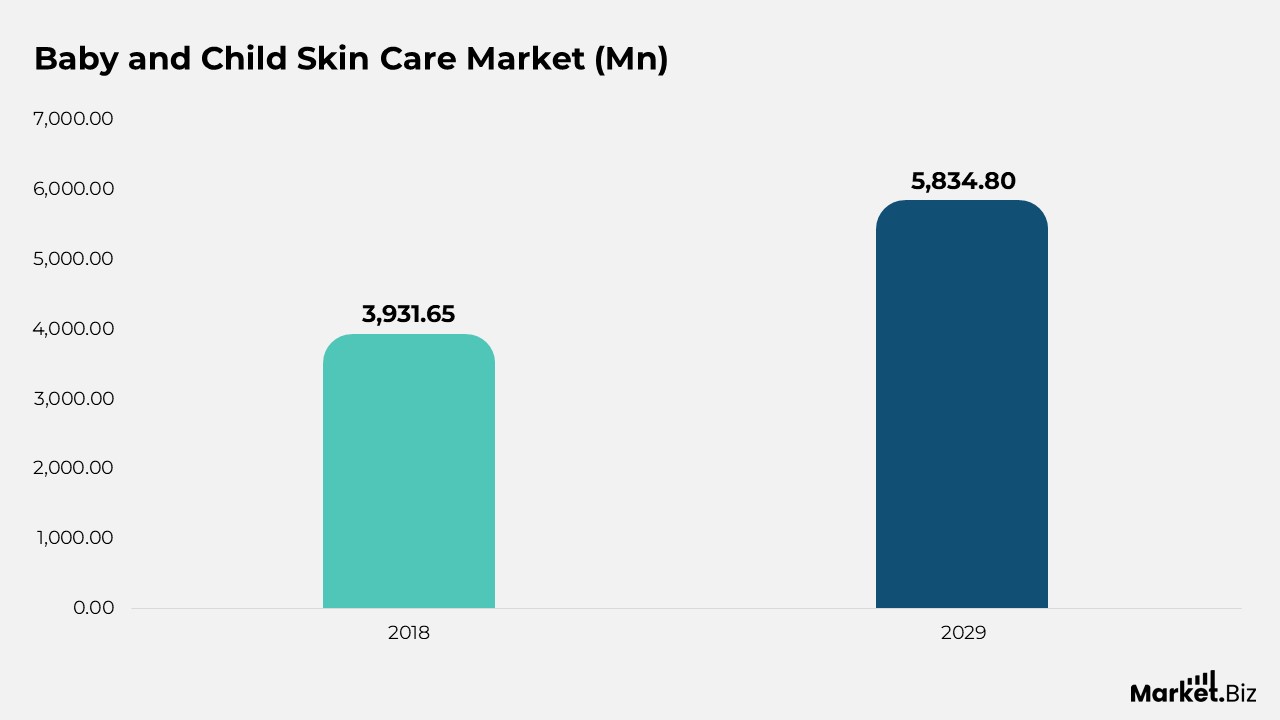
- The global market for baby and child skincare has shown consistent growth over the years, with revenue rising from USD 3,931.65 million in 2018 to an expected USD 5,834.8 million by 2029.
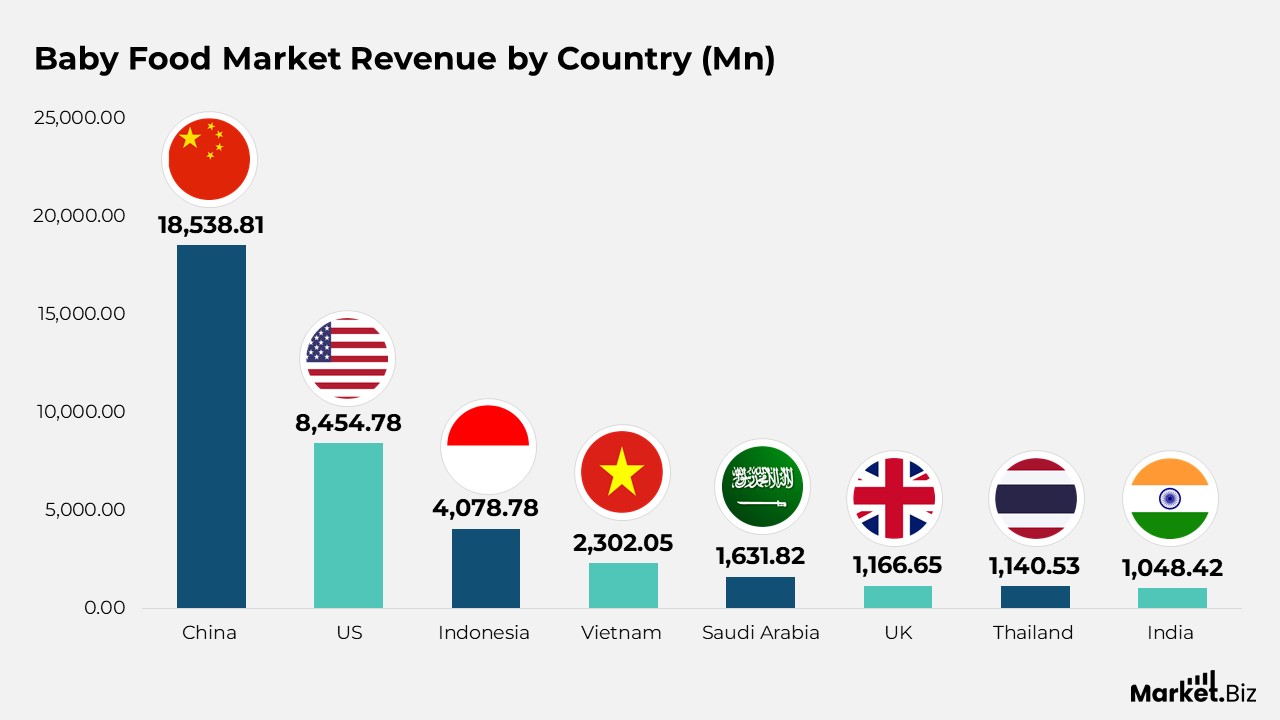
- The United States secured the second position with USD 8,454.78 million, fuelled by a strong demand for premium baby food offerings.
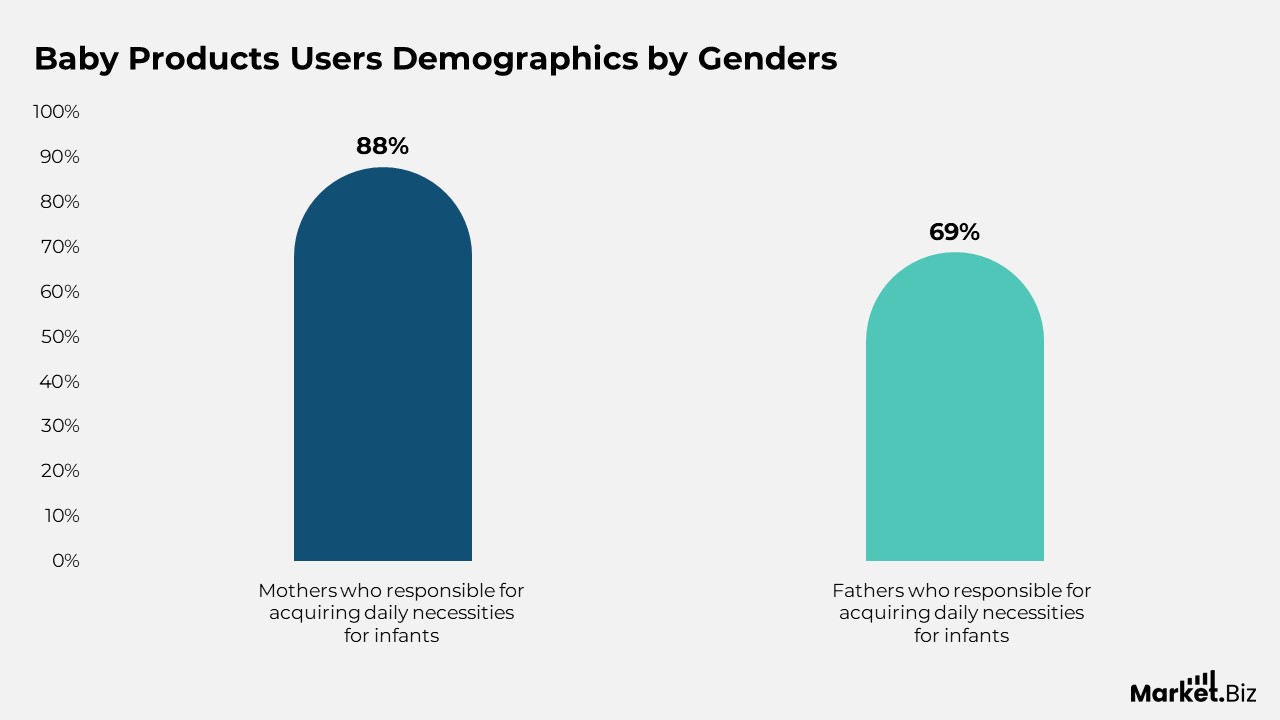
- Among the respondents, 88% of mothers indicated that they were responsible for acquiring daily necessities for infants, in contrast to 69% of fathers.
General Baby Products Statistics
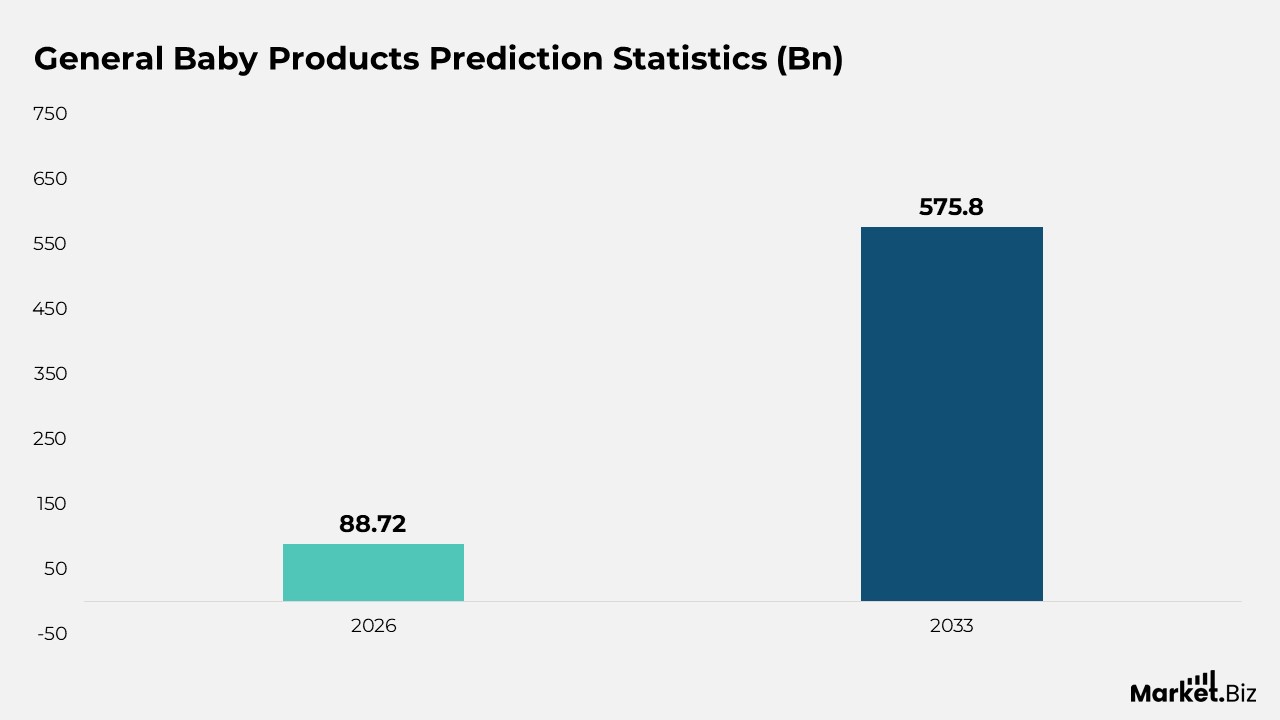
- The global market for baby products is projected to attain a size of USD 575.8 billion by the year 2033.
- The market for baby products worldwide depends on various distribution channels, with hypermarkets and supermarkets dominating with a 46% market share, which underscores their extensive reach and the convenience of one-stop shopping.
- By the year 2026, the global market for baby care products is expected to reach USD 88.72 billion.
- The global market for organic baby food is estimated to reach approximately USD 14.8 billion.
- In 2022, China became the foremost market for baby food retail sales, generating an impressive USD 30,148.8 million, which emphasizes its leadership in the global market, fuelled by its large population and increasing demand for premium infant nutrition products.
- In 2013, Johnson’s and Pampers were recognized as the most trusted brands for baby products in the United Kingdom, each gaining the trust of 77% of survey participants.
- In 2021, the primary concerns for Russian consumers when selecting baby care and hygiene products were safety (65%) and production quality (62%).
Baby Products Market Statistics
- The global market for baby products is anticipated to witness steady growth over the forthcoming decade, with a compound annual growth rate (CAGR) of 6.0%.
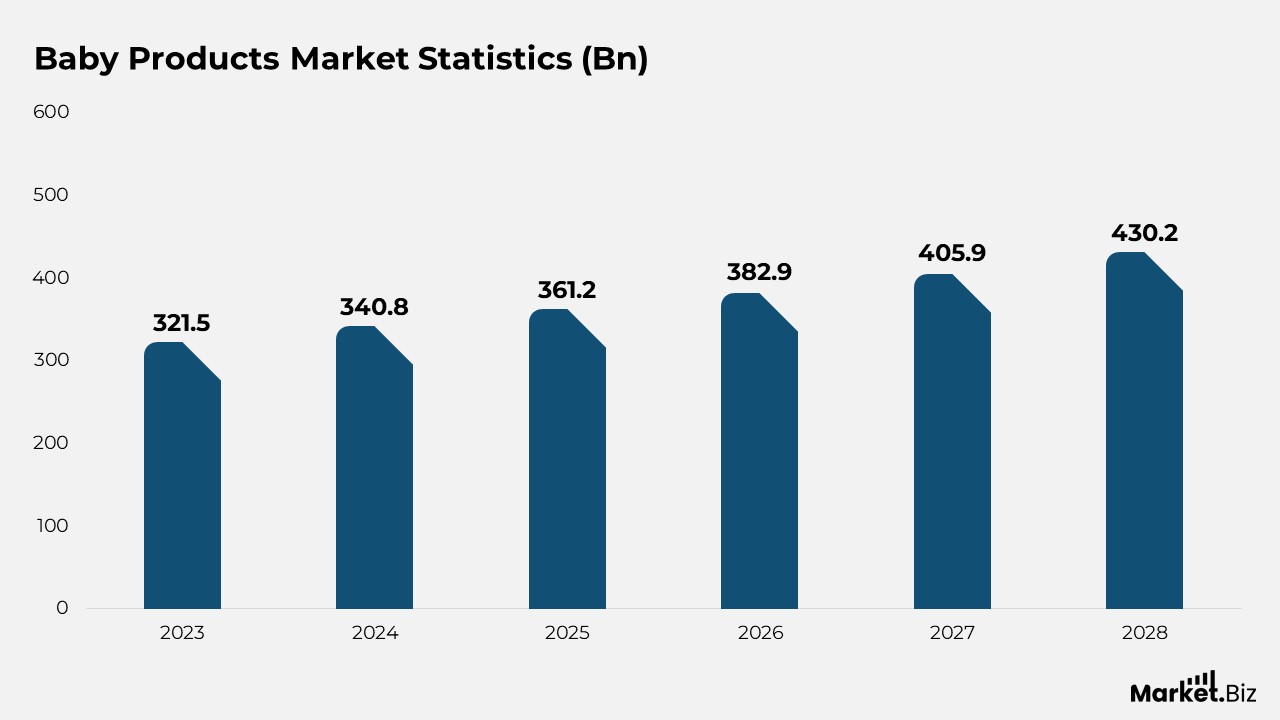
- In 2023, the market size is estimated to attain USD 321.5 billion, with a projected rise to USD 340.8 billion by 2024.
- This positive trend is expected to persist, reaching USD 361.2 billion in 2025 and USD 382.9 billion in 2026.
- By 2027, the market size is forecasted to increase to USD 405.9 billion, further advancing to USD 430.2 billion in 2028.
- The market is anticipated to exceed USD 456.1 billion in 2029 and reach USD 483.4 billion by 2030.
- The following years suggest ongoing growth, with projections indicating the market will achieve USD 512.4 billion in 2031, USD 543.2 billion in 2032, and ultimately reach USD 575.8 billion by 2033.
Global Baby Care Products Statistics
- The global market for baby care products, categorized by product type, pricing, and distribution channels, is projected from 2021 to 2029.
- The baby products market encompasses a diverse array of items, including diapers, wipes, safety products, and food.
- This market is segmented into baby care, valued at over $67 billion worldwide, and baby nutrition, which is similarly valued at around $67 billion and is anticipated to approach nearly $100 billion by 2027.
- Projecting companies in the baby care sector include Kimberly-Clark, Procter & Gamble, and Johnson & Johnson, all headquartered in the United States. Gerber and Beech-Nut dominate the baby food sector in the U.S., offering numerous well-known brands.
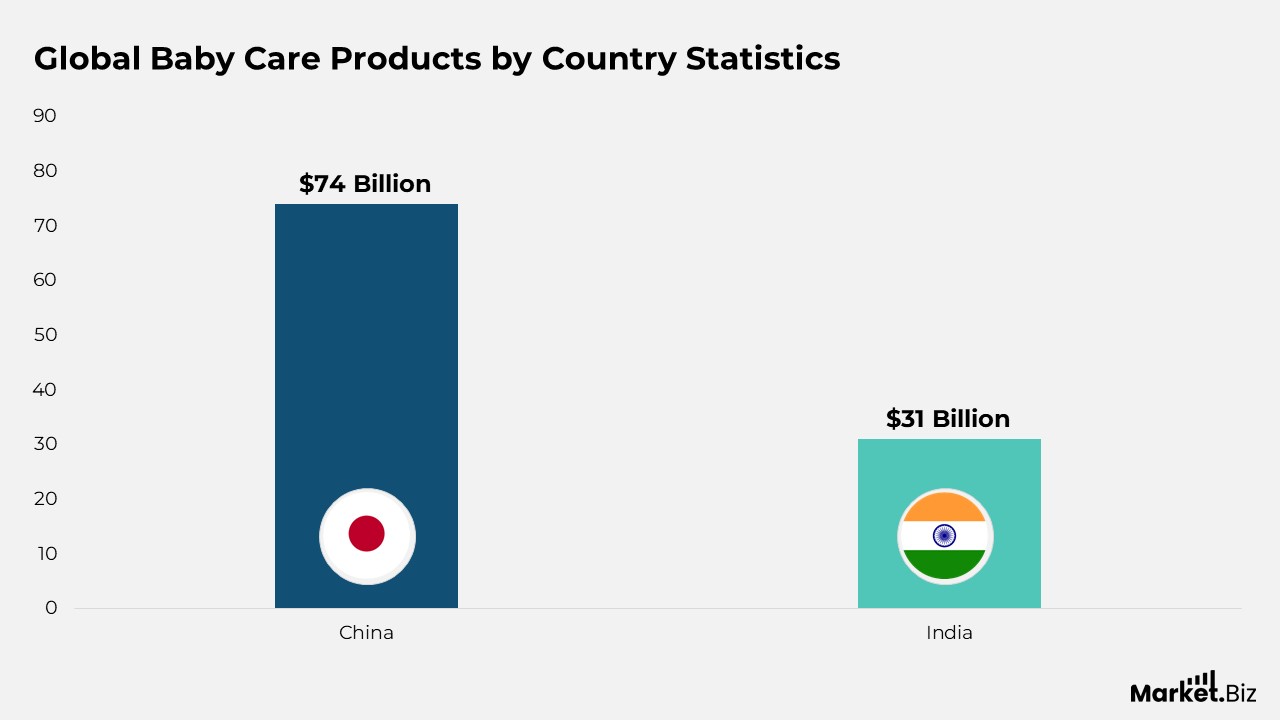
- According to Baby Care Products Statistics, China has the largest baby food market globally, valued at nearly $74 billion, with safety and quality being the primary concerns for consumers.
- India ranks second with a market valuation of approximately $31 billion. Other notable markets include Japan, Indonesia, Pakistan, and the United States.
Moreover
- Factors such as the COVID-19 pandemic may lead to a slight decline in birth rates in regions with easy access to contraception, potentially impacting market revenues in the upcoming years.
- The global baby care products market is expected to expand from $239.81 billion in 2024 to $419.43 billion by 2032, reflecting an annual growth rate of 8.31%.
- In 2020, the Asia Pacific region accounted for the largest market share, exceeding 40.0%, and is projected to experience the fastest growth in the future.
- China’s National Statistics Bureau reported over 17 million births in 2016, while the U.N. forecasts that India’s population will reach 1.37 billion, with an increase of 270 million by 2050. These elements are likely to enhance the uptake of baby care products in the area.
- As indicated by Baby Care Products Statistics, Central and South America are expected to grow at a compound annual growth rate (CAGR) of 4.4% from 2021 to 2028.
- Manufacturers in these regions are innovating baby care products using natural and organic ingredients to appeal to new customer segments.
- North America is also projected to witness significant growth from 2021 to 2028.
Baby and Child Skin Care Market
- The global market for baby and child skincare has shown consistent growth over the years, with revenue rising from USD 3,931.65 million in 2018 to an expected USD 5,834.8 million by 2029.
- In 2019, the market revenue increased to USD 4,030.99 million, but there was a slight decrease in 2020 to USD 3,902.32 million, likely due to disruptions caused by the global economic downturn during the pandemic.
- Nevertheless, the market recovered in 2021, reaching USD 4,135.16 million, and continued to grow in 2022 to USD 4,288.75 million.
- The upward trend is projected to continue, with revenues estimated at USD 4,560.65 million in 2023, USD 4,844.27 million in 2024, and USD 5,051.61 million in 2025.
- By 2026, the market is expected to generate USD 5,276.61 million, further increasing to USD 5,532.5 million in 2027.
- This growth is anticipated to persist, with revenues reaching USD 5,694.14 million in 2028 and peaking at USD 5,834.8 million by 2029.
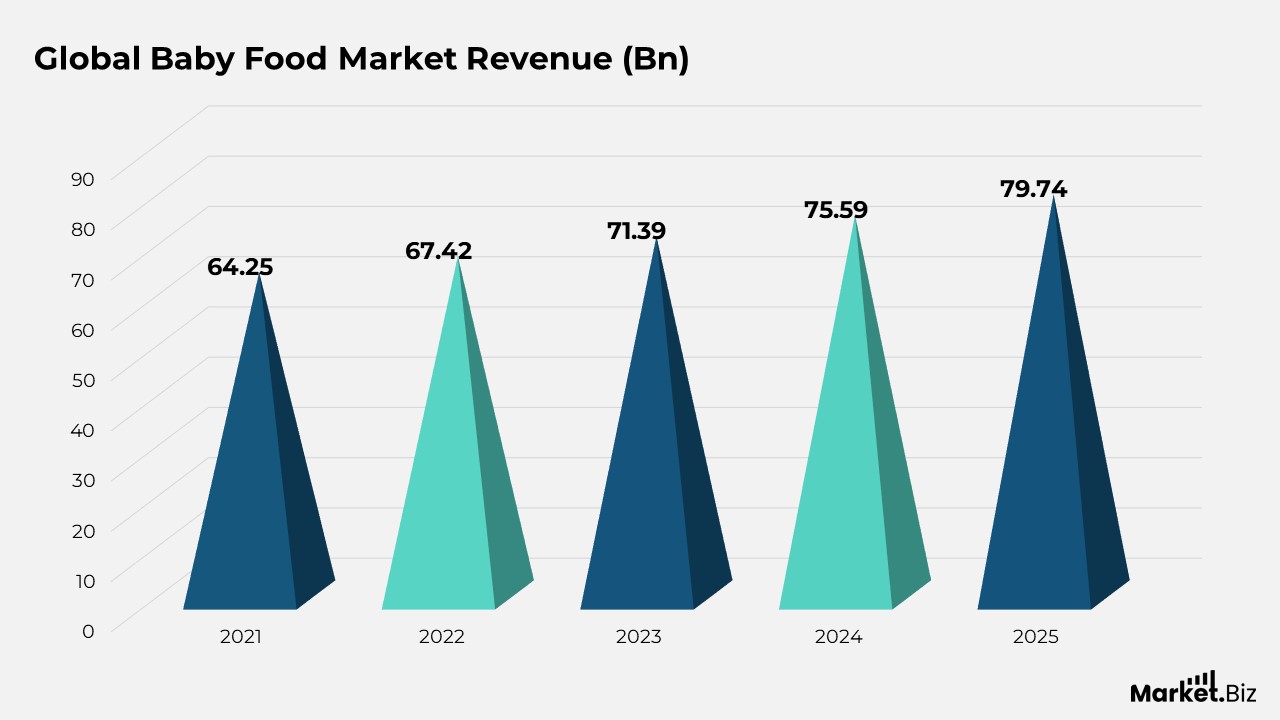
Global Baby Food Market Revenue
- The global baby food market has shown steady growth since 2018 and is anticipated to maintain this upward trend until 2029.
- In 2018, the market revenue was estimated at USD 53.69 billion, which rose to USD 56.12 billion in 2019 and USD 59.37 billion in 2020, fueled by increasing awareness regarding infant nutrition and the rising demand for premium baby food products.
- This trend accelerated in 2021, with revenues reaching USD 64.25 billion, followed by USD 67.42 billion in 2022.
- The market is expected to continue expanding, with projected revenues of USD 71.39 billion in 2023, USD 75.59 billion in 2024, and USD 79.74 billion in 2025.
- By 2026, the market size is forecasted to hit USD 84.31 billion, and by 2027, it is projected to grow to USD 88.83 billion.
- Ongoing growth is anticipated for 2028, with revenue expected to reach USD 94.21 billion, culminating in an estimated USD 100.1 billion by 2029.
Baby Food Market Revenue by Country
- In 2023, the global baby food market demonstrated considerable revenue contributions from various nations, with China significantly leading at USD 18,538.81 million, highlighting its supremacy in the industry due to its vast population and increasing consumer expenditure on infant nutrition.
- The United States secured the second position with USD 8,454.78 million, fuelled by a strong demand for premium baby food offerings.
- Indonesia came next with USD 4,078.78 million, indicating substantial market potential in Southeast Asia.
- Vietnam added USD 2,302.05 million, showcasing its expanding market for baby food.
- Other significant contributors include Saudi Arabia, which reported USD 1,631.82 million, and the United Kingdom, with USD 1,166.65 million, reflecting the demand for baby food in both emerging and developed markets.
- India and Thailand contributed USD 1,048.42 million and USD 1,140.53 million, respectively, further underscoring the significance of Asia as a vital market region.
- Japan recorded USD 768.76 million, while the Philippines accounted for USD 974.56 million, illustrating consistent demand in East Asia.
- Additional contributions were made by Malaysia (USD 625.78 million), South Korea (USD 519.93 million), and Pakistan (USD 510.65 million), indicating regional growth trends.
- Nigeria contributed USD 475.55 million, signifying considerable growth potential in Africa, while Bangladesh concluded the list with USD 99.55 million, reflecting its status as an emerging market.
Baby Products Users Demographics
Gender
- As of August 2019, the duty of purchasing daily baby products within families in China primarily rested with mothers, although fathers played a significant role in certain categories.
- Among the respondents, 88% of mothers indicated that they were responsible for acquiring daily necessities for infants, in contrast to 69% of fathers.
- Likewise, 78% of mothers and 60% of fathers accepted responsibility for buying infant food.
- Regarding toys and services for infants, 80% of mothers and 59% of fathers participated in the purchasing decision.
- In the domain of infant education products and services, the difference was even more marked, with 73% of mothers taking on the responsibility compared to 38% of fathers.
- For infant clothing and shoes, 83% of mothers reported making purchases, whereas only 35% of fathers undertook this responsibility.
Age
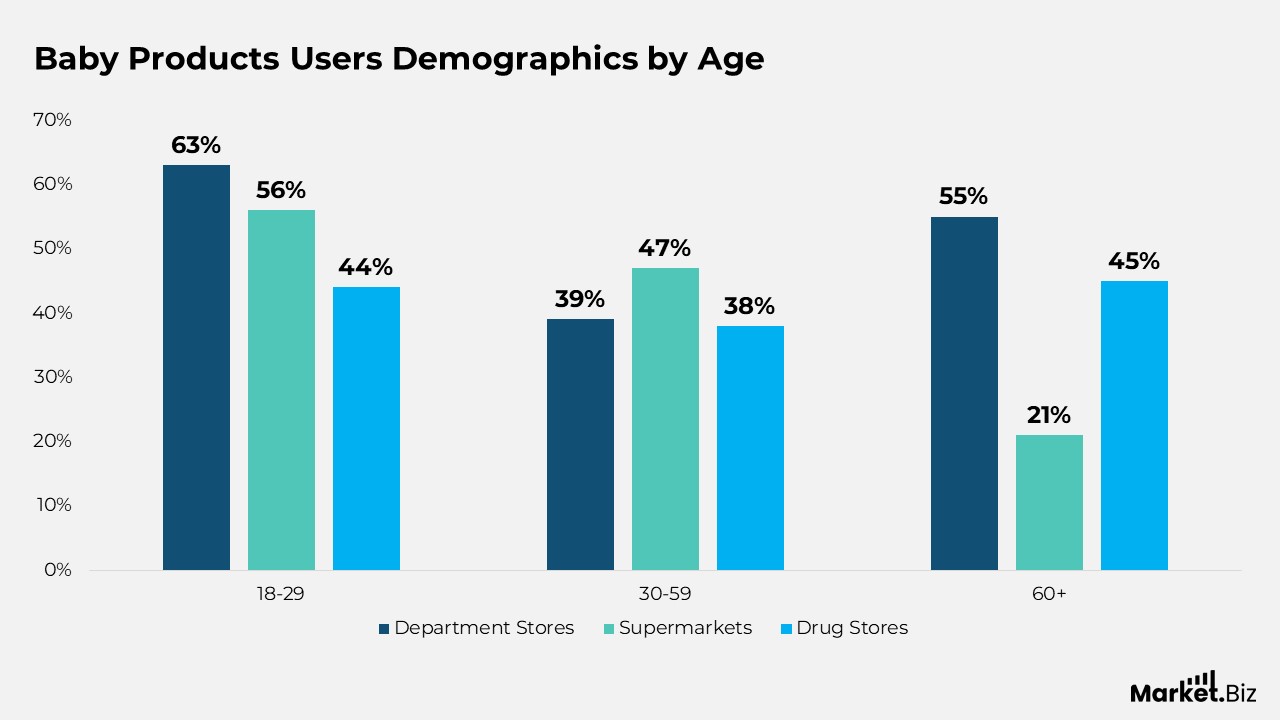
- As of May 2017, the channels for purchasing baby care products in the United States showed considerable variation based on age group.
- Among individuals aged 18-29, department stores emerged as the most favoured purchase channel, used by 63% of this demographic, followed by supermarkets at 56% and drug stores at 44%.
- Discount stores were frequented by 23% of this age group, while 21% opted for online stores and 19% made purchases at pharmacies. Other channels, including kiosks, perfumeries, and beauty salons, were used less frequently, each representing 1-7%.
- In the 30-59 age group, supermarkets took the lead as the primary channel, with 47% of respondents using them, followed closely by discount stores and department stores, both at 38%, and drug stores at 39%.
- Online stores were selected by 18%, while pharmacies were chosen by 17%.
- Channels such as perfumeries and beauty salons accounted for 4-5%, whereas mail order/catalogs and kiosks were used by 3%.
- Among respondents aged 60 years and older, discount stores were the most preferred purchase channel, with 55% of this age group using them, followed by drug stores at 45% and supermarkets at 21%.
- Other channels, including online stores (2%), pharmacies (10%), and department stores (14%), were less frequently used. Channels like kiosks, perfumeries, and beauty salons saw minimal or no usage within this age group.
Recent Developments
- In the second quarter of 2024, Coterie secured $35 million to enhance its premium diaper and baby care operations. Coterie, a direct-to-consumer brand specializing in baby care, is recognized for its high-quality diapers and wipes, and has raised $35 million in Series B funding to expedite product development and broaden its retail footprint.
- In the second quarter of 2024, Pampers unveils Swaddlers 360 Diapers, the brand’s most advanced diaper to date. Pampers, a brand under Procter & Gamble, has announced the introduction of Swaddlers 360, a new diaper tailored for active infants, featuring a 360-degree stretchy waistband and easy-tear sides.
- In the third quarter of 2024, Nestlé launches a new line of plant-based baby food in Europe. Nestlé has introduced a new range of plant-based baby food products across various European markets, aiming to satisfy the increasing demand for sustainable and allergen-friendly nutrition for infants.
Conclusion
The worldwide market for baby products is witnessing consistent growth, fuelled by heightened awareness regarding child health, increasing disposable incomes, and changing consumer preferences. Significant trends encompass a rising demand for premium and organic products, with safety, quality, and affordability being the foremost concerns for parents.
Regional variations influence the market, with developed areas leaning towards eco-friendly alternatives while emerging markets prioritize affordability. Supermarkets, hypermarkets, and online platforms lead in distribution, mirroring consumer preferences for convenience.
FAQs
With 14 different items, disposable diapers rank as the best-selling product in the baby category. Households with infants may allocate over $100 for diapers, as this product is deemed essential on the monthly shopping list, even during periods of inflation.
Organic baby food, biodegradable diapers, and natural skincare items for infants are gaining popularity. Brands like Johnson & Johnson are experiencing a notable increase in sales due to consumers’ preference for eco-friendly biodegradable materials.
Identifying the appropriate audience for your baby and children’s products is crucial for developing your marketing strategy. Generally, your target audience comprises: New parents: They seek dependable products for their newborns. Expectant parents: They require guidance and information on preparing for their baby’s arrival.

