









Introduction
Dropshipping Statistics: Dropshipping continues to be one of the most accessible eCommerce models globally, offering a combination of low early investment and widespread market reach. In 2024, the global dropshipping market is projected to be around $351.8 billion, reflecting a +23.6% increase from the $284.6 billion recorded in 2023. Predictions indicate growth to $435.0 billion in 2025 and $537.8 billion by 2026.
Another estimate places the market at $243.42 billion in 2024, with an increase to $372.47 billion in 2025 and $476.1 billion by 2026. Currently, over 27% of online retailers use dropshipping as their primary fulfillment method, and dropshipping represents 23% of all online sales. In this article, we will examine important dropshipping statistics and trends to provide you with a complete understanding of this competitive market and help you in making well-informed decisions.
Editor’s Choice
- More than 2.14 billion individuals engage in online shopping regularly.
- When suppliers sell to dropshippers, they earn 18.33% more compared to selling through their online stores.
- 25% of the revenue generated by the dropshipping market is reported to come from the Asia Pacific region.
- The annual growth rate of the dropshipping market is expected to be 24.39% from 2020 to 2026.
- A dropshipping store must be optimized for mobile devices, given that 74% of visits to online shops originate from mobile platforms.
- There are currently 310 million active users of Amazon worldwide.
- Dropshipping contributes to 34% of Amazon’s total sales.
- Approximately 23% of all online transactions are conducted through dropshipping.
What is Dropshipping?
Dropshipping is a method of order fulfillment that enables ecommerce businesses to delegate the tasks of sourcing, storing, and shipping products to an external party, usually a supplier. This fulfillment approach often attracts entrepreneurs who are looking for efficiency and reduced overhead costs; however, it may have drawbacks, particularly regarding customer experience.
This guide will explain what dropshipping entails and examine how this fulfillment strategy operates. Additionally, we will review several alternatives to dropshipping that could help you save time, decrease your overhead, or streamline your business.
General Dropshipping Statistics
- By the year 2027, the B2C e-commerce sector is projected to reach a value of $6.2 trillion, as reported by the US market.
- More than 2.14 billion individuals engage in online shopping regularly.
- According to Statista, e-commerce platforms are anticipated to be used by billions of users globally.
- Authentic product reviews instill 12 times greater customer confidence compared to “official” product descriptions.
- The dropshipping sector is expected to attain a value of $557.9 billion by the end of 2025, with a compound annual growth rate (CAGR) of 28.8% throughout the forecast period.
- Another study by Statista indicates that the global dropshipping market is projected to reach $196.78 billion in 2022 and $476.1 billion by 2026.
- Leading drop shippers online assert that merely 10% to 20% of dropshipping enterprises achieve success.
- Currently, around 27% of online retailers employ dropshipping as their primary method for fulfilling customer orders.
- When suppliers sell to dropshippers, they earn 18.33% more compared to selling through their online stores.
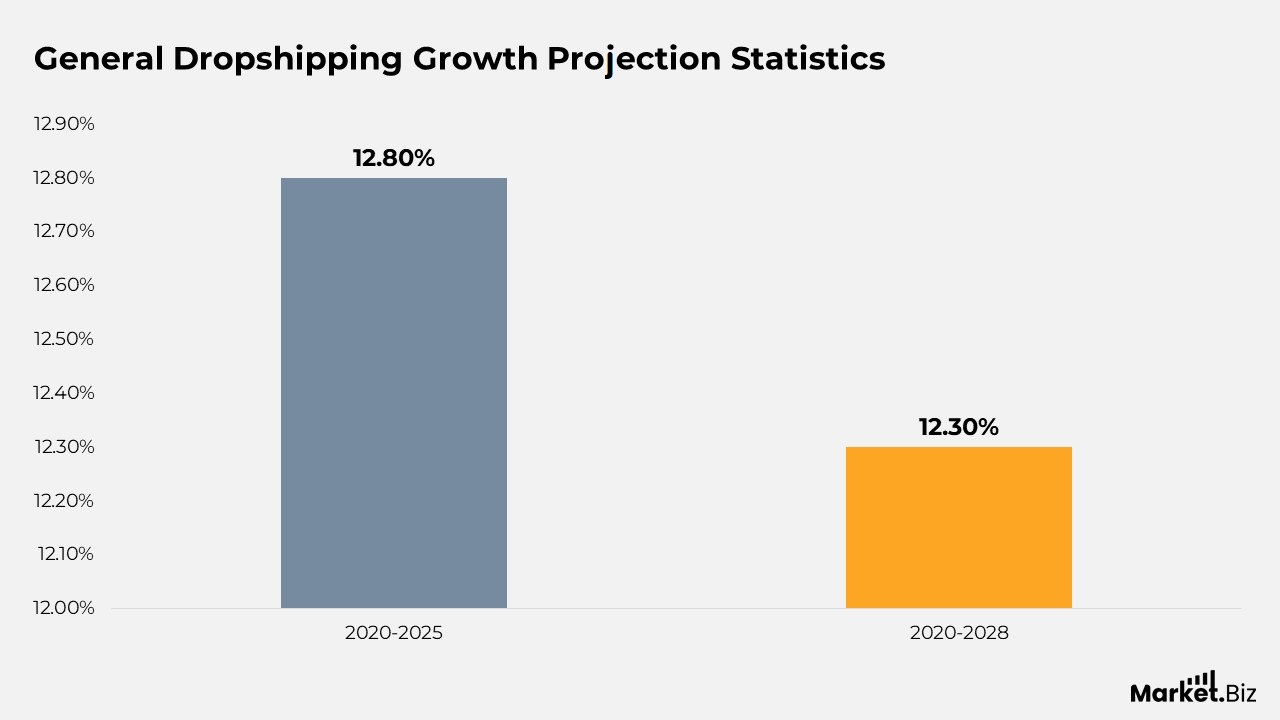
- According to reports, the global dropshipping market for apparel and fashion was valued at $43.9 billion in 2020, and it is projected to grow at a CAGR of 12.8% from 2020 to 2025.
Moreover
- The global dropshipping market for garden and home products was valued at $29.9 billion in 2020, with expectations of a CAGR of 12.3% from 2020 to 2028.
- According to a report, 61% of B2B retailers intend to prioritize their eCommerce platform as a key technology budget item in the upcoming year.
- In 2021, retail e-commerce sales are projected to reach around $4.9 trillion globally, as per Statista.
- China holds the title of the largest market, with e-commerce sales amounting to $2,779.31 billion in 2021.
- In 2021, e-commerce accounted for 19.6% of total retail sales worldwide.
- A Statista forecast estimates that over 2.14 billion individuals globally are expected to seek to purchase goods and services online in 2021, based on the number of digital buyers from 2014 to 2021.
- Recent statistics indicate that online stores with at least one social media account (such as Facebook or Twitter) generally achieve 32% higher sales compared to those without.
- In 2017, dropshipping was used to fulfill approximately $85.1 billion, representing 23% of online sales.
- Nearly 33% of online stores employ dropshipping as their fulfillment model.
- The dropshipping fulfillment model is projected to continue its growth in tandem with e-commerce, which is expanding at an approximate rate of 17% annually.
- Amazon also uses dropshipping: in 2011, drop shippers were responsible for fulfilling 34% of Amazon’s sales, and this percentage has only risen since then.
- A typical bulk order from a traditional retailer constitutes only about 13% of what the supplier would ideally prefer to sell.
Dropshipping Market Size
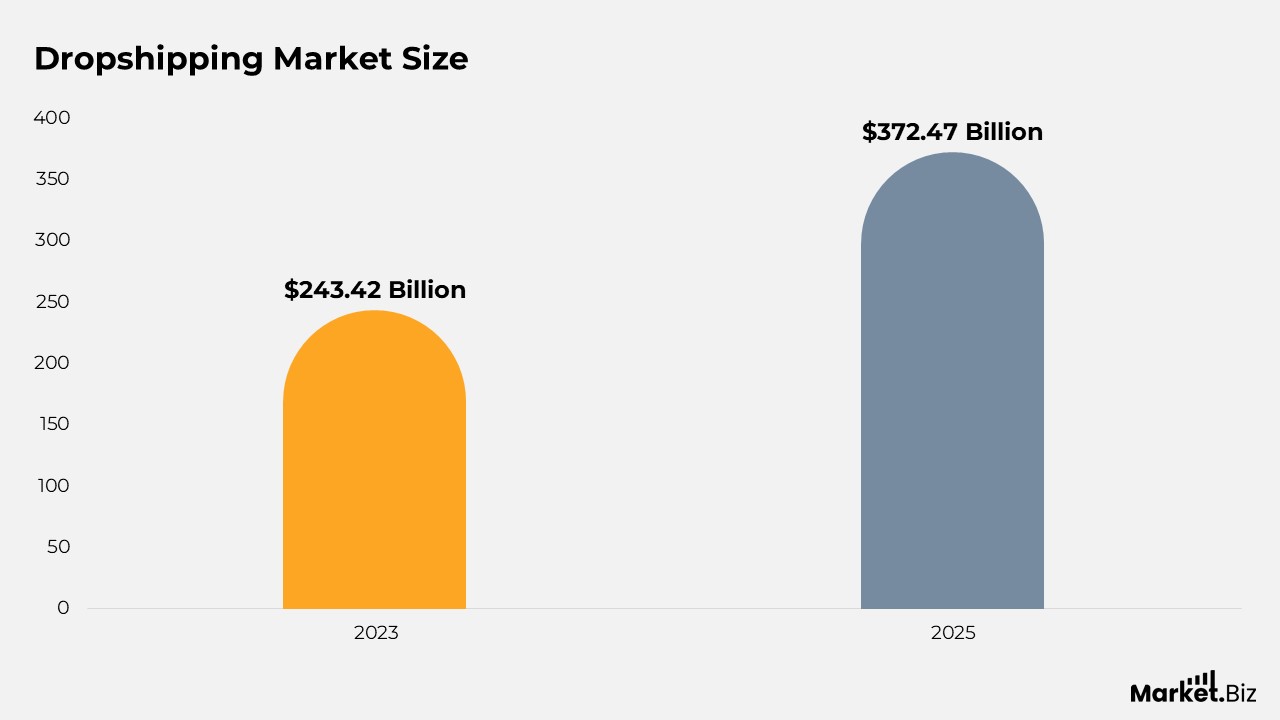
- The dropshipping market is projected to attain a valuation of $243.42 billion in 2023. This marks the first time that the dropshipping market has crossed $200 billion. This represents a growth of 23.7% in market size compared to 2022.
- By the end of 2025, it is anticipated to reach $372.47 billion.
- The annual growth rate of the dropshipping market is expected to be 24.39% from 2020 to 2026.
- 25% of the revenue generated by the dropshipping market is reported to come from the Asia Pacific region.
- In China, the dropshipping market is projected to experience a growth rate of 29.3% CAGR by the end of 2027, with a forecasted value of $136.7 billion by that year.
- Following China, Canada and Japan are expected to see a CAGR of 21.6% and 19%, respectively, from 2020 to 2027.
- In Europe, Germany stands out as the leading player in dropshipping, with an estimated CAGR of 20.3%.
- In North America, 30% of the dropshipping market is attributed to the electronics niche.
- The e-commerce market share in the United States is forecasted to reach 16.4% in 2023.
Media Usage by Dropshipping
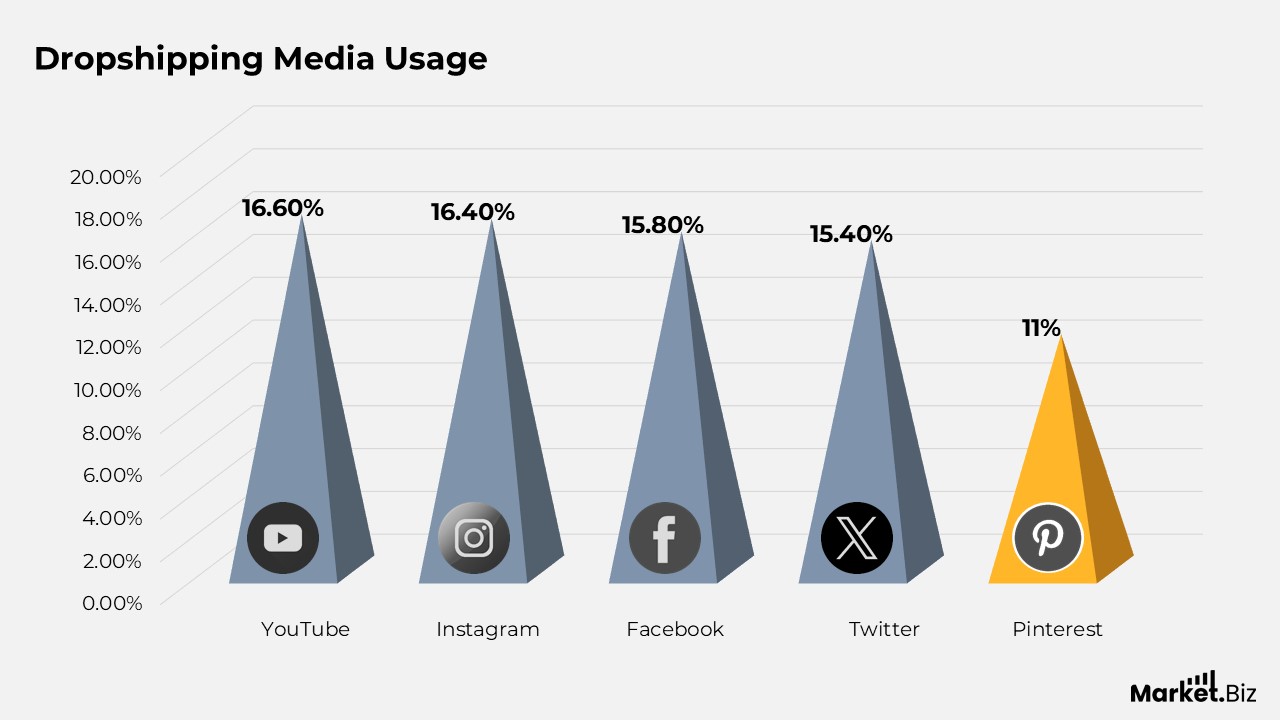
- Dropshipping statistics indicate that as of January 2022, TikTok has emerged as the leading social media platform for influencing consumer purchases.
- Of the users surveyed, 20.6% reported that they purchased products “all of the time,” while the remaining respondents indicated “sometimes” at 48.7%, “rarely” at 20.7%, and “never” at 9.9% to the influence of specific videos.
- YouTube ranked second, with 16.6% of users stating they bought products “all of the time” as a result of watching videos, 47.7% “sometimes,” 24.2% “rarely,” and 11.6% claiming “never” for the same.
- On Instagram, 16.4% of users purchase “all of the time,” 55.8% “sometimes,” 20.7% “rarely, and only 7.1% reported “never.”
- Facebook attracted 15.8% of users who claimed to buy “all the time,” while 54.8% stated they do so sometimes, 23.6% rarely, and 5.9% never.
- On Twitter, 15.4% of users buy products “all the time,” while 37% do so “sometimes,” 33.4% “rarely,” and 14.3% “never.”
- Pinterest recorded the lowest engagement, with only 11% of users purchasing “all the time,” while 54.1% indicated they would buy product styles “sometimes,” 29.3% said they would buy “rarely,” and 14.6% expressed that they would never make a purchase.
Dropshipping Demographics
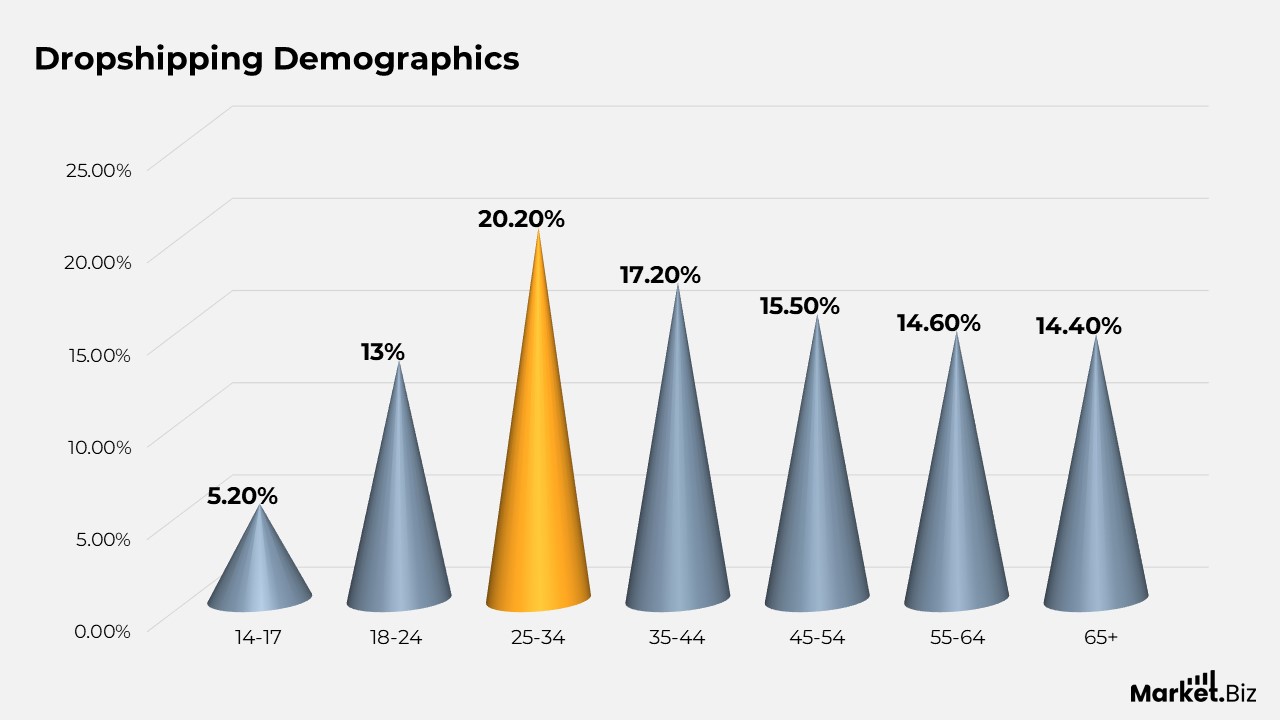
- As of February 2020, the demographics of digital purchasers in the United States revealed significant diversity across various age groups.
- Among these segments, individuals aged 25–34 represented the largest proportion, accounting for 20.2% of the total population, indicating a strong interest in online shopping.
- The second-largest age group was those aged 35–44, who made up 17.2% of all digital buyers.
- Middle-aged individuals were also notably represented, with 15.5% in the 45–54 age bracket and 14.6% in the 55–64 age range.
- Adults aged 65 and older comprised an intriguing share of 14.4%, highlighting their increasing engagement with e-commerce.
- Among the 18 to 24-year-old demographic, 13% were identified as digital buyers, while only 5.2% of the total buyers were teenagers aged 14–17.
- Undoubtedly, these statistics demonstrate that online shopping has indeed become a popular trend among US citizens across various age groups.
Smartphone Dropshipping Statistics
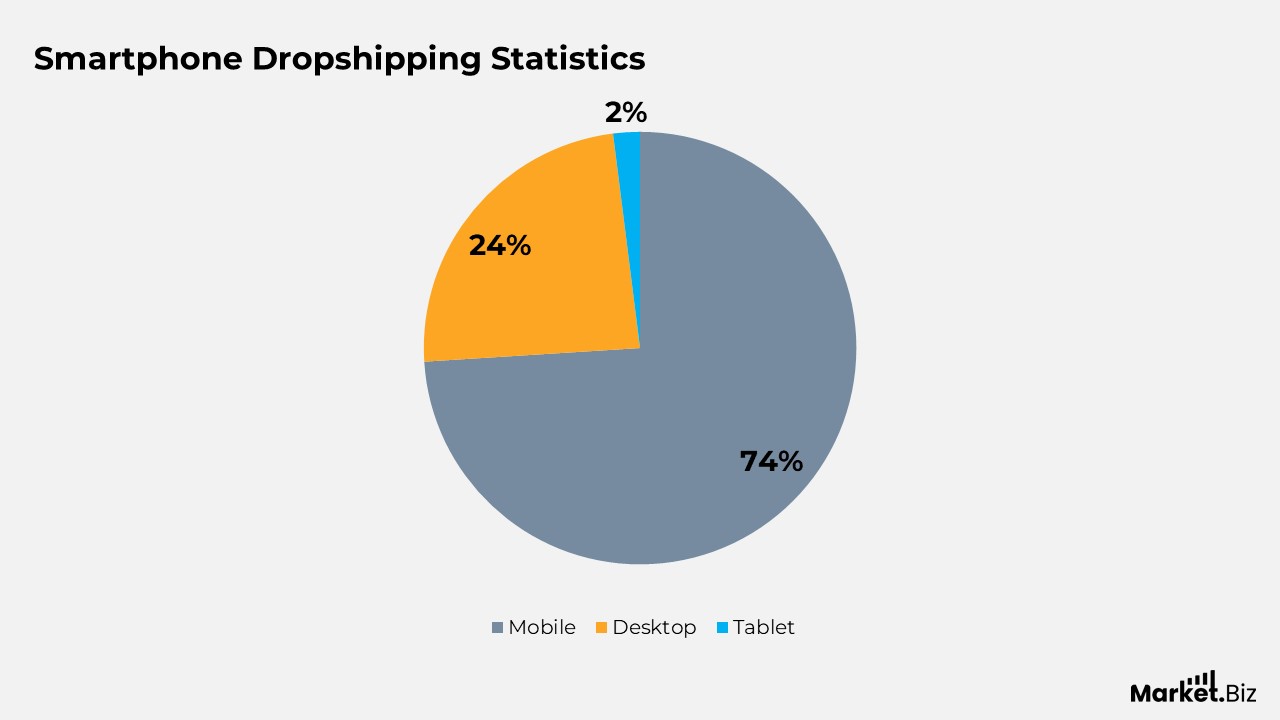
- A dropshipping store must be optimized for mobile devices, given that 74% of visits to online shops originate from mobile platforms.
- The rest of the traffic is allocated between desktops, with 24% for desktop users and 2% for tablet users.
- In terms of completion rates, desktops hold a slight advantage at 35%, while smartphones command a larger share at 63%.
- Consequently, every page on your website should be functional and well-formatted for both mobile and desktop users.
- Since the transition between devices should be seamless, a smooth and positive user experience can significantly enhance conversion rates.
Amazon Dropshipping Statistics
- Between 22% and 33% of retailers engage in dropshipping on Amazon.
- In the last quarter of 2023, 61% of the products available on Amazon were sourced from third-party sellers.
- There are currently 310 million active users of Amazon worldwide.
- Amazon stands as the leading e-commerce marketplace, having over 9.7 million sellers, with 2 million of them actively selling on the platform.
- Dropshipping contributes to 34% of Amazon’s total sales.
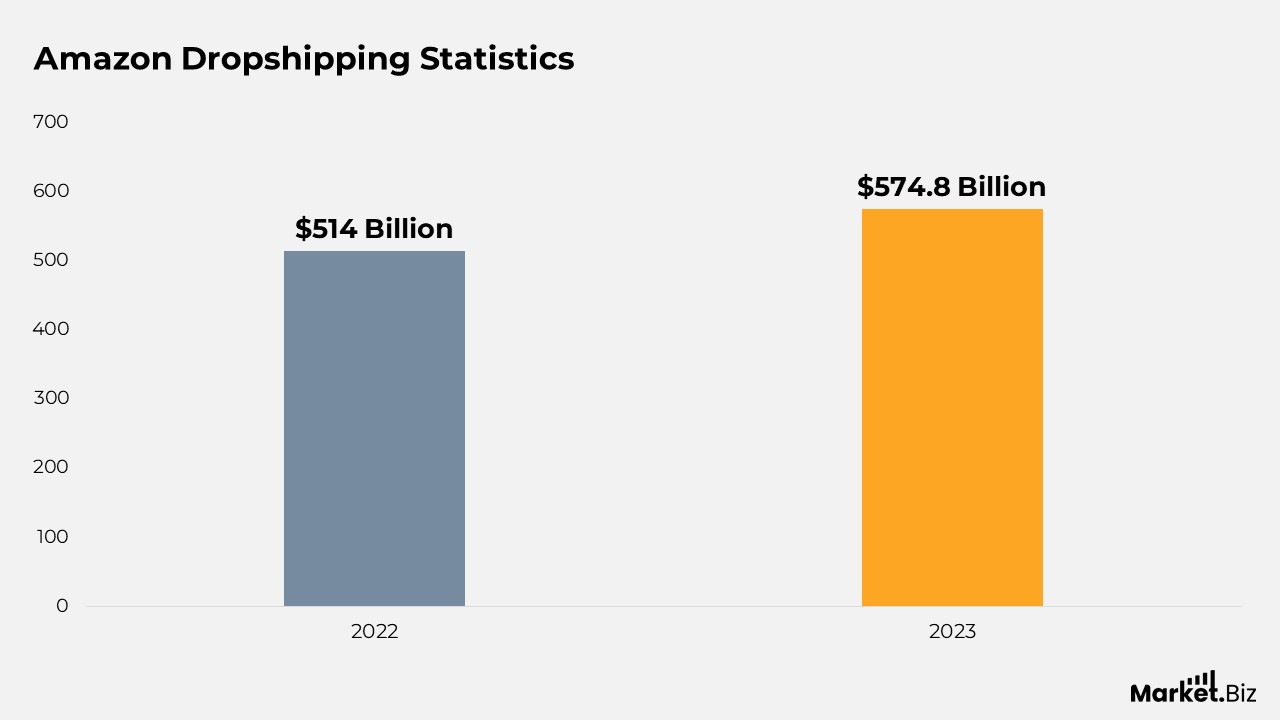
- In 2023, Amazon reported net sales of $574.8 billion, reflecting a 12% increase from the $514.0 billion in net sales recorded in 2022.
- Of this total, 34% of the sales, amounting to $68.98 billion, were generated through dropshipping.
eBay Dropshipping Statistics
- eBay is recognized as one of the foremost e-commerce platforms in the United States. It has over 138 million users globally.
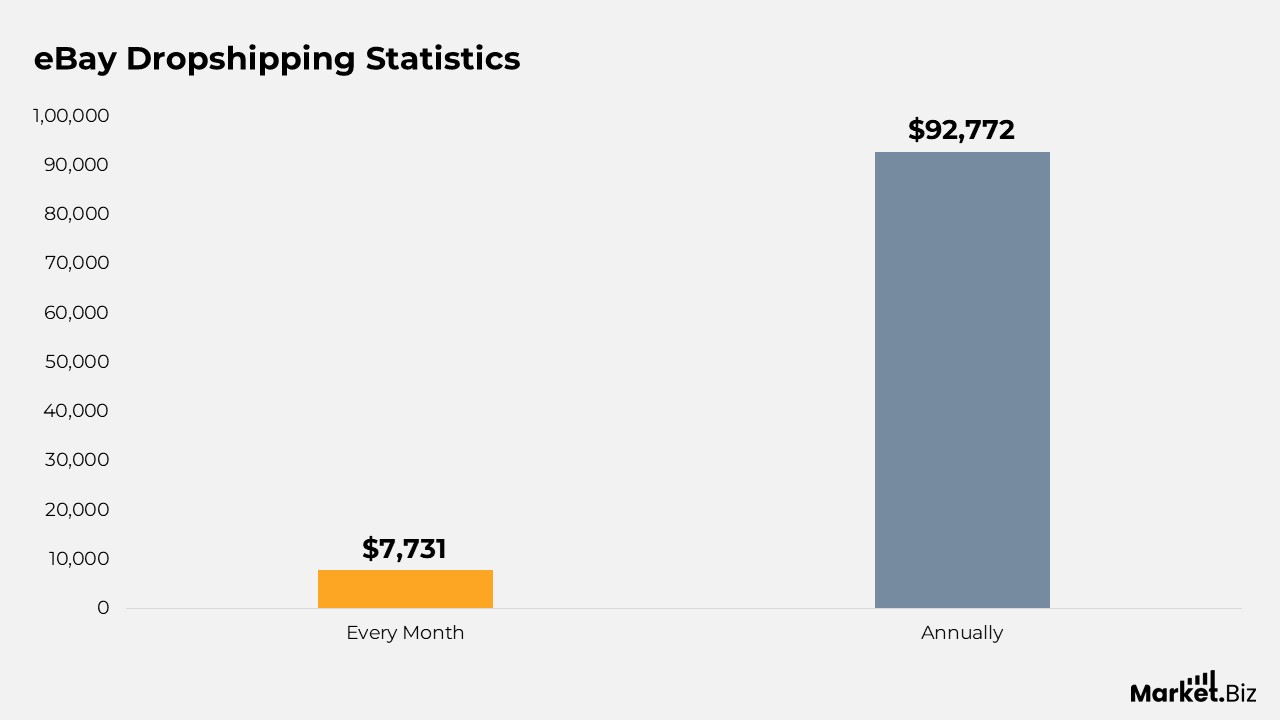
- The top 10% of eBay dropshippers generate approximately $7,731 each month.
- Dropshippers can earn a substantial income through eBay, with 10% of them making around $92,772 annually.
- One-quarter of dropshippers receive more than $1,000 per month.
- However, not all dropshippers fall within the top 10% or 25% in terms of earnings. On average, an eBay dropshipper earns about $2.67 for each sale.
- The leading 10% of eBay dropshippers make $3.64 per sale, while the lowest 10% incur a loss of $2.53 on every sale.
- Typically, an average dropshipper processes around 1,000 orders each month.
Dropshipping Revenue Statistics
- Dropshipping statistics indicate that, quite simply, no more than 1.5% of all dropshipping enterprises generate a monthly revenue exceeding US$50,000, which clearly illustrates the ongoing challenges in the industry, such as identifying the right niche and securing reliable partners.
- Shopify further highlights this by noting that only 10% of dropshipping businesses ultimately achieve profitability by the end of the day.
- Nevertheless, despite these obstacles, dropshipping is generally a more viable option compared to traditional retail, primarily because most expenses are associated with warehouse management and inventory storage costs.
- In recognition of this potential, major e-commerce platforms like Amazon and Shopify have launched new, exactly designed services aimed at reducing operational costs, potentially allowing for profit savings of up to 50%.
- According to dropshipping statistics, the average successful dropshipper realizes a profit margin of approximately 20–30% per transaction.
- Typically, high-value items tend to offer significantly higher profit margins, even if their turnover rates are slower.
- Additionally, as dropshipping has become more prevalent across various channels, suppliers have seen their profits increase by 18% compared to those achieved through direct sales.
- If the statistics highlight the financial advantages that dropshipping models provide to both suppliers and retailers, they undoubtedly represent a successful business model.
Statistics By Dropshipping Sales
- As a significant component of the e-commerce landscape, dropshipping has been a key driver of the industry’s expansion. By the end of the year 2025, sales in this sector are anticipated to approach nearly US$7.4 trillion on a global scale within eCommerce.
- Approximately 23% of all online transactions are conducted through dropshipping.
- Forrester Research approximates that around a quarter of all online purchases, compared to about US$85 billion in international sales-are fulfilled via dropshipping techniques, highlighting the growing appeal of this business model.
- Moreover, dropshipping sales are predominantly linked to marketing through social media, with retailers maintaining active profiles on platforms such as Facebook and Twitter, typically generating 32% higher revenue.
- Additionally, Business Insider reports that 45% of e-commerce transactions in the United States occur through mobile devices. Furthermore, 27% of online merchants employ the dropshipping business model.
- This approach offers advantages to both online retailers and suppliers. Reports indicate that manufacturers who have included dropshipping enjoy profits that are 18.33% higher than those who have not adopted this strategy.
Dropshipping Platforms Statistics
AliDropship
- 86% of dropshippers utilizing AliDropship indicated that they prefer to remain within a specific niche.
- The average revenue per visitor (RPV) in the dropshipping sector is $2.48.
Amazon
- A dedicated Amazon drop shipper can generate earnings ranging from $1,000 to $50,000 each month.
- It is reported that 50% of the products sold on Amazon originate from third-party sellers. Additionally, between 22% and 33% of online retailers have involved dropshipping on Amazon as a supplementary venture.
Shopify
- 87% of Shopify stores indicated that they handle product shipping manually.
- Compared to, only 7.77% of Shopify stores reported utilizing third-party dropshipping services for product delivery.
Conclusion
The worldwide dropshipping market is witnessing significant expansion, with forecasts estimating a value of $1,253.79 billion by the year 2030. This growth is driven by the rising acceptance of e-commerce and digital payment methods, which facilitate smooth transactions and a global presence for retailers. An important element contributing to this growth is the minimal barrier to entry, which draws in both emerging and established enterprises.
Although there are challenges, such as the need to secure dependable suppliers, the general perspective for dropshipping is optimistic, presenting opportunities for niche retailers and sustainable product lines.
FAQs
Typically, dropshippers earn approximately 20-30% profit on each sale. This profit averages out to around $100,000 annually, according to dropshipping statistics. Generally, their monthly earnings range from $1,000 to $5,000. The remaining funds are allocated by dropshippers for expenses such as fees, website hosting, suppliers, and marketing.
Despite the numerous favorable statistics regarding the dropshipping market, there are certain disadvantages, particularly the limited control over lead times and order fulfillment. This can result in dissatisfied customers and diminished customer service, as the dropshipper relies on the supplier to fulfill the order commitments. Additionally, there is a dependency on the inventory of others.
The estimated success rate for dropshipping is between 10% and 20%. This indicates that out of every 100 dropshipping ventures, only 10 to 20 are expected to achieve notable success. However, it is important to note that this figure is not definitive, as there are no official statistics available.

