









Introduction
Nursing Workforce Statistics: The nursing workforce consists of a variety of roles, including Registered Nurses, Licensed Practical Nurses, Nurse Practitioners, and Nursing Assistants (CNAs), each characterised by unique responsibilities and educational prerequisites.
R.N.s, being the largest segment, generally possess either an Associate’s or a Bachelor’s degree and deliver comprehensive patient care. N.P.s, who hold advanced degrees, provide specialised medical services and hospital care.
CNAs and LPNs assist in patient care under management, with LPNs needing a diploma or certificate and CNAs requiring state certification. The nursing workforce in the U.S. exceeds 3 million individuals and encounters challenges such as shortages and burnout. However, it also enjoys growth in advanced practice roles and a variety of career opportunities.
Editor’s Choice
- In 2023, registered nurses in the United States reported experiencing high levels of stress in their work environment.
- By 2026, the revenue increased to $812.9 billion, and in 2027, it further ascended to $862.5 billion.
- As of 2021, the number of active nurses per 1,000 residents shows considerable variation among different nations.
- As of 2013, the distribution of nursing and midwifery staff per 10,000 individuals showed considerable variation across different regions.
- 65% of the nursing workforce comprises women, while 35% consists of men in the African region.
- Nurses who are 45-54 years old are mainly located in ambulatory care (25%), with 20% in emergency departments, 21% in inpatient settings, and 19% in long-term care.
- Luxembourg ranks first with an average annual salary of $97,857, closely followed by Switzerland at $93,971 and Denmark at $89,419.
General Nursing Workforce Statistics
- As of 2021, the number of active nurses per 1,000 residents shows considerable variation among different nations. Finland stands at the forefront with 18.9 nurses for every 1,000 inhabitants.
- The racial and ethnic composition of registered nurses in the United States reveals a predominant presence of White nurses, who account for 75.4% of the total workforce.
- Among inpatient nurses, 17% are engaged in shifts lasting 12 hours or more, 51% work 12-hour shifts, 12% are on 10-hour shifts, 19% work 8-hour shifts, and 1% have shifts shorter than 8 hours, with another 1% categorized as ‘Other’.
- The countries offering the highest salaries for nurses, calculated based on average annual income in USD, showcase a variety of lucrative prospects across different regions. Luxembourg ranks first with an average annual salary of $97,857.
- In 2013, the disparity in salaries between male and female nurses in the U.S. was notably influenced by job roles, highlighting significant inequalities.
- Nurse anaesthetists faced the largest salary gap, with male nurses earning $17,290 over their female colleagues.
- In 2023, registered nurses in the United States reported experiencing high levels of stress in their work environment.
- A substantial 56% of those surveyed indicated that they experience a considerable amount of stress.
- To enhance overall job satisfaction among nursing personnel, 68% of respondents suggested that increasing salaries, wages, or bonuses would be the most effective approach.
- Nursing professionals view various support initiatives as essential to their effectiveness and overall well-being.
- Among those surveyed, 68% emphasized the importance of receiving more appropriate and adequate recognition, while 28% regarded it as neutral, and only 4% deemed it unimportant.
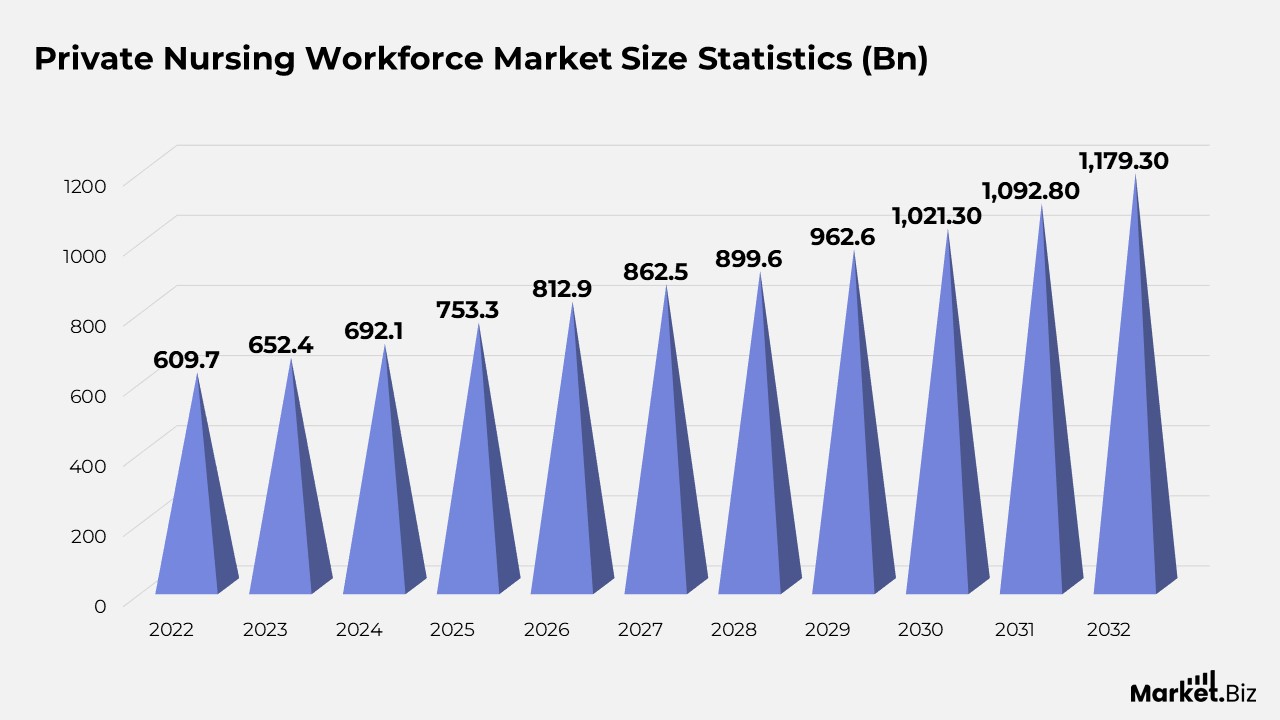
Private Nursing Workforce Market Size Statistics
- In 2022, the market revenue amounted to $609.7 billion, which rose to $652.4 billion in 2023.
- This positive trend persisted, with the market achieving $692.1 billion in 2024 and $753.3 billion in 2025.
- By 2026, the revenue increased to $812.9 billion, and in 2027, it further ascended to $862.5 billion.
- The market sustained its growth, reaching $899.6 billion in 2028 and $962.6 billion in 2029.
- By 2030, the market revenue surpassed the trillion-dollar threshold, attaining $1,021.3 billion, and continued to expand to $1,092.8 billion in 2031.
- The projection for 2032 anticipates that the market will reach $1,179.3 billion, indicating a notable and consistent rise over the decade.
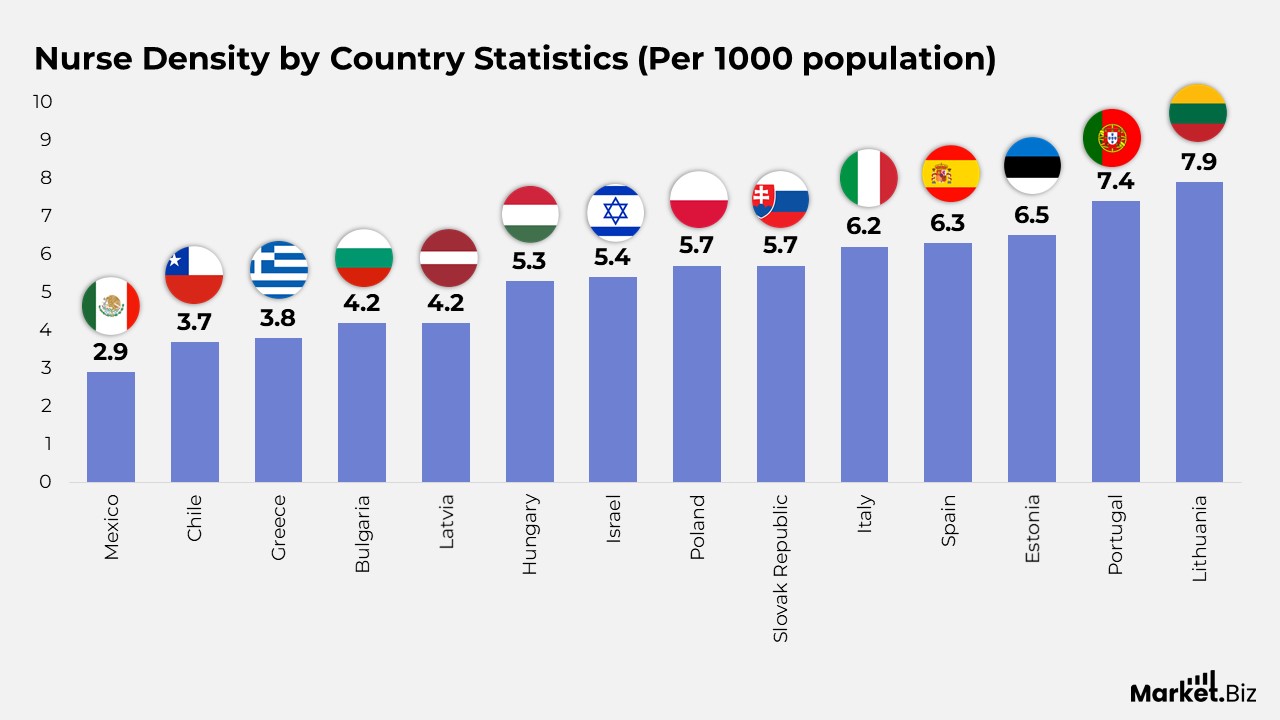
Nurse Density by Country Statistics
- As of 2021, the number of active nurses per 1,000 residents shows considerable variation among different nations.
- Finland ranks first with 18.9 nurses per 1,000 residents, closely followed by Norway and Switzerland, both at 18.
- Iceland has 15 nurses per 1,000 residents, while Ireland and Australia each report 13.
- Germany, Japan, and the United States have 12, 12.1, and 12 nurses per 1,000 residents, respectively.
- Luxembourg has 11.7, Belgium 11.1, the Netherlands 11.4, and New Zealand 10.9.
- Austria, Sweden, and Slovenia report 10.6, 10.7, and 10.5 nurses per 1,000 residents, respectively. Denmark and Canada have 10.2 and 10.3, respectively.
- France has 9.7 nurses per 1,000 residents, while the OECD37 average is 9.2.
- Korea 8.8, The Czech Republic reports 9, and the United Kingdom 8.7.
- Portugal, Lithuania, and Estonia have 7.4, 7.9, and 6.5 nurses per 1,000 residents, respectively.
- Italy and Spain report 6.2 and 6.3, respectively, with Poland and the Slovak Republic each at 5.7.
- Hungary and Israel report 5.3 and 5.4, respectively, while Bulgaria and Latvia each have 4.2.
- Chile has 3.7, Greece 3.8, and Mexico 2.9 nurses per 1,000 residents.
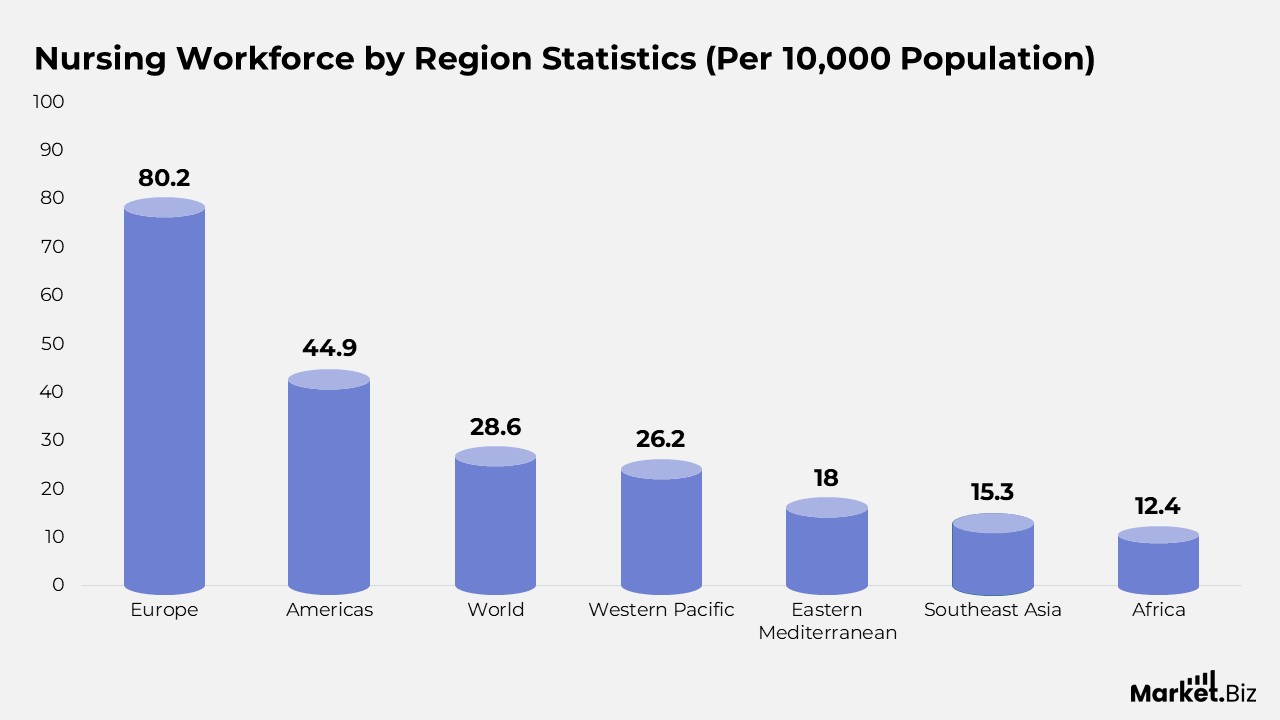
Nursing Workforce by Region Statistics
- As of 2013, the distribution of nursing and midwifery staff per 10,000 individuals showed considerable variation across different regions.
- Europe recorded the highest density, with 80.2 personnel per 10,000 individuals.
- The Americas came next with a density of 44.9 people per 10,000 individuals.
- Globally, the average density was 28.6.
- The density was noted at 26.2, whereas the Eastern Mediterranean region reported 18 personnel per 10,000 individuals in the Western Pacific region.
- Southeast Asia indicated a density of 15.3, and Africa exhibited the lowest density, with merely 12.4 nursing and midwifery personnel per 10,000 individuals.
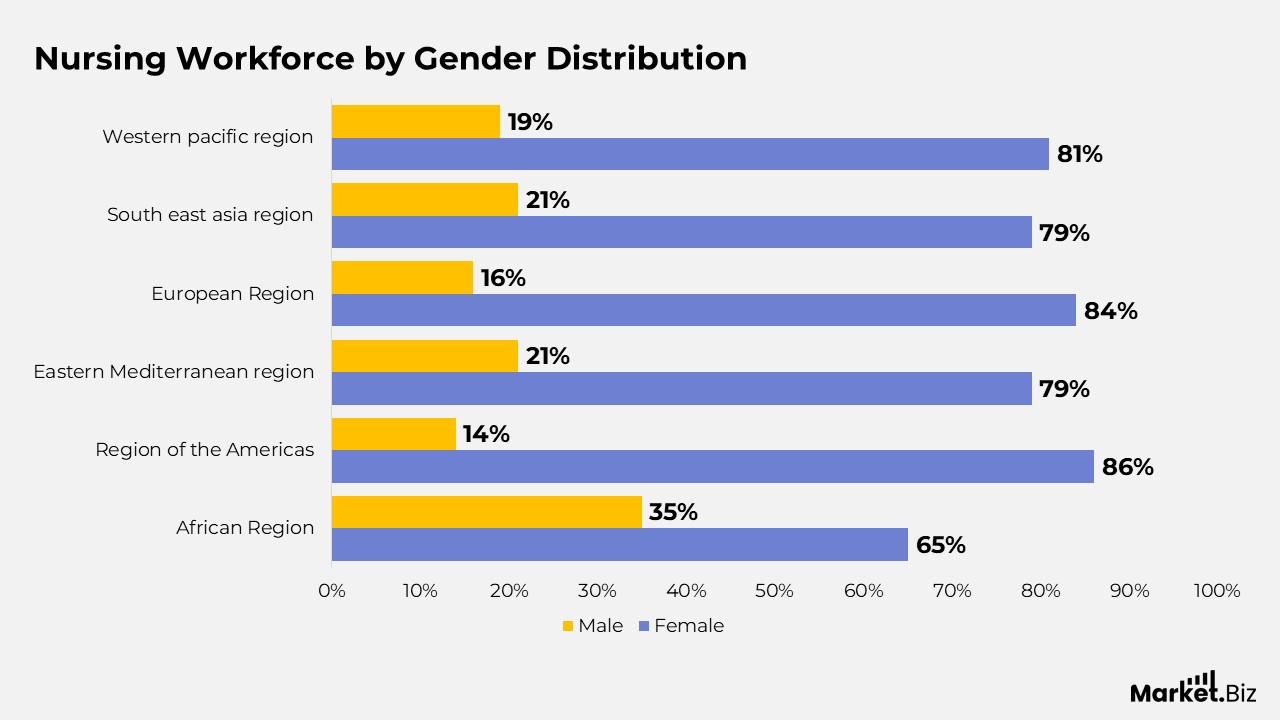
Gender Distribution By Nursing Workforce
- In the African region, 65% of the nursing workforce comprises women, while 35% comprises men.
- The Americas region has the highest percentage of female nurses at 86%, with males accounting for 14%.
- In the Eastern Mediterranean region, the gender ratio is 79% female and 21% male.
- The European region indicates that 84% of its nursing staff is female, with 16% being male.
- Similarly, in the Southeast Asia region, 79% of nurses are female, and 21% are male.
- Lastly, the Western Pacific region reports that 81% of its nurses are female and 19% are male.
Nursing Work Shifts Statistics
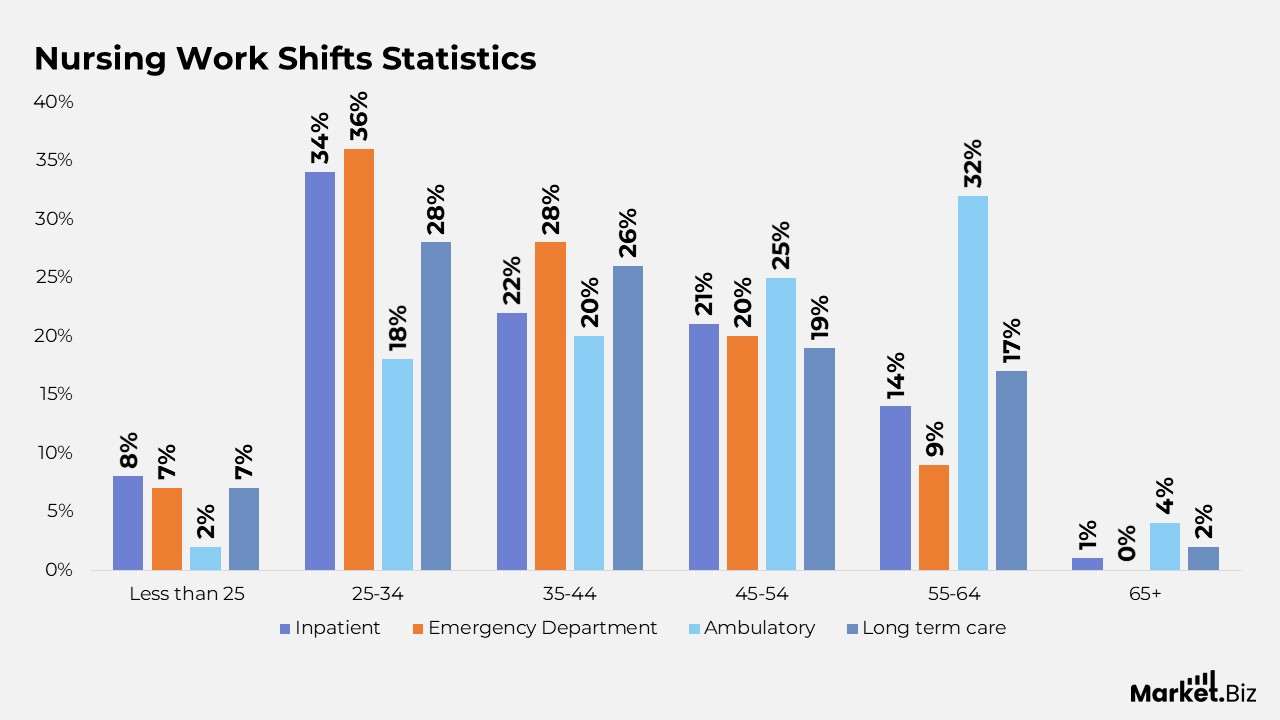
- Among nurses who are under 25 years of age, 8% are employed in inpatient settings. 2% are in ambulatory care, 7% work in emergency departments, and 7% are engaged in long-term care.
- Nurses in the 25-34 age bracket primarily work in emergency departments (36%) and inpatient (34%) environments, with 28% in long-term care and 18% in ambulatory care.
- Individuals aged 35-44 exhibit a more evenly distributed employment pattern: 22% in inpatient, 20% in ambulatory care, 28% in emergency departments, and 26% in long-term care.
- Nurses who are 45-54 years old are mainly located in ambulatory care (25%), with 20% in emergency departments, 21% in inpatient settings, and 19% in long-term care.
- The age group of 55-64 has the highest proportion in ambulatory care (32%), followed by inpatient (14%), long-term care (17%) and emergency departments (9%).
- Nurses aged 65 and above are the least represented in all settings, with 1% in inpatient, 2% in long-term care, and 4% in ambulatory care.
Education Level Statistics By Nursing Workforce
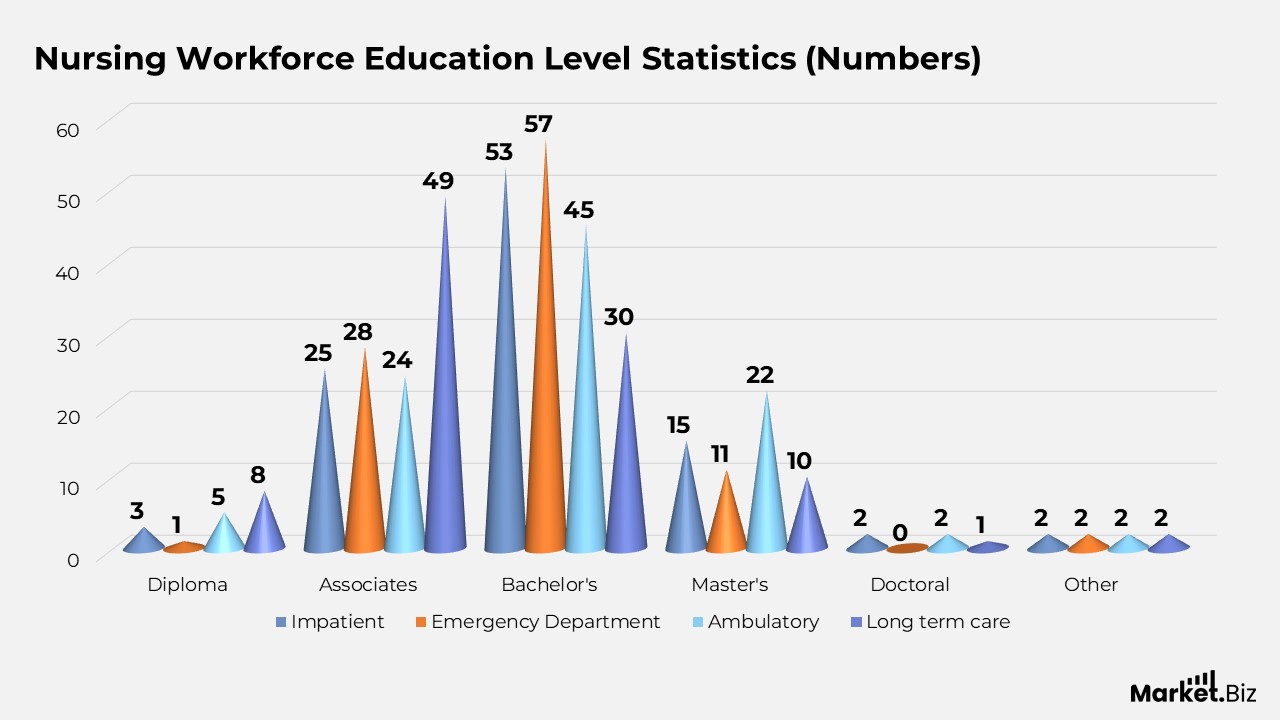
- In inpatient care, 25% have an associate’s degree, 3% of nurses possess a diploma, and 53% hold a bachelor’s degree. Additionally, 2% possess a doctoral degree, 15% have a master’s degree, and another 2% are classified under the ‘Other’ category.
- In the emergency department, 28% have an associate’s degree, 1% of nurses hold a diploma, and 57% possess a bachelor’s degree. Furthermore, 11% have a master’s degree, and 2% are categorised as ‘Other,’ with no respondents having a doctoral degree.
- For ambulatory care nurses, 5% hold a diploma, 45% possess a bachelor’s degree, 24% have an associate’s degree, 2% hold a doctoral degree, 22% have a master’s degree, and 2% are classified as ‘Other.’
- In long-term care settings, 49% hold an associate’s degree, 8% of nurses possess a diploma, 30% have a bachelor’s degree, 1% hold a doctoral degree, 10% possess a master’s degree, and 2% are categorised as ‘Other.’
Nursing Workforce Salaries Statistics
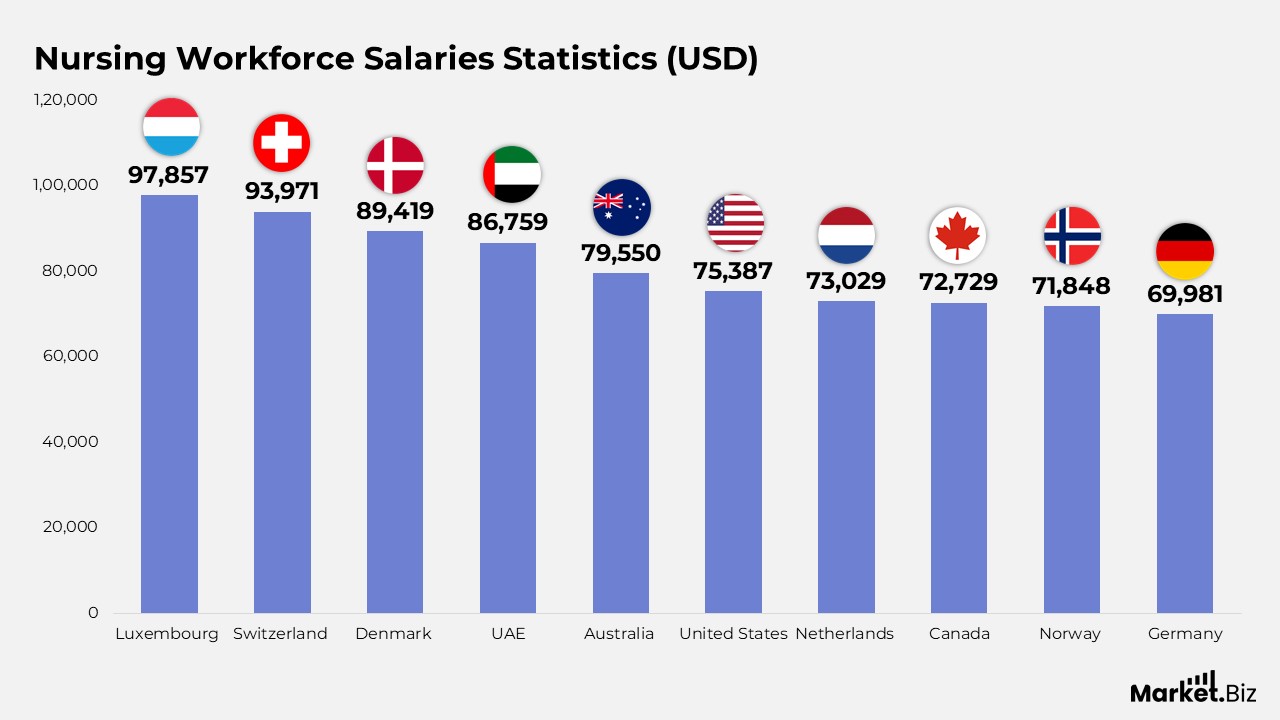
- Luxembourg ranks first with an average annual salary of $97,857, closely followed by Switzerland at $93,971 and Denmark at $89,419.
- Nurses in the United Arab Emirates have an average yearly income of $86,759, whereas those in Australia earn $79,550.
- In the United States, the average salary for nurses stands at $75,387 per year.
- The Netherlands provides an average annual salary of $73,029, which is slightly above Canada’s $72,729.
- Nurses in Norway receive an average salary of $71,848 per year, while in Germany, the average annual salary is $69,981.
Nursing Workforce Pay Gap Statistics
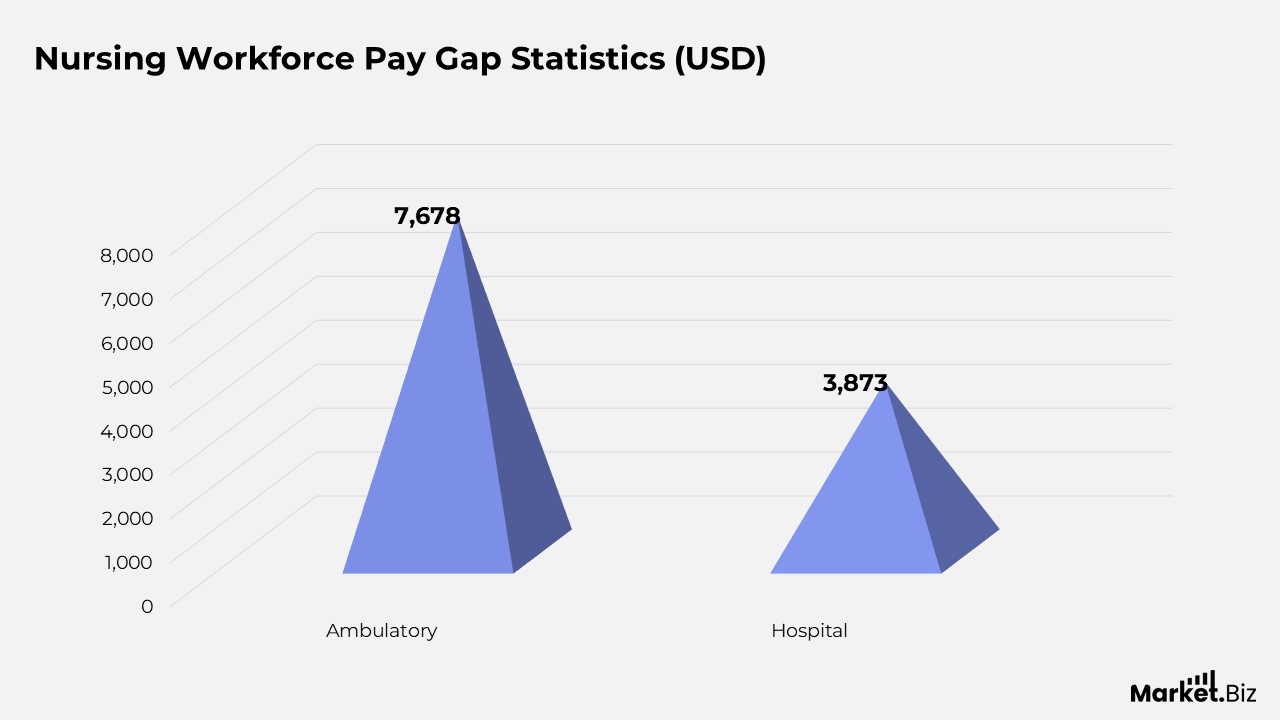
- In outpatient care environments, male nurses receive an average salary that is $7,678 higher than that of their female colleagues.
- In hospital environments, the disparity in salaries is slightly reduced, with male nurses earning $3,873 more than their female counterparts.
Recent Developments
- In the middle of 2023, AMN Healthcare completed the acquisition of Synzi, a platform for virtual care communication, for a total of $125 million.
- Cross Country Healthcare finalized its acquisition of Workforce Solutions Group for $90 million towards the end of 2023.
- In 2023, Trusted Health, a platform dedicated to nursing careers, successfully raised $149 million to broaden its services and create new tools aimed at supporting nurse recruitment, retention, and career advancement.
- Incredible Health, a platform designed to assist hospitals in hiring permanent nurses more efficiently, obtained $80 million in early 2024 to improve its technology and extend its influence throughout the US healthcare system.
- In 2023, the European Union initiated a new strategy for the nursing workforce to enhance nurse retention, improve training programs, and encourage the cross-border mobility of healthcare professionals among member states.
Conclusion
The data regarding the nursing workforce indicates considerable regional differences, with Finland, Switzerland, and Norway exhibiting the highest nurse densities per capita. In countries with Low and Medium Human Development Index (HDI), younger nurses are more prevalent, whereas High HDI and Very High countries tend to have an older nursing population.
Globally, the nursing workforce is primarily female, and there are significant racial and ethnic disparities observed in the United States. The level of educational attainment differs across various care settings, and there are notable salary discrepancies between male and female nurses, particularly among nurse anaesthetists and in the field of cardiology.
To enhance job satisfaction, key factors include salary increases, sufficient staffing levels, and improved support systems. High levels of stress are common among nurses in the U.S.
The market for private nursing services is experiencing robust growth, highlighting the necessity for effective support initiatives such as recognition, open communication, and mental health resources. By addressing these challenges, it is possible to foster a more resilient and content nursing workforce.
FAQ’s
Nursing represents the largest healthcare profession in the country, comprising nearly 4.7 million registered nurses (RNs) across the nation. Among all licensed RNs, 89% are actively employed in nursing roles. The average age of RNs is 46 years. Over 25% of registered nurses indicate their intention to leave the profession or retire within the next five years.
Nurses make up 54% of the total employment in the health industry, which equates to approximately 372,000 registered nurses in 2022.
Beneficial support initiatives encompass adequate and appropriate recognition. Additionally, open lines of communication, mental health resources, and the promotion of a culture that normalizes seeking assistance are essential.

