








Introduction
Edible Insects Statistics: Edible insects are becoming increasingly popular as a sustainable and nutritious food option, emerging as a significant trend. Rich in protein, vitamins, and minerals, they offer an eco-friendly alternative to traditional livestock farming, necessitating less land, water, and feed.
With a long history of consumption across various cultures, insects are now being integrated into mainstream diets, propelled by rising concerns about health and environmental matters.
Although still in its infancy, the edible insect market shows considerable growth potential, with a variety of products such as protein bars and snacks entering the marketplace. As consumers place greater emphasis on health and sustainability, edible insects are poised to greatly impact the future of food production and consumption.
Editor’s Choice
- In 2023, the worldwide revenue for the edible insects market reached USD 3.4 billion.
- In the Asia-Pacific, the market saw a considerable drop from USD 476.9 million in 2018 to USD 173.9 million in 2023.
- Coleoptera, which includes beetles, represents the largest segment, accounting for 29.6% of species consumed.
- The Neotropical region is recognized for having the highest diversity, ranging from Mexico to Patagonia, with a total of 725 insect species being consumed.
- Consumers in the 35-44 age range constitute the largest demographic, with 25% actively consuming edible insects, reflecting a significant segment of the market.
- In the United States, around 72.5% of those surveyed indicated a willingness to try at least one food product made from insects.
General Edible Insects Statistics
- In 2023, the worldwide revenue for the edible insects market reached USD 3.4 billion.
- In the Asia-Pacific area, the market saw a notable decline from USD 476.9 million in 2018 to USD 173.9 million in 2023.
- Beetles (Coleoptera) lead the consumption sector with a share of 31%, followed by caterpillars (Lepidoptera) at 18%.
- The Neotropical region showcases the greatest diversity, spanning from Mexico to Patagonia, with 725 species of insects being consumed.
- The age group of 25-34 years exhibits a higher engagement rate, with 20% participating in insect consumption.
- The profile of edible insect consumers indicates a minor gender imbalance, with males making up 55% and females accounting for 45% of the consumer demographic.
- In the United States, around 72.5% of those surveyed indicated a willingness to try at least one insect-based food item.
Edible Insects Market Size Statistics
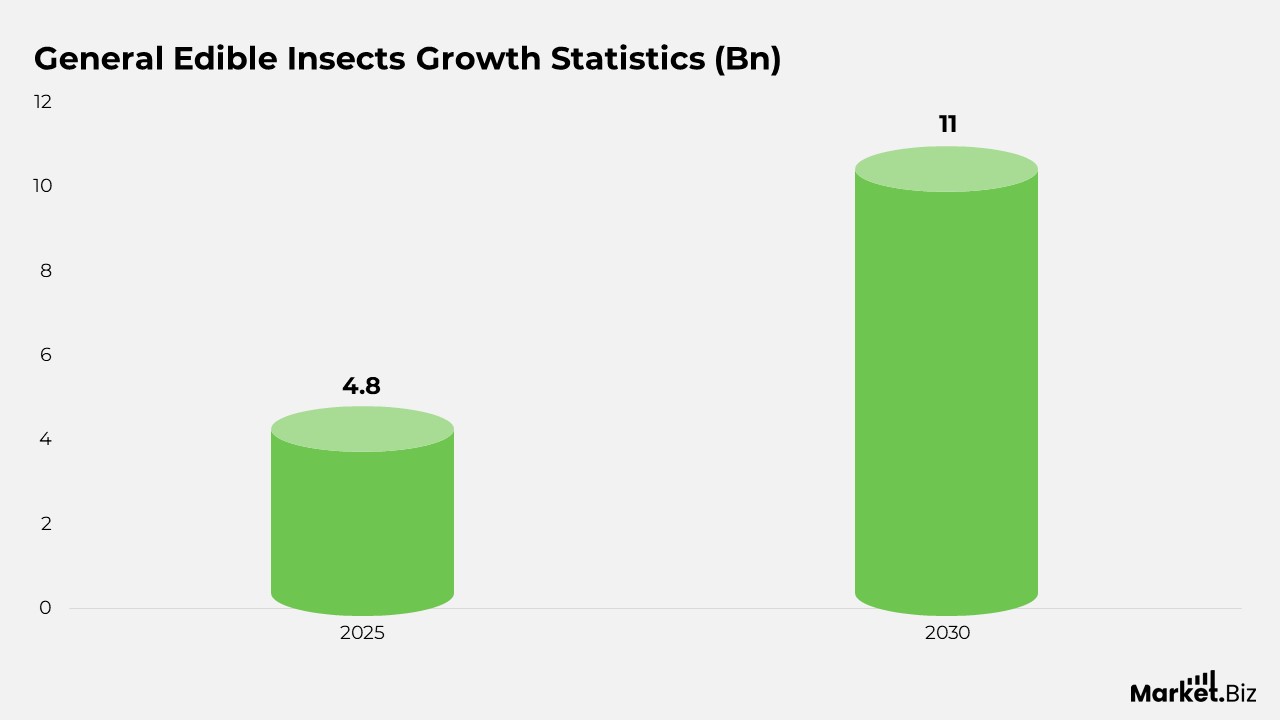
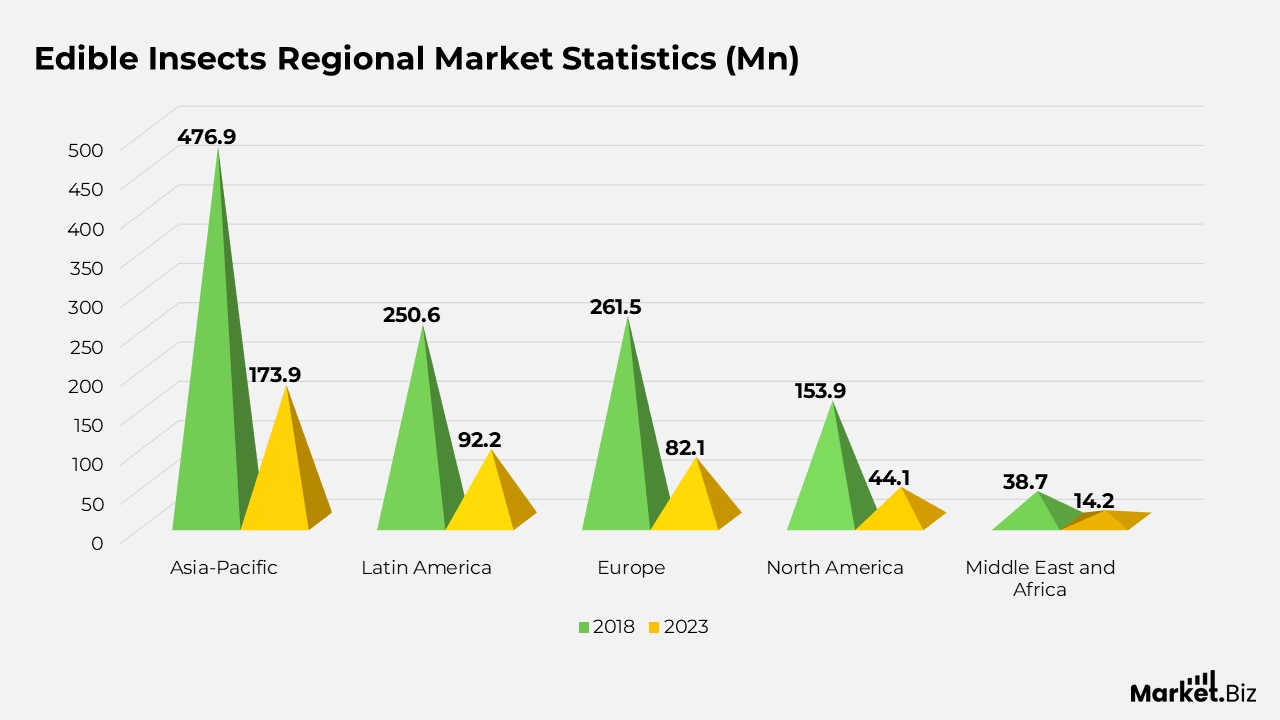
- In 2022, the market revenue was recorded at USD 2.9 billion, followed by a significant increase to USD 3.4 billion in 2023.
- Building on this positive trend, the market is expected to maintain its upward momentum. It is projected to reach USD 4.0 billion in 2024 and further rise to USD 4.8 billion in 2025.
- The growth pattern is anticipated to continue, with revenues estimated to hit USD 5.6 billion in 2026 and USD 6.7 billion in 2027.
- As the global acceptance and utilization of edible insects as a sustainable protein source expand, the market is expected to experience considerable growth, with revenues projected to reach USD 7.9 billion in 2028, USD 9.3 billion in 2029, and USD 11.0 billion in 2030.
- The market is set for ongoing growth, with revenues forecasted to soar to USD 13.0 billion in 2031 and USD 15.3 billion in 2032.
Edible Insects Regional Market Statistics
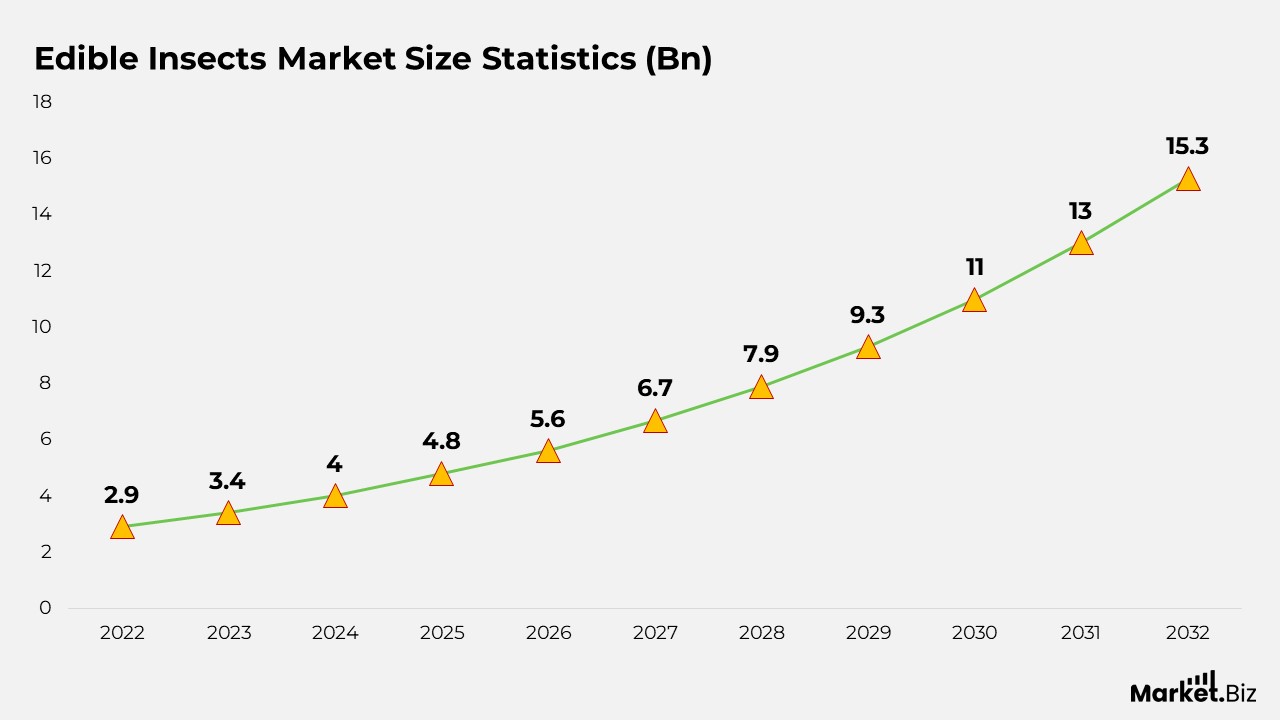
- In the Asia-Pacific, the market saw a considerable drop from USD 476.9 million in 2018 to USD 173.9 million in 2023.
- Similarly, Latin America experienced a decline from USD 250.6 million in 2018 to USD 92.2 million in 2023.
- Europe also faced a reduction from USD 261.5 million in 2018 to USD 82.1 million in 2023.
- North America noted a significant decrease from USD 153.9 million in 2018 to USD 44.1 million in 2023.
- Meanwhile, the Middle East and Africa region saw a decline from USD 38.7 million in 2018 to USD 14.2 million in 2023.
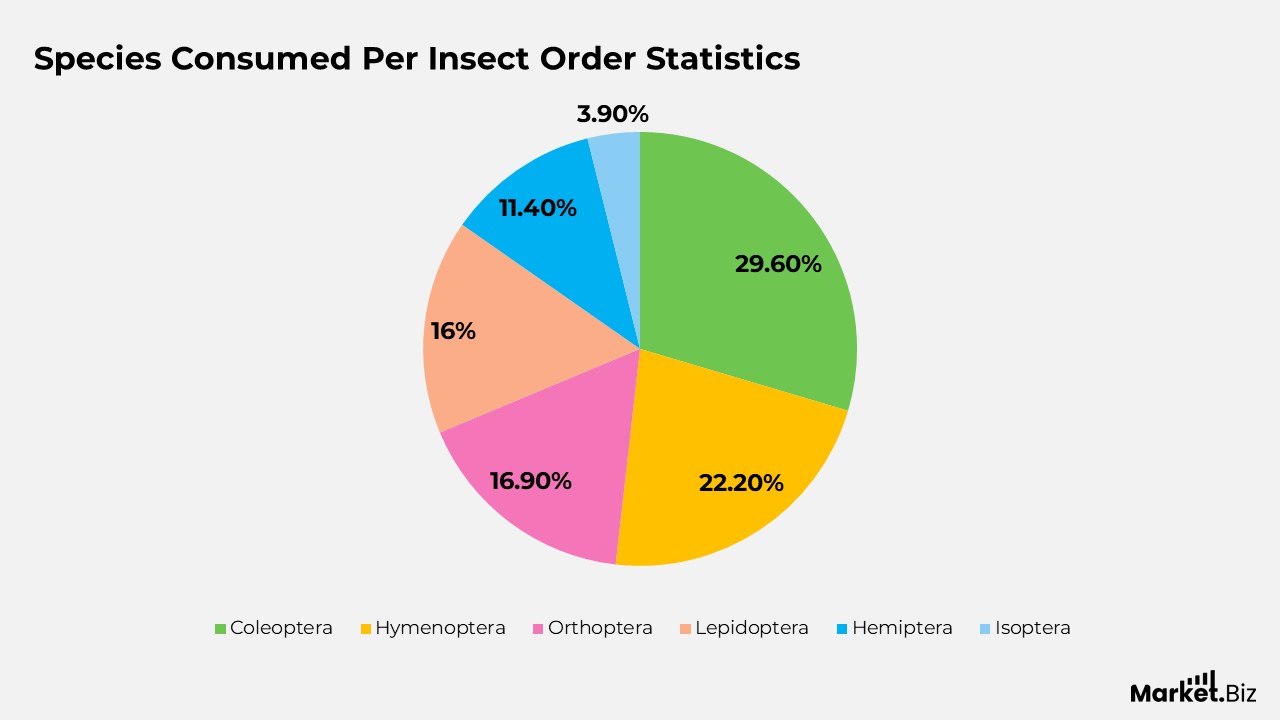
Species Consumed Per Insect Order Statistics
- Coleoptera, which includes beetles, represents the largest segment, accounting for 29.6% of species consumed, highlighting their extensive use in various culinary practices.
- Hymenoptera, which comprises bees, wasps, and ants, closely follows with a contribution of 22.2%, underscoring their important role as a food source in numerous cultures.
- Orthoptera, including grasshoppers, locusts, and crickets, account for 16.9% of overall consumption, while Lepidoptera, which consists of caterpillars, make up 16%.
- Hemiptera, made up of cicadas, leafhoppers, planthoppers, scale insects, and true bugs, represent 11.4% of species consumed, indicating their lesser yet significant culinary role.
- Lastly, Isoptera, or termites, add 3.9% to the total consumption share.
Number of Insect Species Consumed Statistics
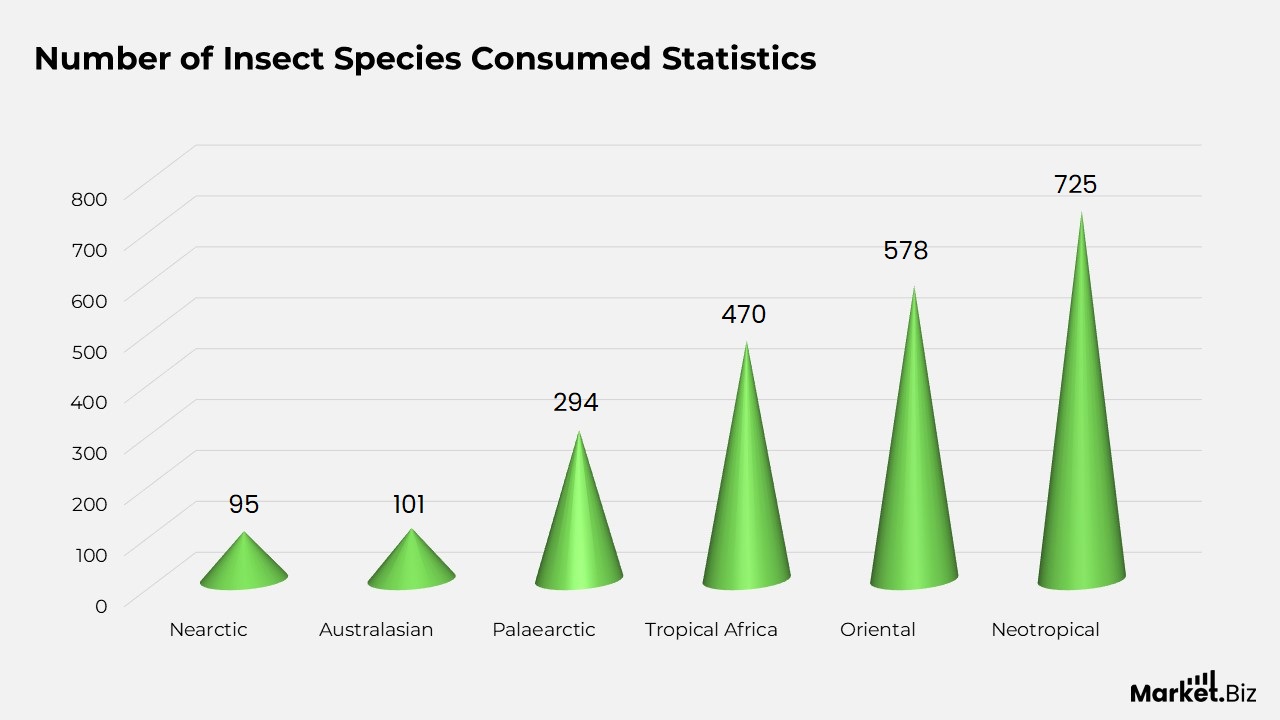
- The Neotropical region is recognized for having the highest diversity, ranging from Mexico to Patagonia, with a total of 725 insect species being consumed.
- In the Asian region, which includes Southeast Asia and India, 578 species are consumed, showcasing the rich culinary traditions found in these areas.
- Tropical Africa, which spans Central and South Africa, closely follows with 470 species consumed, underscoring the importance of insects in local diets.
- In the Palaearctic region, which comprises Europe, North Africa, and China, 294 insect species are consumed, although this is to a lesser degree compared to other regions.
- The Australasian region, which includes New Zealand, Australia, Papua New Guinea, and the Pacific islands, features 101 species spent, while the Nearctic region, covering the United States and Canada, has a consumption of 95 insect species.
Edible Insects Consumers by Age Statistics
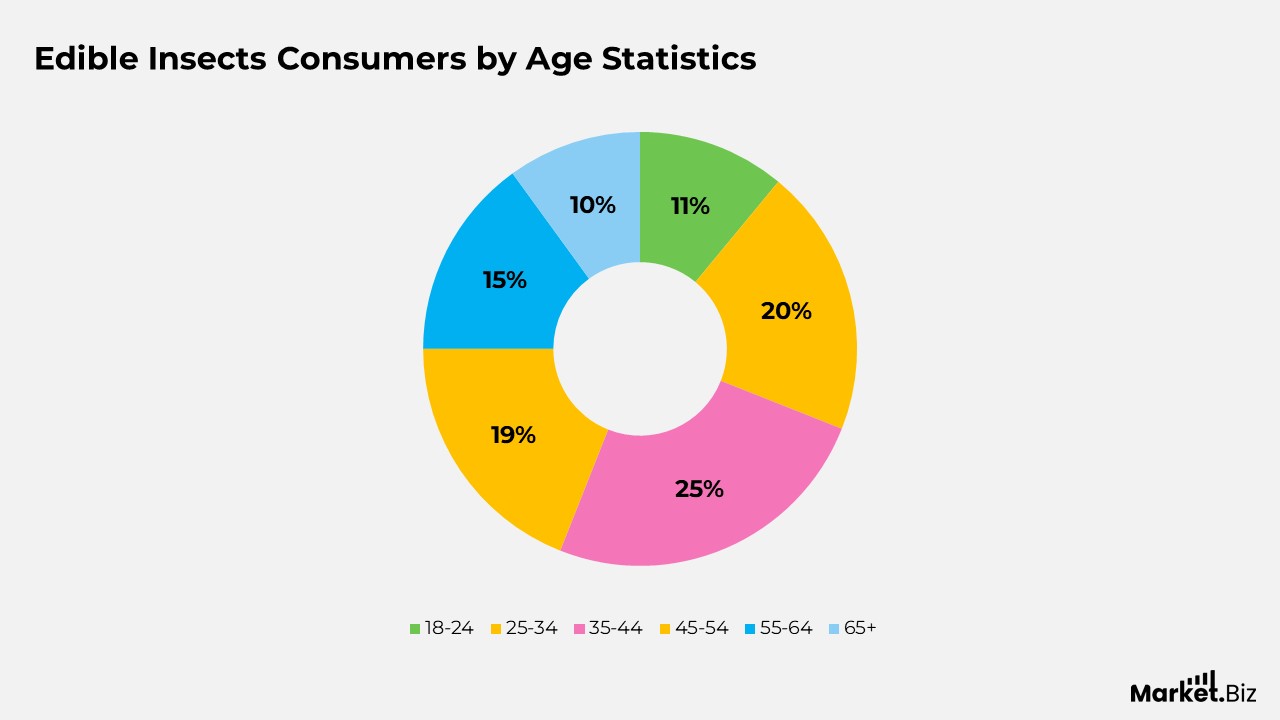
- The demographics of consumers who eat edible insects show a diverse distribution across various age categories.
- Among those aged 18-24, the youngest group, 11% engage in the consumption of edible insects.
- The 25-34 age category exhibits a greater participation rate, with 20% involved in insect consumption.
- Consumers in the 35-44 age range constitute the largest demographic, with 25% actively consuming edible insects, reflecting a significant segment of the market.
- In the 45-54 age group, 19% of consumers are involved in insect consumption, followed by 15% in the 55-64 age range.
- Among individuals over 65 years old, 10% partake in the consumption of edible insects.
Edible Insects Consumers by Education Level Statistics
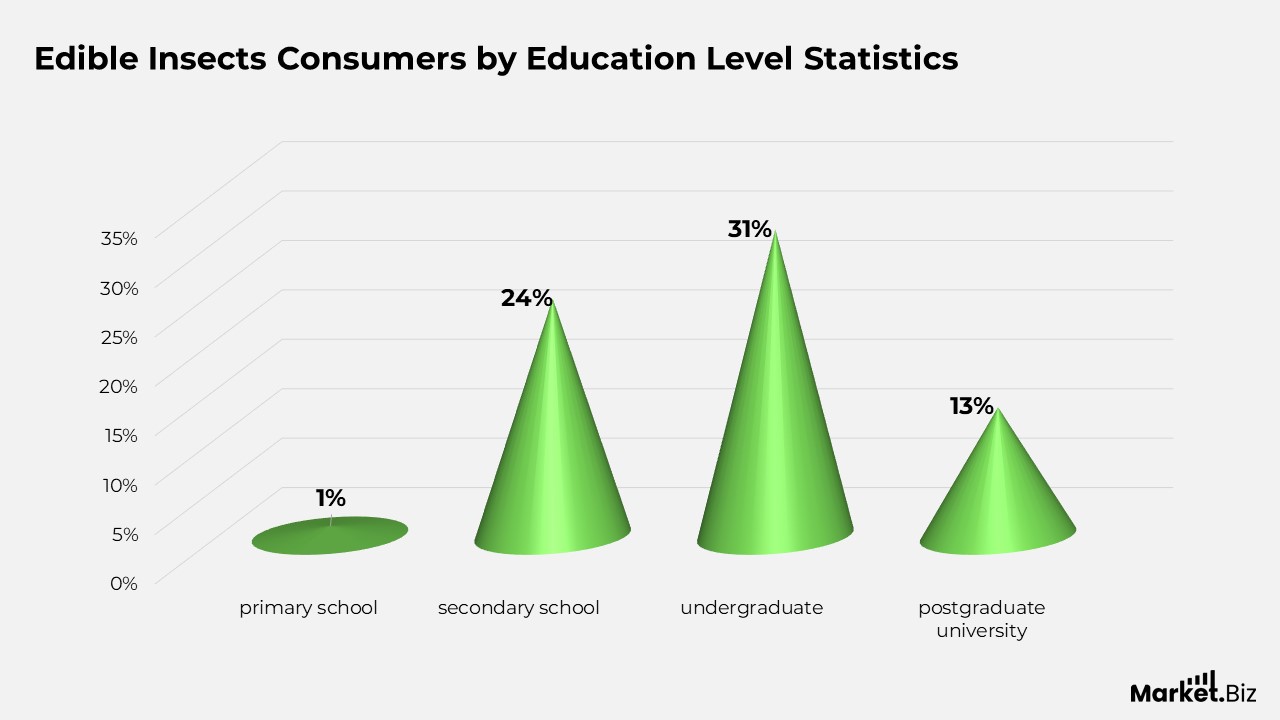
- Among individuals with a primary school education, the involvement in the consumption of edible insects is quite low, representing merely 1%.
- In contrast, there is a significant rise in consumption among those who have completed secondary school, with 24% actively participating in insect consumption.
- This trend further escalates among individuals possessing technical or trade certificates and undergraduate university degrees, making up 31% of the consumer demographic.
- Interestingly, consumers with postgraduate university education show a slightly reduced participation rate at 13%.
Statistics of Edible Insects Protein Content
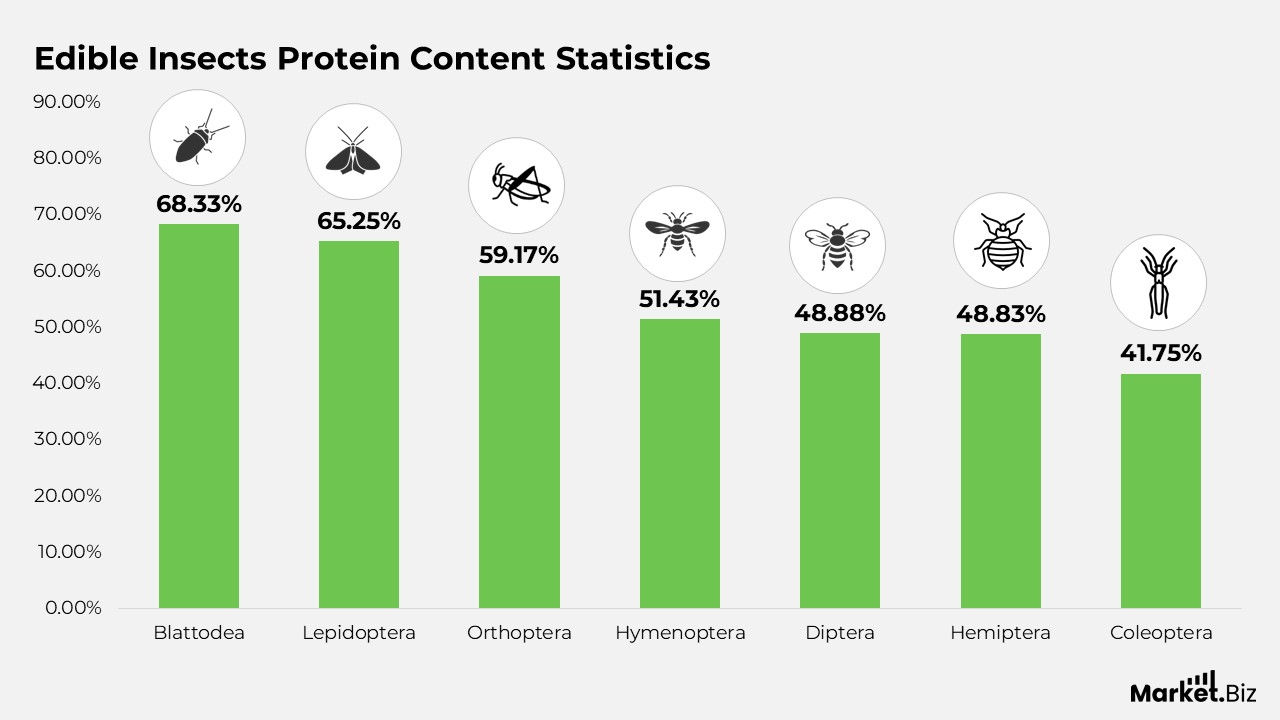
- Blattodea, commonly referred to as cockroaches, has the highest protein content at 68.33%.
- Lepidoptera, which includes moths and butterflies, closely follows with a protein content of 65.25%.
- Orthoptera, comprising grasshoppers and crickets, shows a significant protein content of 59.17%, establishing them as an important protein source.
- Among various insect orders, Hymenoptera, such as bees and ants, display a protein content of 51.43%, whereas Diptera, which consists of flies, reveals a protein content of 48.88%.
- Hemiptera, including cicadas and true bugs, exhibit a comparable protein content of 48.83%. Coleoptera, which encompasses beetles, shows a protein content of 41.75%.
Edible Insects Consumers’ Perspective Statistics
- In the United States, around 72.5% of those surveyed indicated a willingness to try at least one food product made from insects.
- In contrast, about 67% of respondents in Canada stated that they had already sampled foods that include insects.
- In Denmark, consumers view insects as a sustainable food source and a practical alternative to meat. On the other hand, in Belgium, individuals aged 45 and older showed a greater willingness to accept insect-based foods compared to younger age groups.
- Despite this trend, younger consumers typically display a higher openness to new food items such as insects; however, research indicates that young Australians are less inclined to adopt such foods.
- Additionally, in Germany, food neophobia has adversely affected the willingness of children and teenagers to try insect burgers.
Edible Insects Recent Statistics
- Chapul Farms obtained $2.5 million in January 2022 to enhance its operations with an emphasis on utilizing insects for waste management and mitigating climate impact.
- Entomo, a Canadian startup, raised C$3.7 million in February 2021 to promote the application of cricket protein.
- In February 2024, a Series B funding round for an insect-based protein company successfully raised $50 million to increase production capacity and create new product lines.
- In April 2024, seed funding was secured for a vertical farming startup dedicated to the cultivation of edible insects, amounting to $12 million for research and development projects.
- As of 2023, investments from venture capital in startups focused on edible insects have amounted to $800 million, primarily directed towards companies that are developing insect-derived food products and sustainable agricultural technologies.
Conclusion
The market for edible insects presents a promising opportunity as a sustainable source of protein. Although there were initial hesitations, consumer perceptions are slowly evolving, with an increasing number of individuals willing to integrate insect-based products into their meals.
Nonetheless, obstacles such as public perception and existing regulatory frameworks persist. Initiatives aimed at informing consumers about the safety and nutritional benefits of edible insects can facilitate greater acceptance.
The market is set for expansion, bolstered by innovations in farming and food processing technologies, as well as a heightened awareness of environmental sustainability. Cooperation among industry participants and backing from regulatory authorities will be essential to unlock the market’s complete potential in tackling food security and ecological issues.
FAQs
Yes, edible insects are safe for human consumption. They are widely eaten in various cultures around the globe and are abundant in protein and other essential nutrients.
Edible insects provide a rich source of protein, vitamins, and minerals. Additionally, they are low in fat and can serve as a sustainable and environmentally friendly nutritional option.
The flavor of edible insects can differ based on the species and their method of preparation. Some individuals describe their taste as nutty, earthy, or akin to other protein sources such as chicken or fish.

