









Introduction
Spirulina Statistics: Spirulina is a nutrient-dense microalgae composed of 55–70% high-quality protein, with 100g providing 290 kcal, significant B vitamins, and minerals like iron. Spirulina, recognized as a form of blue-green algae, is renowned for its rich nutritional profile and associated health advantages.
It is rich in protein, vitamins, minerals, antioxidants, and essential fatty acids. Numerous people utilize Spirulina as a dietary supplement to enhance immune function, and it may help reduce inflammation and oxidative stress. Moreover, it is thought to lower LDL cholesterol levels and potentially increase energy levels.
Owing to its adaptability, Spirulina is often used as a natural food coloring or dietary supplement in a variety of food products. Its rapid growth and low environmental impact render it an eco-friendly food source with potential ecological benefits. Spirulina presents a practical and nutrient-dense choice for improving overall health and wellness.
Editor’s Choice
- Spirulina is well-known for its high protein content, which constitutes approximately 60-70% of its makeup, thus serving as an excellent source of plant-based protein.
- Spirulina provides significant quantities of other vitamins, offering 11% of the Daily Value (DV) for vitamin A, 17% for vitamin C, 32% for vitamin K, and 25% for vitamin E.
- Temperature plays a critical role in the growth rate of Spirulina, with the optimal range being between 30°C and 38°C. Growth is hindered below 17°C and above 38°C, with negligible growth occurring below 15°C.
- China holds a significant market share with shipments totaling 1838 kg units.
- The United States stands out as the foremost importer, acquiring 1970 kg unit shipments.
General Spirulina Statistics
- By the year 2032, it is anticipated that the global revenue from the Spirulina market will reach USD 1,338.4 million.
- Spirulina is well-known for its high protein content, which constitutes approximately 60-70% of its makeup, thus serving as an excellent source of plant-based protein.
- In the USA, Earthrise Nutritionals primarily produces Spirulina Natural for food consumption, offering it in both powder and capsule forms. The company has an annual production capacity of 550 tons across 5 hectares, with a market price ranging from USD 100 to 244 per kilogram.
- Spirulina powder, recognized as a highly sought-after superfood due to its nutritional advantages, experiences considerable global export activity. India stands out as the leading exporter, sending out 2074 kg units.
- The United States has emerged as the top importer, receiving shipments of 1970 kg units, which underscores the country’s significant demand for this health supplement.
- Investment in nutrients represents the second most important factor influencing Spirulina biomass production, accounting for approximately 15% to 25% of total costs.
- In 2021, a notable percentage of respondents, specifically 25%, expressed a preference for products devoid of artificial ingredients, indicating an increased awareness and demand for natural alternatives.
Market Size Statistics
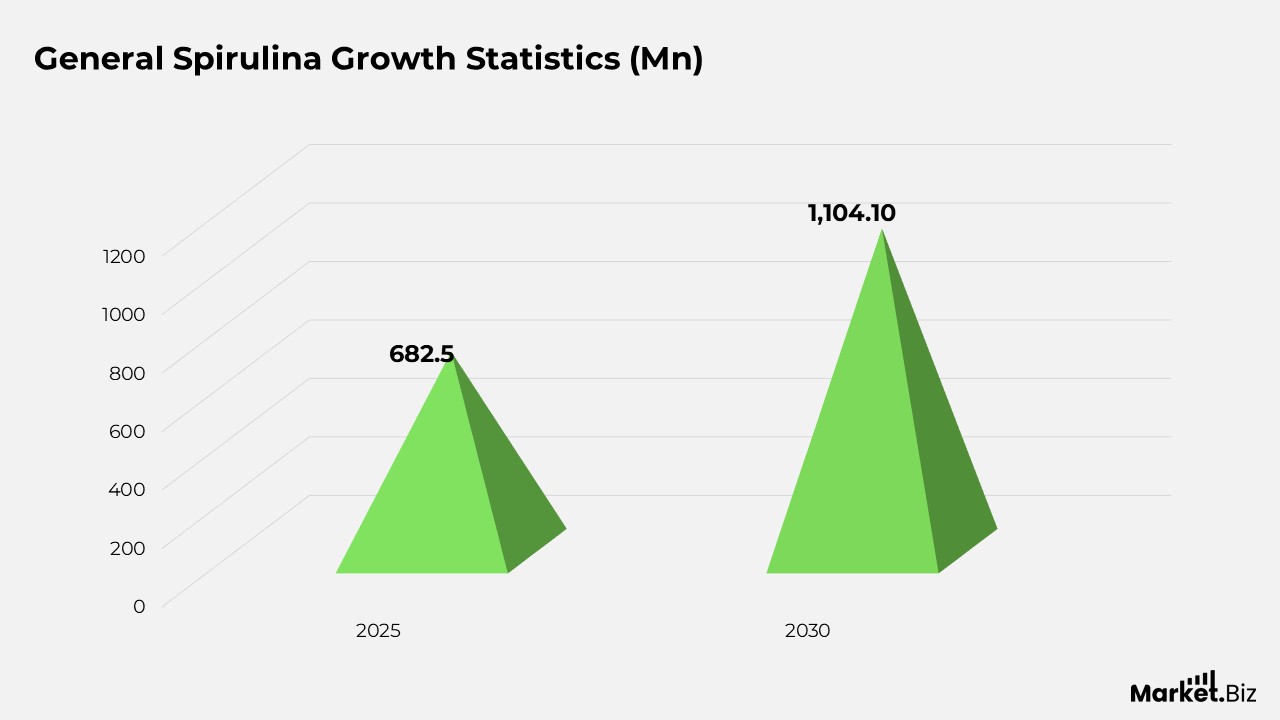
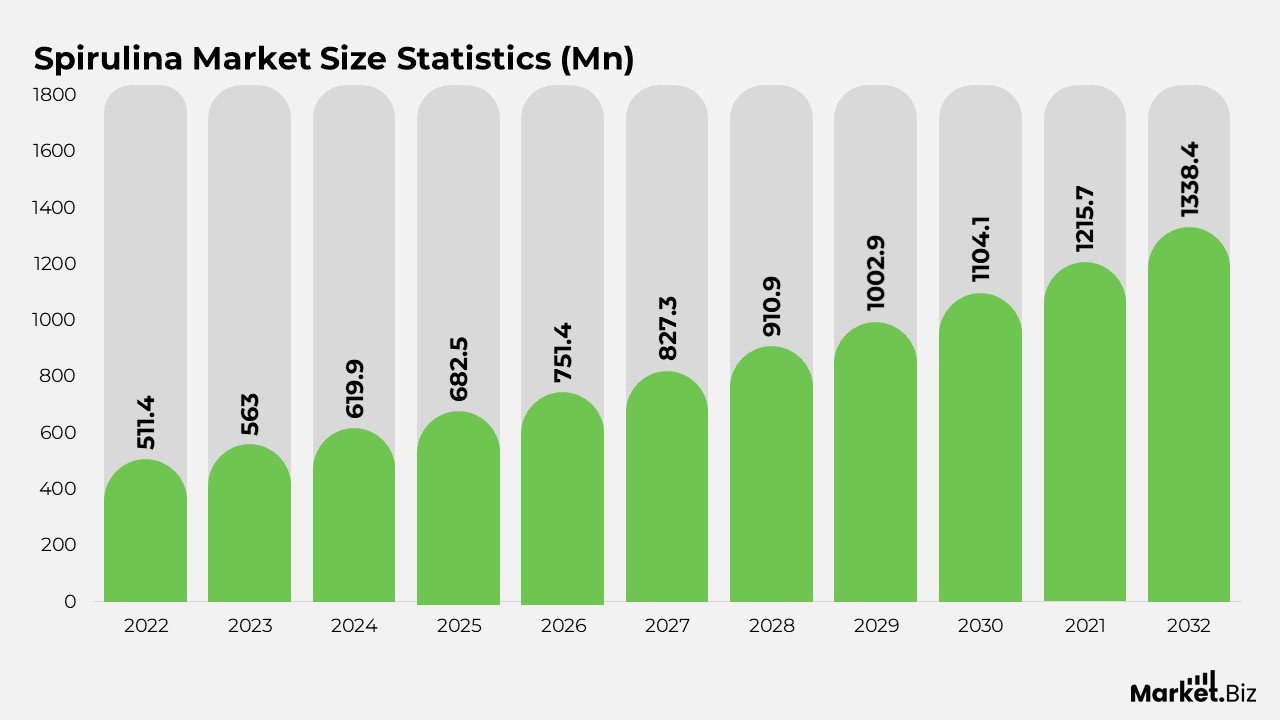
- The worldwide Spirulina market has shown consistent revenue growth over the years, achieving a compound annual growth rate (CAGR) of 10.1%. In 2022, revenues amounted to USD 511.4 million, which increased to USD 563.0 million in 2023.
- This upward trend is expected to persist, with forecasts suggesting revenues of USD 619.9 million in 2024, followed by USD 682.5 million in 2025, USD 751.4 million in 2026, and USD 827.3 million in 2027.
- The market is anticipated to exceed the USD 1 billion threshold by 2029, reaching USD 1,002.9 million, and is projected to continue its ascent to USD 1,104.1 million in 2030 and USD 1,215.7 million in 2031.
- By 2032, the revenue for the global Spirulina market is predicted to reach USD 1,338.4 million.
Spirulina Nutrient Statistics
- Spirulina, when measured per 100 grams, presents a comprehensive nutrient profile. It contains around 57 grams of protein, which accounts for 50-70% of its total weight and includes all essential amino acids, thereby serving as a complete protein source.
- Furthermore, it supplies omega-3 fatty acids, specifically linolenic acid, at a concentration of 0.8 grams per 100 grams, and omega-6 fatty acids, including linoleic acid and GLA, at 1.2 grams per 100 grams.
- Although Spirulina does contain vitamin B12, it is important to recognize that the form available is pseudovitamin B12, which is inactive and not reliable for human B12 supplementation.
- Spirulina also provides significant quantities of other vitamins, offering 11% of the Daily Value (DV) for vitamin A, 17% for vitamin C, 32% for vitamin K, and 25% for vitamin E.
- Additionally, it serves as a source of various B vitamins such as riboflavin (B2), thiamin (B1), folic acid, niacin (B3), and pantothenic acid (B5), along with carotenoids like beta-carotene, lutein, zeaxanthin, and cryptoxanthin.
Spirulina Production and Cultivation Statistics
- To guarantee the successful commercial cultivation of Spirulina, it is essential to meticulously regulate the composition of the culture medium.
- This entails managing elevated levels of salts such as carbonate and bicarbonate while sustaining an alkaline pH between 9.5 and 9.8. These parameters are vital for effectively preventing contamination from other microalgae.
- Investing in nutrients represents the second major factor influencing Spirulina biomass production, accounting for approximately 15% to 25% of total costs.
- Although research on the reuse of culture medium for commercial Spirulina production is scarce, implementing this strategy could lead to substantial cost reductions by minimizing water and nutrient usage. This method can lower water requirements after biomass harvesting by as much as 84%.
- Temperature plays a critical role in the growth rate of Spirulina, with the optimal range being between 30°C and 38°C. Growth is hindered below 17°C and above 38°C, with negligible growth occurring below 15°C.
- Adequate light is essential for the mass cultivation of Spirulina. It is generally advised to provide 30% of full sunlight to ensure optimal light penetration into the liquid and to avoid overheating of the culture.
Exporters Statistics of Spirulina Powder
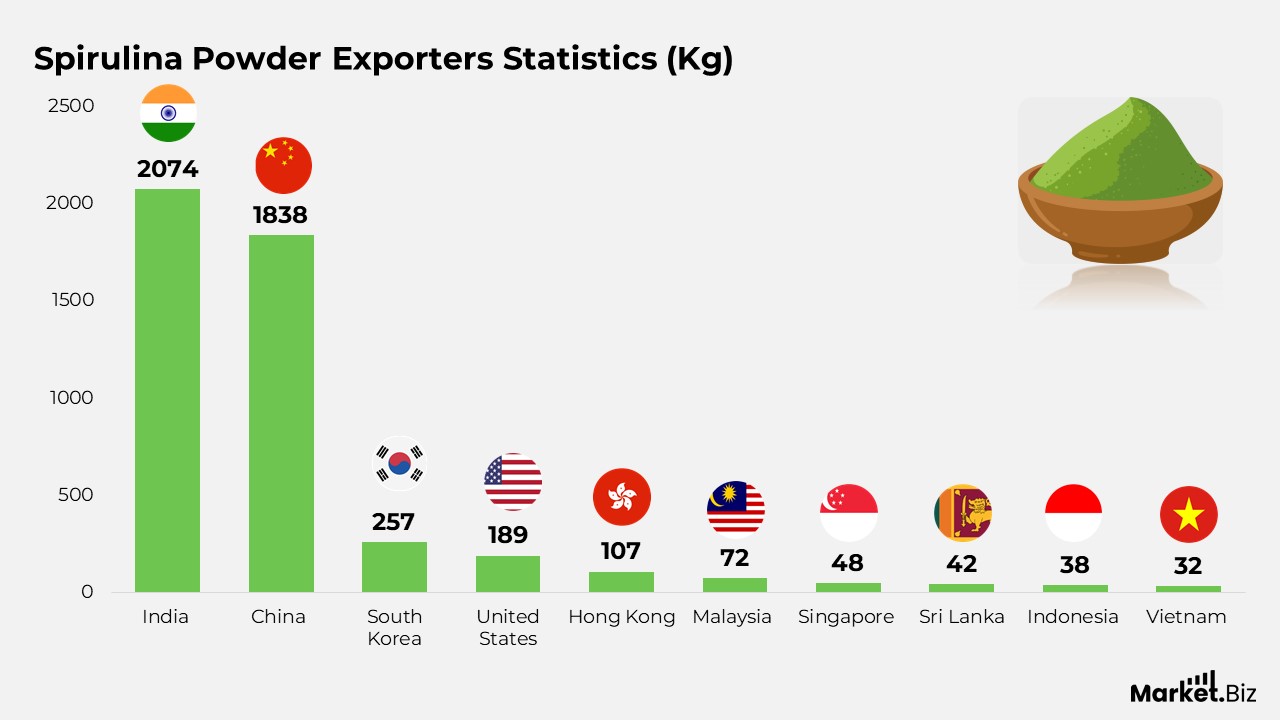
- Spirulina powder, a highly sought-after superfood celebrated for its nutritional advantages, experiences considerable global export activity, with India leading as the top exporter, dispatching 2074 kg units.
- Following closely, China holds a significant market share with shipments totaling 1838 kg units.
- South Korea, the United States, and Hong Kong also play important roles in global trade, contributing 257, 189, and 107 kg unit shipments, respectively.
- Other noteworthy exporters include Malaysia with 72 shipments, Singapore with 48, and Sri Lanka with 42 kg unit shipments.
- Furthermore, Indonesia and Vietnam show modest export volumes, with 38 and 32 kg unit shipments, respectively.
Spirulina Powder Importers Statistics
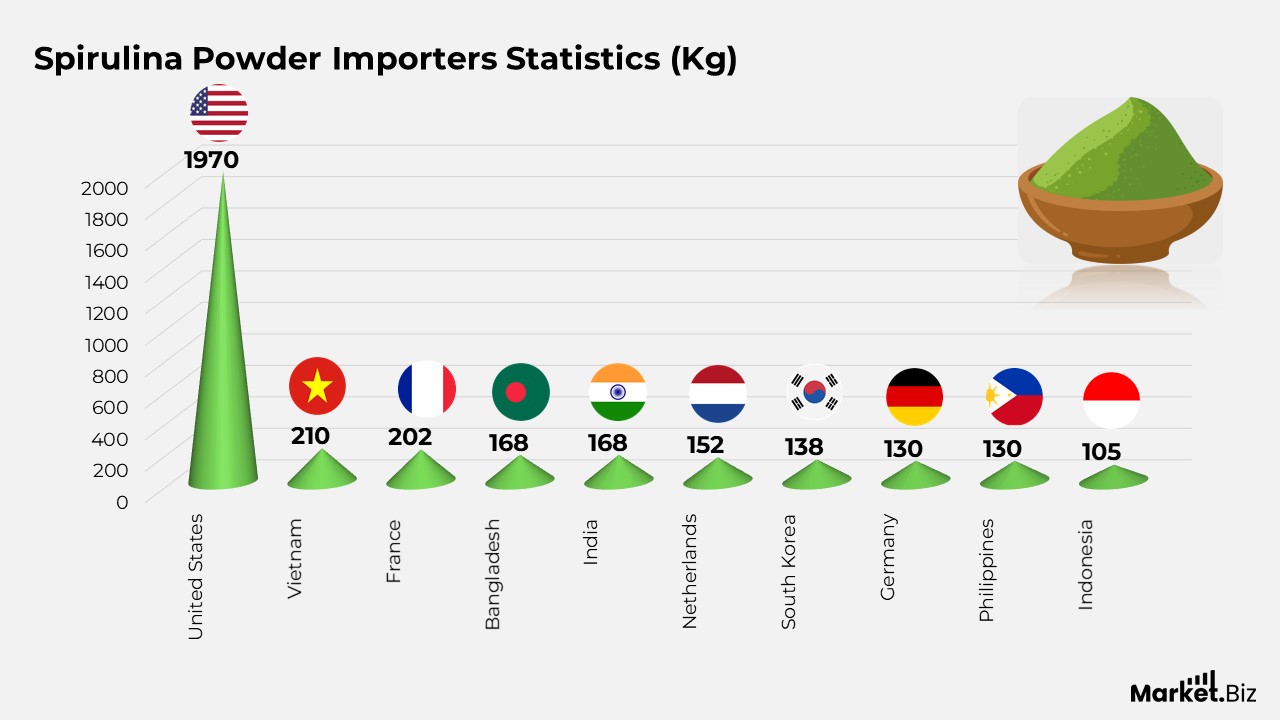
- The United States stands out as the foremost importer, acquiring 1970 kg unit shipments. This underscores the country’s significant demand for this health supplement.
- Vietnam and France closely trail, importing 210 and 202 kg units, respectively. This reflects an increasing interest in the nutritional benefits of Spirulina.
- Bangladesh and India each import 168 kg unit shipments, indicating a substantial market presence in South Asia.
- The Netherlands, South Korea, Germany, and the Philippines also exhibit considerable import volumes, with shipments of 152, 138, 130, and 130 kg units, respectively.
- Furthermore, Indonesia plays a role in the global import market with 105 kg unit shipments.
Spirulina Consumer Preferences Statistics
- Significantly, a considerable segment of respondents, 25%, expressed a preference for products devoid of artificial ingredients. This reflects an increased awareness and demand for natural alternatives.
- Similarly, 23% showed a preference for products that carry a natural or organic label, indicating a tendency towards authenticity and transparency in product labelling.
- Additionally, 20% of respondents highlighted the importance of products free from chemicals, underscoring rising concern about the purity and safety of the ingredients used.
- Moreover, allergen-free products attracted notable interest, with 13% of respondents indicating a preference for such options. This reflects the necessity of addressing diverse dietary requirements and sensitivities.
- Furthermore, 12% of respondents emphasised the importance of non-GMO products, highlighting a desire for offerings that align with sustainable and ethical practices.
Recent Statistics
- Key industry participants are enhancing their production capabilities. For example, Cyanotech augmented its output by almost 1,200 tons in 2024 through the utilization of advanced open-pond systems.
- DIC Corporation introduced high-phycocyanin extracts (≥95% purity) in 2023, aimed at beverage applications.
Spirulina Future Statistics
- Phycocyanin (natural blue colourant) is projected to have the highest CAGR (over 27%) due to its demand in the food and beverage industry.
- By 2032, the revenue for the global Spirulina market is predicted to reach USD 1,338.4 million.
Conclusion
In summary, Spirulina represents a significant natural resource with considerable health advantages. Its nutrient-rich composition, which includes elevated protein content, essential fatty acids, vitamins, and minerals, makes it a flexible dietary supplement.
The use of sustainable farming practices and its low environmental footprint further increase its appeal as a food source. Although challenges like temperature sensitivity and contamination risks exist, continuous research and advancements in technology are consistently enhancing Spirulina production.
The popularity of Spirulina is expected to rise as the demand for clean-label products increases. Spirulina stands out as a promising answer to global nutritional needs and health enhancement.
FAQs
There are several positive studies regarding the cholesterol-lowering properties of Spirulina; however, larger studies are necessary to draw any definitive conclusions. Additionally, there is a lack of high-level evidence trials concerning the role of Spirulina in chronic fatigue and its antiviral applications.
Indeed, spirulina is regarded as one of the highest-protein foods globally, with protein constituting approximately 60%–70% of its dry weight. It is classified as a complete protein, containing all nine essential amino acids, which makes it a more protein-rich option compared to most plant-based foods, including soybeans.
Spirulina may indirectly aid in the elevation of testosterone levels by mitigating oxidative stress, reducing inflammation, and supplying essential minerals such as zinc and magnesium that are vital for hormone production. Research conducted on animal models indicates that it can enhance testosterone levels in instances of toxicity or deficiency; however, direct evidence of significant testosterone enhancement in healthy humans remains limited.

