









Introduction
Cider Statistics: Cider, which is experiencing a worldwide revival, is an alcoholic beverage primarily produced from fermented apple juice, with pear (known as Perry) and various flavored options also gaining popularity. Its manufacturing process includes the selection of high-quality fruit, fermentation with yeast, ageing to develop flavor, blending, and packaging.
Cider is appealing due to its wide range, which varies from dry to sweet, clear to cloudy, and still to sparkling, making it attractive to those seeking alternatives to beer and wine. With an alcohol by volume (ABV) ranging from 4% to 8%, its natural and gluten-free characteristics have contributed to the expansion of the craft and artisanal cider market, which emphasizes local ingredients and innovative flavors.
The growth of this sector is propelled by consumer preferences for premium and distinctive beverages, indicating a bright future for cider, characterized by quality, variety, and environmental awareness.
The global cider market is witnessing consistent growth through the early 2030s. This growth is fuelled by the demand for premium, gluten-free, and healthier alcoholic options, with apple remaining the leading flavor, holding over 65% of the market share, while Europe dominates the market with over 43% share, alongside off-trade sales (bottles and cans).
Editor’s Choice
- In 2023, the worldwide cider market achieved a revenue of USD 18.0 billion.
- The global cider market is witnessing consistent growth, with revenue expected to increase steadily in the upcoming years at a CAGR of 5.1%.
- In 2018, the figure was recorded at USD 14.06, which saw a slight decline to USD 14.05 in 2019.
- The global cider market experiences considerable export activity from numerous countries, with France standing out as the foremost exporter, dispatching around 24,457 units.
- The United States stands out as the leading nation in cider imports, with a total of 19,765 shipments.
General Cider Statistics
- In 2023, the worldwide cider market achieved a revenue of USD 18.0 billion.
- North America holds a considerable share, accounting for 25% of the market, which reflects its significant role in the industry.
- SABMiller Plc and Heineken N.V. are at the forefront, possessing market shares of 17% and 18% respectively, which highlights their strong presence and competitive advantage.
- The anticipated volume of per capita consumption for cider, perry, and rice wine is expected to reach 6.07 liters per person.
- The global cider market experiences considerable export activities from various countries, with France standing out as the top exporter, sending out approximately 24,457 units.
- The United States is recognized as the leading nation in cider imports, receiving 19,765 shipments.
- In comparison to other consumers, individuals who frequently drink cider are more likely to pursue a balanced and nutritious diet, with 84% indicating this goal, as opposed to 80% of other drinkers.
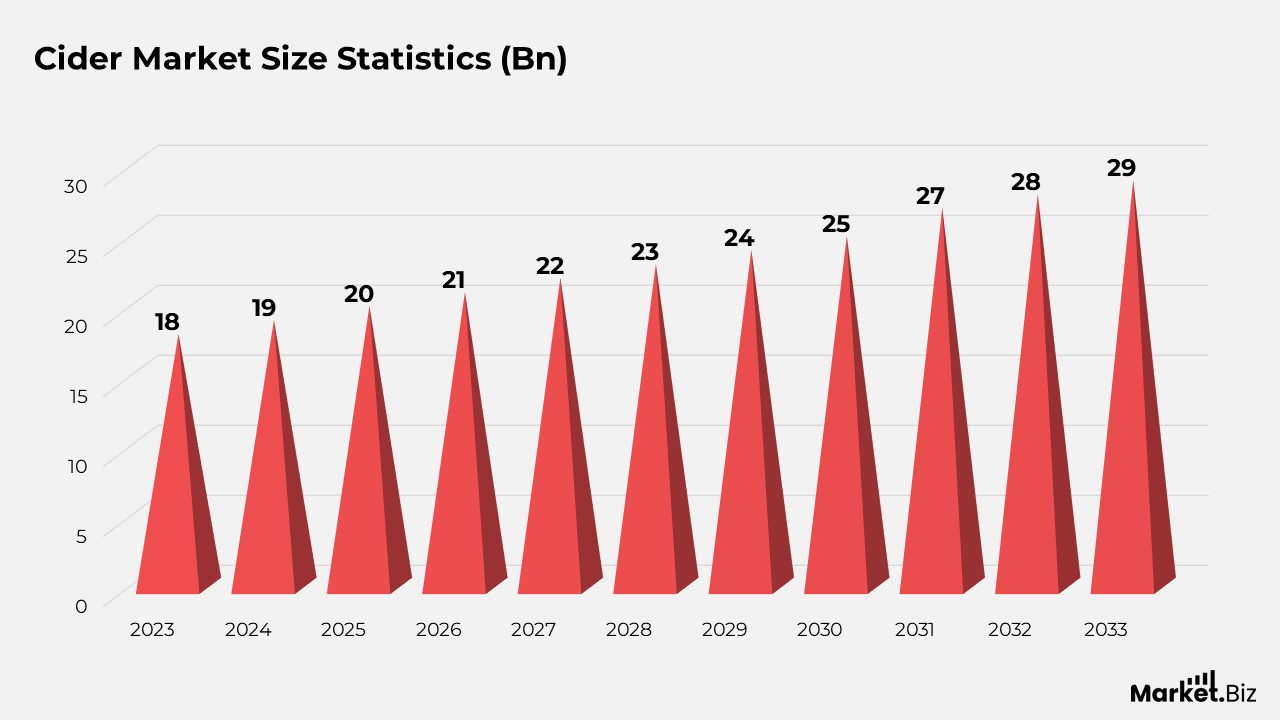
Cider Market Size Statistics
- The global cider market is witnessing consistent growth, with revenue expected to increase steadily in the upcoming years at a CAGR of 5.1%.
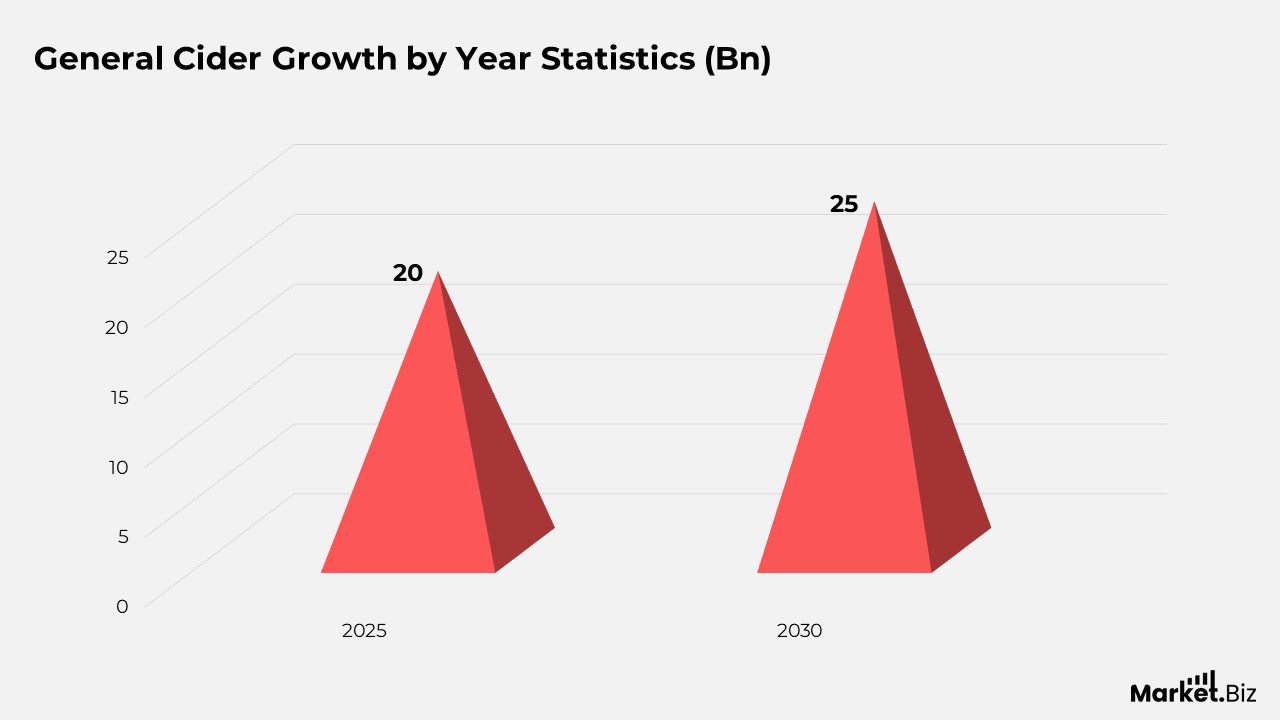
- In 2023, the market produced USD 18 billion in revenue, which rose to USD 19 billion in 2024.
- This positive trend is projected to persist, reaching USD 20 billion in 2025, USD 21 billion in 2026, and USD 22 billion in 2027.
- The market is anticipated to sustain its growth, with revenues expected to reach USD 23 billion in 2028 and USD 24 billion in 2029.
- By 2030, revenues are forecasted to reach USD 25 billion, followed by a significant rise to USD 27 billion in 2031 and USD 28.0 billion in 2032.
- The growth trend continues, culminating in an estimated revenue of USD 29 billion by 2033.
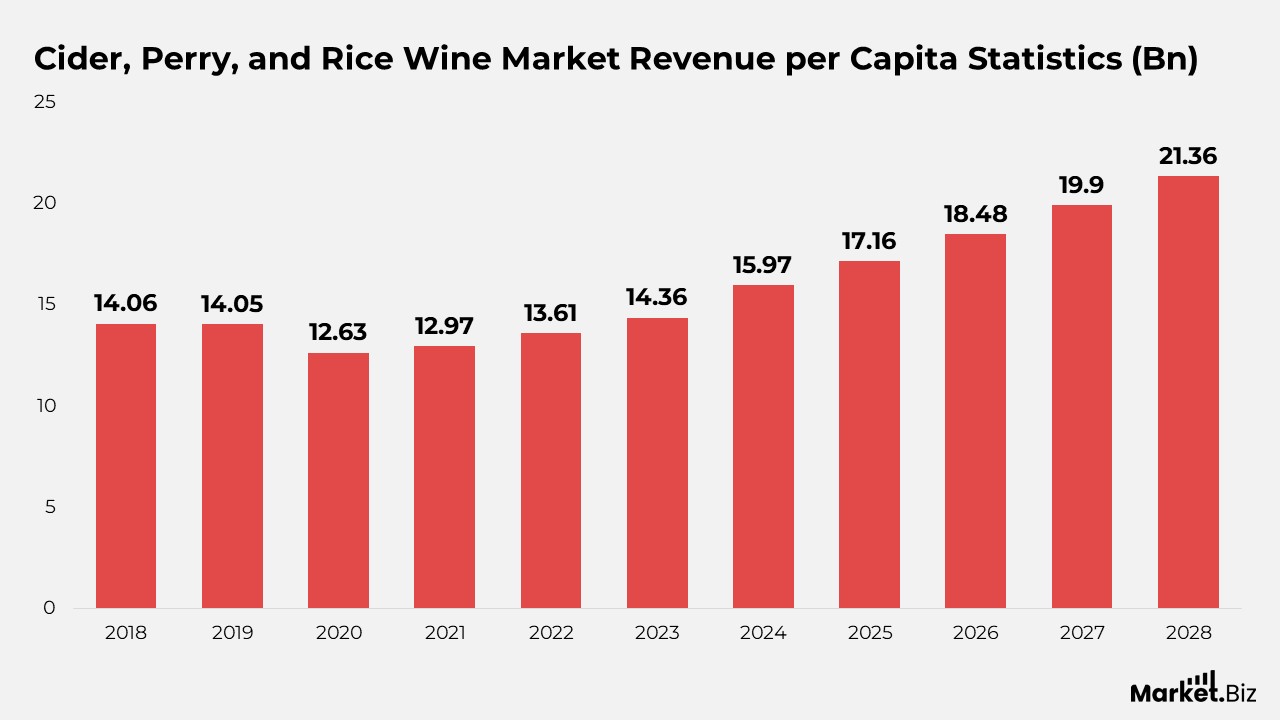
Cider Market Revenue per Capita Statistics
- In 2018, the figure was recorded at USD 14.06, which saw a slight decline to USD 14.05 in 2019.
- However, a significant change occurred in 2020, as it dropped to USD 12.63, indicating possible alterations in consumer preferences or market conditions.
- The following years showed a steady recovery, with revenue per capita increasing to $12.97 in 2021 and $13.61 in 2022.
- From 2023 onward, a consistent upward trend has been noted, reaching USD 14.36 in 2023 and significantly rising to USD 15.97 in 2024.
- This favorable trend persists, with revenue per capita advancing to USD 17.16 in 2025, USD 18.48 in 2026, and USD 19.90 in 2027.
- By 2028, the amount exceeds the USD 20 threshold, achieving USD 21.36.
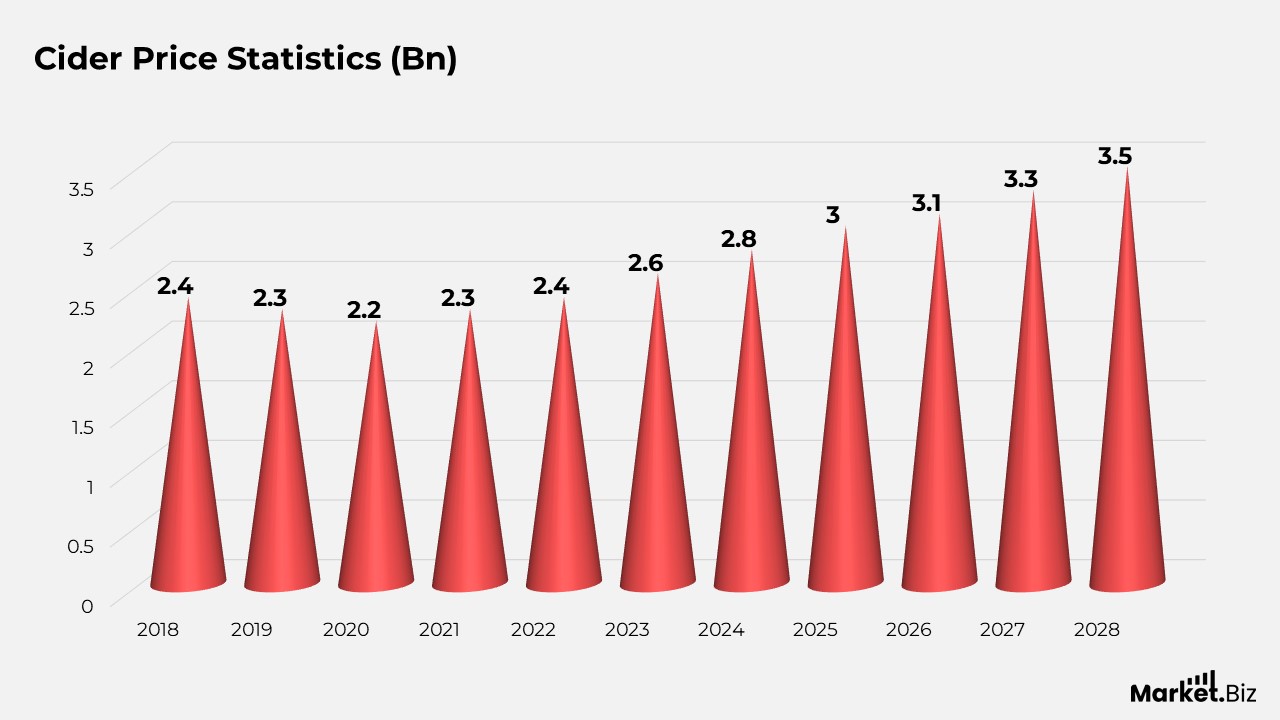
Statistics of Cider Price
- In 2018, the price was recorded at USD 2.35 per unit, which then experienced a minor reduction to USD 2.34 in 2019.
- However, a more significant drop occurred in 2020, with the price falling to USD 2.21, possibly due to influences such as production expenses or competitive market dynamics.
- From 2021 onwards, there has been a steady rise in price, with figures increasing to USD 2.29 in 2021 and USD 2.44 in 2022.
- This upward trajectory persists, reaching USD 2.57 in 2023, USD 2.79 in 2024, and USD 2.96 in 2025.
- By 2026 and 2027, the price rises to USD 3.14 and USD 3.33, respectively, suggesting possible changes in consumer attitudes or the market placing of cider, perry, and rice wine products.
- In 2028, the price is projected to reach USD 3.52 per unit, indicating ongoing growth and potentially enhanced market value within the sector.
Cider-Exporting Nations Statistics
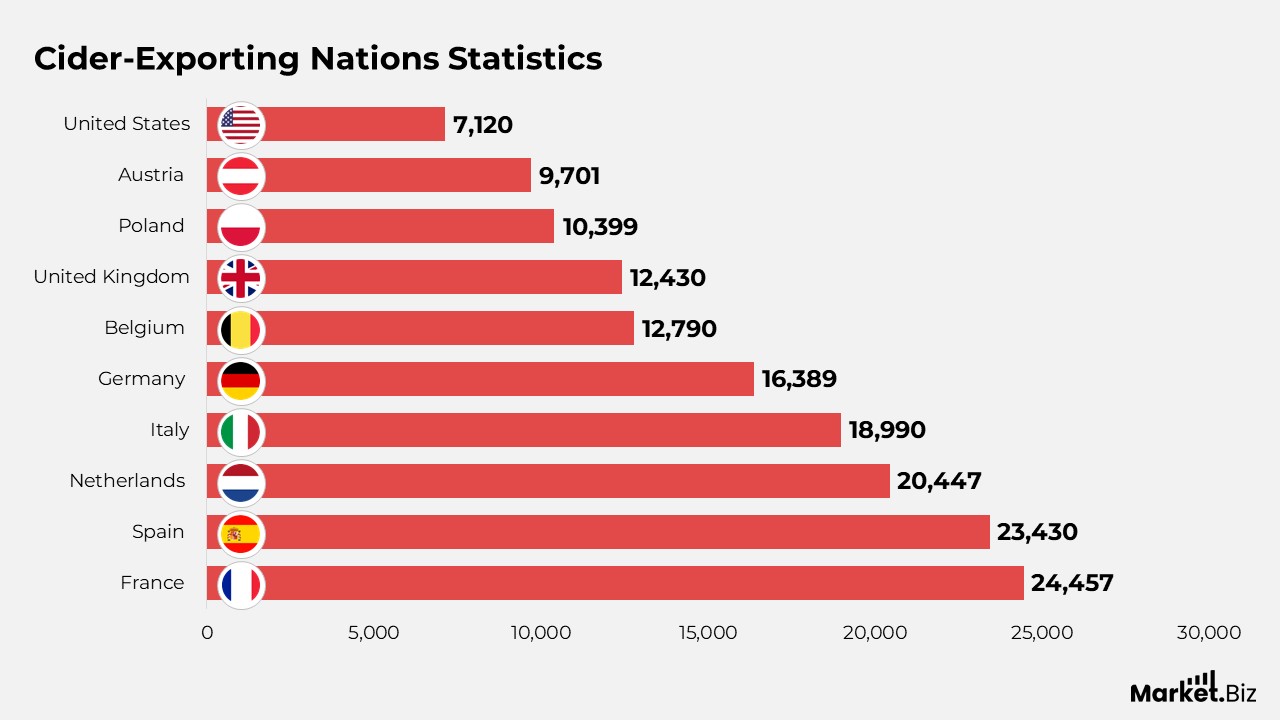
- The global cider market experiences considerable export activity from numerous countries, with France standing out as the foremost exporter, dispatching around 24,457 units.
- Spain follows closely behind, with 23,430 shipments, highlighting its significant role in the global cider trade.
- The Netherlands also has a vital presence, exporting 20,447 units.
- Germany and Italy are not far behind, with 16,389 and 18,990 shipments, respectively.
- The United Kingdom and Belgium also make noteworthy contributions, with 12,430 and 12,790 shipments, respectively.
- Austria and Poland rank among the leading cider-exporting countries, with 9,701 and 10,399 units shipped, respectively.
- Although the United States is a major producer, it exports a relatively smaller number of units, totaling 7,120 shipments.
Cider Importing Nations Statistics
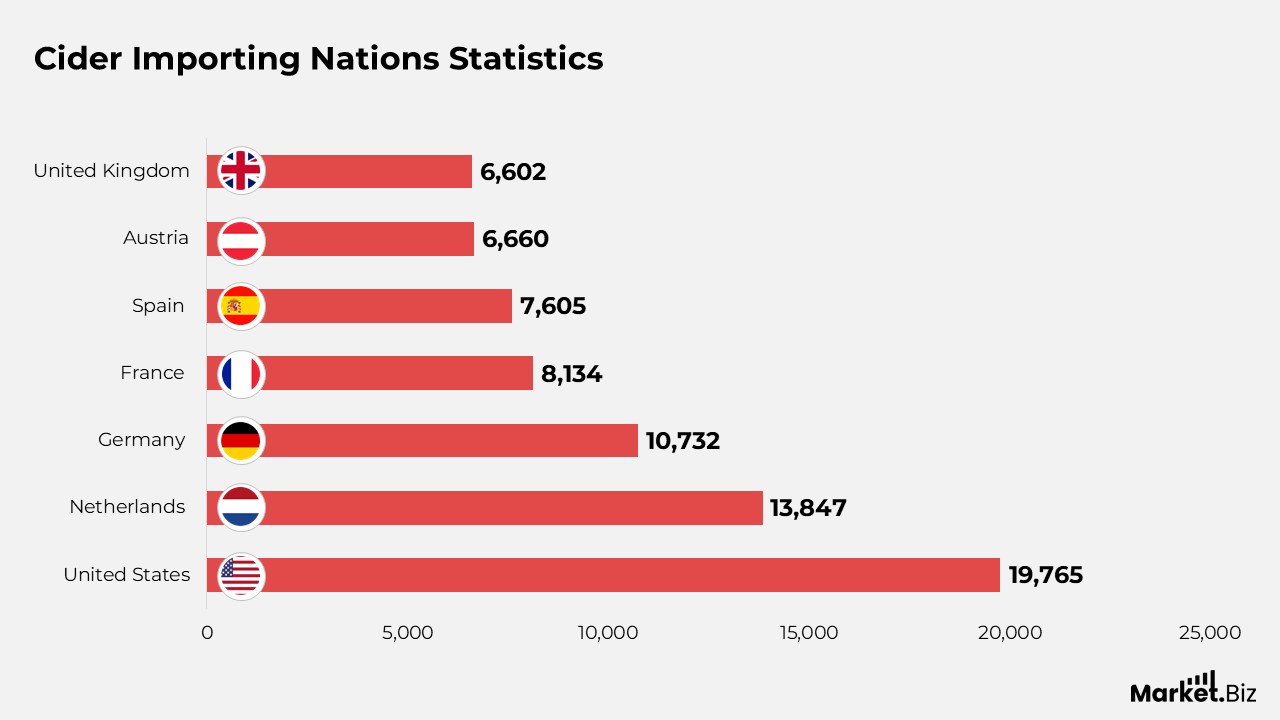
- The United States stands out as the leading nation in cider imports, with a total of 19,765 shipments.
- The Netherlands ranks second, importing 13,847 shipments.
- Germany plays a significant role with 10,732 units.
- Spain and France are also notable importers, with 7,605 and 8,134 shipments, respectively.
- Furthermore, Austria, Italy, the United Kingdom, Sweden and Belgium all make considerable contributions to cider imports, each receiving between 6,144 to 6,660 shipments.
Statistics of Cider Flavor
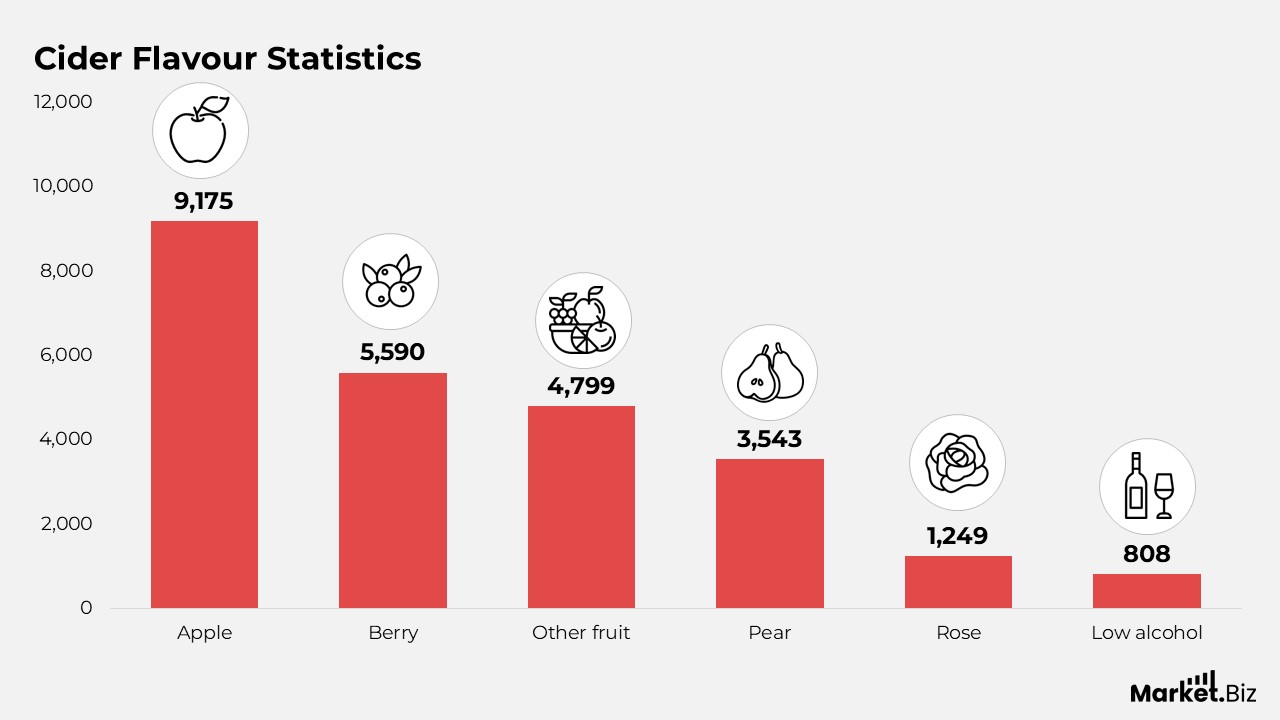
- In Great Britain during the year 2022, the consumption of cider exhibited variation across various flavors, indicating a range of consumer preferences within the market.
- The apple flavor emerged as the most favored, with around 9,175 individuals opting for apple-flavored cider.
- Berry-flavored cider also received considerable attention, with 5,590 consumers enjoying this particular variation.
- Other fruit flavors accounted for 4,799 users, while pear-flavored cider attracted 3,543 consumers.
- A total of 1,249 individuals preferred rose-flavored cider, and 808 people selected low-alcohol or alcohol-free alternatives.
- Furthermore, other flavors collectively represented 253 users.
Cider Drinkers Health Beliefs Statistics
- Generally, individuals who frequently consume cider have reported making efforts to uphold a healthy diet, although their opinions regarding the impact of alcohol on overall health are varied.
- In comparison to other drinkers, those who regularly enjoy cider tend to be more motivated to pursue a balanced and nutritious diet, with 84% indicating this intention, as opposed to 80% of other drinkers.
- Nevertheless, they are less likely to concur with the idea that alcohol cannot be integrated into a healthy lifestyle, with only 24% of regular cider drinkers supporting this assertion, compared to 30% of other drinkers.
- While a considerable segment of the population recognises that Australians face challenges related to alcohol, merely 28% confessed to occasionally consuming excessive amounts or feeling discomfort regarding their drinking behaviours.
Cider Recent Statistics
- In the previous year, the cider sector experienced around 2 notable acquisitions and mergers, reflecting a movement towards consolidation.
- Additionally, over 50 new cider products have been introduced, showcasing a variety of flavor profiles and packaging styles to meet the diverse preferences of consumers.
- Craft cider startups have garnered substantial investment, with total funding exceeding $20 million in the last quarter.
- Furthermore, international cider sales have risen by 15% compared to the previous year, propelled by growth into markets in the Asia-Pacific region and Latin America.
Conclusion
In summary, the global cider market is undergoing significant transformations influenced by changing consumer preferences, innovative product developments, and expanded distribution channels.
Recent years have seen consistent growth in both revenue and consumption, driven by a wide array of flavors and styles that appeal to different palates. Notable trends include the increasing popularity of fruit-infused ciders, the rise of craft producers, and a surge in online sales.
While Europe continues to be a strong market, there are opportunities for expansion in the Asia-Pacific region and South America. Nevertheless, challenges such as regulatory issues, competition, and evolving consumer attitudes remain.
Despite these challenges, the future outlook is optimistic, bolstered by continuous innovation, strategic partnerships, and a growing consumer appreciation for the variety and refreshing nature of cider.
FAQs
Cider is an alcoholic drink produced from the fermentation of apple juice. It can vary in taste from dry to sweet and may include a range of flavours and additives.
Cider typically contains a higher sugar level, particularly in its sweeter varieties, resulting in increased calories per serving. In contrast, beer generally has lower sugar content but is higher in carbohydrates. The healthiest choice ultimately depends on your priorities: gluten, carbohydrates, or sugar.
The United Kingdom holds the title for the highest cider consumption per capita globally, with 840 million liters consumed in 2023, valued at $4.37 billion. Spain ranks as the second-largest consumer in Western Europe, followed by France and Germany. South Africa is the 2nd largest market worldwide, following the UK.