









Introduction
Functional Foods Statistics: Functional foods, which provide additional health advantages beyond basic nutrition, play a vital role in the health and nutrition industries. These foods encompass both natural and modified varieties that are enhanced with elements such as fiber, vitamins, and probiotics to promote health, including improving digestion and immunity while lowering disease risk.
As the functional foods market expands due to increased health awareness, an ageing population, and rising healthcare expenses, the industry encounters challenges in substantiating health claims and maintaining flavor. Nevertheless, the advancing field of food science and growing health interest offer promising opportunities for growth, underscoring its significant influence on enhancing global health.
Functional foods are characterized as natural or processed items that deliver health benefits beyond fundamental nutrition, with the goal of enhancing health and minimizing disease risk. Emerging in the 1980s in Japan, this market is experiencing rapid growth, fuelled by consumer recognition of the links between diet and health, including fortified items like Vitamin D milk and natural functional foods such as berries and nuts.
Editor’s Choice
- The global revenue for functional foods is anticipated to reach USD 678.3 billion by the year 2032.
- The global market for functional foods has demonstrated a notable increase in revenue from 2022 to 2032, with a compound annual growth rate (CAGR) of 8.5%.
- In the functional foods market composition, vitamins dominate with a market share of 30%, emphasising their crucial role in promoting health beyond mere nutrition.
- North America spearheaded the growth, with sales rising from USD 20,930 million in 2016 to USD 32,015 million by 2023.
- Fortified cereals can offer about 25-100% of the recommended daily intake (RDI) for various vitamins and minerals in each serving.
- In 2021, consumers in the United States shared a variety of views on fortified food and beverages (FFAB) as reflected in percentages.
General Functional Foods Statistics
- The global revenue for functional foods is anticipated to reach USD 678.3 billion by the year 2032.
- Among the various product categories, dairy products have consistently dominated the market, with revenues increasing from USD 91.9 billion in 2022 to USD 203.5 billion by 2032.
- Within the functional foods market, vitamins hold the leading position with a market share of 30%, highlighting their essential role in promoting health beyond basic nutrition.
- Fortified cereals can provide approximately 25-100% of the recommended daily intake (RDI) for a range of vitamins and minerals in each serving.
- North America has been at the forefront of the growth in sales of functional food ingredients, rising from USD 20,930 million in 2016 to USD 32,015 million by 2023.
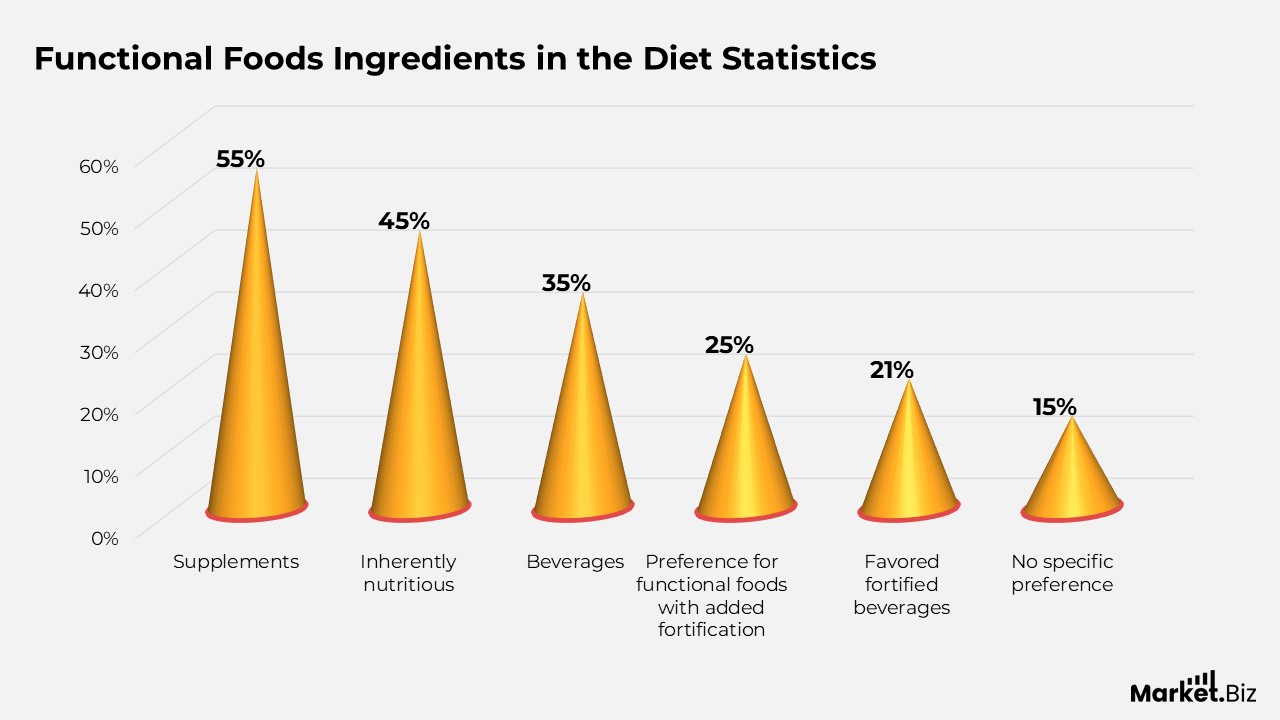
- Survey data indicate that a significant majority of respondents, amounting to 55%, prefer to integrate functional ingredients into their diets through supplements, including capsules, tablets, gummies/chewables, or tinctures.
- In 2021, 7% of consumers in the United States recognized that functional foods and beverages (FFAB) could be advantageous for the body, acknowledging their potential health benefits.
Cider Market Size Statistics
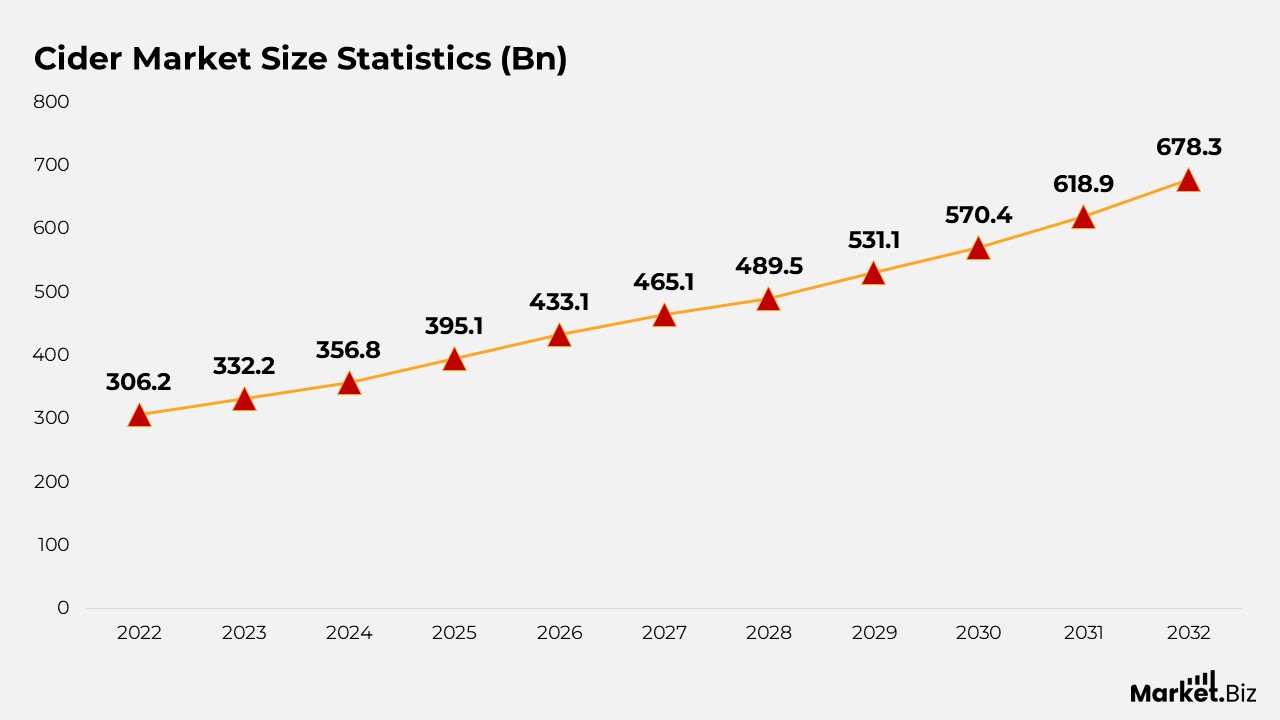
- The global market for functional foods has demonstrated a notable increase in revenue from 2022 to 2032, with a compound annual growth rate (CAGR) of 8.5%.
- Starting at USD 306.2 billion in 2022, the market has shown consistent growth, achieving USD 332.2 billion in 2023, and is anticipated to continue its upward trend, reaching USD 356.8 billion in 2024.
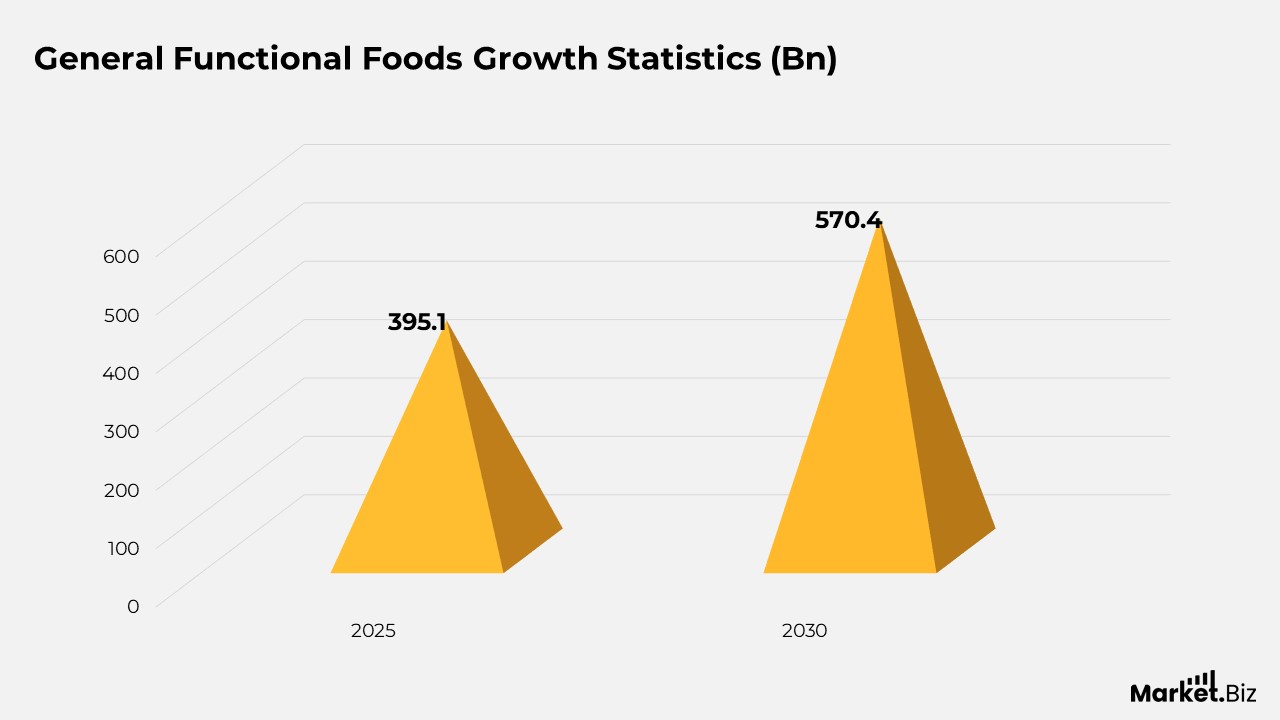
- This positive trajectory is expected to continue, with market revenues projected to rise to USD 395.1 billion in 2025, USD 433.1 billion in 2026, and further to USD 465.1 billion by 2027.
- The growth momentum is predicted to be maintained, with the market expanding to USD 489.5 billion in 2028, USD 531.1 billion in 2029, and USD 570.4 billion in 2030.
- The market is forecasted to achieve new milestones, with revenues of USD 618.9 billion in 2031, culminating in an impressive USD 678.3 billion by 2032.
Functional Foods Market by Ingredient Statistics
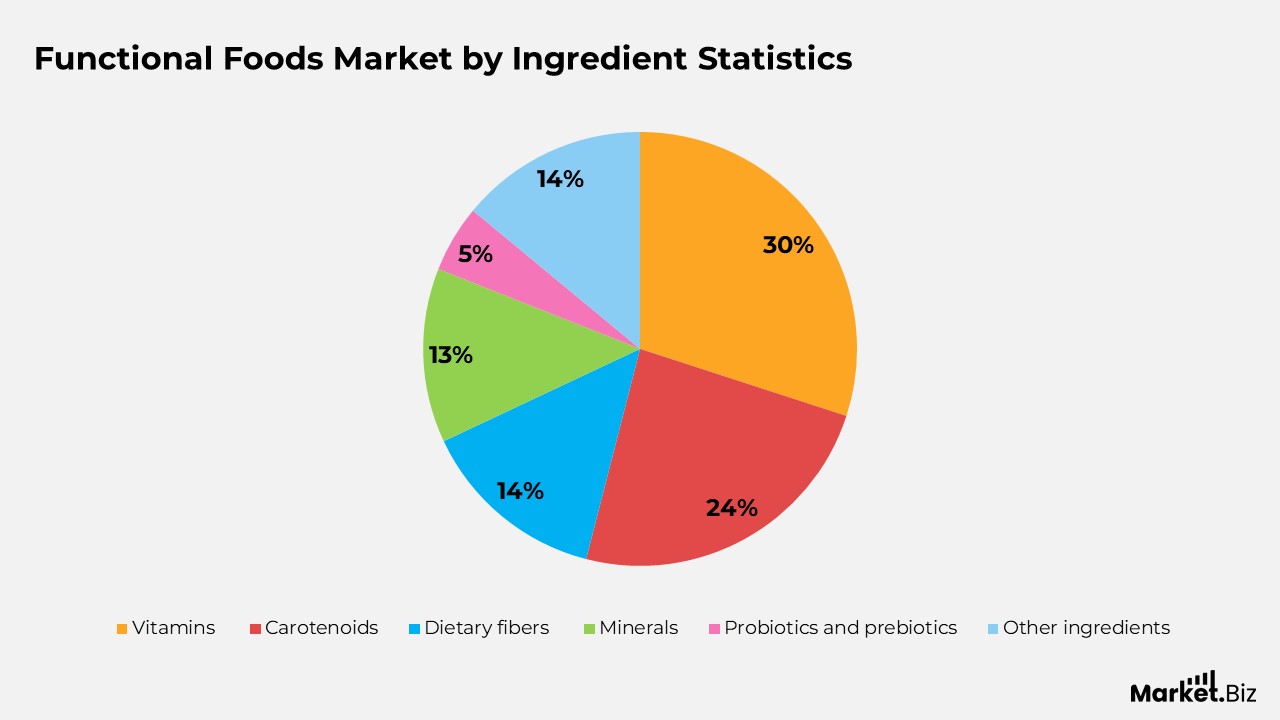
- In the functional foods market composition, vitamins dominate with a market share of 30%, emphasising their crucial role in promoting health beyond mere nutrition.
- Carotenoids closely follow, making up 24% of the market, and are acknowledged for their antioxidant properties and health advantages.
- Dietary fibers represent a 14% share, underscoring their significance in digestive health and disease prevention.
- Minerals, vital for numerous bodily functions, constitute 13% of the market. Probiotics and prebiotics, recognized for their positive effects on gut health, account for 5% of the market.
- The remaining 14% is attributed to other ingredients, reflecting the diversity and innovation present in the functional foods industry.
Sales of Functional Food Ingredients by Regional Statistics
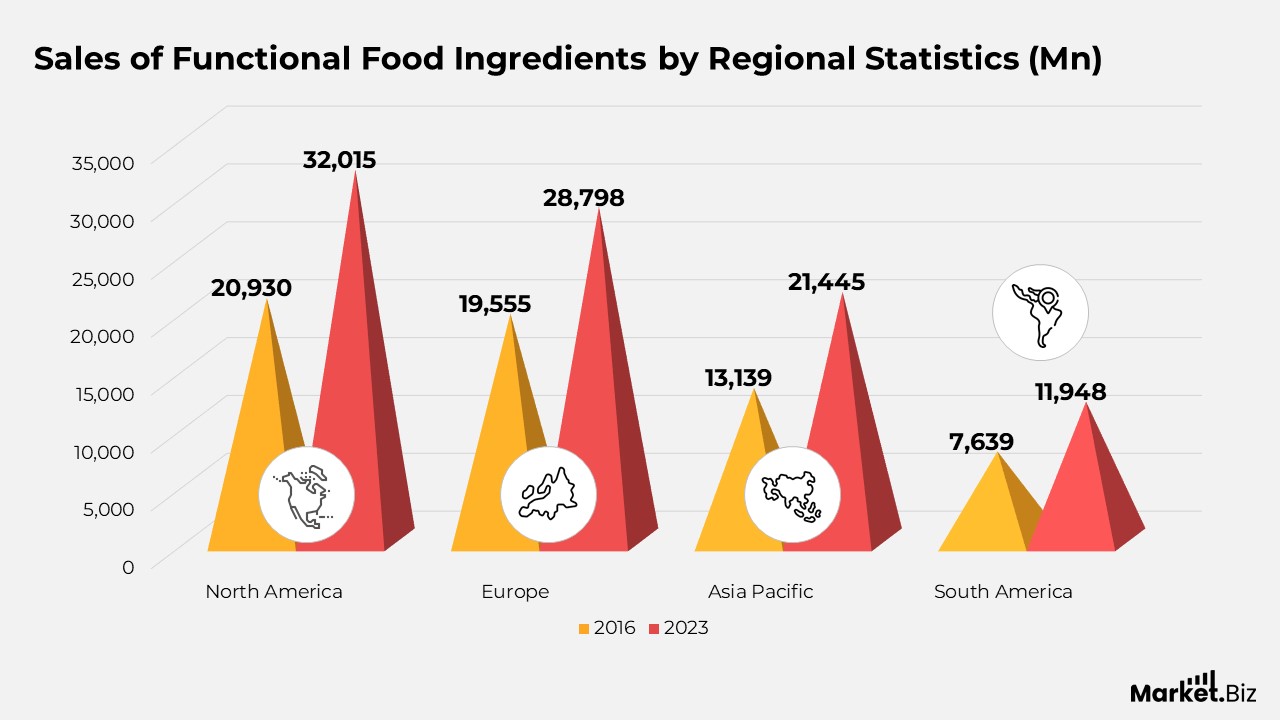
- North America spearheaded the growth, with sales rising from USD 20,930 million in 2016 to USD 32,015 million by 2023, demonstrating a strong demand for health-promoting food components.
- Europe closely followed, with its sales growing from USD 19,555 million in 2016 to USD 28,798 million in 2023, indicating a consistent interest in functional foods.
- The Asia Pacific region also exhibited significant growth, beginning at USD 13,139 million in 2016 and reaching USD 21,445 million in 2023, as awareness and consumption of functional ingredients increased.
- South America, although smaller in market size relative to the other regions, saw steady growth from USD 7,639 million in 2016 to USD 11,948 million in 2023.
Functional Foods Ingredients in the Diet Statistics
- According to the survey results, a significant majority of participants, amounting to 55%, indicated a preference for integrating functional ingredients into their diets via supplements, including tablets, gummies, capsules, or tinctures.
- In close proximity, 45% preferred naturally nutritious and functional foods that do not require fortification, such as whole scraps and fresh produce.
- Regarding beverages, 35% opted for inherently functional choices like bottled water or fruit/vegetable juice.
- Nevertheless, a considerable segment, 25%, expressed a preference for functional foods that include added fortification, while 21% preferred fortified beverages.
- Notably, 15% reported no specific preference and were amenable to utilizing any of the aforementioned methods to incorporate functional ingredients into their diets.
Nutritional Content Statistics
- Fortified cereals can offer about 25-100% of the recommended daily intake (RDI) for various vitamins and minerals in each serving.
- Fortified milk may deliver approximately 30-50% of the RDI for calcium and vitamin D per cup.
- Vegetables such as spinach and kale are excellent sources of vitamins A, C, and K, supplying well over 100% of the RDI in a single serving.
- Blueberries generally contain around 5-9 mill moles of antioxidants for every 100 grams.
- Dark chocolate with a high cocoa content (70-85%) may yield roughly 15-20 millimoles of antioxidants per 100 grams.
- Fatty fish, including salmon, usually provide about 1-2 grams of omega-3 fatty acids per 100 grams.
- Flaxseeds and chia seeds offer approximately 18-25 grams of alpha-linolenic acid (ALA), a form of omega-3 fatty acid, for each ounce (28 grams).
Consumers Perspective on Fortified Food Statistics
- In 2021, consumers in the United States shared a variety of views on fortified food and beverages (FFAB) as reflected in percentages.
- A significant segment, accounting for 27%, acknowledged that FFAB could offer benefits to the body, recognising their potential health benefits.
- Furthermore, 24% noted the extensive availability of FFAB in the food supply, indicating their prevalence in the marketplace.
- A considerable number, amounting to 23%, believed that fortification was vital for enhancing overall nutrition, underscoring its significance in improving dietary quality.
- In addition, 23% regarded FFAB as a convenient way to increase vitamin consumption, while 21% acknowledged their capacity to enhance nutrient density.
- An equivalent percentage, also at 21%, viewed fortification as the safest approach to incorporating essential vitamins into the diet, highlighting safety considerations.
- Nevertheless, merely 15% reported actively pursuing FFAB, indicating differing degrees of consumer involvement with these products, even in light of their perceived advantages and convenience.
Cider Recent Statistics
- Unilever has acquired Nutrafol, a transaction valued at $700 million, which highlights Unilever’s dedication to entering the expanding market for functional foods that address specific health issues.
- Beyond Meat has made its foray into the functional foods sector with the introduction of Beyond Breakfast Sausage® Links. In the initial month following its release, sales exceeded 500,000 units, demonstrating significant consumer demand for functional plant-based food options.
- Oatly, a company specialising in oat milk from Sweden, has raised $200 million in its most recent funding round, which was led by Blackstone Group Inc. and received backing from notable figures such as Oprah Winfrey and Natalie Portman.
Conclusion
The sector of functional foods has experienced significant growth owing to a heightened emphasis on health and nutrition among consumers. Products that are fortified with vitamins, minerals, probiotics, and other health-promoting ingredients have gained immense popularity worldwide.
Sales statistics from different regions spanning from 2016 to 2023 illustrate this trend, indicating considerable market growth in North America, Europe, Asia Pacific, and South America. In spite of the challenges associated with substantiating health claims and sustaining product attractiveness, innovations in food technology and favourable regulatory environments are driving the industry forward.
This expansion highlights the evolving consumer preference for dietary options that enhance health and well-being, establishing functional foods as an essential element of contemporary diets and preventive healthcare approaches.
FAQs
Functional foods are foods that have been shown to have potential health benefits beyond basic nutrition. These include foods naturally rich in healthful components, as well as foods that have been fortified, enhanced, or enriched with additional nutrients or bioactive compounds.
Functional foods can play a role in promoting a healthier diet and may assist in lowering the risk of specific diseases, including heart disease, diabetes, and certain types of cancer. Nevertheless, they should not be considered a replacement for a balanced diet and a healthy lifestyle, nor can they independently treat diseases.
Functional foods are generally considered safe for consumption as part of a balanced diet. However, individuals with allergies, specific health conditions, or those taking certain medications should consult healthcare professionals before integrating new functional foods into their diets, especially those that are fortified or enriched with bioactive compounds.