








Introduction
Food Preservatives Statistics: Food preservatives are substances added to food products to prolong their shelf life by inhibiting the growth of microorganisms and preventing oxidation. They are divided into two main categories: natural, such as salt and sugar, and synthetic, like benzoates and sulfites.
These additives are essential for preventing food spoilage, preserving freshness, and ensuring adherence to safety regulations. Their use is regulated by governmental agencies, and they are frequently found in a wide range of food products, from baked goods to beverages and processed meats.
Despite increasing concerns about the potential health impacts of synthetic preservatives, there is a growing consumer preference for natural alternatives. Nevertheless, understanding the basics of food preservatives is crucial for maintaining the quality and safety of food in the industry.
The global market for food preservatives, propelled by the demand for ready-to-eat meals, is primarily dominated by synthetic preservatives, which hold over a 69% market share, although natural options are gaining traction, particularly in meat and poultry.
Editor’s Choice
- In 2023, the global market for food preservatives generated an estimated USD 3.4 billion.
- The global market for food preservatives has shown a steady increase in revenue over the last ten years, achieving a compound annual growth rate (CAGR) of 3.8%.
- Synthetic preservatives represented the largest share of revenue during this timeframe, with amounts increasing from USD 2.18 billion in 2022 to USD 3.10 billion in 2032.
- Sulfur dioxide (SO2) effectively combats yeast and mold by modifying cellular metabolic processes and enzymatic systems.
- American consumers are placing greater emphasis on ingredient lists, preferring clean components and avoiding those that appear chemical in nature.
General Food Preservatives Statistics
- In 2023, the global market for food preservatives generated an estimated USD 3.4 billion.
- Synthetic preservatives constituted the largest portion of revenue from 2022 to 2032, with projections increasing from USD 2.18 billion in 2022 to USD 3.10 billion in 2032.
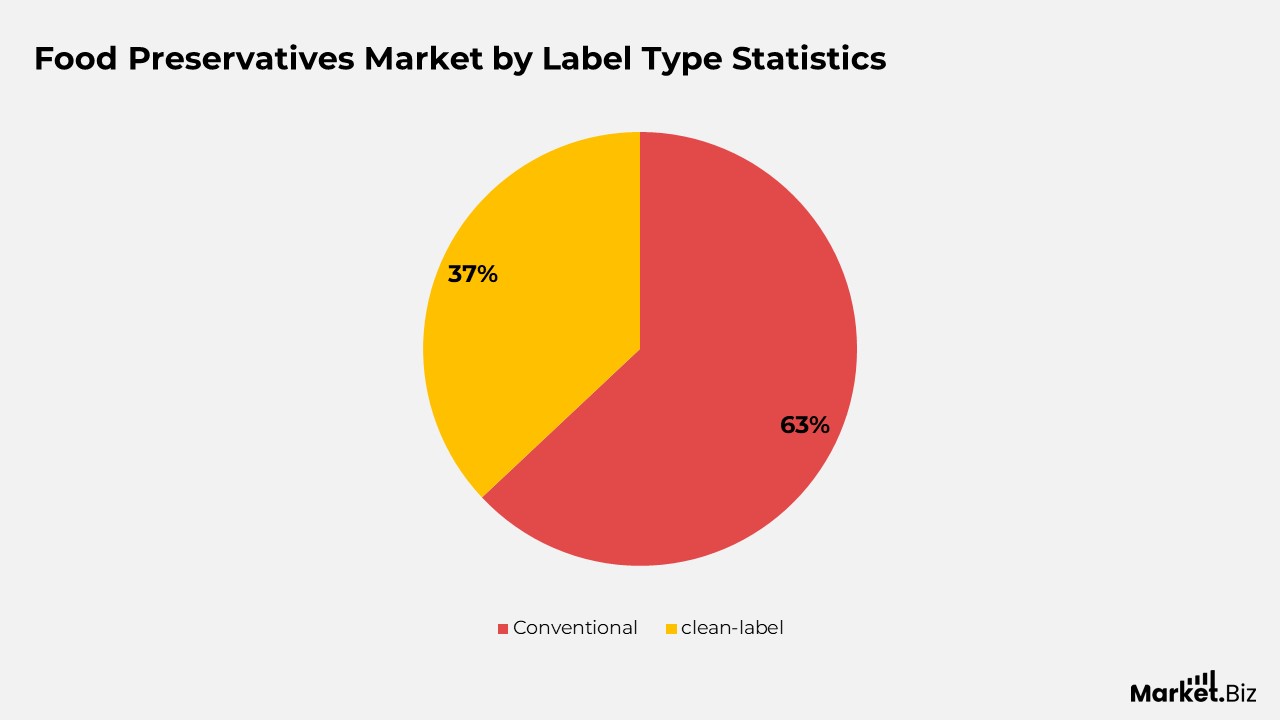
- Conventional preservatives dominate the market, holding a 63% share, while clean-label preservatives account for the remaining 37%.
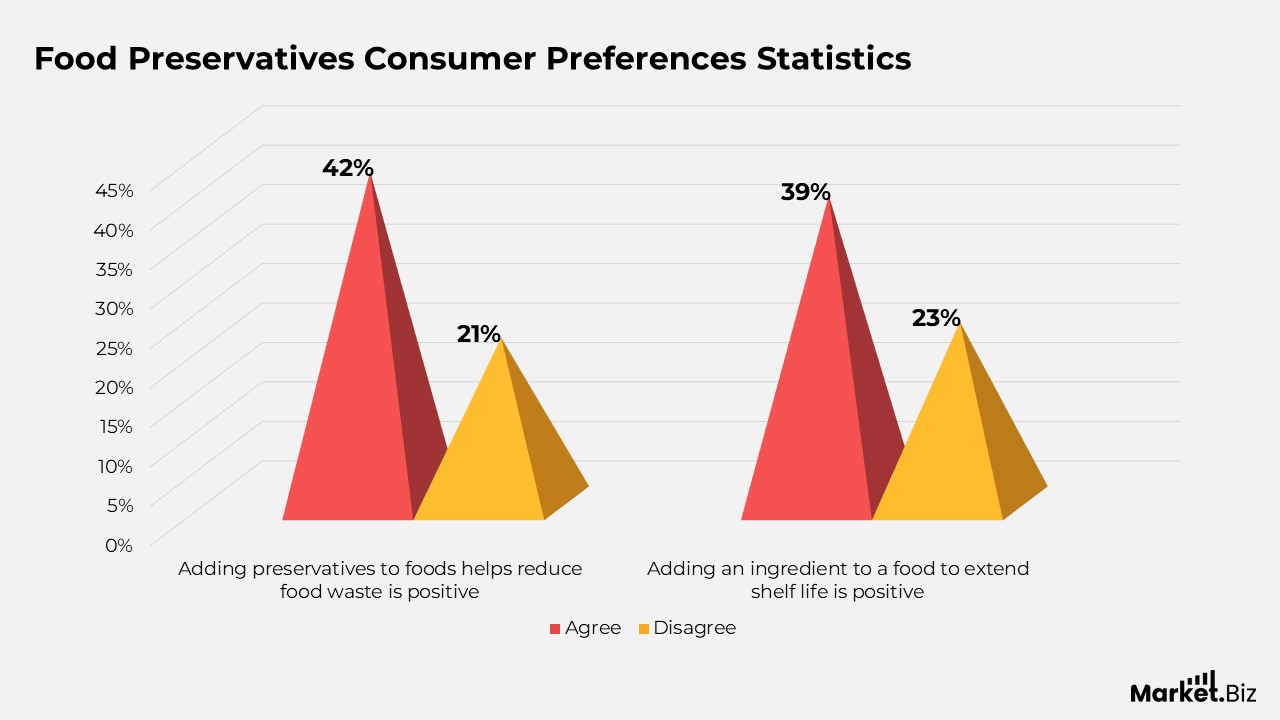
- 42% of Americans believe that the addition of preservatives to food helps in minimising food waste, whereas 21% hold an opposing view.
- Surveys indicate that around 40% of consumers actively look for natural preservatives, valuing their perceived health advantages and clean label characteristics.
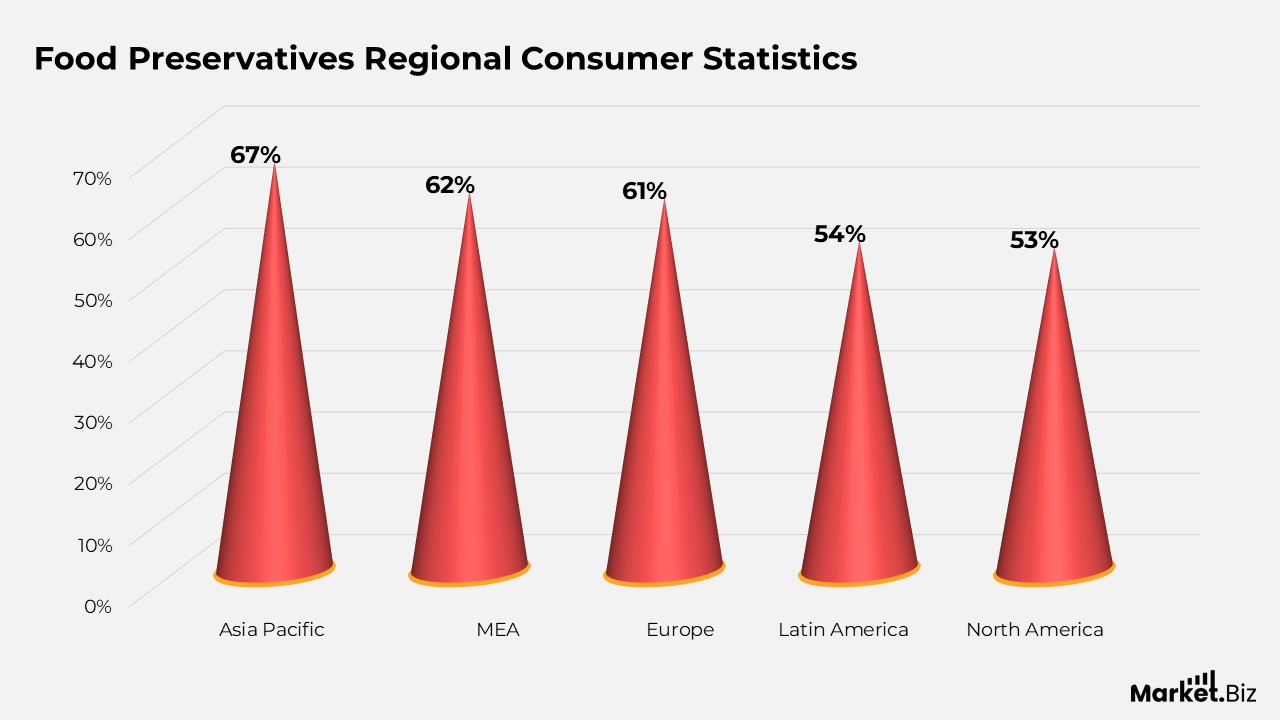
- In the Asia-Pacific region, the highest percentage of consumers, at 67%, reported that they actively avoid artificial preservatives, reflecting a strong inclination towards natural and minimally processed food options.
Market Size Food Preservatives Statistics
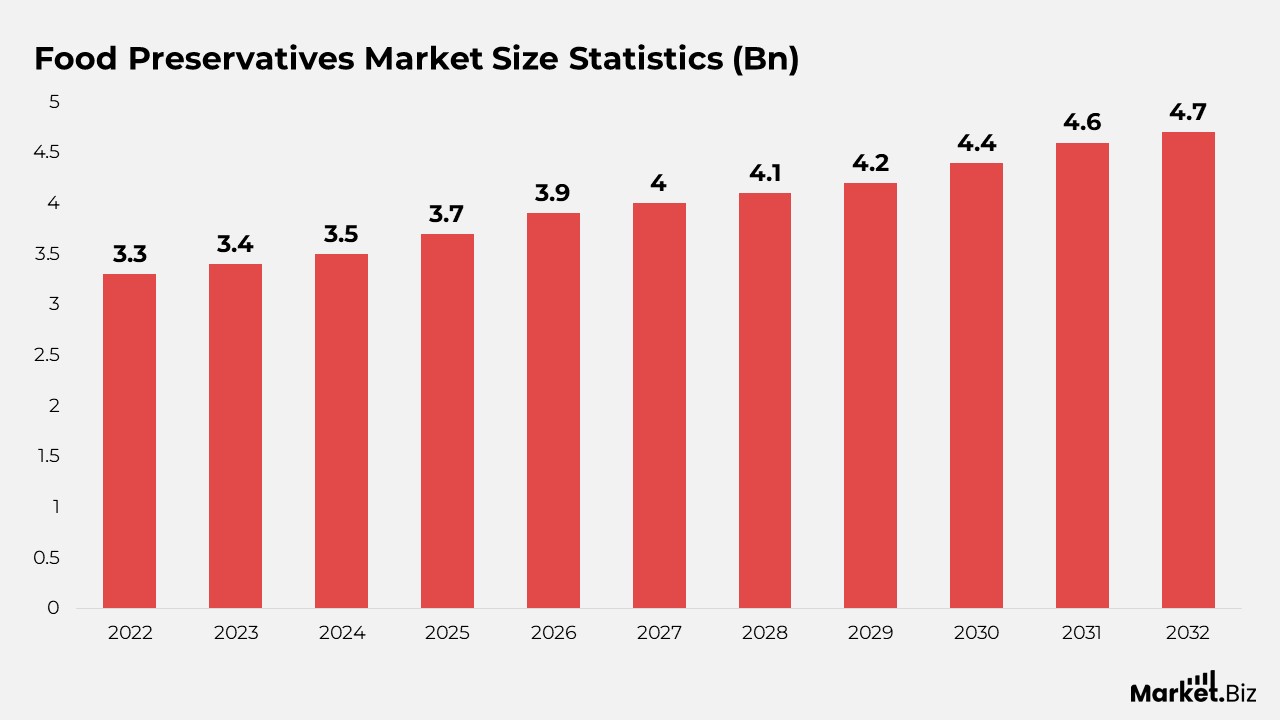
- The global market for food preservatives has shown a steady increase in revenue over the last ten years, achieving a compound annual growth rate (CAGR) of 3.8%.
- In 2022, the market produced around USD 3.3 billion, which marked the beginning of this upward trend.
- Following this, the market experienced gradual growth, with revenues climbing to USD 3.4 billion in 2023, and reaching USD 3.5 billion in 2024, reflecting a consistent rise.
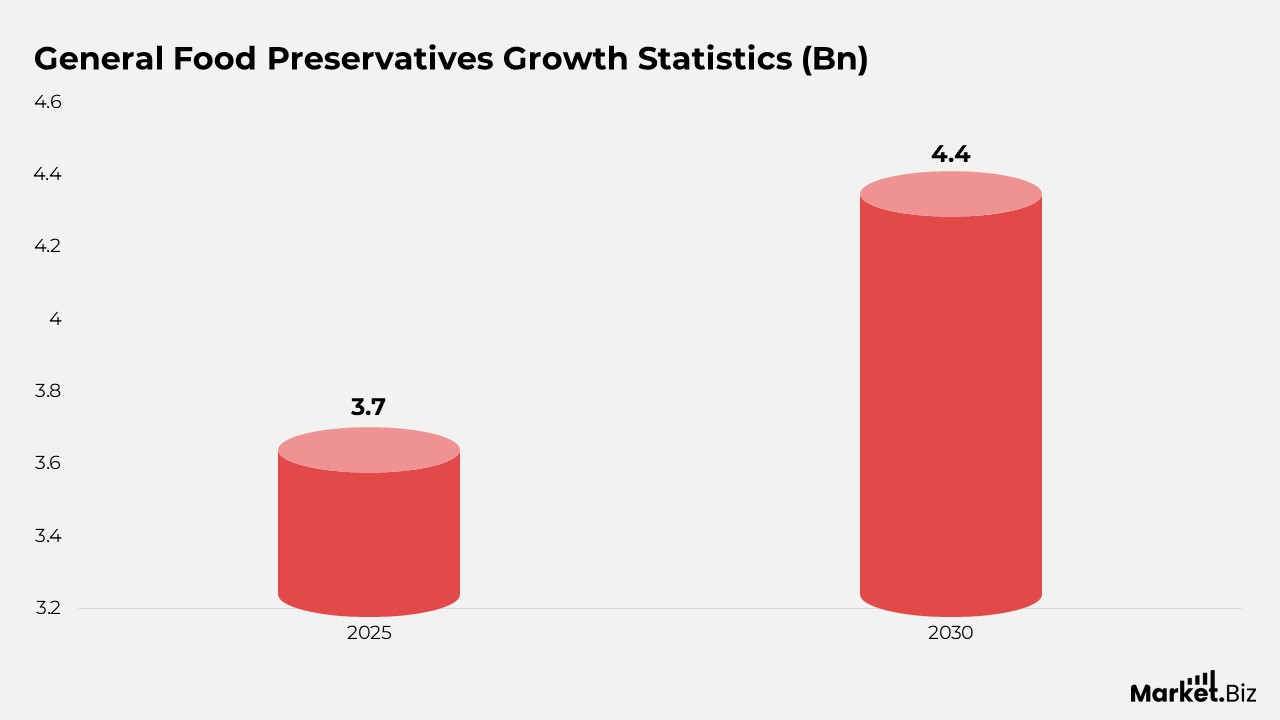
- Looking forward, projections indicate ongoing growth, with expected revenues of USD 3.7 billion in 2025 and USD 3.9 billion in 2026.
- This trend of growth continues, with anticipated revenues of USD 4.0 billion in 2027, USD 4.1 billion in 2028, and USD 4.2 billion in 2029, demonstrating sustained momentum in the market.
- As we approach the next decade, the market is predicted to further solidify, with revenues expected to hit USD 4.4 billion in 2030, USD 4.6 billion in 2031, and USD 4.7 billion in 2032.
Food Preservatives Market by Type Statistics
- Beginning at USD 3.3 billion in 2022, the market experienced gradual growth annually, culminating in USD 4.7 billion by 2032.
- Synthetic preservatives represented the largest share of revenue during this timeframe, with amounts increasing from USD 2.18 billion in 2022 to USD 3.10 billion in 2032.
- Conversely, natural preservatives also saw consistent growth, advancing from USD 1.12 billion in 2022 to USD 1.60 billion in 2032.
Food Preservatives Market by Label Type Statistics
- In the worldwide market for food preservatives, the allocation of market share is split between conventional and clean-label categories.
- Conventional preservatives dominate the market, comprising 63% of the total share, whereas clean-label preservatives account for the remaining 37%.
Synthetic Food Preservative Statistics
- Sulfur dioxide (SO2) effectively combats yeast and mold by modifying cellular metabolic processes and enzymatic systems.
- Although it offers benefits such as antioxidant properties and colour retention, its potent odour and corrosive nature restrict its application in canning.
- Sorbates, which include sodium sorbate and potassium sorbate, interfere with enzyme systems and are especially beneficial in beverages, juices, wines, and baked goods.
- Benzoic acid and its derivatives disrupt enzymatic systems, primarily affecting yeasts and molds, thus making them appropriate for high-acid foods and fruit beverages.
- Parabens, such as p-hydroxybenzoic acid, damage cell structures and proteins, and are commonly found in soft drinks, fish products, and salad dressings.
Food Preservatives Consumer Preferences Statistics
- American consumers are placing greater emphasis on ingredient lists, preferring clean components and avoiding those that appear chemical in nature.
- Furthermore, perspectives on preservatives differ: 42% of participants think that the inclusion of preservatives in food helps minimize food waste, whereas 21% hold an opposing view.
- In a similar vein, 39% concur that adding an ingredient to prolong a food’s shelf life is advantageous, while 23% disagree.
- Notably, men showed a stronger tendency than women to firmly endorse these opinions.
Regional Food Preservatives Consumer Statistics
- As of 2016, there was a notable variation in consumer aversion to artificial preservatives in food products across different global regions.
- In the Asia-Pacific region, the highest percentage of consumers, at 67%, indicated that they actively avoid artificial preservatives, reflecting a strong inclination towards natural and minimally processed foods.
- In a similar vein, significant proportions of consumers in Africa & the Middle East, Europe, and Latin America also expressed avoidance of artificial preservatives, with respective shares of 62%, 61%, and 54%.
- In North America, a slightly lower percentage of consumers, totaling 53%, reported that they avoid artificial preservatives in their food selections.
Food Preservatives Recent Statistics
- Kerry Group plc allocated $141 million to enhance its facility in Rome, Georgia, with the objective of improving its capabilities in delivering taste and nutrition solutions.
- Corbion expanded its North American production capacity for lactic acid by around 40% to meet the increasing demand for natural ingredients.
- In February 2024, a biotech startup focused on developing innovative preservative solutions completed a Series B funding round, raising $30 million to scale production and undertake regulatory trials.
- In April 2024, a food preservation research institute secured $10 million in seed funding to further research on natural preservatives and their applications within the food industry.
- In 2023, venture capital investments in food preservative startups reached $2.2 billion, emphasizing companies that are creating innovative preservative solutions with clean labels and natural claims.
- Strategic acquisitions and partnerships among food manufacturers, ingredient suppliers, and research institutions represented 55% of the total investment activity in the food preservatives market in 2023.
Conclusion
In conclusion, food preservatives play a crucial role in prolonging the shelf life of food, minimizing waste, and ensuring safety. Although synthetic preservatives have been widely utilized, there is an increasing trend towards natural alternatives driven by consumer preferences for simpler ingredient labels and concerns regarding the health implications of synthetic additives.
Natural preservatives, derived from plants and minerals, provide effective alternatives that are perceived to have health advantages. It is important to find a balance between the necessity of preservation and consumer desires for less processed foods.
Continuous research and innovation are essential to satisfy changing consumer expectations while maintaining food quality, safety, and sustainability. A comprehensive understanding of the function of preservatives is vital for both consumers and manufacturers to make educated decisions and uphold high standards of food quality.
FAQs
Food preservatives refer to substances that are incorporated into food items to enhance their longevity by inhibiting the growth of microorganisms, preventing oxidation, and preserving freshness and quality.
Food preservatives are utilised to prolong the shelf life of food items, ensure food safety, minimise food waste, and maintain consistent quality.
Food preservatives can be classified into two categories: natural preservatives (such as sugar, salt, plant extracts, and vinegar) and synthetic preservatives (which include sulfites, benzoates, and sorbates).