








Introduction
Sleep statistics indicate a significant prevalence of inadequate sleep, with many adults obtaining less than 7 hours. This situation underscores a public health concern, as sleep requirements differ by age; for instance, teenagers require between 8 and 10 hours, while adults need 7 to 9 hours. Each night, we experience approximately 4 to 6 sleep cycles, which include Non-Rapid Eye Movement (NREM) and Rapid Eye Movement (REM) stages, with each cycle lasting between 90 and 120 minutes.
Notably, REM sleep tends to increase as the night progresses. However, contemporary lifestyles, the use of screens, and stressors disrupt these natural sleep patterns, adversely affecting health. Sleep is essential for overall health and comprises various stages, including NREM and REM sleep. A complete sleep cycle typically spans around 90 minutes, with adults generally requiring 7 to 9 hours of sleep each night.
The body’s internal clock, known as the circadian rhythm, plays a crucial role in regulating sleep-wake cycles, which are influenced by exposure to light and darkness. Practising good sleep hygiene, such as adhering to a consistent sleep schedule and fostering a quiet, dark sleeping environment, is vital for achieving restorative sleep.
Editor’s Choice
- 54.1% of adults prefer to sleep in the fetal position, whereas 37.5% choose to sleep on their back.
- By 2024, the sleep economy is anticipated to reach USD 585 billion.
- Among adults aged 50 to 64, 31% characterised their sleep as excellent or very good, 38% as good, and 30% as fair or poor.
- South Africa recorded the longest average sleep duration, with females sleeping for 557 minutes and males for 552 minutes.
- 48% of the individuals featured in our dreams are acquaintances whose names we recognize.
- 90 million Americans experience snoring, with 37 million doing so on a regular basis.
- Sleep issues contribute approximately $15.9 billion to the overall national health care expenses.
- 76% of parents have shared a bed with their infant.
General Sleep Statistics
- Sleeping an additional 60 to 90 minutes each night can enhance your happiness and health.
- REM sleep accounts for 25% of our overall sleep duration, while the other 75% consists of non-REM sleep stages.
- Generally, our body temperature decreases during sleep and rises during the waking phase cyclically.
- 54.1% of adults prefer to sleep in the fetal position, whereas 37.5% choose to sleep on their back.
- In one study, 6-8% of participants reported experiencing a condition known as “sexsomnia,” which involves engaging in sexual activities while asleep.
- A recent study indicated that 75% of pilots experienced significant fatigue while operating flights.
- During REM sleep, certain chemicals in the brain induce paralysis, preventing individuals from acting out their dreams.
- On average, a person takes about 7 minutes to fall asleep.
- Each complete sleep cycle lasts approximately 90 minutes.
- Your body temperature decreases by 1-3 degrees during sleep.
- As individuals age and their BMI increases, they tend to adopt a side-sleeping position.
- 63% of Americans sleep on their side, 14% on their back, and 16% on their stomach.
- The average sleep duration for most Americans is 6.8 hours within a 24-hour timeframe, with only one-third of Americans achieving the recommended amount of sleep each night.
- In 1910, the average sleep duration was 9 hours.
Sleep Economy Market Value Statistics
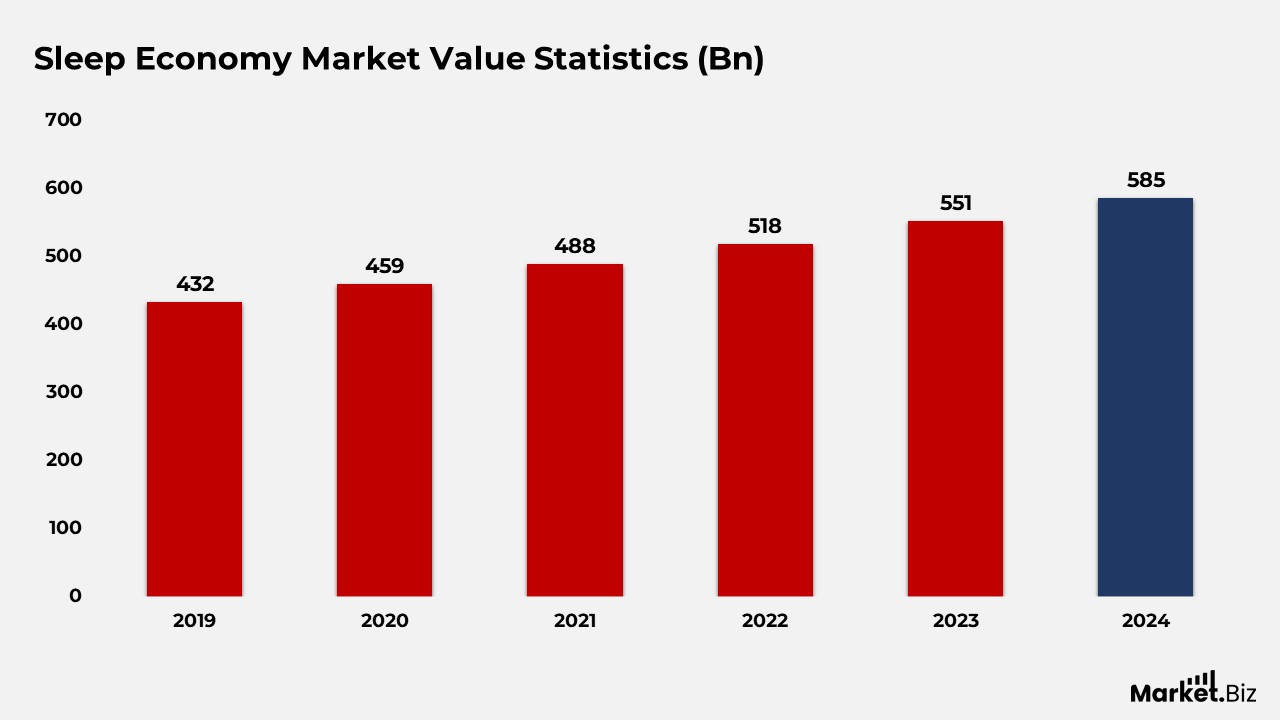
- In 2019, the market size was assessed at USD 432 billion.
- By 2020, this amount increased to USD 459 billion, indicating a growth trend despite global economic difficulties.
- The market further expanded in 2021, attaining USD 488 billion. This was succeeded by a valuation of USD 518 billion in 2022.
- This upward trend continued, with the market size increasing to USD 551 billion in 2023.
- By 2024, the sleep economy is anticipated to reach USD 585 billion.
Statistics of Sleep Aids Market Revenue
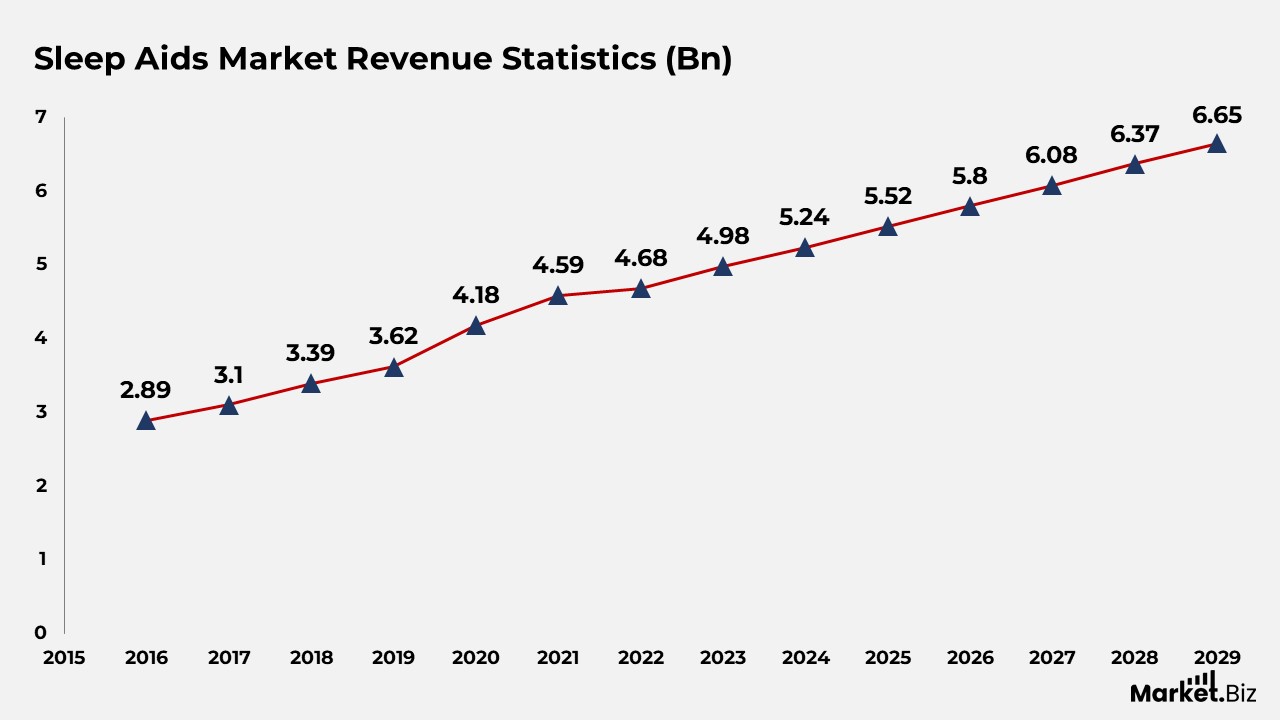
- In 2016, the market revenue was recorded at USD 2.89 billion. This figure rose to USD 3.10 billion in 2017 and further increased to USD 3.39 billion in 2018.
- By 2019, the market had expanded to USD 3.62 billion, followed by a notable increase to USD 4.18 billion in 2020.
- In 2021, the market revenue reached USD 4.59 billion and maintained its upward trend, achieving USD 4.68 billion in 2022 and USD 4.98 billion in 2023.
- The market is anticipated to continue its growth, reaching USD 5.24 billion in 2024, USD 5.52 billion in 2025, and USD 5.80 billion in 2026.
- By 2027, the revenue is projected to rise to USD 6.08 billion, followed by USD 6.37 billion in 2028 and USD 6.65 billion in 2029.
Sleep Habits Statistics
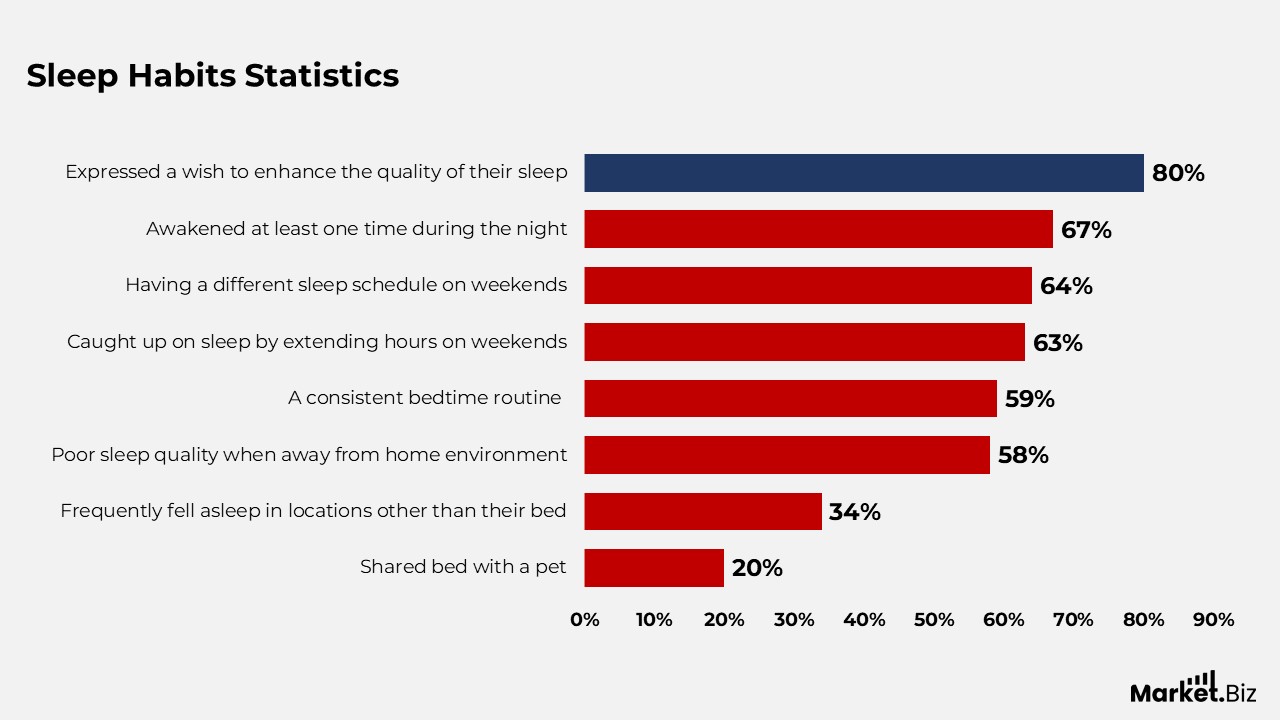
- As of 2019, a considerable proportion of adults in selected countries reported diverse sleep habits and behaviours.
- Among these individuals, 80% expressed a wish to enhance the quality of their sleep, underscoring a prevalent interest in improved sleep health.
- Furthermore, 67% of those surveyed typically awakened at least one time during the night, and 64% acknowledged having a different sleep schedule on weekends.
- A total of 63% of participants indicated that they caught up on sleep by extending their hours on weekends.
- A consistent bedtime routine was adhered to by 59%, while 58% noted a decline in sleep quality when away from their home environment.
- Notably, 34% frequently fell asleep in locations other than their bed, and 20% typically shared their bed with a pet.
Sufficient Sleep Statistics by Age
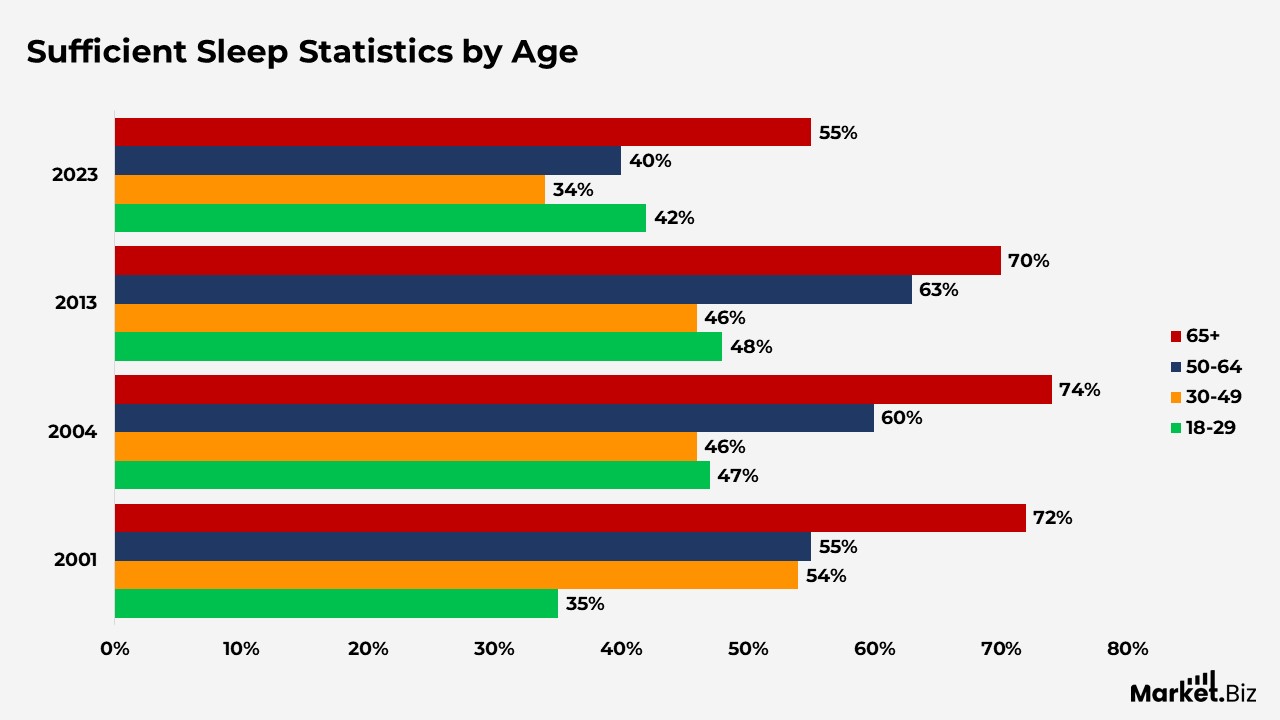
- In 2001, 35% of individuals aged 18-29 reported having sufficient sleep, in contrast to 54% of those aged 30-49, 55% of individuals aged 50-64, and 72% of adults aged 65 and above.
- By 2004, the percentage for the youngest demographic increased to 47%, while it decreased to 46% for those aged 30-49.
- At the same time, 60% of adults aged 50-64 and 74% of those aged 65 and older indicated they were getting enough sleep.
- In 2013, 48% of individuals aged 18-29 and 46% of those aged 30-49 showed stable figures from 2004, whereas the percentage rose to 63% for those aged 50-64, but slightly decreased to 70% among individuals aged 65 and older.
- By 2023, the trend indicated a decline across all age groups, with 42% of individuals aged 18-29, 34% of those aged 30-49, 40% of individuals aged 50-64, and 55% of those aged 65 and older reporting adequate sleep.
Sleep Quality by Age Statistics
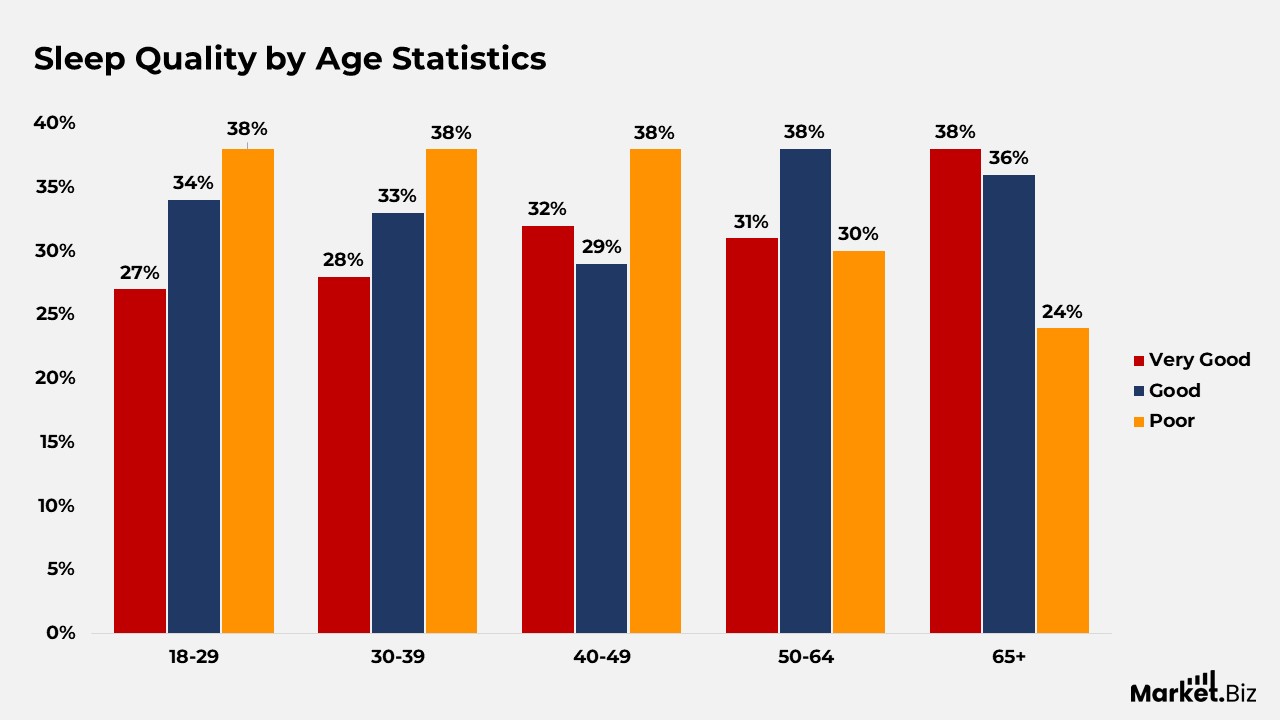
- Among individuals aged 18 to 29, 27% characterised their sleep as excellent or very good, 34% assessed it as good, and 38% classified it as fair or poor.
- Adults in the 30 to 39 age group exhibited comparable results, with 28% indicating excellent or very good sleep, 33% describing it as good, and 38% categorising it as fair or poor.
- For individuals aged 40 to 49, 32% reported excellent or very good sleep, 29% rated it as good, and 38% considered it fair or poor.
- Among adults aged 50 to 64, 31% characterised their sleep as excellent or very good, 38% as good, and 30% as fair or poor.
- Sleep quality was rated the highest among individuals aged 65 and older, with 38% reporting excellent or very good sleep, 36% describing it as good, and only 24% rating it as fair or poor.
Sufficient Sleep Statistics by Gender
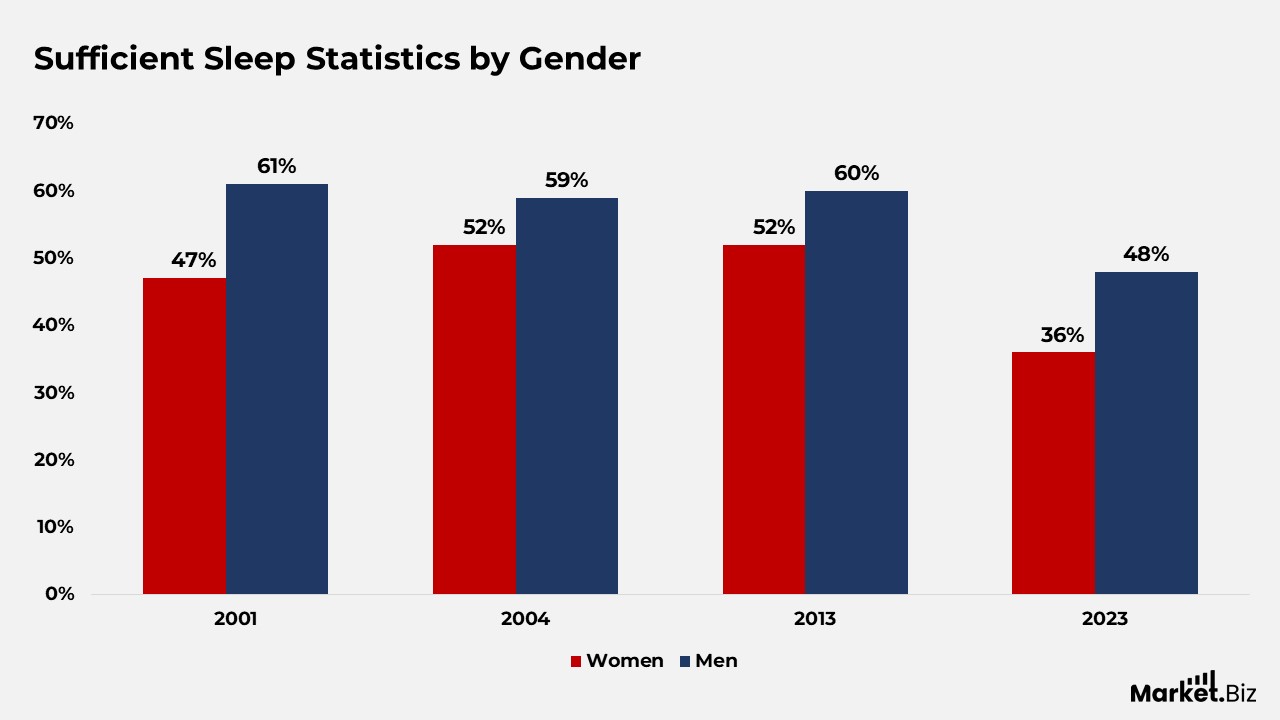
- In 2001, 47% of women and 61% of men reported having sufficient sleep.
- By 2004, the percentage of women who reported adequate sleep rose to 52%, whereas men experienced a minor decrease to 59%.
- This pattern persisted in 2013, with 52% of women and 60% of men indicating they had enough sleep.
- However, by 2023, both sexes faced notable reductions, with only 36% of women and 48% of men claiming they regularly obtained sufficient sleep.
Sleeping Duration Statistics
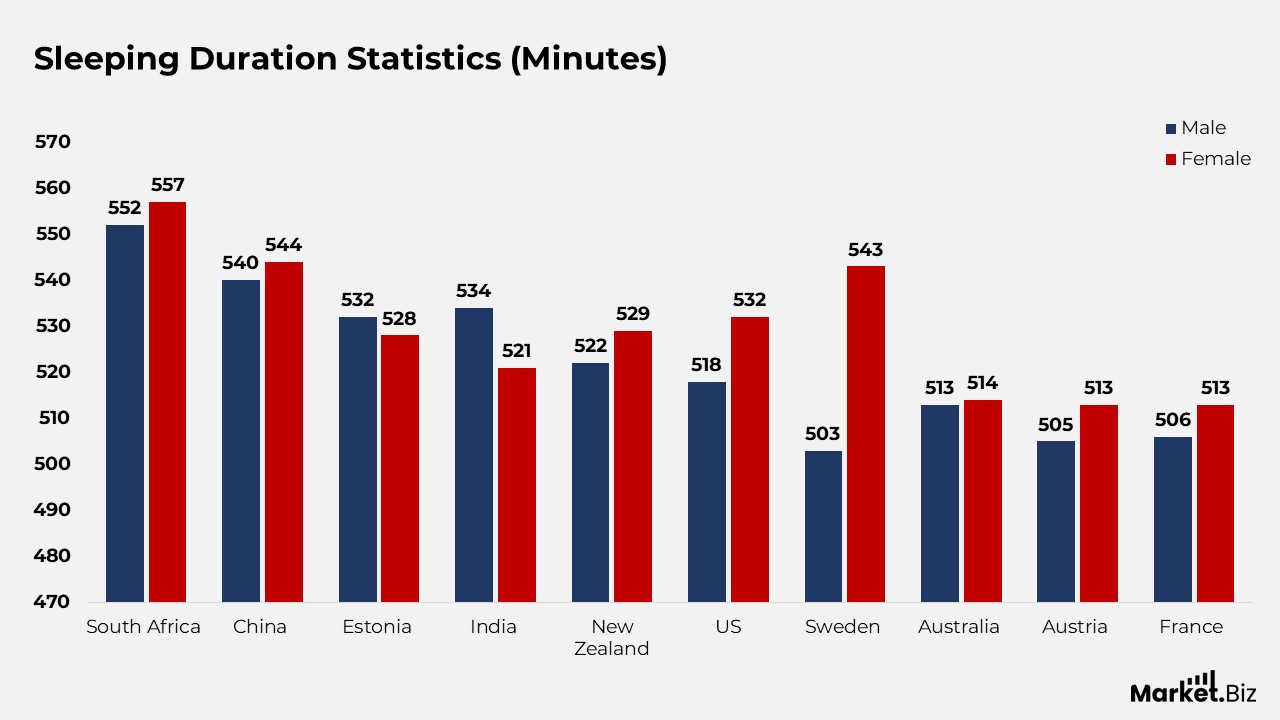
- South Africa recorded the longest average sleep duration, with females sleeping for 557 minutes and males for 552 minutes.
- China was a close second, with females averaging 544 minutes and males 540 minutes.
- Estonia reported an average of 528 minutes for females and 532 minutes for males. Conversely, India indicated that females slept for 521 minutes while males averaged 534 minutes.
- In New Zealand, females had an average of 529 minutes compared to 522 minutes for males. In the US, females averaged 532 minutes of sleep, while males had 518 minutes.
- Sweden documented 543 minutes for females and 503 minutes for males. Australia displayed nearly identical averages, with females averaging 514 minutes and males 513 minutes.
- Austria and France noted that females slept for 513 minutes, while males averaged 505 and 506 minutes.
- Turkey documented 512 minutes for females and 504 minutes for males. The Netherlands indicated 516 minutes for females and 498 minutes for males.
- Poland recorded 511 minutes for females and 502 minutes for males, whereas Portugal averaged 508 and 503 minutes.
Parasomnias and Dreams Statistics
- 48% of the individuals featured in our dreams are acquaintances whose names we recognize.
- Transforming memories into a dream typically requires an average of 7 days.
- The earliest documented dreams were inscribed on clay tablets approximately 5000 years ago in Mesopotamia.
- Every individual experiences dreams. If you believe you do not, it is likely that you have simply forgotten them.
- It is possible to experience 3 to 6 distinct dreams within a single night.
- Hallucinations are reported in 75% of individuals who experience sleep paralysis.
- Individuals suffering from depression tend to dream 3 to 4 times more frequently than the average person.
- Currently, 75% of the population dreams in colour. Prior to the invention of colour television, only 15% did so.
- Individuals who are blind can still visualize images in their dreams, provided they were not born blind.
- Recurring dreams are experienced by 60 to 75% of the population. The most prevalent recurring dreams involve being attacked or pursued, being late, missing an examination, or losing control of a vehicle.
- In the dreams of men, nearly 70% of the characters are also male; conversely, a woman’s dreams will typically feature a roughly equal distribution of peoples.
Sleeping Disorder Statistics
Insomnia
- Approximately 65 to 90% of adult individuals suffering from major depression encounter various sleep issues, predominantly insomnia.
- Furthermore, around 80% of expectant mothers face persistent insomnia as a result of uncomfortable alterations in their sleeping patterns, along with swelling and other irritations.
Sleep Apnea
- 90 million Americans experience snoring, with 37 million doing so on a regular basis.
- 80% of both mild and severe cases of Obstructive Sleep Apnea remain undiagnosed.
- 1 in 4 children, including infants, are affected by obstructive sleep apnea.
- The presence of Sleep Apnea elevates the risk of heart disease to three times greater than that of individuals without the condition.
Restless Legs Syndrome
- Approximately 10% of adults in the United States are impacted by Restless Legs Syndrome, with a higher prevalence observed in women compared to men.
- Between 2% and 3% of adults experience moderate to severe RLS, equating to more than 5 million individuals affected.
- Furthermore, 80% of those with RLS also suffer from periodic limb movement disorder, characterized by involuntary jerking of the legs and occasionally the arms during sleep, occurring every 15 to 40 seconds.
Sleep Deprivation Statistics
- Sleep issues contribute approximately $15.9 billion to the overall national health care expenses.
- Only 20% of adults report that their sleep quality is either very good or excellent.
- 49% of Generation X and 43% of Millennials indicate that their sleep quality is either fair or poor.
- 67% of Americans aged 65 and above achieve 7 or more hours of sleep each night.
- 87% of high school students fail to obtain sufficient sleep, as 8-10 hours are recommended for teenagers.
- The record for the longest duration without sleep is 11 days.
- Car accidents tend to rise on the Monday following Daylight Savings Time.
- 71% of adults sleep with or beside their mobile phones.
- 20% of Americans experience chronic pain that disrupts their sleep on a nightly basis.
Sleep Hygiene Statistics
- 41% of Americans maintain a regular bedtime routine. Some individuals engage in reading, journaling, or watching television, while others prefer scrolling through their phones or preparing to-do lists for the following day.
- More than half (58%) of adults incorporate activities such as scrolling on smartphones or tablets, watching television, or using other screens into their nightly rituals during the hour before sleep. These individuals tend to encounter more frequent sleep disturbances, as exposure to artificial light interferes with sleep quality.
- On average, individuals dedicate 26 minutes each day to their night-time routines.
- Generation Z places a higher emphasis on sleep compared to other generations. They are more inclined to forgo a night-time routine, such as neglecting to brush their teeth (53%) or change into pajamas (47%).
- 15% of Americans utilize sleep trackers, with women being 50% more likely to use them than men. Nearly half of those who employ sleep trackers report improvements in their sleep habits.
- 18.4% of adults resort to sleep medications, with women being nearly twice as likely to use them to initiate or maintain sleep.
Child Sleep Statistics
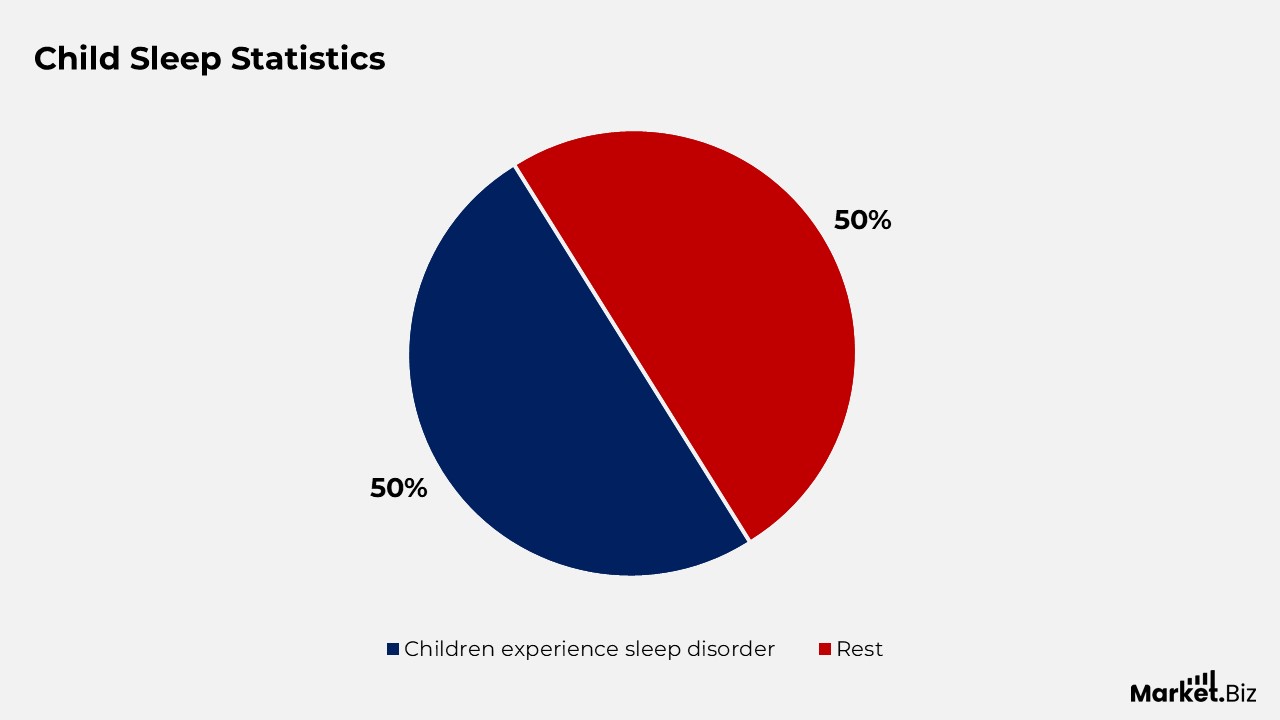
- Data from the American Academy of Paediatrics indicates that as many as 50% of children experience a sleep disorder at some stage.
- More than half of children aged 6 to 17 do not receive the recommended amount of sleep.
- 76% of parents have shared a bed with their infant.
- Each year, 3,400 infants in the United States succumb to sleep-related causes, including Sudden Infant Death Syndrome (SIDS) and accidental suffocation.
Caffeine and Sleep Statistics
- 94% of Americans consume caffeinated drinks, with 64% doing so on a daily basis.
- 71% of respondents from a SleepFoundation.org survey report that they drink coffee every day. 70% believe that caffeine affects their sleep.
- Common sleep problems reported by those who consume caffeine include daytime drowsiness, fatigue, and insomnia. 30% of survey participants indicated that they experience anxiety.
- The half-life of caffeine, which is the duration needed for half of it to be cleared from the body, typically ranges from 4 to 6 hours, but it can vary between 2 to 12 hours.
- Coffee enhances alertness and diminishes fatigue by obstructing adenosine receptors, thereby negating its sleep-inducing effects. However, once the effects subside, individuals may encounter drowsiness and muscle fatigue.
Sleep Recent Development
- In 2023, 3Z Brands, a firm focused on sleep-related products, purchased Leesa Sleep, a trailblazer in the bed-in-a-box sector.
- In 2024, SleepCogni, a company that provides a portable device designed to assist with insomnia management, secured £300,000 in a pre-approved bridging round under the Enterprise Investment Scheme.
- In the middle of 2024, Eight Sleep launched the Pod 4 Ultra mattress topper, priced at $4,249. This innovative product incorporates temperature regulation and biometric tracking to improve sleep quality.
Conclusion
In summary, sleep plays a vital role in sustaining overall health and well-being, affecting mood, productivity, and physical health in individuals of all ages. Although sleep patterns, challenges, and remedies differ greatly due to demographics, cultural norms, and personal choices, important findings indicate a growing dependence on technology, environmental changes, and lifestyle adjustments to enhance sleep quality.
Tackling sleep-related problems through tailored strategies and increased awareness can greatly improve the quality of life. Since sleep is a fundamental requirement, promoting healthy sleep habits is essential for both individuals and communities to flourish.
FAQ’s
The Koala is well-known for its tendency to sleep approximately 90% of the day (20-22 hours), a behaviour influenced by its low-energy diet consisting primarily of eucalyptus. Other notably sleepy animals include sloths and brown bats, which require up to 20 hours of sleep, while certain dog breeds, such as Chows, also approach this level of sleep, categorising them among the sleepiest of creatures.
Indeed, sleeping from 10 PM to 7 AM (9 hours) is typically sufficient for the majority of adults, as it falls within the advised range of 7-9 hours for optimal health. This duration aligns well with the natural circadian rhythms of the body, promoting effective rest and recovery, although individual sleep requirements may differ, with some individuals needing slightly more or less.
The renowned inventor Thomas Edison was known to sleep only three or four hours each night, viewing sleep as an unproductive use of time, a remnant from our prehistoric ancestors. In contrast, President Clinton averages five to six hours of sleep.