









Introduction
Game-Based Learning Statistics: Game-based Learning (GBL) employs gameplay as a teaching tool, demonstrating notable market expansion (for instance, it is anticipated to reach $77 billion by 2032) due to heightened student engagement, motivation, and enhanced learning outcomes. Statistics indicate that in classrooms, students can spend up to 93% of their time engaged in tasks. However, the effectiveness of GBL is contingent upon appropriate design, which must balance challenge with the avoidance of frustration.
Key statistics reveal a high rate of adoption in corporate training and K-12 education, with significant positive effects on focus, problem-solving abilities, and critical thinking skills. Nonetheless, challenges such as cost and potential distractions remain. Game-based learning incorporates gaming principles to create an engaging and motivating educational experience. It utilises both digital and analogue games to foster active learning, deliver immediate feedback, and enhance problem-solving and critical thinking capabilities.
The games encompass a broad spectrum of subjects and skills, ranging from mathematics to interpersonal skills like teamwork. They can be tailored to accommodate individual skill levels and encourage collaboration among learners. However, it is crucial to use these games judiciously, aligning them with specific educational objectives while ensuring they complement other instructional methods. Ultimately, game-based learning introduces an enjoyable element to education, making the learning process more engaging and effective for students.
Editor’s Choice
- In 2022, the market was valued at USD 11.5 billion, and it is projected to escalate to USD 77.4 billion by 2032.
- The market for game-based learning shows varying levels of adoption across different regions, with Western Europe at the forefront, securing a significant market share of 47.2%.
- Point scores, selected by 27% of learners, add a competitive element and recognition of success.
- Interestingly, only a minor percentage, 8%, of U.S. teachers express uncertainty regarding its necessity, suggesting a relatively low degree of scepticism.
- Games also help students in visualising complex concepts (51%) and in introducing new ideas during lessons (50%).
General Game-Based Learning Statistics
- The game-based learning market is experiencing significant growth, with a compound annual growth rate (CAGR) of 21.6%, and its revenue is anticipated to rise consistently over the next ten years.
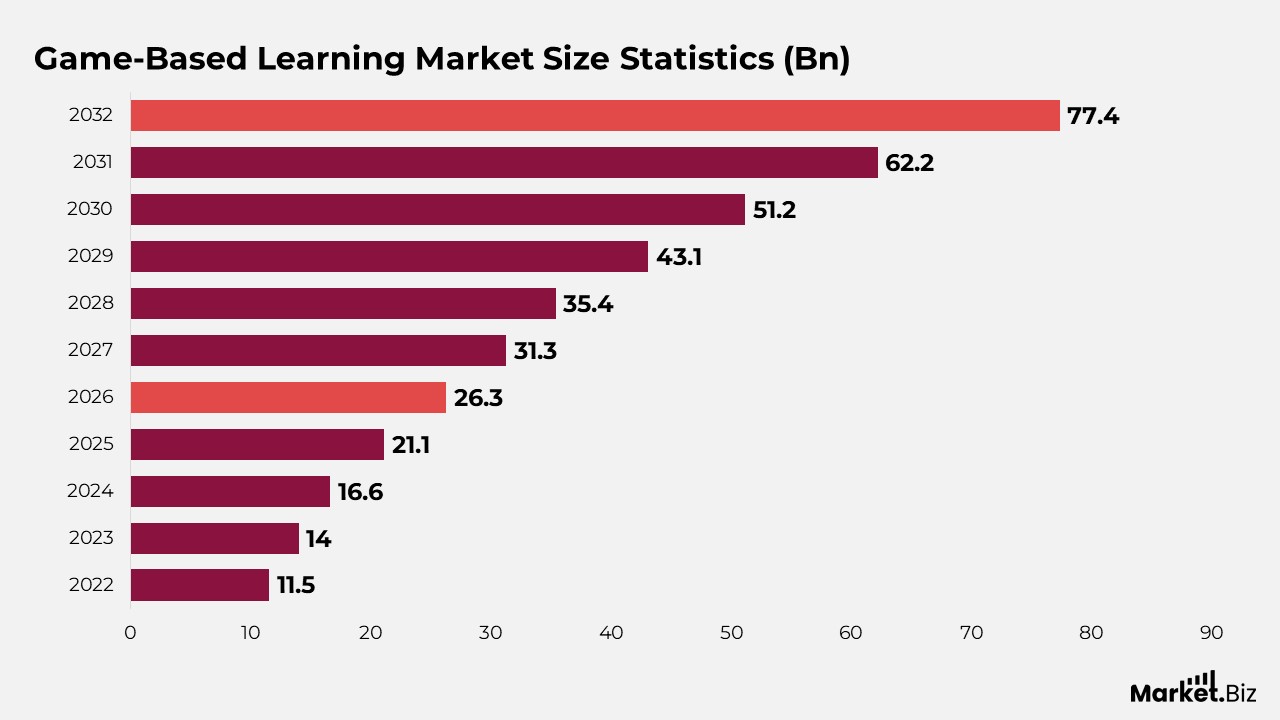
- In 2022, the market was valued at USD 11.5 billion, and it is projected to escalate to USD 77.4 billion by 2032.
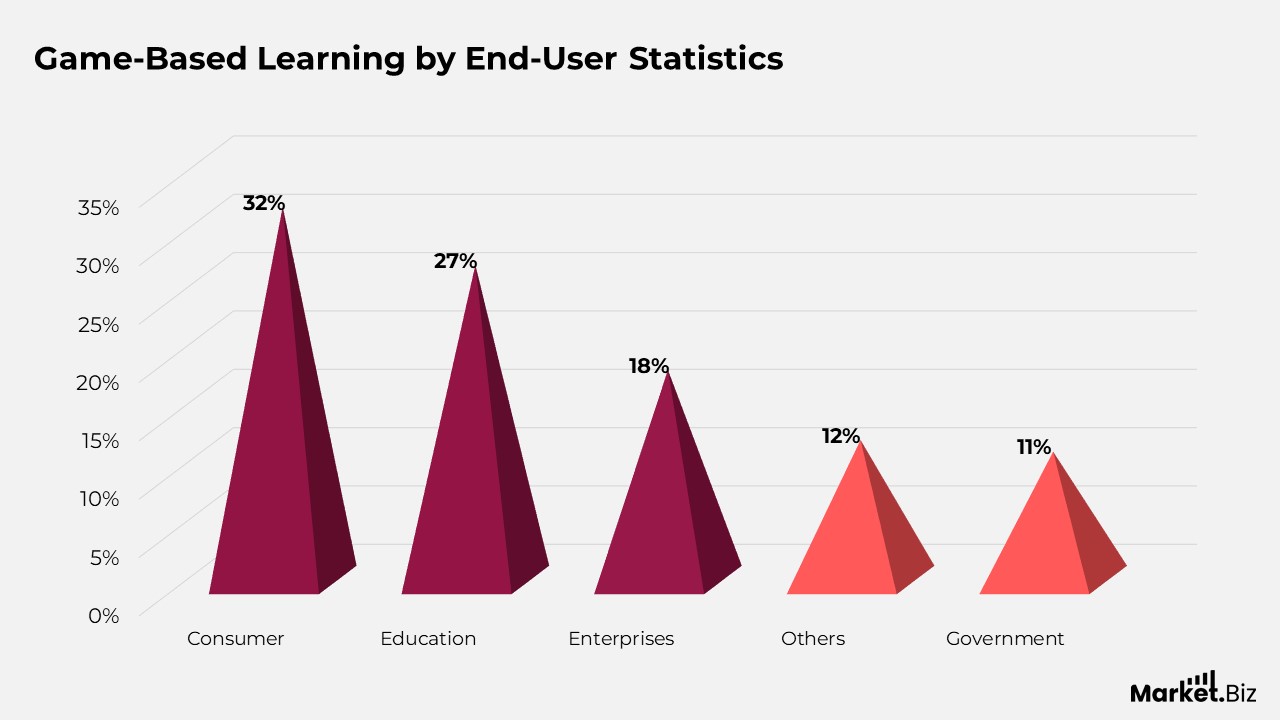
- Importantly, the consumer sector holds the largest market share at 32%, indicating a growing trend of individuals utilising gamified educational applications and platforms to improve their learning experiences.
- The game-based learning market demonstrates varying levels of adoption across different regions.
- Western Europe is at the forefront, securing a significant market share of 47.2%.
- Concerning game-based learning techniques, 24% of students express a preference for activity-oriented gaming content, which offers an engaging and immersive educational experience.
- Moreover, virtual reality-based learning games are leading the way with an impressive growth rate of 51.9%, highlighting the increasing integration of immersive technologies in education.
- According to survey findings, a notable 88% of teachers who incorporate digital games in their classrooms have reported enhanced student engagement in learning, which is a crucial element in improving the educational experience.
Game-Based Learning Market Size Statistics
- The game-based learning sector is experiencing significant expansion, with a compound annual growth rate (CAGR) of 21.6%, and its revenue is anticipated to grow consistently over the next ten years.
- In 2022, the market was assessed at USD 11.5 billion, and it is projected to rise to USD 14 billion in 2023.
- The upward trend persists as we advance into the future, with forecasts indicating USD 16.6 billion in 2024 and USD 21.1 billion in 2025.
- In 2026, the market is expected to attain USD 26.3 billion, and by 2027, it is predicted to exceed USD 31.3 billion.
- This growth trajectory is anticipated to gain further momentum, reaching USD 35.4 billion in 2028, USD 43.1 billion in 2029, and an impressive USD 51.2 billion in 2030.
- Looking even further into the future, the game-based learning market is projected to achieve USD 62.2 billion in 2031 and an impressive USD 77.4 billion in 2032.
Component Statistics By Game-based Learning
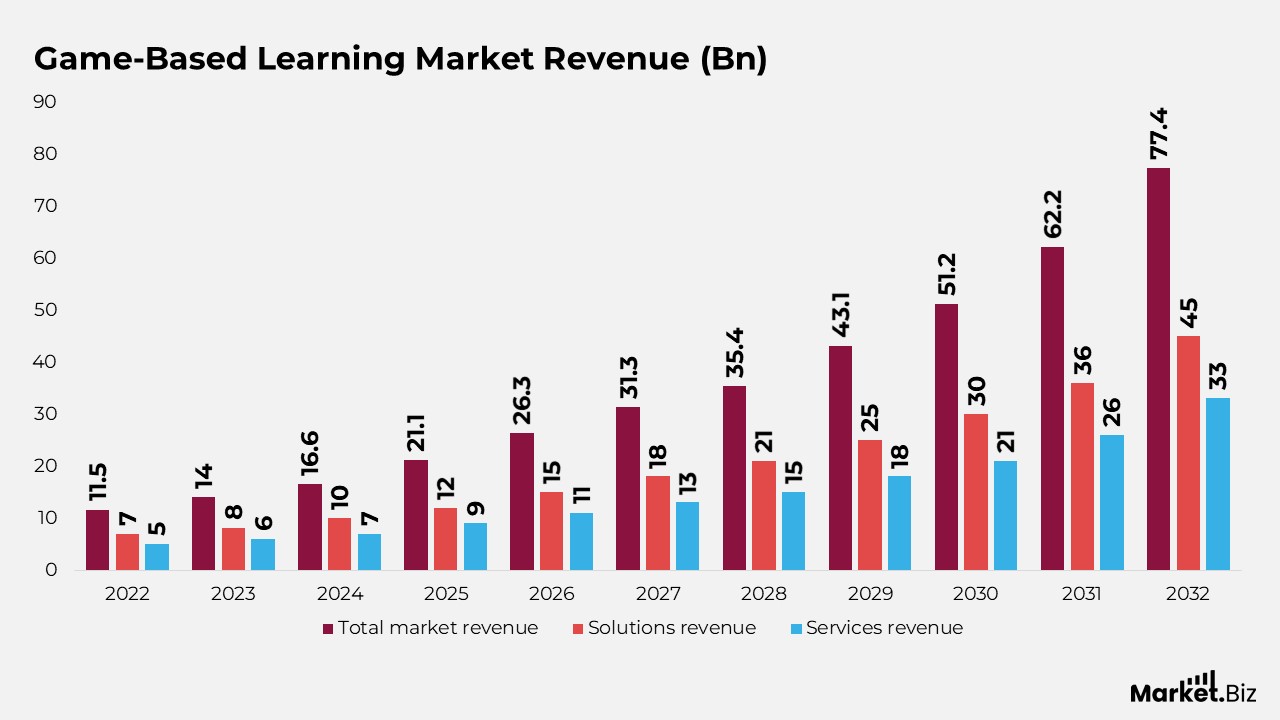
- In 2022, the market achieved a total revenue of USD 11.5 billion, with solutions contributing USD 7 billion and services providing USD 5 billion.
- This upward trend is anticipated to persist, with market revenue projected to reach USD 14 billion in 2023, USD 16.6 billion in 2024, and USD 21.1 billion in 2025.
- The increasing adoption of game-based learning solutions is propelling this growth, as organisations acknowledge the efficacy of these tools in improving education and training.
- By 2032, the game-based learning market is expected to attain a remarkable USD 77.4 billion in total revenue, with solutions making up USD 45 billion and services yielding USD 33 billion.
Game-Based Learning by End-User Statistics
- In the education sector, game-based learning has achieved notable prominence, securing a considerable 27% market share as educational institutions and schools increasingly adopt interactive gaming as an effective teaching resource.
- Government agencies, acknowledging the advantages of digital learning tools, account for 11% of the market share, while businesses, recognising the value of game-based learning for employee training and development, possess a significant 18% share.
- The remaining 12% is attributed to various other sectors, highlighting the extensive adoption and diverse applications of game-based learning across numerous industries.
Regional Statistics By Game-Based Learning
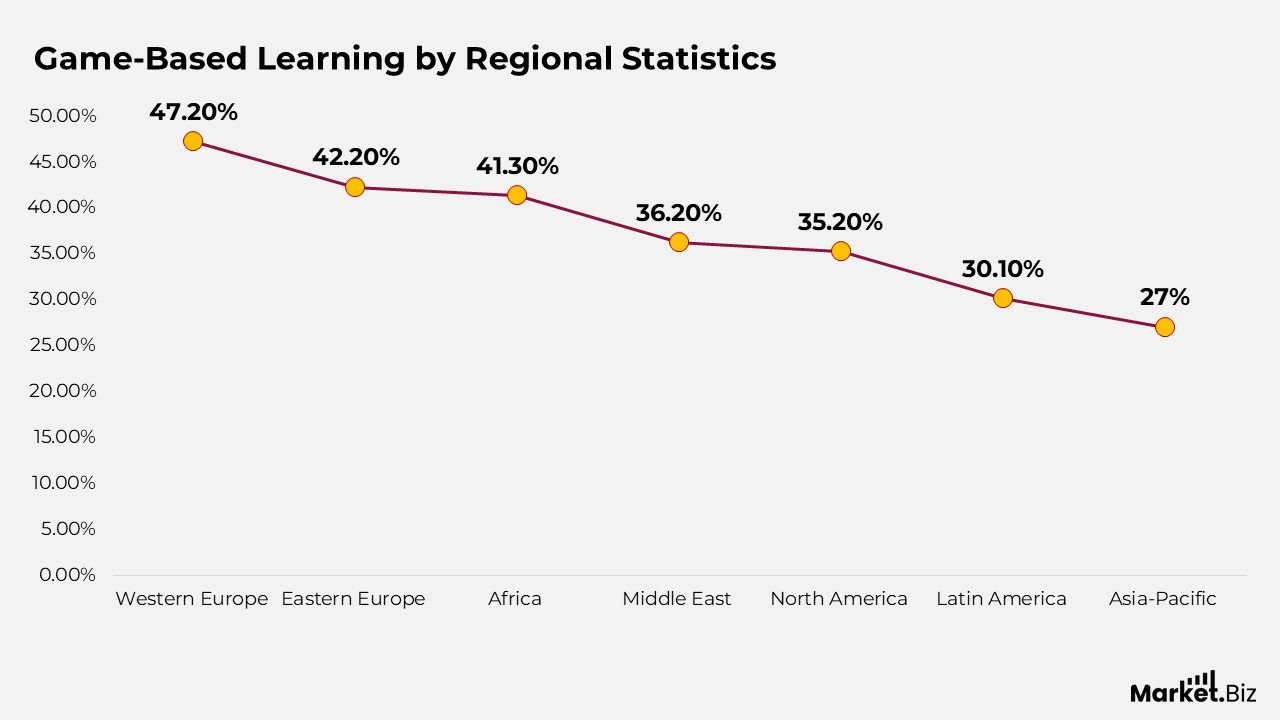
- The market for game-based learning shows varying levels of adoption across different regions, with Western Europe at the forefront, securing a significant market share of 47.2%.
- Eastern Europe follows closely behind, holding a notable share of 42.2%, which reflects the increasing interest in game-based educational methods in these European areas.
- Both Africa and the Middle East exhibit considerable enthusiasm for game-based learning, with market shares of 41.3% and 36.2%, respectively.
- Although North America and Latin America have somewhat lower shares, they are still actively participating in this educational trend, contributing 35.2% and 30.1% to the market, respectively.
- In the rapidly evolving Asia-Pacific region, game-based learning commands a market share of 27%, signifying a rising interest in utilising gamification for educational purposes.
Game-Based Learning Techniques Statistics
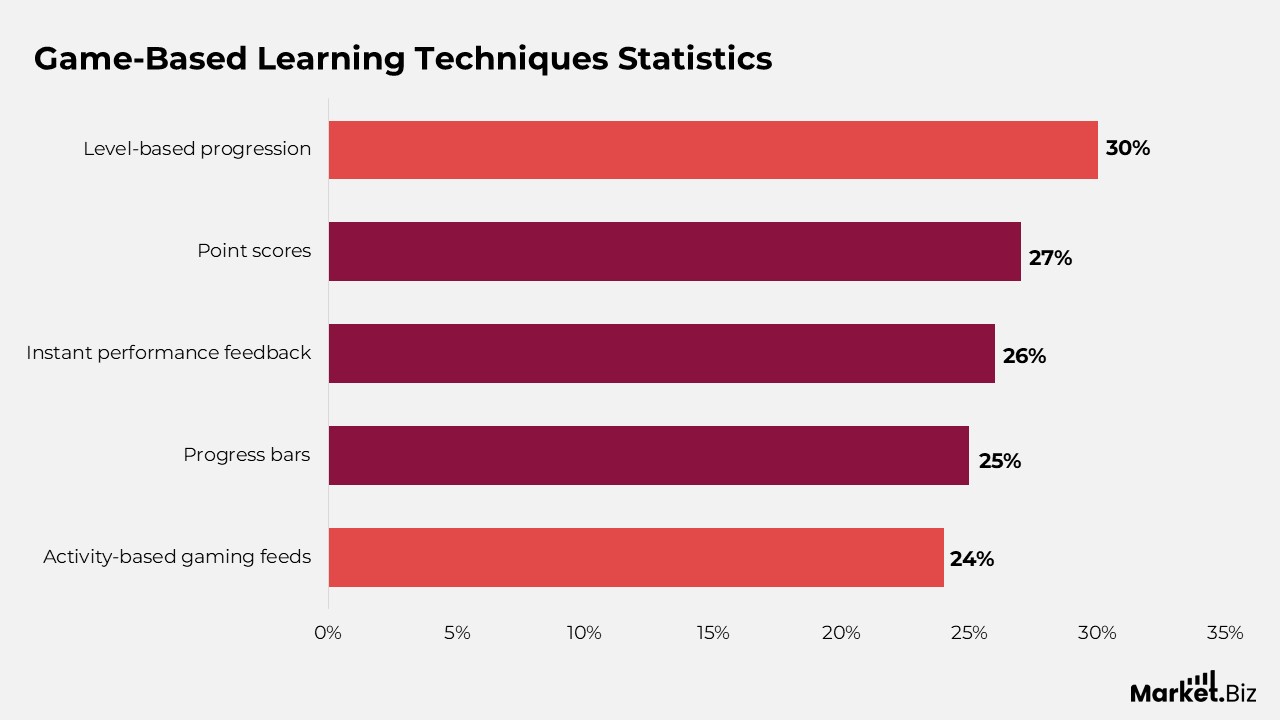
- Among these approaches, 24% of students express a preference for activity-based gaming feeds, which offer an engaging and immersive learning experience.
- Progress bars, used to track learners’ progress, are preferred by 25% of individuals, as they foster a sense of achievement and motivation.
- Instant performance feedback, favoured by 26% of learners, is greatly appreciated for its immediate guidance and assessment.
- Point scores, selected by 27% of learners, add a competitive element and recognition of success.
- The most favoured method seems to be level-based progression, with 30% of learners choosing this structured approach that encourages gradual skill development and a sense of mastery.
Educational-type Games Growth Rate Statistics
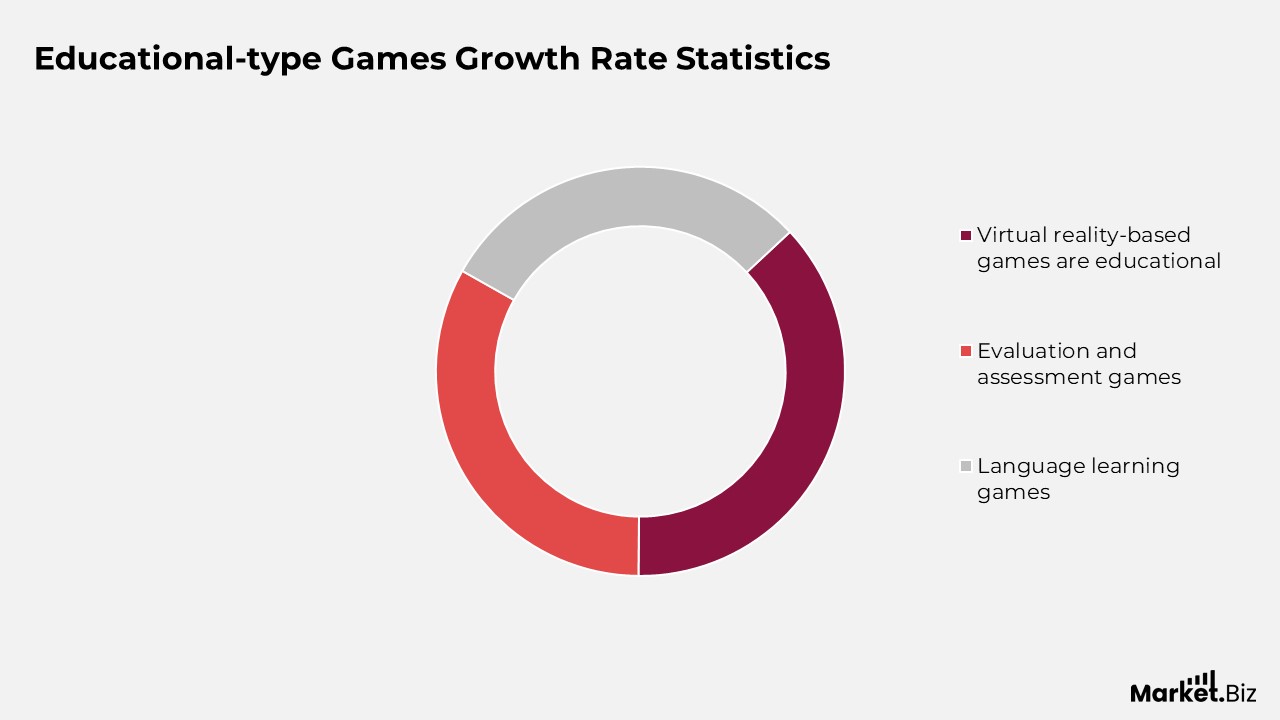
- Notably, educational games that incorporate virtual reality are leading the way, exhibiting an impressive growth rate of 51.9%, indicative of the increasing incorporation of immersive technologies in the education sector.
- Moreover, evaluation and assessment games are experiencing a significant rise, with a growth rate of 46.2%, highlighting the essential function of effective assessment tools in the educational process.
- In addition, language learning games also have a substantial effect, showcasing a growth rate of 41.8%, which highlights the growing demand for interactive approaches to language learning.
Game-Based Learning in Education Statistics
- It is encouraging to observe that 74% of educators are adopting digital game-based learning to enhance their lessons, reflecting an increasing acknowledgement of its educational significance.
- The statistic that 93% of class time is effectively engaged during game-based learning sessions underscores the level of engagement and concentration it can promote among students.
- Furthermore, the participation of 52% of young learners in educational games illustrates the attractiveness of this method to the upcoming generation of students, particularly given that 91% of school-aged children are already acquainted with video games.
- These figures collectively highlight the importance and potential of game-based learning in contemporary classrooms.
- Nevertheless, challenges remain, as only 46% of children have access to the essential technology required for video game-based learning, which presents obstacles to its broader adoption.
- Despite this, a notable 54% of U.S. educators firmly believe that game-based learning is essential, with an additional 38% concurring on its importance in the educational setting.
- This widespread agreement emphasises the recognised value of this method in improving the learning experience.
- Interestingly, only a minor percentage, 8%, of U.S. teachers express uncertainty regarding its necessity, suggesting a relatively low degree of scepticism.
Digital Game Learning Benefit Statistics
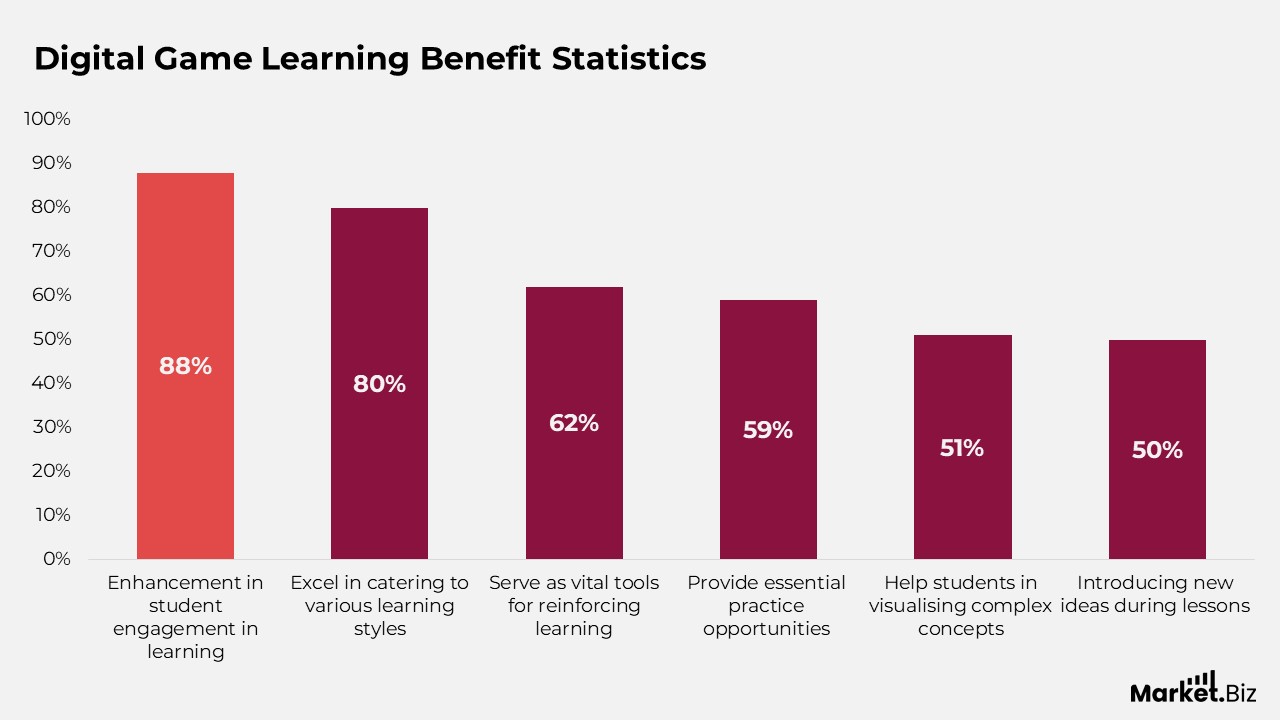
- According to survey findings, a significant 88% of educators who utilise digital games in their classrooms have reported an enhancement in student engagement in learning, which is an essential factor in enriching the educational experience.
- These games also excel in catering to various learning styles, with 80% of these teachers recognising their effectiveness in addressing diverse student requirements.
- Furthermore, they serve as vital tools for reinforcing learning, as noted by 62% of educators, and provide essential practice opportunities for 59% of students.
- Additionally, digital games enable teachers to customise instruction, making it more personalised and effective, a feature appreciated by 59% of educators.
- These games also help students in visualising complex concepts (51%) and in introducing new ideas during lessons (50%).
Recent Developments
- In 2023, Kahoot!, a prominent platform for game-based learning, purchased Clever, an educational technology firm based in the U.S., for $500 million.
- In late 2023, Duolingo introduced additional interactive game-based features, which included new reward systems and social challenges, aimed at enhancing user engagement in language learning.
- In 2023, Dreamscape Learn, a company that focuses on immersive, game-based education, secured $30 million in Series B funding.
- In early 2024, Minecraft Education Edition unveiled new learning modules that concentrate on STEM, history, and language arts.
Game-Based Learning Future Predictions
- The worldwide GBL market is anticipated to attain nearly $32.6 billion by 2027, with a Compound Annual Growth Rate (CAGR) estimated between 19% and 22%.
- By 2028, game-based learning (GBL) is expected to undergo substantial expansion, fueled by the incorporation of immersive technologies (AR/VR), AI-driven personalization, a heightened application in corporate training, and the ongoing growth of mobile learning platforms. The market size is forecasted to reach around $42-50 billion by 2028-2029.
Conclusion
In conclusion, game-based learning has become a widely acknowledged and effective approach within the offering engaging educational sector, and tailored learning experiences for various age groups and educational stages. The ongoing expansion of the market and the strong preferences exhibited by learners for specific methods highlight its increasing importance.
However, challenges such as unequal access to technology and differing levels of acceptance among educators persist. In spite of these challenges, the incorporation of emerging technologies, such as virtual and augmented reality, presents opportunities for even more immersive educational experiences. Game-based learning represents an exciting new frontier in fostering engagement, education, and enhancing learning outcomes, with a bright future ahead.
FAQ’s
It’s an exceptional tool for enhancing test scores. A well-structured, curriculum-aligned game-based learning approach can elevate test scores by making the learning process enjoyable and engaging. GBL promotes improved concentration, enhanced memory, and refined problem-solving abilities – all crucial components for achieving success in tests.
Educational games can significantly enhance knowledge retention by making the learning experience more dynamic and interactive. Players are more inclined to remember the information they acquire through gameplay compared to information they have merely read or heard.
Previous imaging research utilising both cross-sectional and longitudinal techniques has demonstrated that engaging in video games influences brain structure by altering grey matter [31,32,33], white matter [34,35], and functional connectivity [36,37,38,39].

