









Introduction
Image Sensors Statistics: An image sensor serves as a fundamental component in digital imaging devices. It is found in devices such as cameras and smartphones, where it plays a crucial role in converting incoming light into electrical signals for the purpose of image creation.
The sensor is made up of an array of light-sensitive pixels, with each pixel responsible for detecting light intensity and transforming it into an electrical charge. There are two primary types of sensors utilised: CCD (Charge-Coupled Device) and CMOS (Complementary Metal-Oxide-Semiconductor).
CCD sensors utilise a sophisticated capacitor structure for the transfer of charge and are recognised for producing high-quality, low-noise images. This makes them particularly well-suited for professional photography and astronomical applications. On the other hand, CMOS sensors, which are widely used in contemporary devices, incorporate simpler pixel designs, with each pixel containing its own amplifier and converter.
Although they were initially regarded as inferior in image quality compared to CCDs, advancements in CMOS technology have significantly enhanced their quality, cost-effectiveness, and energy efficiency. Image sensors play a crucial role in capturing and converting our visual environment into digital images, influencing a wide range of applications from casual smartphone photography to professional imaging systems.
Editor’s Choice
- In the early 1990s, solid-state image sensors were priced between $20 and $25, representing a minimal segment of the semiconductor market.
- As of 2022, the image sensor market was valued at $26.1 billion.
- The first image sensor was a MOS (metal-oxide-semiconductor) device created by Bell Labs in 1969.
- By 2032, the image sensor market is projected to experience significant growth, with revenues expected to soar to USD 55.8 billion, reflecting the ongoing expansion and innovation within the industry.
- 2D image sensors lead the market with a substantial 65% share.
- C-Level positions, which include CEOs, CFOs, and CTOs, account for a 32% market share, signifying the highest level of corporate leadership.
- Galaxy Core, Inc. and Infineon Technologies AG are at the forefront, each holding a significant 15% share of the market.
- In 2007, these sensors represented a modest 4% of the market share.
General Image Sensors Statistics
- In the early 1990s, solid-state image sensors were priced between $20 and $25, representing a minimal segment of the semiconductor market.
- The Apple QuickTake 100, the first commercially successful digital camera, was launched in 1994.
- It featured a resolution of 640×480 and utilised a CCD (charge-coupled device) image sensor.
- As of 2022, the image sensor market was valued at $26.1 billion.
- By 2032, the market had seen considerable growth, reaching $55.8 billion.
- 2D image sensors hold a dominant position in the market, capturing an impressive 65% share.
- Manager-level positions represent the largest segment of the market, making up a significant 45%.
- In North America, these sensors account for a notable 22.5%, highlighting their essential role across various industries, including technology and automotive, in this region.
- The Asia-Pacific (APAC) region has emerged as a leading player, holding the largest market share at 41%.
- The following years experienced even more pronounced growth, with a market share of 5.9% in 2011 and 7.1% in 2012.
- The first image sensor was a MOS (metal-oxide-semiconductor) device created by Bell Labs in 1969.
Image Sensors Market Revenue Statistics
- In 2022, the market generated an estimated USD 26.1 billion in revenue, which is expected to rise to USD 28.2 billion in 2023.
- The upward trend is set to continue, with projected revenues of USD 30.2 billion in 2024, USD 33.3 billion in 2025, and USD 36.3 billion in 2026.
- As technological advancements and the growing demand for image sensors persist, the market is anticipated to achieve revenues of USD 38.9 billion in 2027, USD 40.8 billion in 2028, and USD 44.2 billion in 2029.
- Looking further into the future, the market is forecasted to reach USD 47.3 billion in 2030 and USD 51.1 billion in 2031.
- By 2032, the image sensor market is projected to experience significant growth, with revenues expected to soar to USD 55.8 billion, reflecting the ongoing expansion and innovation within the industry.
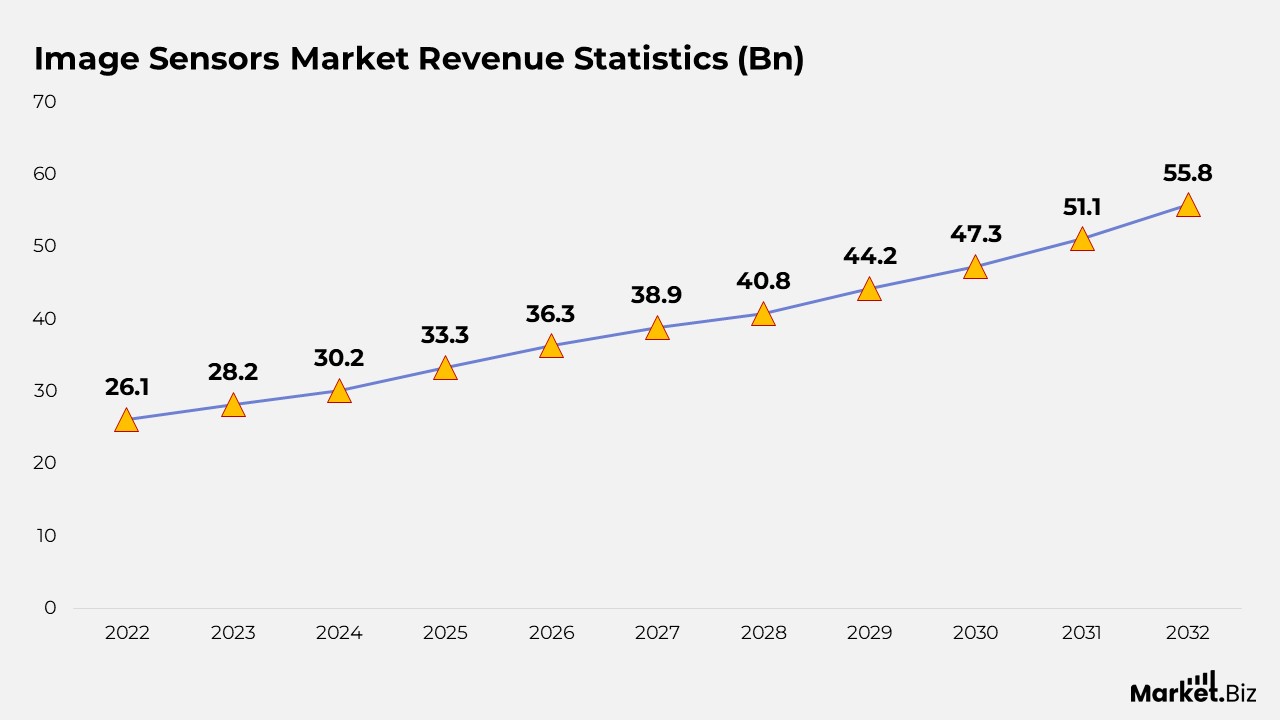
Image Sensor Market Type Statistics
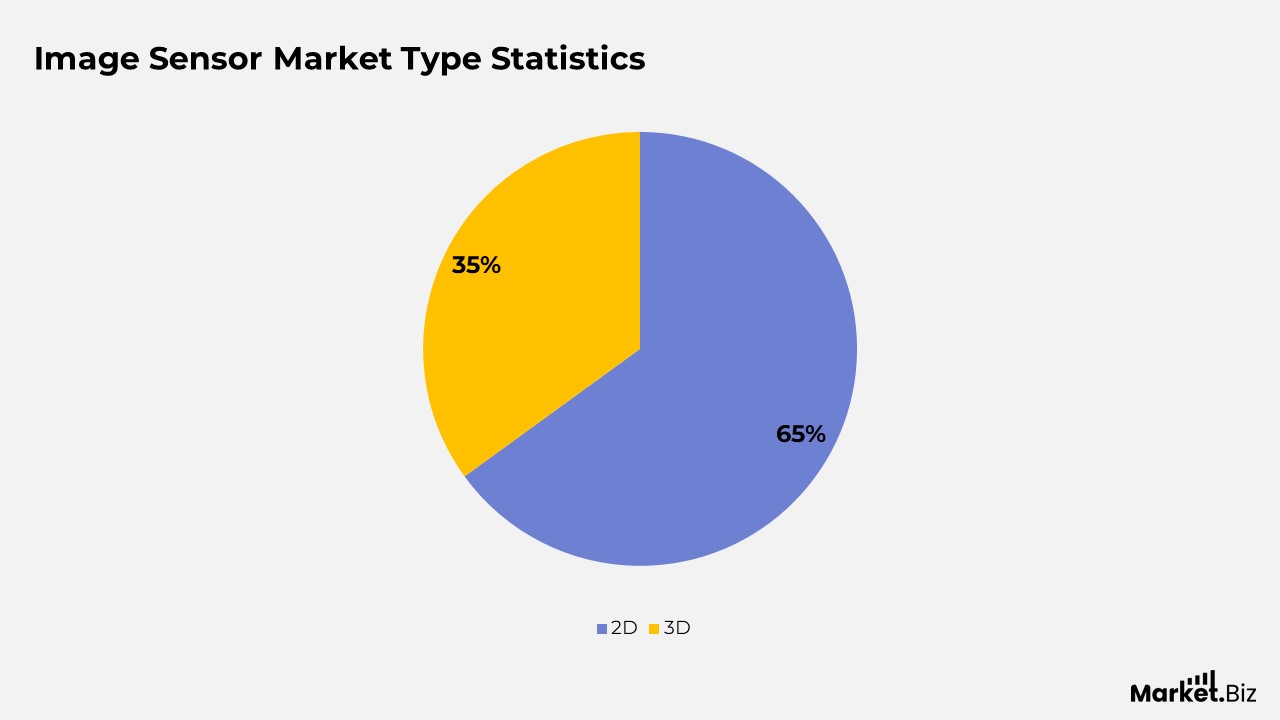
- 2D image sensors lead the market with a substantial 65% share.
- 3D image sensors, while representing a smaller portion, maintain a notable 35% market share.
- 2D sensors are proficient in accurately capturing two-dimensional images and are extensively utilized across multiple applications.
- 3D sensors, valued for their capability to capture depth information, are employed in facial recognition, augmented reality, and 3D scanning, thereby enhancing their market presence.
Designation Statistics By Image Sensors
- Manager-level positions represent the most significant portion of the market, comprising a notable 45%.
- C-Level positions, which include CEOs, CFOs, and CTOs, account for a 32% market share, signifying the highest level of corporate leadership.
- Director-level positions, which manage particular departments or functions, play a crucial role with a 23% market share.
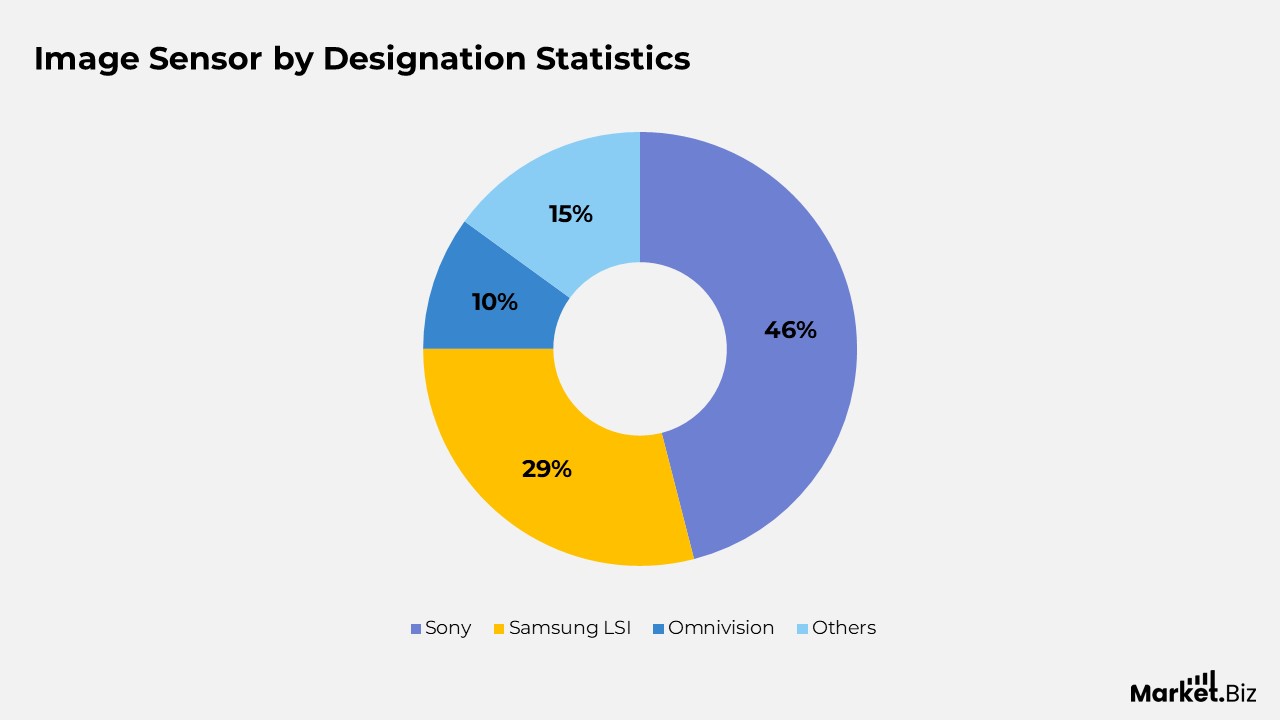
Image Sensor by Regional Statistics
- In North America, these sensors represent a notable 22.5%. This highlights their essential function across various sectors, such as technology and automotive, within this region.
- Europe follows closely behind, holding a 24% market share, which illustrates the significant presence of image sensors in a wide range of applications throughout the continent.
- The Asia-Pacific (APAC) region stands out as a leading player, possessing the largest share at 41%.
- The substantial market share of APAC can be linked to its crucial involvement in the global electronics and smartphone manufacturing sectors, where image sensors play a vital role in improving device performance and camera functionalities.
- In contrast, the contributions from Latin America and the Middle East & Africa (MEA) regions to the global image sensor market are 6.5% and 6%, respectively.
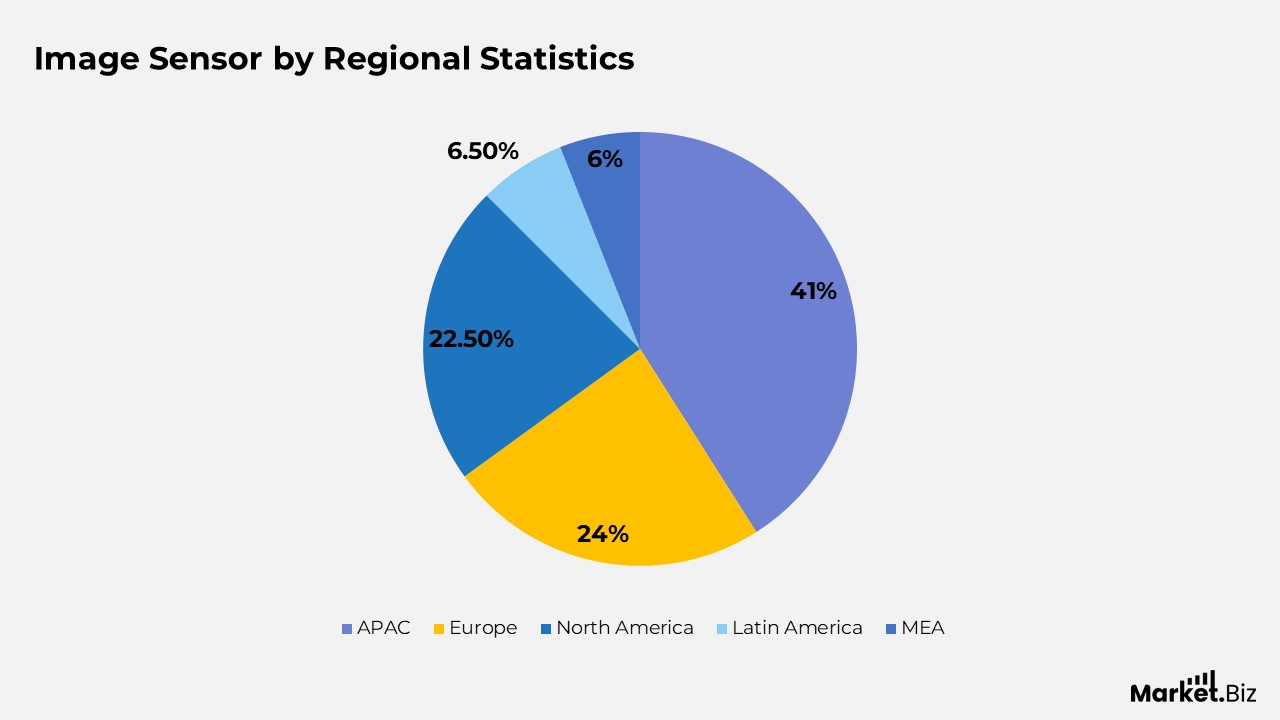
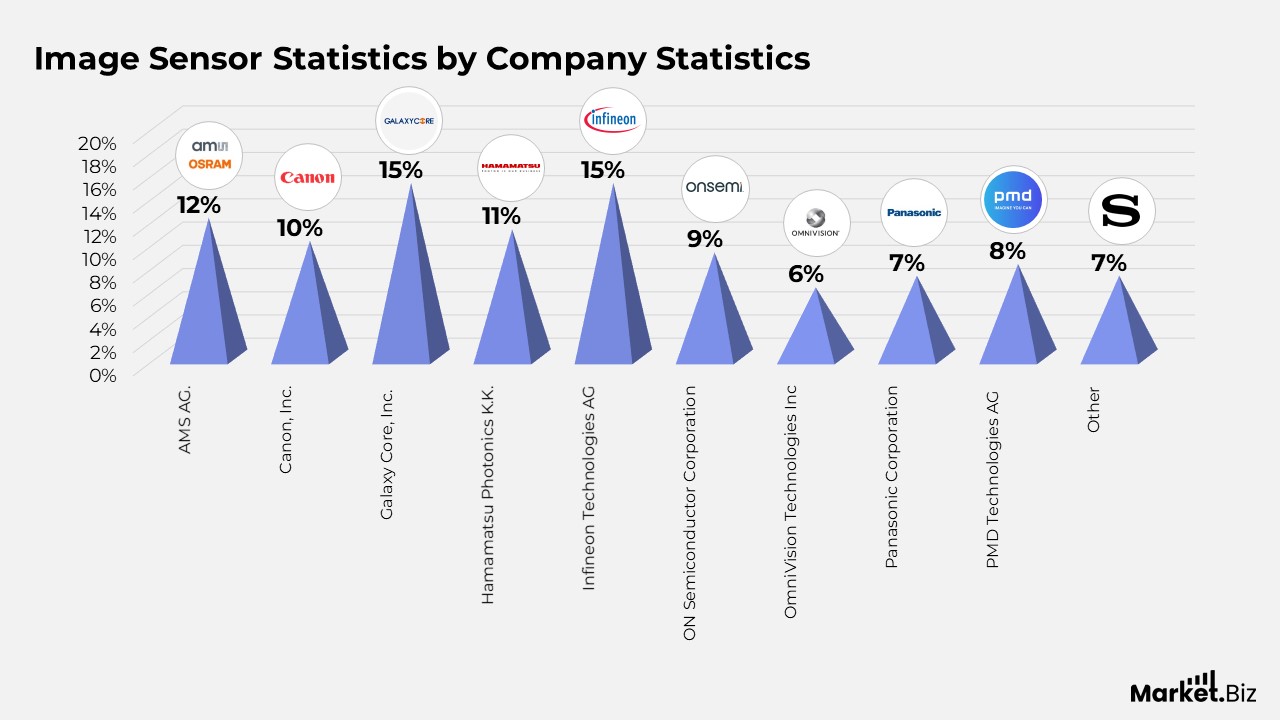
Image Sensor Statistics by Company Statistics
- Galaxy Core, Inc. and Infineon Technologies AG are at the forefront, each holding a significant 15% share of the market.
- These firms are celebrated for their innovative approaches and state-of-the-art technology, playing a vital role in the progress of image sensor technology.
- Hamamatsu Photonics K.K. and AMS AG follow closely behind, with market shares of 12% and 11%, respectively.
- Their influence in the sector is considerable, as their image sensors are utilized in a wide range of applications, from smartphones to medical devices.
- Canon, Inc. and ON Semiconductor Corporation also have important positions, each possessing a market share of 10% and 9%, respectively.
- These companies are esteemed for their quality and dependability, making them the preferred options for numerous manufacturers.
- Furthermore, PMD Technologies AG and Panasonic Corporation account for 8% and 7% of the market shares, respectively, while OmniVision Technologies Inc.
- Other Key Players together represent 13% of the market.
Smartphone Image Sensor Statistics
- Sony, a well-known leader in the industry, commands a notable presence in this sector with a considerable 46% market share.
- Samsung LSI, another key participant in the market, possesses a commendable 29% of the market share.
- Omnivision, although holding a smaller share at 10%, continues to be an essential contributor to the smartphone image sensor domain.
- Lastly, the remaining 15% is made up of several other manufacturers, each providing distinct products.
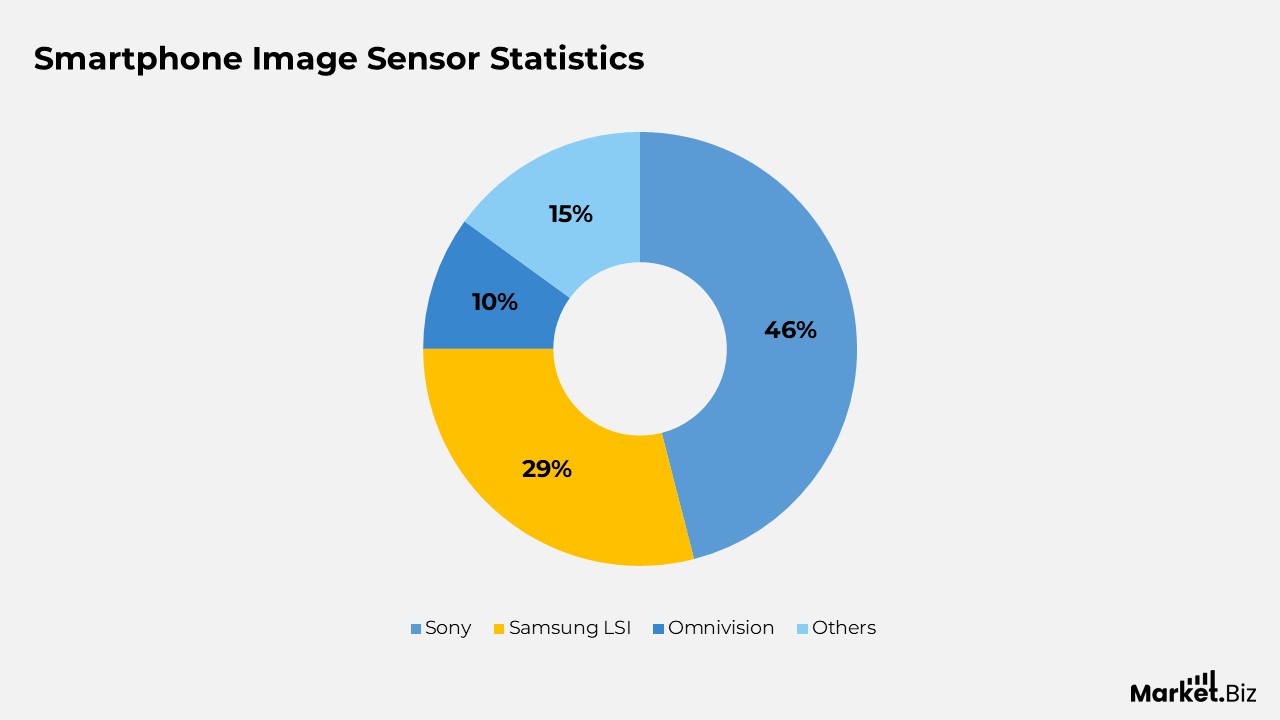
Image CMOS Sensors Statistics
- In 2007, these sensors represented a modest 4% of the market share.
- However, this figure gradually rose, achieving 4.5% in both 2008 and 2009.
- The following years saw more significant growth, with a market share of 5.9% in 2011 and 7.1% in 2012, as CMOS image sensors became increasingly essential to the consumer electronics and imaging industries.
- From 2013 onward, the growth rate accelerated, with sales revenue consistently increasing.
- By 2021, CMOS image sensors held a notable 22.8% market share, underscoring their significance in applications such as smartphones, digital cameras, and automotive systems.
- Looking forward, the projection for 2025 anticipates an impressive 33.6% market share, indicating the ongoing expansion of CMOS image sensors and their growing influence in the evolution of imaging technology.
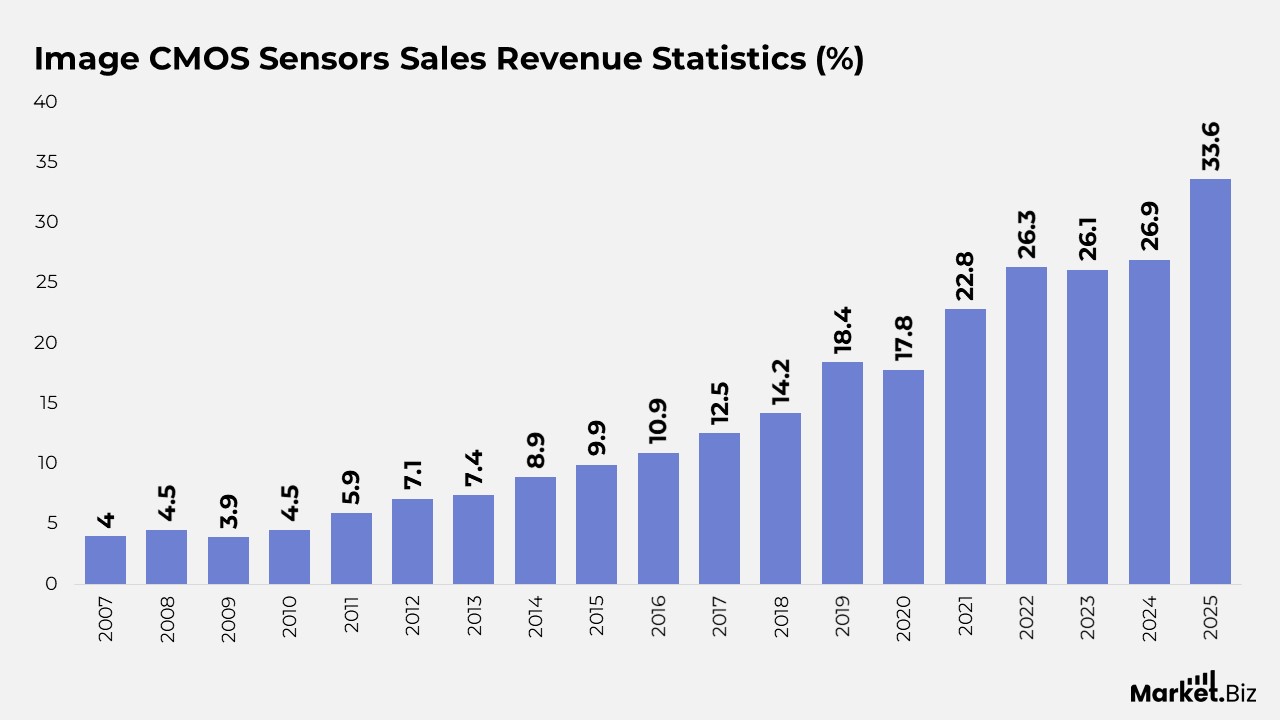
Image CCD Sensors Statistics
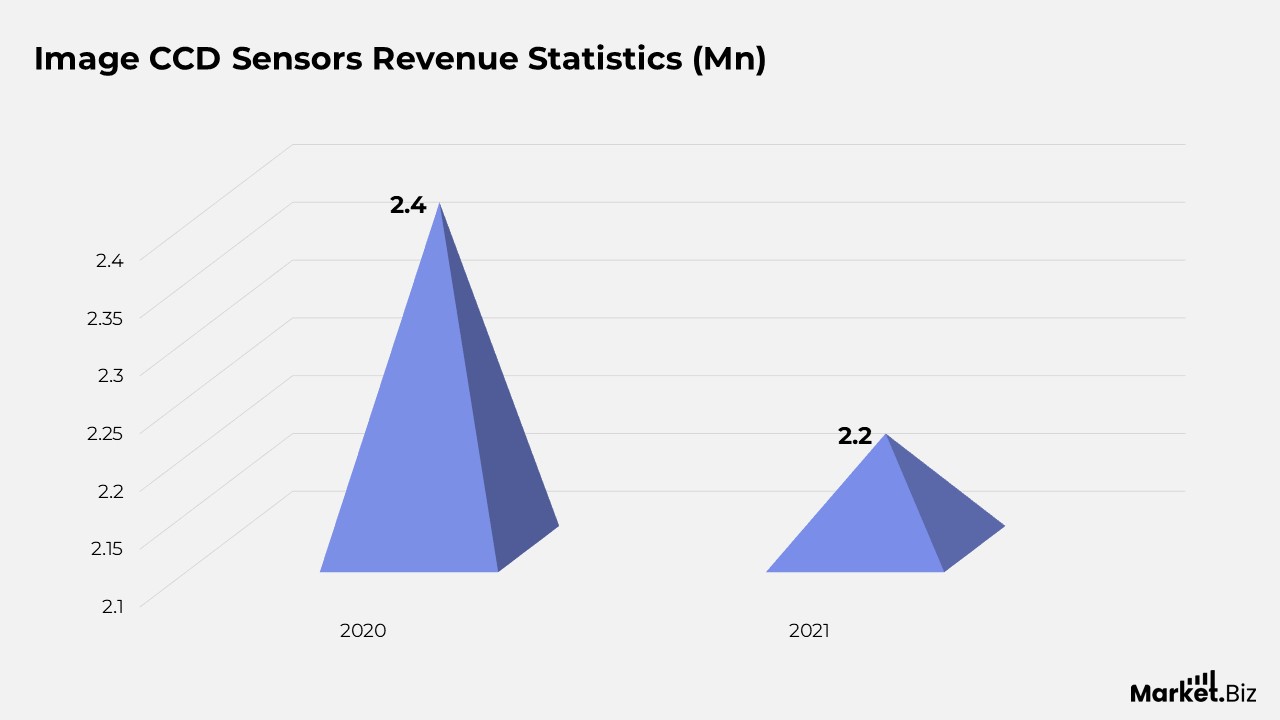
- In 2020, the market achieved a total revenue of USD 2.38 million, reflecting a robust performance.
- However, in 2021, there was a minor decrease in revenue, with the market generating USD 2.16 million.
- In 2023, the market’s revenue was recorded at USD 0.77 billion, signifying a foundation for its growth.
- Over the next five years, the market is expected to undergo significant expansion, with revenue projected to attain USD 1.42 billion by 2028.
Recent Developments
- At the beginning of 2023, Sony purchased Altair Semiconductor, a significant contributor in the field of IoT chipsets, for a sum of $200 million.
- In the middle of 2023, ON Semiconductor finalised its acquisition of Fairchild Imaging, a company specialising in high-performance CMOS image sensors, for $400 million.
- In 2024, Sony launched the IMX800, recognised as the world’s first 1-inch mobile camera sensor, specifically engineered for premium smartphones.
- OmniVision, a prominent entity in image sensor technology, secured $150 million in 2023 to support its research and development initiatives.
Image Sensors Future Predictions
- The worldwide image sensor market is anticipated to experience significant growth, with projections differing but typically estimating values exceeding $29 billion by the late 2020s or early 2030s, with CMOS sensors at the forefront.
- The global image sensor market is expected to attain a value of roughly $38.6 billion by 2027, expanding at a compound annual growth rate (CAGR) of about 8.1% from 2022.
Conclusion
In summary, image sensors serve as the essential elements that support the realm of digital imaging, enabling the conversion of light into electrical signals for the production of digital images. They are categorised into two main types, CCD and CMOS, each possessing distinct advantages and disadvantages, suitable for a range of applications, from professional photography to casual smartphone photos.
The ongoing progress in image sensor technology has resulted in enhanced image quality, greater cost-effectiveness, and reduced power consumption. This evolution has made digital imaging more accessible and adaptable across various sectors and everyday life, ultimately influencing how we capture and engage with the visual environment surrounding us.
FAQ’s
Sensors are fundamental in contemporary industrial settings. They are utilised to identify physical parameters such as temperature, distance, pressure, level, or motion and transform this data into quantifiable signals.
In a time where reliability and speed are paramount, the monitoring of conditions through sensors has emerged as a vital resource for industries. By consistently observing machine performance, sensors aid in averting failures, lowering expenses, and enhancing safety.
Organisations that utilise sensors are increasingly interconnected, secure, and adaptable. The principal benefits of sensors encompass heightened sensitivity in data acquisition, nearly lossless transmission, and ongoing, real-time analysis.

