









Introduction
IP Camera Statistics: An IP camera, also known as an Internet Protocol camera, is a digital video surveillance device that transmits data via a network instead of relying on traditional coaxial cables.
It provides essential features such as high-resolution imaging (ranging from HD to 4K), Power over Ethernet (PoE) capabilities, and sophisticated functionalities including motion detection and remote access through web browsers and mobile applications.
The available types encompass fixed, PTZ (Pan-Tilt-Zoom), bullet, dome, and wireless cameras, each designed to meet various monitoring requirements. IP cameras are extensively utilized in commercial security, home monitoring, traffic surveillance, and healthcare, representing a significant leap in surveillance technology that improves flexibility and integration.
Editor’s Choice
- In 2011, the analog camera sector was the leader, generating USD 7.4 billion in revenue, while the IP camera sector produced USD 4.3 billion.
- Beginning with a market size of USD 26.6 billion in 2016, it grew to USD 30.2 billion in 2017.
- The worldwide revenue generated by the IP camera market reached USD 12.7 billion in 2023.
- In 2023, the overall market revenue is projected to be USD 12.7 billion, with hardware contributing USD 9.96 billion and services accounting for USD 2.74 billion.
- Starting from a modest total of 0.1 million units in 2012, shipments experienced a consistent increase to 0.4 million units in 2013.
General IP Camera Statistics
- The worldwide revenue generated by the IP camera market reached USD 12.7 billion in 2023.
- It is anticipated that the global IP camera market revenue will grow to USD 42.7 billion by 2033, with the hardware segment increasing to USD 33.48 billion and services amounting to USD 9.22 billion.
- In 2016, the IP camera market was primarily led by several major players, with Arlo at the forefront, securing a significant 27% of the market share.
- The projected revenue for the global market of IP video surveillance and Video Surveillance as a Service (VSaaS) is expected to reach USD 88.03 billion by 2030.
- In 2011, the analog camera market was the leader, generating USD 7.4 billion in revenue, while the IP camera market produced USD 4.3 billion.
- As of 2023, the global scenario of online threats aimed at IP cameras showed considerable variation among different brands.
- Hikvision cameras were the most targeted, accounting for 57.93% of all online threats, suggesting a significant level of vulnerability or market penetration that rendered them frequent targets.
- The United States has enacted specific regulations, such as the IoT Cybersecurity Improvement Act of 2020, which oversees the federal acquisition and utilization of IoT devices, including IP cameras, along with the recent ECCN 5A001.j, which regulates IP network communications surveillance systems.
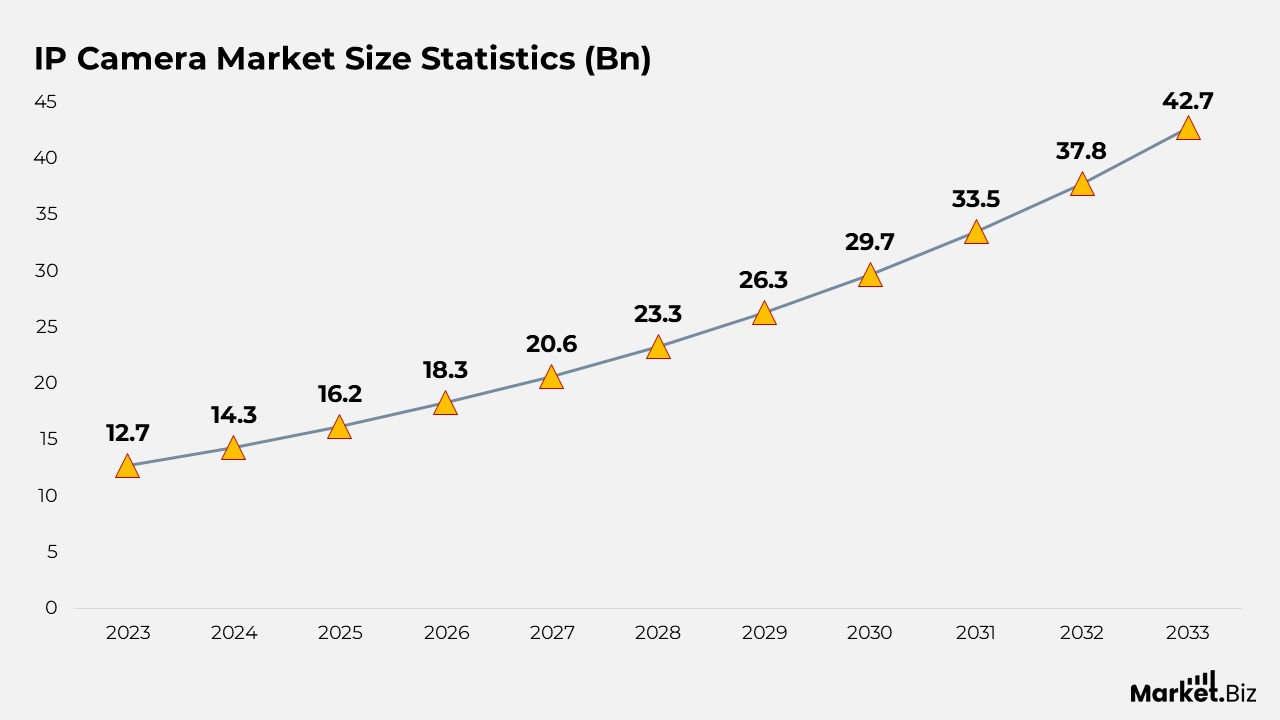
IP Camera Market Size Statistics
- The global IP camera market is projected to experience substantial growth throughout the forecast period, with a compound annual growth rate (CAGR) of 12.9%.
- In 2023, the anticipated market revenue is expected to reach USD 12.7 billion, and this amount is likely to increase consistently in the following years.
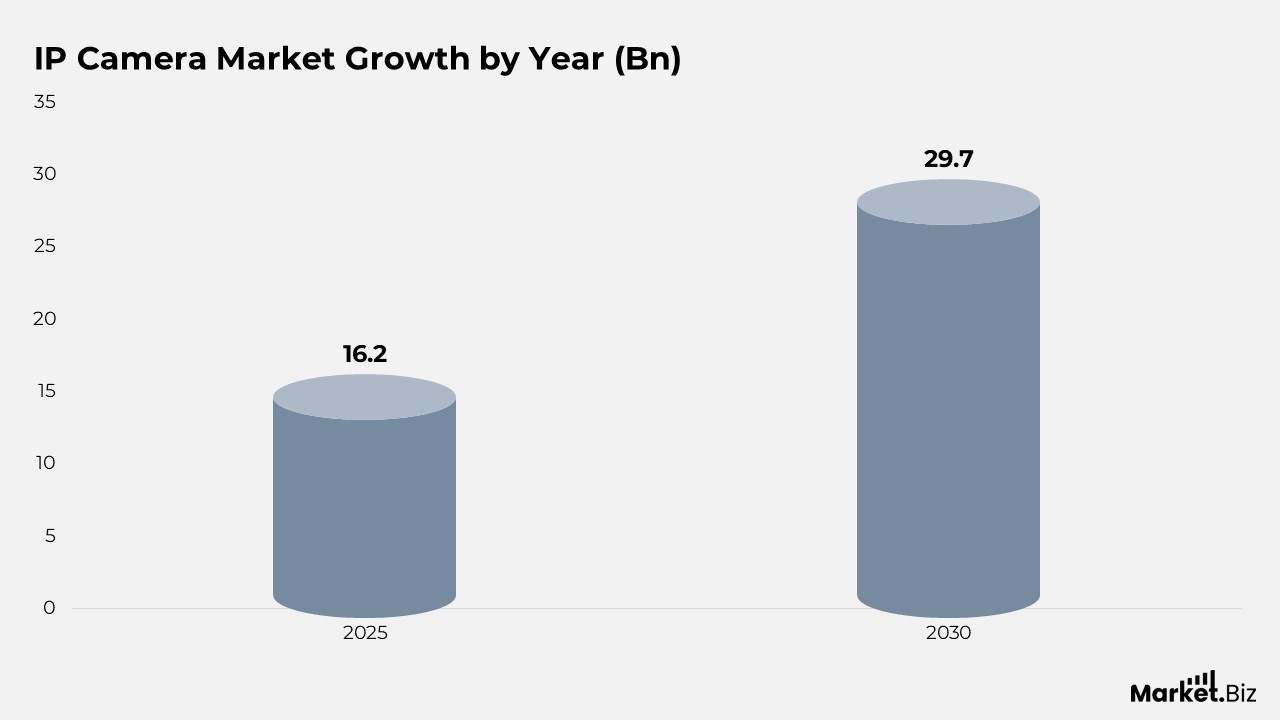
- By 2024, the market is predicted to generate USD 14.3 billion, which will rise to USD 16.2 billion in 2025.
- The upward trajectory continues with a forecasted revenue of USD 18.3 billion in 2026, further escalating to USD 20.6 billion in 2027.
- In 2028, the market is expected to grow to USD 23.3 billion, followed by an increase to USD 26.3 billion in 2029.
- The momentum is anticipated to remain strong, with the market size projected to reach USD 29.7 billion in 2030 and USD 33.5 billion in 2031.
- By 2032, the market is expected to generate USD 37.8 billion, and by 2033, it is forecasted to achieve USD 42.7 billion.
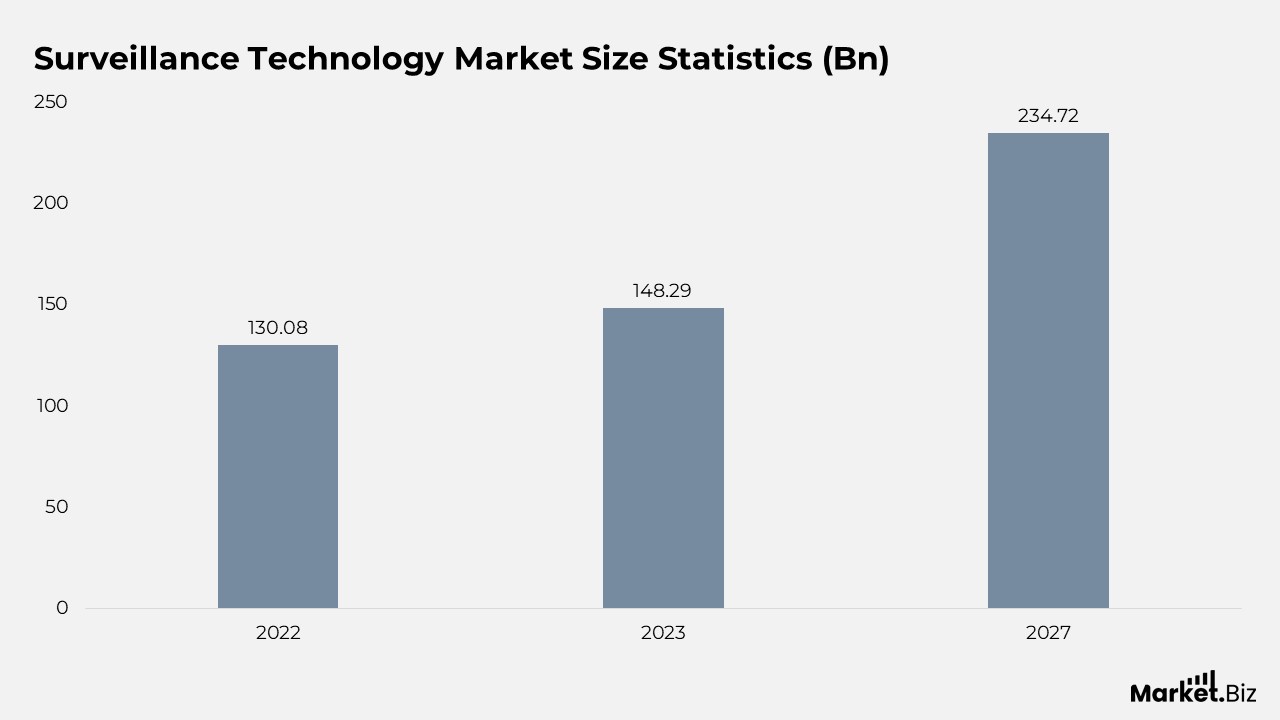
Surveillance Technology Market Size Statistics
- The worldwide surveillance technology market is undergoing significant growth, as evidenced by its revenue increase from USD 130.08 billion in 2022 to USD 148.29 billion in 2023.
- This upward trend is anticipated to persist, with projections indicating that the market will attain USD 234.72 billion by 2027.
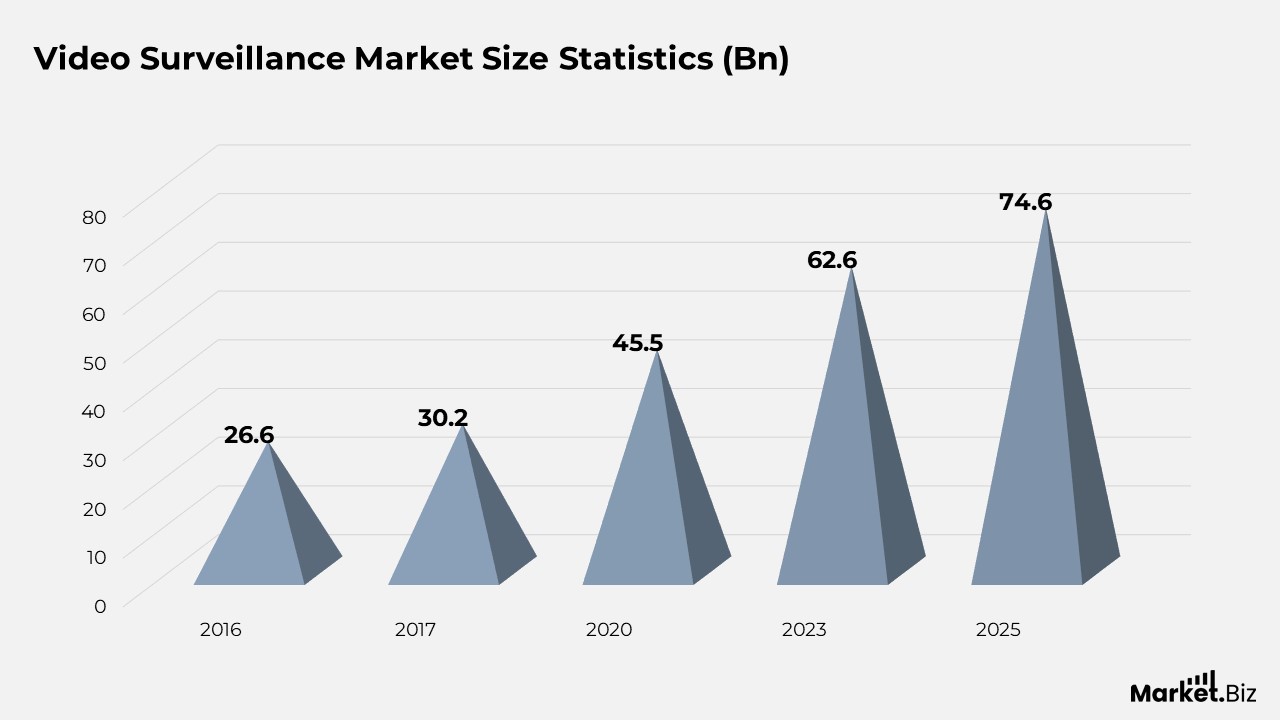
Video Surveillance Market Size Statistics
- Beginning with a market size of USD 26.6 billion in 2016, it grew to USD 30.2 billion in 2017.
- After several years, the revenue saw a significant increase, reaching USD 45.5 billion by 2020.
- The growth trend persisted, with the market attaining USD 62.6 billion in 2023, and it is anticipated to further increase to USD 74.6 billion by 2025.
IP Camera Market by Revenue Statistics
- In 2023, the overall market revenue is projected to be USD 12.7 billion, with hardware contributing USD 9.96 billion and services accounting for USD 2.74 billion.
- The growth trend is anticipated to persist. Total revenue is expected to rise to USD 14.3 billion in 2024, with hardware making up USD 11.21 billion and services contributing USD 3.09 billion.
- By 2025, revenue is forecasted to increase further to USD 16.2 billion, with hardware representing USD 12.70 billion and services USD 3.50 billion.
- The market is predicted to expand to USD 18.3 billion in 2026, USD 20.6 billion in 2027, and USD 23.3 billion in 2028, with corresponding growth in both hardware and service sectors.
- By 2029, the market size is anticipated to reach USD 26.3 billion, comprising USD 20.62 billion from hardware and USD 5.68 billion from services.
- The upward trend is set to continue, with projections indicating the market will grow to USD 29.7 billion in 2030 and further to USD 33.5 billion in 2031.
- In the concluding years of the forecast, the market is expected to reach USD 37.8 billion in 2032 and peak at USD 42.7 billion in 2033, with the hardware segment increasing to USD 33.48 billion and services reaching USD 9.22 billion.
Distribution Statistics of the IP Camera Market
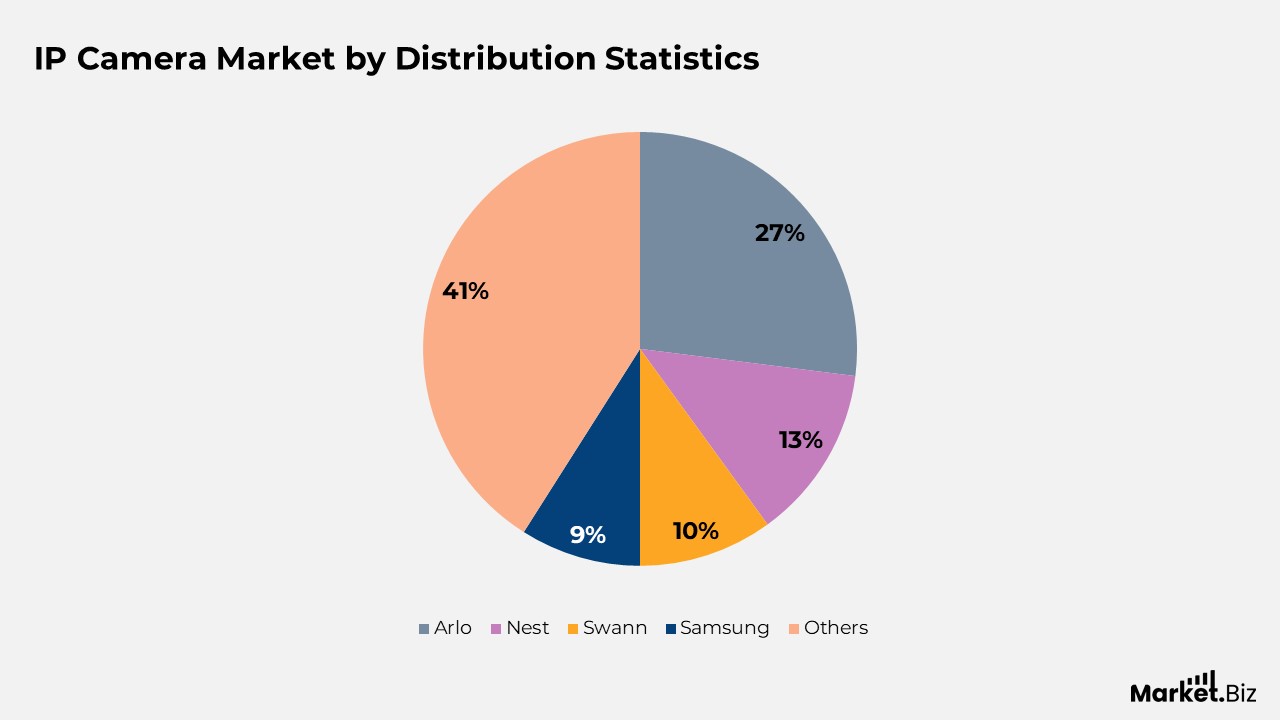
- In 2016, the worldwide market for Internet Protocol (IP) cameras was primarily controlled by a few major companies. Arlo was at the forefront, securing a considerable 27% of the market share.
- Nest came next, maintaining a strong position with 13% of the market.
- Swann and Samsung also possessed significant shares, representing 10% and 9%, respectively.
- The remaining 41% of the market was allocated among numerous other firms, reflecting a competitive and fragmented market environment.
IP Camera Market in the US Statistics
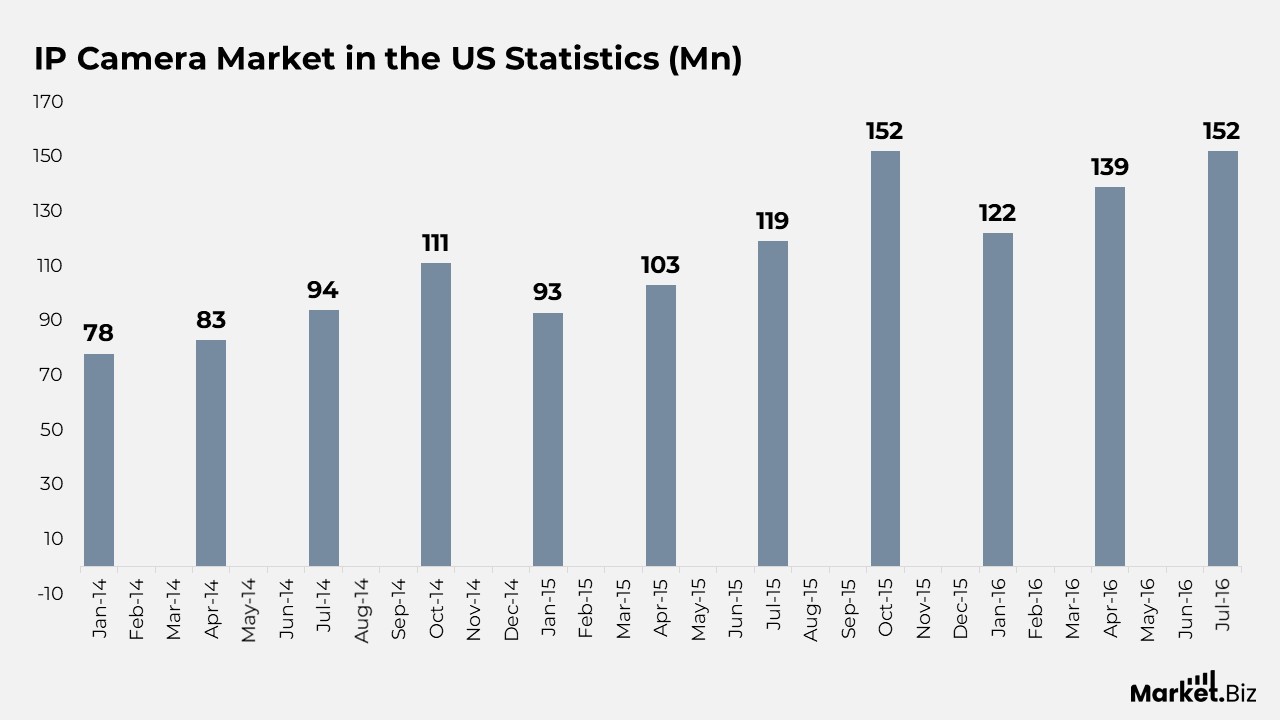
- Beginning in the first quarter of 2014, the market was assessed at USD 78 million, demonstrating a steady rise to USD 83 million by the second quarter and USD 94 million in the third quarter.
- By the end of 2014, the market size reached its peak at USD 111 million in the fourth quarter, reflecting a strong growth trajectory.
- In 2015, the market size initially fell to USD 93 million in the first quarter but subsequently rebounded and continued to expand throughout the following quarters, achieving USD 103 million in the second quarter, USD 119 million in the third quarter, and significantly increasing to USD 152 million in the fourth quarter.
- The upward trend continued into 2016, with the market size commencing at USD 122 million in the first quarter, ascending to USD 139 million in the second quarter, and stabilising at USD 152 million in the third quarter.
Analog and IP Camera Market Statistics
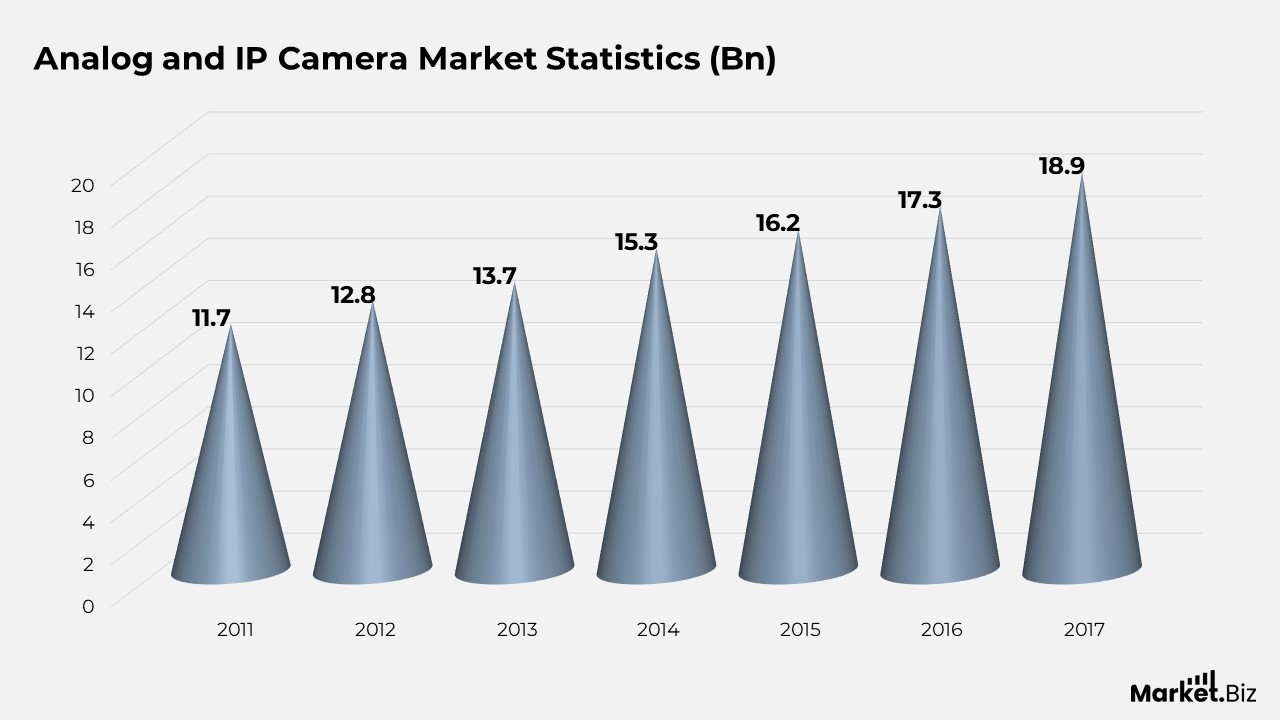
- In 2011, the analog camera sector was the leader, generating USD 7.4 billion in revenue, while the IP camera sector produced USD 4.3 billion.
- However, as technology progressed, a steady decline in the analog camera market was noted. Revenues fell from USD 7.5 billion in 2012 to USD 4.4 billion by 2017.
- In contrast, the IP camera segment saw significant growth during this timeframe. Beginning at USD 5.3 billion in 2012, revenue for IP cameras rose to USD 6.6 billion in 2013, and by 2014, it had surpassed the analog market with a revenue of USD 9 billion.
- The upward trend persisted, with the IP camera market achieving USD 10.7 billion in 2015, USD 12.4 billion in 2016, and reaching a peak of USD 14.5 billion in 2017.
IP Video Surveillance Revenue Statistics
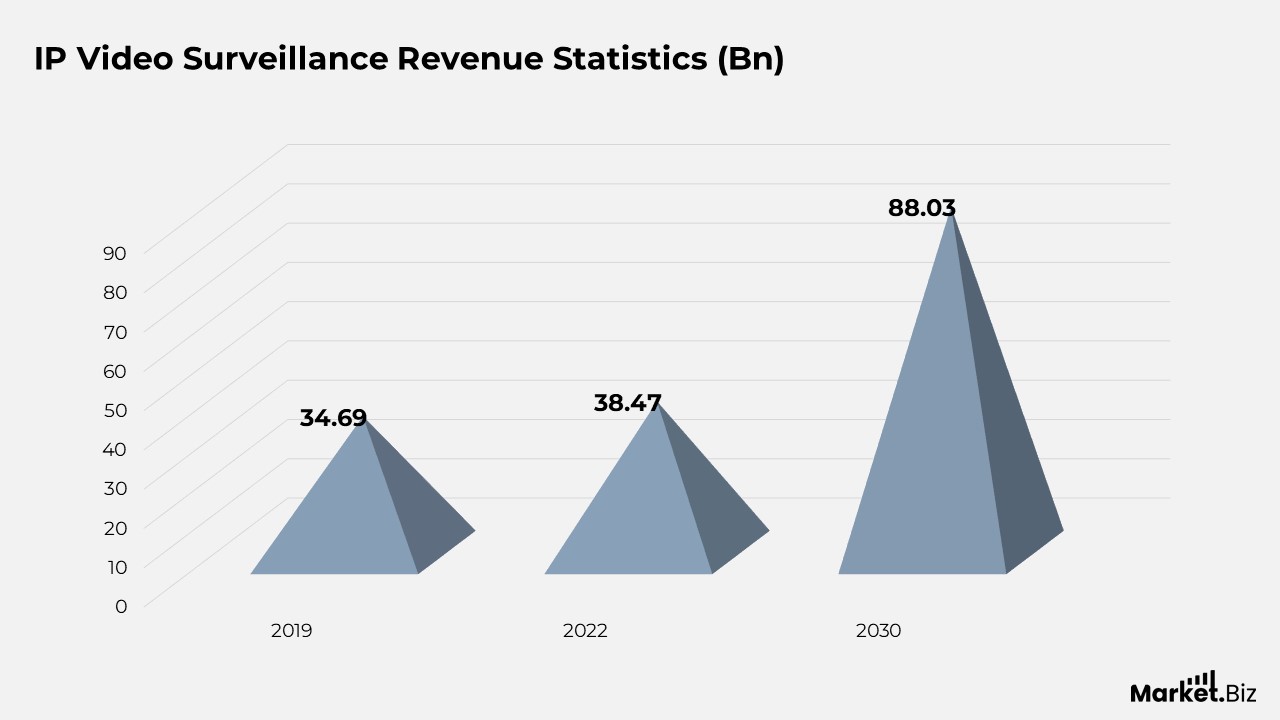
- In 2019, the market was assessed at USD 34.69 billion, demonstrating the robust foundation and growth potential of the sector.
- By 2022, this figure is anticipated to rise to USD 38.47 billion, signifying consistent growth in the face of advancing technology and heightened market acceptance.
- The market is forecasted to undergo a substantial increase, with the valuation expected to exceed USD 88.03 billion by 2030.
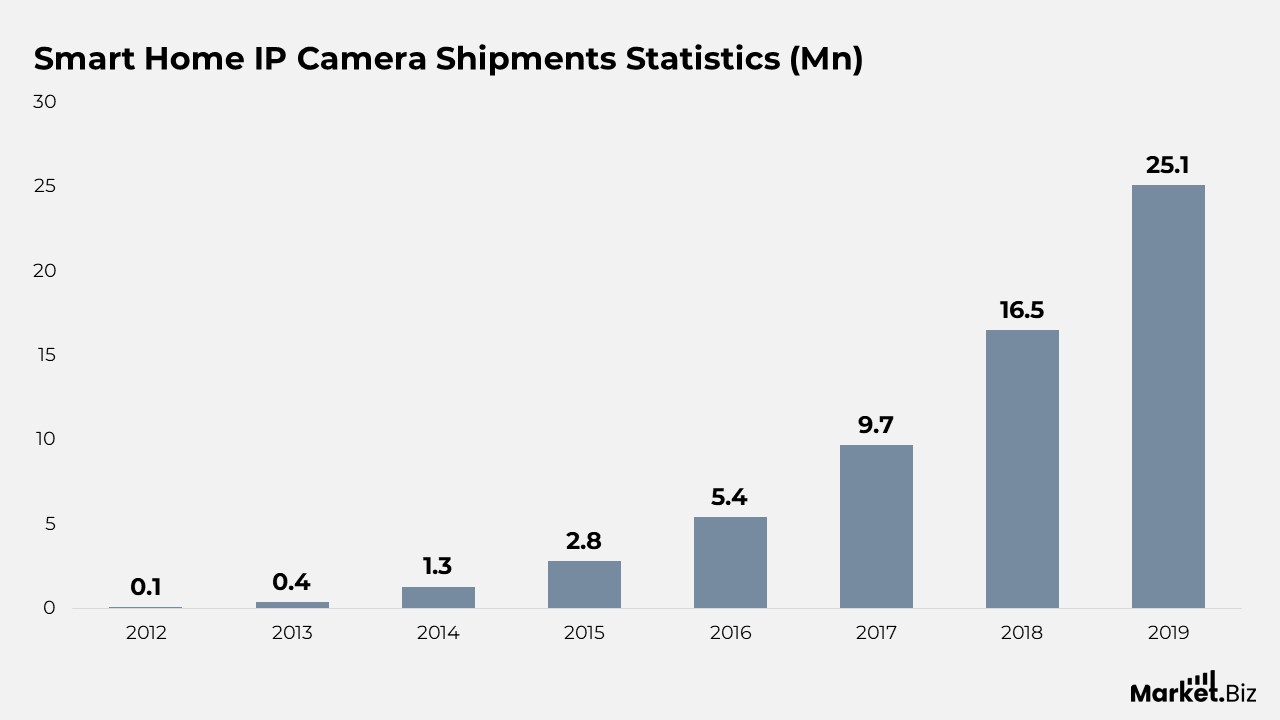
Smart Home IP Camera Shipments Statistics
- Starting from a modest total of 0.1 million units in 2012, shipments experienced a consistent increase to 0.4 million units in 2013.
- The growth rate significantly picked up in the subsequent years, with shipments rising to 1.3 million units in 2014 and then doubling to 2.8 million units by 2015.
- The upward trend continued, with shipments more than doubling once more, achieving a total of 5.4 million units in 2016.
- By the year 2017, the volume had almost doubled again, achieving a total of 9.7 million units.
- The trend of rapid growth continued, with shipments soaring to 16.5 million units in 2018 and further climbing to 25.1 million units in 2019.
IP Camera Recent Development
- In 2023, Motorola Solutions broadened its video security offerings by purchasing Ava Security, a cloud-native video surveillance firm, for $400 million.
- In late 2023, Bosch Security Systems unveiled a new line of IP cameras featuring AI and edge computing technologies.
- In early 2024, Hikvision, a worldwide leader in IP surveillance cameras, introduced its latest collection of AI-enhanced IP cameras.
- In early 2024, Verkada, a provider of cloud-based security cameras, secured $205 million in Series D funding to enhance its product range.
IP Camera Future Predictions
- The worldwide market for IP cameras is experiencing rapid growth, with a projected compound annual growth rate (CAGR) ranging from 9.6% to 14.5% through 2027.
- As connectivity improves, cameras released in 2028 are anticipated to incorporate enhanced security features, such as advanced encryption methods (WPA3, 128-Bit AES, SSL/TLS) and better authentication processes, thereby addressing privacy issues.
- Moreover, the dedicated AI camera sector is forecasted to expand considerably, with an estimated value of $22.1 billion by 2028, propelled by the demand for sophisticated, proactive surveillance solutions.
Conclusion
IP Camera Statistics: The IP camera market has witnessed considerable growth owing to technological advancements and rising security needs, with forecasts suggesting ongoing expansion. Technological improvements, including enhanced resolution, cloud connectivity, and sophisticated analytics, have expanded the uses of IP cameras. Nonetheless, they encounter significant security issues, underscored by their susceptibility to online threats.
Consumer trends indicate a movement towards proactive security measures, such as remote surveillance and monitoring of household activities. The competitive environment remains fluid, with leading brands driving innovation and maintaining competitive pricing. Tackling security weaknesses and fulfilling consumer expectations for functionality are crucial for the continued growth of the IP camera industry.
FAQ’s
IP rating, which stands for Ingress Protection rating, is a globally recognized standard that indicates the degree of protection provided by security cameras and other electrical and electronic devices against dust, moisture, and solid particles.
Certain security cameras may utilize as little as 5 Kbps during a “steady-state,” while others can reach data consumption levels of 6 Mbps or more. Typically, the average bandwidth usage for an IP cloud camera is between 1-2 Mbps, assuming a resolution of 1080p with H. 264 codec at 6-10 frames per second. In contrast, a hybrid cloud camera generally consumes a significantly lower amount, ranging from 5-50 Kbps in a steady-state.
IP cameras are generally better for modern surveillance due to superior image quality (4K+), advanced AI features (analytics, facial recognition), easier scalability, and remote access, making them ideal for complex needs, while traditional analog CCTV cameras remain a budget-friendly option for basic, fixed setups, though IP systems often have lower installation costs due to Power over Ethernet (PoE).