









Introduction
mRNA Statistics: Messenger RNA (mRNA) technology has become one of the most transformative advancements in contemporary science, especially in immunology and biotechnology. Although mRNA vaccines garnered widespread recognition for their crucial role in combating the COVID-19 pandemic, the technology has evolved over many years. Its potential extends beyond vaccines, offering promising prospects for treating cancer, rare genetic disorders, and other medical conditions.
Analysing statistical data related to mRNA technology is crucial in evaluating its effectiveness, safety, and potential for large-scale use. Insights from clinical trials, real-world performance, production capabilities, and distribution trends help clarify how mRNA vaccines and therapies perform globally in diverse populations.
Furthermore, tracking adoption rates and the implementation of mRNA technologies across various regions and healthcare systems offers valuable guidance for shaping future public health strategies and advancing innovative treatments. By exploring these statistical findings, we can better understand the transformative power of mRNA technology and its broad implications for the future of medicine and society.
Editor’s Choice
- In 2021, more than 13 billion mRNA-based COVID-19 vaccines (Pfizer-BioNTech and Moderna) were administered globally, accounting for over 60% of all COVID-19 vaccine doses distributed worldwide. This underscores the crucial role of mRNA vaccines in the global vaccination campaign.
- Clinical trials and real-world data indicate that mRNA vaccines have an efficacy of approximately 95% in preventing symptomatic COVID-19 infection in the general population. In older adults (ages 65+), real-world effectiveness is slightly lower, at around 90%, but still provides substantial protection against severe illness and hospitalisation.
- mRNA vaccines reduce the risk of severe COVID-19 outcomes by over 90%. For instance, in the U.S., vaccines have been shown to reduce hospitalisation rates by 92% and death rates by 93% among vaccinated people.
- A recent review by NIH found the incidence of myopericarditis following COVID-19 vaccination to be 18 cases per million doses. This is lower than that for smallpox vaccination (132 cases per million doses) but higher than for influenza (1.3 cases per million) and other non-smallpox vaccines (57 cases per million), suggesting a relatively low risk associated with COVID-19 vaccines.
- mRNA technology has extended beyond COVID-19, with more than 200 clinical trials exploring its use for various diseases. For instance, mRNA vaccines are being investigated for cancer treatment, with early-stage trials demonstrating encouraging immune responses in patients with melanoma and breast cancer.
mRNA Market Size Statistics
- The mRNA market experienced a significant surge in 2021, primarily driven by COVID-19 vaccines, generating around 50 billion U.S. dollars.
- After this peak, revenues will decline, reaching approximately 14 billion dollars by 2028.
- The market is forecast to recover gradually, potentially reaching approximately 23 billion dollars by 2035.
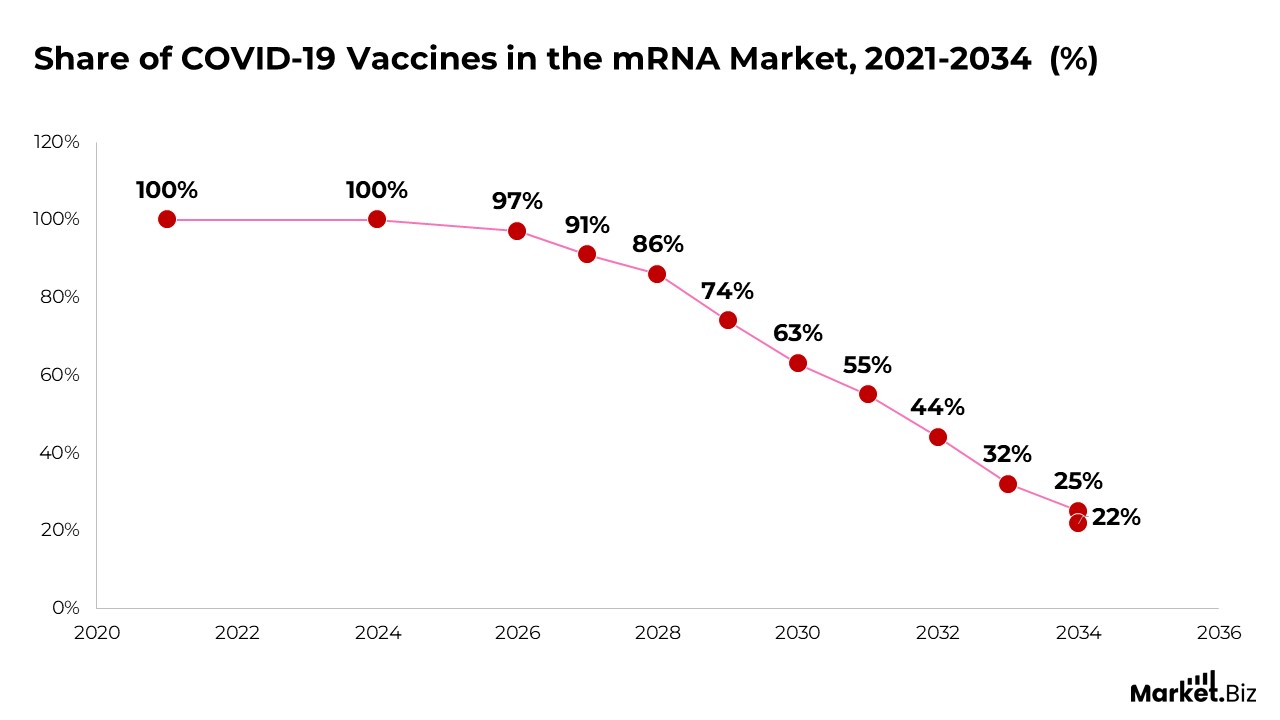
- The proportion of COVID-19 vaccines in the overall mRNA market is set to decrease rapidly, from 100% in 2021 to 2024 around 25% by 2034.
- By 2028, approximately 86% of the projected revenue from mRNA products is expected to come from the COVID-19 vaccines.
(Source: Statista)
RNA Analysis Market Size
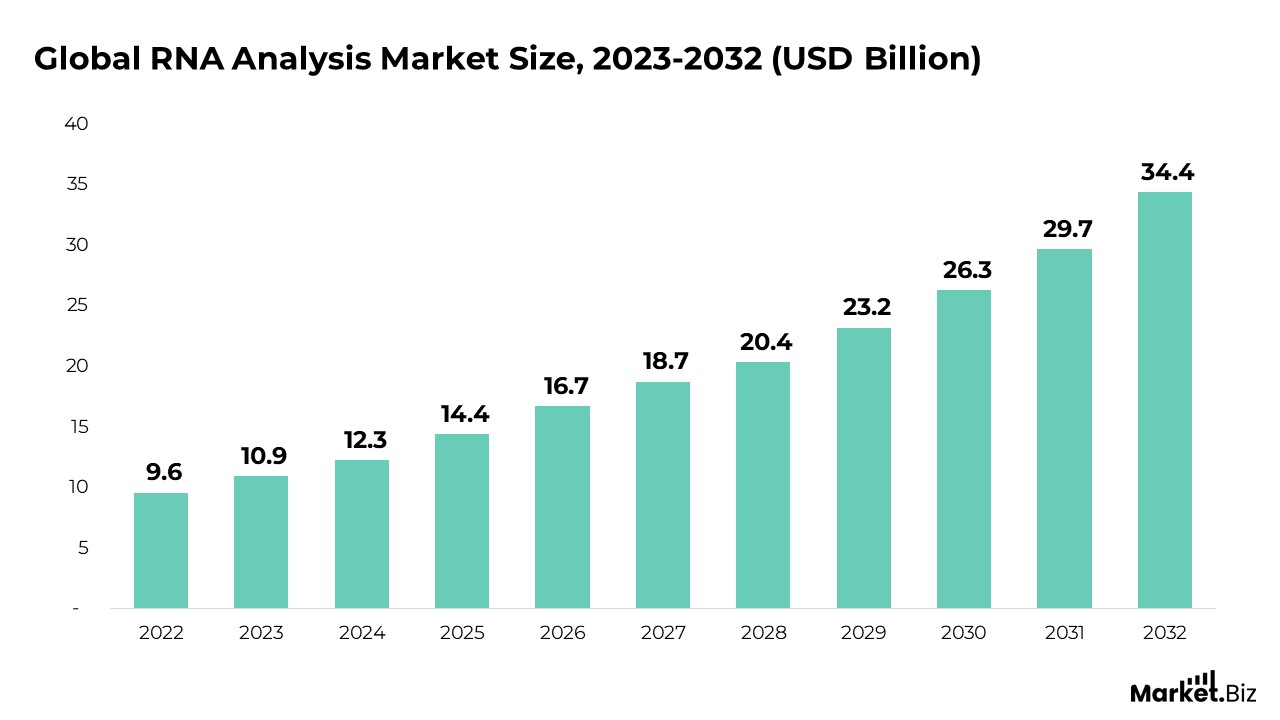
- According to Market.us, the global RNA analysis market is projected to grow from $12.3 billion in 2025 to $34.4 billion by 2032, reflecting a compound annual growth rate (CAGR) of 14% over the forecast period from 2022 to 2032.
- Market growth is driven by advances in RNA-based drug development, RNA sequencing technology, and government funding for RNA research.
- Kits and reagents account for 57% of the market, with strong growth expected due to rising demand for RNA sequencing and transcriptome analysis.
- Real-time PCR (qPCR) technology holds a 44% market share and is critical for COVID-19 diagnostics and viral RNA detection.
- The clinical diagnostics segment holds 37% of the market, driven by increasing demand for personalised medicine and RNA-based diagnostic tools.
- Government institutions and academic centres capture 35% of the market, fueled by high-throughput technologies and research.
- North America dominates with a 41% market share, supported by rapid advancements in drug design, transcriptomics research, and biopharmaceutical investments.
(Source: Market.us)
History of mRNA Vaccines
- mRNA vaccines were first explored in the 1990s, with early research investigating mRNA as a potential tool for protein-based vaccines.
- Delivering mRNA effectively to cells posed significant challenges due to stability and delivery issues.
- In the 2010s, advances in lipid nanoparticle (LNP) technology enabled safer and more effective mRNA delivery, making it viable for vaccine development.
- The COVID-19 pandemic in 2020 led to a breakthrough, with Pfizer-BioNTech and Moderna developing the first mRNA vaccines within a year, demonstrating around 95% efficacy in preventing symptomatic COVID-19.
- The success of these vaccines highlighted the speed and flexibility of mRNA technology, opening the door for future mRNA vaccines for other diseases, such as cancer and genetic disorders.
(Source: Johns Hopkins Bloomberg School of Public Health, Springer Nature Limited, The College of Physicians of Philadelphia)
Key Facts About the Pfizer-BioNTech (BNT162b2) COVID-19 Vaccine
The Pfizer-BioNTech (BNT162b2) vaccine uses mRNA to produce the receptor-binding domain of the SARS-CoV-2 spike protein. Clinical trials involving 10 of 1,000 participants have demonstrated that the vaccine is highly effective in preventing symptomatic COVID-19, with an efficacy of approximately 95% in individuals not previously exposed to the virus.
What is the efficacy of the vaccine?
- The Pfizer-BioNTech (BNT162b2) vaccine consistently demonstrated an efficacy rate above 70% for children aged 6 months to 4 years, including the specific age group of 6 to 23 months.
- In individuals aged 16 and older, the vaccine was highly effective, with 95% efficacy against symptomatic COVID-19 in clinical trials.
- The vaccine demonstrated remarkable effectiveness in adolescents aged 12 to 15 years, achieving 100% efficacy in preventing COVID-19 infection.
- Among children aged 5 to 11, the vaccine was 90.7% effective in preventing symptomatic COVID-19, underscoring its strong performance across age groups.
What are the Frequent Side Effects of the Vaccine?
- No serious adverse events were reported during the phase 3 clinical trials of the Pfizer-BioNTech (BNT162b2) vaccine. The mild side effects observed were localised, including symptoms such as redness, warmth, pain, and swelling at the injection site.
- Other systemic side effects, such as fever, fatigue, headache, arthralgia, and myalgia, were more commonly reported with the vaccine than by the placebo, with the majority arising within 1 to 2 days after vaccination.
- The most common reaction to the Pfizer-BioNTech vaccine was injection-site discomfort within 1 week of vaccination.
- Common reactions were more prevalent among individuals aged 26 and older.
- Less than 1% of participants experienced severe pain, which was most common in those aged 55 and above.
- Systemic reactions were more commonly reported by younger individuals, particularly those aged 16 to 55.
- Compared with the first dose, most systemic reactions were observed after the second dose of the vaccine.
- The incidence of systemic reactions was less than 1% with the first dose and under 2% with the second dose.
- Approximately 3.8% of vaccine recipients reported fatigue, while 2% reported headaches.
- After the first dose, only 0.2% of vaccine recipients and 0.1% of placebo recipients experienced fever>40°C.
- After the second dose, approximately 0.8% of vaccine recipients and 0.1% of placebo recipients reported fever>40°C.
- Opposing events were reported more frequently among vaccine recipients (27%) compared to the placebo group (12%).
(Source: National Institute of Health, Pfizer Inc.)
Key Facts About the Moderna Vaccine, mRNA-1273 Vaccine Statistics
- The Moderna vaccine, mRNA-1273, utilises mRNA to produce the SARS-CoV-2 spike protein, stabilised in its prefusion form.
- Clinical trials involving 10 of 1,000 participants have shown that the Moderna vaccine is highly effective in preventing symptomatic COVID-19, with an efficacy rate of approximately 94-95% in individuals without prior exposure to the virus.
- The mRNA-1273 vaccine, later branded as Spikevax, became Moderna’s first product to receive approval from the U.S. Food and Drug Administration (FDA).
- Spikevax saw widespread use, particularly in Western countries, and was ranked as the world’s second-best-selling pharmaceutical product in 2022, generating over USD 21 billion in revenue.
What is the efficacy of the vaccine?
- The vaccine demonstrated 36.8% efficacy against COVID-19 in children aged 2 to 5 years.
- Among adults aged 6 to 23 months, the vaccine showed 50.6% efficacy when the Omicron variant was the predominant strain.
What are the Common and Adverse Side Effects of the Vaccine?
- Like the Pfizer-BioNTech vaccine, the Moderna vaccine may cause side effects, but most are mild and temporary.
- Common side effects include pain or swelling at the injection site, fatigue, headache, muscle pain, chills, fever, and nausea, which typically resolve within a few days.
- Serious adverse events are uncommon but possible with the Moderna vaccine.
- Severe allergic reactions and anaphylaxis have been reported in rare cases.
- The incidence of anaphylaxis after administration of the Moderna vaccine is extremely low.
(Source: Statista, National Institute of Health, Market.us)
Distribution of mRNA Vaccine Clinical Trials by Region Statistics
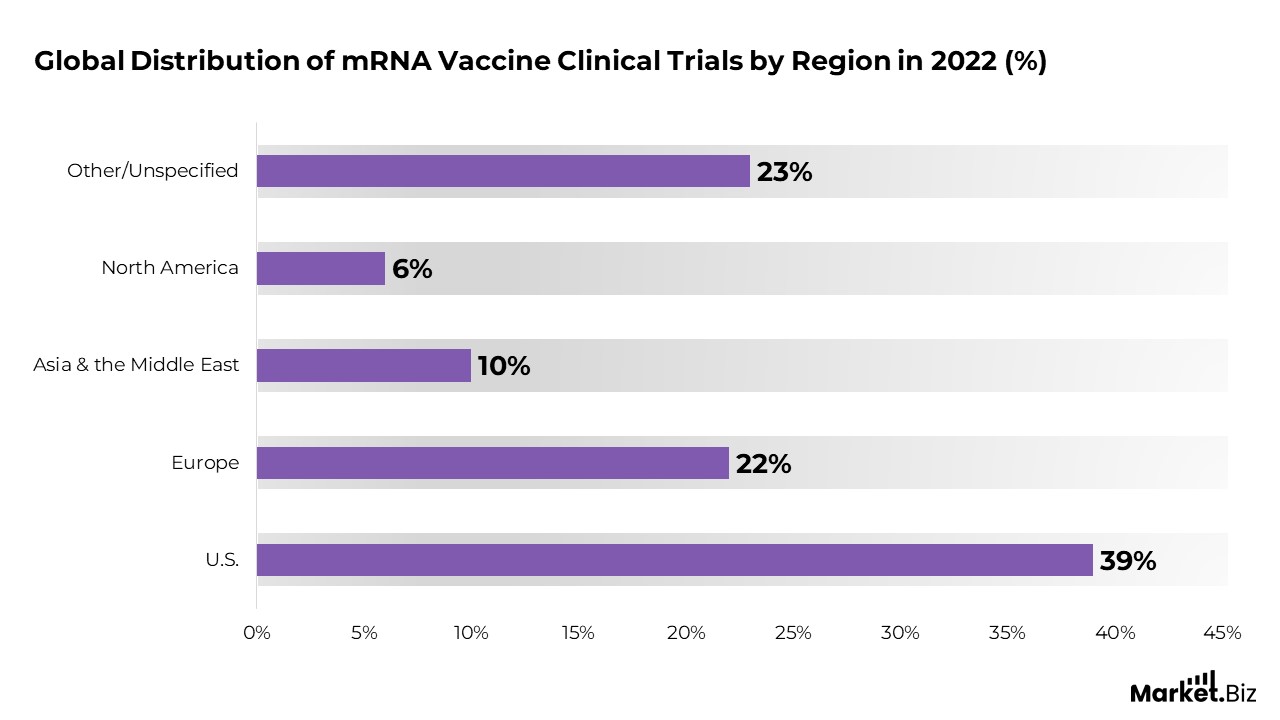
- As of August 2022, approximately 39% of all mRNA clinical trials globally were conducted in the United States.
- Approximately 22% of mRNA clinical trials were conducted in Europe during the same period.
- The combined regions of Asia and the Middle East accounted for approximately 10% of mRNA clinical trials.
- North America (excluding the U.S.) accounted for approximately 6% of global mRNA clinical trials.
- The remaining 23% of mRNA clinical trials were conducted in other countries worldwide.
(Source: Statista, Market.us)
Breakthroughs in mRNA Oncology Statistics
- Immunotherapy has emerged as a groundbreaking approach to cancer treatment.
- mRNA vaccines are a powerful immunotherapeutic platform for cancer due to their:
- High potencySpecificityVersatilityRapid and large-scale development potential, Low-cost manufacturing
- Safety
- Recent advances in mRNA vaccine design and delivery have accelerated the development and clinical application of mRNA cancer vaccines.
- Cancer continues to be one of the leading causes of death worldwide, with nearly 10 million fatalities each year. In 2022, there were 19.9 million new cancer cases reported, and this figure is expected to increase to 24.3 million by 2030.
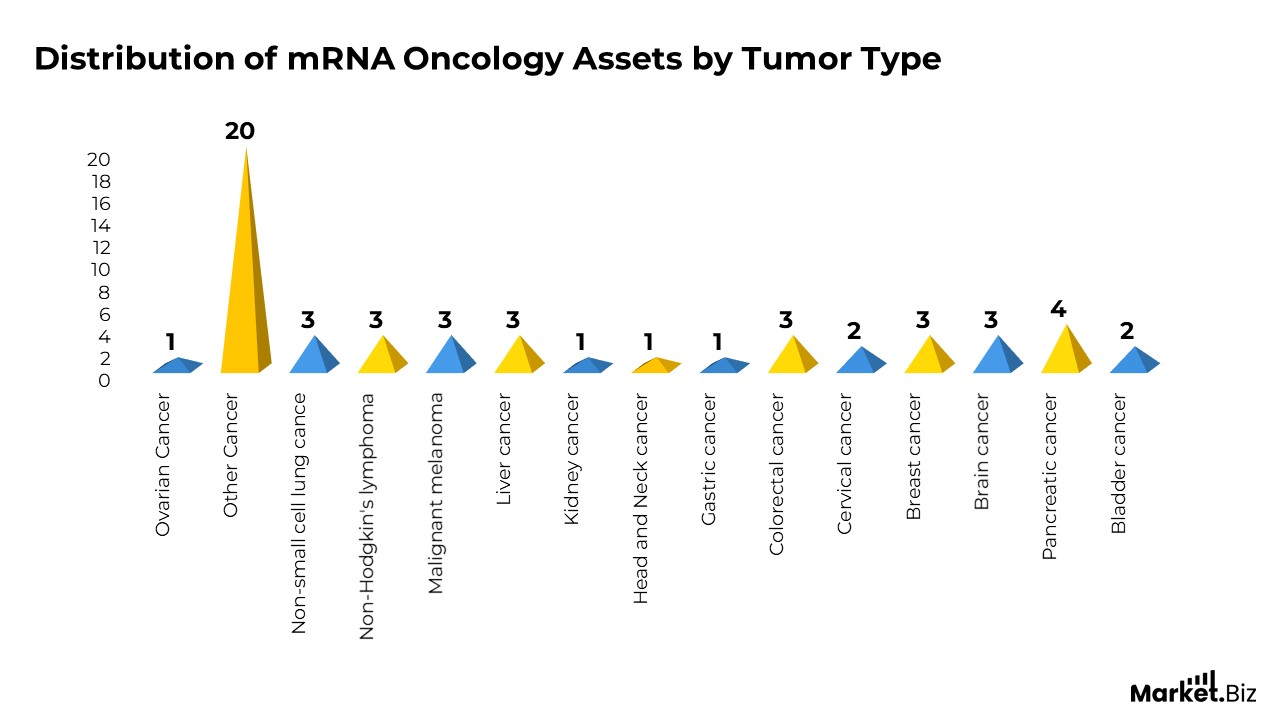
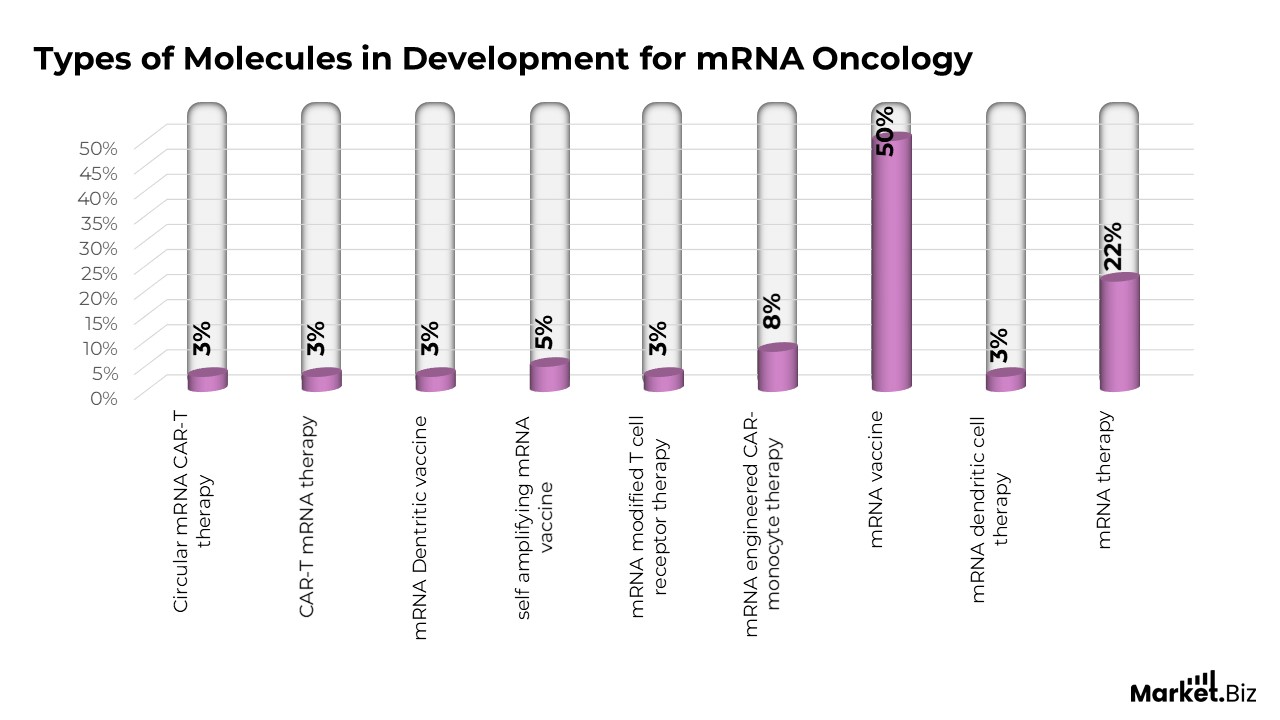
- As of October 2024, IQVIA’s Pipeline Link/Trial Link listed 36 mRNA-based oncology therapies in development, either as monotherapies or in combination with other drugs, for various tumour types in adults aged 18 and above.
- Most of these therapies focus on solid tumours, followed by liquid tumours.
- A total of 51 clinical trials have been recorded, of which 34 are currently recruiting participants.
- Many of these trials are in Phase I and II, with ongoing efforts to optimise delivery systems and improve efficacy.
- Two programs are in the advanced stages of late Phase II/III and III.
(Source: National Institute of Health, World Health Organization, IQVIA)
Distribution of mRNA Oncology Assets by Tumor Type Statistics
Types of Molecules in Development for mRNA Oncology
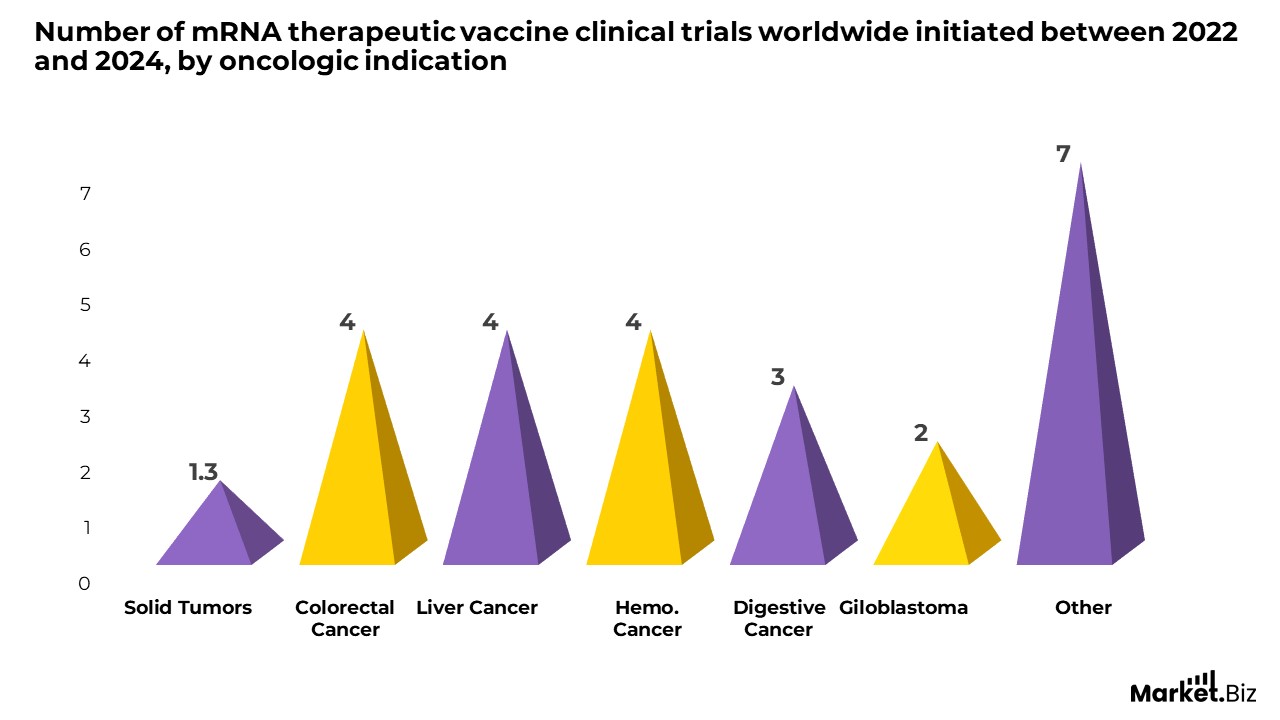
mRNA Therapeutic Vaccine Trials Initiated by Cancer Type Statistics
- The success of mRNA vaccines in addressing the COVID-19 pandemic has driven substantial advancements in mRNA technology. This achievement has highlighted the potential of mRNA as a flexible platform for developing treatments for other diseases, including cancer.
- From 2022 to July 2024, 37 clinical trials of oncology mRNA therapeutic vaccines were initiated globally. Of these, 13 focused on solid tumors.
Leading Biotechnology Companies
- As of March 2023, Moderna, CureVac, BioNTech, and Arcturus Therapeutics were leading global mRNA biotech companies.
- Moderna had a market capitalisation of approximately $54.89 billion as of March 9, 2023.
- BioNTech was the second-leading mRNA company with a market capitalisation of $31.27 billion as of March 2023.
- As of March 2023, CureVac had a market capitalisation of $1.62 billion, while Arcturus Therapeutics had a market capitalisation of $0.43 billion.
(Source: Statista, Market.us)
Recent Developments
Product Launches
- In June 2023, the government of India launched GEMCOVAC-OM, an Omicron-specific mRNA-based booster vaccine to combat COVID-19.
- In May 2022, IAVI and Moderna, Inc., a biotechnology company at the forefront of mRNA therapeutics and vaccines, launched the mRNA HIV vaccine clinical trial in Africa. The trial aimed to assess the safety and immunogenicity of the mRNA HIV vaccine antigen while enhancing regional scientific capacity.
Research Fundings
- In October 2023, during the Grand Challenges Annual Meeting, Bill Gates, Co-chair of the Bill & Melinda Gates Foundation, revealed a $40 million investment to enhance mRNA research and vaccine manufacturing in low- and middle-income countries (LMICs). The funding aimed to expand access to Quantoom Biosciences’ affordable mRNA platform, which had been developed through an earlier Grand Challenges grant to its parent company, Univercells, enabling LMICs to produce high-quality, life-saving vaccines at scale.
- In November 2022, a team of researchers from Weill Cornell Medicine received a five-year, $5.7 million grant from the National Cancer Institute at the National Institutes of Health to establish a center focused on developing messenger RNA (mRNA) vaccines to prevent cancer in at-risk populations.
- In March 2022, RNAimmune, Inc., a U.S.-based biopharmaceutical company specializing in discovering and developing mRNA-based therapeutics and vaccines, announced that it had secured approximately $27 million in a Series A financing round. The Company planned to use the funding to accelerate its research and development of mRNA vaccines and drug discovery, focusing on infectious diseases, cancer, and rare diseases.
Partnerships and Collaboration
- In July 2024, GSK plc collaborated with CureVac N.V. to develop, manufacture, and globally commercialize mRNA vaccine candidates for influenza and COVID-19, including combination vaccines.
- In May 2024, BioNTech SE and the Coalition for Epidemic Preparedness Innovations (CEPI) expanded their strategic partnership to support the development of Africa’s sustainable, resilient, end-to-end vaccine ecosystem. CEPI committed up to $145 million to support BioNTech in establishing mRNA vaccine R&D, clinical, and commercial-scale manufacturing capabilities at the Company’s facility in Kigali, Rwanda. These capabilities were intended to strengthen efforts to better prepare for future epidemic and pandemic threats in Africa.
Consumer Trends
- The growing focus on personalized medicine and targeted therapies drove increased demand for mRNA-based treatments, resulting in a 70% rise in sales of mRNA therapeutics compared to the previous year.
- During the COVID-19 pandemic, the adoption of mRNA vaccines accelerated, as mRNA-based COVID-19 vaccines showed superior efficacy and safety compared to traditional vaccine platforms.
Regulatory Landscape
Regulatory agencies accelerated the approval process for mRNA therapeutics and vaccines by utilising fast-track pathways and emergency use authorisations to meet urgent healthcare demands and respond to public health emergencies.
Conclusion
mRNA Statistics: mRNA technology has emerged as a game-changer in medicine, particularly in developing vaccines and therapies. The widespread adoption of mRNA vaccines, especially during the COVID-19 pandemic, demonstrated their superior efficacy and safety compared to traditional vaccine platforms.
The statistical data on mRNA vaccine effectiveness, safety, and global distribution underscores its significant role in public health and its potential for future applications in cancer treatment, genetic diseases, and other infections.
With ongoing investment in mRNA research, the future of mRNA-based therapies is highly promising, with the technology set to transform how we approach disease prevention and treatment.
FAQ’s
mRNA technology uses messenger RNA (mRNA) to instruct cells to produce proteins that can trigger an immune response or treat specific diseases. This approach has been widely applied in vaccine development, particularly for COVID-19.
mRNA vaccines, like those developed by Pfizer-BioNTech and Moderna, have demonstrated high efficacy. The Pfizer-BioNTech vaccine has shown about 95% efficacy in preventing symptomatic COVID-19, while Moderna’s vaccine has an efficacy rate of 94-95% in clinical trials.
mRNA vaccines were quickly adopted worldwide, particularly during the COVID-19 pandemic. By 2021, billions of doses had been administered globally, with mRNA vaccines for more than 60% of all COVID-19 vaccine doses distributed.
The most common side effects of mRNA vaccines include pain at the injection site, fatigue, headache, muscle aches, chills, fever, and nausea. These side effects are usually mild and go away within a few days. Severe reactions, such as anaphylaxis, are very rare.
Although long-term data are still being collected, early studies show that mRNA vaccines protect against severe illness, hospitalisation, and death. Ongoing research examines their long-term effectiveness, especially in light of emerging variants.