









Introduction
Peanut Butter Statistics: Peanut butter, a beloved spread worldwide, is mainly made from finely ground roasted peanuts and may include additives such as salt, sweeteners, and emulsifiers. It provides essential nutrients like protein, healthy fats, fiber, vitamins, and minerals.
Available in creamy, crunchy, natural, and organic varieties, peanut butter is adaptable and can be used for various culinary applications, including spreading, dipping, or cooking.
Its health advantages encompass being a significant source of plant-based protein and heart-healthy fats, supporting digestion, and offering antioxidant benefits. Proper storage of peanut butter in a cool, dry place is crucial to maintain its freshness and prevent spoilage.
The global peanut butter market represents a significant and growing industry, fueled by health-conscious consumers in search of high-protein, plant-based options. As a staple in 90% of households in the US, it has become a common breakfast item and versatile ingredient, with more than 1.2 billion pounds of peanuts consumed annually in the United States alone.
Editor’s Choice
- The global peanut butter market is anticipated to attain a value of $8.6 billion by the year 2032.
- Standard peanut butter commands the largest market share at 38%, demonstrating its extensive popularity among consumers.
- France has established itself as the leading importer, with an import value of USD 148.21 million, which constitutes roughly 9.81% of the total import value.
- India is at the forefront with a considerable shipment volume of 31,328 units, highlighting its prominent position in the global peanut butter market.
- China emerges as the foremost consumer of peanut butter, with a substantial consumption of 4210 TMT in 2023.
- In July 2023, the average export price for peanut butter was $2,062 per ton, reflecting a modest rise of 1.6% in comparison to the preceding month.
- As per the most recent survey conducted by Ask Your Target Market, a significant majority of respondents, totaling 76%, conveyed a predominantly positive view of peanut butter.
General Peanut Butter Statistics
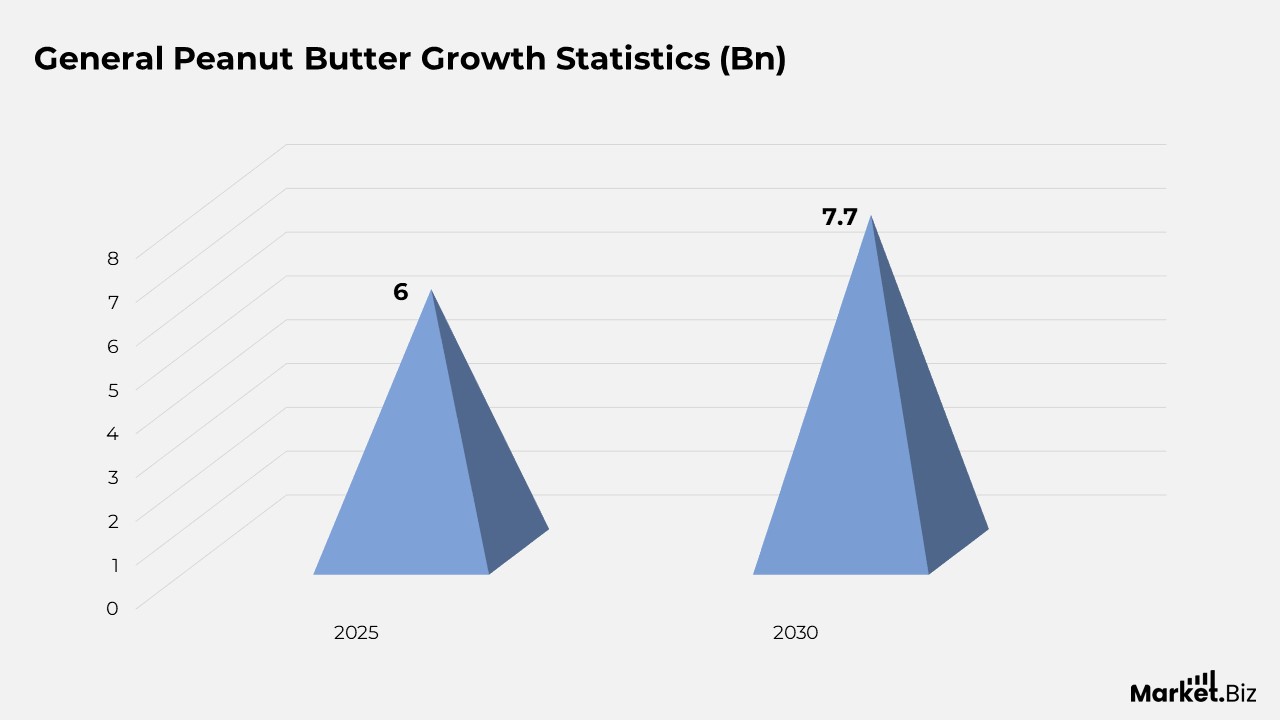
- The global peanut butter market is anticipated to attain a value of $8.6 billion by the year 2032.
- Regular peanut butter commands the largest market share at 38%, reflecting its extensive popularity among consumers.
- In 2022, France emerged as the top importer, with an import value of USD 148.21 million, which represents approximately 9.81% of the total import value.
- India leads in export volume, boasting a significant shipment of 31,328 units, underscoring its prominent presence in the global peanut butter market.
- China is recognized as the foremost consumer of peanut butter, with a consumption of 4210 TMT in 2023, which is more than double that of India, the second-largest consumer at 1494 TMT.
- The regular export price of peanut butter was $2,062 per ton.
- According to the most recent survey conducted by Ask Your Target Market, a majority of respondents, totaling 76%, conveyed a generally positive view of peanut butter.
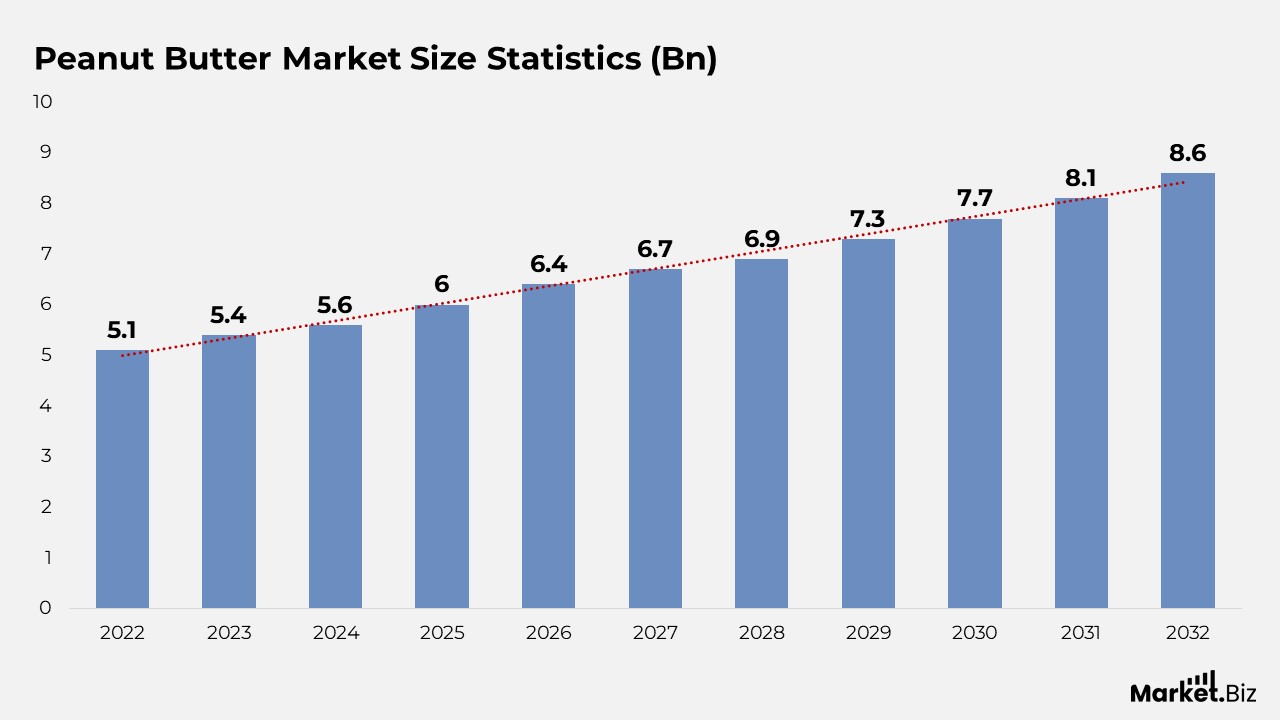
Peanut Butter Market Size Statistics
- Starting at $5.1 billion in 2022, the market revenue increased steadily to $5.4 billion in 2023 and $5.6 billion in 2024.
- The upward trend is projected to continue, with revenue reaching $6.0 billion in 2025, $6.4 billion in 2026, and $6.7 billion in 2027.
- By 2028, the market revenue is expected to reach $6.9 billion, followed by further growth to $7.3 billion in 2029, $7.7 billion in 2030, and $8.1 billion in 2031.
- The market is forecasted to expand further, reaching $8.6 billion by 2032.
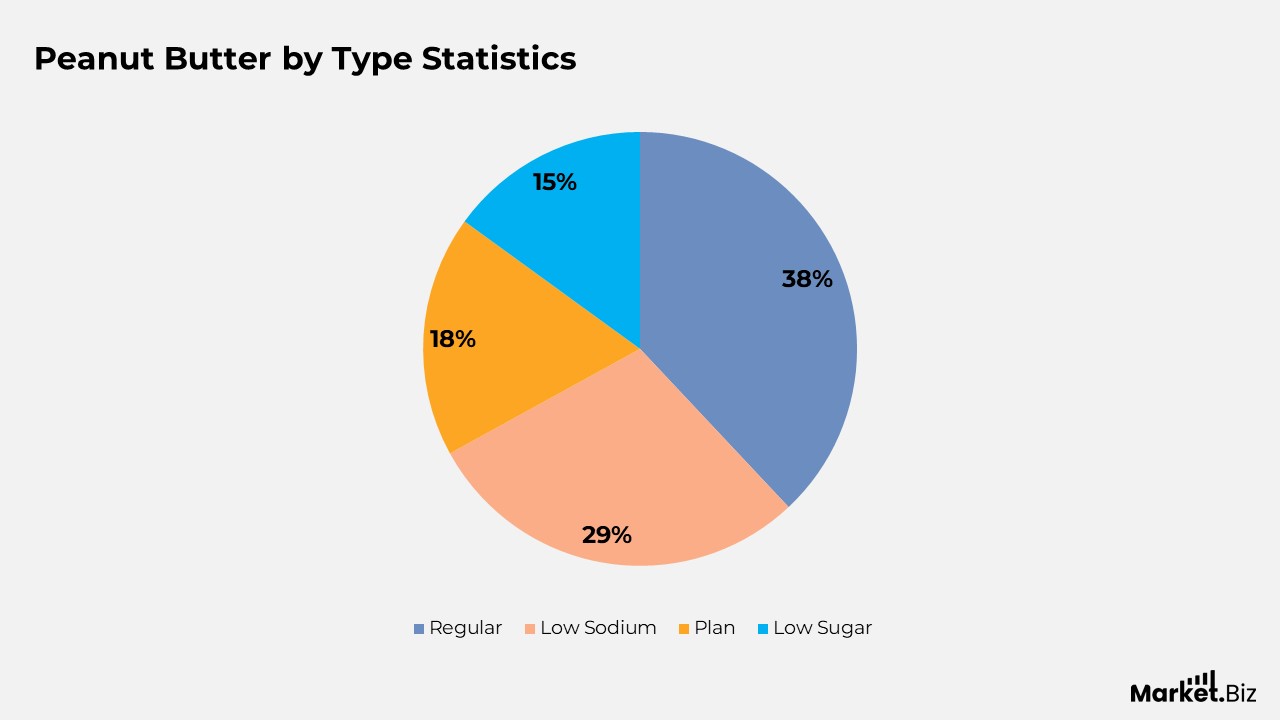
Peanut Butter by Type Statistics
- Standard peanut butter commands the largest market share at 38%, demonstrating its extensive popularity among consumers.
- In second place is low-sodium peanut butter, which secures 29% of the market share, attracting health-conscious individuals in search of lower sodium alternatives.
- Plant-based peanut butter represents 18% of the market share, highlighting the increasing shift towards plant-based dietary preferences.
- Finally, low-sugar peanut butter occupies a 15% market share, serving consumers who are in pursuit of options with less sugar content.
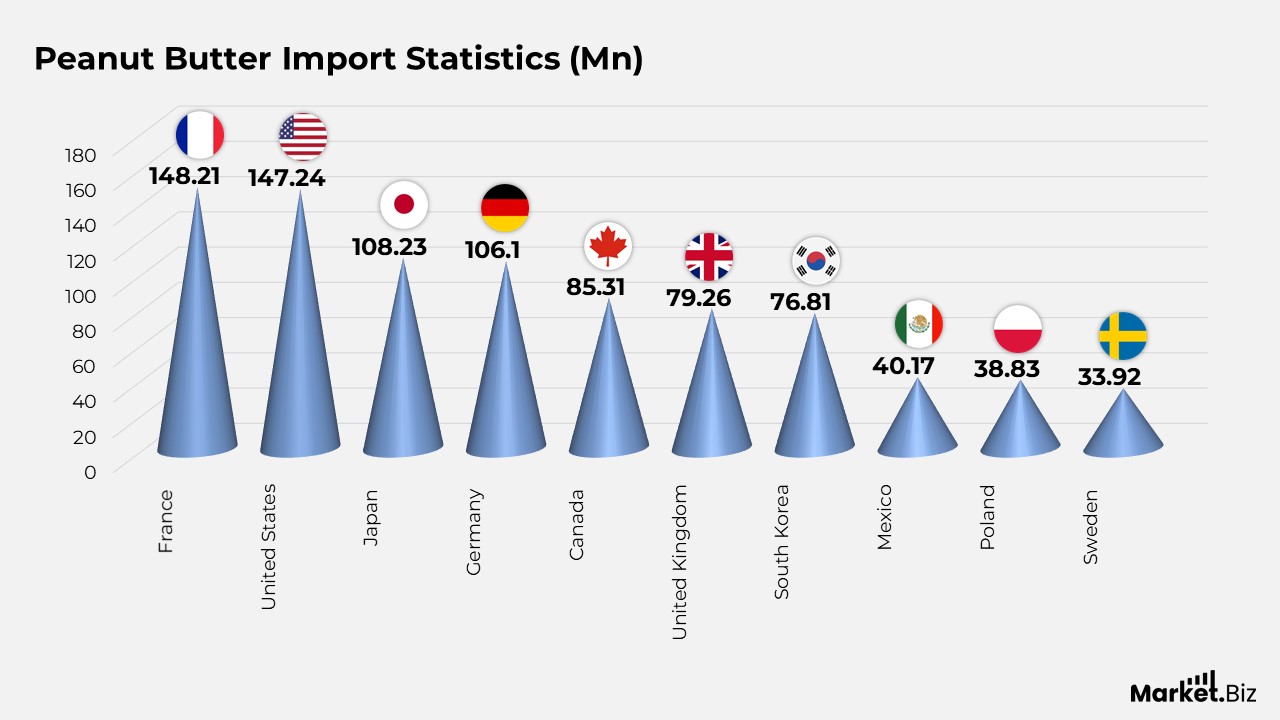
Import Statistics of Peanut Butter
- France has established itself as the leading importer, with an import value of USD 148.21 million, which constitutes roughly 9.81% of the total import value.
- Not far behind, the United States followed closely with an import value of USD 147.24 million, accounting for 9.75% of the total import value.
- Germany and Japan also played significant roles in the import sector, with import values of USD 106.1 million and USD 108.23 million, respectively, representing 7.02% and 7.16% of the total import value.
- The United Kingdom and Canada also maintained substantial shares, with import values of USD 79.26 million and USD 85.31 million, which correspond to 5.25% and 5.65% of the total import value, respectively.
- South Korea imported peanut butter valued at USD 76.81 million, making up 5.08% of the total import value.
- In contrast, Poland, Mexico, and Sweden imported peanut butter worth USD 38.83 million, USD 40.17 million, and USD 33.92 million, respectively, contributing approximately 2-3% to the overall import value.
Peanut Butter Export Statistics
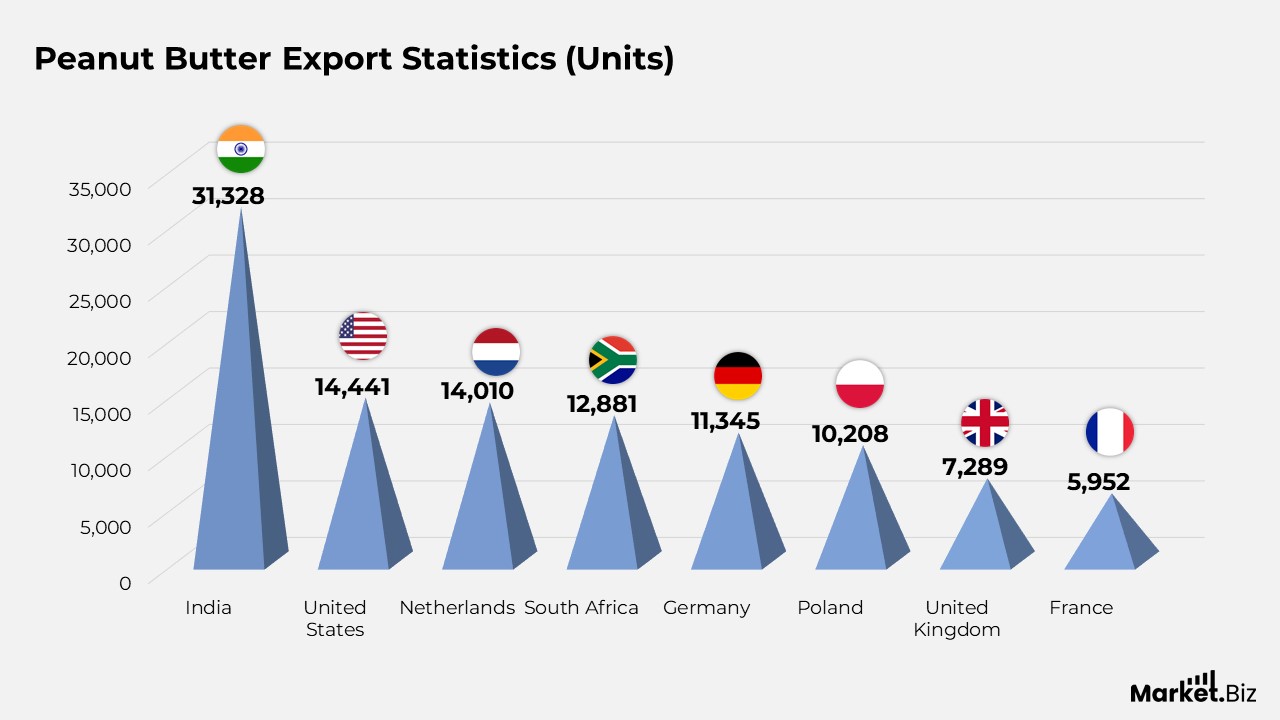
- India is at the forefront with a considerable shipment volume of 31,328 units, highlighting its prominent position in the global peanut butter market.
- Following closely, the United States and the Netherlands are notable with 14,441 and 14,010 shipments, respectively, reflecting their strong export capabilities.
- South Africa also plays a significant role, contributing with 12,881 shipments.
- Germany and Poland show impressive export figures, with 11,345 and 10,208 shipments, respectively.
- The United Kingdom, France, Italy, and Spain maintain commendable export volumes, ranging from 5,952 to 5,209 shipments, which indicates their involvement in international peanut butter trade.
- Moreover, Hungary, the Czech Republic, Austria, Belgium, and China exhibit moderate export activities, with shipment numbers between 4,235 and 3,691 units.
Peanut Butter Consumption Statistics
- China emerges as the foremost consumer of peanut butter, with a substantial consumption of 4210 TMT in 2023, which is more than twice the amount consumed by India, the second-largest consumer at 1494 TMT.
- In the wake of these two nations, peanut butter consumption significantly declines in other regions of the globe. For example, Myanmar’s consumption reached 309 MT, while Nigeria and Sudan consumed 245 MT and 255 MT, respectively.
- Burkina Faso and Tanzania reported consumption figures of 153 MT and 170 MT, respectively.
- The United States recorded a consumption of 152 MT, narrowly surpassing Brazil’s consumption of 148 MT.
- Conversely, certain countries exhibited minimal peanut butter consumption in 2023, such as Mexico with 2 MT, Japan with 1 TMT, and Zambia with 3 MT.
- The European Union, as a whole, consumed 15 MT, reflecting a relatively low consumption rate in comparison to other areas.
Cost Statistics of Peanut Butter
- In July 2023, the average export price for peanut butter was $2,062 per ton, reflecting a modest rise of 1.6% in comparison to the preceding month.
- Overall, the export price demonstrated a relatively consistent trend over time. The most notable growth rate was recorded in August 2022, with a month-on-month increase of 13%, culminating in a peak of $2,338 per ton.
- Export prices continued lower from September 2022 to July 2023. Prices fluctuated significantly based on the destination country, with Afghanistan commanding the highest price at $3,247 per ton, whereas Turkey had one of the lowest average export prices at $1,653 per ton.
- From July 2022 to July 2023, the most significant price increase was noted in exports to Turkey (+2.3%), while prices for other major destinations saw more modest growth rates.
- According to data from the U.S. Bureau of Labor Statistics, the price of peanut butter rose by nearly 94% between 1997 and 2024, which translates to an approximate increase of $2.33 in price.
Peanut Butter Nutritional Statistics
- Peanut butter serves as a substantial source of various nutrients. In terms of its proximate composition, it contains 1.18 grams of water and delivers 597 calories per serving.
- It is notably high in protein, offering 22.5 grams per serving, and has a considerable fat content, amounting to 51.1 grams.
- When it comes to carbohydrates, peanut butter provides 22.3 grams, which includes 4.8 grams of dietary fiber and 10.5 grams of total sugars.
- Furthermore, it supplies a range of minerals such as iron (1.73 mg), calcium (49 mg), phosphorus (339 mg), magnesium (169 mg), potassium (564 mg), zinc (2.54 mg), sodium (429 mg), copper (0.42 mg), and selenium (4.1 µg).
- In addition, it contains several vitamins and other essential components, including riboflavin (0.191 mg), thiamin (0.138 mg), niacin (13.3 mg), folate (86 mg), vitamin B-6 (0.444 mg), choline (63 mg), and vitamin E (9.11 mg).
- Peanut butter is also abundant in fatty acids, providing 10.1 grams of saturated fatty acids, 25.4 grams of monounsaturated fatty acids, and 12.3 grams of polyunsaturated fatty acids per serving.
Flavours and Brands Statistics
- As per the most recent survey conducted by Ask Your Target Market, a significant majority of respondents, totaling 76%, conveyed a predominantly positive view of peanut butter.
- Only 6% expressed a dislike for it, while 18% chose to remain neutral.
- Among the different varieties of peanut butter, creamy was identified as the most popular, with 68% of participants selecting it as their preferred choice.
- In contrast, 22% opted for crunchy peanut butter, and 9% showed a preference for extra crunchy.
- Furthermore, 1% of respondents mentioned other preferred types, including all-natural or a mix of creamy and crunchy.
Peanut Butter Recent Statistics
- More than 20 new peanut butter products have been introduced to the market, addressing a variety of consumer preferences including organic, natural, flavored, and specialty peanut butter spreads.
- Peanut butter startups have garnered substantial investment, with around $10 million funneled into the industry in just the last quarter.
- Efforts to penetrate the market have led to a 15% rise in export volumes compared to the previous year.
- Sales of natural peanut butter varieties have increased by 25% year-on-year, indicating a trend towards clean-label products.
Conclusion
In summary, peanut butter is a cherished food item enjoyed by many around the globe. Its adaptability, health benefits, and range of flavors play a significant role in its lasting popularity. Even with the common occurrence of peanut allergies and the presence of alternative nut and seed butter products, peanut butter still occupies a unique position in the hearts and kitchens of consumers.
Whether it is spread on bread, utilized in baking, or included in various dishes, peanut butter continues to be a household essential and a preferred option for numerous individuals.
As consumer tastes evolve and dietary trends change, it will be intriguing to see how the peanut butter industry adjusts to fulfill these shifting demands and preferences. In conclusion, the lasting charm of peanut butter highlights its reputation as a timeless classic among food products.
FAQs
Peanut butter is a food rich in nutrients, offering healthy fats along with a variety of vitamins and minerals. It is also high in energy, with a 2-tablespoon serving providing just over 7 grams of protein. Typically, all-natural peanut butters consist solely of ground peanuts, possibly with a small amount of salt.
Although China is the largest consumer of peanut butter globally by a significant margin, there are several other nations that consume more peanut butter than the United States.
Peanut butter is mainly a source of fat, with approximately 70–80% of its calories derived from fat (predominantly heart-healthy monounsaturated and polyunsaturated fats). While it does offer a moderate protein content (around 7–8 grams per 2-tablespoon serving), its elevated fat and calorie levels categorize it as a high-energy, fat-dominant food.

