









Introduction
Endpoint Security Statistics: In today’s digital landscape, endpoint security has become a vital component of organizational cybersecurity. As businesses adopt hybrid work arrangements and expand their digital networks, protecting a growing range of connected devices has become increasingly essential. Laptops, smartphones, tablets, and IoT devices have become frequent targets for advanced cyberattacks, including ransomware, phishing, and zero-day exploits.
The increasing complexity of these threats has compelled organizations to enhance their endpoint security measures by adopting advanced technologies, such as AI-driven threat detection, behavioural monitoring, and continuous real-time surveillance. These sophisticated solutions aim to reduce exposure to risks, safeguard critical data, and ensure seamless business operations in the face of constantly evolving cyber threats.
Editor’s Choice
- 68% of administrations have encountered at least one successful endpoint attack that led to data breaches or disruptions in their IT infrastructure.
- Only 47% of organizations maintain continuous, round-the-clock network monitoring.
- 81% of businesses have suffered attacks involving some form of malware.
- 55% of security professionals identify smartphones as one of the most vulnerable endpoints in their networks.
- 40% of organizations postpone patch deployments to prevent possible system conflicts.
- 67% of IT experts believe that BYOD (Bring Your Device) policies have weakened their organization’s overall security stance.
- 81% of businesses have been affected by malware-related attacks.
- 69% of security executives anticipated experiencing at least one ransomware attack during 2022.
- The total cost of a ransomware attack can potentially double when the ransom payment is made.
- Meanwhile, 69% of security leaders anticipated encountering at least one ransomware incident in 2022.
- Only 50% of organizations apply encryption to protect sensitive data on endpoint devices.
- 59% of ransomware incidents involved the compromise of data stored in public cloud environments.
- Nearly 70% of businesses intend to boost their investment in endpoint security solutions over the next two years.
- In 2021, 53% of organizations experienced at least one successful ransomware attack, marking a 148% surge compared to 2020.
(Source: Statista, The Federal Reserve System, EnigmaSoft Ltd.)
Incidence of Endpoint Attacks
- A study conducted by the Ponemon Institute revealed that 68% of organizations have faced one or more endpoint attacks that positively compromised their data or IT systems.
- Additionally, 68% of IT professionals reported a noticeable increase in the frequency of such attacks compared to the previous year.
- The same research indicated that endpoint attacks remain among the most widespread, with 81% of businesses encountering malware-related incidents and 28% reporting breaches involving stolen or compromised devices.
- In 2021, 53% of organizations fell victim to successful ransomware attacks, with nearly 23% experiencing multiple incidents.
- SonicWall highlighted a dramatic surge in ransomware cases, noting a 148% year-over-year increase compared to 2020. Similarly, Check Point’s analysis showed that the average weekly ransomware attacks on corporate networks rose by 50% throughout 2021 relative to 2020.
- Reflecting these alarming trends, 69% of Chief Information Security Officers (CISOs) anticipated facing at least one ransomware attack during 2022.
(Source: Expert Insights, Ponemon Institute, SonicWall, Check Point, Chief Information Security Officers)
Endpoint Security Market Size
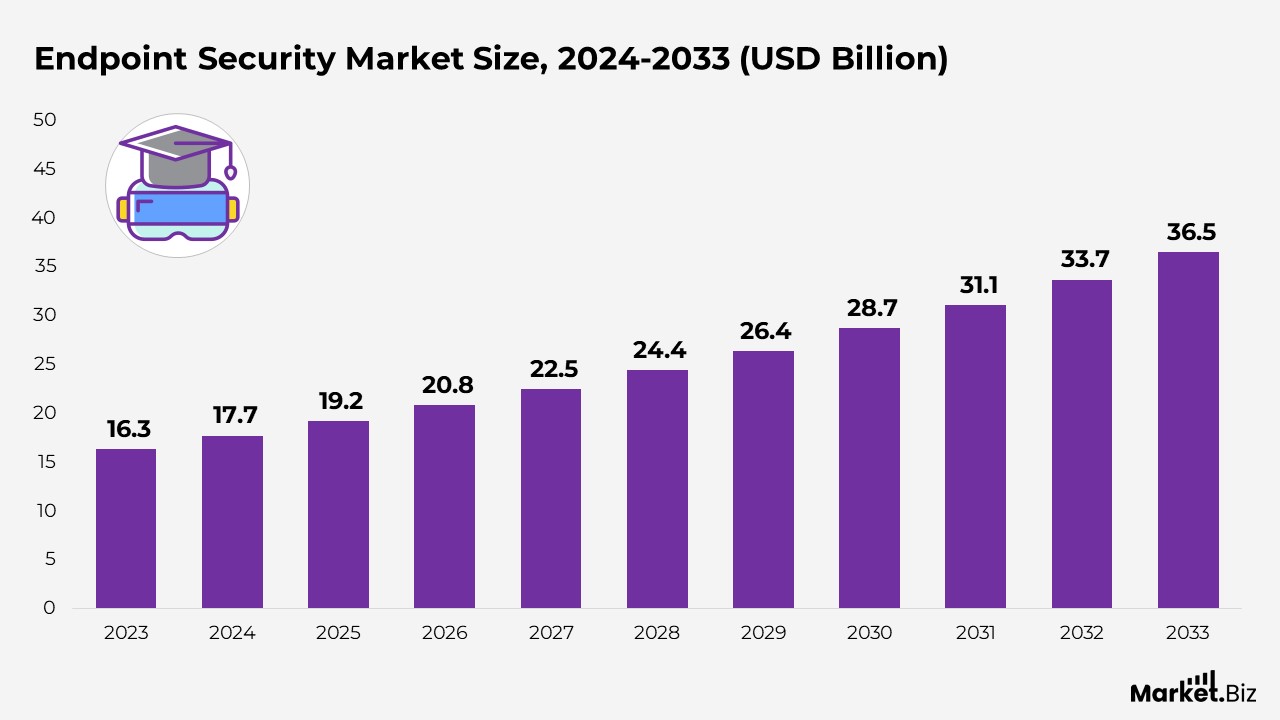
- According to Market.us, the endpoint security market is projected to grow from $17.7 billion in 2024 to $36.5 billion by 2033, representing a compound annual growth rate (CAGR) of 8.4% from 2024 to 2033.
- The market is experiencing growth due to the rising frequency and complexity of cyberattacks, as well as the increasing number of connected devices. Organizations across various industries, including healthcare, finance, government, and enterprises of all sizes, are actively investing in endpoint security solutions to mitigate risks and protect critical data.
- In 2023, the Antivirus/Antimalware segment led the market, holding over 32% of the share, highlighting its essential role in defending endpoints against diverse cyber threats.
- Cloud-based deployment models secured over 61% of the total market share in 2023, driven by their flexibility, ease of access, and cost efficiency, making them a preferred choice for many organizations.
- Large enterprises held a dominant position with over 57% market share in 2023, reflecting their demand for comprehensive endpoint security solutions to safeguard their complex IT ecosystems and manage higher levels of risk exposure.
- The Banking, Financial Services, and Insurance (BFSI) sector represented more than 20% of the market share in 2023, underscoring the critical importance of data protection within this highly sensitive industry.
- North America emerged as the leading region in 2023, capturing over 39.5% of the market share, driven by robust cybersecurity regulations and a strong organizational focus on data protection.
- Endpoint security demand in North America reached US$6.4 billion in 2023, with promising expectations for future growth driven by advanced IT infrastructure and heightened awareness of cybersecurity measures.
(Source: Market.us)
Endpoint Threat Protection Market Size
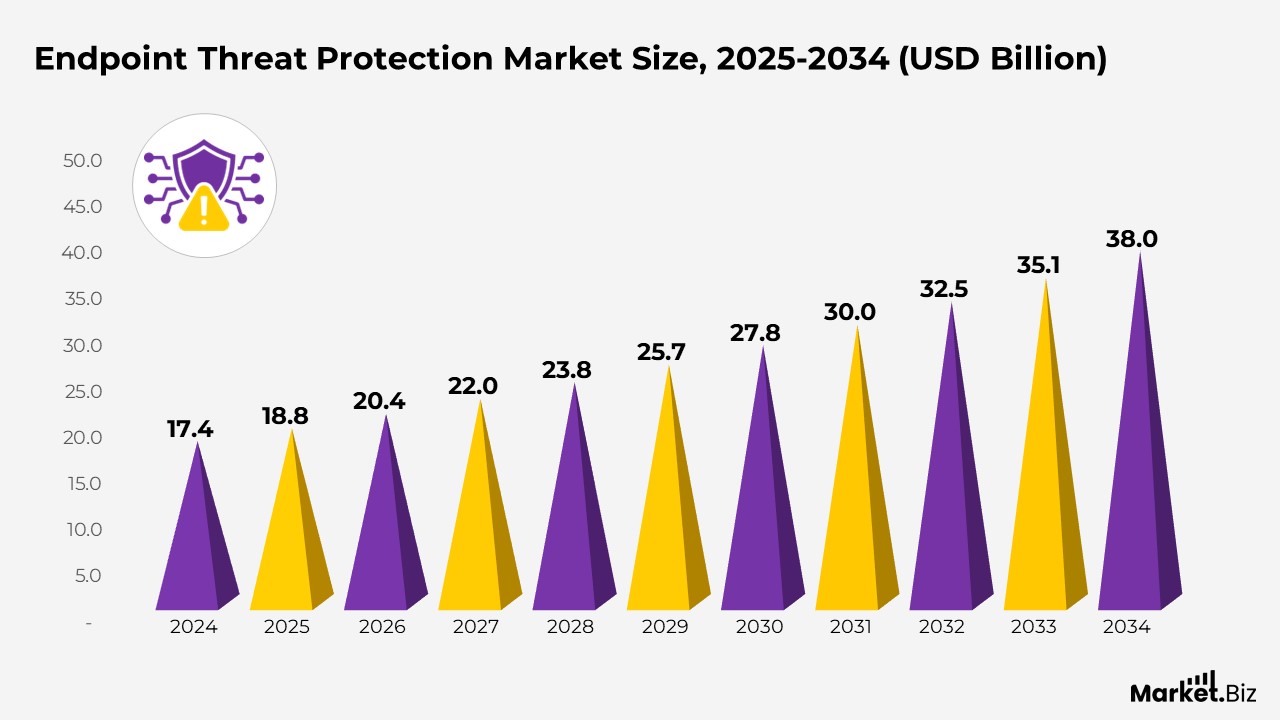
- According to Market.us, the endpoint threat protection market is projected to grow from $18.8 billion in 2025 to $38.0 billion by 2034, representing a compound annual growth rate (CAGR) of 8.10% from 2025 to 2034.
- The market’s expansion is fueled by the growing integration of Artificial Intelligence and Machine Learning, the widespread adoption of remote work models and Bring Your Own Device (BYOD) policies, an increasing reliance on cloud-based security solutions, and a heightened focus on regulatory compliance and data privacy.
- In 2024, the solution segment led the global Endpoint Threat Protection Market, securing a share of over 67.3%, emphasizing its central role in comprehensive security frameworks.
- The on-premise deployment model held a commanding position in 2024, accounting for more than 62.8% of the global market, as many organizations continue to prefer localized control over their security infrastructure.
- Large enterprises were the primary end-users in 2024, capturing a market share of upwards of 71.3%, driven by their complex IT ecosystems and heightened exposure to sophisticated cyber threats.
- The government and defence sector accounted for a significant portion of the market in 2024, claiming over 26.7%, reflecting the sector’s critical need for robust and resilient endpoint protection measures.
- North America is expected to hold the largest share of the global Endpoint Threat Protection Market in 2024, capturing more than 37.4% of the market and generating approximately USD 6.5 billion in revenue, driven by strong digital infrastructure, substantial cybersecurity investments, and early technology adoption.
- This regional dominance is a result of advanced digital maturity, larger cybersecurity budgets, and proactive adoption of next-generation endpoint protection technologies by enterprises across North America.
- The U.S. ETP Market was valued at about USD 5.83 billion in 2024, with projections indicating a steady growth at a 15.6% CAGR.
(Source: Market.us)
Security Risks of BYOD and Unmanaged Devices
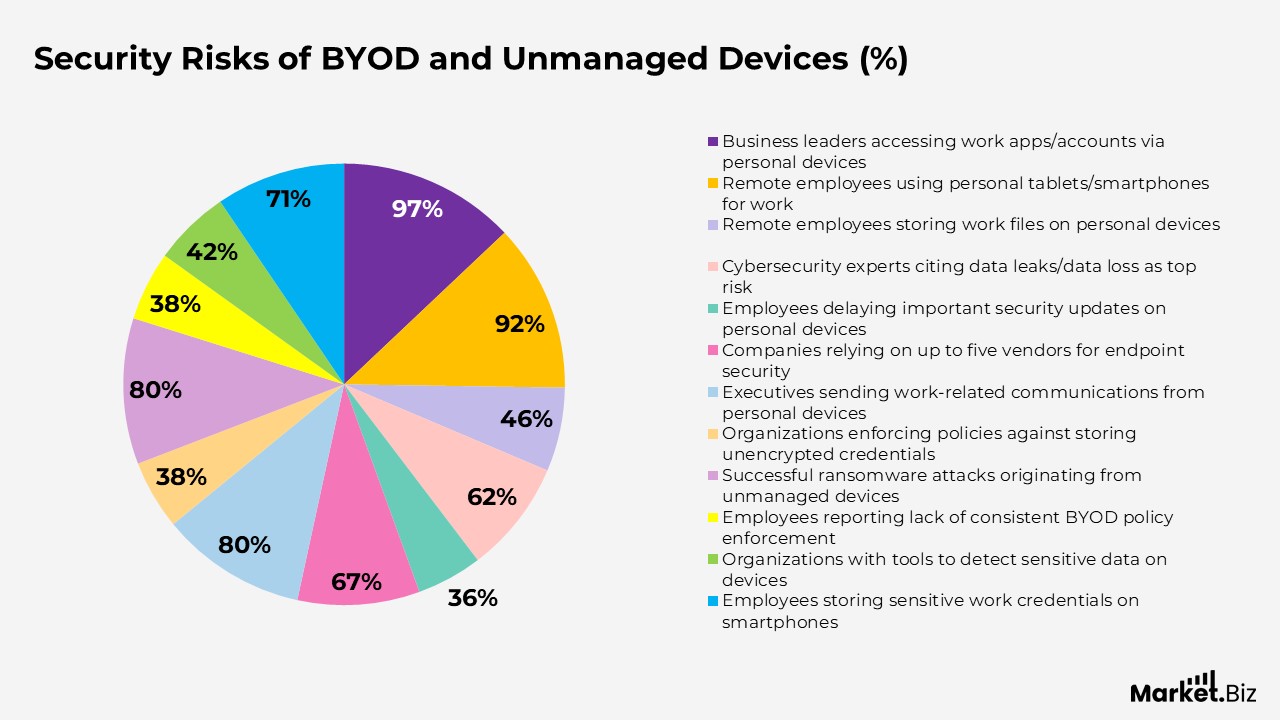
- 97% of business leaders access work applications or accounts using their devices.
- 92% of remote employees use personal tablets or smartphones for work, and 46% have stored work-related files on these devices.
- 62% of cybersecurity experts identify data leaks and data loss as the most significant risks associated with BYOD practices.
- 36% of employees who use personal devices for work admit they often postpone important security updates.
- 67% of companies rely on as many as five different vendors to manage and secure their range of endpoint devices.
- 80% of executives frequently send work-related communications from personal devices.
- Only 38% of organizations enforce policies that prevent employees from storing unencrypted access credentials on personal devices.
- Microsoft reports that 80-90% of successful ransomware attacks originate from unmanaged personal devices.
- 38% of employees acknowledge that their employer either lacks a BYOD policy entirely or fails to enforce existing policies consistently.
- Only 42% of organizations have implemented tools to detect sensitive data stored on employee devices proactively.
- 71% of employees store sensitive work credentials on their smartphones.
(Source: The HIPAA Journal, Lookout, Inc., State of Remote Work Security, Microsoft, Menlo Security, Security Magazine, Computerworld, Sensitive Data Report)
Financial Burden of Data Breaches
- The average cost of a data breach surged to USD 4.88 million in 2024, up from USD 4.45 million in 2023, representing a 10% increase, the highest jump since the pandemic era.
- In 2023, detection and escalation activities accounted for the largest portion of total breach expenses, averaging USD 1.58 million per incident.
- By 2024, the United States registered the highest average data breach cost worldwide at USD 9.36 million, followed by the Middle East at USD 8.75 million.
- A significant breach involving 50 to 60 million records in 2024 is projected to cost approximately USD 375 million, representing a USD 43 million increase from the 2023 estimate.
- Companies struggling with regulatory noncompliance face an average breach cost of USD 5.05 million, which is approximately 12.6% higher than organizations in compliance.
- Two-thirds of surveyed organizations reported adopting security AI and automation within their security operations centres, representing a 10% increase from the previous year.
Moreover
- Enterprises that fully implement AI into prevention workflows, such as attack surface management, red teaming, and posture management, experience average savings of USD 2.2 million compared to those not using AI for prevention.
- Over half of breached companies are grappling with severe cybersecurity talent shortages. This problem has increased by 26.2% year-over-year, resulting in an average of USD 1.76 million in additional breach-related costs.
- Incidents involving stolen or compromised credentials remain the slowest to detect and resolve, averaging 292 days to identify and contain.
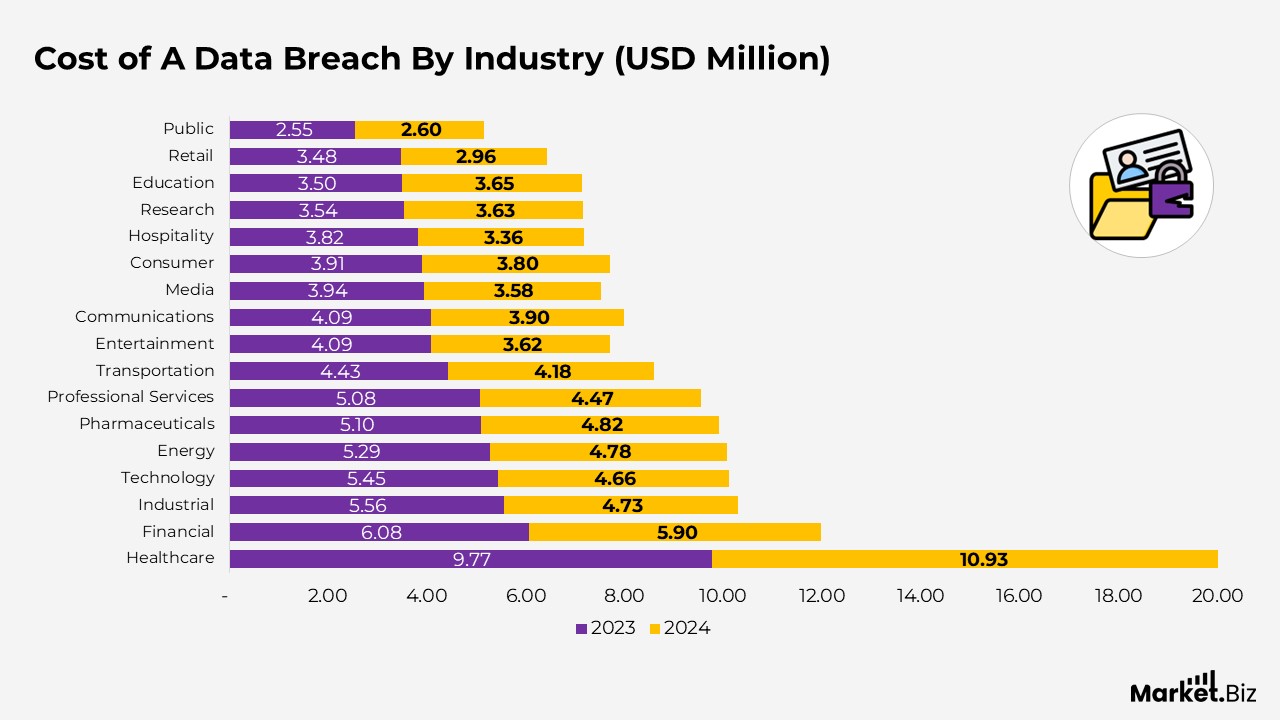
- The industrial sector experienced the sharpest year-over-year rise in breach costs, with an additional USD 830,000 per incident compared to the previous year.
- Organizations that engaged law enforcement during ransomware incidents saw an average reduction of nearly USD 1 million in total breach costs.
Data Breach Costs Across Countries and Regions
| Country | 2024 (USD Million) | 2023 (USD Million) |
|---|---|---|
| United States | $9.36 | $9.48 |
| Middle East | $8.75 | $8.07 |
| Benelux | $5.90 | — |
| Germany | $5.31 | $4.67 |
| Italy | $4.73 | $3.86 |
| Canada | $4.66 | $5.13 |
| United Kingdom | $4.53 | $4.21 |
| Japan | $4.19 | $4.52 |
| France | $4.17 | $4.08 |
| Latin America | $4.16 | $3.69 |
| South Korea | $3.62 | $3.48 |
| ASEAN | $3.23 | $3.05 |
| Australia | $2.78 | $2.70 |
| South Africa | $2.78 | $2.79 |
| India | $2.35 | $2.18 |
| Brazil | $1.36 | $1.22 |
(Source: International Business Machines Corporation)
Cost Of A Data Breach By Industry
(Source: International Business Machines Corporation)
Data Breach Costs Across the Breach Lifecycle
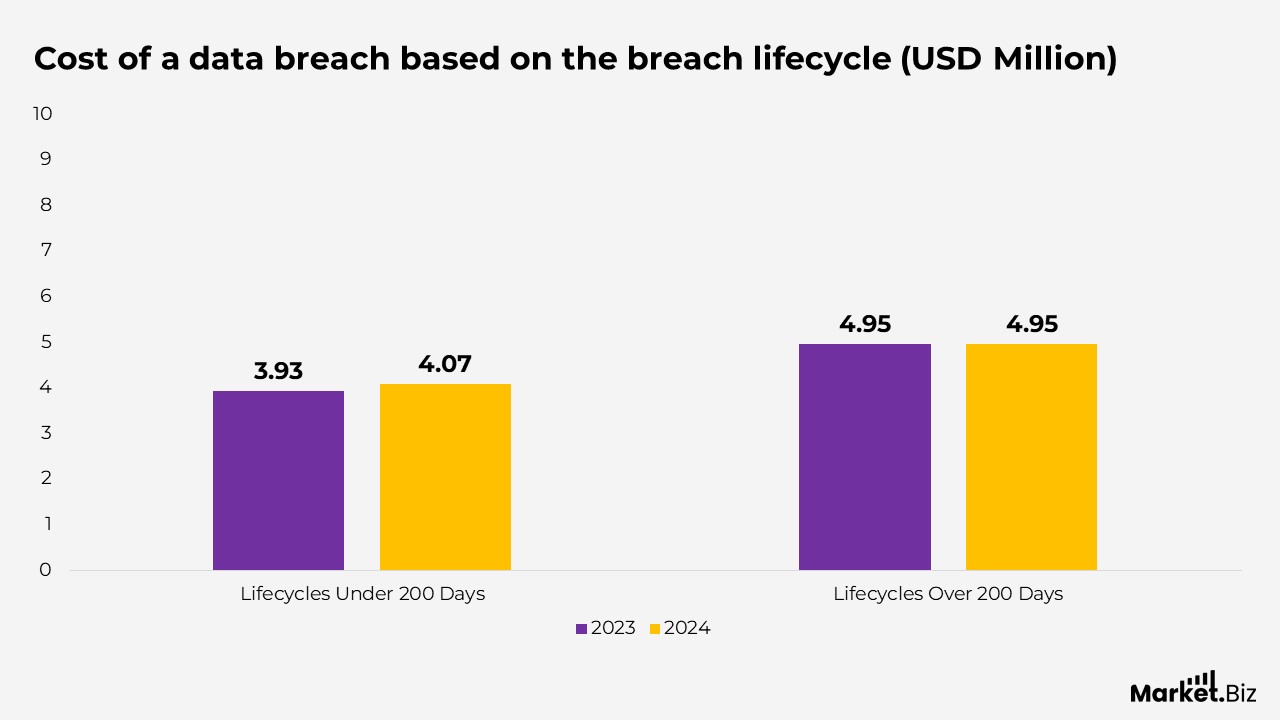
(Source: International Business Machines Corporation)
Financial Impact of Endpoint Breaches and Ransomware Attacks
- IBM reports that the average cost of a data breach stands at USD 4.27 million. In contrast, ransomware attacks cost around USD 4.62 million, and destructive attacks that wipe or destroy data cost approximately USD 4.69 million.
- The financial burden of a successful endpoint attack has escalated from USD 7.1 million to USD 8.94 million.
- According to Coveware, while the average ransomware payout remained stable between Q2 and Q3 of 2021, the median payout doubled, likely because attackers shifted their focus from large enterprises to mid-sized businesses to avoid attention from national law enforcement.
- Beyond financial losses, data exfiltration has become a common tactic, with over 80% of ransomware incidents in Q3 2021 involving threats to leak stolen data.
- The growing centrality of data to business operations is prompting more organizations to pay ransoms despite official warnings. In Q3, 47.8% of companies paid, rising to 59.6% in Q4.
- Sophos found that 56% of companies successfully recovered data from backups, while only 26% recovered data by paying ransom.
- Alarmingly, paying the ransom doesn’t guarantee data recovery—1% of companies paid but never recovered their data.
- The average global cost of ransomware incidents is USD 761,106, with small to mid-sized companies (100–1,000 employees) averaging USD 505,827 and larger companies (1,000–5,000 employees) facing average costs of USD 981,140.
(Source: Coveware, International Business Machines Corporation, Expert Insights )
Ransomware
- In 2021, 53% of organizations experienced successful ransomware attacks, representing a 148% increase from the previous year.
- In Q3 2021, 47.8% of affected companies opted to pay the ransom, with this figure climbing to 59.6% by Q4.
- Multiple attack vectors contribute to endpoint security risks, with 59% of ransomware incidents involving data hosted in public cloud services such as Office 365 or AWS.
- The majority of ransomware infiltrations begin through user interaction—29% originate from individuals downloading suspicious files or clicking on malicious links.
- Sophos research indicates that 29% of ransomware infections are delivered via phishing emails containing malicious links or downloads.
- Remote server attacks account for 21% of ransomware intrusions, while phishing emails with harmful attachments are responsible for 16% of attacks.
(Source: Statista, Community Banking Connections, Sophos, EnigmaSoft Ltd., Expert Insights )
Endpoint Security Trends
- Approximately 58% of organizations worldwide have employees working remotely, which offers flexibility but introduces multiple security challenges.
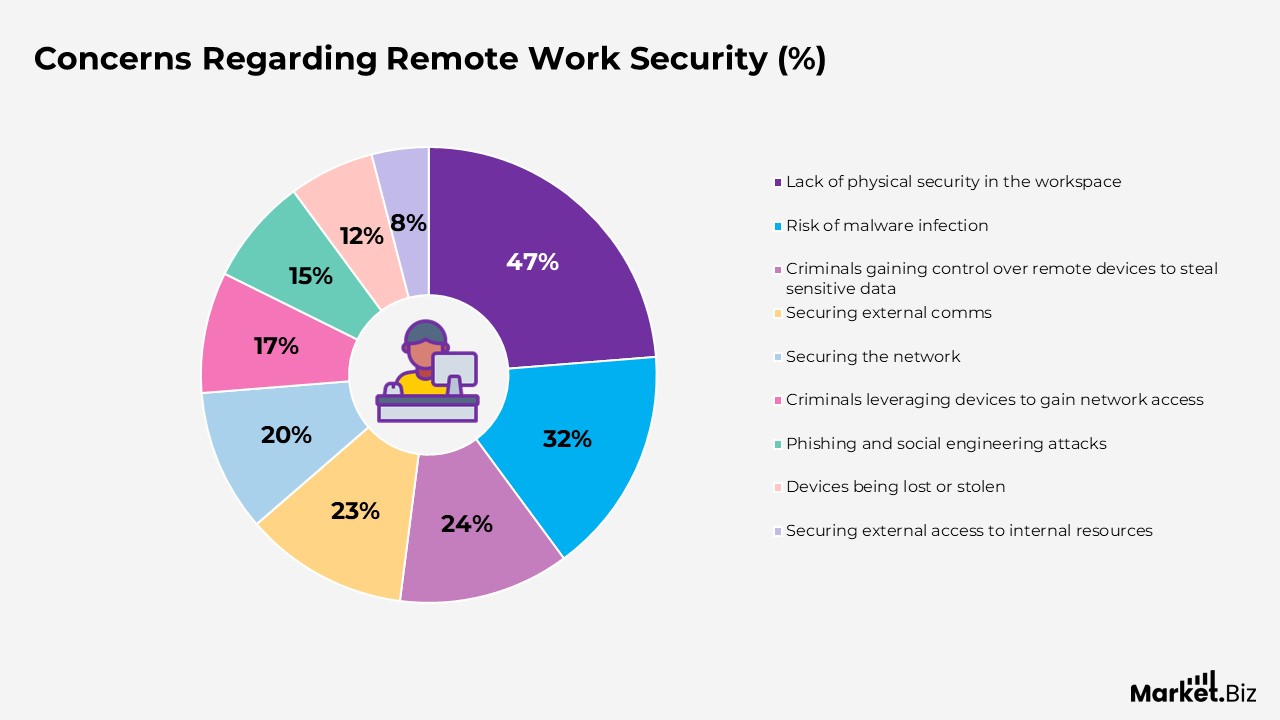
- In a Ponemon survey, respondents identified their top concerns regarding remote work security:
- 47% cited the absence of physical security at remote work locations as their biggest worry.
- 32% were concerned about the risk of malware infections on remote devices.
- 24% feared cybercriminals taking control of remote systems to extract sensitive data.
- 23% pointed to the challenge of securing external communications.
- 20% expressed concern over securing overall network access.
- 17% worried about attackers using compromised devices to infiltrate corporate networks.
- 15% identified phishing and social engineering attacks as a growing threat.
- 12% were concerned about the risk of devices being lost or stolen.
- 8% noted difficulties in managing secure external access to internal company resources.
(Source: Ponemon, Expert Insights )
Employee-Related Endpoint Security Threats
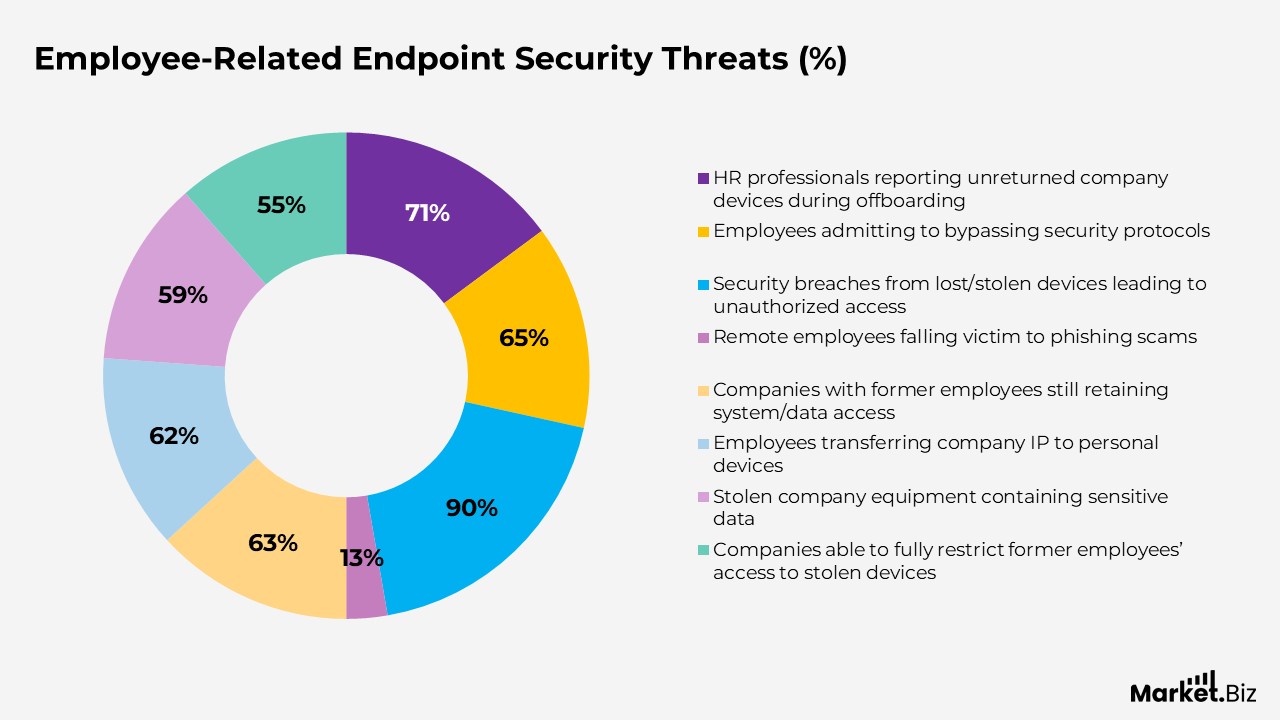
- 71% of HR professionals who managed employee offboarding in the past year stated that at least one departing employee failed to return company-issued devices like laptops or smartphones.
- 65% of employees admit to intentionally bypassing their organization’s security protocols to enhance productivity or simplify their work processes.
- More than 90% of security breaches involving lost or stolen devices result in unauthorized access to sensitive data.
- 13% of remote employees acknowledged falling victim to phishing scams while working from home.
- Research by Wing Security revealed that 63% of companies may still have former employees who retain access to organizational systems or data.
- 62% of surveyed employees disclosed transferring company intellectual property to personal or non-company devices.
- In cases of stolen company equipment, 59% contained sensitive data, while only 55% of companies were able to restrict former employees’ access to these devices fully.
(Source: Capterra, The HIPAA Journal, Samsung Knox, Security Magazine, USACI, Guardz Cyber Ltd)
Endpoint Threats
- Endpoint malware detections surged by 300% in Q3 2024, highlighting a dramatic escalation in malicious activity targeting endpoints.
- In 2024, a data breach at Twilio exposed 33 million Authy user phone numbers, traced back to an unauthenticated API endpoint vulnerability.
- 54% of security professionals reported that more than cloud environments20% of their organization’s endpoints remain unmanaged, leaving significant gaps in protection.
- Verizon’s Mobile Security Index revealed that 90% of successful cyberattacks and 70% of data breaches originate from compromised endpoint devices.
- A recent survey found that 67% of Managed Service Providers (MSPs) experienced attacks from AI-powered threats within the past year, with growing concerns that AI-driven attacks may soon surpass traditional endpoint threats in severity.
(Source: Help Net Security, Security Week, IDG Communications, Inc., Verizon Business 2023 Mobile Security Index, Guardz Cyber Ltd. )
Conclusion
The expanding set of endpoint security statistics underscores the growing sophistication and intensity of today’s cyber threats. With the continued adoption of remote work environments, Bring Your Device (BYOD) practices, cloud-driven operations, and endpoint vulnerabilities have become increasingly pronounced.
The escalating financial impact of breaches, particularly those tied to ransomware attacks and compromised credentials, underscores the urgent need for robust security measures. The integration of AI-powered defence systems, automation, and real-time threat detection is proving vital in reducing both the cost and duration of breaches.
Looking ahead, organizations that prioritize cutting-edge endpoint protection, implement strict security protocols, and address gaps in cybersecurity expertise will be better equipped to navigate the evolving threat landscape and maintain long-term business stability.
FAQ’s
With the expansion of remote work, BYOD practices, and cloud adoption, organizations are managing an increasing number of connected devices. These endpoints create additional entry points for cybercriminals, making them prime targets for advanced threats, such as ransomware, phishing, and zero-day attacks.
The financial impact encompasses both direct expenses, such as data recovery and ransom payments, and indirect costs, including operational disruptions, regulatory fines, legal fees, and damage to brand reputation. Globally, the average cost of endpoint breaches has increased sharply in recent years.
Ransomware incidents typically drive up breach-related costs due to ransom demands, the threat of data exposure, and extended recovery efforts. Even when ransoms are not paid, these attacks often result in significant financial losses running into millions of dollars.
AI-powered tools and automation enhance the early detection of threats, speed up incident response, and reduce the risk of human errors. Organizations that heavily implement these technologies report considerably lower breach costs compared to those using manual security measures alone.
Sectors such as healthcare, financial services, government, and manufacturing are particularly vulnerable due to the sensitive nature of their data and the complexity of their IT environments. These industries often experience higher costs and longer recovery times when breaches occur.
Breaches involving compromised or stolen credentials are usually the most time-consuming to detect and resolve, often taking several months. The longer the delay in detection, the greater the potential damage and associated costs will be.