









Introduction
Internet of Things Statistics: The Internet of Things (IoT) is revolutionizing the way devices and systems interact, paving the way for a new age of connectivity and automation. As smart devices, ranging from home appliances to industrial equipment, become more prevalent, IoT forms an interconnected network that facilitates real-time data exchange and automation across numerous sectors.machine learning
The expansion of 5G networks, combined with advancements in artificial intelligence (AI) and machine learning, further amplifies the potential of the Internet of Things (IoT), driving efficiency and creating new opportunities in industries such as healthcare, manufacturing, logistics, and agriculture.
While IoT holds the promise of increased productivity, cost reductions, and innovative business models, it also introduces challenges related to data privacy, security, and regulatory concerns. As the Internet of Things (IoT) continues to evolve, its influence on both industries and daily life is expected to grow significantly.
Editor’s Choice
- The global IoT connections surged by 18% in 2022, reaching 14.3 billion lively IoT endpoints.
- In 2023, IoT Analytics forecasts a further 16% increase in the number of connected IoT devices, transporting the total to 16.7 billion active endpoints.
- By 2030, it is anticipated that the number of IoT devices will surpass 25.4 billion.
- The largest share of IoT spending is allocated to video entertainment.
- Over 10% of venture capital funding is now directed towards IoT-related investments.
- IoT devices are expected to produce 79.4 zettabytes (ZB) of data by 2025.
- 58% of IoT manufacturers believe that the Industrial Internet of Things (IIoT) is essential for the successful digital transformation of businesses in manufacturing.
- Security remains a top priority for both IoT developers and users, particularly with 1.5 billion cyberattacks reported in 2021 targeting IoT devices.
Growth Trends in the Internet of Things (IoT)
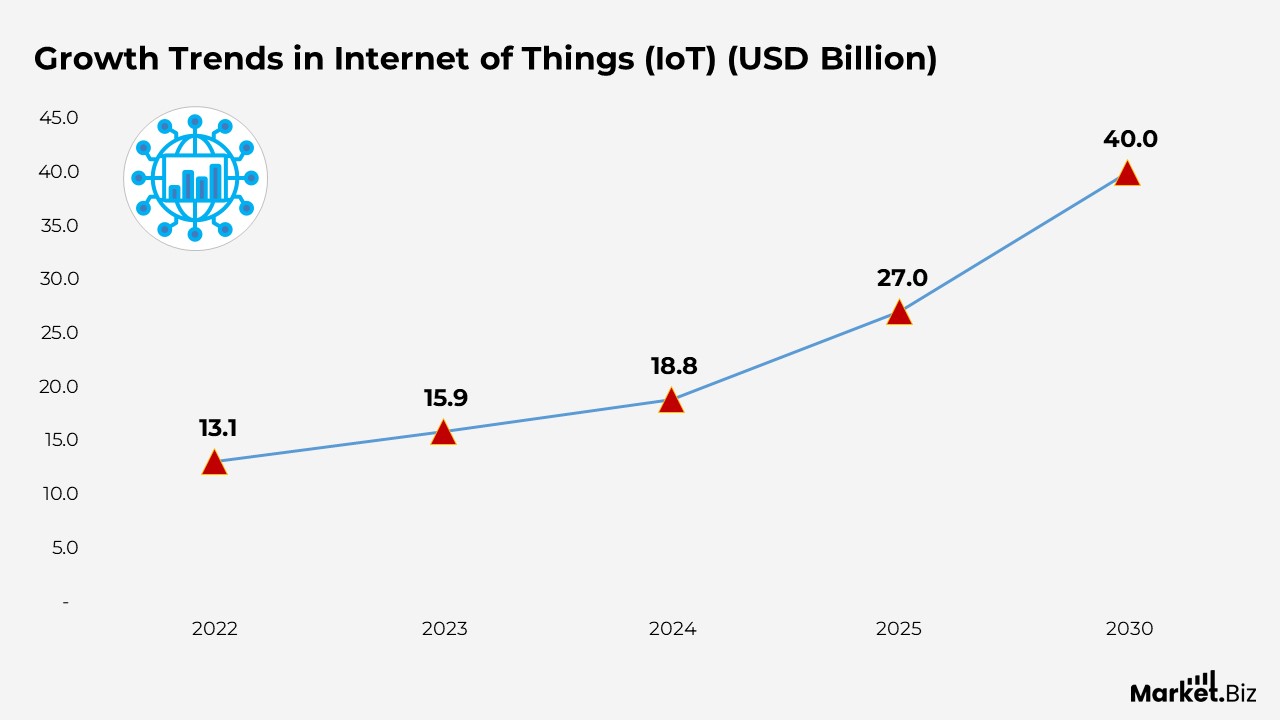
- In 2022, the global number of connected Internet of Things (IoT) devices reached 13.1 billion.
- By 2023, this figure grew to 15.9 billion connected devices.
- In 2024, the number of connected IoT devices is forecasted to reach around 18.8 billion.
- By 2025, it is expected that the number of connected devices will exceed 27 billion.
- Looking ahead, by 2030, the global count of IoT devices is expected to surpass 40 billion.
- This growth trajectory represents a steady 13% annual increase, driven by the rising adoption of IoT across sectors, including smart homes, industrial automation, healthcare, agriculture, and smart cities.
(Source Autobits Labs Pvt Ltd)
General Internet of Things (IoT) Statistics
- The number of connected IoT devices worldwide exceeds the global population by more than 2 times.
- According to the latest data, there are approximately 18.8 billion connected IoT devices worldwide.
- Over the next five years, the number of IoT devices is expected to surpass 40 billion.
- In 2023, IoT spending is estimated to have exceeded $1 trillion.
- The current global data volume stands at around 120 zettabytes, with IoT devices alone projected to generate 73.1 zettabytes of data by 2025.
- By 2025, approximately 152,200 IoT devices are expected to connect to the internet every minute.
- Every minute, 7,620 new Internet of Things (IoT) devices are connected, which equates to one device being added every 127 seconds.
- By 2025, the number of connected devices per minute is expected to rise to 152,000.
- IoT devices are projected to generate 79.4 zettabytes (ZB) of data by 2025.
- 58% of IoT manufacturers agree that the Industrial Internet of Things (IIoT) is critical for the successful digital transformation of businesses in manufacturing.
- Security remains a primary concern for IoT developers and users, particularly given that in 2021, there were 1.5 billion cyberattacks targeting IoT devices.
(Source: McKinseyDigital, International Data Corporation, GE Digital, Velvetech, SmartTek Solutions.LLC, Statista)
IoT Device Management Market Size
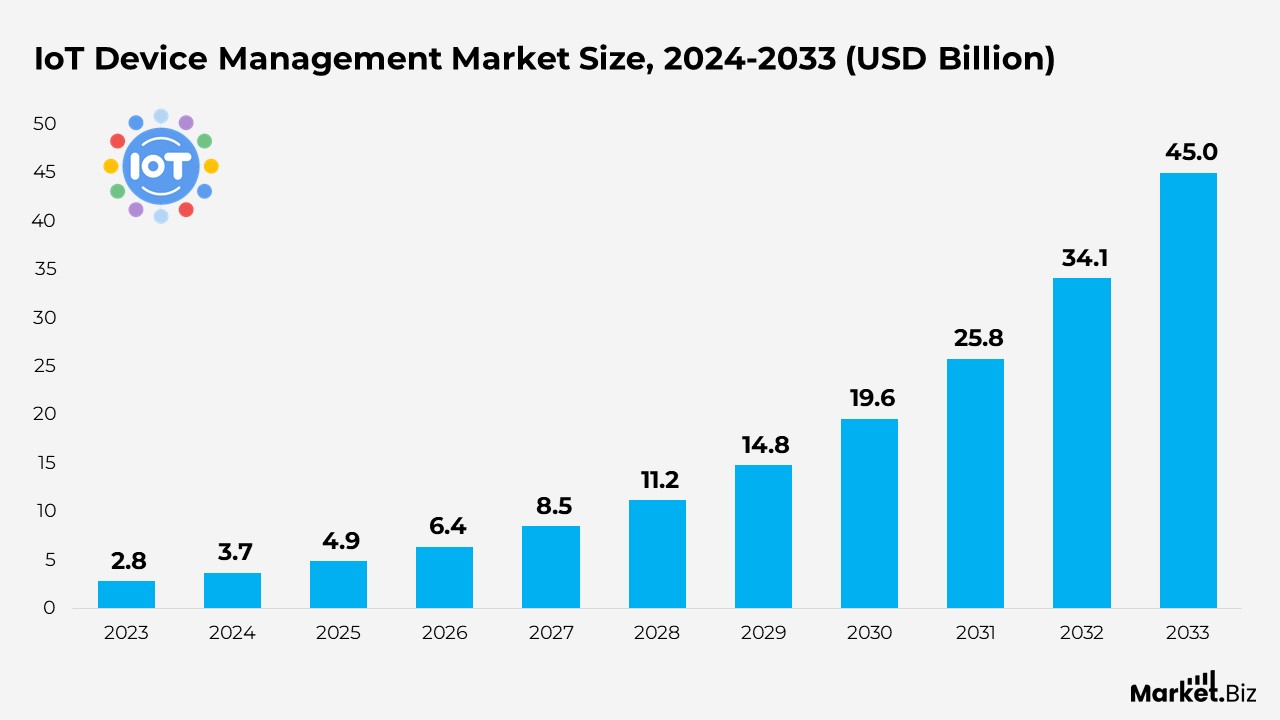
- According to Market.us, the IoT device management market is projected to grow from $3.7 billion in 2024 to $45.0 billion by 2033, representing a compound annual growth rate (CAGR) of 32.0% from 2024 to 2033.
- Market growth is driven by the increased integration of smart devices across industries and the need for advanced IoT management solutions.
- In 2023, the solution segment led the market, with data management holding a dominant 25.5% share.
- Professional services captured the largest market share at 68.1% in 2023, highlighting the complexity of IoT device management.
- The manufacturing sector led the IoT device management market in 2023 with a 33.7% share, driven by digital transformation efforts.
- North America dominated the market in 2023, accounting for a 34.3% share, primarily due to its robust IoT infrastructure and strong tech presence.
- Microsoft led the competitive landscape with a 24.5% market share, supported by a $10 billion investment in its Azure IoT platform.
- Amazon Web Services (AWS) followed closely with a 22.3% share, fueled by a $5 billion investment in its AWS IoT services.
- PTC secured a 12.2% market share, dedicating $200 million to enhance its ThingWorx platform for industrial applications.
- Google Cloud Platform (GCP) captured a 10.8% market share with a $1 billion investment in its Cloud IoT Core platform.
- IBM maintained an 8.6% market share with a $1 billion investment in its Watson IoT platform, focusing on the integration of cognitive computing.
(Source: Market.us)
Healthcare Internet of Things (IoT) Security Market Size
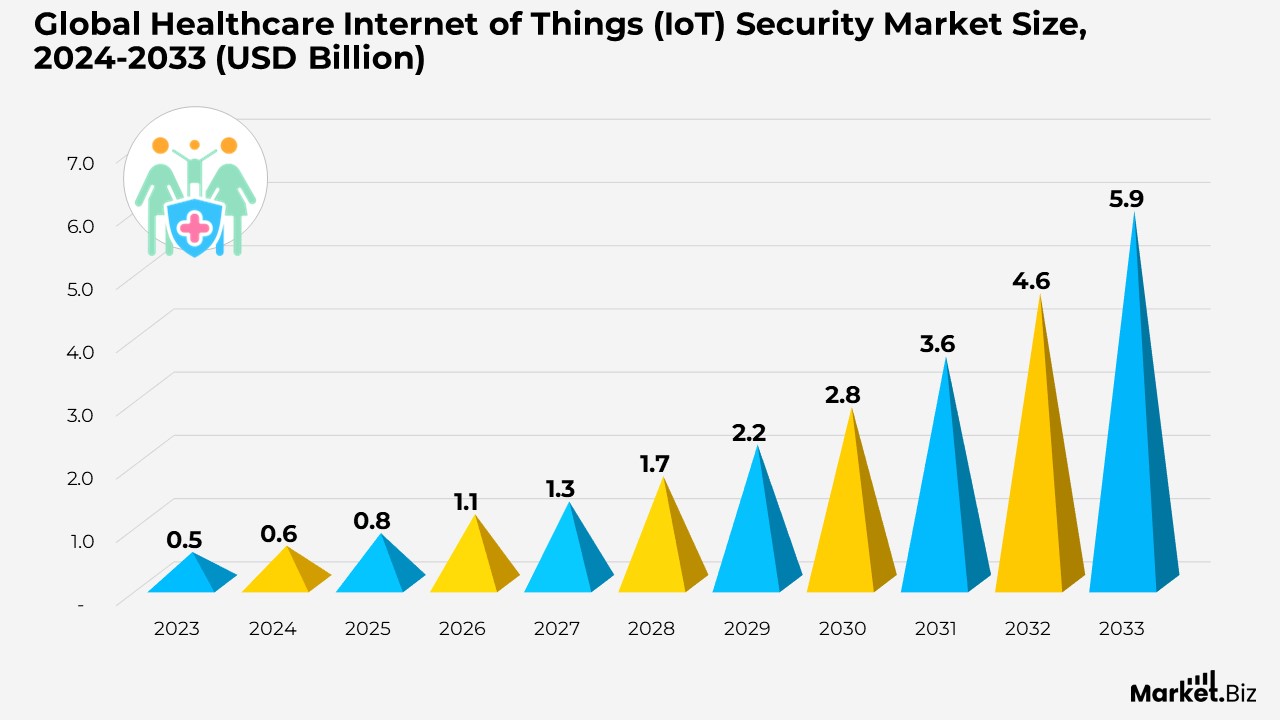
- According to Market.us, the healthcare Internet of Things (IoT) security market is projected to grow from $0.6 billion in 2024 to $5.9 billion by 2033, representing a compound annual growth rate (CAGR) of 28.1% from 2024 to 2033.
- Market growth is driven by increased adoption of IoT in healthcare, growing cybersecurity awareness, and stringent data protection regulations.
- In 2023, the Solutions segment led the Healthcare IoT Security Market, capturing over 57.1% of the market share.
- Cloud Security played a significant role in the Healthcare IoT Security Market in 2023, holding over 35.8% of the market share.
- Hospitals and clinics dominated the Healthcare IoT Security Market in 2023, securing over 61.8% of the market share due to the need for enhanced data protection.
- North America led the Healthcare IoT Security Market in 2023, with a market share of 46.2% and a value of approximately USD 0.28 Billion.
- North America’s advanced technological infrastructure, especially in healthcare facilities and IT ecosystems, played a key role in driving the adoption of IoT security solutions.
(Source: Market.us)
Global Internet of Things Adoption
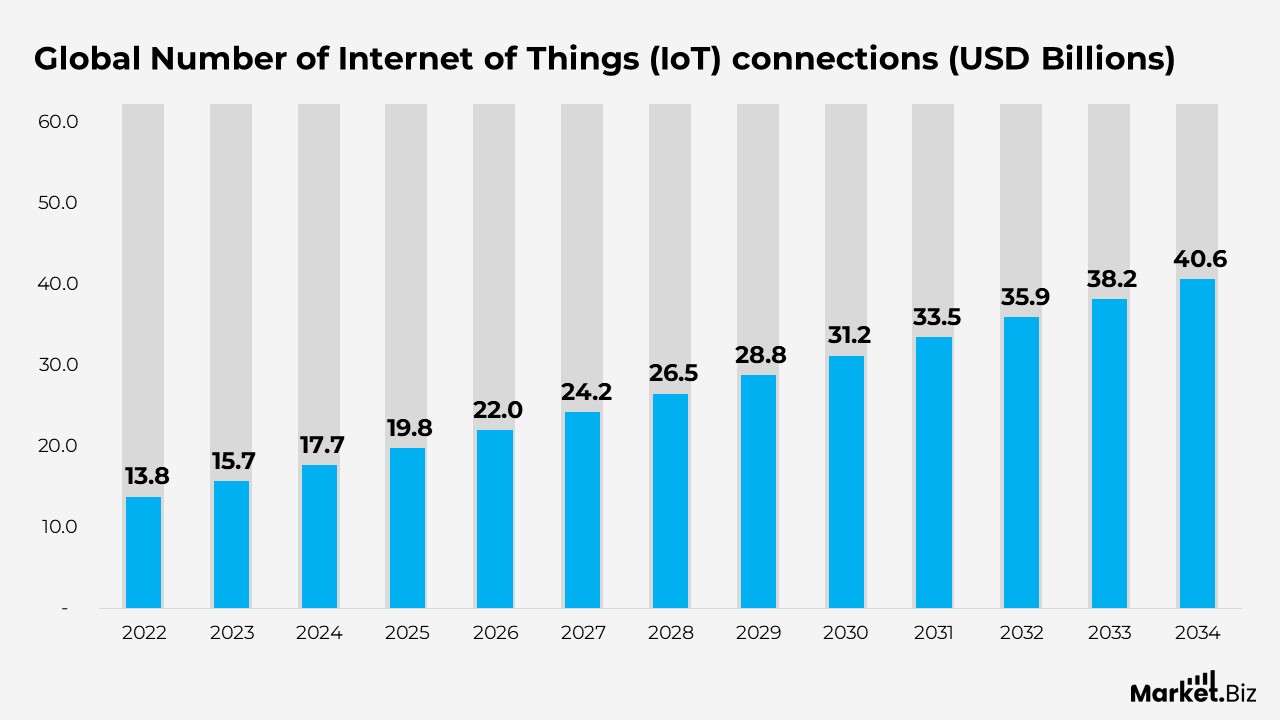
- The global number of Internet of Things (IoT) devices is expected to more than double from 19.8 billion in 2025 to over 40.6 billion by 2034.
- In 2034, China is forecast to have the highest number of IoT devices, with approximately 7.51 billion consumer devices.
- IoT devices are utilized across various manufacturing verticals and consumer markets, with the consumer segment reported for about 60% of all connected devices in 2025, a share expected to remain stable over the next decade.
- Industry verticals with over 100 million connected IoT devices include electricity, gas, steam and air conditioning, water supply and waste management, retail and wholesale, transportation and storage, and government.
- By 2033, the total number of IoT devices across all industries is projected to exceed 8 billion.
- The most prominent use case for IoT devices in the consumer segment is consumer internet & media devices, such as smartphones, with IoT devices expected to reach over 17 billion by 2033.
- Other significant IoT use cases forecasted to surpass 1 billion devices by 2033 include IT infrastructure, connected (autonomous) vehicles, asset tracking & monitoring, and smart grids.
(Source: Statista)
Internet of Things (IoT) Connectivity
- LPWANs (Low Power Wide Area Networks provide long-range communication with small, low-cost batteries that last for years, designed to support large-scale IoT networks across extensive areas.
- Other Mesh Protocols and Zigbee is short-range wireless technology that uses sensor data and nodes, offering high data rates but is less power-efficient than LPWANs.
- Bluetooth and BLE (Bluetooth Low Energy) is short-range communication technologies that facilitate data exchange between multiple nodes, with BLE designed for low-power, small consumer IoT applications.
- Wi-Fi: Less commonly used in the IoT space due to challenges with scalability, coverage, and power consumption.
- Cellular Networks (3G/4G/5G) is used for phone calls, internet access, and video streaming, among other functions. These networks are costly to operate and consume a lot of power.
- RFID (Radio Frequency Identification) uses radio waves to transmit data from an RFID tag to a reader over short distances, commonly applied in logistics and retail.
(Source TechJury.net, Autobits Labs Pvt Ltd)
Growth of IoT Devices Statistics
- In 2025, non-IoT devices were projected to be 10.3 billion, while IoT devices were expected to reach 30.9 billion, making up 75% of total devices.
- In 2024, non-IoT devices were 10.2 billion, with IoT devices surging to 24.4 billion, representing 70.5%.
- In 2023, non-IoT devices remained at 10.2 billion, while IoT devices grew to 19.8 billion, making up 66%.
- In 2022, non-IoT devices had increased slightly to 10.1 billion, and IoT devices grew to 16.4 billion, representing 61.9%.
- In 2021, non-IoT devices were 10 billion, with IoT devices reaching 13.8 billion, accounting for 58%.
- In 2020, non-IoT devices held steady at 9.9 billion, while IoT devices expanded to 11.7 billion, making up 54.2%.
- In 2019, non-IoT and IoT devices reached 10 billion each, with IoT devices constituting 50%.
- In 2018, non-IoT devices remained at 9.9 billion, while IoT devices grew to 8 billion, making up 44.7%.
- In 2017, non-IoT devices slightly increased to 9.9 billion, and IoT devices rose to 6.1 billion, accounting for 38.1%.
- In 2016, non-IoT devices were 9.8 billion, with IoT devices growing to 4.6 billion, making up 31.9%.
- In 2015, non-IoT devices remained at 9.7 billion, and IoT devices increased to 3.6 billion, making up 27%.
- In 2014, non-IoT devices were 9.7 billion, while IoT devices expanded to 2.8 billion, representing 22.4%.
(Source: IoT Analytics, Semrush Inc)
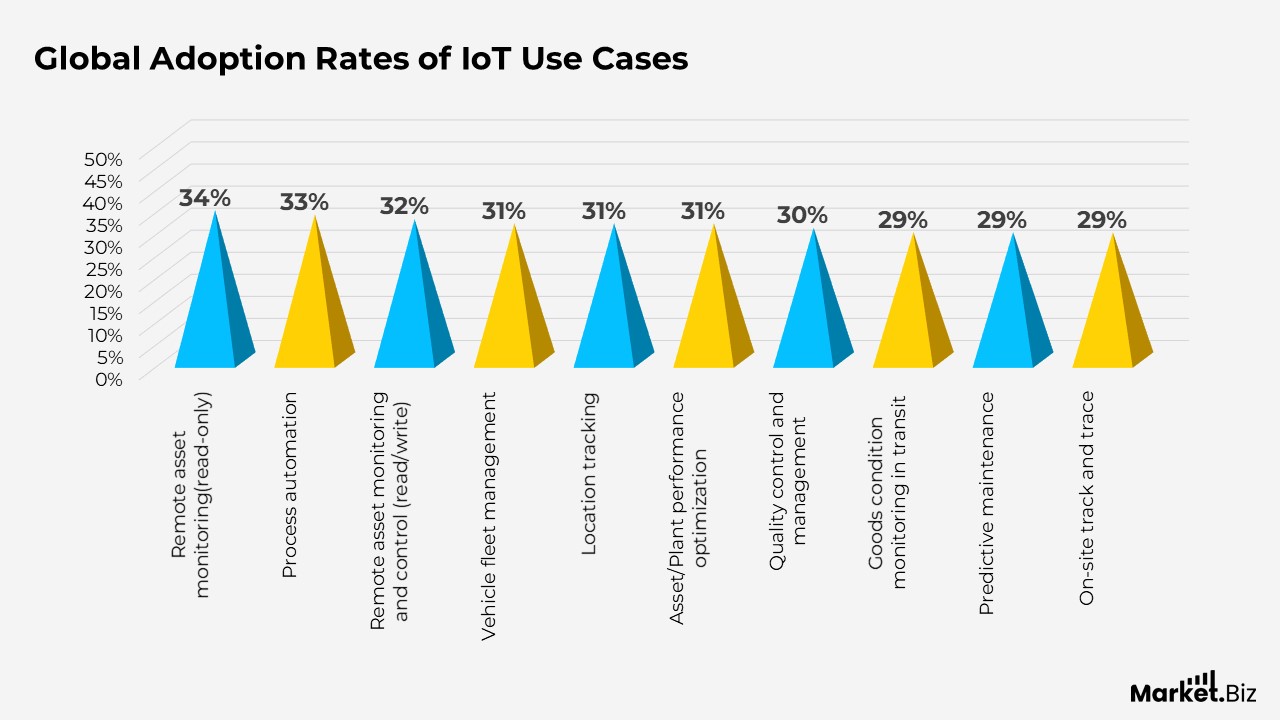
Global Adoption Rates of IoT Use Cases
- 34% of global adoption is attributed to remote asset monitoring (read-only).
- 33% of adoption is driven by process automation.
- Remote asset monitoring and control (read/write) accounts for 32% of global adoption.
- 31% of IoT adoption is focused on vehicle fleet management.
- Location tracking has a 31% adoption rate globally.
- Asset and plant performance optimisation achieves a 31% adoption rate.
- Quality control and management is adopted by 30% globally.
- Good condition monitoring during transit accounts for 29% of IoT adoption.
- Predictive maintenance has an adoption rate of 29%.
- On-site track and trace also sees a 29% global adoption rate.
(Source DemandSage)
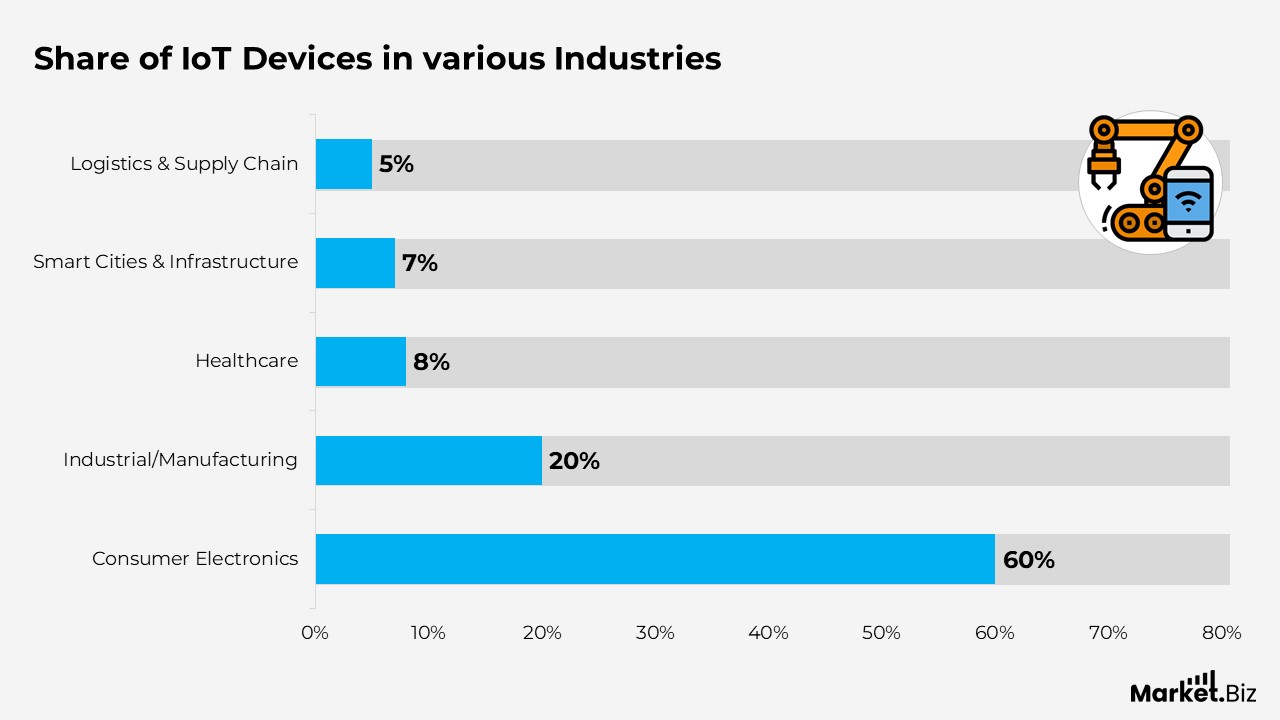
IoT Device
Distribution Across Industries
- Consumer electronics account for approximately 60% of the total IoT device market share.
- The industrial and manufacturing sectors account for around 20% of IoT devices.
- Healthcare accounts for approximately 8% of the total IoT device market share.
- Smart cities and infrastructure make up roughly 7% of the IoT devices.
- The logistics and supply chain sector holds nearly 5% of the total IoT devices.
(Source Autobits Labs Pvt Ltd)3
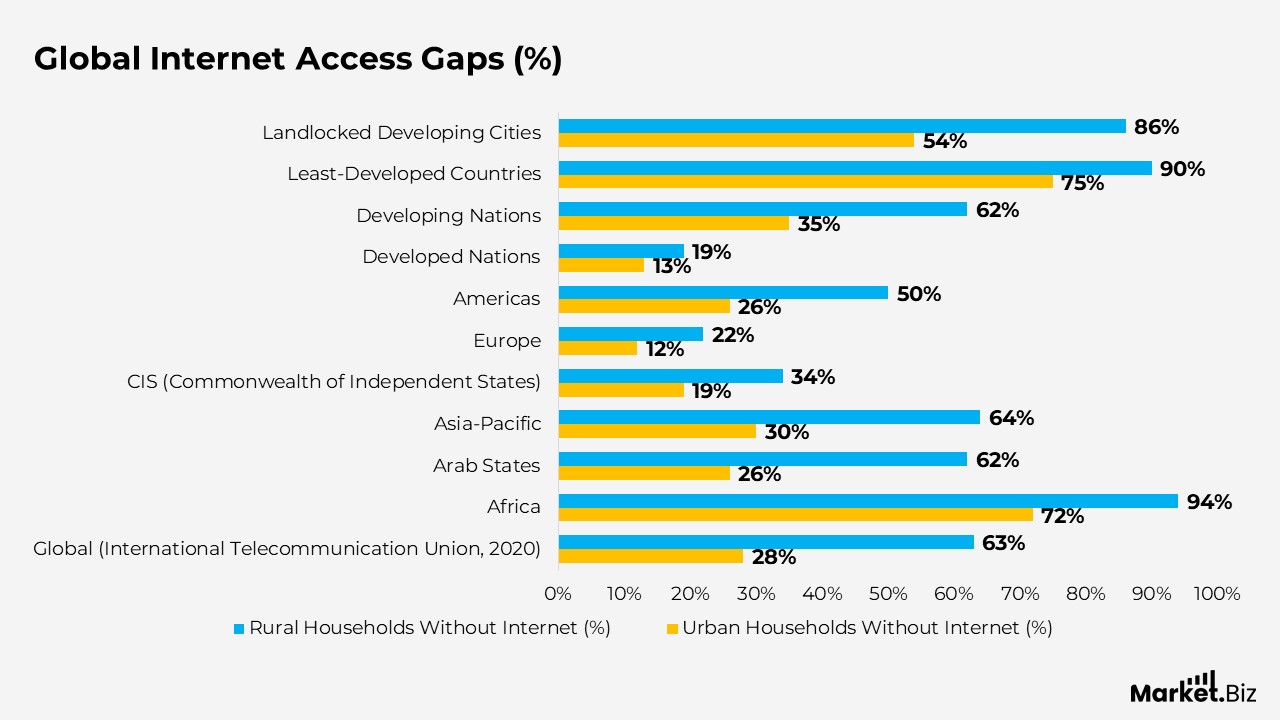
Global Internet Access Gaps
- According to the International Telecommunication Union 2020, 28% of urban households and 63% of rural households worldwide lack internet access.
- In Africa, 72% of urban households and 94% of rural households are without internet access.
- Approximately 26% of urban households in Arab states lack internet connectivity, with a similar 62% of rural households also without access.
- In the Asia-Pacific region, 30% of urban households and 64% of rural households lack internet access.
- 19% of urban households and 34% of rural households in the CIS (Commonwealth of Independent States) countries do not have internet access.
- 12% of urban households and 22% of rural households in Europe lack internet connectivity.
- In the Americas, 26% of urban households and 50% of rural households lack internet access.
- Among developed nations, 13% of urban households and 19% of rural households are without internet access.
- In developing nations, 35% of urban households and 62% of rural households remain without internet connectivity.
- In least-developed countries, 75% of urban households and 90% or more of rural households lack internet access.
- Approximately 54% of households in landlocked developing cities lack internet access, with a similar 86% of rural households in landlocked developing countries also lacking online connectivity.
- In the United States, between 21 million and 162 million people lack internet access, with 14% of the population still without online connectivity.
(Source: Pew Charitable Trusts, International Telecommunication Union, World Economic Forum)
Internet of Things (IoT) Trends
- More than 60% of companies currently utilize IoT, while only 9% have no adoption of IoT.
- Out of the 21.7 billion connected devices in 2020, approximately 11.7 billion (54%) were IoT-connected devices.
- By 2025, it is estimated that the number of IoT device connections will reach 30 billion.
- This translates to an average of 4 IoT devices per user.
- The global industrial IoT market size is projected to reach $110.6 billion by 2025.
- It is estimated that 5.7 billion IoT devices will be connected to cellular networks by 2026.
- The IoT security services market is projected to be worth $16.8 billion by 2026, driven by the growing demand for enhanced protection of IoT-connected devices.
- 24% of consumers report feeling overwhelmed by the number of devices and subscriptions they need to manage.
- In 2022, the average number of connected IoT devices per household in the U.S. was 22.
- IoT end-user spending is projected to reach $1.6 trillion by 2025.
- Approximately 35% of manufacturers utilise data derived from automation in their manufacturing processes.
- As of 2022, 32% of U.S. consumers owned a smart speaker.
- The adoption of low-power networking systems and satellites saw a 20% growth in 2021.
- In 2022, the average number of connected devices per U.S. household was 22.
- 62% of smart speaker users now own more than one device.
- Edge AI is becoming increasingly standard as it enables real-time data processing for users.
(Source: Estuary Technologies, Inc. Statista, IoT Analytics, Autobits Labs)
Internet of Things (IoT) Security Challenges
- 75% of IoT attacks are routed through routers, with an average of 5,200 attacks per router recorded monthly.
- 56% of IoT devices are more susceptible to malware and cyberattacks due to outdated operating systems.
- 48% of businesses admit that they lack the efficiency to detect IoT breaches within their networks.
- 55% of brands and businesses believe third-party IoT providers should adhere to privacy and security regulations.
- 84% of companies that have adopted IoT reported experiencing security breaches, with 50% citing cost and 44% pointing to maintenance as the most common issue.
- Attacks on IoT devices that disrupt critical operations are seen as the top security concern by 33% of IT executives.
- Nearly 60% of organizations worldwide are using IoT solutions, but 43% of enterprises lack a system to protect their infrastructure.
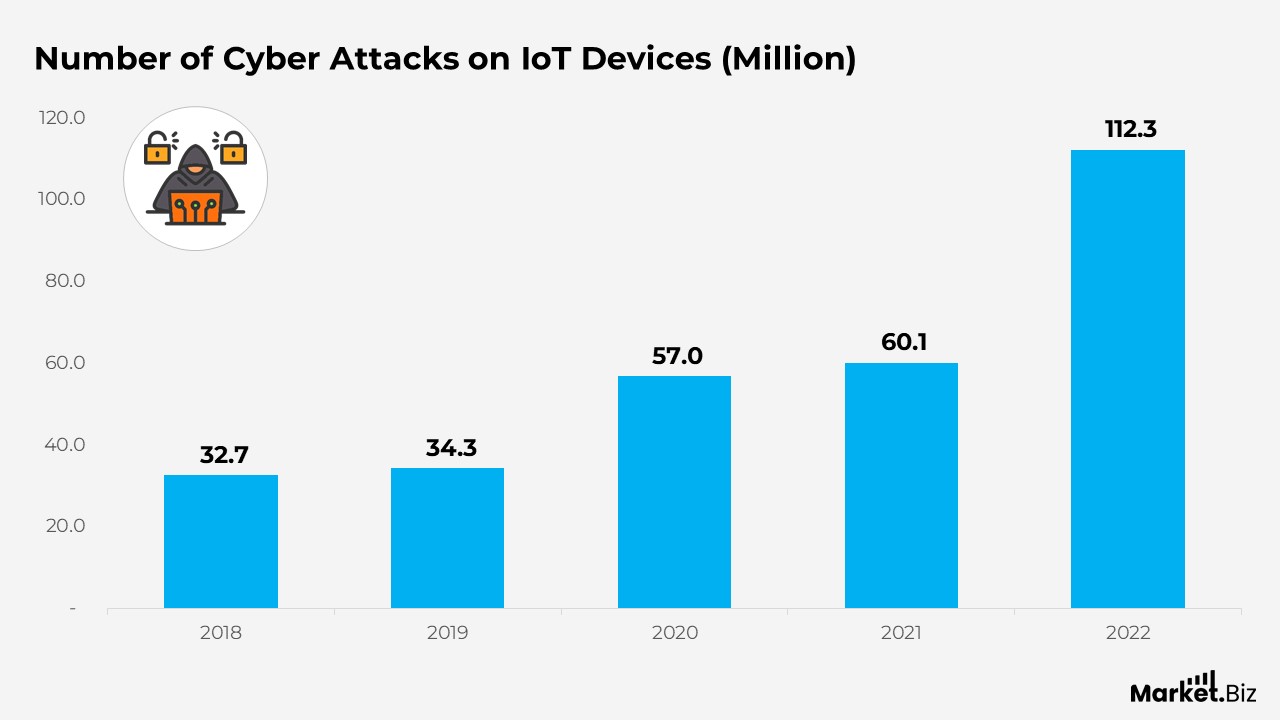
- In 2022, the total number of cyberattacks on Internet of Things (IoT) devices exceeded 112 million. Here’s a breakdown of the number of attacks in previous years:
- In 2018, there were 32.7 million cyberattacks on IoT devices.The following year, 2019, saw a slight increase to 34.3 million attacks.In 2020, the number of IoT cyberattacks rose significantly to 56.95 million.In 2021, this number further climbed to 60.14 million.
- By 2022, the number of IoT cyberattacks more than doubled, reaching 112.29 million.
(Source: DemandSage)
Conclusion
The Internet of Things (IoT) is evolving rapidly, with broad adoption anticipated across diverse industries and consumer sectors. As more industries implement IoT solutions, the consumer segment will remain a major driver. At the same time, sectors such as manufacturing, transportation, and energy are expected to see significant growth, enhancing efficiencies and fostering innovation.
The increasing number of IoT devices will result in vast amounts of data being generated, highlighting the critical need for stronger security measures to safeguard connected devices. Looking forward, the Internet of Things (IoT) is poised to transform industries and everyday life, building a more interconnected world and unlocking new possibilities for automation, smart living, and business advancements.
FAQ’s
More than 60% of companies worldwide have integrated IoT technology, while just 9% have yet to adopt it. The number of connected IoT devices is steadily increasing, with billions of devices expected to be in operation in the coming years.
The IoT market is projected to grow substantially, with the number of connected devices expected to more than double within the next decade. This growth is driven by widespread adoption across both industrial sectors and consumer markets.
Industries such as manufacturing, transportation, energy, and healthcare are at the forefront of adopting the Internet of Things (IoT). The consumer sector will continue to lead, with significant contributions from areas like smart homes, retail, and logistics.
Consumer internet and media devices, particularly smartphones, represent the largest use case for IoT devices. These devices are expected to remain a major driver in the continued expansion of IoT in the coming years.
IoT devices are forecasted to generate an enormous volume of data, with estimates suggesting that by 2025, the data produced by IoT devices will reach several tens of zettabytes. This makes data management and security crucial concerns for both businesses and consumers.
Security is a critical concern for both IoT developers and users. As the number of IoT devices continues to grow, so does the risk, with billions of cyberattacks targeting IoT devices each year. This highlights the need for stronger cybersecurity measures to protect these connected devices.