









Introduction
Cloud Security Statistics: As businesses continue to embrace cloud-based solutions, cloud security has emerged as a top priority due to the increasing number of cyber threats targeting their data and operations. The rise of cyberattacks, including data breaches, ransomware, and unauthorized access, has prompted organizations to reassess their security strategies to ensure sensitive information is protected and business continuity is maintained.
In response to the evolving digital landscape, companies are investing in robust security measures such as encryption, multi-factor authentication, and secure access controls to safeguard their cloud environments. This growing demand for cloud security solutions highlights the need to navigate the complexities of protecting cloud infrastructures, providing critical insights into the risks and opportunities organizations must address to secure their vital assets.
Editor’s Choice
- In 2021, 80% of organizations encountered significant cloud security issues, highlighting the growing challenges in safeguarding cloud infrastructures.
- 58% of developers and security professionals anticipate an increased risk in cloud security in 2024, reflecting concerns over emerging threats.
- Cloud security continues to be a major focus, with 83% of organizations identifying it as a primary concern in 2024, underscoring the need for more effective protection strategies.
- In 2023, 82% of cloud data breaches were linked to data stored within the cloud, reflecting ongoing vulnerabilities in data storage practices.
- The startups (89%) and public sector (88%) were most impacted by cloud security breaches in 2023, emphasizing the need for enhanced security measures in these sectors.
- According to findings in 2023, 82% of cloud data breaches involved data stored in cloud environments, highlighting a critical risk area.
- From 2022 to 2023, there was a 75% increase in cloud environment intrusions, indicating a significant rise in security challenges.
- In 2024, 27% of businesses experienced a public cloud security incident, representing a 10% increase compared to the previous year.
- The volume of data stored in the cloud is expected to reach 100 zettabytes by the end of 2025, marking a massive expansion in cloud storage.
- In April2020, 51% of the U.S. workforce was working remotely full-time. By 2021, this number decreased to 25%, though it remains above pre-pandemic levels.
Moreover
- Remote workers are now taking an average of 5.8 remote workdays per month, up from 2.4 days per month before the pandemic.
- The global market value for cloud storage was projected at US$103.44 billion in 2023, with an expected rise to US$376.67 billion by 2029.
- Cloud security remains the top concern for 83% of organizations when it comes to cloud computing, highlighting the importance of strengthening security protocols.
- 80% of companies faced cloud security incidents in the past year, emphasizing the widespread challenges in cloud security management.
- Over 60% of organizations experienced security issues related to public cloud usage in 2024, reflecting the increasing complexity of cloud security.
- 88% of data breaches are caused by human error, pointing to the critical need for better training and awareness in cloud security practices.
- In 2024, 73% of organizations identified phishing as the most common cloud security breach, underlining its prevalence in cyberattacks.
- Preventing cloud misconfigurations was the top security priority for over 50% of companies in 2023, indicating its critical role in preventing breaches.
- 72% of security professionals listed underlying infrastructure compromise as a major concern in cloud security, reflecting ongoing vulnerabilities.
(Source: Snyc, Netgate, IBM, StationX, Crowdstrike, SentinelOne, Sprinto, ASTRA IT, Inc., Netgain Tech, Statista.)
General Cloud Security Statistics
- In 2022, enterprise spending on cloud infrastructure services rose to $225 billion, marking an increase of $47 billion compared to the previous year.
- Global spending on public cloud services is expected to grow by 20.4%, reaching $678.8 billion in 2024, up from $563.6 billion in 2023.
- 69% of organizations utilize three or more cloud service providers.
- A 2022 survey found that respondents were using an average of 147 public cloud services, a significant increase from 38 reported in 2020.
- A majority of organizations (71%) use a multi-cloud environment, driven by factors such as improving performance and latency (14%), reducing vendor lock-in (13%).
- Leveraging different providers’ strengths (17%) and enhancing resilience and disaster recovery (13%).
- It is predicted that by 2027, over 70% of enterprises will adopt industry cloud platforms to accelerate their business initiatives, up from less than 15% in 2023.
- 83% of organizations have moved their workloads to the cloud.
- In a 2022 survey, the majority of organizations (89%) reported hosting sensitive data or workloads in the public cloud.
- According to a study by Venafi, organizations currently host 41% of their applications in the cloud, with expectations to grow this figure to 57% over the next 18 months.
- 25% of organizations have at least 30% of their production workloads running on public cloud infrastructure, and 67% expect to have at least 30% of their workloads on public cloud infrastructure within the next 24 months.
- 66% of organizations have increased their investment in business-critical SaaS applications.
(Source: Statista, Gartner, Enterprise Strategy Group, Cloud Security Alliance, Google Cloud, Venafi, Secureframe)
Cloud Security Market Size
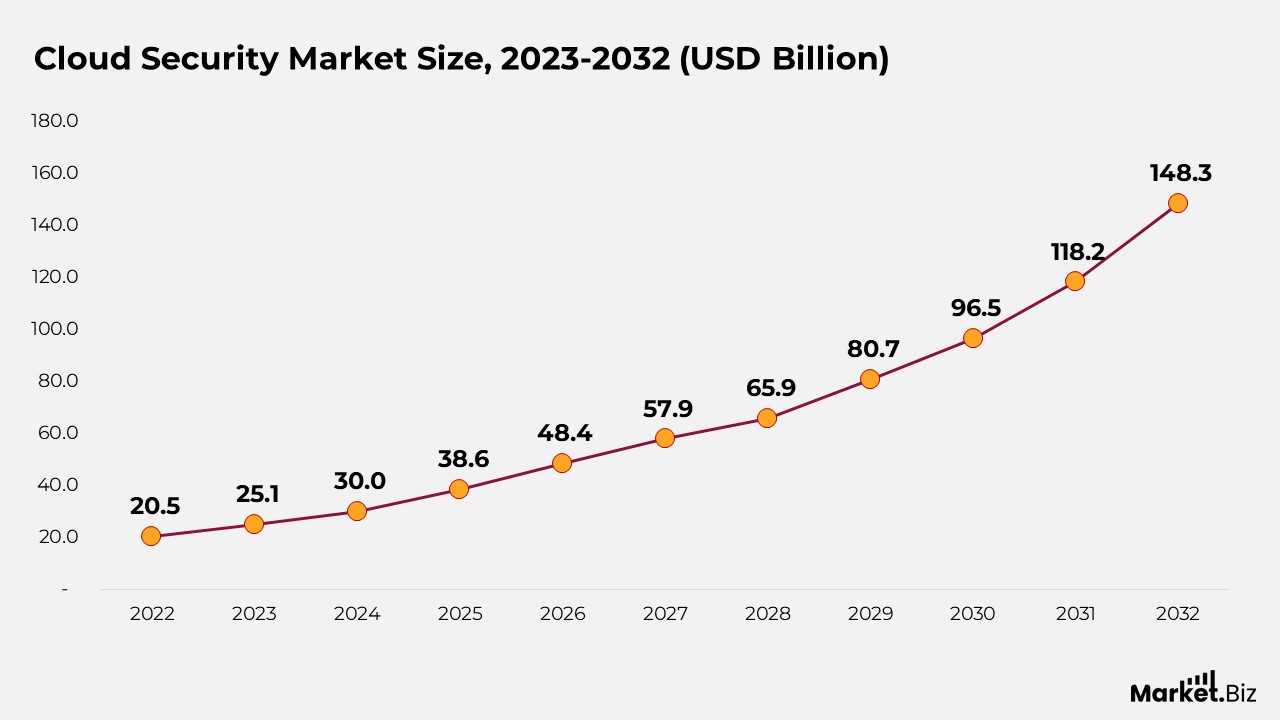
- According to Market.us, the cloud security market is expected to rise from $25.1 billion in 2023 to $148.3 billion by 2032, representing a compound annual growth rate (CAGR) of 22.5% from 2023 to 2032.
- The increasing sophistication of cybercrimes and data breaches drives the growth of the cloud security market.
- The Identity & Access Management (IAM) segment holds the largest market share at 46%, with technologies like multi-factor authentication and single sign-on playing a key role.
- The Data Loss Prevention (DLP) segment is expected to grow at a high CAGR due to the increased focus on data and network security solutions in response to rising data breaches.
- Large enterprises are increasing investments in cloud security solutions as they seek to enhance productivity and protect their operations in a competitive landscape.
- The IT & Telecommunications industry is expected to grow at the highest CAGR during the forecast period.
- The rise of 5G networks and the adoption of AI and data analytics are driving cloud security demand within the IT and telecom sector.
- North America leads the global cloud security market with a 42.4% share, driven by a high number of connected devices, rising cybercrime, and growing awareness of cloud security.
(Source: Market.us)
Cloud Security Software Market Size
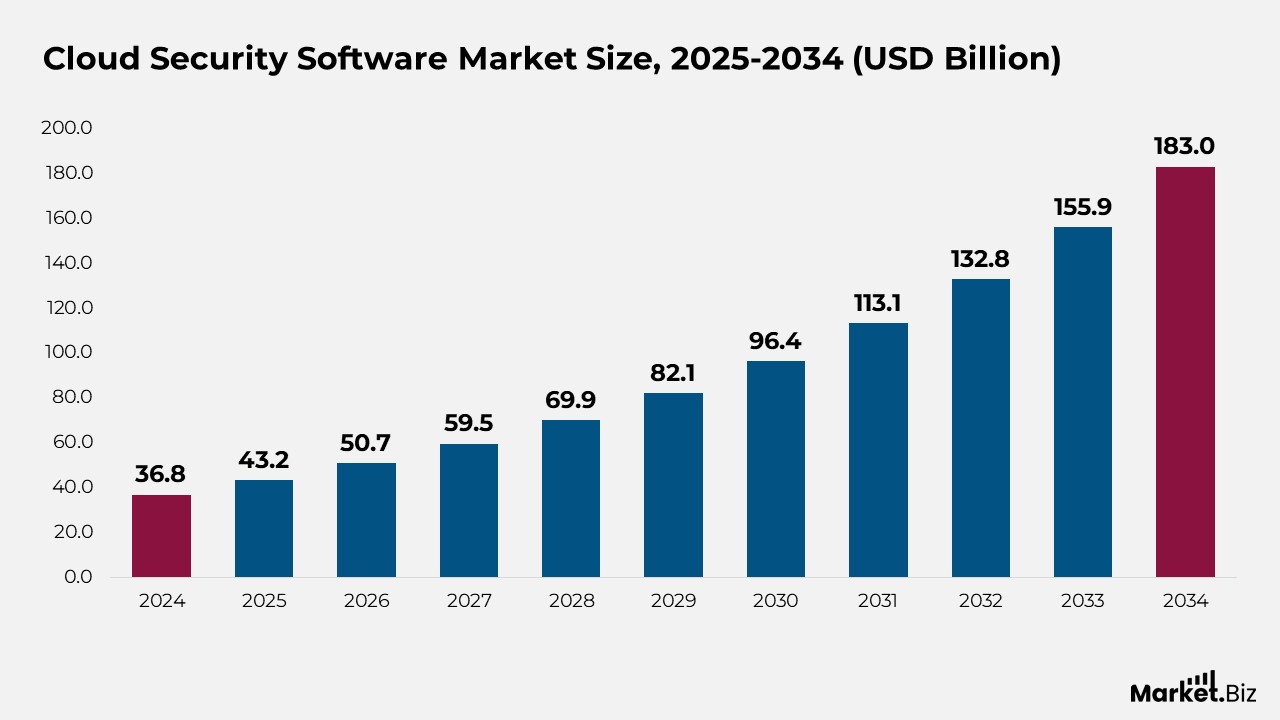
- According to Market.us, the cloud security software market is expected to grow from $43.2 billion in 2025 to $183.0 billion by 2034, representing a compound annual growth rate (CAGR) of 17.4% from 2025 to 2034.
- Increased investments in cloud security drive the market growth, the rise of DevOps, the growing multi-cloud environments, and the integration of AI and ML technologies, along with the adoption of remote work and digital transformation to combat cybersecurity breaches.
- In 2024, the solution segment led the global cloud security software market, accounting for over 72.9% of the market share, driven by the increasing complexity of cyber threats.
- In 2024, the private cloud segment dominated the global cloud security software market with 54.5% of the total share, due to its superior security and control mechanisms.
- In 2024, the Large Enterprises segment held a dominant market position with over 78.8% share, attributed to substantial investments in cloud development and infrastructure.
- In 2023, the BFSI segment captured more than 24.8% of the global cloud security software market, driven by the vast amounts of sensitive financial data that require robust protection.
- In 2024, North America led the cloud security software market with a 38.6% share and revenues amounting to USD 0.1 billion, supported by strong market dynamics.
Moreover
- The United States is leading the cloud security software market, projected to reach USD 6.4 billion in 2024, with around USD 29.5 billion invested in cloud infrastructure and security technologies.
- According to Gloroots, 74% of companies plan to make remote work permanent post-pandemic, and 91% of remote employees say remote work improves work-life balance.
- Technological advancements like DevSecOps practices, AI-powered threat detection, and comprehensive security frameworks are creating significant opportunities for market growth.
- According to SentinelOne, the average cost of a data breach is USD 4.35 million, and 51% of global organizations are increasing investments in cloud security to improve threat detection and response.
- Phishing remains the top threat, with 51% of organizations reporting it as the most common tactic for stealing cloud credentials.
- Cloud attacks are rising, with 80% of companies experiencing an increase in incidents, including 33% from cloud data breaches, 27% from environment intrusions, 23% from crypto mining, and 15% from failed audits, leading to revenue losses.
(Source: Market.us)
Number of Companies Utilizing Cloud Computing
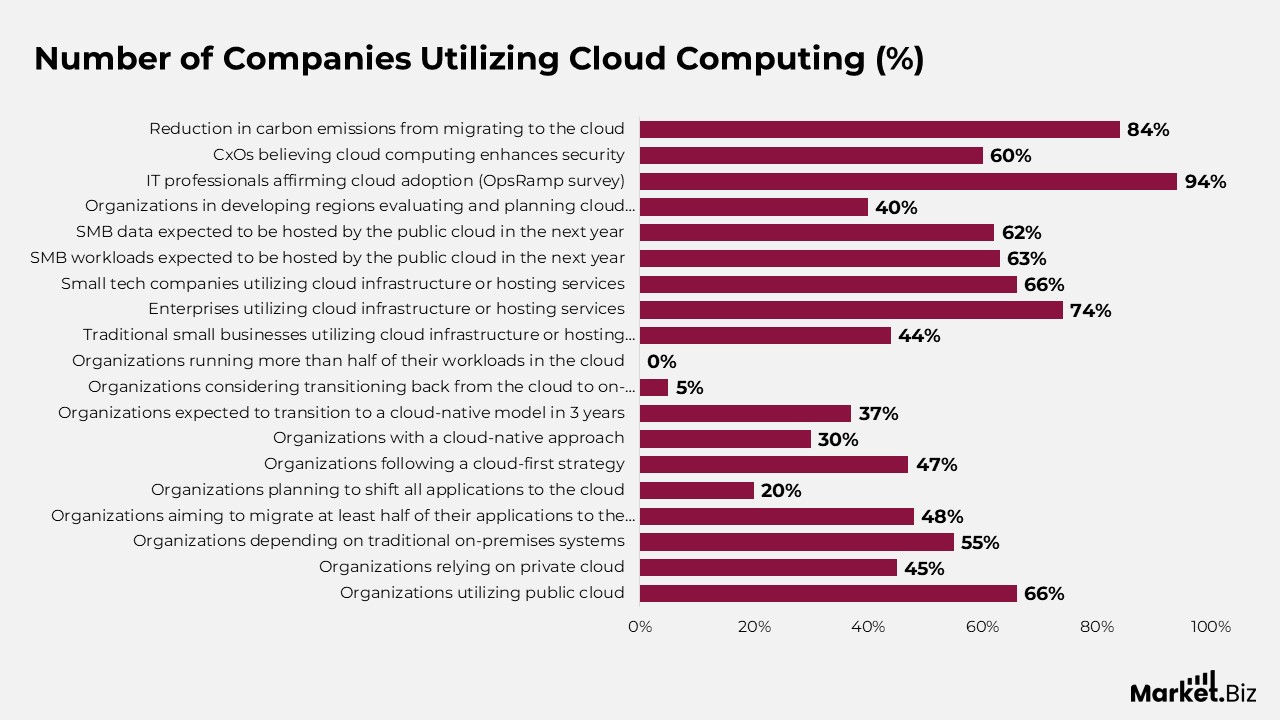
- Approximately two-thirds of respondents are currently utilizing a public cloud, with 45% relying on a private cloud, while 55% continue to hinge on traditional, on-premises systems.
- 48% of organizations aim to migrate at minimum half of their claims to the cloud within the next year, and 20% plan to shift all of their applications to the cloud.
- 47% are following a cloud-first strategy, 30% have already adopted a cloud-native approach, and 37% are expected to transition to a cloud-native model in the next three years.
- Only 5% of respondents are considering transitioning back from the cloud to on-premises infrastructure (cloud repatriation).
- Over 90% of organizations are leveraging cloud technology.
- 0% of organizations are running more than half of their workloads in the cloud.
- Over 94% of organizations with more than 1,000 employees have a significant portion of their workloads in the cloud, based on a survey of 800 organizations.
- Cloud adoption among enterprise organizations is above 94%.
- Organizations with 1,000 or fewer employees are making substantial investments in the cloud.
- Around 44% of traditional small businesses utilize cloud infrastructure or hosting services, compared to 74% of enterprises and 66% of small tech companies.
- The public cloud is expected to host 63% of SMB workloads and 62% of SMB data within the next year.
- 40% of organizations in developing regions are currently evaluating and planning cloud strategies.
- 94% of IT professionals in an OpsRamp survey affirmed this.
- Accenture also discovered that moving workloads to the public cloud results in 30-40% savings in Total Cost of Ownership (TCO).
- 6 in 10 CxOs believe cloud computing enhances security.
- Migrating to the cloud reduces carbon emissions by 84%.
(Source: Fortinet, O’Reilley, RightScale, TechRepublic, Oracle, International Data Corporation, OpsRamp, Accenture)
Cloud Security Measures
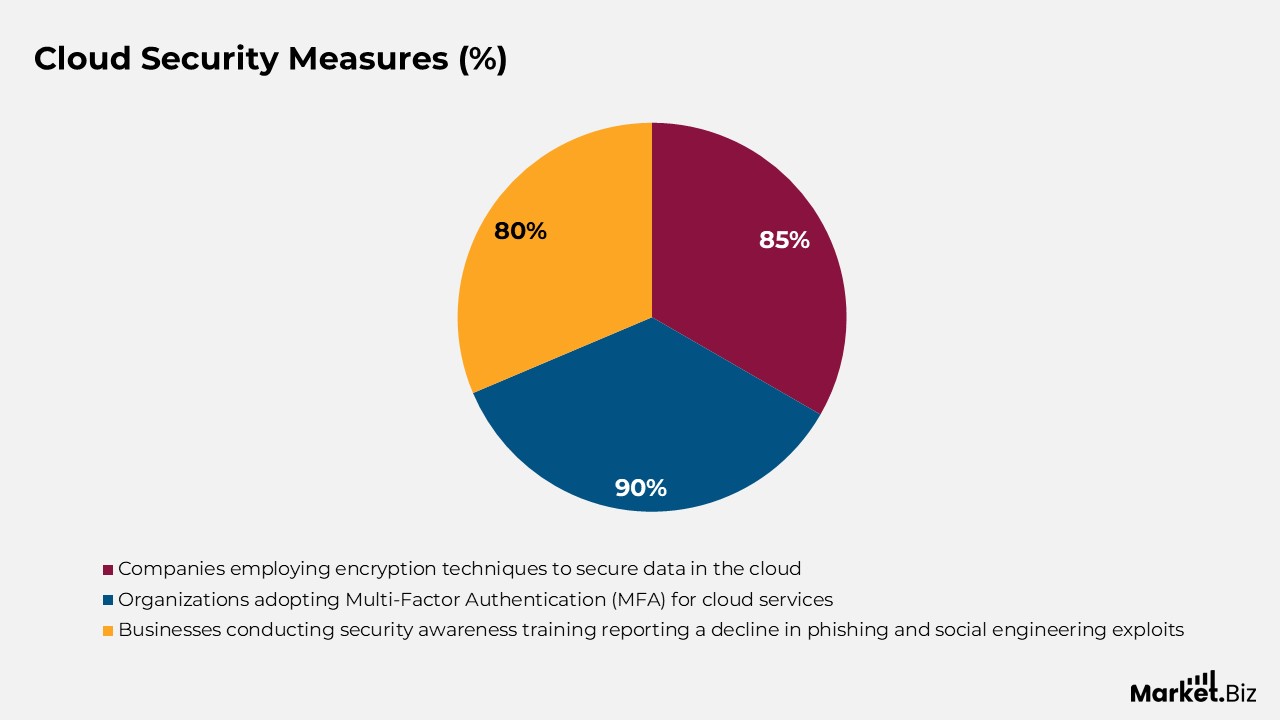
- Around 85% of companies employ encryption techniques to secure data in the cloud, ensuring that sensitive information is protected during both storage and transmission.
- Approximately 90% of organizations have adopted Multi-Factor Authentication (MFA) for cloud services, significantly reducing the occurrence of unauthorized access and account compromises.
- Nearly 80% of businesses that regularly conduct security awareness training for employees report a notable decline in phishing attacks and other social engineering exploits.
(Source: Adivi, Statista)
Cloud Security Strategies
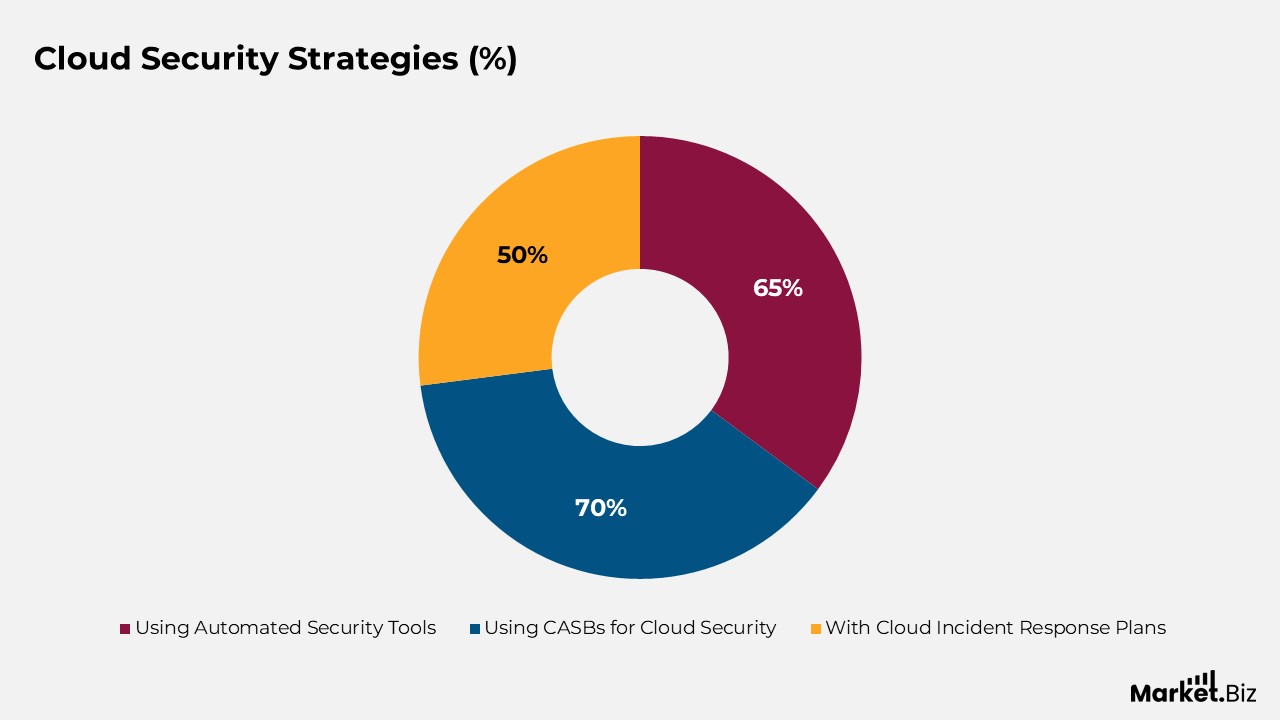
- About 65% of organizations utilizing automated security policy enforcement tools experience a significant drop in compliance violations and misconfiguration incidents.
- More than 70% of enterprises using Cloud Access Security Brokers (CASBs) have gained improved visibility and control over their cloud applications and services, helping to reduce the risk of data breaches.
- Companies with a structured cloud incident response plan are 50% more likely to effectively manage and mitigate the consequences of security breaches compared to those without such plans.
(Source: Adivi, Statista)
Cloud Security Career Trends
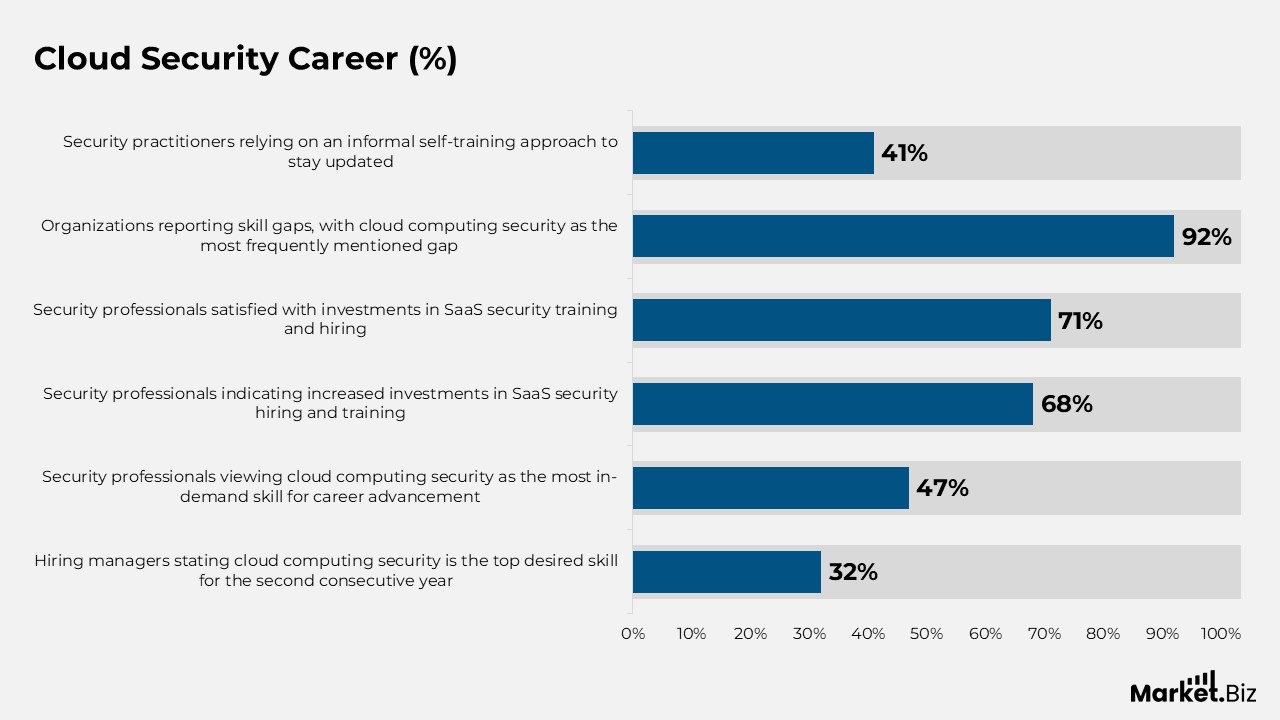
- 32% of hiring managers have stated that cloud computing security remains the top desired skill for the second consecutive year.
- Nearly 47% of security professionals view cloud computing security as the most in-demand skill for career advancement.
- 68% of security professionals indicated that their organizations have increased investments in hiring and training staff focused on SaaS security.
- 71% of security professionals expressed being somewhat or highly satisfied with their organizations’ investments in hiring and training staff for SaaS security.
- 92% of organizations report having skill gaps, with cloud computing security being the most frequently mentioned gap, cited by 35% of respondents.
- 41% of security practitioners revealed that their organization relies on an informal self-training approach to stay updated.
(Source: International Information System Security Certification Consortium, Cloud Security Alliance, Google Cloud, Secureframe)
Cloud Security Threats
- Cyberattacks targeting cloud services have surged by over 50% in the past year, marking a notable rise in malicious actors focusing on cloud infrastructure.
- Misconfigurations remain a primary cause, responsible for nearly 70% of cloud security breaches, stressing the urgent need for better configuration management and continuous monitoring.
- Insider threats contribute to roughly 15% of cloud security breaches, emphasizing the need for stringent access controls and monitoring systems to mitigate internal risks.
- Around 40% of organizations utilizing cloud services have fallen victim to ransomware attacks, highlighting the increasing risk of ransomware in cloud environments.
- 30% of cloud security incidents are linked to API vulnerabilities, underlining the importance of secure API integration and effective management practices.
- Distributed Denial of Service (DDoS) attacks against cloud infrastructure have risen by 25%, reflecting the increasing use of this tactic by attackers to disrupt services and operations.
- Data exposure or leakage incidents have impacted 60% of organizations, exposing significant challenges in ensuring data privacy and protection within cloud storage and services.
(Source: Sagapixel, Statista)
Cloud Breaches Cost
- As reported by Gartner, by 2024, 60% of infrastructure and operations leaders are projected to face public cloud cost overruns, which will significantly impact their available budgets.
- A study involving 662 US organizations revealed that the average annual financial loss due to compromised cloud accounts was estimated at US$6.2 million.
- Over the 12 months preceding the study’s release, this amount represented an average of 3.5% of the companies’ total revenues, highlighting a substantial impact on their budgets. On average, organizations also experience 138 hours of application downtime each year, which compounds the overall financial strain on the business.
- Data breaches in hybrid cloud environments tend to be slightly less costly than those affecting public clouds. The 2022 Cost of a Data Breach report by IBM and the Ponemon Institute found that the average cost of a breach in a hybrid cloud environment was US$3.61 million, which is US$1.19 million less than breaches in public cloud environments.
- IBM’s 2022 report further revealed that the average cost of data breaches had risen to US$6.35 million, marking an increase of US$150,000 from the previous year and setting a new record for the highest-ever data breach costs. This surge underscores the growing financial risk businesses face from cloud security incidents.
(Source: Gartner, International Business Machines Corporation, StrongDM)
Cloud Security Breaches Statistics
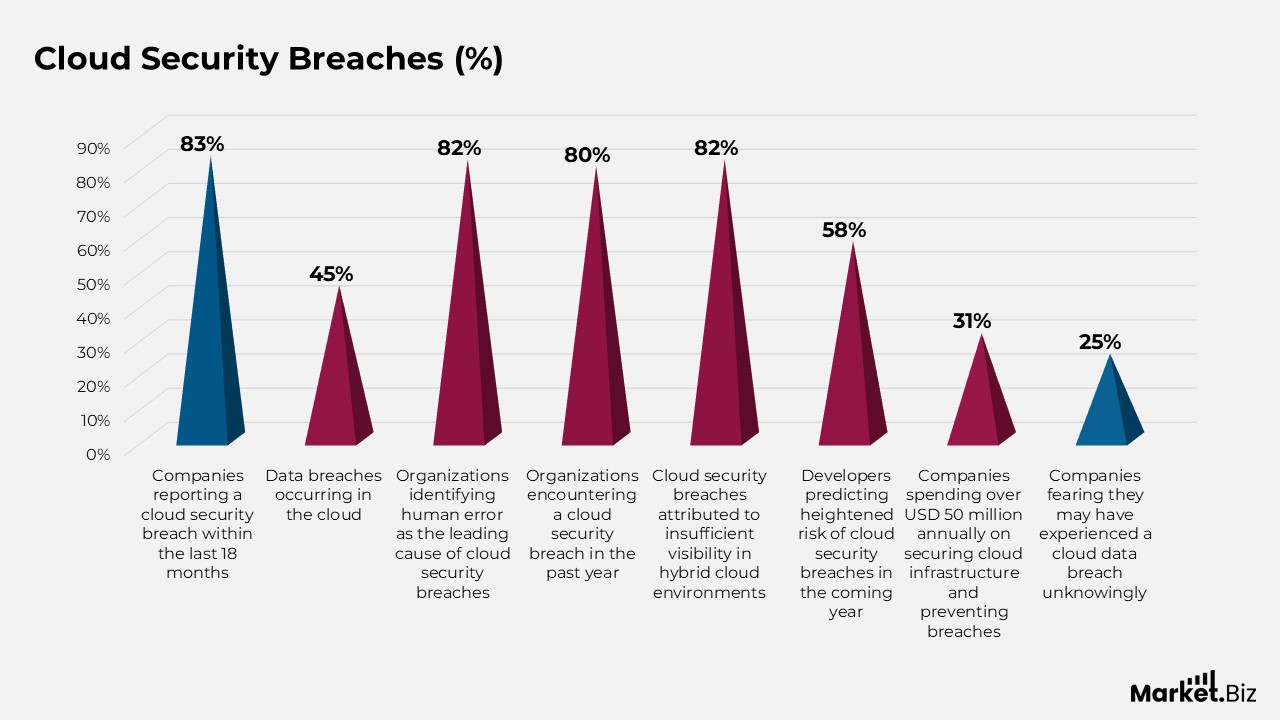
- 83% of companies report experiencing a cloud security breach within the last 18 months.
- 45% of data breaches occur in the cloud.
- 82% of organizations identify human error as the leading cause of cloud security breaches.
- 80% of organizations state that they encountered a cloud security breach in the past year.
- 82% of cloud security breaches are recognized to insufficient visibility, particularly in hybrid cloud environments.
- 58% of developers predict that companies will face a heightened risk of cloud security breaches in the coming year.
- 31% of companies report spending over USD 50 million annually on securing their cloud infrastructure and preventing data breaches.
- Organizations generally trust that cloud security breaches begin with unauthorized data access.
- 25% of companies fear they may have experienced a cloud data breach without being aware of it.
- Public sector organizations and startups were the most impacted by cloud security breaches last year.
(Source: SentinelOne, Statista)
Conclusion
Cloud security continues to be a critical focus as organizations increasingly rely on cloud services. The growing complexity of cyber threats, along with the widespread adoption of multi-cloud and hybrid environments, emphasizes the need for strong security measures to protect sensitive data and ensure business continuity.
The rise in cloud data breaches, coupled with the expanded use of cloud platforms for vital workloads, reinforces the importance of investing in advanced security solutions. As more businesses integrate cloud technologies, the demand for cutting-edge cloud security solutions, including AI-driven threat detection and multi-cloud security frameworks, is set to rise.
Moreover, organizations must prioritize cloud security to mitigate risks, safeguard data, and maintain operational resilience in an increasingly cloud-dependent landscape.
FAQ’s
AI-driven threat detection systems and multi-cloud security frameworks are projected to see significant demand. As businesses expand their cloud infrastructure, these advanced solutions will play a crucial role in mitigating risks, protecting data, and preventing potential security breaches.
Organizations are prioritizing investments in cloud security to minimize the risks associated with data breaches. Solutions leveraging AI and machine learning are becoming more popular, providing real-time threat monitoring and automated responses to potential security threats.
In multi-cloud environments, cloud security is crucial for protecting data and applications across various cloud platforms. As organizations increasingly adopt multi-cloud strategies, ensuring consistent security across different cloud services is essential to maintain data integrity and prevent security lapses.
Cloud security is a fundamental component of business continuity, especially as more companies rely on cloud-based systems for their critical operations. Effective security protocols help minimize the risks of cyberattacks or data breaches, thus protecting businesses from operational disruptions.