









Introduction
B2B Marketing Statistics: Business-to-business (B2B) marketing encompasses efforts aimed at promoting brands and companies among business entities, including manufacturers, suppliers, and retailers, rather than targeting the end consumer. Key strategies include trade shows and conferences, which allow companies to showcase their products, enhance brand visibility, and engage in networking.
In the digital landscape, formats such as video, social media advertisements, webinars, and online events are leading the way. Projections suggest that the B2B marketing sector in the United States will experience consistent growth. By 2026, expenditures allocated to these activities are expected to reach approximately 69 billion U.S. dollars. Likewise, spending on marketing technology within the U.S. B2B sector is anticipated to continue its upward trajectory in the coming years.
Editor’s Choice
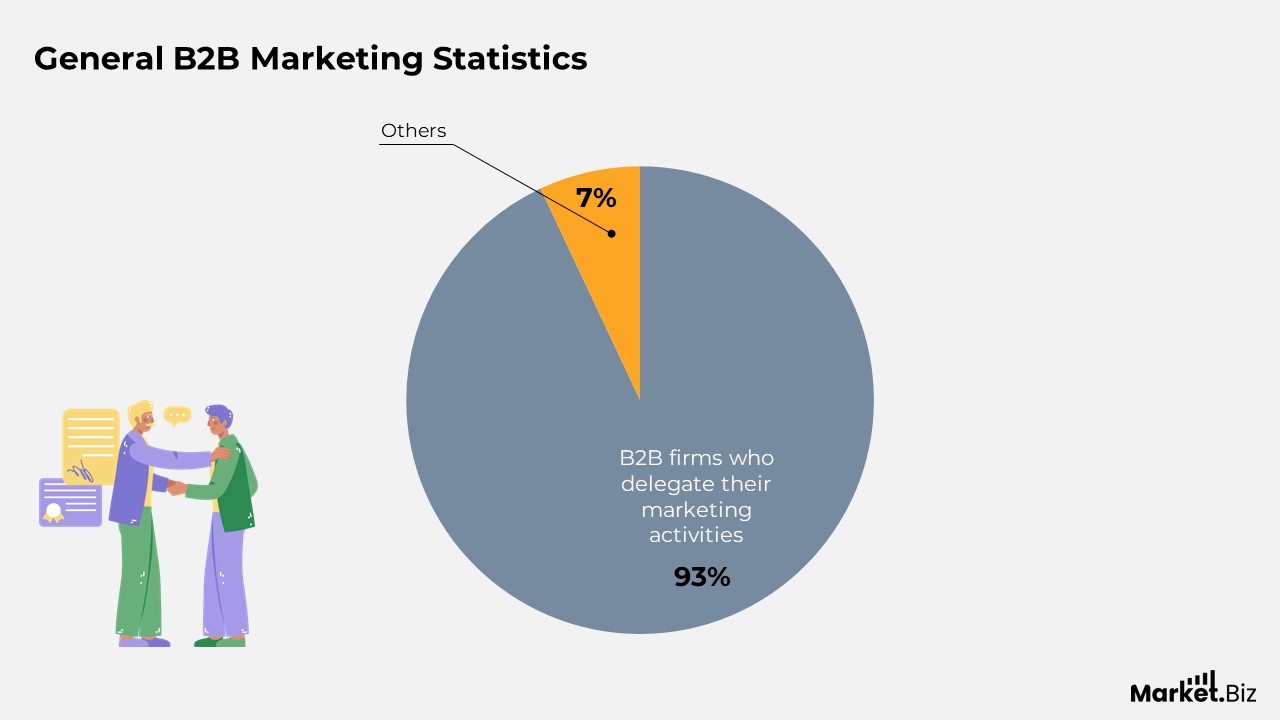
- 93% of B2B firms that delegate their marketing activities find it to be effective.
- 46% of B2B companies plan to invest in account-based marketing strategies.
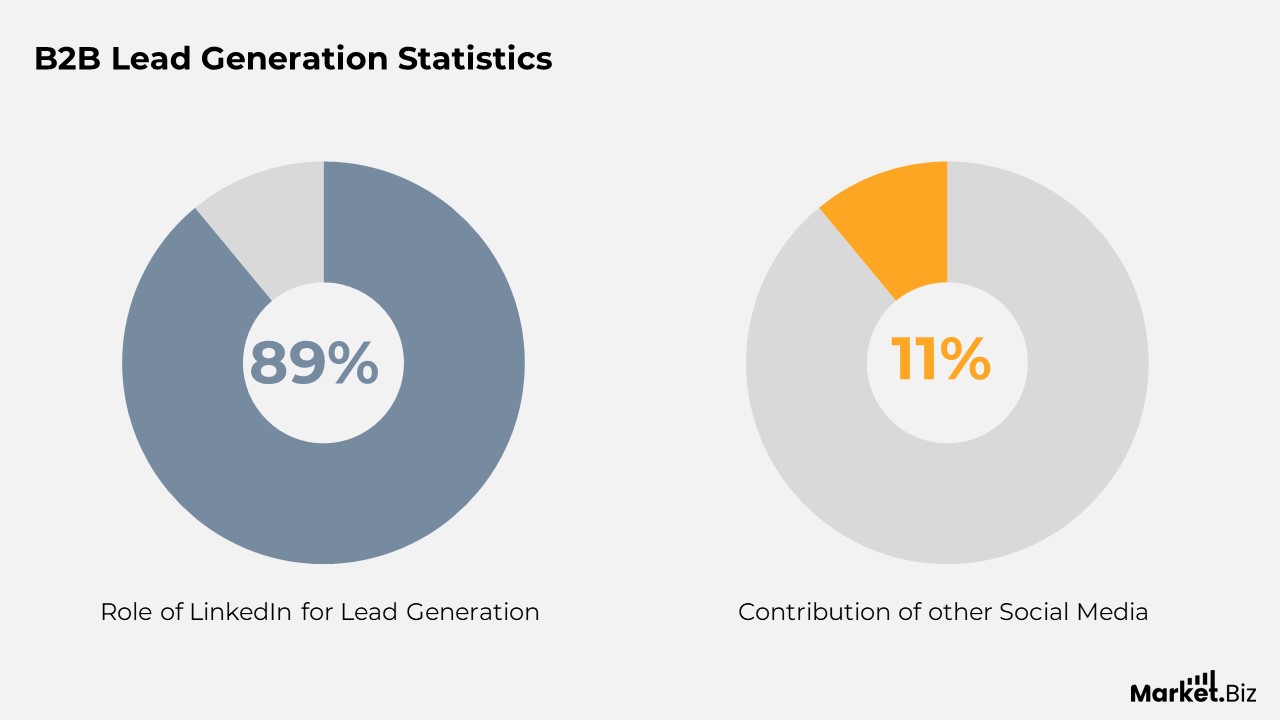
- 89% of B2B marketers utilize LinkedIn for lead generation.
- The leading three content formats utilized by B2B marketers are brief articles (94%), videos (84%), and case studies (78%).
- 43% of B2B organizations implement content marketing strategies.
- 45% of B2B marketers intend to increase their investment in video marketing.
- 93% of B2B marketers use email to distribute their content and resources.
- 62% of B2B marketers consider SEO algorithms to be significant for their operations.
- 80% of organizations, encompassing both B2B and business-to-consumer (B2C), utilize Google Ads.
- 61% of B2B marketers report that their organizations lack guidelines for the use of generative AI.
General B2B Marketing Statistics
- 93% of B2B firms that delegate their marketing activities find it to be effective.
- 53% of B2B marketing professionals reported that they would raise their spending on thought leadership content.
- 46% of B2B companies plan to invest in account-based marketing strategies.
- 41% of B2B companies aim to direct resources towards video marketing initiatives.
- 35% of B2B corporations outsource their marketing efforts while simultaneously having an in-house team.
- 33% of B2B marketers indicated a desire to increase their investment in building online communities.
- 33% of B2B organizations are planning to invest in remarketing strategies.
- 32% of B2B organizations aim to invest in personalization efforts.
- 30% of B2B marketers are looking to experiment with influencer marketing.
- 27% of B2B companies practice search engine marketing (SEM).
- 11% of B2B companies are planning to spend on programmatic advertising.
- 11% of B2B organizations also plan to invest in voice optimization.
B2B Lead Generation Statistics
- 91% of B2B companies assert that content marketing produces more leads compared to traditional marketing methods.
- 89% of B2B marketers utilize LinkedIn for lead generation.
- 76% of B2B marketers indicate that content marketing has been instrumental in generating leads.
- 70% of B2B marketers believe that video content aids in converting leads.
- 63% of B2B marketers think that content marketing assists them in nurturing leads.
- 61% of B2B marketers identify high-quality leads as their primary challenge.
- 40% of B2B marketers report that LinkedIn is the most effective platform for generating high-quality leads.
- 27% of B2B leads are ready for sales upon initial generation.
- LinkedIn Message ads featuring Lead Gen Forms can yield up to four times the number of leads.
Statistics by B2B Content Marketing
- The leading three content formats utilized by B2B marketers are brief articles (94%), videos (84%), and case studies (78%).
- 79% of the highest-performing B2B marketers assert that understanding their audience is the most significant factor in successful content campaigns.
- 70% of B2B marketers indicate that their companies incorporate content into their comprehensive marketing, sales, and communications strategy.
- 68% of the top-performing B2B marketers report that they establish goals that are in alignment with their organizations’ objectives.
- 61% of the best-performing B2B marketers claim that they effectively assess content performance.
- 57% of B2B marketers think that their organization’s content marketing strategy is moderately successful.
- 53% of B2B marketers identify case studies and videos as the most effective types of content.
- 46% of B2B marketers feel that their organizations are capable of effectively measuring the performance of their content.
- 43% of B2B organizations implement content marketing strategies.
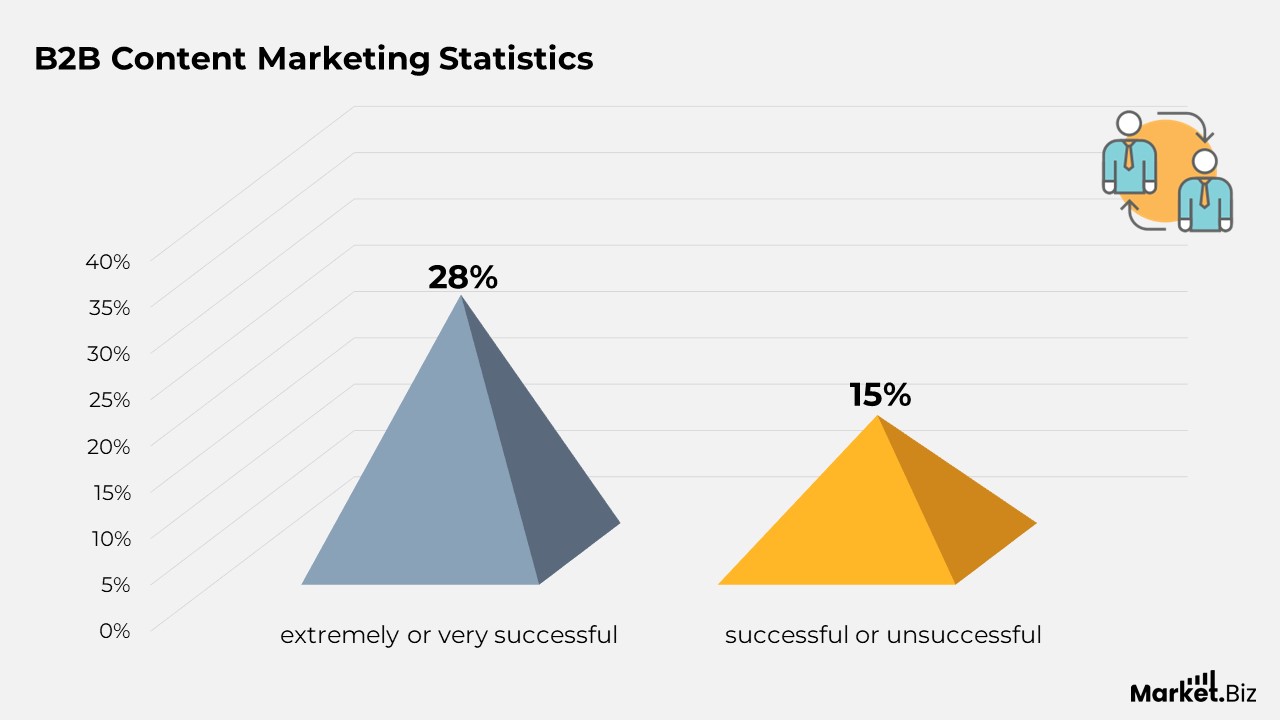
- 28% of B2B marketers consider their organization’s content marketing approach to be extremely or very successful.
- 15% of B2B marketers indicate that their company’s content marketing strategy is either minimally successful or entirely unsuccessful.
- 3% of B2B marketers report that they do not measure the performance of their content.
B2B Content Marketing Tools
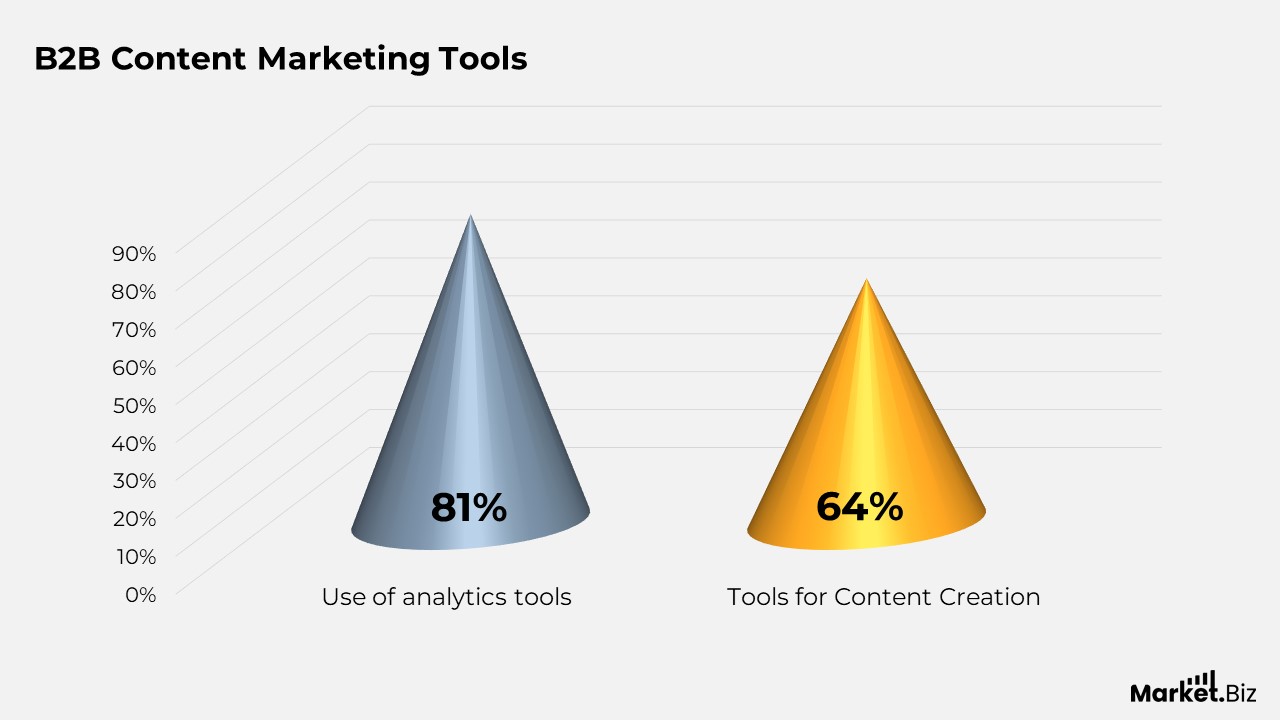
- 81% of B2B marketers utilize analytics tools for content management.
- 64% of B2B marketers employ tools for content creation, scheduling, and collaboration.
- 50% of B2B marketers make use of content management systems (CMS).
- 45% of B2B marketers indicate that their organizations are likely to invest in new content technologies.
- 32% of B2B marketers express that their organizations are unlikely to invest in new content technologies.
- 31% of B2B marketers think that their organizations possess the appropriate technology for content management.
- 29% of B2B marketers acknowledge that they have not secured suitable technology for managing content.
Video Marketing of B2B Statistics
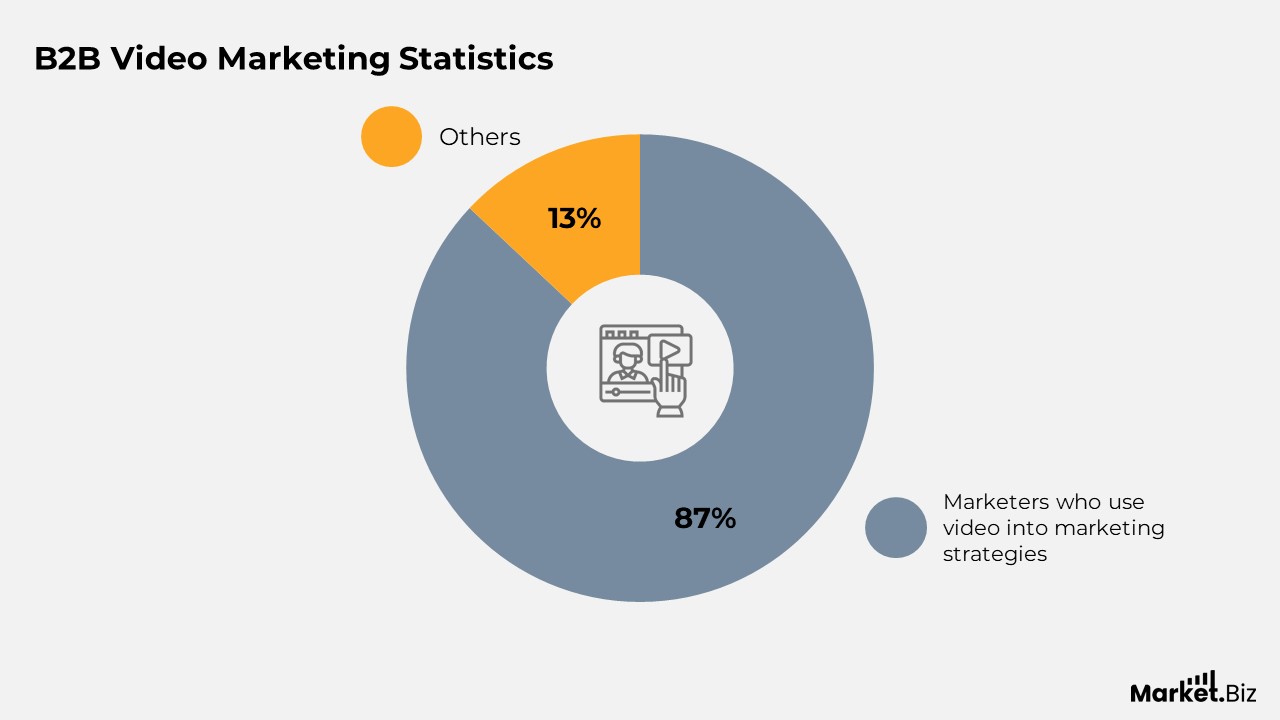
- 87% of B2B marketers incorporate video into their marketing strategies.
- Approximately 70% of B2B buyers and researchers interact with videos throughout their purchasing journey.
- 52% of B2B marketers recognize video as the content type that delivers the highest return on investment.
- B2B marketers who use video experience 49% faster revenue growth compared to those who do not.
- 85% of B2B marketers consider video an effective medium and marketing tool for online engagement.
- 73% of B2B marketers observe a positive effect of video on their marketing outcomes.
- The use of video in B2B email campaigns results in 2-3 times higher click-through rates.
- 45% of B2B marketers intend to increase their investment in video marketing.
- 50% of B2B buyers use video content to inform their purchase decisions.
- 65% of B2B companies have acquired customers through LinkedIn video marketing.
- In 2023, around 3.48 billion internet users engaged with video content online.
- 78% of video marketers indicated that videos played a crucial role in improving sales.
- 96% of individuals depend on videos to obtain deeper insights into products and services.
- Video conferences accounted for a significant 13% of revenue for B2B companies.
- 91% of businesses successfully leverage the power of video as a fundamental element of their marketing strategy.
B2B Email Marketing Statistics
- Since the onset of the pandemic, over 40% of marketers have experienced reductions in their email budgets.
- 35% of marketers dispatch 3-5 emails to their customers each week.
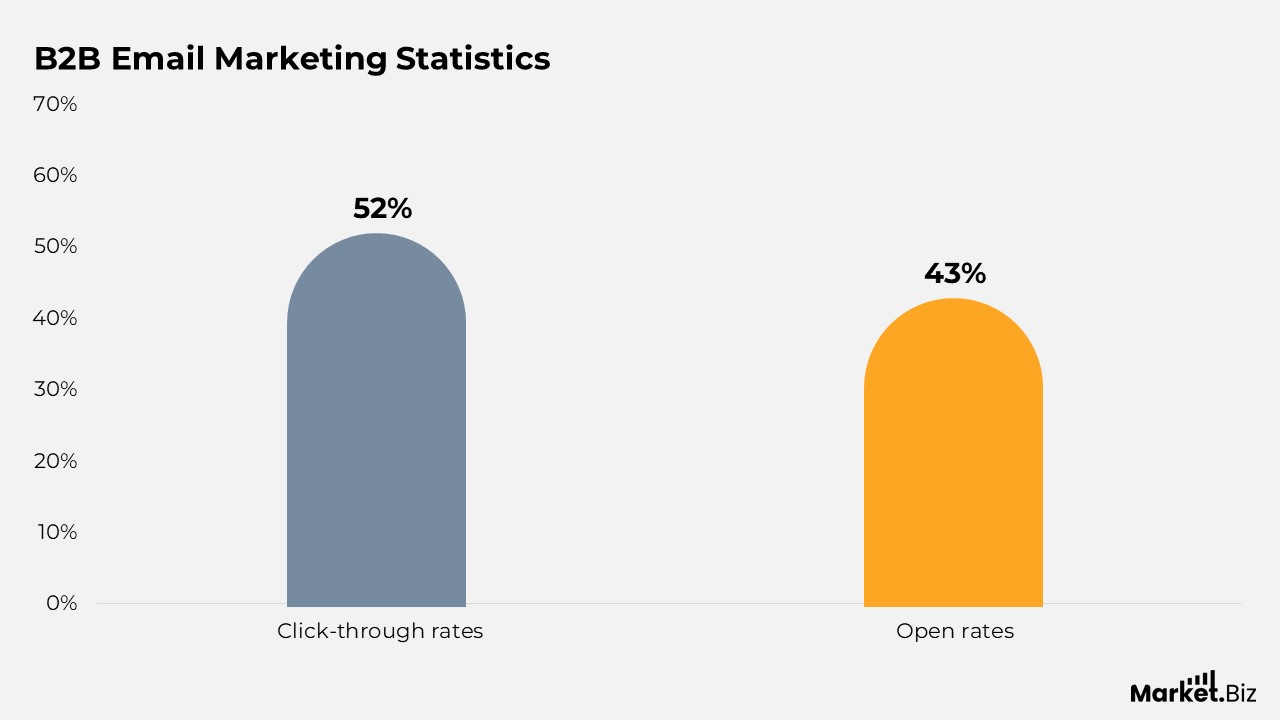
- The primary challenges faced by email marketing include click-through rates at 52% and open rates of 43%.
- 80% of marketers express a preference for prioritizing email marketing over social media.
- Currently, 4 billion users engage with emails daily, a figure projected to rise to 4.6 billion in 2025.
- Fridays show the highest email open rates at approximately 19%, whereas Saturdays record the lowest at 17%.
- For every dollar invested in email marketing, organizations can expect a minimum return of $43.
- 66% of marketers believe that artificial intelligence can enhance the optimization of email send times.
- 77% of B2B buyers indicate a greater comfort level with being contacted via email compared to other communication channels.
- 93% of B2B marketers use email to distribute their content and resources.
Statistics of B2B SEO
- Approximately two-thirds of B2B purchasers conducted online research for products before making a purchase.
- 95% of search traffic is directed to the first page of search results.
- 62% of B2B marketers consider SEO algorithms to be significant for their operations.
- 49% of B2B firms adopt SEO strategies within their marketing efforts.
- 45% of B2B marketers report that optimizing content for search engines presents a challenge.
- 40% of online revenue is generated through organic traffic.
- The average close rate for SEO stands at six percent, which is eight times greater than that of traditional marketing.
B2B Advertising Statistics
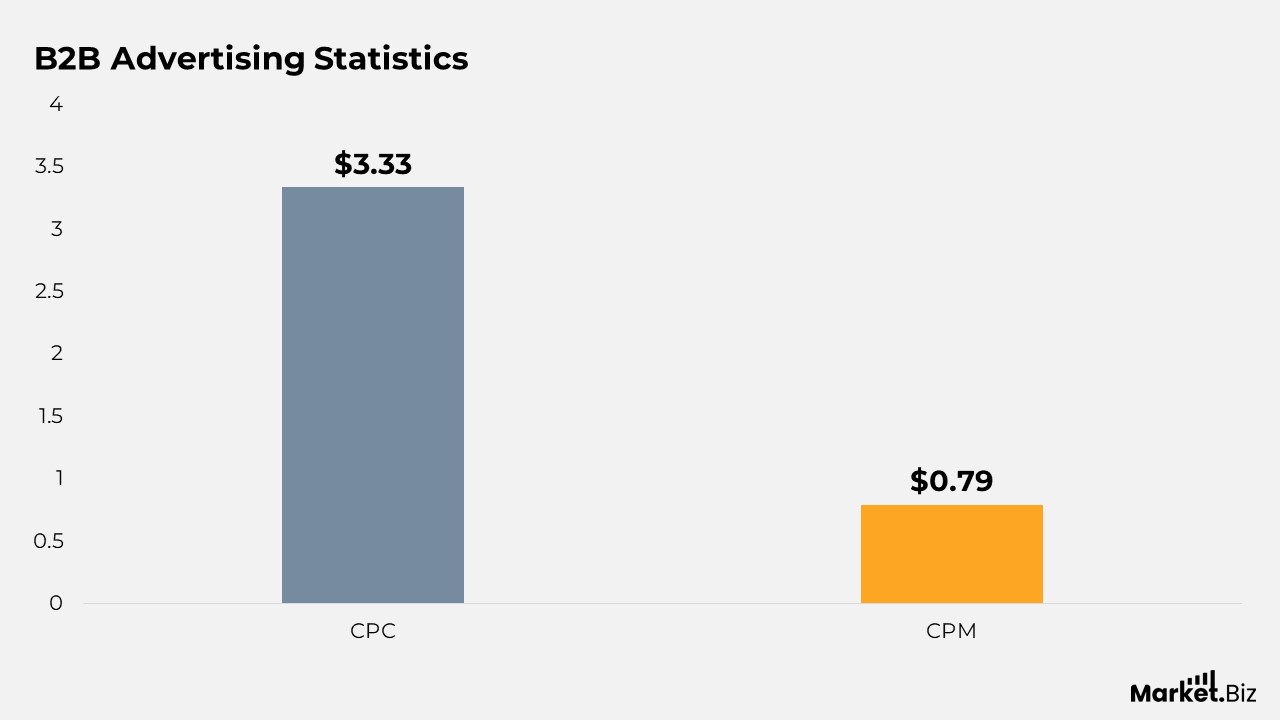
- $3.33 represents the average cost-per-click (CPC) within the B2B sector.
- $0.79 denotes the average cost-per-thousand-impressions (CPM) in the B2B sector.
- Search advertisements can enhance brand visibility by as much as 80%.
- 85% of B2B firms report positive outcomes from their social media advertising initiatives.
- 80% of organizations, encompassing both B2B and business-to-consumer (B2C), utilize Google Ads.
- 78% of B2B marketers engage in social media advertising to disseminate their content.
- 64% of B2B marketers employ search advertisements to promote their content.
- 62% of B2B marketers assert that SEM and PPC are effective channels for paid content.
- 59% of B2B marketers leverage digital display advertising to share their content.
- 50% of B2B marketers assert that social media advertising serves as an effective paid content channel.
- 35% of B2B organizations implement social media advertising strategies.
B2B Market Research Statistics
- Only 30% of B2B marketers report that market research is a crucial marketing channel within their existing strategy.
- 77% of B2B consumers indicate that they perform comprehensive research before making a purchase.
- 90% of B2B marketers claim that market research acts as an effective channel for generating high-quality leads; 33% consider it to be VERY effective.
- 32% of B2B marketers assert that they dedicate a minimal budget to market research.
- 52% of B2B clients show a preference for buying from companies that create their content.
- 61% of decision-makers argue that an organization’s thought leadership can be moderately or significantly more effective in demonstrating the potential value of its products and services compared to conventional product-focused marketing.
- 50% of C-suite executives express that high-quality thought leadership has a greater impact on their purchasing decisions during economic downturns than in times of prosperity.
- 65% report that they have more trust in peer reviews, user-generated content, and third-party publications/analysts than in company-generated content.
- 60% of thought leadership producers expect that their content will maintain their brand and capabilities at the forefront during a downturn, even among clients or prospects who are unable to make purchases due to budget constraints.
- Thought leadership content that is derived from original research has been shown to generate up to $2 million in closed/won deals.
AI and B2B Marketing Statistics
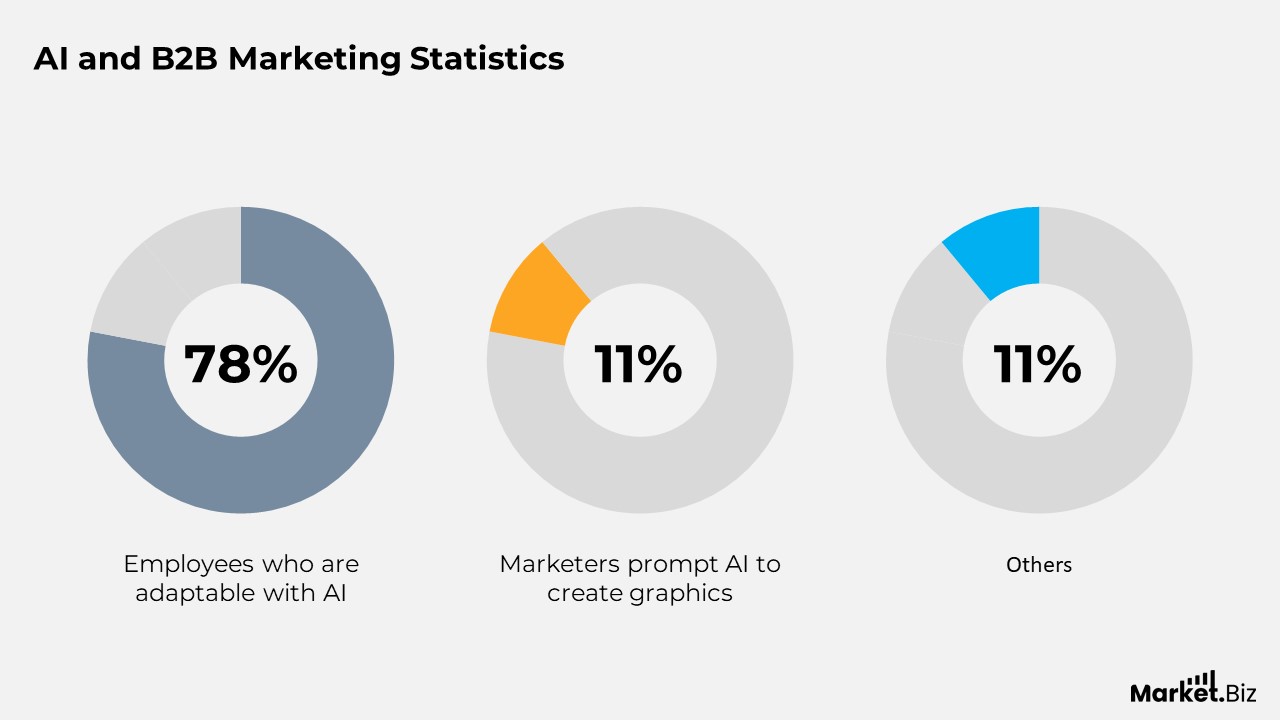
- 78% of marketers express comfort in employing AI for personalization.
- 72% of B2B marketers engage with generative AI.
- 61% of B2B marketers report that their organizations lack guidelines for the use of generative AI.
- 50% of marketers harbor concerns regarding AI data privacy and ethical considerations.
- Nearly 53% of marketers utilize AI for data analysis.
- 51% of B2B marketers leverage generative AI to brainstorm new content topic ideas.
- 45% of B2B marketers employ AI tools for researching headlines and keywords.
- 42% of B2B marketers intend to experiment with AI and automation.
- 38% of B2B marketers utilize AI tools integrated within their content creation and management systems.
- 36% of B2B marketers abstain from using generative AI tools due to concerns about accuracy.
- 31% of B2B marketers indicate that their organizations have established guidelines for the use of generative AI.
- 28% of B2B marketers do not utilize generative AI tools.
- 27% of B2B marketers avoid generative AI tools because of a lack of understanding.
- 27% of B2B marketers who utilize generative AI invest in tools like Jasper and Writer.
- 23% of B2B marketers use AI to outline assignments.
- 22% of B2B marketers do not use generative AI tools due to copyright concerns.
- 20% of B2B marketers employ AI to proofread content.
- 11% of B2B marketers prompt AI to create graphics.
Conclusion
In 2025, B2B marketing has become increasingly digital, data-driven, and centered on the buyer. 89% of buyers conduct their research online, 75% utilize social media in their purchasing decisions, and 60% depend on digital content to complete their purchases. With content, video, SEO, and AI taking precedence, marketers are emphasizing personalization and lead generation, dedicating more than 8.7% of their company budgets to marketing efforts.
Email, video, and online marketplaces are prevalent across various channels. B2B marketing statistics illustrate a vibrant landscape significantly shaped by digital channels, content marketing, and the growing influence of AI. Notable trends encompass an increasing dependence on LinkedIn, the success of video marketing, and a commitment to lead nurturing aimed at improving conversion rates.
FAQs
The global B2B payments market was valued at USD 87.98 trillion in 2024. It is anticipated that the market will expand from USD 97.88 trillion in 2025 to USD 213.28 trillion by 2032, reflecting a CAGR of 11.8% throughout the forecast period.
In 2025, B2B marketing will be significantly shaped by artificial intelligence, data-driven personalization, and an emphasis on authenticity and community engagement. Marketers will utilize AI for automation, content generation, and insights, while also focusing on first-party data and ethical link-building practices. Video marketing, especially short-form content, will remain a vital element, along with a renewed focus on in-person events and interactive content.
Business-to-business (B2B) sales refer to a sales model where one business sells products or services to other businesses. This contrasts with business-to-consumer (B2C) sales, where a business sells products or services directly to consumers.
The future of B2B marketing is shifting towards a more strategic, data-driven, and personalized methodology, with a strong focus on cultivating meaningful relationships and utilizing technology for greater efficiency and impact. Notable trends include the increased application of AI for personalization, improved alignment between sales and marketing, an emphasis on data-driven content, and the implementation of adaptive marketing strategies.