









Introduction
Creator Economy Statistics: The creator economy has emerged as a dominant force in the digital realm, empowering individuals to turn their skills, creativity, and personal brands into profitable ventures. Spanning industries like entertainment, fashion, education, and technology, this thriving sector is fueled by the growing availability of social media platforms and digital tools.
By connecting directly with their audiences, content creators are revolutionizing traditional career trajectories and monetization strategies, moving away from conventional media to online platforms.
Sites such as YouTube, TikTok, and Instagram are at the forefront of this change, providing creators with new ways to earn through avenues like advertising, subscriptions, and merchandise sales. This shift is transforming how businesses engage with consumers and how individuals navigate their careers in the digital age.
Editor’s Choice
- Over 207 million content creators exist globally.
- In the U.S., 162 million individuals identify as content creators, with more than 45 million being professionals.
- Nearly 46.7% of creators work full-time.
- On average, creators take approximately 6.5 months to earn their first dollar.
- 70% of content creators spend 10 hours or fewer each week creating content.
- Merchandise companies in the creator economy generate over $500 million in annual revenue, on average.
- Shopify is the leading company in creator economy revenue, with $5.2 billion.
- Content creators generally require an average of 6.5 months to start earning their first dollar.
- Only 10% of influencers earn $100K or more annually.
- The global influencer market reached a value of $21.1 billion in 2023.
- European brands invested €1.3 billion in creator marketing in 2020 alone.
- 85% of full-time content creators report enjoying their work.
Creator Economy Statistics
- The global creator community comprises 207 million individuals.
- Facebook leads as the platform with the largest user base, boasting 2.9 billion monthly active users.
- According to Linktree data, 67.15% of creators are nano influencers, with followings ranging from 1,000 to 10,000, making up around 139 million creators.
- There are 41 million micro influencers, representing 19.81% of all content creators.
- 2 million creators are categorized as macro influencers, with 100,000 to 1 million followers, and another 2 million are classified as mega influencers, having over 1 million followers. Combined, these segments account for less than 1% of all creators globally.
- 23 million creators have fewer than 1,000 followers, representing 11.11% of the total creator population.
- The creator economy hosts over 45 million professional content creators.
- 51.9% of content creators are women, while 48.1% are men.
- The industry also includes over 162 million amateur content creators.
- 46.7% of content creators identify as full-time, with 42.7% working part-time.
- 10.6% of creators consider content creation a hobby.
- Just 0.96% of creators have more than 1 million followers.
Moreover
- 66% of creators work part-time as content creators.
- A survey by Collabstr in their 2023 Influencer Marketing Report covered 50,000 influencers, revealing that 77% were women, while 23% were men.
- Among the niches, 25% of respondents were in fashion and beauty, 10.7% in parenting and home, 12.5% in travel and lifestyle, 12.9% in gaming, 12% in sports, and 6.8% in family and health and fitness.
- 67% of social media creators have never collaborated with a brand.
- A significant 85% of creators have attended college.
- More than 63% of brands continue to collaborate with the same influencers.
- Nearly 36.5% of creators generate income through lifestyle content creation.
- The creator economy consists of over 207 million creators, with 45 million working full-time and 162 million participating as amateurs.
- One in every five individuals identifies as a content creator.
- In 2023, 76.5% of creators reported earning higher incomes than the previous year.
- Around 83.5% of creators anticipate growing their earnings through the monetization opportunities provided by social media platforms.
(Source: Statista, Influencer Marketing Hub, Collabstr, Linktree, Semrush Inc., DemandSage, Blogging Wizard, Neoreach, Influencer Marketing Hub, Influencer Marketing Factory, HubSpot, Epidemic Sound)
Content Creator Statistics
- There are approximately 207 million content creators across the globe.
- Out of these, around 200 million are active content creators, with more than 2 million considered expert creators.
- The United States alone is home to over 45 million professional content creators.
- Recreational influencers, with audiences ranging from 0 to 1,000 followers, account for 23 million creators.
- Semi-Proinfluencers, who have between 1,000 and 10,000 followers, make up 139 million creators.
- Pro influencers, with audiences of 10,000 to 100,000 followers, represent 41 million creators.
- Expert influencers, whose followers range from 100,000 to 1 million, number 2 million creators.
- Expert+ influencers, with more than 1 million followers, also total 2 million creators.
(Source: Linktree, DemandSage, WPbeginner, Nealschaffer)
Independent Creator Statistics
- Independent creators tend to be younger and predominantly male, with 63% under the age of 40 and 53% identifying as male. However, the representation of older generations, such as Baby Boomers and Gen X, has been increasing, rising from 27% in 2022 to 35% in 2023.
- A majority of independent creators, 70%, work part-time in the creator economy, while 30% pursue content creation as a full-time profession.
- Among beginner creators, 59% have yet to monetize their content, 35% have earned some income but not enough to sustain themselves, and only 6% have achieved notable success, earning more than US$10,000.
- The number of independent creators earning money through digital content creation saw a slight decrease, from 8.2 million in 2022 to 8.1 million in 2023.
- Nearly half of independent creators, 46%, find achieving success challenging, with 41% experiencing burnout, indicating the pressures and difficulties within the creator economy.
- For niche creators, 62% believe that specialization enhances engagement and reach. They are more likely to collaborate with brands (37% vs. 26%) and earn over US$100K annually (5% vs. 7%) compared to non-niche creators.
Moreover
- 40% of Americans believe they have the potential to succeed as content creators, motivated by passion sharing (37%), financial goals (39%), and the desire for independence (35%).
- 58% view content creation as a legitimate career, with 49% believing it can provide a decent living.
- In 2024, 58.3% of creators reported challenges with monetizing their content, an improvement from 61.5% in 2023, suggesting a gradual reduction in monetization difficulties within the creator economy.
- 73.1% of creators are optimistic about their income growth in 2024, anticipating better earnings through new monetization opportunities and content diversification, showing a slight improvement from the previous year’s outlook.
- 77% of creators who monetize their content feel adequately compensated through platform programs.
- 62.3% still struggle to effectively align their content with monetization strategies, highlighting ongoing challenges in the industry.
- The vast majority of creators, 92%, generate the bulk of their income through brand partnerships, with top creators in tech and business niches earning over US$150,000 annually.
(Source: Linktree, DemandSage, WPbeginner, Nealschaffer, MBO Partners, SupplyGem, linktree)
Creator Economy Market Size
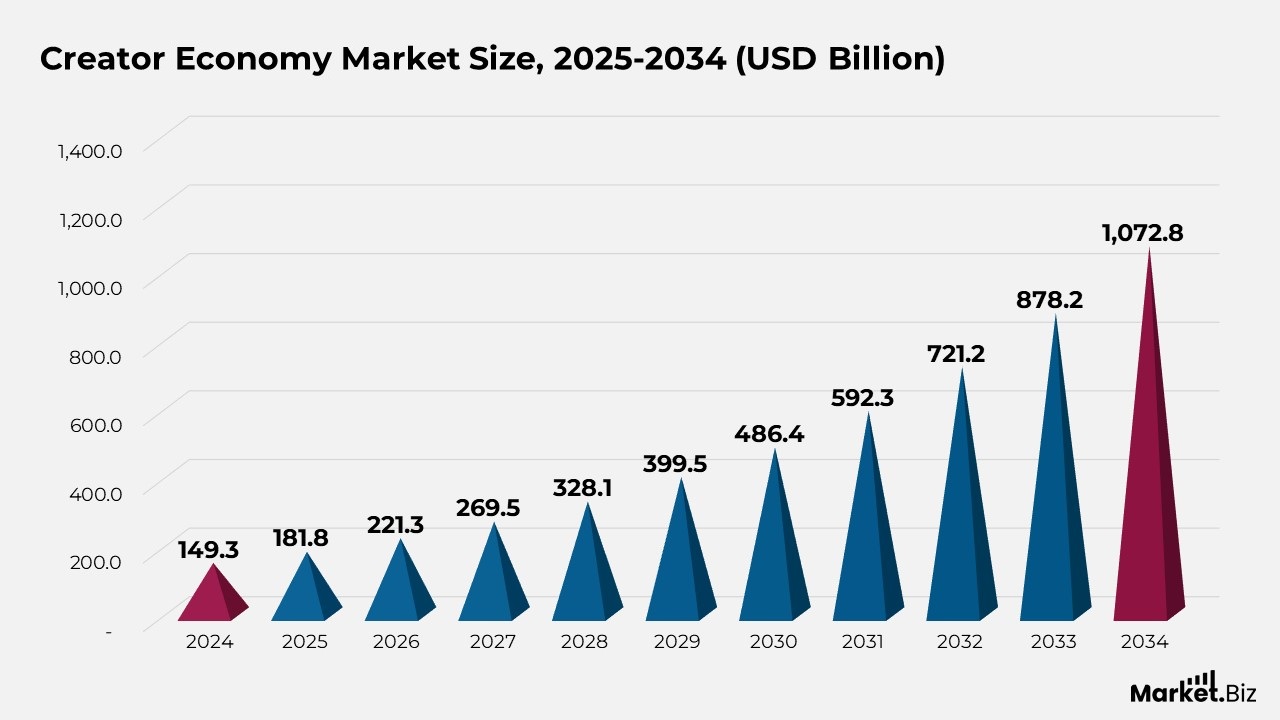
- According to Market.us, the global creator economy market is expected to rise from $181.5 billion in 2025 to $1,072.8 billion by 2034, representing a compound annual growth rate (CAGR) of 21.8% from 2025 to 2034.
- The growth of the creator economy is being propelled by factors such as widespread social media adoption, increased content consumption, mobile internet proliferation, and expanding digital advertising investments.
- Social media platforms captured 27.8% of the global creator economy in 2024, with North America contributing approximately 29% of platform-based value, driven by the growing popularity of platforms like Instagram, YouTube, and TikTok, which create a thriving environment for creators.
- Video content led the content type segment, accounting for 23.8% of the market share in 2024, fueled by the rising demand for both short-form and long-form videos on platforms such as YouTube, TikTok, and Instagram Reels, preferred for their visual and engaging nature.
- Brand collaborations dominated the monetization method segment, capturing 23.5% of the market share, reflecting brands’ shift toward influencers and creators, who offer authentic connections with audiences and provide higher engagement and improved ROI for brands.
- Amateur creators made up 64.1% of the end-user segment, with many creating content for passion or supplemental income rather than full-time careers, supported by the accessibility of digital tools, affordable equipment, and the reach of social media platforms.
Further
- North America held 37.4% of the global creator economy market in 2024, generating USD 55.8 billion in revenue, driven by advanced digital infrastructure, widespread smartphone use, and a highly engaged social media audience.
- The U.S. creator economy market, valued at USD 50.9 billion in 2024, is projected to grow at a CAGR of 19.3% and reach USD 297.3 billion by 2034, bolstered by ongoing investments in creator tools, influencer marketing, and creator-led platforms.
- Over 400 million creators are estimated globally by 2024, with full-time digital creator jobs in the U.S. growing from 200,000 in 2020 to 1.5 million in 2024, driven by the increasing popularity of self-created, niche, and authentic content on digital platforms.
- 68.8% of creators primarily rely on brand deals for income, compared to only 7.3% who depend on ad revenue, reflecting the growing success of influencer partnerships that offer more lucrative and direct revenue opportunities.
- Advertising income grew by 15%, affiliate marketing by 9%, and merchandise sales by 4%, indicating a shift toward diversified income streams, where creators explore new ways to monetize their audience beyond traditional advertising.
(Source: Market.us)
Creator Economy in 3D Market Size
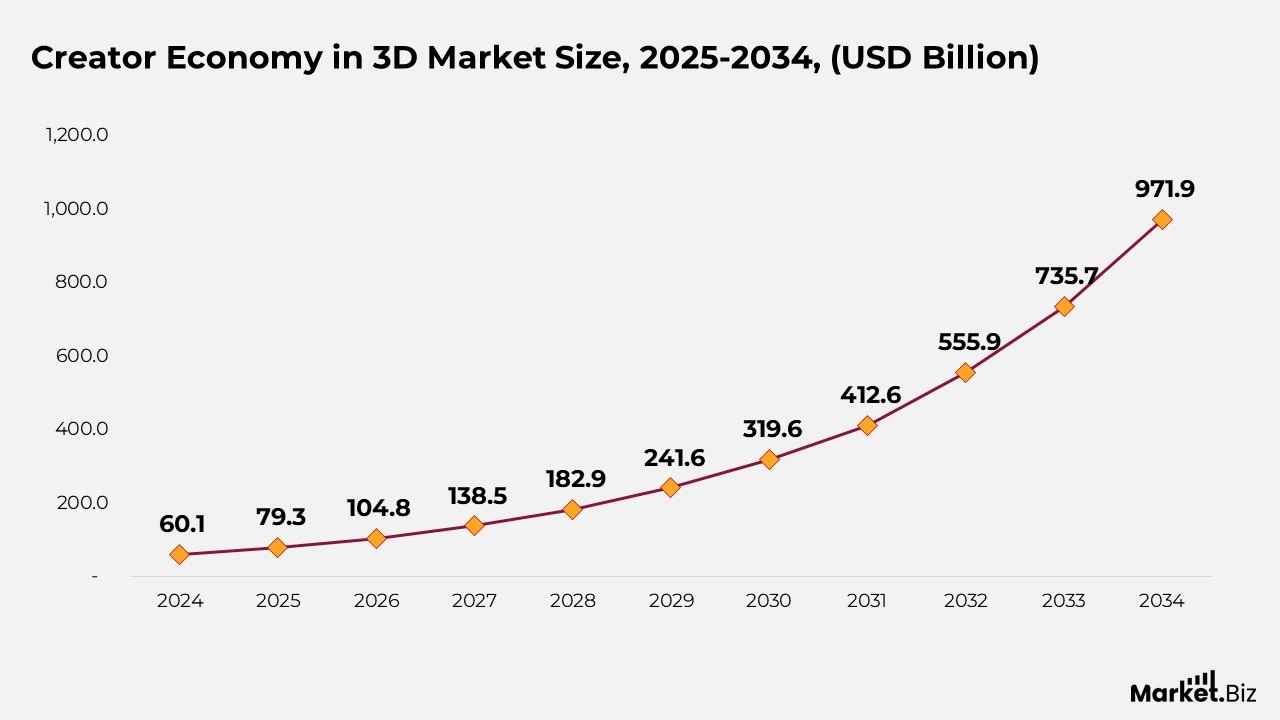
- According to Market.us, the global creator economy in the 3D market is expected to rise from $79.3 billion in 2025 to $971.9 billion by 2034, representing a compound annual growth rate (CAGR) of 32.1% from 2025 to 2034.
- The market is growing due to rising consumer demand for immersive and interactive content.
- In 2024, the 3D models and assets segment captured 37.4% of the global Creator Economy in the 3D market, driven by its essential role in industries like gaming, film, animation, and virtual reality.
- In 2024, the professional creators segment held 43.1% of the 3D Creator Economy market, encompassing skilled individuals and entities specializing in high-quality 3D content for commercial use.
- The gaming and entertainment segment captured 29.9% of the 3D Creator Economy in 2024, supported by the rapid growth of immersive gaming experiences and the rising popularity of VR and AR platforms.
- In 2024, North America held 38.2% of the 3D Creator Economy market, generating approximately USD 22.9 billion, due to strong tech infrastructure and innovation in sectors like entertainment, automotive, and healthcare.
- The U.S. Creator Economy in the 3D market is expected to reach USD 18.49 billion in 2024, with a CAGR of 30.1%, driven by demand and advancements in 3D content creation across industries like entertainment, manufacturing, and healthcare.
(Source: Market.us)
Creator Economy Statistics by Platform
- Over 30 million creators are active on Instagram, 3 million on Twitch, 13 million on YouTube, and more than 2 million on other social platforms.
- Twitch has an average of 2.6 million concurrent viewers and approximately 93,000 concurrent streamers.
- Full-time creators typically use an average of 3.4 platforms to engage with their audiences.
- Khaby Lame is the maximum followed creator on TikTok, with 149.7 million followers, followed by Bella Poarch with 91.7 million and Charli D’Amelio at 147.1 million.
- The global content creator population is estimated at 200 million.
(Source: SignalFire, Twitch Tracker, HubSpot, Inc., ConvertKit, Statista, Linktree)
Creator Economy Statistics by Content Creators
- 30% of individuals aged 18-24 and 40% of those aged 25-35 identify as content creators.
- Content creators tend to be younger, with 63% being from Gen Z, and 48% are female.
- Around 46.7% of creators work full-time in content creation.
- The most common types of creators are coaches, bloggers, educational creators, writers, and artists.
- The highest-earning creators typically come from fields such as influencing, coaching, education, podcasting, and marketing.
- 37% of niche creators have participated in at least one brand collaboration.
- On average, creators spend 1 to 5 hours per week on content creation.
- A majority of content creators cite brand deals as their primary source of income.
- Instagram and TikTok are the preferred platforms for monetizing content among creators.
- 61% of content creators post content for enjoyment, 34% do it out of passion for their subject matter, and 31% create content to explore a new hobby.
- 15% of consumers are subscribed to a creator’s membership site.
(Source: HubSpot Blog, Global Web Index, ConvertKit, Linktree, Influencer Marketing Hub, Uscreen, HubSpot, Inc.)
Which Social Media Platform Offers the Highest Earnings?
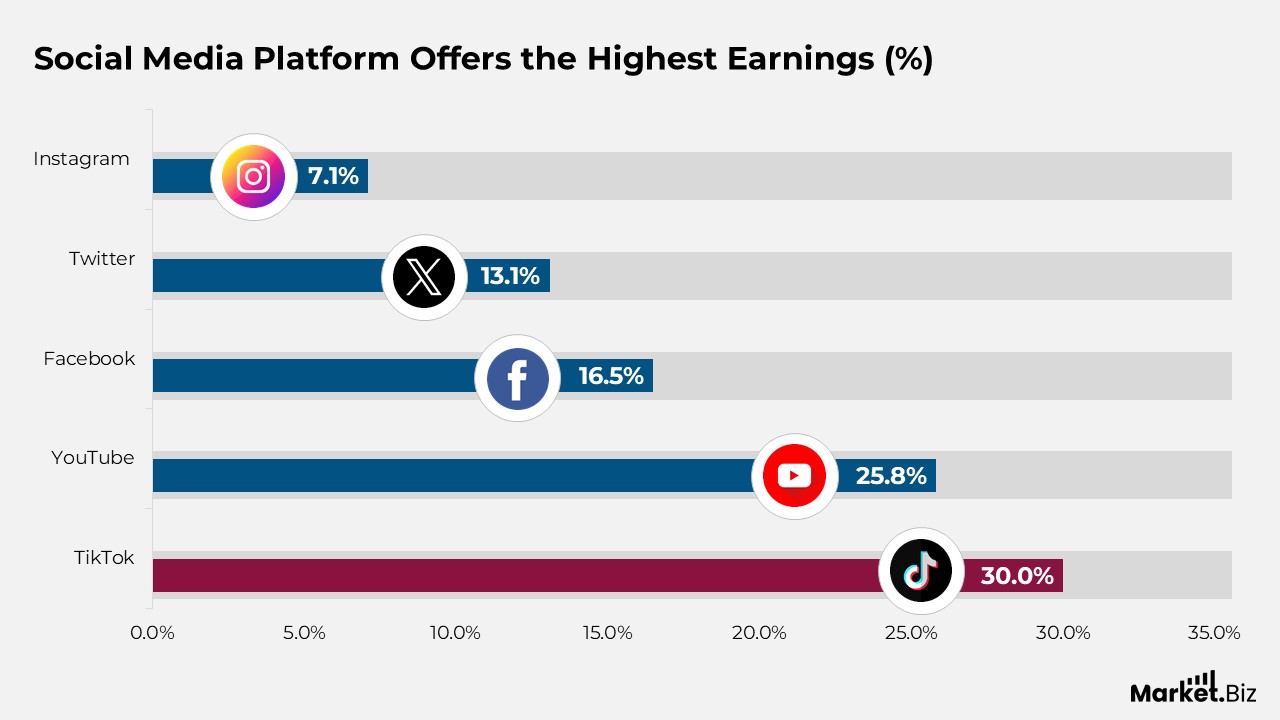
- TikTok is the leading platform for earnings among social media creators.
- A study of 1,500 creators who earn income through social media found that 30% of respondents identified TikTok as the highest-paying platform.
- Following closely, 25.8% of creators stated that YouTube offers the most lucrative opportunities.
- 30% of creators say TikTok is the most profitable platform for income generation.
- 25.8% of creators rank YouTube as the leading platform for earning money.
- 16.5% of creators believe Facebook offers the highest earnings.
- 13.1% of creators find Twitter to be the most rewarding social media platform.
- 7.1% of creators consider Instagram the top platform for generating income.
(Source: Epidemic Sound, DemandSage, Statista)
Instagram Creator Statistics
- Globally, Instagram is home to over 64 million influencers.
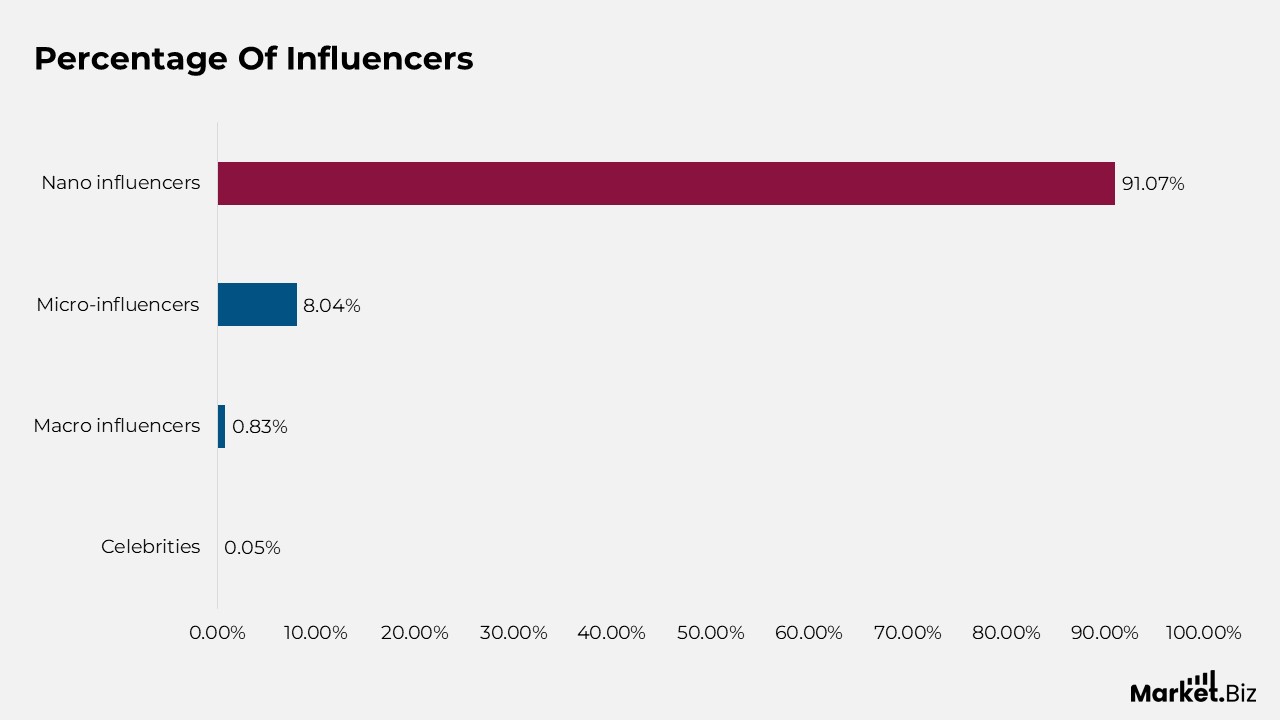
- Among these, 0.05% are celebrities, and the majority, 91.07%, are nano influencers.
- There are 34,300 celebrities on Instagram, representing 0.05% of all influencers.
- 500,000 macro influencers make up 0.83% of the total influencer population.
- 5.1 million micro-influencers account for 8.04% of Instagram influencers.
- The largest group, 58.2 million nano influencers, comprises 91.07% of the total influencer base.
(Source: Trend Hero, DemandSage, Statista)
Role of AI in Marketing and Content Creation
- 88% of marketers believe that leveraging more automation and AI is crucial for meeting customer expectations and staying competitive.
- 83.2% of marketers plan to use AI tools for content creation in 2024.
- Bloggers report spending 30% less time on content creation with the help of AI.
- 14% of bloggers use AI to generate content specifically for webinars.
(Source: Mailchimp, Siege Media, Wordtune)
Creators Earnings Statistics
- Creators earning less than $100 annually typically work fewer than 5 hours per week.
- Creators with annual earnings between $50K and $100K usually work less than 10 hours per week.
- Those earning between $100K and $500K annually generally work more than 10 hours per week.
- Over the past year, half of creators have begun monetizing their content, though earnings vary significantly: 72% earned less than $500, 17% made between $500 and $5,000, and just 11% earned over $10,000, with 2% exceeding $50,000.
- Since early 2022, the average monthly earnings for creators have increased by over 25%, signaling considerable revenue growth.
- On Twitter, creators earn 97% of the revenue up to $50,000 in lifetime earnings from paid subscriptions, with a reduction to 80% after that threshold.
- Only 4% of creators globally make over $100,000 annually, marking them as professionals, while the majority remain in the amateur or hobbyist category.
- Among full-time creators, 12% make over $50,000 a year, while 46% earn less than $1,000 annually.
- Among part-time creators, 68% earn less than $1,000 annually, with only 3% surpassing $50,000 in annual earnings.
- Only 9% of independent creators reached earnings above $100,000 last year, with the majority (71%) making less than $30,000; 34% earned under $5,000, and 37% earned between $5,000 and $30,000.
- More than half (52%) of creators earning between $50,000 and $100,000 annually spend 10 hours or less per week on content creation.
(Source: Mailchimp, Passive Secrets, LLC, Siege Media, Wordtune)
Challenges in the Creator Economy
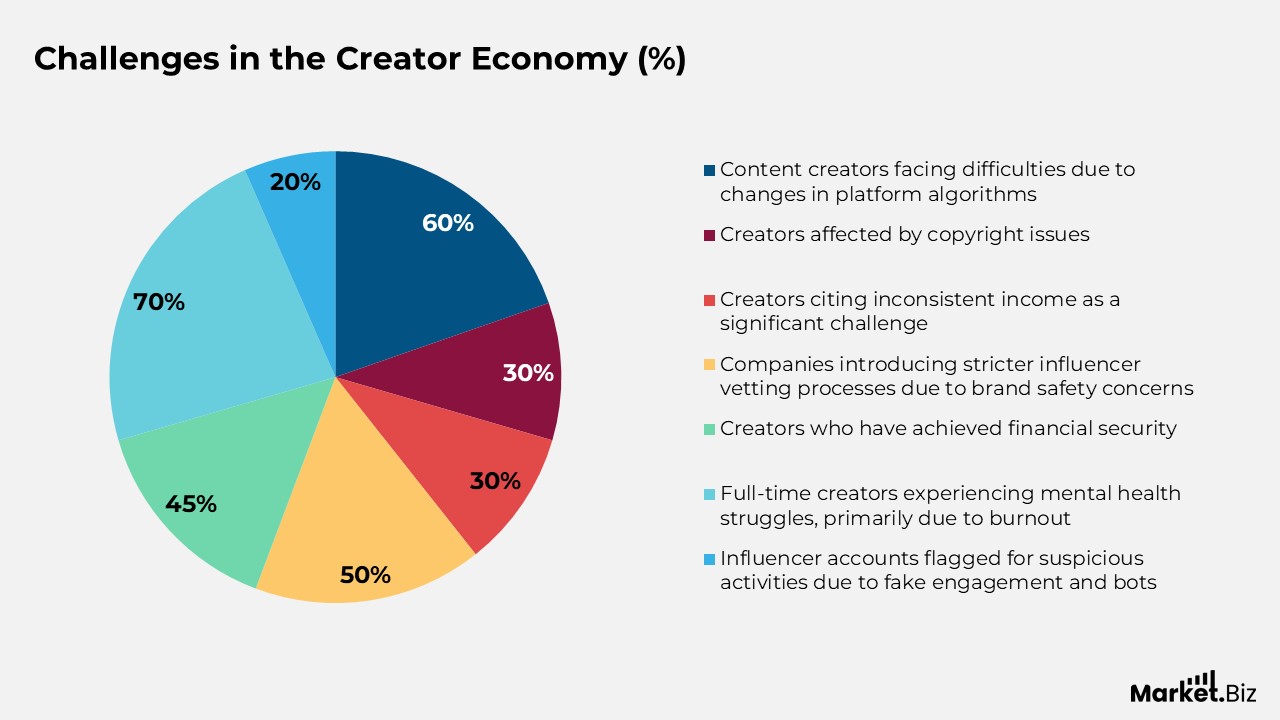
- 60% of content creators face difficulties due to changes in platform algorithms, which impact their reach.
- 30% of creators are affected by copyright issues, which pose challenges in content creation and distribution.
- 30% of creators cite inconsistent income as a significant challenge, affecting their financial stability.
- Due to brand safety concerns, 50% of companies have introduced stricter influencer vetting processes.
- Only 45% of creators have achieved financial security, raising concerns about the long-term sustainability of their careers.
- 70% of full-time creators experience mental health struggles, primarily due to burnout.
- Fake engagement and bots continue to be a concern, with 20% of influencer accounts flagged for suspicious activities.
(Source: Hobo, Statista, DemandSage)
Conclusion
The creator economy is rapidly expanding, fueled by a wide array of influencers ranging from nano to mega influencers across multiple platforms. With a fairly equal gender distribution, the sector is growing both in terms of the number of creators and their impact.
This growth underscores the rising significance of content creators in shaping the digital landscape, influencing consumer behavior, and enhancing brand engagement.
As the creator economy continues to evolve, businesses and brands have increasing opportunities to engage with this dynamic ecosystem, forging authentic connections with audiences through diverse, creator-driven content.
FAQ’s
The creator economy is a rapidly expanding sector where individuals generate income by producing and sharing content on digital platforms. This includes a wide variety of content creators, such as influencers, vloggers, bloggers, podcasters, and others, who monetize their content through sponsorships, advertisements, product sales, and other revenue streams.
Globally, there are an estimated 207 million content creators, spanning a wide range of influencer categories with different follower counts and content styles.
Approximately 67% of content creators are classified as nano-influencers, meaning they have between 1,000 and 10,000 followers. This group forms the largest segment of influencers within the creator economy.
The creator economy has a relatively balanced gender distribution, with women making up 51.9% of content creators and men comprising 48.1%.
Influencers in the creator economy are usually categorized into nano, micro, macro, and mega influencers. Nano-influencers have between 1,000 and 10,000 followers, while macro and mega influencers have significantly larger followings, typically exceeding 100,000 and 1 million followers, respectively.

